
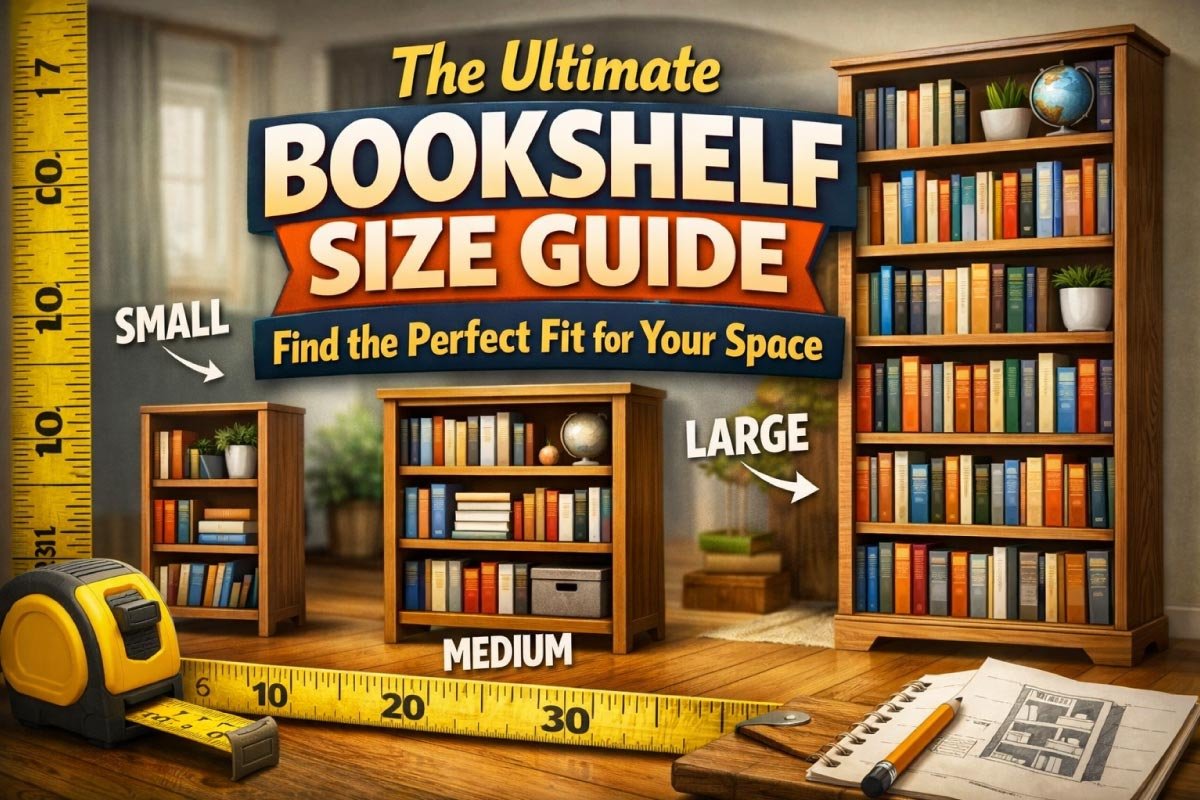
A bookshelf is more than just a storage unit—it’s a blend of functionality and style. Whether you’re a book lover, a home office enthusiast, or someone who wants to display decorative items, choosing the right bookshelf size is crucial.
Selecting a bookshelf that is too small limits storage, while one that’s too large can overwhelm the room.
This bookshelf size guide will help you understand standard dimensions, types, storage capacities, and tips to pick the perfect fit for your space.
Table of Contents
ToggleStandard Bookshelf Dimensions
Choosing the right bookshelf starts with understanding standard dimensions. Size affects storage capacity, room fit, and overall aesthetics.
By considering height, width, depth, and shelf spacing, you can select a bookshelf that balances functionality and style, ensuring your books and decor are displayed safely and efficiently.
-
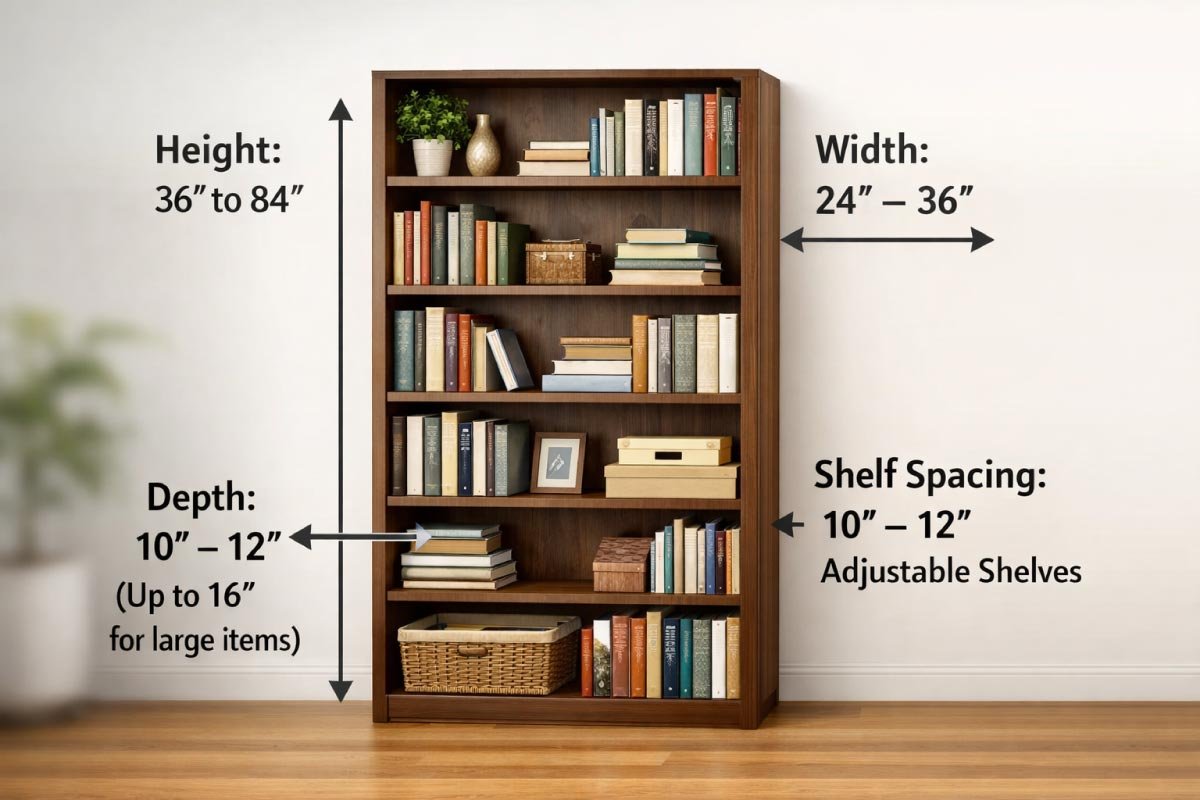
Height: Typical bookshelves range from 36 inches (3 feet) to 84 inches (7 feet). Tall bookshelves maximize vertical space but may require anchoring for safety.
-
Width: Shelves usually span 24–36 inches. Narrow shelves fit small spaces, while wider units provide more storage but need larger walls.
-
Depth: Most bookshelves have a depth of 10–12 inches, suitable for storing standard books. Deeper shelves (up to 16 inches) accommodate large art books or decorative items.
-
Shelf Spacing: Adjustable shelves allow flexibility. A typical gap is 10–12 inches, ideal for most books.
Standard Bookshelf Size Chart
Choosing the right bookshelf size ensures both functionality and aesthetic appeal in any room.
This chart outlines standard bookshelf dimensions, helping you select the perfect height, width, and depth based on your space and storage needs.
From compact options for small rooms to tall units for libraries, every type has a purpose.
| Bookshelf Type | Height (inches) | Width (inches) | Depth (inches) | Suitable For |
|---|---|---|---|---|
| Small/Compact | 36–48 | 24–30 | 8–10 | Small rooms, kids’ rooms |
| Medium | 60 | 30–36 | 10–12 | Living rooms, home offices |
| Tall | 72–84 | 30–36 | 12–14 | Libraries, large walls |
| Wide | 48–60 | 36–48 | 10–12 | Shared spaces, family rooms |
| Corner | 48–72 | 24–36 | 10–12 | Corners, maximizing space |
Types of Bookshelves and Their Dimensions
Bookshelves come in various shapes and sizes, designed to fit both functional and aesthetic needs.
Choosing the right type ensures efficient use of space while complementing your room’s style.
Dimensions vary depending on design, purpose, and available space, making it important to understand each type before purchase.
a. Standard Upright Bookshelves
These classic shelves are vertical and freestanding, often adjustable to accommodate books of different heights.
They are ideal for living rooms, bedrooms, or offices, providing ample storage without consuming too much floor space.
Typical heights range from 60 to 84 inches, widths from 24 to 36 inches.
b. Ladder Bookshelves
Ladder-style bookshelves lean against a wall, narrowing toward the top for a visually appealing display.
They are great for decorative items, plants, or lightweight books but offer limited deep storage.
Standard widths range from 18 to 30 inches, with heights between 60 and 84 inches.
c. Corner Bookshelves
Corner bookshelves are designed to utilize often-overlooked corners, making them space-efficient.
They usually feature triangular or L-shaped shelves and provide storage for books, décor, or small plants.
Heights typically range from 48 to 84 inches, and widths from 24 to 36 inches, depending on the corner size.
d. Modular Bookshelves
Modular bookshelves consist of separate units that can be stacked, arranged, or combined.
Their flexibility allows users to expand storage as needed. Each module is usually 12–24 inches wide and high,
with depths of 10–14 inches, making it easy to customize both vertical and horizontal layouts.
e. Built-in Bookshelves
Built-in shelves are custom-made to fit a wall perfectly, providing a seamless, integrated look.
They maximize storage and can be designed with cabinets or drawers for added functionality.
Dimensions are fully customizable, typically ranging from 8 to 12 feet in width and up to 10 feet in height.
f. Cube Bookshelves
Cube bookshelves feature square or rectangular compartments, ideal for storing books, baskets, or decorative pieces.
They can be stacked or arranged horizontally and vertically. Standard cubes are 12–15 inches per side,
with overall units ranging from 36 to 72 inches in height and width, depending on the number of cubes.
g. Floating Bookshelves
Floating bookshelves attach directly to walls without visible supports, creating a clean, minimalist look.
Perfect for small spaces or accent walls, they typically hold lighter books or decorative items.
Standard lengths range from 24 to 60 inches, with depths of 8 to 12 inches and heights adjustable based on wall arrangement.
Bookshelf Types & Typical Dimensions
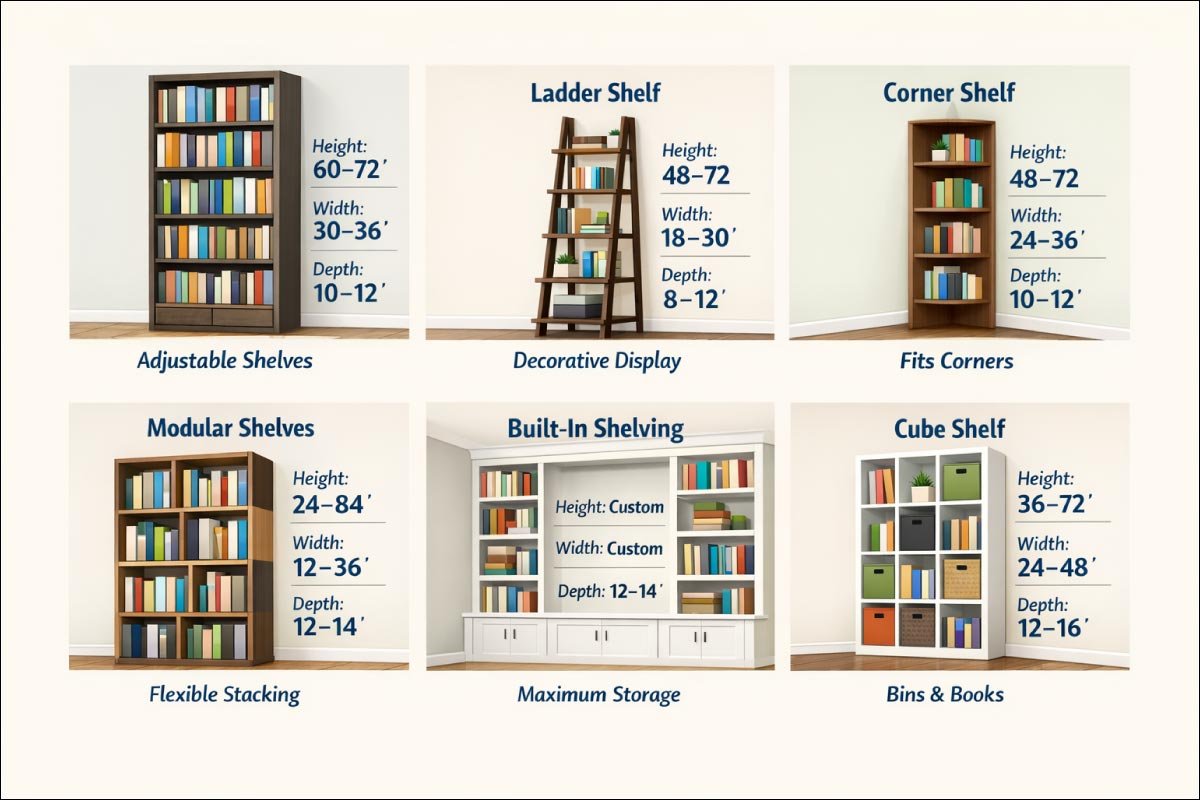
Bookshelves come in a variety of styles, each designed to meet different storage needs and room layouts.
This table highlights common bookshelf types along with their typical dimensions,
helping you choose between upright, ladder, corner, modular, built-in, or cube designs to maximize both space and functionality.
| Type | Height (inches) | Width (inches) | Depth (inches) | Notes |
|---|---|---|---|---|
| Standard Upright | 60–72 | 30–36 | 10–12 | Adjustable shelves |
| Ladder | 48–72 | 18–30 | 8–12 | Decorative, limited book storage |
| Corner | 48–72 | 24–36 | 10–12 | Fits corners, space-saving |
| Modular | 24–84 | 12–36 | 12–14 | Flexible stacking |
| Built-in | Custom | Custom | 12–14 | Maximum storage, room-specific |
| Cube | 36–72 | 24–48 | 12–16 | Storage bins & books |
Bookshelf Shelf Height & Spacing
Proper shelf height and spacing ensure your books and decorative items fit comfortably while keeping your bookshelf organized and visually appealing.
Standard measurements work for most collections, but customizing spacing based on item type improves accessibility, display, and overall functionality.
-
Children’s Books: 8–10 inches of height
-
Novels & Paperbacks: 10–12 inches
-
Coffee Table & Large Art Books: 12–15 inches
-
Decorative Items: Flexible spacing based on item size
Recommended Shelf Height by Item Type
Selecting the right shelf height is essential for organizing books and display items efficiently. This table provides recommended shelf heights for different types of items, ensuring easy access and proper spacing. From children’s books to large art volumes, adjusting shelves correctly helps maintain a neat and functional bookshelf arrangement.
| Item Type | Recommended Shelf Height (inches) |
|---|---|
| Children’s books | 8–10 |
| Paperbacks & novels | 10–12 |
| Textbooks | 11–13 |
| Large art/coffee table books | 12–15 |
| Decorative items | Adjustable |
Bookshelf Storage Capacity
Knowing your bookshelf’s storage capacity helps prevent overcrowding and ensures durability.
Both the number of books and their weight matter when planning your shelf layout.
By considering dimensions, material, and weight limits, you can optimize storage while keeping your collection safe and your shelves sturdy.
-
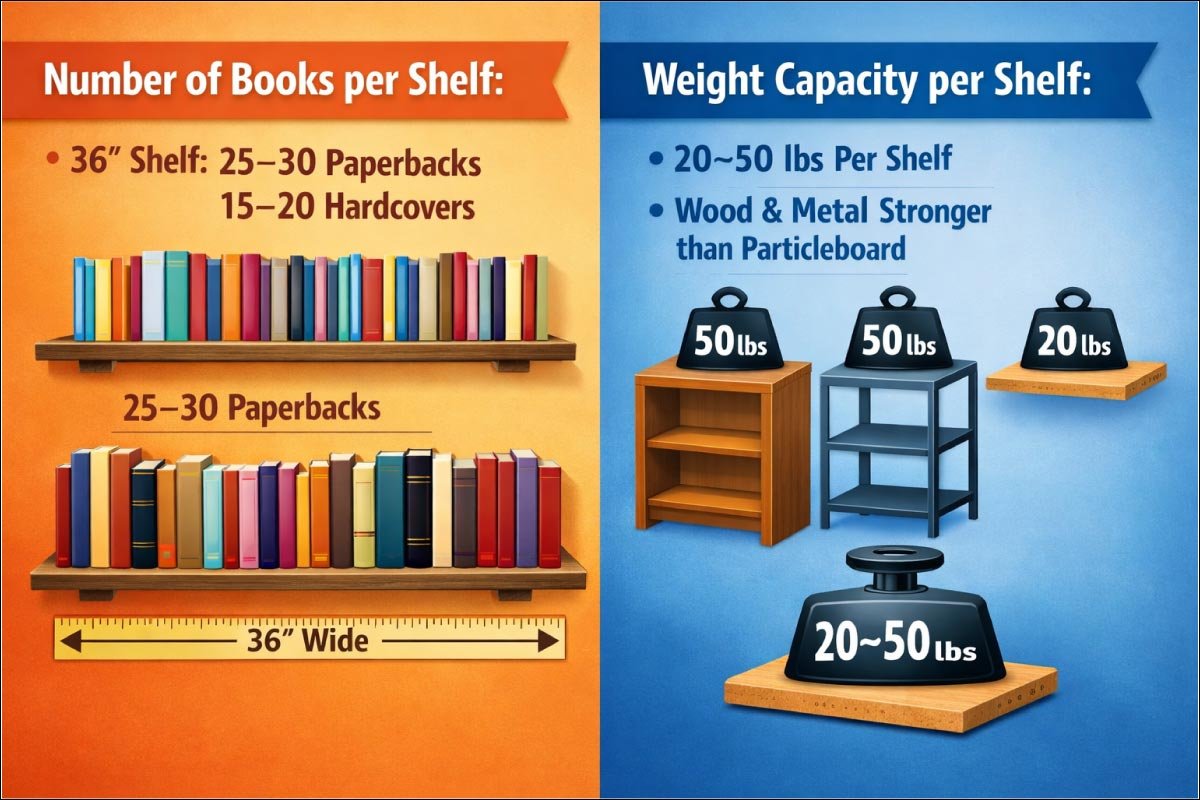
Number of Books per Shelf: Depends on width, depth, and book size. A standard 36-inch shelf can hold 25–30 paperbacks or 15–20 hardcovers.
-
Weight Capacity: Bookshelves vary from 20–50 pounds per shelf. Wood and metal support more than particleboard.
Bookshelf Storage Capacity
Understanding a bookshelf’s storage capacity helps in planning how many books it can hold safely.
This table outlines the approximate number of paperbacks and hardcovers per shelf based on width
and depth, along with the weight each shelf can support, ensuring your bookshelf remains both functional and durable over time.
| Bookshelf Width (inches) | Depth (inches) | Books per Shelf (Paperback) | Books per Shelf (Hardcover) | Weight Capacity per Shelf (lbs) |
|---|---|---|---|---|
| 24 | 10 | 15–20 | 8–12 | 20–25 |
| 30 | 10 | 20–25 | 12–15 | 25–30 |
| 36 | 12 | 25–30 | 15–20 | 30–40 |
| 48 | 12 | 30–35 | 20–25 | 40–50 |
Bookshelf Depth Considerations
Shelf depth affects what you can store and how your bookshelf fits in a room.
Choosing the right depth balances functionality and aesthetics, ensuring books and decorative items
are properly accommodated without wasting space or creating awkward overhangs.
-
Shallow Shelves (8–10 inches): Good for paperbacks, kids’ books, or decorative items. Saves space in narrow rooms.
-
Standard Shelves (10–12 inches): Fits most books comfortably.
-
Deep Shelves (12–16 inches): Ideal for oversized books, baskets, or display items.
Shelf Depth Guide
Shelf depth plays a key role in both functionality and aesthetics. This table provides guidance on selecting the appropriate depth for different items,
from paperbacks and small decor to large books and storage baskets, helping you optimize space while ensuring stability and easy access.
| Depth (inches) | Suitable For | Notes |
|---|---|---|
| 8–10 | Paperbacks, small decorative items | Space-saving, compact |
| 10–12 | Novels, standard hardcovers | Most common depth |
| 12–16 | Large books, baskets, decor | Requires stronger support |
Discover More:
Planning Bookshelf Placement
Where you place your bookshelf affects safety, accessibility, and room aesthetics.
Considering wall space, traffic flow, and lighting helps you choose the best location.
Thoughtful placement ensures your shelves are both functional and visually appealing, whether freestanding, built-in, or creatively used as a room divider.
-
Against a Wall: Standard option; ensures stability.
-
Floating/Room Divider: Freestanding units can separate spaces but need access from both sides.
-
Corner Units: Ideal for small rooms, making use of awkward spaces.
-
Built-in Units: Maximize storage and create a cohesive look with the room.
Bookshelf Placement Guide
Proper bookshelf placement can enhance room functionality and style.
This table outlines placement options, recommended room sizes, and the advantages and disadvantages of each.
From wall-mounted units that save floor space to built-in designs offering maximum storage, choosing the right placement ensures both practicality and visual appeal.
| Placement Type | Recommended Room Size | Pros | Cons |
|---|---|---|---|
| Wall-mounted | Any | Saves floor space | Limited shelf depth |
| Freestanding | Medium/Large | Flexible positioning | Takes more space |
| Corner | Small/Medium | Space-efficient | Limited width |
| Built-in | Medium/Large | Maximum storage, stylish | Permanent, costly |
Discover More:
Safety & Practical Tips
Ensuring your bookshelf is safe and practical protects both your items and your space.
Proper anchoring, measuring, and material choice prevent accidents, while adjustable shelves and storage solutions maximize functionality.
Following these tips creates a secure, organized, and efficient bookshelf setup.
-
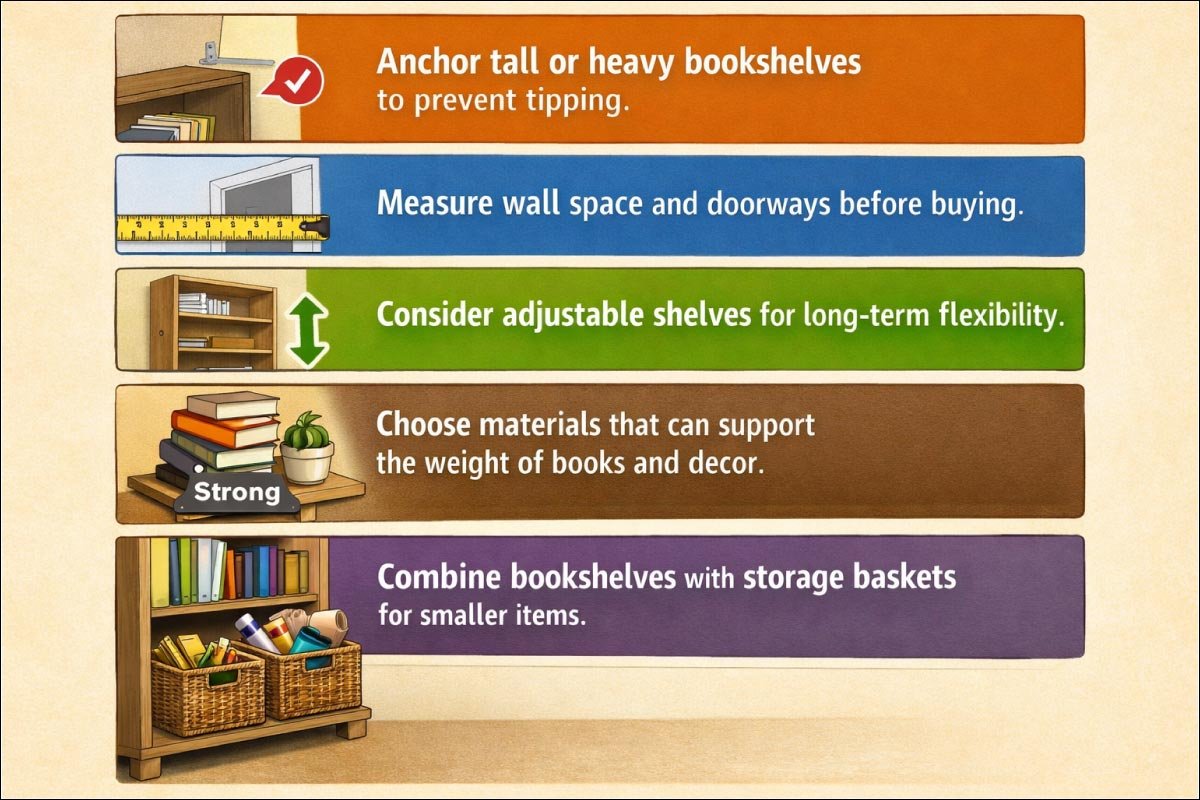
Anchor tall or heavy bookshelves to prevent tipping.
-
Measure wall space and doorways before buying.
-
Consider adjustable shelves for long-term flexibility.
-
Choose materials that can support the weight of books and decor.
-
Combine bookshelves with storage baskets for smaller items.
Conclusion
Choosing the right bookshelf size is a balance between storage needs, room dimensions, and style preferences.
By understanding standard dimensions, types, shelf spacing, and placement, you can select a bookshelf that enhances both the functionality and aesthetics of your space.
Whether you opt for a small, compact unit for a bedroom or a towering built-in for a home library, proper planning ensures that your bookshelf will serve you for years to come.
Discover More:

I am Engineer Hassan, a professional engineer with over 15 years of experience in measurements, design accuracy, and furniture, appliance, and home product sizing. Through Size Helper, I provide research-based guides and trending 2026 home design ideas for living rooms, bedrooms, sofas, wall décor, fashion, and sports—helping users make confident, informed decisions. Every guide is written with real expertise, verified data, and a commitment to quality, usability, and style.