
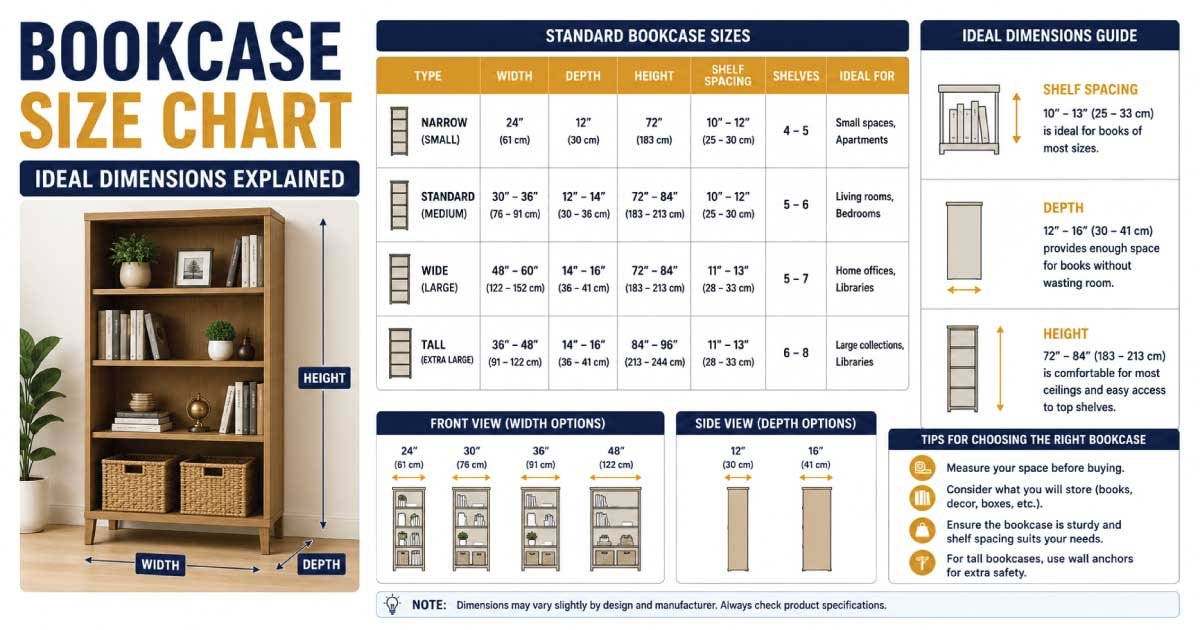
A bookcase is an essential piece of furniture for organizing books, displaying decorative items, storing office supplies, and maximizing vertical storage. Whether you’re furnishing a home office, living room, bedroom, or library, choosing the correct bookcase size ensures it fits your available space while providing enough storage for your collection. Bookcases are available in a wide range of heights, widths, depths, and shelf configurations, making it important to understand standard dimensions before purchasing.
This complete guide includes a detailed Bookcase Size Chart, standard dimensions, shelf spacing recommendations, weight capacities, and expert buying tips to help you choose the perfect bookcase for your home.
Bookcase Size Chart
| Bookcase Type | Width | Depth | Height | Number of Shelves |
|---|---|---|---|---|
| Small Bookcase | 24–30 inches | 10–12 inches | 30–42 inches | 2–3 Shelves |
| Medium Bookcase | 30–36 inches | 10–14 inches | 48–60 inches | 3–4 Shelves |
| Standard Bookcase | 36–48 inches | 12–14 inches | 60–72 inches | 4–5 Shelves |
| Large Bookcase | 48–60 inches | 12–16 inches | 72–84 inches | 5–6 Shelves |
| Library Bookcase | 60–72 inches | 14–18 inches | 84–96 inches | 6–8 Shelves |
Standard Bookcase Dimensions
Standard Bookcase Height
Bookcase height determines storage capacity and how efficiently vertical space is used. Compact models fit beneath windows or in small rooms, while taller bookcases maximize storage and create an impressive display. Most bookcases range from 30 to 84 inches high, with library-style units reaching 96 inches.
| Bookcase Style | Height |
|---|---|
| Low Bookcase | 30–36 inches |
| Medium Bookcase | 48–60 inches |
| Standard Bookcase | 72 inches |
| Tall Library Bookcase | 84–96 inches |
Standard Bookcase Width
The width of a bookcase affects the amount of storage and display space available. Wider units accommodate more books and decorative accessories while reducing the number of vertical dividers.
| Bookcase Size | Width |
|---|---|
| Small | 24–30 inches |
| Medium | 30–36 inches |
| Standard | 36–48 inches |
| Large | 48–60 inches |
| Extra Large | 60–72 inches |
Standard Bookcase Depth
Depth is an important consideration because it determines the size of books and items that can be stored. Most residential bookcases are 10 to 14 inches deep, while deeper units are suitable for large books, binders, and storage baskets.
| Bookcase Type | Depth |
|---|---|
| Slim Bookcase | 10 inches |
| Standard Bookcase | 12 inches |
| Deep Bookcase | 14–16 inches |
| Library Bookcase | 16–18 inches |
Bookcase Shelf Size Chart
Proper shelf dimensions help organize books of different sizes while maximizing storage efficiency.
| Book Type | Shelf Height | Shelf Depth |
|---|---|---|
| Paperback Books | 8–10 inches | 10 inches |
| Hardcover Books | 10–12 inches | 10–12 inches |
| Coffee Table Books | 14–16 inches | 12–16 inches |
| Magazines & Binders | 12–15 inches | 12–14 inches |
| Decorative Storage Boxes | 12–16 inches | 12–14 inches |
Adjustable shelves provide the flexibility to accommodate books and decorative items of various sizes.
Bookcase Sizes by Style
Small Bookcase
Small bookcases are ideal for apartments, bedrooms, children’s rooms, and home offices where space is limited. They provide practical storage without overwhelming the room and can also serve as display units for decorative accessories.
Typical dimensions include:
- Width: 24–30 inches
- Depth: 10–12 inches
- Height: 30–42 inches
Standard Bookcase
Standard bookcases offer an excellent balance between storage capacity and floor space. They are commonly used in living rooms, offices, and study areas to organize books while displaying plants, framed photos, and decorative objects.
Typical dimensions:
- Width: 36–48 inches
- Depth: 12 inches
- Height: 60–72 inches
Tall Bookcase
Tall bookcases maximize vertical storage, making them ideal for homeowners with large book collections. Many include adjustable shelves that can be customized to fit books of varying heights.
Typical dimensions:
- Width: 36–48 inches
- Depth: 12–14 inches
- Height: 72–84 inches
Library Bookcase
Library-style bookcases provide extensive storage for serious readers, collectors, and home offices. Their larger dimensions make them suitable for storing books, binders, collectibles, and decorative pieces.
Typical dimensions:
- Width: 48–72 inches
- Depth: 14–18 inches
- Height: 84–96 inches
Bookcase Weight Capacity
The amount of weight a bookcase can safely support depends on its materials and construction.
| Bookcase Type | Weight Capacity |
|---|---|
| Small Bookcase | 100 lbs |
| Standard Bookcase | 200 lbs |
| Large Bookcase | 300 lbs |
| Heavy-Duty Bookcase | 500 lbs |
Always distribute heavy books evenly across shelves to reduce stress on the frame.
⏩ Detailed Measurement Guide 👉 Complete Dining Chair Sizes Guide 2026 With Chart
Bookcase Clearance Guide
Front Clearance
Adequate space in front of a bookcase makes it easy to browse books and access shelves comfortably.
| Location | Recommended Clearance |
|---|---|
| Bedroom | 30–36 inches |
| Living Room | 36 inches |
| Home Office | 36–42 inches |
| Library | 42–48 inches |
Maintaining clear access improves both functionality and room flow.
Top Clearance
Leave enough space above the bookcase for decorative items and safe installation.
| Ceiling Height | Recommended Top Clearance |
|---|---|
| 8 Feet | 6–12 inches |
| 9 Feet | 12–18 inches |
| 10 Feet | 18–24 inches |
This spacing also makes cleaning easier and prevents the room from feeling crowded.
Bookcase Materials
Solid Wood Bookcases
Solid wood bookcases provide exceptional durability and timeless appeal. They are suitable for traditional, farmhouse, and luxury interiors while supporting heavy book collections.
Engineered Wood Bookcases
Engineered wood offers affordability and a wide range of finishes that closely resemble natural wood. It is a popular choice for modern homes.
Metal Bookcases
Metal bookcases are strong, durable, and ideal for industrial-style interiors, offices, garages, and workshops.
Glass Bookcases
Glass bookcases create a contemporary appearance while making rooms feel more open. They are often used for displaying collectibles and decorative items.
⏩ Detailed Measurement Guide 👉 Dining Table Size Chart: Expert Guide to Standard Sizes
How to Choose the Right Bookcase Size
Measure Your Available Space: Measure the width, depth, and height of the intended location. Consider nearby doors, windows, and furniture to ensure the bookcase fits comfortably.
Estimate Your Book Collection: Count your books and allow additional storage space for future purchases. Selecting a slightly larger bookcase often prevents the need for replacement later.
Choose Adjustable Shelves: Adjustable shelving allows you to customize shelf heights for books, decorative items, storage baskets, and office supplies.
Coordinate with Your Interior Design: Select a finish and material that complement your flooring, wall color, and surrounding furniture to create a cohesive appearance.
Bookcase vs. Bookshelf
| Feature | Bookcase | Bookshelf |
|---|---|---|
| Structure | Enclosed Frame | Open Shelves |
| Storage Capacity | Higher | Moderate |
| Stability | Excellent | Good |
| Decorative Display | Excellent | Good |
| Suitable for Large Collections | Yes | Limited |
Bookcases generally provide greater stability and storage capacity than simple wall-mounted bookshelves.
Benefits of a Properly Sized Bookcase
A well-sized bookcase offers numerous advantages.
- Organizes books efficiently
- Maximizes vertical storage
- Enhances room appearance
- Displays decorative accessories
- Reduces clutter
- Improves accessibility
- Protects books from damage
- Adds value to interior décor
- Supports flexible storage
- Creates an organized living space
Common Bookcase Buying Mistakes
Avoid these common purchasing mistakes:
- Buying a bookcase that’s too tall for the room
- Ignoring shelf depth
- Overloading shelves
- Forgetting wall anchoring for tall units
- Choosing fixed shelves only
- Underestimating future storage needs
- Ignoring available floor space
- Selecting materials unsuitable for heavy books
Proper planning helps ensure long-lasting satisfaction with your purchase.
Bookcase Maintenance Tips
Proper care keeps your bookcase looking attractive for years.
- Dust shelves regularly.
- Clean surfaces with suitable products.
- Tighten screws and hardware periodically.
- Distribute heavy books evenly.
- Anchor tall bookcases to the wall.
- Avoid prolonged moisture exposure.
- Polish wood finishes when needed.
- Rearrange books occasionally to reduce shelf stress.
Routine maintenance extends the life of both the bookcase and your book collection.
Conclusion
Choosing the correct bookcase size is essential for creating an organized, functional, and visually appealing space. By selecting the right height, width, depth, shelf spacing, and weight capacity, you can maximize storage while enhancing your room’s overall design. Whether you need a compact bookcase for a bedroom or a large library unit for an extensive collection, the size charts and recommendations in this guide will help you find the ideal bookcase for your home or office.
⏩ Detailed Measurement Guide 👉 Buffet Table Size Chart: Easy Measurement Guide
FAQs:
What is the standard size of a bookcase?
A standard bookcase usually measures 36 to 48 inches wide, 12 inches deep, and 60 to 72 inches high. These dimensions make it suitable for most homes, offices, and study areas while providing enough storage space for books, décor items, and personal collections.
How deep should a bookcase be?
Most bookcases have a depth of 10 to 12 inches, which works well for standard paperback and hardcover books. Larger books, magazines, or decorative items may require deeper shelves measuring 14 to 16 inches for better storage and accessibility.
How much weight can a bookcase hold?
A standard bookcase can typically support around 200 pounds when properly constructed and evenly loaded. Heavy-duty models made from stronger materials can hold 300 to 500 pounds, depending on shelf thickness, design, and the quality of the overall construction.
Should a tall bookcase be anchored to the wall?
Yes, tall bookcases that are 72 inches or higher should be anchored securely to the wall. Wall anchoring improves stability, prevents accidental tipping, and creates a safer environment, especially in homes with children, pets, or areas with frequent movement.
Are adjustable shelves better than fixed shelves?
Yes, adjustable shelves offer more versatility compared to fixed shelves because they allow you to change spacing based on your needs. They are ideal for storing books, storage bins, collectibles, and decorative accessories of different sizes while keeping the bookcase organized.
