
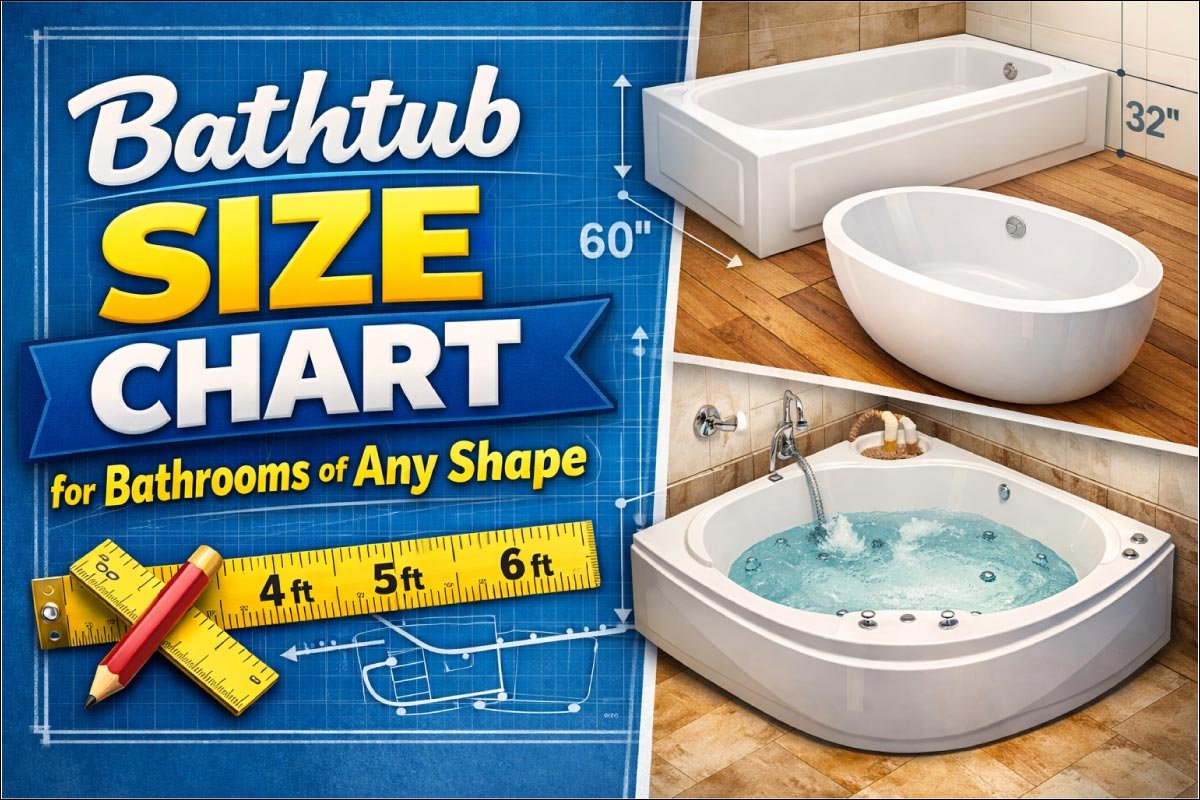
Choosing the right bathtub is not just about aesthetics—it’s about maximizing comfort, utility, and harmony with your bathroom’s layout.
A well-chosen bathtub can transform your bathroom into a sanctuary, while a poorly sized one can make even a spacious bathroom feel cramped.
In this guide, we will explore the dimensions, types, and considerations to help you select the perfect bathtub for any bathroom shape. To make things even easier, we’ve included comprehensive bathtub size charts for quick reference.
Standard Bathtub Sizes: What You Need to Know
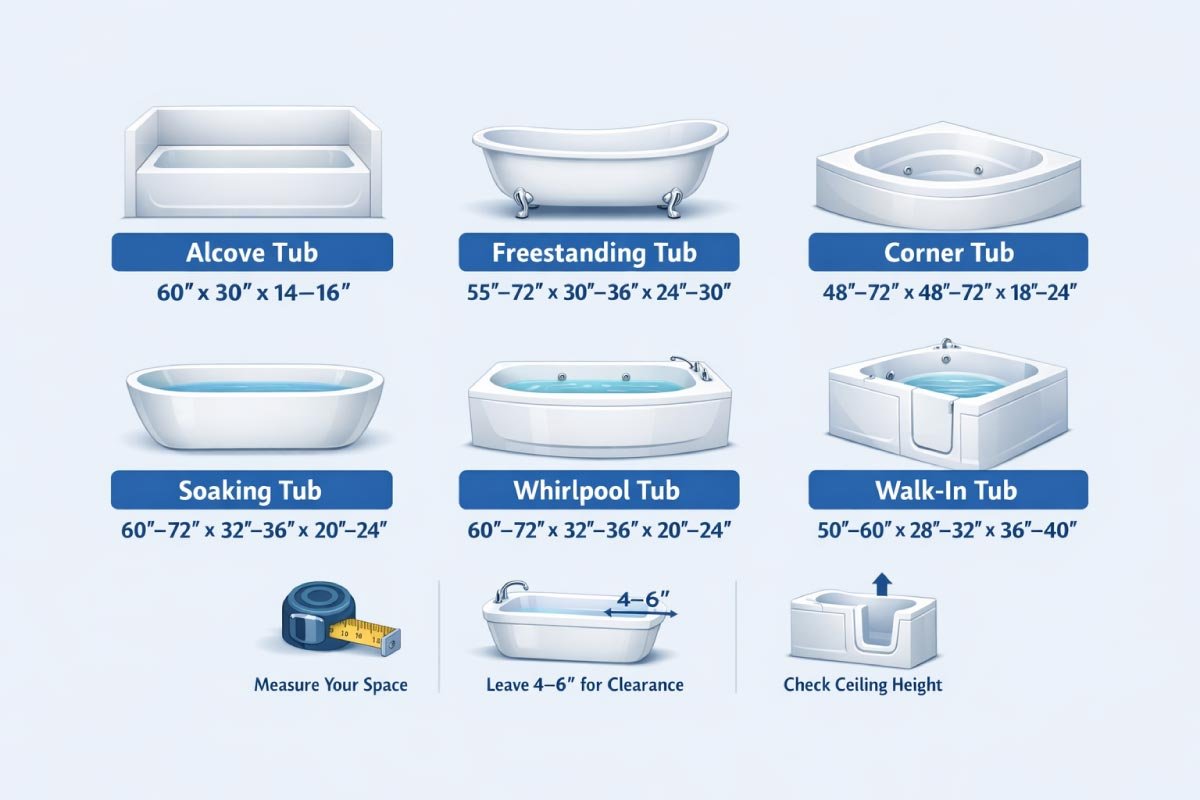
Choosing the right bathtub size affects comfort, functionality, and bathroom aesthetics.
Sizes vary by style—freestanding, alcove, or corner—and manufacturer, so precise measurements are essential. Knowing standard dimensions helps you plan plumbing, space, and design effectively.
Most bathtubs fall into standard size ranges, but slight variations exist based on style, manufacturer, and intended use.
Understanding these dimensions is crucial to ensure your bathtub fits seamlessly into your bathroom.
Key Standard Sizes:
Choosing the right bathtub size is essential for comfort, safety, and bathroom design.
Different types—alcove, freestanding, corner, soaking, whirlpool, and walk-in—come in standard dimensions to suit various spaces and needs.
Understanding typical lengths, widths, and heights helps ensure a perfect fit and an enjoyable bathing experience.
| Bathtub Type | Typical Length | Typical Width | Typical Height | Notes |
|---|---|---|---|---|
| Alcove Tub | 60″ | 30″ | 14–16″ | Fits between three walls, most common in small bathrooms |
| Freestanding Tub | 55–72″ | 30–36″ | 24–30″ | Can be placed anywhere; perfect for luxury bathrooms |
| Corner Tub | 48–72″ | 48–72″ | 18–24″ | Ideal for L-shaped or irregular bathrooms |
| Soaking Tub | 60–72″ | 32–36″ | 20–24″ | Deep for a full-body soak |
| Whirlpool Tub | 60–72″ | 32–36″ | 20–24″ | Includes jets for a spa-like experience |
| Walk-in Tub | 50–60″ | 28–32″ | 36–40″ | Provides accessibility and safety features |
Tips:
-
Measure your bathroom space before choosing a tub.
-
Leave at least 4–6 inches around the edges for plumbing and maintenance.
-
Consider the ceiling height if you’re opting for a deeper soaking or freestanding tub.
Small Bathrooms: Compact Bathtubs That Save Space
In compact bathrooms, every inch matters. Choosing a space-saving bathtub ensures comfort without compromising usability.
Options like corner tubs, shallow designs, or shorter lengths maximize room efficiency.
Thoughtful selection allows for functional layouts, better movement, and stylish design.
Small bathrooms require careful planning. The last thing you want is a bathtub that overwhelms your space or limits movement.
Compact Bathtub Options:
For smaller bathrooms, choosing a compact bathtub maximizes space without sacrificing comfort.
Options like alcove tubs, corner tubs, and mini soaking tubs come in reduced dimensions, making them ideal for apartments, guest bathrooms, or tight layouts.
Knowing typical lengths, widths, and depths ensures a practical and stylish fit.
| Bathtub Type | Length | Width | Depth | Ideal Bathroom Size |
|---|---|---|---|---|
| Alcove Tub | 55–60″ | 28–30″ | 14–16″ | 5′ x 7′ bathrooms |
| Corner Tub | 48–60″ | 48–60″ | 18–20″ | Bathrooms under 6′ x 6′ |
| Mini Soaking Tub | 50–55″ | 28–32″ | 18–22″ | Tiny apartments or guest bathrooms |
Space-Saving Tips:
-
Choose a tub with built-in storage ledges.
-
Sliding glass doors instead of a swinging door can maximize space.
-
Consider wall-mounted faucets to free up perimeter space.
Small bathrooms benefit from bathtubs that don’t dominate the floor plan.
Alcove tubs are typically the most practical, while corner tubs can create a focal point in slightly larger compact bathrooms.
Medium Bathrooms: Balance Comfort and Utility
Medium bathrooms provide an ideal mix of space and versatility. You can choose bathtubs that offer comfort without overwhelming the room.
This allows for a variety of designs, from standard-length tubs to stylish unique shapes, ensuring both practicality and visual appeal.
Medium-sized bathrooms offer more flexibility, allowing you to balance functionality with aesthetics. In these spaces, you can explore slightly longer tubs and unique shapes.
Ideal Bathtub Sizes for Medium Bathrooms:
Medium-sized bathrooms offer enough space for both style and functionality.
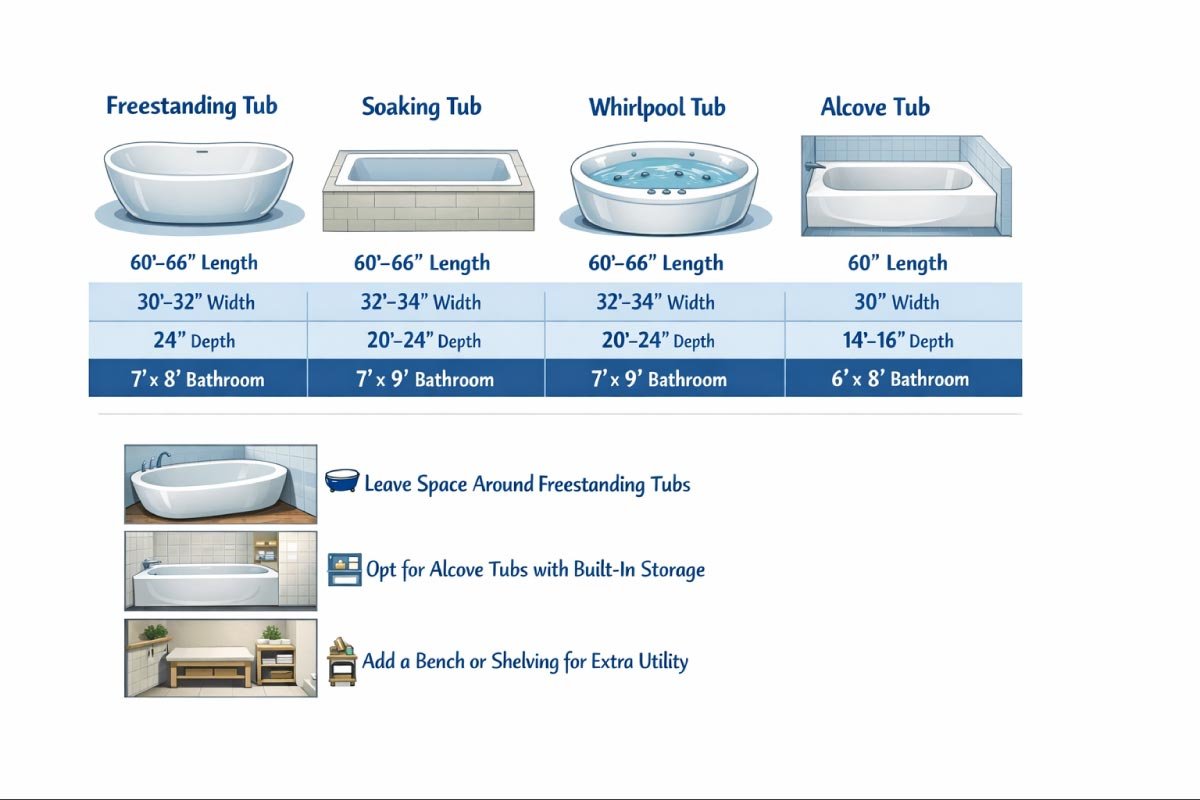
Bathtubs like freestanding, soaking, whirlpool, and alcove tubs fit comfortably without overcrowding the room.
Understanding ideal lengths, widths, and depths helps homeowners select the perfect tub, ensuring a balanced layout and a relaxing bathing experience.
| Bathtub Type | Length | Width | Depth | Recommended Bathroom Size |
|---|---|---|---|---|
| Freestanding Tub | 60–66″ | 30–32″ | 24″ | 7′ x 8′ bathrooms |
| Soaking Tub | 60–66″ | 32–34″ | 20–24″ | 7′ x 9′ bathrooms |
| Whirlpool Tub | 60–66″ | 32–34″ | 20–24″ | 7′ x 8′ bathrooms |
| Alcove Tub | 60″ | 30″ | 14–16″ | 6′ x 8′ bathrooms |
Practical Tips:
-
Freestanding tubs look luxurious in medium bathrooms but need space around them.
-
Alcove tubs remain practical if you prefer built-in storage options.
-
Add a small bench or shelving to maximize bathroom utility.
With medium bathrooms, you can experiment with tub styles without sacrificing comfort or accessibility.
Large Bathrooms: Go Big or Go Home
In large bathrooms, you have the freedom to prioritize luxury and comfort.
Bigger spaces allow for freestanding tubs, deep soaking designs, or even double-person options, creating a spa-like experience.
Thoughtful selection enhances both style and functionality.
For large bathrooms, size is your friend. You can afford luxurious freestanding tubs, spacious soaking tubs, or even dual-person tubs.
Large Bathroom Bathtub Sizes:
Spacious bathrooms allow for luxurious and statement-making tubs.
Options like freestanding, soaking, corner, whirlpool, and dual-person tubs provide ample room for comfort and style.
Knowing the ideal lengths, widths, and depths ensures these large tubs fit perfectly, creating a relaxing, spa-like atmosphere while maximizing bathroom design potential.
| Bathtub Type | Length | Width | Depth | Best For |
|---|---|---|---|---|
| Freestanding Tub | 66–72″ | 32–36″ | 24–30″ | Centerpiece design |
| Soaking Tub | 66–72″ | 34–36″ | 22–24″ | Relaxation and spa experience |
| Corner Tub | 60–72″ | 60–72″ | 20–24″ | Maximizes unused corner space |
| Whirlpool Tub | 66–72″ | 32–36″ | 22–24″ | Home spa or therapeutic use |
| Dual-Person Tub | 66–72″ | 36″ | 22–24″ | Couples or family use |
Design Tips:
-
Use the bathtub as a focal point, especially freestanding models.
-
Incorporate statement tiles or a surrounding platform for a luxurious feel.
-
Ensure at least 24–30 inches of clearance around freestanding tubs for easy access.
Large bathrooms provide flexibility in both form and function, allowing you to prioritize relaxation and style without compromise.
Bathtub Depth and Soaking Comfort
While length and width affect fit, the depth of a bathtub shapes your bathing experience. Deeper tubs allow full-body immersion, enhancing relaxation and comfort.
Considering depth ensures a more luxurious soak without compromising safety or space. Length and width are important, but depth determines how immersive your bathing experience will be.
Standard bathtubs often feel shallow compared to modern soaking tubs.
Depth Considerations:
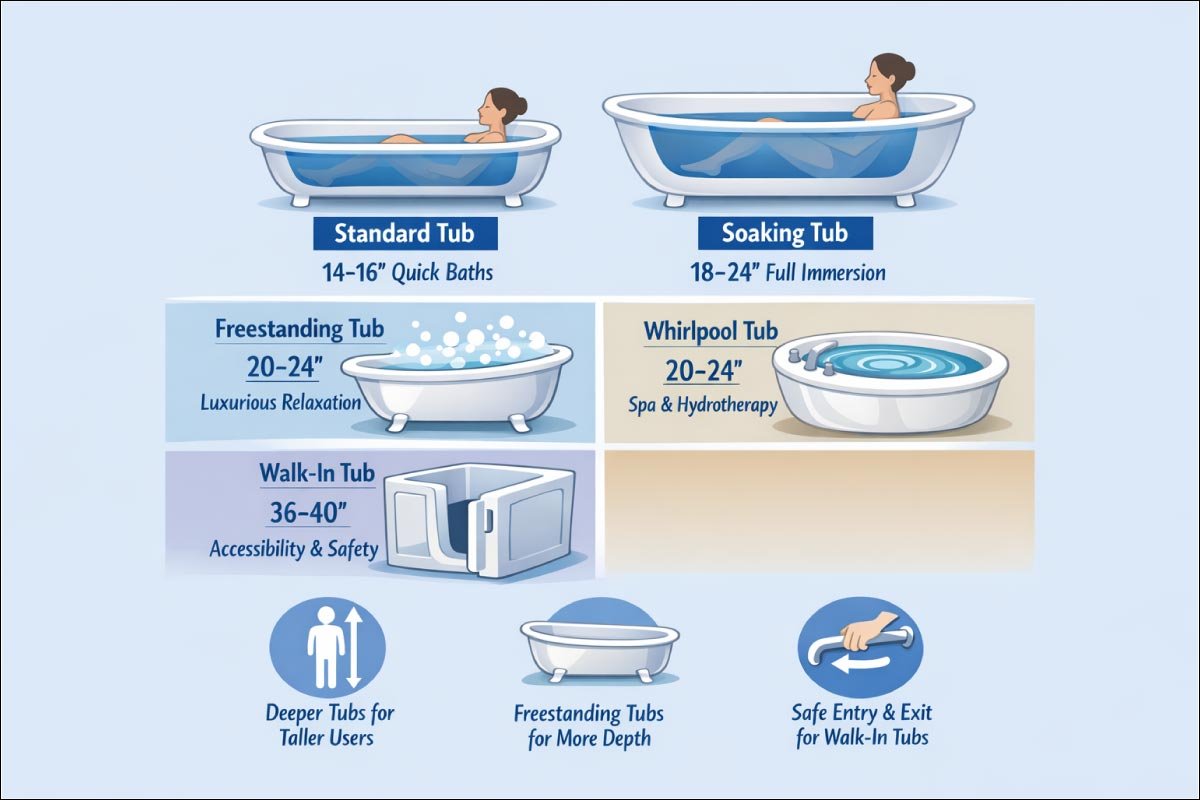
Bathtub depth directly affects comfort, bathing experience, and accessibility.
From standard tubs for quick baths to deep soaking, freestanding, whirlpool, and walk-in tubs, each type offers specific immersion levels.
Understanding depth measurements helps homeowners choose a tub that meets relaxation, therapeutic, or safety needs effectively.
| Bathtub Type | Depth (Bottom to Overflow) | Purpose |
|---|---|---|
| Standard Tub | 14–16″ | Quick baths, practical use |
| Soaking Tub | 18–24″ | Full-body immersion |
| Freestanding Tub | 20–24″ | Luxurious relaxation |
| Whirlpool Tub | 20–24″ | Spa and hydrotherapy |
| Walk-in Tub | 36–40″ | Accessibility and safety |
Tips for Choosing Depth:
-
Taller users often prefer deeper tubs for comfort.
-
Freestanding tubs allow for greater depth without wall constraints.
-
For walk-in tubs, depth is balanced with safety—entry and exit ease is essential.
Depth is often overlooked, but it can drastically improve your bathing experience, especially if you love long, relaxing soaks.
Also Read:
Specialty Shapes: Corner, Oval, and Oval-Freeform Tubs
Bathrooms don’t always follow standard layouts, and bathtubs don’t need to either.
Specialty shapes like corner, oval, and freeform tubs maximize space, adapt to unusual floor plans, and add visual interest. Thoughtful design can enhance both functionality and style.
Not all bathrooms are rectangular, and not all bathtubs have to be either. Specialty shapes can fit irregular spaces and create unique aesthetics.
Specialty Tub Sizes:
Specialty tubs add style and functionality to unique bathroom layouts.
Shapes like corner, oval, oval-freeform, and angled tubs cater to irregular spaces, narrow areas, or luxury designs.
Knowing their typical lengths and widths helps homeowners achieve a perfect fit while enhancing both aesthetics and comfort.
| Shape | Typical Length | Typical Width | Ideal For |
|---|---|---|---|
| Corner | 48–72″ | 48–72″ | L-shaped bathrooms or tight corners |
| Oval | 60–72″ | 30–36″ | Medium to large bathrooms, elegant design |
| Oval-Freeform | 65–72″ | 35–40″ | Luxury bathrooms with irregular layouts |
| Angled | 60–72″ | 30–36″ | Custom fit for narrow or wide bathrooms |
Practical Considerations:
-
Corner tubs save space but may require angled walls.
-
Oval tubs often need a freestanding setup for the best look.
-
Freeform shapes are customizable and require precise measurement.
These specialty tubs often serve as the centerpiece of the bathroom, merging functionality with artistic appeal.
Also Read:
Walk-in Tubs: Accessibility Meets Comfort
Walk-in tubs combine safety, convenience, and relaxation.
Designed with low thresholds, built-in seats, and easy-entry doors, they make bathing safer for seniors or those with mobility limitations.
Modern designs ensure comfort and style without sacrificing accessibility. Walk-in tubs prioritize accessibility without compromising comfort. They are essential for elderly users or those with mobility challenges.
Walk-in Tub Dimensions:
Walk-in tubs prioritize safety, accessibility, and comfort for users with mobility needs.
Standard, deep-soaking, and whirlpool walk-in tubs offer varying lengths, widths, and heights, along with features like doors, built-in seats, and hydrotherapy jets.
Choosing the right dimensions ensures a secure and relaxing bathing experience for all.
| Tub Type | Length | Width | Height | Key Features |
|---|---|---|---|---|
| Standard Walk-in | 50–54″ | 28–32″ | 36–38″ | Door access, built-in seat |
| Deep Soaking Walk-in | 54–60″ | 28–32″ | 38–40″ | Full-body soak |
| Whirlpool Walk-in | 50–60″ | 28–32″ | 36–40″ | Hydrotherapy jets for relaxation |
Design Tips:
-
Ensure door mechanisms are easy to operate.
-
Include anti-slip surfaces and grab bars for safety.
-
Measure bathroom door width to ensure the tub can be installed.
Walk-in tubs are functional, but modern designs also make them stylish additions to your bathroom.
Also Read:
Planning Your Bathtub Layout
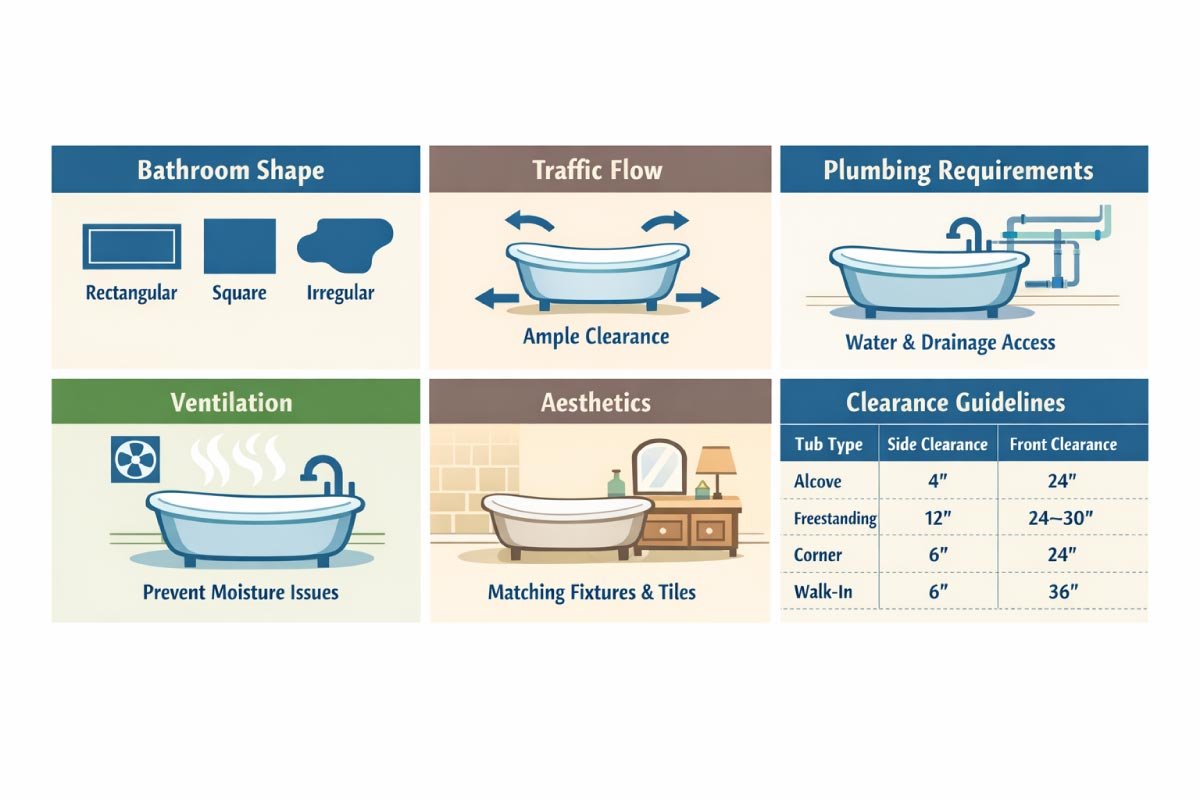
A well-planned bathtub layout ensures functionality, comfort, and style.
Considering space, plumbing, and traffic flow helps avoid installation issues and enhances the overall bathroom experience.
Thoughtful placement also protects against moisture problems and maximizes aesthetic appeal.
When planning your bathtub installation, always consider:
When planning your bathtub installation, always consider:
-
Bathroom Shape: Rectangular, square, or irregular layouts influence tub choice.
-
Traffic Flow: Leave clearance around the tub for easy movement.
-
Plumbing Requirements: Ensure water and drainage access aligns with the tub.
-
Ventilation: Deep soaking tubs require proper ventilation to prevent moisture issues.
-
Aesthetics: Complement the bathtub style with fixtures, tiles, and cabinetry.
Clearance Guidelines:
Proper clearance around a bathtub ensures safety, accessibility, and ease of maintenance.
Alcove, freestanding, corner, and walk-in tubs each require specific side and front spaces.
Following these minimum clearance guidelines helps homeowners plan layouts that allow comfortable use, safe entry and exit, and hassle-free cleaning or repairs.
| Tub Type | Minimum Side Clearance | Minimum Front Clearance | Notes |
|---|---|---|---|
| Alcove | 4″ | 24″ | Practical for maintenance |
| Freestanding | 12″ | 24–30″ | Allows access from all sides |
| Corner | 6″ | 24″ | Ensure access for cleaning |
| Walk-in | 6″ | 36″ | Prioritize entry and exit safety |
Also Read:
Quick Reference Bathtub Size Chart
This quick reference chart provides an at-a-glance overview of standard bathtub dimensions and ideal uses.
Covering alcove, freestanding, corner, soaking, whirlpool, and walk-in tubs, it helps homeowners and designers quickly compare lengths, widths, depths.
And heights to select the perfect tub for any bathroom size or purpose.
| Bathtub Type | Length | Width | Depth | Height | Best For |
|---|---|---|---|---|---|
| Alcove | 55–60″ | 28–30″ | 14–16″ | 14–16″ | Small bathrooms |
| Freestanding | 55–72″ | 30–36″ | 24–30″ | 24–30″ | Medium to large bathrooms |
| Corner | 48–72″ | 48–72″ | 18–24″ | 18–24″ | Irregular corners |
| Soaking | 60–72″ | 32–36″ | 20–24″ | 20–24″ | Relaxation |
| Whirlpool | 60–72″ | 32–36″ | 20–24″ | 20–24″ | Spa experience |
| Walk-in | 50–60″ | 28–32″ | 36–40″ | 36–40″ | Accessibility |
Conclusion: Choosing the Right Tub for Any Bathroom
Selecting the right bathtub isn’t just about size—it’s about comfort, function, and harmony with your bathroom’s layout.
From compact alcove tubs for small spaces to luxurious freestanding tubs for large bathrooms, there’s a bathtub for every situation.
Use the charts and guidelines above to make informed decisions, ensuring that your bathtub is not only functional but a relaxing centerpiece of your home.
By paying attention to length, width, depth, and clearance, you can create a bathing space that is safe, comfortable, and visually appealing. Whether you prioritize luxury, accessibility, or practicality, your ideal bathtub awaits.
Also Read:

I am Engineer Hassan, a professional engineer with over 15 years of experience in measurements, design accuracy, and furniture, appliance, and home product sizing. Through Size Helper, I provide research-based guides and trending 2026 home design ideas for living rooms, bedrooms, sofas, wall décor, fashion, and sports—helping users make confident, informed decisions. Every guide is written with real expertise, verified data, and a commitment to quality, usability, and style.