
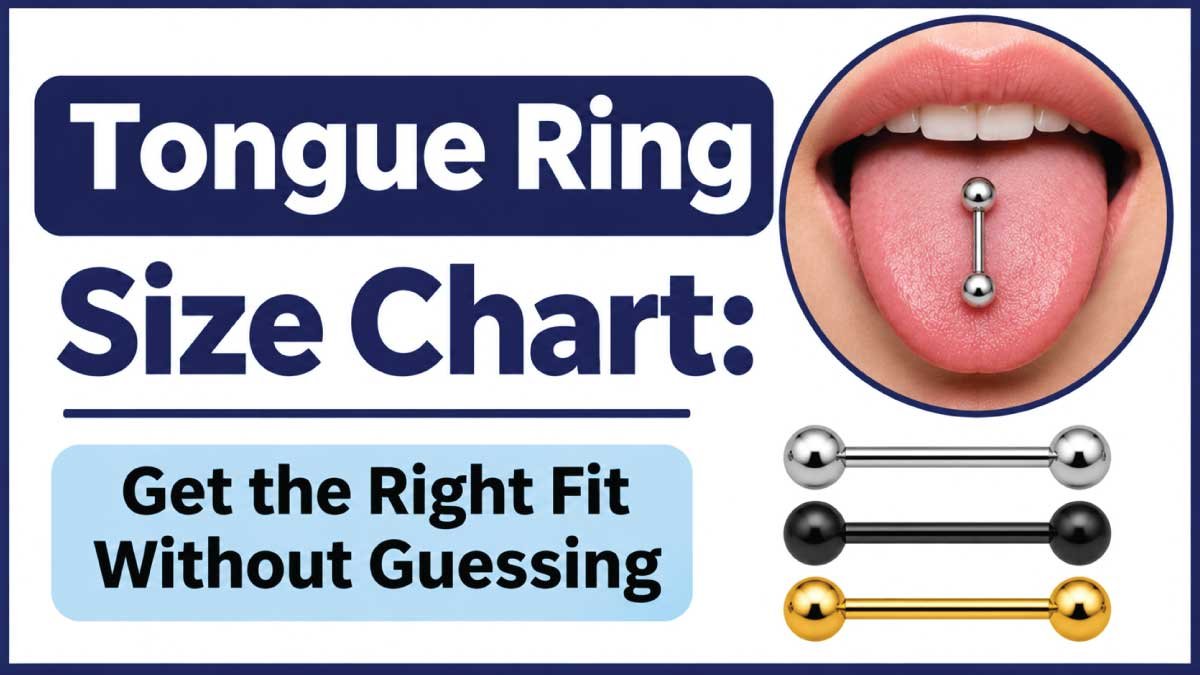
Choosing the correct tongue ring size is essential for comfort, proper movement, and a secure fit. A tongue piercing that is too short may press against the tongue and cause irritation, while a barbell that is too long can move excessively, rub against the teeth, and make everyday activities uncomfortable. Understanding tongue ring measurements helps you select jewelry that suits your piercing and anatomy.
Most traditional tongue piercings use straight barbell jewelry, with measurements based on gauge (thickness) and wearable length. However, the ideal size depends on whether your piercing is new or fully healed, your tongue thickness, and the placement of the piercing.
This tongue ring size chart explains common gauge measurements, barbell lengths, sizing differences, and how to choose jewelry that fits comfortably. It also covers measurement methods, material considerations, and common sizing mistakes so you can make a more informed decision.
Tongue Ring Size Chart
Tongue rings are commonly measured using two dimensions: gauge and barbell length. Gauge describes the thickness of the jewelry, while length refers to the wearable portion of the straight bar between the ends.
The following chart provides common tongue barbell measurements. These are general jewelry sizing references rather than a guarantee of the correct fit for every piercing.
| Gauge | Thickness in Inches | Thickness in Millimeters | Common Use |
|---|---|---|---|
| 12G | 0.080 in | 2.0 mm | Less common, larger gauge |
| 14G | 0.064 in | 1.6 mm | Common tongue piercing size |
| 16G | 0.051 in | 1.2 mm | Smaller jewelry, if suitable for the piercing |
| 18G | 0.040 in | 1.0 mm | Very thin jewelry, not a typical standard tongue size |
Important: A 14G barbell is a common size for traditional tongue piercings, but you should not assume that every piercing uses this gauge. The original piercing size and the advice of a qualified piercer are important when choosing replacement jewelry.
Tongue Ring Length Size Chart
Barbell length is one of the most important measurements when selecting a tongue ring. It determines how much room the jewelry provides for the tongue and how far the ends sit from the tissue.
A new tongue piercing generally requires extra room to accommodate swelling. Once swelling has settled and the piercing has healed, a shorter barbell may be appropriate. The correct length varies according to individual anatomy.
| Barbell Length | Length in Millimeters | General Description |
|---|---|---|
| 1/2 inch | 12.7 mm | Short option for some healed piercings |
| 9/16 inch | 14.3 mm | Shorter barbell option |
| 5/8 inch | 15.9 mm | Common initial jewelry length |
| 11/16 inch | 17.5 mm | Longer option for additional room |
| 3/4 inch | 19.1 mm | Longer barbell for certain anatomies |
| 7/8 inch | 22.2 mm | Extended length for specific needs |
These lengths are examples of commonly available barbell sizes. They should not be treated as a universal progression or a recommendation to choose a particular length without measuring.
What Is the Standard Tongue Ring Length?
A 5/8-inch (approximately 16 mm) straight barbell is a commonly used starting reference for traditional tongue piercings. However, the initial jewelry selected by a professional piercer may be longer to allow for swelling.
After the swelling has completely settled, a shorter barbell may provide a better fit. Some people need a different length because their tongues are thicker, thinner, or shaped differently.
The best size is the one that provides enough room for comfortable tongue movement without allowing excessive jewelry movement or unnecessary contact with the teeth.
Tongue Ring Gauge Chart Explained
Gauge refers to the thickness of the barbell shaft. It is important to understand that gauge numbers work in reverse: a lower gauge number indicates thicker jewelry, while a higher gauge number indicates thinner jewelry.
For example, 12G jewelry is thicker than 14G jewelry, and 16G jewelry is thinner than 14G jewelry.
14G Tongue Ring
14G, measuring approximately 1.6 mm, is a common gauge for traditional tongue piercings. Many standard straight barbells are available in this thickness.
If your original piercing was performed with 14G jewelry, replacing it with the same gauge is generally the simplest option. However, the piercing should be assessed before changing sizes, particularly if you are considering thinner or thicker jewelry.
16G Tongue Ring
16G jewelry measures approximately 1.2 mm. It is thinner than 14G jewelry and may not be appropriate for a piercing originally made for a thicker barbell.
Using jewelry that is too thin can allow the piercing channel to change size. A professional piercer can determine whether a different gauge is suitable for your anatomy and existing piercing.
12G Tongue Ring
12G jewelry measures approximately 2.0 mm and is thicker than standard 14G jewelry. It is less common for traditional tongue piercings.
Do not force a thicker barbell into an existing piercing. Increasing the jewelry thickness requires professional guidance and should never involve pushing jewelry through resistant or irritated tissue.
How to Measure a Tongue Ring
Correct measurement helps you avoid buying jewelry that is too long, too short, or too thick. A tongue barbell has two main measurements: the shaft thickness and the wearable length.
Measure the Gauge
Gauge measures the diameter of the barbell shaft.
To identify the gauge:
- Check the packaging or product description of your current jewelry.
- Look for the gauge measurement, such as 14G or 16G.
- If the original size is unknown, ask a professional piercer to measure it.
- Avoid guessing based on how thick the jewelry looks.
A digital caliper can measure the shaft diameter in millimeters, but a piercer can help confirm the correct jewelry specification.
Measure the Barbell Length
Barbell length is measured from one end of the straight shaft to the other, excluding the removable balls or decorative ends.
Follow these steps:
- Identify the straight shaft of the barbell.
- Measure the distance between the two ends of the shaft.
- Do not include the external balls or decorative attachments.
- Record the measurement in millimeters or inches.
- Compare the result with the available jewelry sizes.
For example, a barbell with a 16 mm shaft has a wearable length of approximately 5/8 inch.
Check the Fit
Measurement alone does not determine whether a tongue ring is suitable. The jewelry should allow normal tongue movement without pressing tightly against the tissue.
A barbell that is too long may move excessively and increase the chance of contact with teeth and gums. A barbell that is too short may press into the tongue, particularly if swelling is still present.
If you experience pressure, pain, unusual swelling, or jewelry embedding, seek help from a qualified piercer or healthcare professional rather than trying to correct the fit yourself.
Initial Tongue Piercing Size vs. Healed Tongue Ring Size
One important difference in tongue ring sizing is the distinction between initial jewelry and jewelry worn after healing.
A fresh tongue piercing can swell considerably. Professional piercers generally account for this by selecting a longer initial barbell that provides room for swelling.
Initial Jewelry Size
Initial jewelry is selected to accommodate the body’s early healing response. It may look longer than expected because it needs to leave enough space for swelling.
Choosing jewelry that is too short during this stage can cause pressure and complications. For this reason, you should not replace or shorten initial jewelry simply because it appears long.
Follow your piercer’s aftercare instructions and attend any recommended follow-up appointments.
Healed Jewelry Size
Once swelling has settled and the piercing has healed sufficiently, a professional piercer may recommend a shorter barbell.
A shorter barbell can reduce unnecessary movement and help limit contact with the teeth and gums. However, the correct length still depends on tongue thickness and piercing placement.
Do not use a calendar alone to decide when to downsize. Healing times vary, and a piercing can appear normal externally while still healing internally.
Also Read:
How to Choose the Right Tongue Ring Size
Selecting the correct tongue ring involves more than choosing a popular size. You should consider the piercing’s original gauge, the thickness of your tongue, the barbell length, and the jewelry material.
Consider Your Original Gauge
Start by identifying the gauge used for your original piercing. Keeping the same gauge is usually the most straightforward way to choose replacement jewelry.
If you do not know the original measurement, have a professional piercer assess the piercing before purchasing a new barbell.
Choose a Suitable Length
The barbell should provide enough room for the tongue without excessive movement.
A fresh piercing needs room for swelling, while a healed piercing may be suitable for a shorter barbell. Your tongue’s natural thickness and the position of the piercing also affect the required length.
Select Appropriate Materials
Material quality matters because tongue jewelry remains in contact with sensitive oral tissue.
Common options include:
- Implant-grade titanium: A widely recommended option for body jewelry, particularly when nickel sensitivity is a concern.
- Suitable implant-grade steel: Can be appropriate for some people, provided it meets recognized material standards and is compatible with their sensitivities.
- Solid gold: Certain nickel-free, suitable-karat gold jewelry may be an option for healed piercings when properly manufactured.
- Biocompatible alternatives: Some specialized materials may be suitable when recommended by an experienced professional.
Avoid cheap, poorly finished, plated, or unidentified metal jewelry. Rough surfaces and low-quality materials can irritate tissue and damage the mouth.
Think About Ball Size and Design
Tongue barbells usually have two ends, often called balls. Their size and shape can affect comfort and how much they contact the teeth.
A low-profile, smooth design may reduce unnecessary contact. However, no design completely removes the risk of tooth or gum damage associated with oral jewelry.
Make sure the ends are secure and that the jewelry is specifically designed for tongue piercings.
Also Read:
Different Types of Tongue Ring Jewelry
Although straight barbells are the most common choice for traditional tongue piercings, other jewelry styles are available. Not every design is appropriate for every piercing.
Straight Barbell
A straight barbell has a straight shaft with removable or fixed ends. It is the standard jewelry style for many traditional tongue piercings.
It is available in different gauges, lengths, materials, and end designs. The shaft length must match the wearer’s anatomy and the healing stage.
Decorative Tongue Barbell
Decorative barbells may feature colored ends, crystals, shapes, or other designs. These can change the appearance of the jewelry without changing the basic shaft measurements.
When choosing decorative jewelry, check that the ends are securely attached and have smooth surfaces.
Flexible Tongue Jewelry
Some jewelry is marketed as flexible or made from softer materials. These products are not automatically safer than conventional jewelry.
Material quality, surface finish, correct sizing, and professional suitability still matter. Ask a qualified piercer before changing to an alternative material.
Also Read:
Common Tongue Ring Sizing Mistakes
Choosing the wrong jewelry size can create discomfort and increase the risk of oral problems. Avoid these common mistakes when purchasing replacement tongue rings.
Choosing Jewelry Only by Appearance
A tongue ring may look attractive in a product photo, but appearance does not confirm that it will fit your piercing.
Always check the gauge and wearable length before buying. Decorative ends should not distract you from the shaft measurements.
Using a Barbell That Is Too Short
A barbell that is too short can place pressure on the tongue. If the tissue is swollen, the jewelry may become embedded or cause significant irritation.
Never choose a shorter barbell simply because the longer initial jewelry looks inconvenient.
Using a Barbell That Is Too Long
Excessively long jewelry can move around more than necessary. This movement may increase contact with the teeth and gums and can make speaking or eating less comfortable.
A piercer can assess whether a shorter barbell is appropriate after swelling has settled.
Changing the Gauge Without Professional Advice
Moving from 14G to 16G or 12G changes the thickness of the jewelry. A different gauge may not fit the existing piercing channel properly.
Do not force jewelry into the piercing. Have a professional determine whether a gauge change is suitable.
Ignoring Material Quality
Low-quality jewelry may contain unsuitable metals, have rough edges, or use unreliable coatings. These features can contribute to irritation and discomfort.
Choose clearly identified materials from reputable manufacturers and seek professional advice if you have known metal sensitivities.
Tongue Ring Aftercare and Comfort Tips
Correct sizing is only one part of maintaining a comfortable tongue piercing. Good aftercare and regular attention to oral health are also important.
- Follow the cleaning and aftercare instructions provided by your professional piercer.
- Maintain good oral hygiene and use mouth-care products recommended for your piercing.
- Avoid playing with, biting, or repeatedly moving the jewelry.
- Do not change jewelry before the piercing is sufficiently healed.
- Check that the barbell ends remain secure without repeatedly twisting them.
- Avoid using jewelry with sharp edges or damaged surfaces.
- Attend professional checkups if you notice persistent irritation or an uncomfortable fit.
Tongue jewelry can contribute to chipped teeth, enamel wear, gum irritation, and other oral problems. Regular dental checkups are important, and you should discuss the risks of oral jewelry with your dentist.
If you develop severe swelling, difficulty breathing or swallowing, fever, or rapidly worsening symptoms, seek urgent medical attention. Do not remove jewelry from a potentially infected or severely swollen piercing without professional medical guidance.
Frequently Asked Questions About Tongue Ring Sizes
1. What Is the Standard Tongue Ring Size?
A 14G (approximately 1.6 mm) straight barbell is a common size for traditional tongue piercings. However, not every piercing uses the same gauge. The correct size depends on the original piercing and individual anatomy.
2. What Length Is a Normal Tongue Ring?
A 5/8-inch (approximately 16 mm) barbell is a common reference length. Some people need shorter or longer jewelry depending on tongue thickness, piercing placement, and healing stage.
3. Is a 14G or 16G Tongue Ring Bigger?
A 14G tongue ring is thicker than a 16G tongue ring. Gauge measurements work in reverse, meaning a smaller gauge number represents a larger jewelry diameter.
4. How Long Is a 5/8-Inch Tongue Ring in Millimeters?
A 5/8-inch tongue ring has a wearable barbell length of approximately 15.9 mm. This measurement excludes the two decorative ends or balls.
5. Can I Wear a Shorter Tongue Ring After Healing?
A shorter barbell may be appropriate after swelling has settled and the piercing has healed sufficiently. A professional piercer should determine the correct length based on your anatomy and the jewelry’s fit.
6. How Do I Know If My Tongue Ring Is Too Short?
Signs of an excessively short barbell may include pressure, discomfort, tissue compression, or the jewelry beginning to sink into the tongue. If this happens, seek professional help promptly rather than trying to force the jewelry out.
7. How Do I Know If My Tongue Ring Is Too Long?
A barbell may be too long if it moves excessively, repeatedly contacts your teeth or gums, or makes everyday activities uncomfortable. A piercer can assess whether downsizing is appropriate.
8. Can I Change My Tongue Ring Gauge?
Changing the gauge is possible in some circumstances, but it should not be done without professional advice. A thicker or thinner barbell may not suit the existing piercing channel, and jewelry should never be forced into place.
9. Should I Include the Balls When Measuring a Tongue Ring?
No. Tongue ring length refers to the straight wearable shaft between the two ends. The balls or decorative attachments are excluded from the length measurement.
10. What Material Is Best for a Tongue Ring?
Implant-grade titanium is a widely recommended option because it is suitable for many people with metal sensitivities. The best choice depends on the material’s specifications, manufacturing quality, and individual needs.
Conclusion
Choosing the correct tongue ring size helps support a more comfortable fit and reduces unnecessary movement or pressure. A 14G gauge and a 5/8-inch barbell are common reference measurements for traditional tongue jewelry, but they are not universal sizes.
Always consider the original piercing gauge, tongue thickness, jewelry length, and healing stage before purchasing a replacement. Initial jewelry generally needs additional room for swelling, while a shorter barbell may be appropriate after healing. A qualified piercer can measure your piercing and recommend suitable jewelry for your anatomy.
Prioritize properly manufactured materials, smooth jewelry surfaces, and a secure fit. Since tongue jewelry can affect teeth and gums, regular dental care and professional guidance are important parts of responsible piercing maintenance.
