
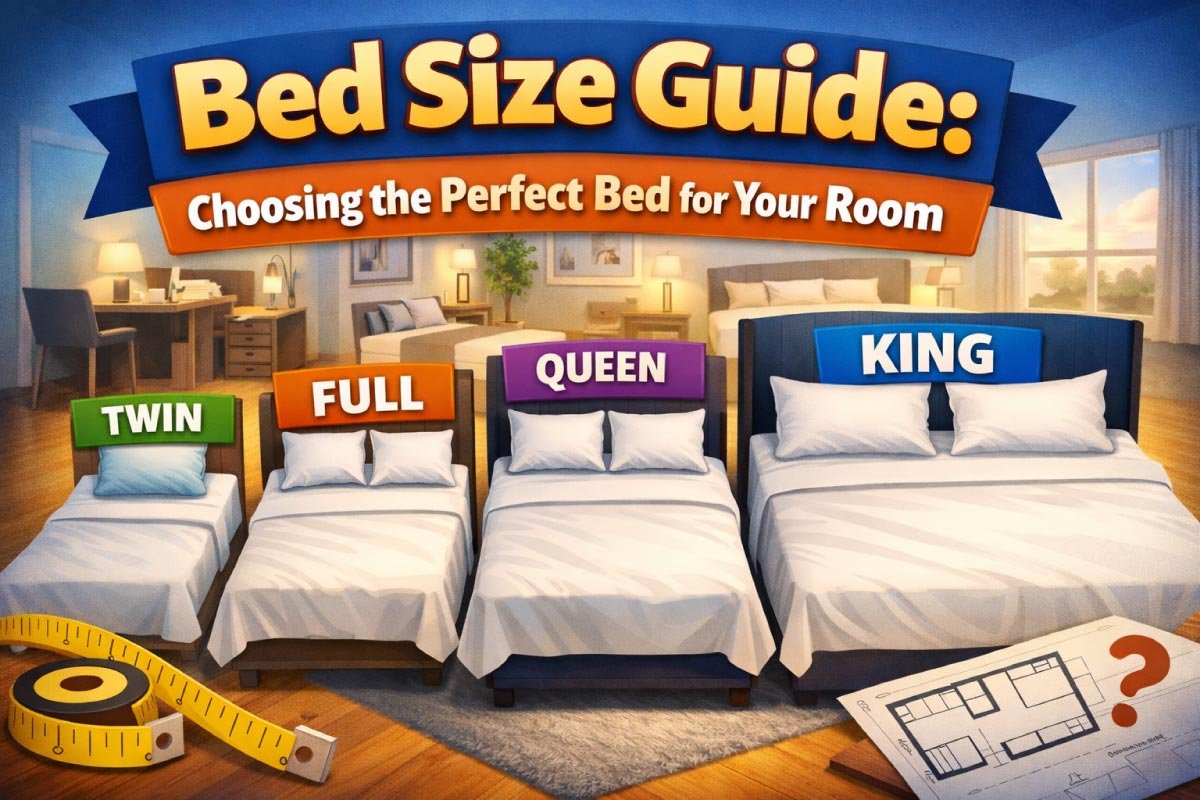
A good night’s sleep begins with the right bed. Choosing the proper bed size not only ensures comfort but also maximizes your room space efficiently.
Whether you’re shopping for a single sleeper, a couple, or a family, understanding standard bed sizes, dimensions, and suitable room layouts is essential.
This comprehensive guide covers all standard bed sizes, dimensions, and tips to select the perfect bed for your lifestyle and bedroom.
Standard Bed Sizes and Dimensions
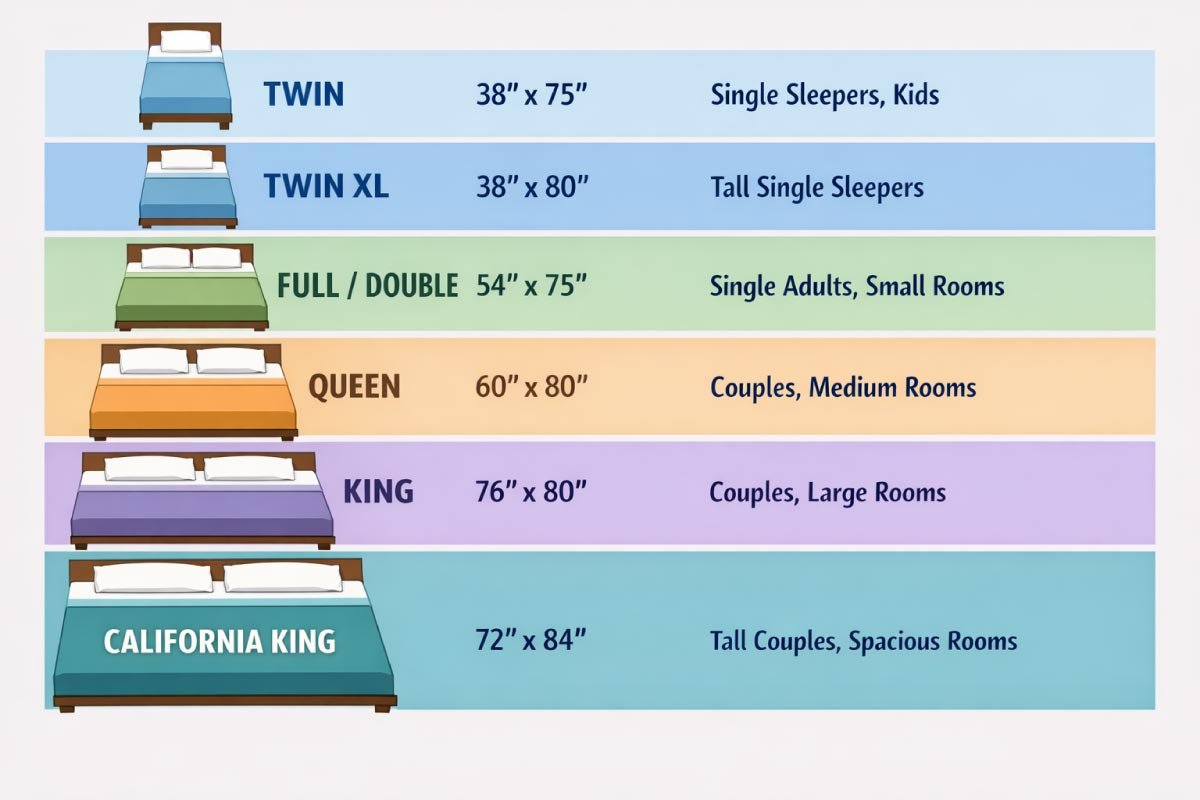
Beds come in various standard sizes, each designed to accommodate different numbers of sleepers and room layouts.
Understanding these dimensions helps avoid overcrowding your bedroom and ensures optimal comfort.
Bed sizes are usually defined by length and width, and they vary slightly depending on the country.
Standard Bed Sizes and Dimensions
This table provides an overview of standard bed sizes, their dimensions, and ideal usage.
From Twin to California King, understanding these measurements helps you select the right bed for your space,
sleeping needs, and comfort preferences, ensuring a perfect fit for any bedroom and sleeper.
| Bed Size | Width (inches) | Length (inches) | Ideal For |
|---|---|---|---|
| Twin | 38 | 75 | Single sleepers, kids |
| Twin XL | 38 | 80 | Tall single sleepers |
| Full / Double | 54 | 75 | Single adults, small rooms |
| Queen | 60 | 80 | Couples, medium rooms |
| King | 76 | 80 | Couples, large rooms |
| California King | 72 | 84 | Tall couples, spacious rooms |
A Twin bed is perfect for kids or guest rooms, while a Queen or King is ideal for couples seeking comfort. The California King, slightly longer than a standard King, is suited for taller individuals.
How to Choose the Right Bed Size
Choosing the right bed size is essential for comfort, functionality, and a well-balanced bedroom layout.
The ideal size supports restful sleep, fits your room without crowding, and matches your lifestyle. By evaluating space, sleepers, and daily habits,
you can select a bed that improves sleep quality and enhances your bedroom’s overall comfort and long-term satisfaction for years to come ahead.
1. Room Size and Layout
Start by measuring your bedroom’s length and width, noting doors, windows, and wardrobes.
Leave at least two to three feet of clearance around the bed for movement.
Adequate circulation prevents a cramped feel, allows easy cleaning, and ensures nightstands and dressers function comfortably without blocking pathways or restricting daily routines.
2. Number of Sleepers
Consider who will use the bed regularly. Solo sleepers often find Twin or Full sizes sufficient, while couples typically prefer Queen or King beds.
If children or pets frequently share the bed, upsizing improves comfort, reduces sleep disturbance, and provides each sleeper enough personal space throughout the night and early mornings.
3. Personal Comfort and Sleeping Style
Your sleeping position and comfort preferences influence bed size. Active sleepers who toss and turn benefit from wider beds, while taller individuals need extra length.
If you enjoy stretching out, reading, or relaxing in bed, a larger size supports better posture and uninterrupted rest for improved nightly recovery and relaxation.
4. Bedroom Furniture and Storage Needs
Think about existing furniture and storage requirements. Larger beds require proportional nightstands, benches, or wardrobes to maintain balance.
If your room includes built-in storage or under-bed drawers, ensure the chosen size allows easy access, smooth opening, and visual harmony across the space without crowding walkways or overpowering the layout.
5. Future Needs and Lifestyle Changes
Plan for future changes before finalizing a bed size. Moving homes, changing room layouts, or lifestyle shifts can affect suitability.
Choosing a slightly larger bed offers flexibility for guests, growing families, or evolving routines, helping your investment remain practical and comfortable over time while supporting better sleep consistency and long-term value.
Recommended Bed Size by Room Dimensions
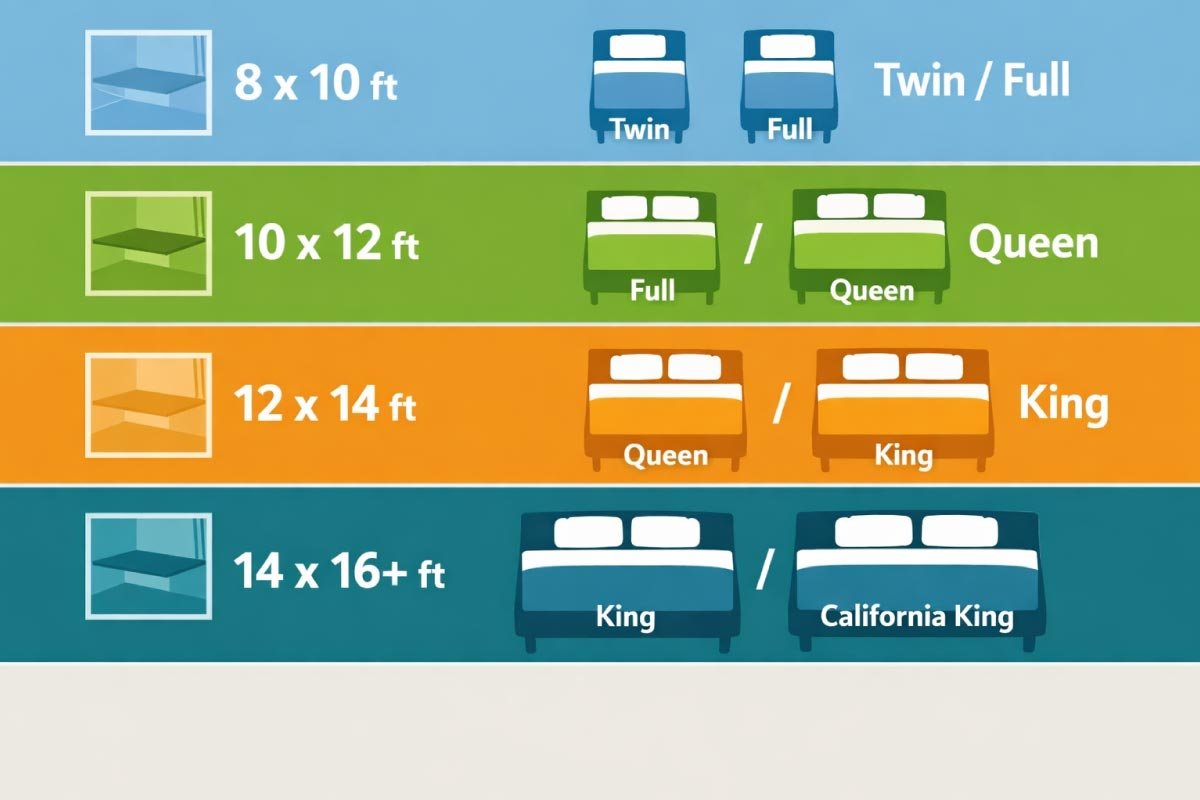
Choosing the right bed size depends not only on comfort but also on how well it fits your room.
Room dimensions determine movement space, furniture placement, and overall balance.
This table highlights recommended bed sizes based on common bedroom measurements to help you create a functional, comfortable sleeping environment.
| Room Size (feet) | Recommended Bed Size |
|---|---|
| 8 x 10 | Twin / Full |
| 10 x 12 | Full / Queen |
| 12 x 14 | Queen / King |
| 14 x 16+ | King / California King |
Twin vs Twin XL: Which One Should You Choose?
Twin and Twin XL beds are similar in width but differ in length. Twin beds are 75 inches long, while Twin XL beds add an extra 5 inches, making them 80 inches long. Twin XL beds are ideal for taller teens or adults who need more legroom.
Pros of Twin Beds:
-
Compact and space-saving
-
Ideal for small bedrooms or shared rooms
-
Affordable and easy to find
Pros of Twin XL Beds:
-
Extra length for taller sleepers
-
Perfect for college dorm rooms
-
Works well with standard full-sized bedding for flexibility
Twin vs Twin XL Comparison
This table compares Twin and Twin XL beds to show how a small difference in length can impact comfort and usability.
Although both share the same width, Twin XL offers extra legroom, making it a better choice for taller individuals and dorm settings, while Twin remains budget-friendly.
| Feature | Twin | Twin XL |
|---|---|---|
| Width (inches) | 38 | 38 |
| Length (inches) | 75 | 80 |
| Ideal For | Kids, Single adults | Tall singles, Dorms |
| Bedding Compatibility | Twin sheets | Twin XL sheets |
| Price Range | Lower | Slightly higher |
Full / Double Bed: Best for Single Adults
A Full bed, also called a Double bed, is wider than a Twin but shorter than a Queen.
It’s a great option for single adults who want extra space to sleep comfortably. While couples can use a Full bed, it may feel cramped for two adults.
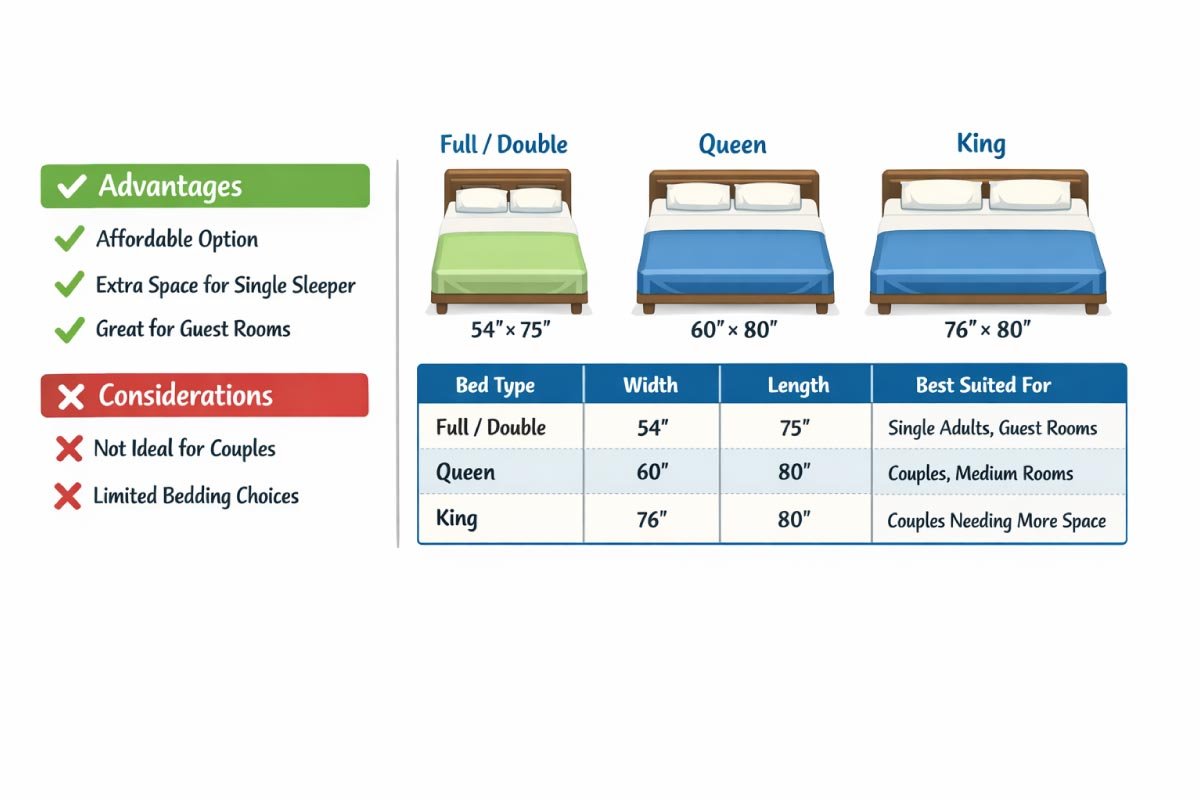
Advantages of Full Beds:
-
Affordable compared to larger beds
-
Provides extra space for a single sleeper
-
Suitable for guest rooms or small apartments
Considerations:
-
Not ideal for two adults for daily use
-
Limited bedding options compared to Queen or King beds
Double Bed Dimensions and Recommendations
This table highlights the key dimensions of Full/Double, Queen, and King beds to help you compare space, comfort, and suitability.
Understanding these differences makes it easier to choose the right bed for your needs, whether for solo sleeping, guest rooms, or couples seeking extra room.
| Bed Type | Width (inches) | Length (inches) | Best Suited For |
|---|---|---|---|
| Full / Double | 54 | 75 | Single adults, guest rooms |
| Queen | 60 | 80 | Couples, medium rooms |
| King | 76 | 80 | Couples needing more space |
Discover More:
Queen, King, and California King Beds
Larger bed sizes provide comfort, space, and flexibility for couples or individuals who enjoy extra room while sleeping.
Choosing the right size depends on bedroom dimensions, personal preferences, and lifestyle needs.
These beds accommodate different sleeping habits, body sizes, and even pets, ensuring restful and luxurious sleep.
-
Queen Bed: Most popular choice for couples. Offers enough space for two adults while fitting comfortably in medium-sized bedrooms.
-
King Bed: Offers maximum width for couples, allowing ample space for sleeping, lounging, or pets. Ideal for large master bedrooms.
-
California King: Slightly narrower but longer than a King, perfect for taller individuals. Offers extra legroom without overwhelming the room width-wise.
Queen, King, and California King Dimensions
When choosing between larger bed options, understanding the size differences is essential for comfort and room planning.
Queen, King, and California King beds vary in width and length, making each suitable for different sleeping needs, body heights, and bedroom sizes. This table compares their dimensions to help you decide.
| Bed Type | Width (inches) | Length (inches) | Best For |
|---|---|---|---|
| Queen | 60 | 80 | Couples, medium bedrooms |
| King | 76 | 80 | Couples, large bedrooms |
| California King | 72 | 84 | Tall couples, spacious rooms |
Discover More:
Custom and Specialty Bed Sizes
Custom and specialty bed sizes are ideal for bedrooms with unique layouts or for sleepers with specific comfort preferences.
These options go beyond standard dimensions, offering extra width, adjustable features, or distinctive shapes.
While they provide flexibility and luxury, they often require custom frames and bedding.
Popular Specialty Bed Sizes:
-
Olympic Queen: 66 x 80 inches, wider than standard Queen
-
Split King: Two Twin XL mattresses combined for adjustable beds
-
Round Beds: Usually 72–84 inches diameter, for modern luxury rooms
Specialty beds may require custom bedding, which can be more expensive. Always check mattress, frame, and bedding compatibility before buying.
Discover More:
Bed Frame Considerations
A bed frame plays a crucial role in both the appearance and practicality of your bed setup.
While standard bed sizes refer to the mattress only, frames can add several inches to overall width and length.
Choosing the right frame ensures comfort, accessibility, and efficient use of space
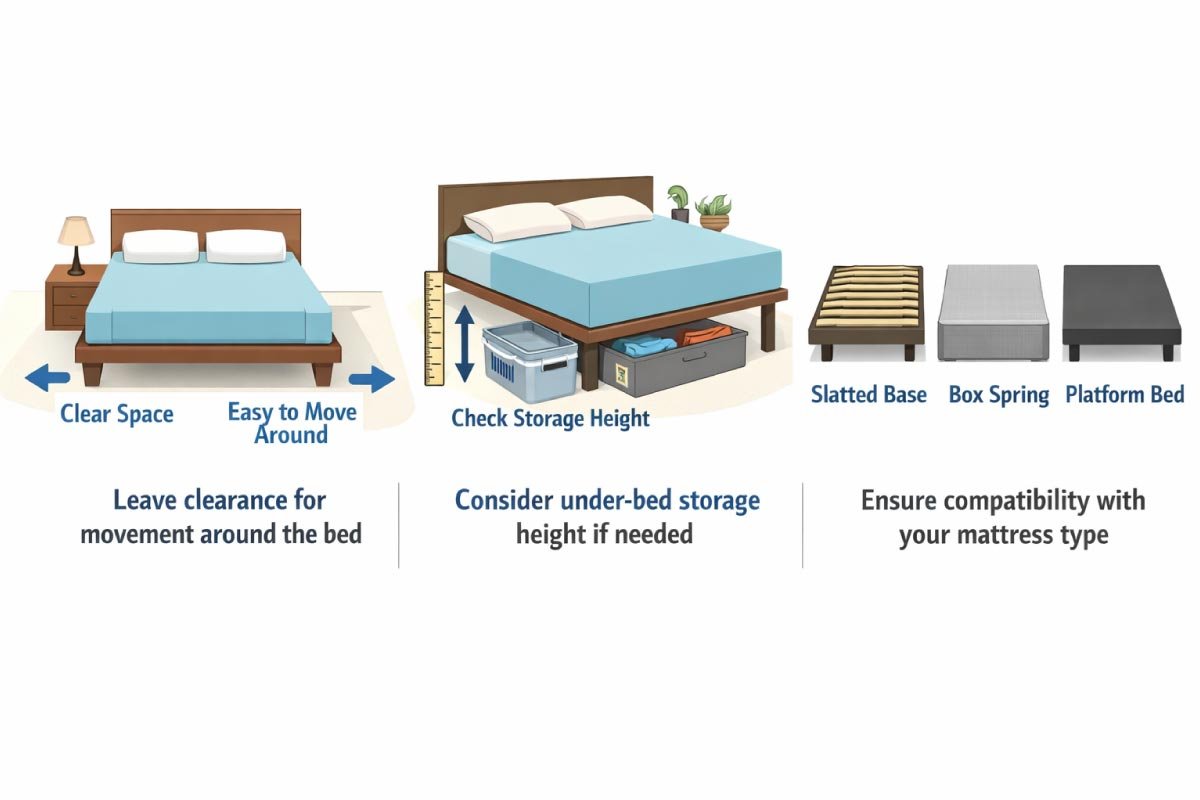
Key Points When Choosing a Bed Frame:
-
Leave clearance for movement around the bed
-
Consider under-bed storage height if needed
-
Ensure compatibility with your mattress type
Discover More:
Tips for Selecting the Perfect Bed
Selecting the perfect bed involves balancing size, comfort, and practicality.
Beyond measurements, factors like room layout, furniture placement, and future needs play a major role.
A well-chosen bed enhances sleep quality, supports your lifestyle, and ensures your bedroom remains functional and visually appealing.
Tips:
-
Measure Your Room First: Always measure before buying a bed to ensure it fits comfortably.
-
Account for Side Tables: Include space for nightstands and walking areas.
-
Consider Mattress Thickness: Some frames and headboards require thinner or thicker mattresses.
-
Think About Future Needs: Choose a size that works for long-term comfort and lifestyle changes.
Bedding and Accessories for Different Bed Sizes
Choosing the right bedding is just as important as selecting the bed itself.
Properly sized sheets, duvets, and accessories enhance comfort, improve sleep quality, and give your bedroom a neat, well-finished look.
Correct sizing also helps bedding stay in place and last longer.
Bedding Sizes:
-
Twin sheets fit Twin and Twin XL beds (XL requires slightly longer top sheet)
-
Full sheets for Full beds
-
Queen sheets for Queen beds
-
King sheets for King and California King beds (ensure length matches)
Conclusion
Selecting the right bed size is essential for comfort, sleep quality, and room aesthetics.
From Twin to California King, each bed size has unique advantages depending on the sleeper, room dimensions, and lifestyle.
Always measure your space, consider your needs, and choose a bed that balances comfort, style, and functionality.
Discover More:
