
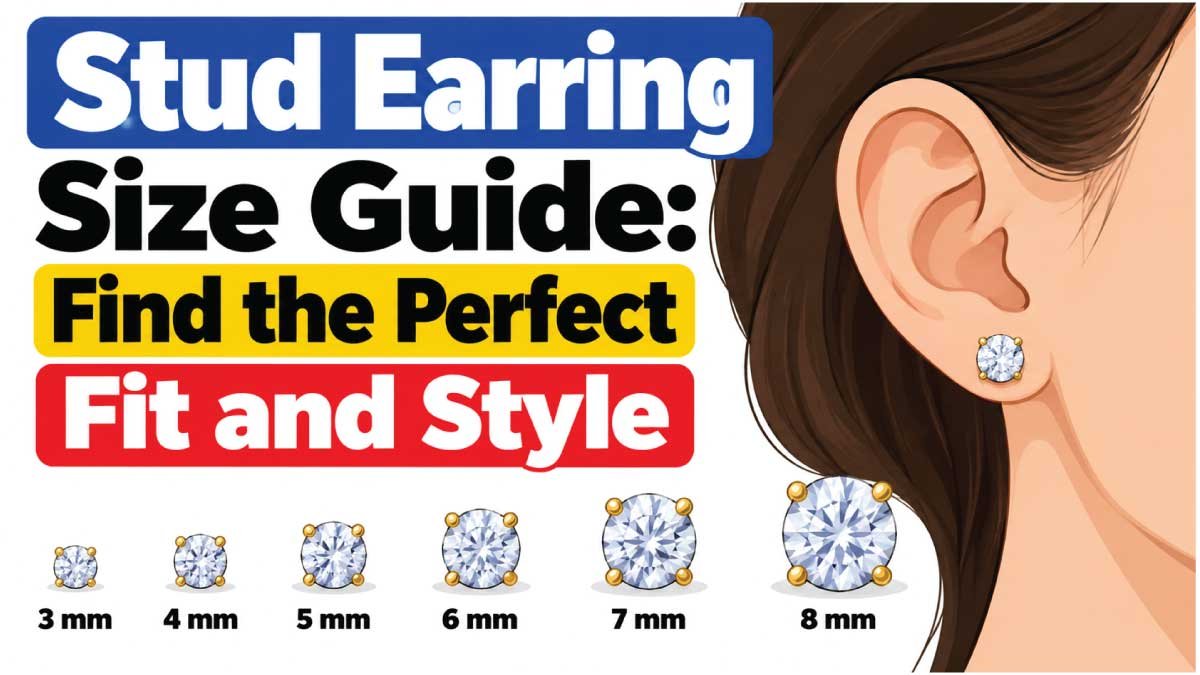
Stud earrings may be small, but choosing the right size can make a noticeable difference in comfort, appearance, and overall style. Whether you prefer tiny diamond studs, classic gold balls, sparkling gemstone earrings, or modern minimalist designs, understanding stud earring sizes helps you find a pair that suits your ears and personal preferences.
This stud earring size guide explains common stud diameters in millimeters, how different sizes look when worn, how to measure earrings, and how to select the right fit for everyday wear, special occasions, and multiple ear piercings. You will also learn how stud size differs from gemstone size, backing type, and post length so you can shop with greater confidence.
What Is Stud Earring Size?
Stud earring size generally refers to the diameter or width of the decorative front of an earring. Unlike hoop earrings, which are measured by their overall diameter, stud earrings are usually described by the diameter of their face in millimeters (mm).
For example, a round stud measuring 3 mm across has a smaller visible face than a 6 mm stud. The difference may seem minor on paper, but it can significantly affect how noticeable the earring looks on the earlobe.
Stud earring dimensions can refer to several different measurements:
Face diameter: The width of a round or circular stud’s decorative front.
Gemstone diameter: The width of the stone itself, excluding the surrounding metal setting.
Face width: The widest measurement of a square, oval, flower-shaped, or irregular stud.
Post length: The length of the metal pin that passes through the piercing.
Post thickness: The diameter of the post, which must be suitable for the piercing.
Understanding these measurements prevents confusion when comparing jewelry listings. A 4 mm gemstone, for instance, may have a slightly larger overall appearance when mounted in a metal setting.
Stud Earring Size Chart in Millimeters
The following stud earring size chart provides a practical overview of common decorative-face diameters and their typical appearance. These ranges are general shopping guidelines rather than fixed industry standards. The actual appearance depends on the design, setting, gemstone, and shape of your earlobe.
| Stud Size (mm) | Approximate Size (inches) | Typical Appearance | Common Use |
|---|---|---|---|
| 2 mm | 0.08 in | Tiny and subtle | Minimalist everyday wear |
| 3 mm | 0.12 in | Small and delicate | Work and casual outfits |
| 4 mm | 0.16 in | Noticeable but understated | Everyday diamond or gold studs |
| 5 mm | 0.20 in | Moderately prominent | Daily wear and versatile styling |
| 6 mm | 0.24 in | Clearly visible | Statement everyday studs |
| 7 mm | 0.28 in | Bold and eye-catching | Evening and fashion jewelry |
| 8 mm | 0.31 in | Large and prominent | Statement looks and special occasions |
| 9–10 mm | 0.35–0.39 in | Very noticeable | Bold decorative designs |
How to Read the Stud Earring Size Chart
A 2–3 mm stud usually creates a discreet appearance, while a 4–5 mm stud provides a more noticeable presence without necessarily looking oversized. Sizes around 6–8 mm can make the earrings a prominent part of an outfit.
Remember that millimeters measure the actual width, not how large the earring appears from every angle. A raised gemstone, thick bezel, or decorative halo can make a stud look larger than a flat design with the same listed diameter.
How Different Stud Earring Sizes Look on the Ear
Choosing the correct size becomes easier when you imagine how each measurement will look on your earlobe. The same stud may appear delicate on one person and more prominent on another because ear proportions vary.
2–3 mm Stud Earrings: Small and Subtle
Tiny stud earrings are suitable for people who prefer understated jewelry. Their compact size works well with professional clothing, relaxed outfits, and minimalist accessories.
These studs are commonly considered for:
- Discreet everyday jewelry.
- Small diamond or gemstone designs.
- Secondary and upper-ear piercings, when the jewelry is appropriate for the piercing.
- People who prefer a delicate appearance.
Their main limitation is visibility. Small stones and fine details may be difficult to notice from a distance.
4–5 mm Stud Earrings: Balanced and Versatile
Medium-small studs provide a balance between subtlety and visibility. They are a practical starting point if you want one pair that works with different outfits.
These sizes can suit round gemstone studs, simple gold or silver balls, and classic diamond-style designs. They are also useful when you want earrings that remain noticeable without dominating your overall appearance.
6–8 mm Stud Earrings: Bold and Noticeable
Larger studs create a stronger visual effect. They may feature prominent gemstones, decorative metal shapes, pearls, or detailed designs.
Consider this range if you want your earrings to stand out during social events, celebrations, or evening outings. However, the physical weight and setting height deserve attention, especially when the decorative face is large.
9–10 mm Stud Earrings: Statement Jewelry
Studs measuring around 9–10 mm across have a prominent appearance, although the effect depends on the design. Large floral shapes, geometric pieces, and decorative gemstone settings may fall into this category.
These earrings are not automatically uncomfortable, but weight, balance, and backing support become increasingly important. Try to evaluate the complete earring rather than choosing by face diameter alone.
How to Measure Stud Earring Size Correctly
If you already own earrings that fit well, measuring them can help you find a similar size when shopping online.
Method 1: Measure the Earring Face
You will need a metric ruler or digital caliper.
- Remove the earring and place it on a flat surface.
- Identify the widest part of the decorative front.
- Position the ruler across the face, passing through its center if it is round.
- Record the measurement in millimeters.
- For an irregular shape, measure both the width and height.
A digital caliper can provide a more precise reading than a standard ruler, particularly for tiny studs. Avoid squeezing delicate jewelry or gemstone settings while measuring.
Method 2: Measure the Visible Gemstone
If you are comparing diamond or gemstone studs, distinguish the stone’s diameter from the total setting size.
For example, a round gemstone might measure 4 mm across, while its surrounding metal setting measures 5 mm. Both measurements describe the same earring, but they refer to different parts.
Check the product description carefully to determine whether the advertised dimension refers to the stone, the setting, or the entire decorative face.
Method 3: Check the Post and Backing
The decorative face is only one part of earring sizing. The post passes through the piercing, while the backing keeps the earring in place.
Check the following details:
Post length: The available length behind the decorative face.
Post thickness: The post diameter, which should suit your piercing.
Backing design: Butterfly backs, screw backs, flat backs, and other closures have different shapes and space requirements.
Fit against the ear: The earring should not press painfully into the skin or leave the backing excessively loose.
If the jewelry is intended for a fresh piercing, professional piercer guidance is especially important because suitable jewelry dimensions may differ from those used for healed piercings.
Stud Earring Sizes for Different Ages and Preferences
Age alone does not determine the ideal stud size. Ear proportions, personal taste, jewelry weight, and the intended occasion are more useful considerations.
Stud Earrings for Children
Small, lightweight studs are often preferred for children because they create a simple appearance and avoid bulky designs. Smooth fronts and secure, properly fitted closures can also make daily wear easier.
Parents and caregivers should prioritize comfortable jewelry, appropriate materials, and secure construction rather than selecting a size based only on appearance. Avoid oversized or heavy earrings that may catch on clothing or pull on the earlobe.
For babies and young children, professional guidance about piercing care, suitable jewelry, and age-appropriate safety is important.
Stud Earrings for Teenagers
Teenagers may prefer anything from tiny minimalist studs to colorful gemstone designs. A 3–5 mm face can provide a versatile everyday look, while larger options may suit individual fashion preferences.
For multiple piercings, smaller studs can create a coordinated arrangement without making the ear look crowded.
Stud Earrings for Adults
Adults can choose from subtle 2–3 mm designs, versatile 4–5 mm styles, or larger statement pieces. Workplace expectations, wardrobe preferences, and comfort during long periods of wear may influence the decision.
There is no universal rule that adults should wear larger studs. The best size is the one that suits the wearer and the occasion.
Also Read:
How to Choose the Right Stud Earring Size
The ideal stud earring size depends on more than the millimeter measurement. Consider how the jewelry will look, feel, and function throughout the day.
Consider Your Earlobe Proportions
Small studs can look particularly delicate on larger earlobes, while the same design may appear more prominent on smaller earlobes. This does not mean one size is correct for a particular ear shape.
If you want a subtle look, choose a face that occupies only a small portion of the visible earlobe. If you prefer a bold look, consider a wider decorative face while keeping the weight comfortable.
Match the Size to Your Lifestyle
Your daily activities can help determine the most practical choice.
Office or school: Small to medium studs are often easy to coordinate with everyday clothing.
Casual wear: Medium-sized gold, silver, or gemstone studs offer flexibility.
Formal events: Larger gemstones or decorative designs can create a more prominent appearance.
Sports and physical activities: Removing earrings when appropriate or following activity-specific safety guidance can help reduce snagging and injury risks.
Avoid choosing heavy jewelry solely because it looks attractive. Comfort and secure fit matter just as much as style.
Think About the Jewelry Material
The material affects appearance, durability, maintenance, and suitability for sensitive ears. Common options include gold, sterling silver, platinum, titanium, and stainless steel.
People with metal sensitivities should pay attention to the exact alloy and any nickel content rather than assuming that a particular color or finish guarantees suitability. For new piercings, choose jewelry materials and designs recommended by a qualified professional.
Check the Setting Style
The same gemstone size can appear different depending on its setting.
Prong settings: Hold the gemstone with small metal claws and allow much of the stone to remain visible.
Bezel settings: Surround the gemstone with a metal rim, often increasing the overall face width.
Halo settings: Place smaller stones around a central gemstone, creating a larger overall appearance.
Flat decorative settings: Feature a relatively low-profile front that may be less prominent from the side.
When comparing sizes, look at the overall dimensions and profile, not just the gemstone measurement.
Also Read:
Stud Earring Size Comparison by Style
Different stud designs can create different visual effects even when their dimensions are similar. The following comparison can help you narrow down your options.
| Stud Style | Common Size Range | Visual Effect | Best Suited For |
|---|---|---|---|
| Diamond studs | 2–6 mm | Classic sparkle | Everyday and formal wear |
| Gold ball studs | 2–6 mm | Simple and polished | Minimalist styling |
| Pearl studs | 4–8 mm | Soft and elegant | Classic and dressy outfits |
| Gemstone studs | 3–7 mm | Colorful and distinctive | Casual or occasion wear |
| Geometric studs | 4–10 mm | Modern and structured | Contemporary outfits |
| Floral studs | 5–10 mm | Decorative and expressive | Fashion-focused styling |
These ranges are examples of commonly encountered design sizes, not universal limits. A particular style may be available in smaller or larger dimensions.
Diamond Stud Earring Size Guide
Diamond stud earrings deserve special attention because gemstone weight and physical diameter are often confused. Carat measures gemstone weight, while millimeters describe its physical dimensions.
Two diamonds with the same carat weight can have different face-up diameters because of differences in cut proportions, shape, and depth. The final appearance also depends on the mounting.
The following table gives broad examples of approximate face-up diameters for round diamonds. These are illustrative ranges rather than guaranteed dimensions for every stone.
| Approximate Total Carat Weight | Approximate Diameter per Round Diamond | Typical Appearance |
|---|---|---|
| 0.10 ct total | About 1.5–2 mm | Very delicate |
| 0.25 ct total | About 2–3 mm | Small and subtle |
| 0.50 ct total | About 3–4 mm | Noticeable but modest |
| 1.00 ct total | About 4–5 mm | Prominent classic style |
| 2.00 ct total | About 5–6.5 mm | Bold and eye-catching |
Important: Total carat weight usually refers to both earrings combined when describing a pair of diamond studs. For example, a pair with 1.00 carat total weight generally contains approximately 0.50 carat in each diamond, not 1.00 carat per earring.
Actual measurements vary with diamond proportions and the specific product. Check whether a listing states the weight per stone or the combined weight of the pair.
Also Read:
Choosing Stud Earrings for Multiple Ear Piercings
Multiple piercings allow you to combine different stud sizes for a balanced, personalized arrangement. The goal is to create visual variety without overcrowding the ear or compromising comfort.
Create a Graduated Size Arrangement
One approach is to wear a larger stud in the main lobe piercing and progressively smaller pieces in additional piercings.
For example, you might combine a 5 mm lobe stud with 3 mm and 2 mm studs in other suitable piercings. These measurements are styling examples, not requirements.
Coordinate Shapes and Materials
You do not need every earring to be identical. A coordinated arrangement can combine different shapes while maintaining a consistent metal color or visual theme.
Consider these combinations:
- Small gold balls paired with a delicate gemstone stud.
- A medium diamond-style stud paired with smaller matching stones.
- A pearl stud combined with understated metal accents.
- Geometric studs in different sizes for a contemporary look.
Leave Enough Visual Space
Large decorative fronts can overlap visually when piercings sit close together. If the studs touch, press against one another, or interfere with neighboring jewelry, choose smaller faces or a different arrangement.
For cartilage and other non-lobe piercings, jewelry length, thickness, and placement are especially important. Do not assume that a standard lobe stud will fit every piercing.
Common Stud Earring Sizing Mistakes to Avoid
Even a well-designed pair of earrings may disappoint if you misunderstand the measurements or overlook comfort.
Confusing Millimeters With Carats
Millimeters describe physical dimensions, while carats measure gemstone weight. Neither measurement can replace the other.
When shopping for diamonds, check both the stated carat weight and the physical diameter if available.
Ignoring the Metal Setting
A gemstone’s diameter does not always equal the complete earring’s width. A surrounding bezel, halo, or decorative border can increase the face size.
Compare total dimensions when you want a particular visual appearance.
Choosing a Size Without Considering Weight
A large stud may look attractive but feel uncomfortable during extended wear if the complete earring is heavy. The metal, stone, and setting all contribute to weight.
For frequent use, consider a design that balances appearance with a comfortable load on the earlobe.
Overlooking Post Length and Backing Fit
A post that is too short may press the backing against the ear, while an unsuitable closure may feel loose or bulky. Post thickness also matters because the jewelry must be compatible with the piercing.
If the earring causes persistent pain, swelling, or pressure, remove it when safe to do so and seek appropriate professional advice. Do not force jewelry through a piercing that feels tight or painful.
Assuming Every Brand Measures the Same Way
Product descriptions may list gemstone diameter, decorative-face diameter, or the total width of an irregular design. Always confirm which measurement is being provided.
If the listing is unclear, ask the seller for the face dimensions and, when relevant, the post length, thickness, and earring weight.
Frequently Asked Questions About Stud Earring Sizes
What is the most common stud earring size?
Stud earrings are available in many sizes, but approximately 3–5 mm is a useful range to explore for versatile everyday styles. The right size depends on the design, ear proportions, and personal preference.
Are 3 mm stud earrings too small?
No. A 3 mm stud can create a delicate, understated appearance and may be suitable for everyday wear or coordinated multiple-piercing arrangements. Whether it looks too small depends on the wearer’s preferred style.
Are 5 mm stud earrings considered large?
A 5 mm stud is generally a medium-sized option. It is more noticeable than a 2–3 mm stud but usually less prominent than a 7–10 mm decorative design.
What size stud earrings are best for everyday wear?
Sizes around 3–5 mm are practical starting points for everyday jewelry. Lightweight construction, comfortable backing, and suitable materials are equally important when selecting a pair for extended wear.
How do I know what size diamond studs to buy?
Consider the combined carat weight, the diameter of each diamond, the total setting width, and the desired appearance. If you want a subtle style, explore smaller stones. If you want more visible sparkle, compare larger diameters and check the complete earring weight.
Can I sleep in stud earrings?
Sleeping in earrings can cause pressure, irritation, or snagging, depending on the design and sleeping position. Flat-backed, low-profile jewelry may reduce protrusion, but it does not eliminate every risk. Follow professional piercing-care advice, especially for healing piercings.
What is the difference between stud size and post length?
Stud size generally describes the width of the decorative front, whereas post length describes the metal section that passes through the piercing. A large stud can have a short post, and a small stud can have a longer post. Both measurements matter when choosing suitable jewelry.
Which stud earring size is best for children?
Small, lightweight studs are often preferred for children, but the correct choice depends on the child’s age, piercing condition, comfort, and jewelry construction. Secure fit, suitable materials, and supervision are more important than selecting a specific millimeter measurement.
Do larger stud earrings always look better?
No. Larger studs attract more attention, while smaller studs can create a refined, subtle appearance. The best size is the one that matches your desired look and remains comfortable to wear.
Conclusion
The best stud earring size balances appearance, comfort, and practicality. Small 2–3 mm studs offer a delicate look, 4–5 mm designs provide versatile everyday styling, and larger 6–10 mm studs create a more prominent statement.
Before buying, compare the decorative-face diameter, gemstone dimensions, setting width, post length, backing style, and overall weight. For diamond studs, distinguish carat weight from millimeter measurements and confirm whether the stated carat total applies to one stone or the entire pair.
By understanding these details, you can use this stud earring size guide to choose earrings that complement your style, suit your piercings, and feel comfortable for the occasions in which you plan to wear them.
