
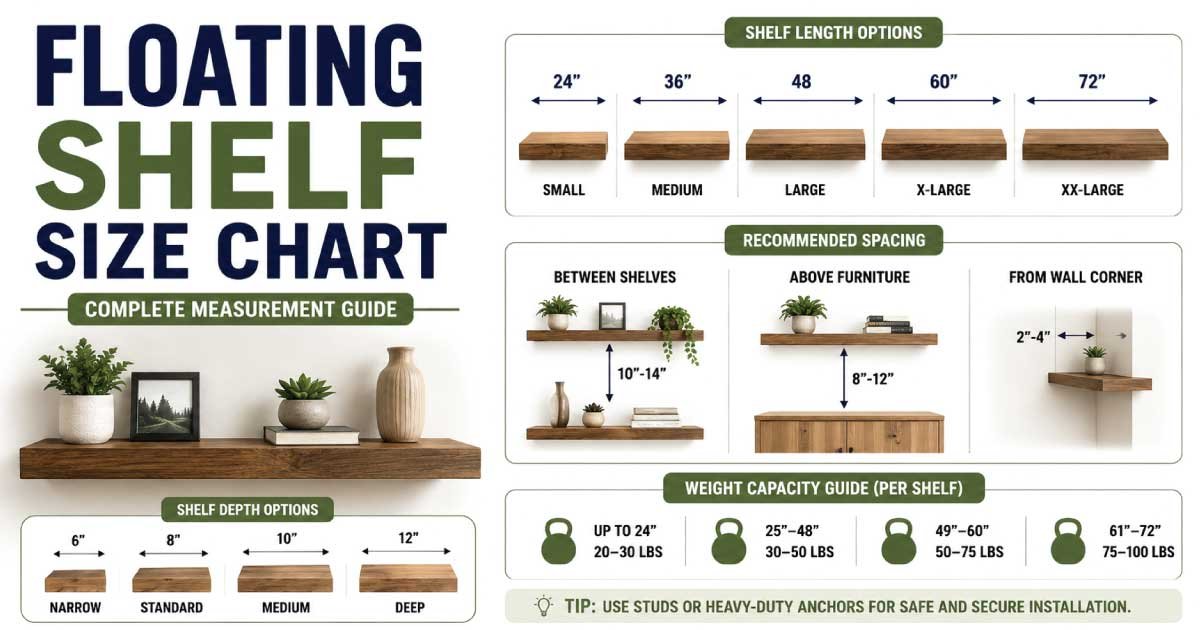
Floating shelves are a stylish and space-saving storage solution for living rooms, bedrooms, kitchens, bathrooms, offices, and entryways. Unlike traditional shelving, floating shelves use concealed brackets that create a clean, modern appearance while providing practical storage and display space. Choosing the correct floating shelf size ensures it complements your room, safely supports its intended load, and fits proportionally within the available wall space.
This complete guide includes a detailed Floating Shelf Size Chart, standard dimensions, weight capacities, installation recommendations, spacing guidelines, and expert buying tips to help you choose the perfect floating shelves for your home.
Floating Shelf Size Chart
| Floating Shelf Type | Length | Depth | Thickness | Weight Capacity |
|---|---|---|---|---|
| Small Shelf | 12–24 inches | 6–8 inches | 1.5–2 inches | 15–30 lbs |
| Medium Shelf | 24–36 inches | 8–10 inches | 1.5–2 inches | 30–50 lbs |
| Standard Shelf | 36–48 inches | 10–12 inches | 2 inches | 40–75 lbs |
| Large Shelf | 48–60 inches | 10–12 inches | 2–2.5 inches | 50–100 lbs |
| Extra Large Shelf | 60–72 inches | 12–14 inches | 2–3 inches | 75–150 lbs |
Standard Floating Shelf Dimensions
Standard Floating Shelf Length
Shelf length determines how much storage and display space is available. Short shelves work well for decorative items, while longer shelves can hold books, kitchen supplies, and larger décor pieces. Most floating shelves range from 12 to 72 inches in length.
| Shelf Size | Length |
|---|---|
| Extra Small | 12 inches |
| Small | 18–24 inches |
| Medium | 30–36 inches |
| Standard | 42–48 inches |
| Large | 60–72 inches |
Standard Floating Shelf Depth
Shelf depth affects the types of items that can be stored. Shallow shelves are ideal for photographs and decorative accessories, while deeper shelves accommodate books, dishes, and storage baskets.
| Shelf Type | Depth |
|---|---|
| Decorative Shelf | 6 inches |
| Standard Shelf | 8 inches |
| Storage Shelf | 10 inches |
| Kitchen Shelf | 12 inches |
| Heavy-Duty Shelf | 12–14 inches |
Standard Floating Shelf Thickness
Shelf thickness contributes to both appearance and structural strength. Thicker shelves generally support more weight while creating a premium look.
| Shelf Style | Thickness |
|---|---|
| Slim Shelf | 1–1.5 inches |
| Standard Shelf | 1.5–2 inches |
| Heavy-Duty Shelf | 2–3 inches |
Floating Shelf Size by Room
Living Room Floating Shelves
Living room shelves are commonly used to display books, artwork, family photos, candles, and decorative accessories. Medium to large shelves provide a balanced appearance above sofas, consoles, or entertainment centers.
Typical dimensions include:
- Length: 36–60 inches
- Depth: 8–12 inches
- Thickness: 2 inches
Kitchen Floating Shelves
Kitchen floating shelves offer convenient storage for dishes, mugs, spices, cookware, and decorative containers. Deeper shelves provide additional storage while maintaining easy access.
Typical dimensions:
- Length: 24–48 inches
- Depth: 10–12 inches
- Thickness: 2 inches
Bathroom Floating Shelves
Bathroom shelves are ideal for towels, toiletries, candles, and decorative accents. Compact dimensions help maximize storage without overwhelming smaller spaces.
Typical dimensions:
- Length: 18–30 inches
- Depth: 6–8 inches
- Thickness: 1.5–2 inches
Bedroom Floating Shelves
Bedroom floating shelves provide space for books, alarm clocks, framed photographs, plants, and decorative items. They are often installed above beds, dressers, or desks.
Typical dimensions:
- Length: 24–48 inches
- Depth: 8–10 inches
- Thickness: 1.5–2 inches
Office Floating Shelves
Office shelves organize books, office supplies, awards, and decorative accessories while keeping desks clutter-free.
Typical dimensions:
- Length: 30–48 inches
- Depth: 10–12 inches
- Thickness: 2 inches
Floating Shelf Weight Capacity Chart
Weight capacity depends on shelf construction, mounting hardware, and wall material.
| Shelf Length | Average Capacity |
|---|---|
| 12–24 inches | 15–30 lbs |
| 24–36 inches | 30–50 lbs |
| 36–48 inches | 40–75 lbs |
| 48–60 inches | 50–100 lbs |
| 60–72 inches | 75–150 lbs |
Proper installation into wall studs significantly increases weight capacity.
Floating Shelf Installation Height
Recommended Shelf Height by Room
Installing shelves at the correct height improves accessibility and appearance.
| Room | Recommended Height from Floor |
|---|---|
| Living Room | 54–72 inches |
| Kitchen | 18–24 inches above countertop |
| Bathroom | 48–60 inches |
| Bedroom | 48–60 inches |
| Office | 54–66 inches |
Always adjust installation height based on furniture placement and intended use.
Spacing Between Floating Shelves
When installing multiple shelves, maintain consistent spacing for a balanced look.
| Shelf Purpose | Vertical Spacing |
|---|---|
| Decorative Display | 10–12 inches |
| Books | 12–15 inches |
| Storage Baskets | 15–18 inches |
| Kitchen Storage | 14–16 inches |
Adequate spacing ensures items remain easy to access.
⏩ Detailed Measurement Guide 👉 Buffet Cabinet Size Chart: Easy Measurement Guide
Floating Shelf Materials
Solid Wood Floating Shelves: Solid wood shelves offer excellent durability and natural beauty. They complement farmhouse, rustic, traditional, and modern interiors while supporting moderate to heavy loads.
Engineered Wood Floating Shelves: Engineered wood shelves provide an affordable alternative with a wide range of finishes that resemble natural wood while resisting warping.
Metal Floating Shelves: Metal shelves offer exceptional strength and a sleek industrial appearance. They are ideal for garages, offices, kitchens, and modern homes.
Glass Floating Shelves: Glass shelves create an elegant, minimalist look and are commonly used in bathrooms and display areas for decorative items.
How to Choose the Right Floating Shelf Size
Measure Available Wall Space: Measure the wall carefully before purchasing shelves. Leave enough room around windows, doors, artwork, and furniture to maintain visual balance.
Determine Storage Needs: Consider what the shelf will hold. Decorative objects require less depth, while books, dishes, and baskets need deeper, stronger shelves.
Choose Proper Weight Capacity: Select shelves that comfortably support the expected load. Heavy books and kitchenware require reinforced brackets and stronger construction.
Match the Room Style: Choose materials and finishes that coordinate with your furniture, flooring, and wall colors for a cohesive interior design.
Floating Shelf vs. Traditional Shelf
| Feature | Floating Shelf | Traditional Shelf |
|---|---|---|
| Visible Brackets | No | Yes |
| Modern Appearance | Excellent | Good |
| Space Saving | Excellent | Good |
| Installation | Moderate | Easy |
| Decorative Appeal | High | Moderate |
Floating shelves provide a cleaner, more contemporary appearance while maximizing wall space.
Benefits of Properly Sized Floating Shelves
Selecting the correct floating shelf size provides numerous advantages.
- Maximizes vertical storage
- Saves floor space
- Enhances wall décor
- Organizes books and accessories
- Creates a modern appearance
- Displays artwork and collectibles
- Improves room organization
- Works in nearly every room
- Increases storage flexibility
- Adds value to interior design
⏩ Detailed Measurement Guide 👉 Sideboard Size Chart: Standard Sizes for Every Room
Common Floating Shelf Buying Mistakes
Avoid these common mistakes when selecting floating shelves:
- Buying shelves that are too deep for the room
- Ignoring wall stud locations
- Choosing insufficient weight capacity
- Installing shelves too high
- Overloading shelves
- Selecting incorrect spacing between shelves
- Forgetting nearby electrical outlets or switches
- Choosing finishes that don’t match existing décor
Proper planning helps ensure a safe and attractive installation.
Floating Shelf Maintenance Tips
Regular maintenance keeps floating shelves looking beautiful and functioning safely.
- Dust shelves weekly.
- Tighten mounting hardware periodically.
- Avoid exceeding weight limits.
- Clean surfaces with suitable products.
- Distribute heavy objects evenly.
- Inspect brackets for stability.
- Keep shelves dry in humid areas.
- Rearrange decorative items occasionally to prevent uneven loading.
Routine maintenance extends both appearance and structural integrity.
Conclusion
Choosing the correct floating shelf size is essential for creating attractive, organized, and functional storage throughout your home. By selecting the appropriate length, depth, thickness, and weight capacity while maintaining proper installation height and spacing, you can maximize both style and usability. Whether you’re displaying decorative accessories in the living room, organizing kitchen essentials, or creating additional storage in a home office, the size charts and recommendations in this guide will help you find the perfect floating shelves for your space.
⏩ Detailed Measurement Guide 👉 Table Height Size: Complete Guide with Size Charts
FAQs:
What is the standard size of a floating shelf?
A standard floating shelf usually measures 36 to 48 inches in length, 8 to 12 inches in depth, and around 2 inches thick. These dimensions work well for most homes, providing enough space for displaying books, décor items, plants, and small storage essentials.
How deep should a floating shelf be?
Most floating shelves have a depth of 8 to 12 inches, depending on their intended use. Shallow shelves are ideal for artwork and decorations, while deeper shelves are better for books, kitchen items, and larger display pieces requiring extra surface space.
How much weight can a floating shelf hold?
A properly installed floating shelf can typically support 30 to 75 pounds, depending on the shelf material, bracket design, and wall type. Heavy-duty shelves secured directly into wall studs can often hold 100 pounds or more when installed correctly.
How far apart should floating shelves be?
Floating shelves should generally be spaced 10 to 15 inches apart vertically for displaying décor, photos, and books. If you plan to store larger items, allow 15 to 18 inches between shelves to provide enough room and maintain easy access.
Should floating shelves be installed into wall studs?
Yes, installing floating shelves into wall studs is the best method for maximum strength and stability. Stud mounting provides better support than drywall anchors alone and helps prevent sagging or damage when storing heavier items like books, kitchenware, or collectibles.
