
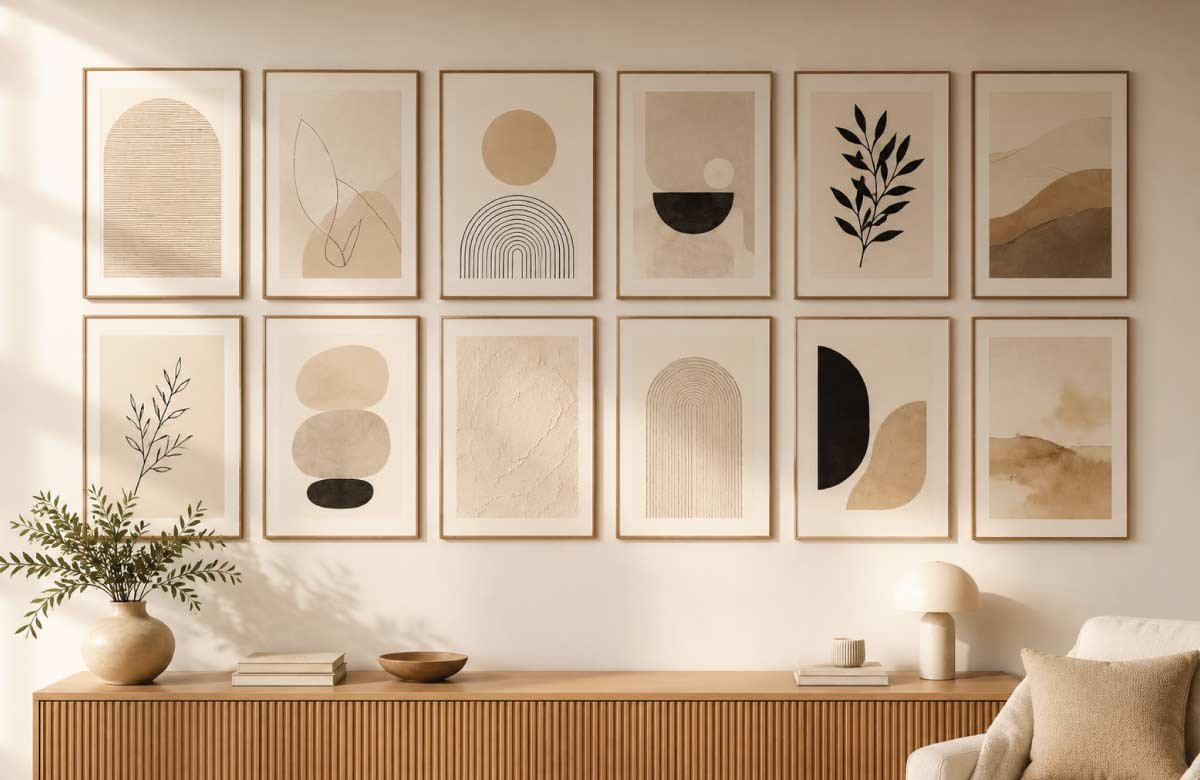
Minimalism is not about emptiness it’s about intention. In a minimalist living room, every element serves a purpose, and art plays a vital role in shaping the atmosphere. Minimalist living room art enhances a space without overwhelming it, using simplicity, balance, and restraint to create a sense of calm and sophistication.
Choosing art for a minimalist interior requires thoughtful consideration. The goal isn’t to fill walls but to complement the architecture, furniture, and natural flow of the room. Below are 12 minimalist living room art ideas that embrace simplicity while adding depth, character, and quiet elegance.
1. Single Large-Scale Minimalist Artwork
A single large-scale minimalist artwork creates a powerful focal point in a living room while preserving a clean and uncluttered aesthetic. Instead of multiple decorative elements, one well-chosen piece defines the space and enhances visual balance. It works best in modern interiors where simplicity, openness, and intentional design are priorities.
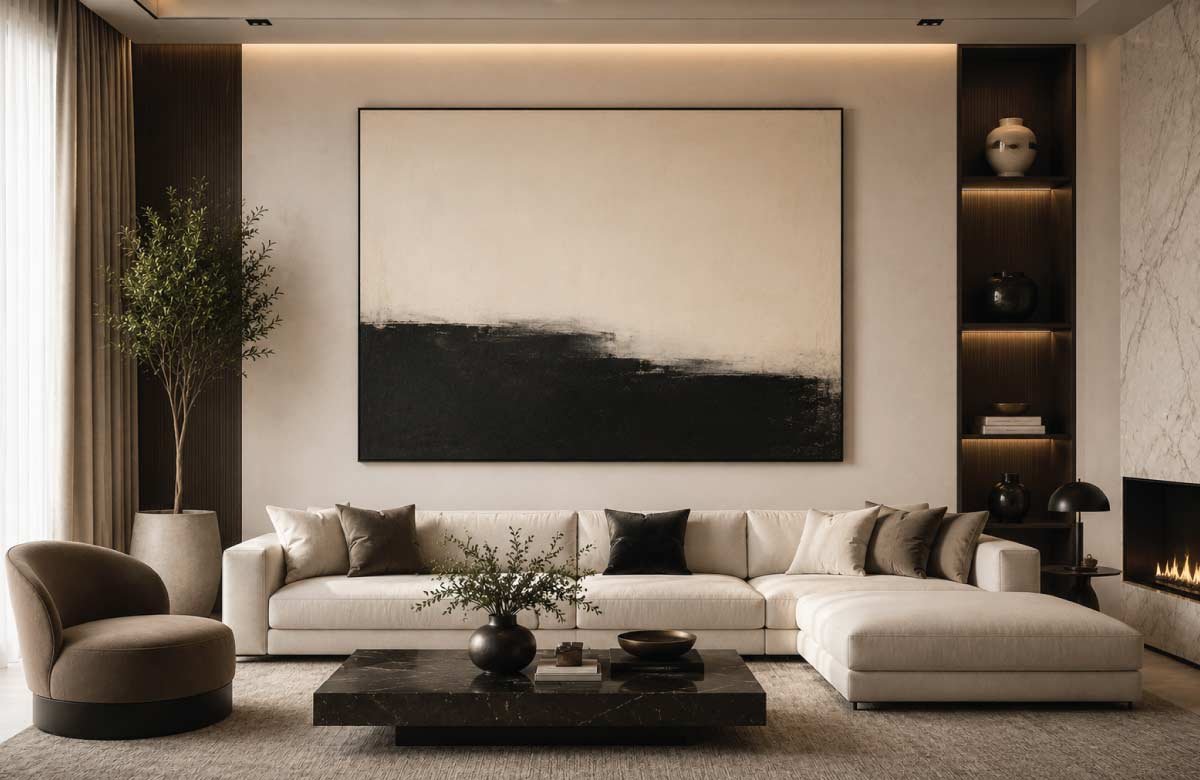
- Anchors living room space with strong yet simple visual focal presence
- Maintains clean uncluttered aesthetic suitable for modern minimalist interior styles
- Works best above sofas fireplaces or main feature wall areas effectively
- Enhances spatial balance without introducing unnecessary decorative visual distractions inside
- Creates elegant statement through simplicity subtle form and refined composition
Personal experience
I have observed that a single large minimalist artwork often makes living rooms feel more organized and intentional. It removes visual clutter and helps the entire space feel calmer, more structured, and thoughtfully designed.
2. Neutral Color Palette Art
Art in neutral tones such as white, beige, soft gray, taupe, or muted earth shades fits seamlessly into minimalist living rooms. These colors promote calmness and allow the space to feel open and airy.
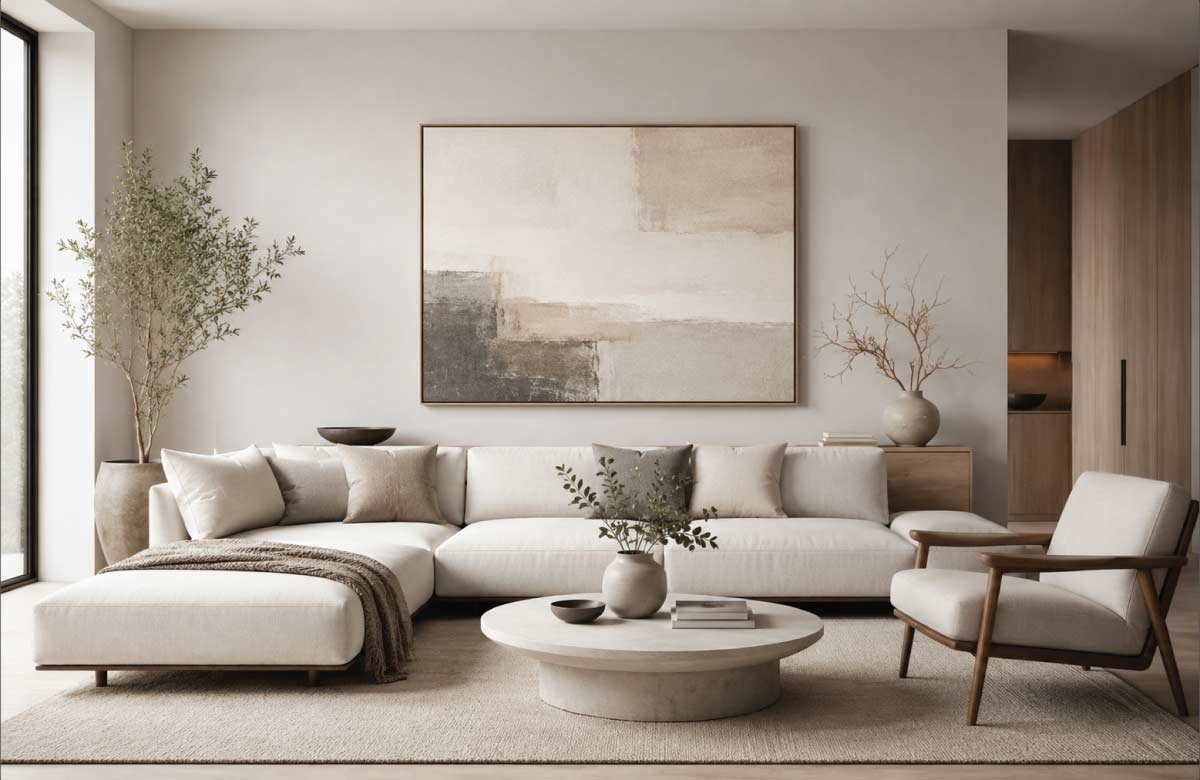
Neutral color palette art uses soft tones like beige, white, gray, and muted earth shades to create a calm and balanced living room environment. This style blends seamlessly with minimalist interiors, emphasizing harmony and openness while allowing furniture and architectural features to remain visually prominent and uncluttered.
- Promotes calm atmosphere using soft muted and balanced neutral color tones
- Enhances openness by blending seamlessly with minimalist interior design spaces effectively
- Emphasizes texture form and composition instead of bold color distractions visually
- Supports cohesive interior styling with furniture and architectural room elements present
- Creates timeless aesthetic suitable for modern Scandinavian and minimalist homes styles
Personal experience
I have seen neutral palette art consistently make living rooms feel more spacious and peaceful. It often supports a soft visual flow that makes the entire environment feel more relaxing and naturally balanced.
3. Abstract Minimalist Art
Minimalist abstract art strips down visual elements to their essentials. Soft brushstrokes, subtle contrasts, and open space define this style.
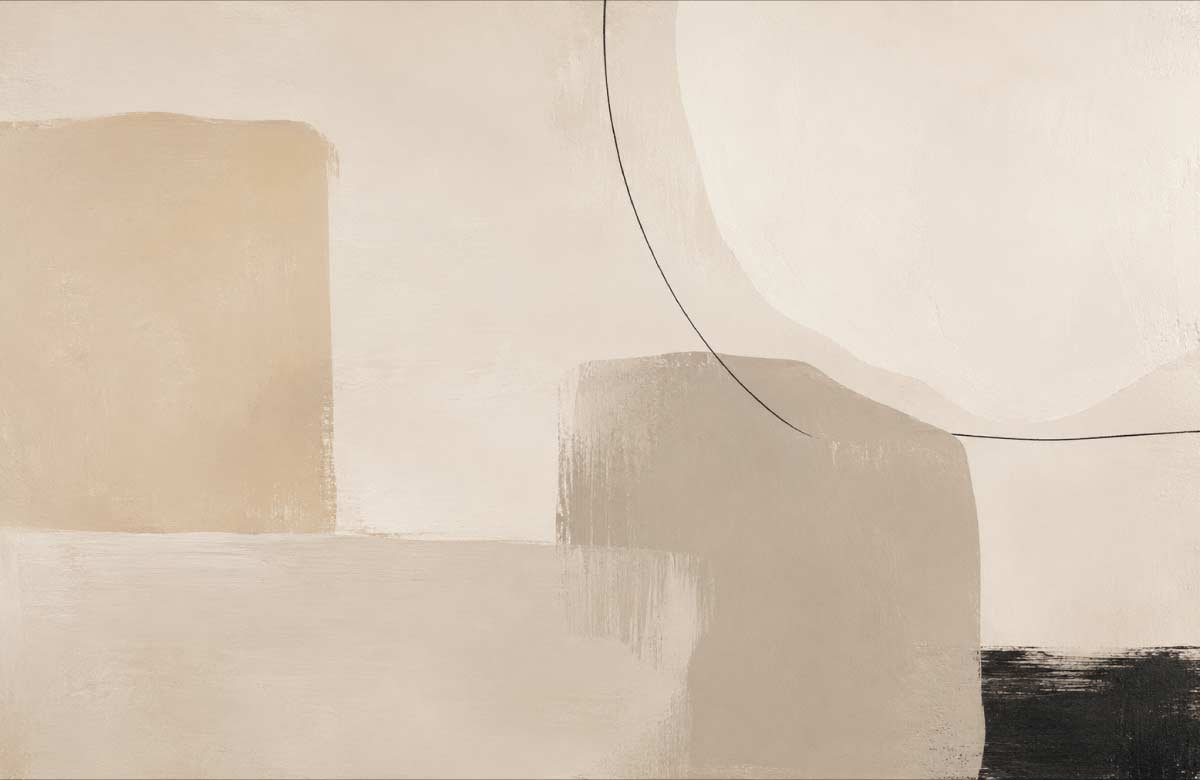
Abstract minimalist art focuses on essential visual elements such as soft shapes, subtle brushstrokes, and open space to create a refined and understated aesthetic. In living rooms, it adds quiet artistic depth without overpowering the environment, making it ideal for interiors that value simplicity and visual clarity.
- Uses simple shapes and soft brushstrokes for refined visual expression style
- Maintains open space to enhance calm balanced living room environment design
- Adds subtle artistic depth without overwhelming minimalist interior composition structure
- Works well with modern clean lined furniture and neutral décor themes
- Enhances sophistication through restraint simplicity and balanced visual composition style
Personal experience
I have noticed abstract minimalist art brings a quiet elegance to living rooms. It never competes for attention but instead supports the overall atmosphere, making the space feel more thoughtful and visually calm.
4. Black and White Minimalist Art
Black and white artwork is a classic choice for minimalist interiors. The contrast adds structure while maintaining clarity and restraint.
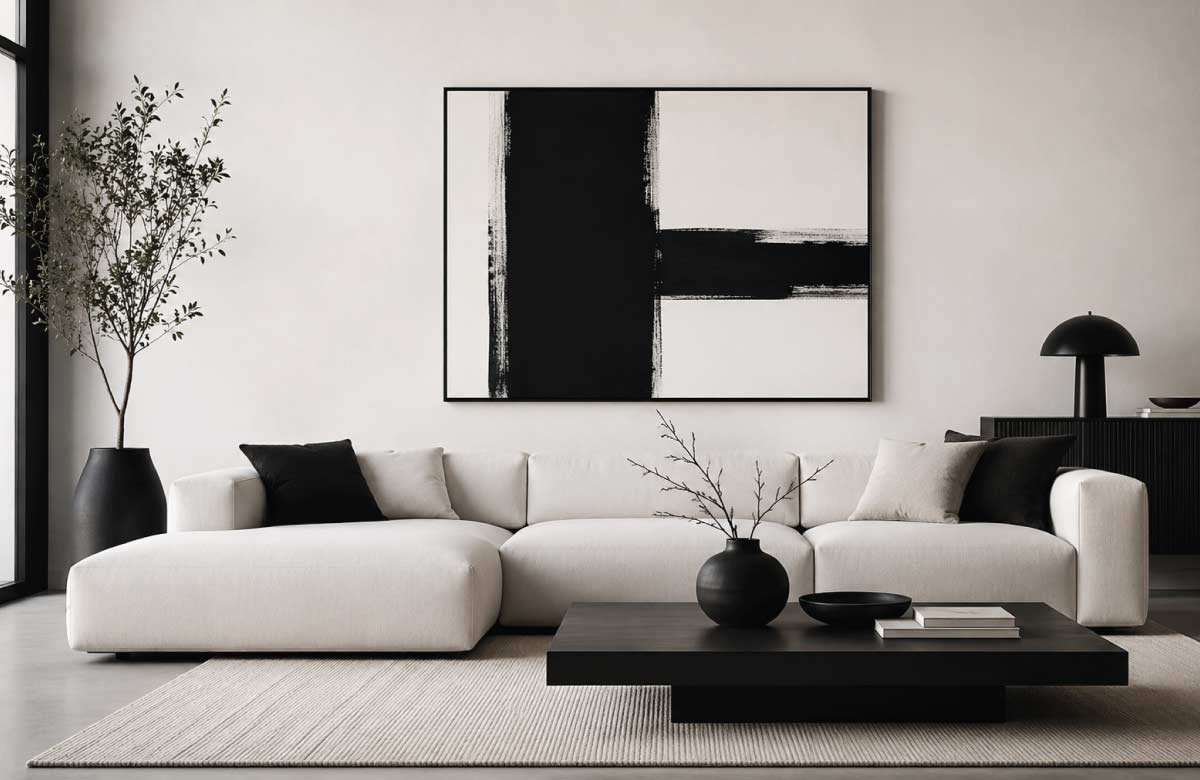
Black and white minimalist art is a timeless choice that emphasizes contrast, structure, and simplicity in living room interiors. By removing color, the focus shifts to composition and form, creating a strong yet restrained visual statement that complements modern, Scandinavian, and contemporary design styles effortlessly.
- Creates strong contrast while maintaining clean and minimalist visual aesthetic
- Enhances structure and form without relying on colorful visual distractions
- Complements modern Scandinavian and contemporary interior design styles perfectly well
- Works well in uncluttered spaces emphasizing simplicity and visual clarity focus
- Adds timeless elegance suitable for both modern and classic interiors
Personal experience
I have experienced black and white minimalist art bringing a refined balance to living rooms. It often creates a sophisticated focal point while still keeping the overall design clean, calm, and visually organized.
5. Line Art Drawings
Line art is one of the most popular forms of minimalist art. Using simple, continuous lines, these pieces convey emotion and movement with remarkable simplicity.
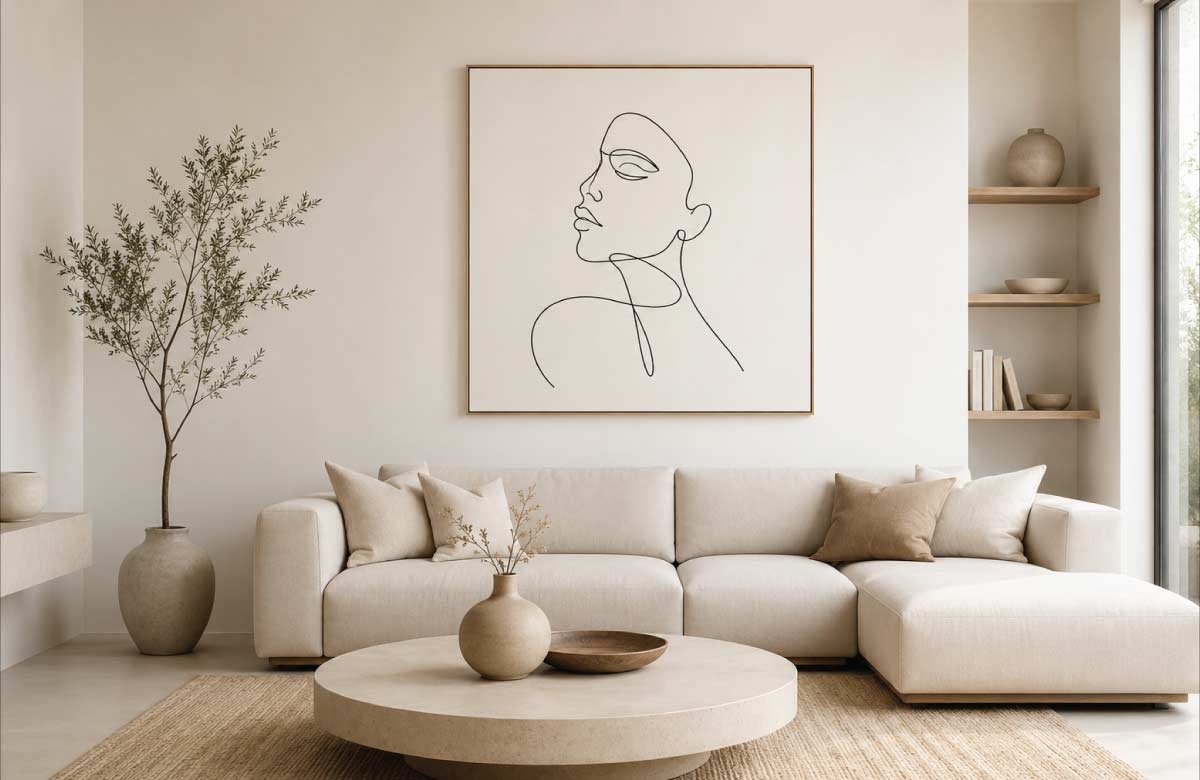
Line art drawings use continuous or minimal lines to create expressive yet simple compositions that fit perfectly within minimalist living room designs. These artworks rely on elegance and restraint, making them ideal for interiors that value openness, subtlety, and artistic clarity without visual heaviness or clutter.
- Uses simple continuous lines to create expressive minimal artistic compositions
- Enhances elegance while preserving open and uncluttered visual wall space
- Works beautifully in Scandinavian modern and contemporary interior styles homes
- Adds subtle artistic interest without overwhelming minimalist room design balance
- Maintains harmony through simplicity fluidity and refined visual expression style
Personal experience
I have seen line art drawings add a delicate and elegant touch to living rooms. They provide just enough artistic detail to be interesting while still maintaining a very calm and uncluttered visual environment.
6. Minimalist Typography Art
Typography art can be minimalist when executed thoughtfully. Simple fonts, limited words, and clean layouts ensure the piece feels intentional rather than decorative.
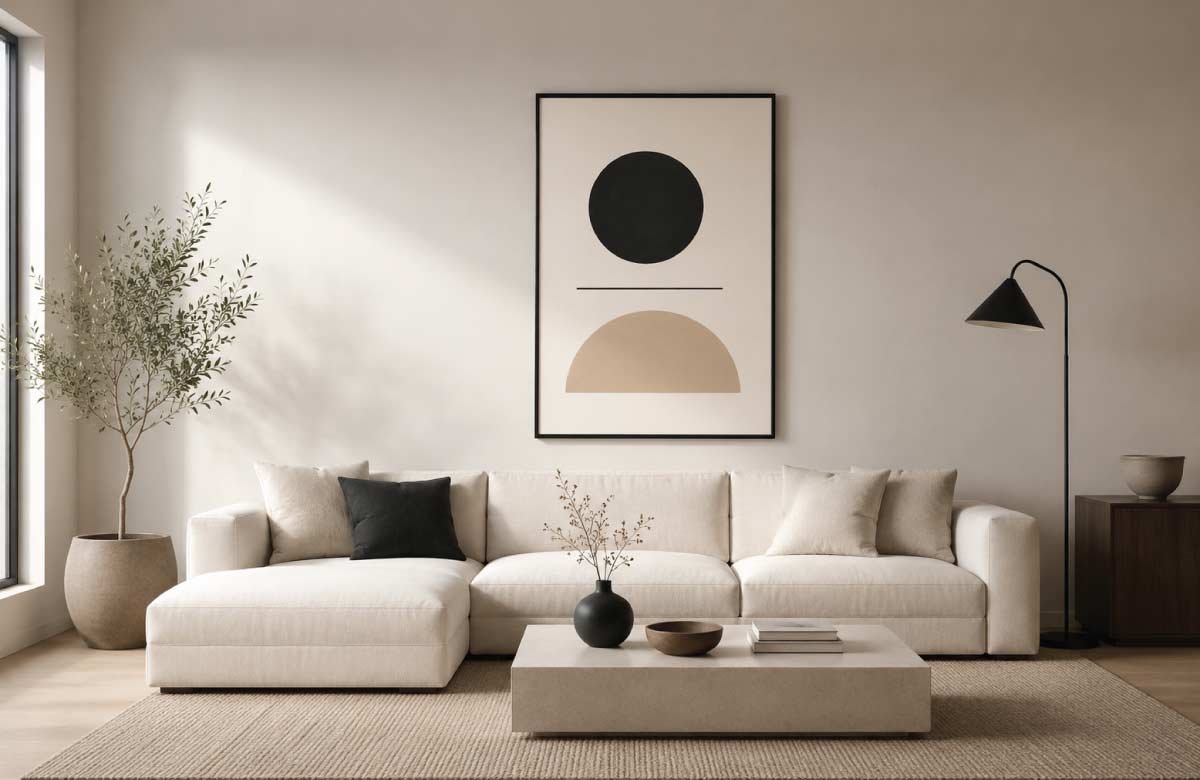
Minimalist typography art uses simple fonts, clean layouts, and carefully chosen words to create subtle yet meaningful visual statements in living rooms. It works best when used sparingly, often as an accent piece that enhances the room’s personality without disrupting the overall minimalist aesthetic and visual harmony.
- Uses clean simple fonts and layouts for understated visual communication style
- Focuses on meaningful words or phrases to create emotional connection impact
- Works best as accent piece rather than dominant room focal artwork
- Maintains minimalist aesthetic through restraint clarity and balanced visual spacing
- Enhances modern interiors with subtle personality and thoughtful design expression style
Personal experience
I have noticed minimalist typography art works best when kept simple and intentional. It can subtly reflect personality in a living room while still maintaining the calm, uncluttered feeling that minimalist interiors depend on.
Also Read:
7. Textured Minimalist Art
Texture adds depth without adding clutter. Minimalist textured art often uses subtle materials like layered paint, plaster, or fabric in neutral shades.
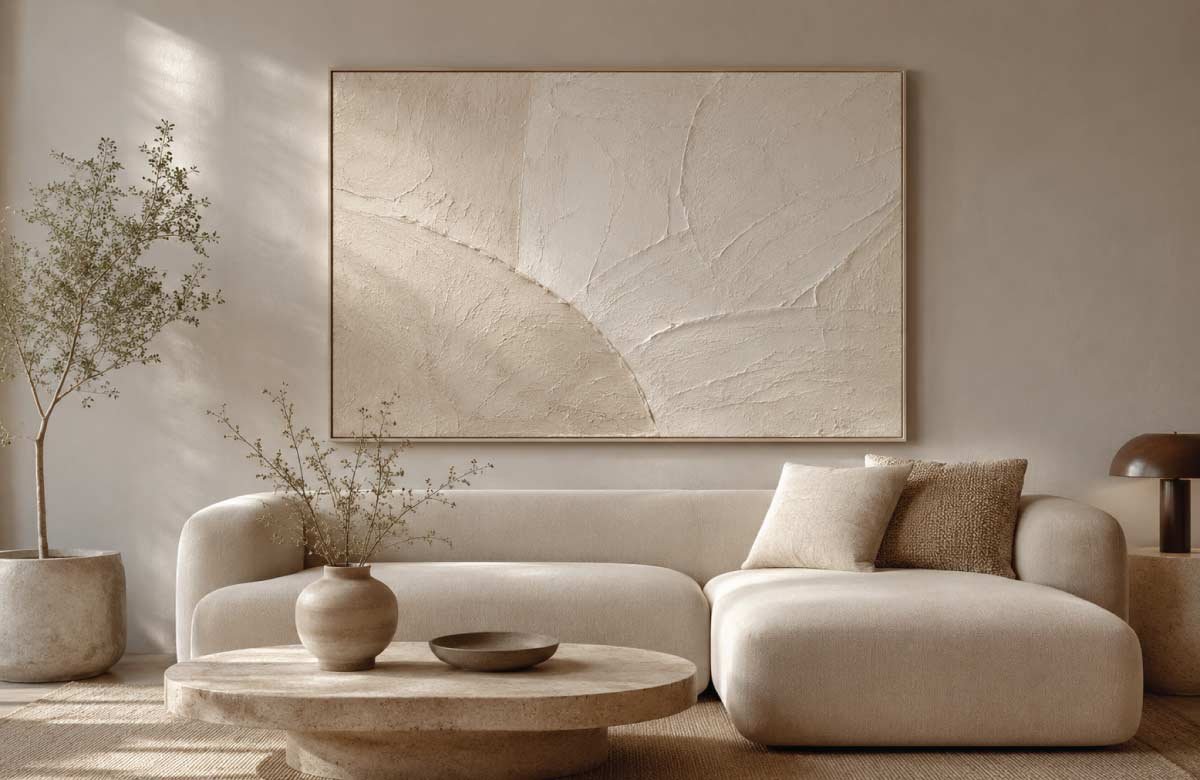
Textured minimalist art introduces depth and dimension into a living room without relying on color or complex visuals. It uses subtle materials such as layered paint, plaster, or fabric in muted tones. This creates a refined tactile surface that interacts softly with light, adding quiet sophistication to minimalist interiors.
- Adds depth and dimension without introducing visual clutter or distractions
- Uses subtle materials like plaster fabric or layered neutral toned paint
- Interacts gently with natural light creating soft shifting surface shadows
- Enhances minimalist interiors through tactile rather than colorful visual interest
- Works best in calm modern spaces focused on texture and simplicity
Personal experience
I have seen textured minimalist art make living rooms feel more refined and grounded. It brings a quiet richness to walls, especially when lighting changes throughout the day, adding subtle movement without disturbing the minimalist atmosphere.
8. Monochromatic Art Pieces
Monochromatic art uses variations of a single color to create harmony and flow. This approach aligns perfectly with minimalist design principles.
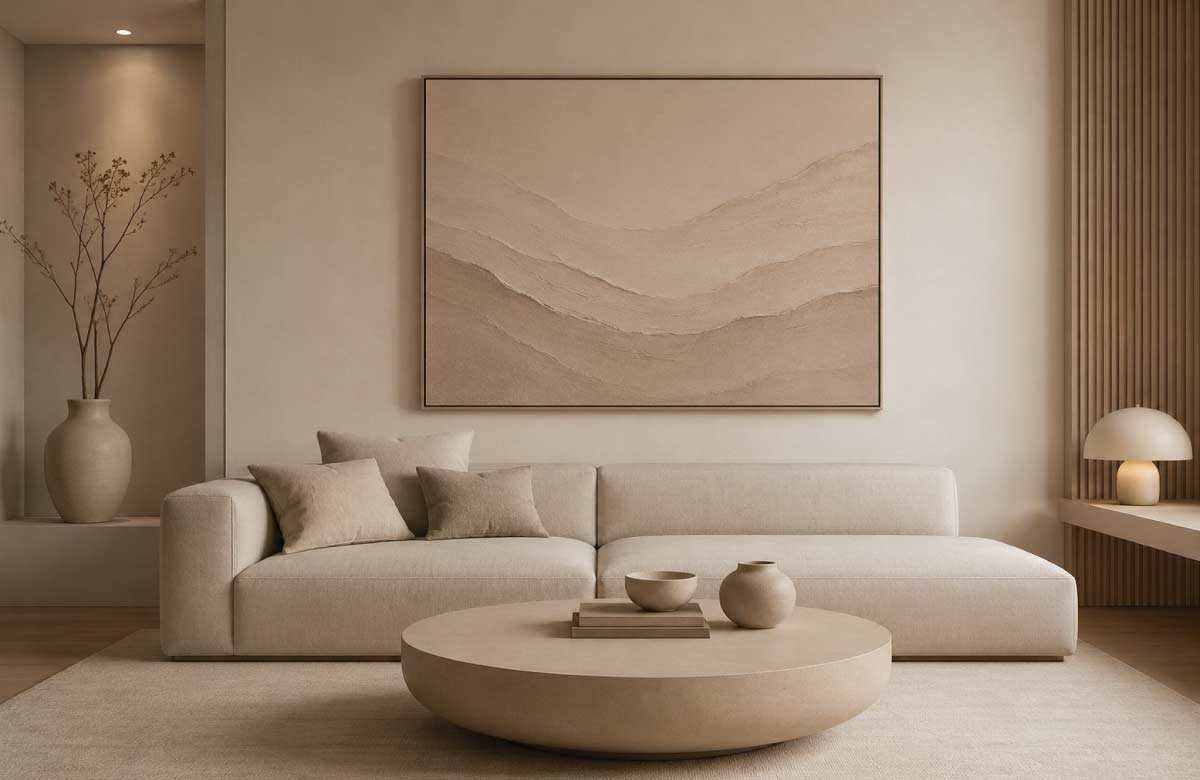
Monochromatic art pieces use variations of a single color to create harmony, depth, and visual flow within a minimalist living room. By focusing on tonal shifts rather than multiple colors, these artworks blend seamlessly into interiors while maintaining elegance, balance, and a calm, unified aesthetic throughout the space.
- Creates visual harmony using tonal variations of a single chosen color palette
- Enhances cohesion by blending naturally with minimalist interior design elements
- Maintains calm atmosphere without introducing strong contrasting color distractions
- Works seamlessly in modern living rooms with simple clean design layouts
- Highlights form texture and composition through subtle tonal depth variations
Personal experience
I have noticed monochromatic art pieces often make living rooms feel more unified and peaceful. They integrate smoothly into the background while still offering enough depth to keep the wall visually engaging and refined.
9. Small, Intentional Art Groupings
Minimalism doesn’t forbid multiple artworks it simply demands intention. A small, carefully arranged grouping of art can work well when spacing and consistency are prioritized.
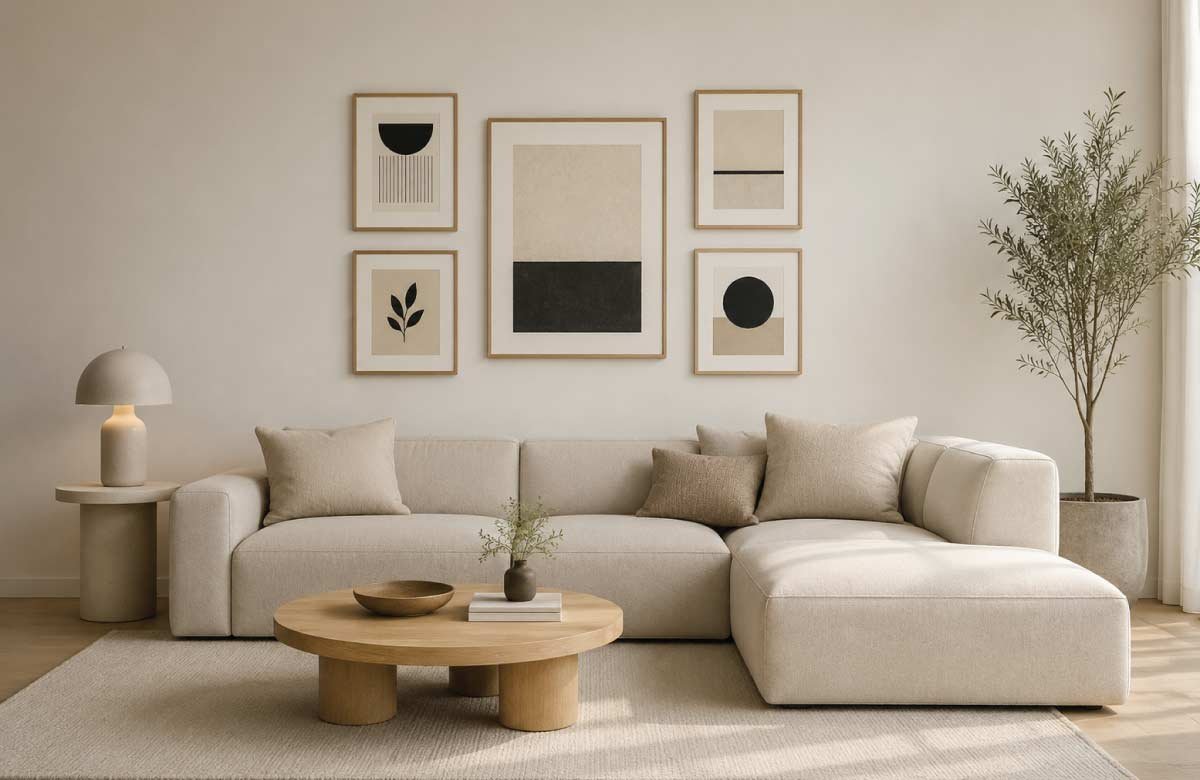
Small, intentional art groupings bring structure and personality to minimalist living rooms when arranged with careful spacing and consistency. Rather than cluttering walls, these curated arrangements rely on balance, repetition, and negative space to maintain simplicity while still adding visual interest and a sense of thoughtful design.
- Uses carefully arranged artworks with consistent spacing and visual alignment rules
- Maintains minimalist clarity through controlled composition and intentional design choices
- Works best with matching frames sizes and cohesive color palette themes
- Relies on negative space to prevent visual overcrowding and maintain balance
- Adds subtle personality without disrupting clean and simple interior aesthetics
Personal experience
I have found that small art groupings work best when they feel deliberate and restrained. When spacing is respected, they can add character to a room without breaking the calm and organized feeling of minimalist design.
Also Read:
How to Organize a Small Room: Practical Tips and Smart Solutions
10. Nature-Inspired Minimalist Art
Minimalist art inspired by nature such as abstract landscapes, organic shapes, or botanical forms adds warmth and serenity to living rooms.
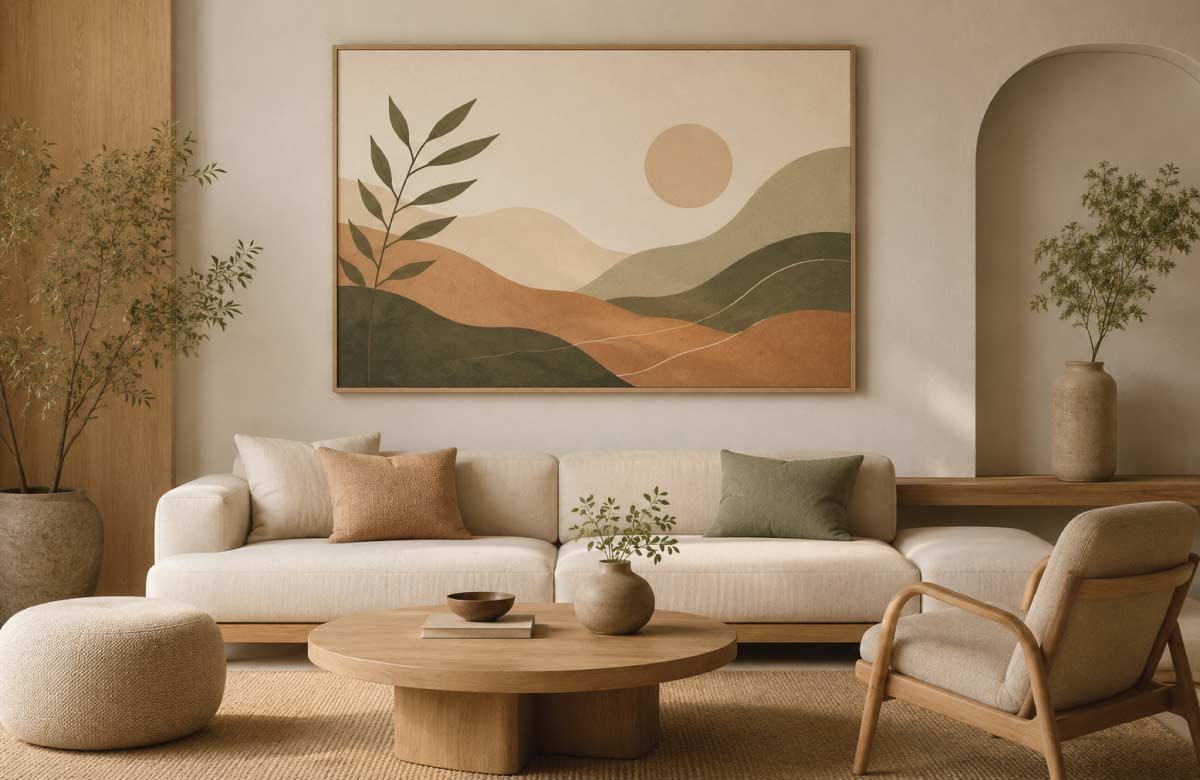
Nature-inspired minimalist art brings calmness and warmth into living rooms by drawing from organic forms such as landscapes, botanical shapes, and flowing natural patterns. These artworks remain simple and restrained while subtly reflecting the beauty of the natural world through soft colors and gentle, balanced compositions.
- Incorporates organic shapes inspired by landscapes botanical and natural elements
- Uses muted earthy tones to maintain calm and balanced interior atmosphere
- Enhances serenity through soft curves and fluid natural inspired compositions
- Works well with wooden textures and nature themed interior design styles
- Brings warmth and softness into otherwise clean minimalist living spaces
Personal experience
I have seen nature-inspired minimalist art create a very soothing effect in living rooms. It often softens sharp modern interiors and makes the space feel more welcoming, grounded, and emotionally comfortable.
11. Subtle Geometric Art
Geometric art fits naturally into minimalist spaces when shapes are simple and colors are restrained. Clean lines and balanced compositions enhance modern living rooms.
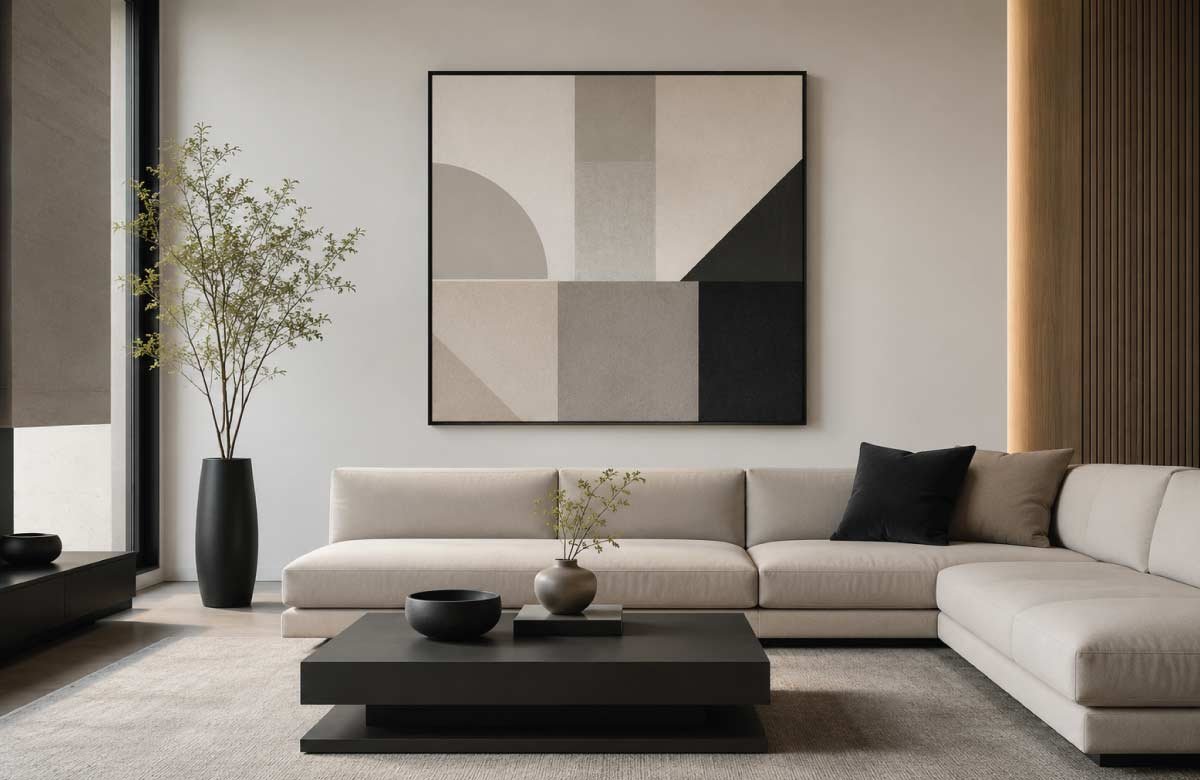
Subtle geometric art fits perfectly into minimalist living rooms by using clean lines, simple shapes, and restrained color palettes. It creates structure and order without overwhelming the space, making it ideal for interiors that emphasize balance, precision, and modern architectural clarity in their overall design approach.
- Uses clean geometric shapes to create structured and balanced visual compositions
- Maintains minimalist aesthetic through simple forms and restrained color usage
- Complements modern furniture and architectural interior design elements seamlessly
- Reinforces order and clarity in contemporary and minimalist living room spaces
- Adds visual interest without introducing unnecessary complexity or decoration clutter
Personal experience
I have observed subtle geometric art works especially well in modern living rooms with strong architectural lines. It reinforces structure in the space while still keeping the overall design clean and visually controlled.
12. Custom Minimalist Art
Custom art allows you to tailor scale, color, and composition to your living room perfectly. A custom minimalist piece can feel deeply personal while still maintaining restraint and elegance.
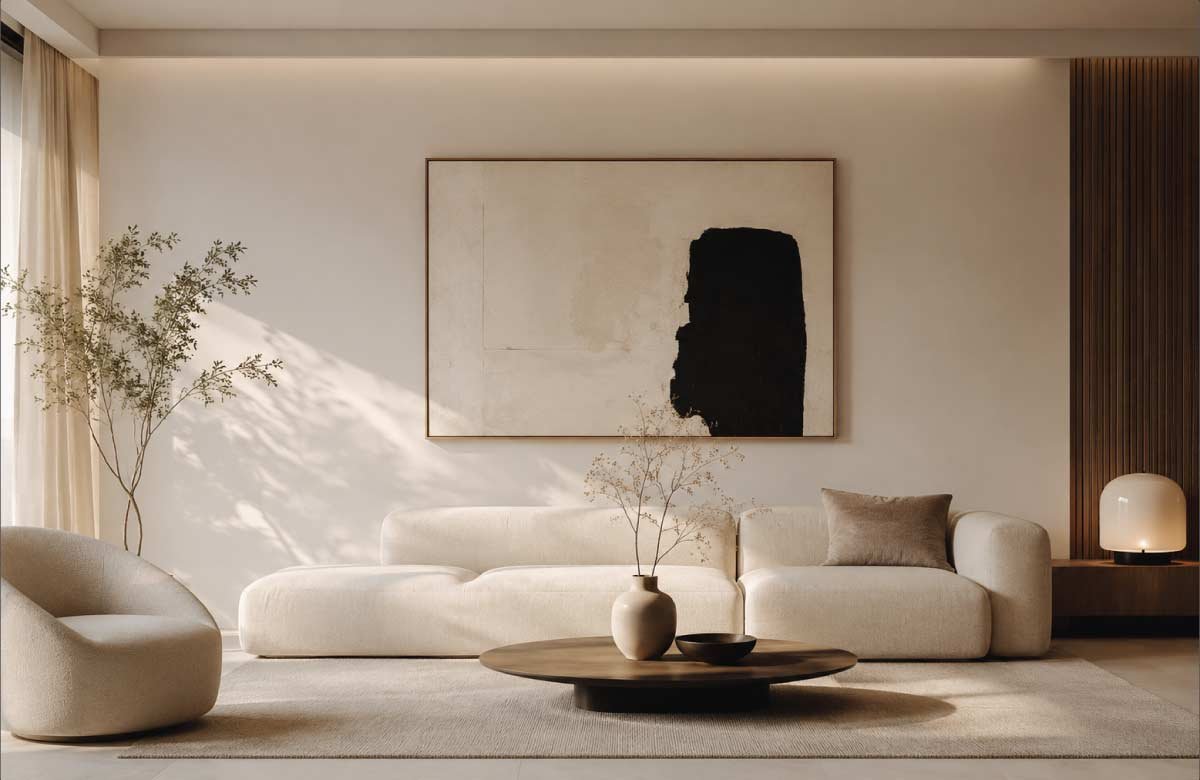
Custom minimalist art allows complete personalization of scale, color, and composition while maintaining the simplicity that defines minimalist design. It offers a unique opportunity to create artwork that aligns perfectly with a living room’s mood, proportions, and aesthetic direction without introducing unnecessary visual complexity.
- Tailored specifically to match living room scale color and design requirements
- Ensures unique personalized artwork reflecting individual taste and style preference
- Maintains minimalist principles through controlled simplicity and refined composition
- Allows precise coordination with furniture lighting and architectural room features
- Creates meaningful focal point without disrupting clean interior visual harmony
Personal experience
I have seen custom minimalist art feel more connected to the space than ready-made pieces. Because it is designed for a specific room, it often achieves a stronger sense of harmony and purpose within the interior.
Also Read:
How to Choose Minimalist Art for Your Living Room
Selecting minimalist art for a living room requires attention to simplicity, proportion, and cohesion. The goal is to enhance the space without overwhelming it, ensuring every piece feels intentional. By focusing on restraint, quality, and alignment with the room’s design, minimalist artwork can elevate the atmosphere while preserving calm visual balance.
- Less is more: Choose fewer pieces with greater impact.
- Embrace negative space: Empty space enhances minimalist art.
- Focus on quality: Materials and craftsmanship matter.
- Stay cohesive: Match artwork to your room’s palette and style.
- Consider scale: Art should feel proportionate to walls and furniture.
Final Thoughts
Minimalist living room art is about clarity, intention, and quiet beauty. It doesn’t shout for attention it invites calm reflection. By choosing art that aligns with minimalist values, you create a living room that feels balanced, modern, and effortlessly elegant.
Whether you prefer abstract forms, line art, textured pieces, or monochromatic designs, minimalist art allows your living room to breathe while still expressing personality and style. In the end, the most powerful statement in a minimalist space is thoughtful simplicity.
