
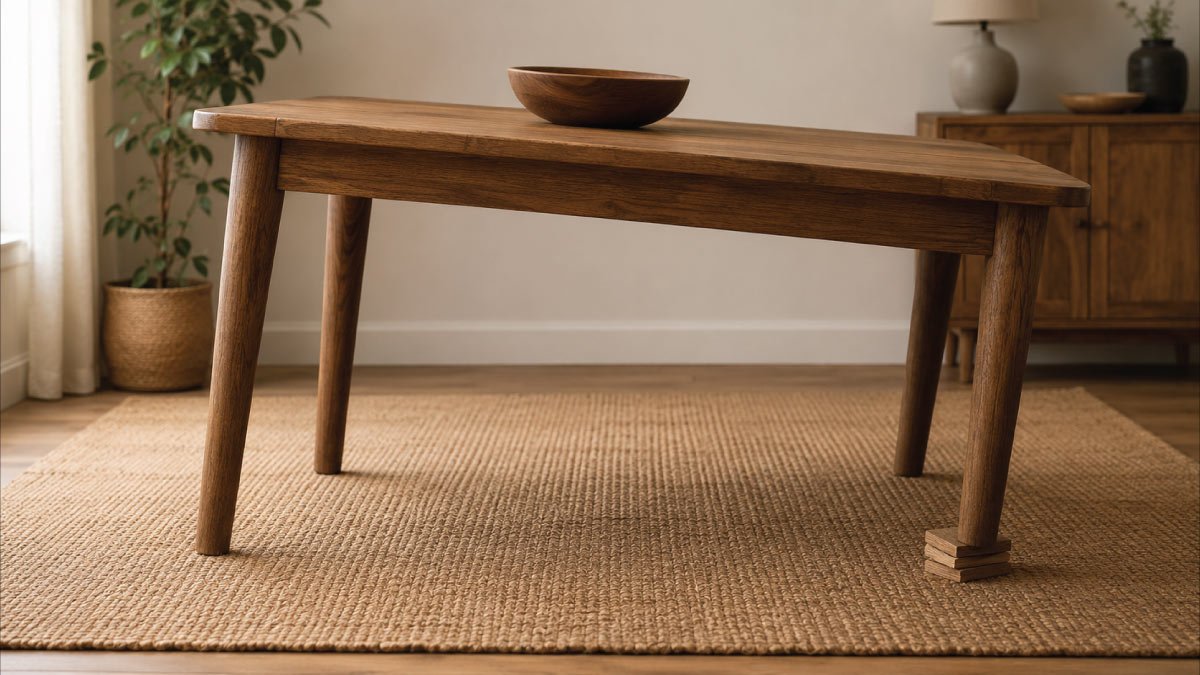
A wobbly dining table might seem like a small annoyance at first, but over time it can become surprisingly frustrating. Drinks spill more easily, meals feel less comfortable, and the constant unevenness can even damage the table further if ignored. The good news is that most wobbly tables are easy to fix at home without professional help or expensive tools.
This guide will walk you through everything you need to know about identifying the cause of a wobble and fixing it step by step. Whether your table has loose joints, uneven legs, or warped wood, you’ll find a practical solution below.
Why Dining Tables Become Wobbly
Before jumping into repairs, it helps to understand what causes instability in the first place. A dining table usually becomes wobbly for one or more of the following reasons:
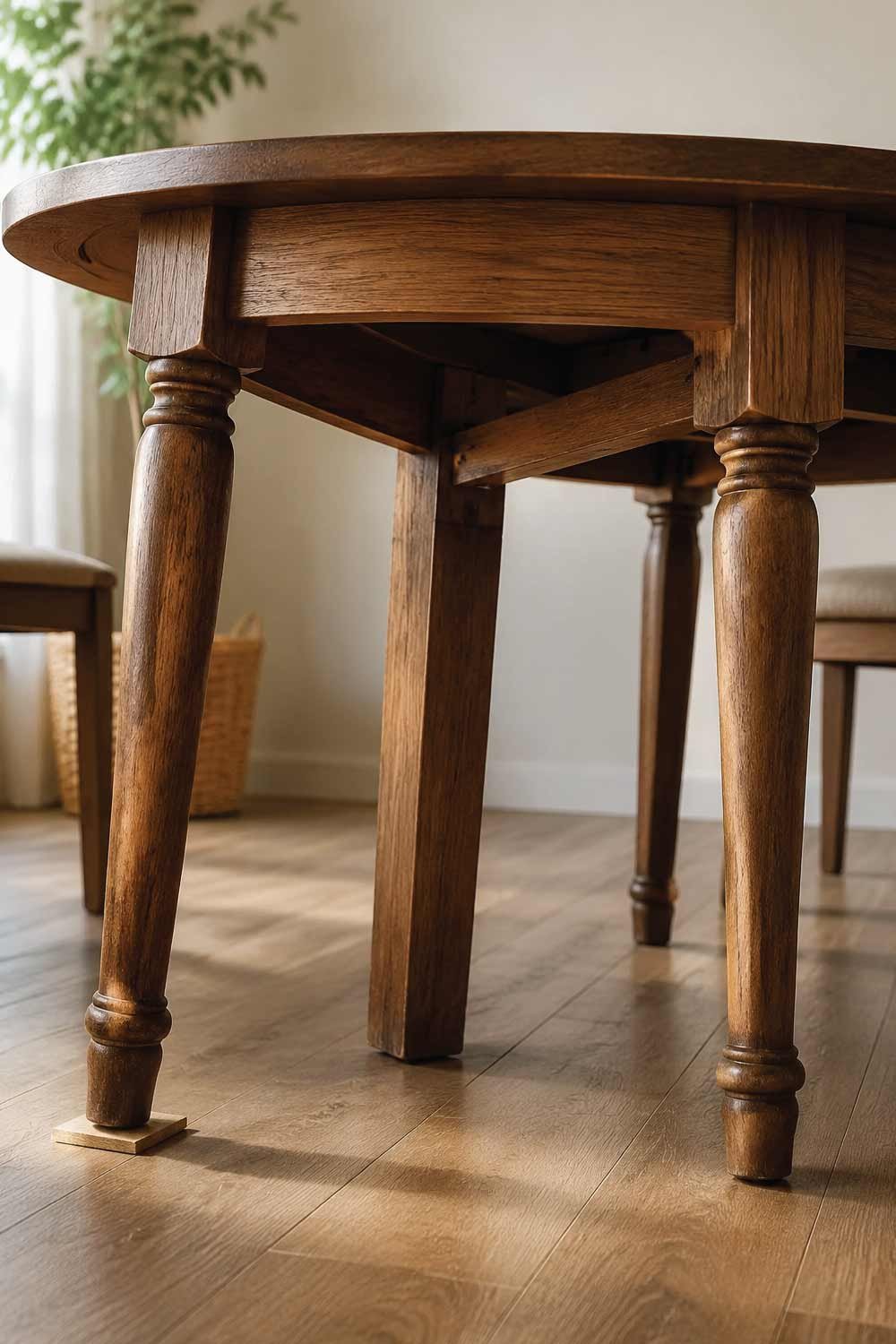
1. Uneven legs
Uneven legs are one of the most common reasons a dining table becomes unstable, and the issue often develops gradually without being noticed. Small shifts in height between each leg can affect balance, especially on hard floors, making the wobble more obvious when weight is applied during daily use or movement.
2. Loose joints
Loose joints occur when the fasteners or adhesive holding a dining table together begin to weaken over time. Regular use, repeated shifting, and constant pressure can gradually reduce the tightness of screws, bolts, or wooden joinery, leading to noticeable movement and reduced stability across the entire table structure.
3. Warped wood
Wooden dining tables can gradually warp when exposed to changing environmental conditions, especially humidity and heat. Natural fibers in wood absorb moisture, causing expansion and contraction that may lead to bending or twisting. Over time, this distortion affects the table’s flat surface and results in uneven contact with the floor.
4. Uneven flooring
Sometimes the instability of a dining table is not caused by the furniture itself but by the surface it rests on. Floors that have slight slopes, dips, or uneven tiles can create imbalance even in well-built tables. This external factor often makes the table appear wobbly despite being structurally sound.
5. Damaged frame or support beams
Damaged frame or support beams weaken the overall structure of a dining table, especially when subjected to long-term stress or heavy loads. These internal components play a crucial role in maintaining stability. When they crack, loosen, or break, the table loses its rigidity and becomes noticeably unstable during use.
Once you identify the cause, the fix becomes much easier.
Step 1: Diagnose the Wobble
Start by carefully checking how and where the table loses balance before attempting any repair work. A proper diagnosis helps you avoid unnecessary fixes and ensures you target the real issue. Move slowly and observe the table’s reaction as you apply pressure so you can clearly understand the source of instability.
Ask yourself:
- Does one leg not touch the ground?
- Does the table rock diagonally?
- Is the movement coming from the center or the edges?
You can also slide a thin object like a piece of paper under each leg to test for gaps.
If the wobble disappears in a different location, the issue is likely your floor rather than the table.
Step 2: Tighten All Screws and Fasteners
This step focuses on restoring structural tightness by securing all hardware connections that may have loosened over time. A dining table relies heavily on firm joints, and even slight looseness in screws or bolts can create noticeable movement during use. Proper tightening often solves minor wobbling instantly.
What to do:
- Flip the table upside down (place it on a soft blanket to avoid scratches).
- Inspect all screws, bolts, and brackets.
- Use a screwdriver or wrench to tighten everything securely.
Pay special attention to:
- Leg joints
- Corner brackets
- Center support beams
Even slightly loose screws can cause instability. After tightening, flip the table back and test it again.
Also Read:
Complete Bookshelf Sizes Guide: Door-Sized & Standard Dimensions
Step 3: Reinforce Loose Joints
When basic tightening is not enough, reinforcing the joints becomes necessary to restore long-term strength and stability. Over time, repeated stress can weaken connection points, especially in wooden furniture. Strengthening these areas ensures the table remains stable under regular use and prevents the wobble from returning quickly.
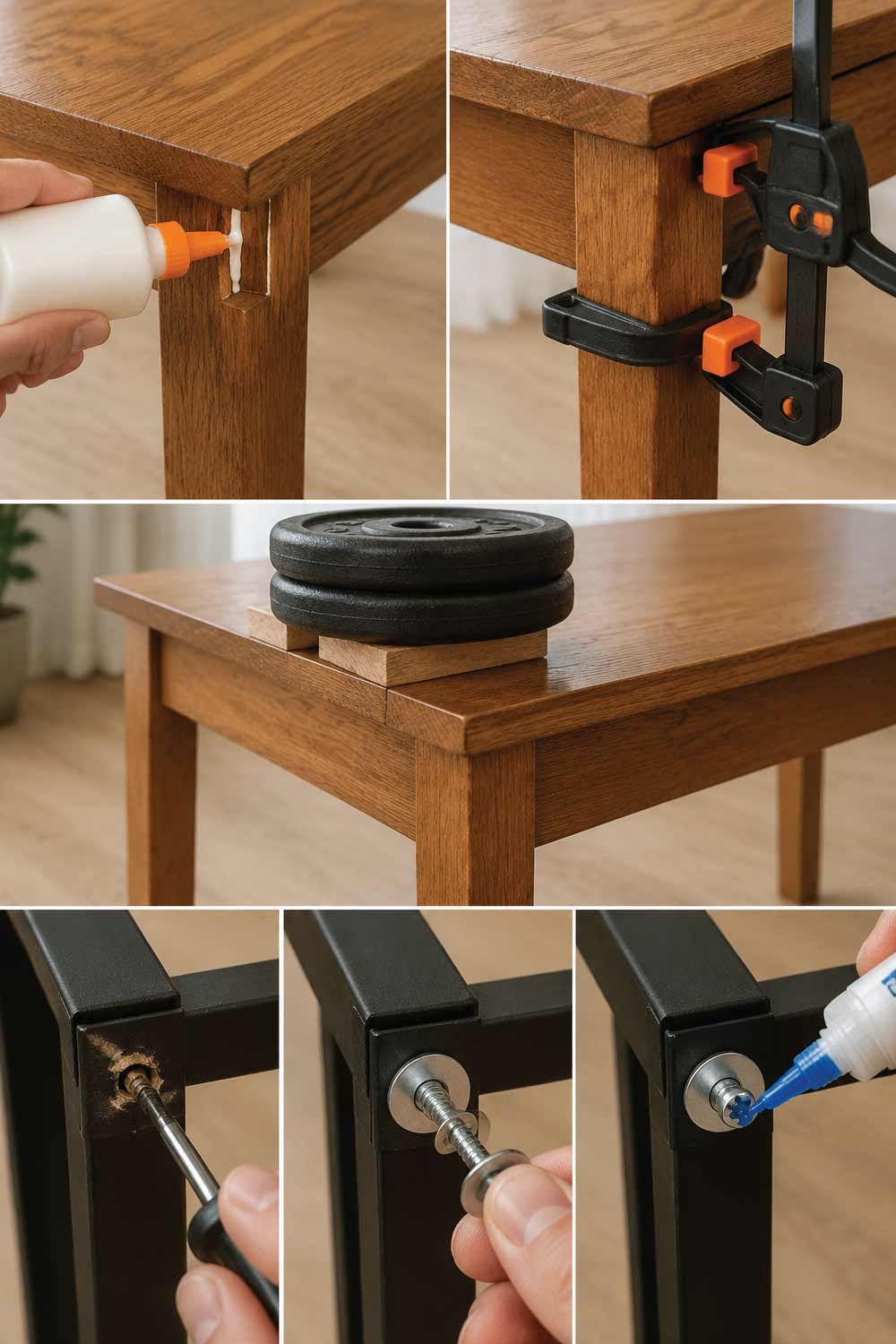
For wooden joints:
Wooden joints often loosen due to age, moisture changes, or repeated pressure, so strengthening them is essential for restoring the table’s original stability. Proper re-gluing helps rebuild the internal bond and prevents future movement in the structure when the table is used regularly.
- Apply wood glue inside the joint
- Clamp the area tightly
- Let it dry for at least 24 hours
If clamps aren’t available, you can temporarily use heavy objects to apply pressure.
For metal fasteners:
Metal fasteners can lose grip over time if screws become stripped or if vibrations repeatedly loosen the fittings. Reinforcing or replacing these parts ensures the table frame stays firmly connected and reduces any side-to-side movement during use.
- Replace stripped screws with slightly longer or thicker ones
- Add washers for better grip
- Use thread-locking adhesive if needed
This step significantly improves long-term stability.
Step 4: Fix Uneven Legs
Uneven legs can disrupt the table’s balance and create a constant rocking motion, especially on hard or slightly irregular floors. Fixing the height difference ensures all four legs make proper contact with the ground, restoring stability and preventing strain on joints or fasteners over time. This step is often a quick and effective solution.
Option 1: Sanding the longer leg
If one leg is slightly longer, sanding is a precise way to bring all legs back to equal height and restore balance. This method requires patience and careful checking because removing too much material can permanently affect stability and may create further imbalance in the table structure overall.
- Mark the excess length
- Sand it down gradually
- Check balance frequently
Be careful remove small amounts at a time. You can always sand more, but you can’t add material back.
Option 2: Add padding to shorter legs
If you prefer a non-permanent solution, adding padding is a quick and flexible way to stabilize the table without altering its structure. This method is especially useful for renters or temporary fixes and allows easy adjustments whenever needed over time. It also prevents damage to legs and keeps balance consistent on uneven floors.
- Stick felt pads, rubber pads, or furniture sliders under the shorter leg
- Stack thin materials until the table stabilizes
This is the easiest and most adjustable fix.
Also Read:
Step 5: Use Furniture Shims
Furniture shims provide a simple yet highly effective way to correct minor height differences caused by uneven floors. Because they are thin and adjustable, shims allow precise leveling without altering the table itself. This method works well for both temporary and long-term fixes, offering reliable stability with minimal effort or tools required.
How to use them:
- Place the table on a flat surface
- Identify the shortest leg
- Slide a shim underneath it
- Adjust until the table stops wobbling
Once stable, you can:
- Trim excess shim material
- Glue it in place for permanence
This is one of the most reliable solutions for uneven floors.
Step 6: Check the Table Frame
When a table continues to wobble despite even legs, the problem often lies within the frame itself. The frame holds the entire structure together, so any weakness can affect overall stability. Carefully inspecting and reinforcing this area ensures the table remains solid, balanced, and safe for long-term everyday use.
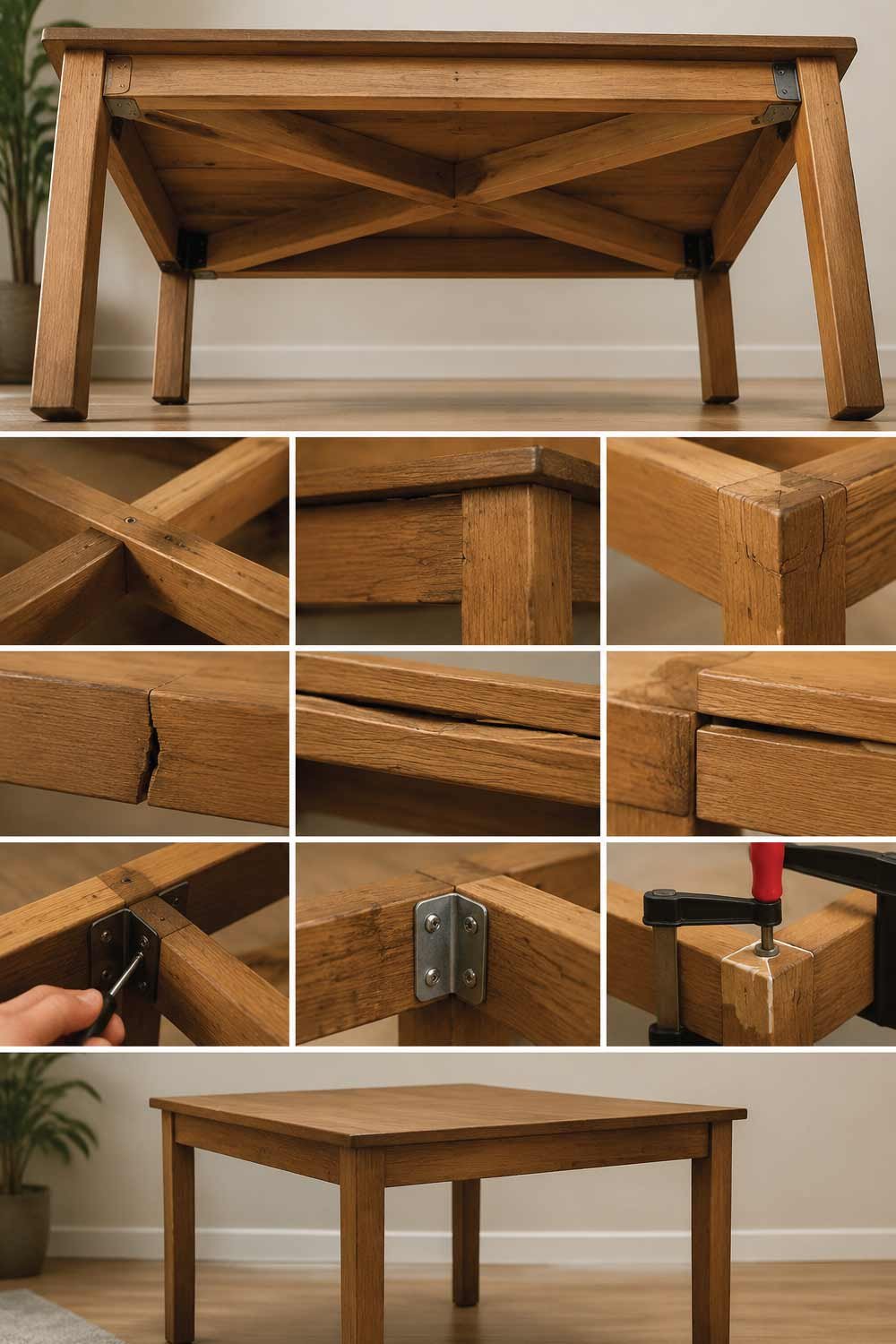
Inspect:
- Cross braces under the tabletop
- Apron (the wooden border connecting legs)
- Corner joints
Look for:
- Cracks
- Splits
- Gaps
Fixes:
- Tighten screws or bolts
- Add metal corner brackets for support
- Reinforce with wood glue and clamps
- Replace damaged sections if necessary
A weak frame will always cause instability, no matter how perfect the legs are.
Step 7: Level the Floor (If Needed)
In some cases, the dining table itself may be completely stable, and the wobble is caused by an uneven floor surface. Addressing floor-related issues helps eliminate movement without modifying the table. This step ensures consistent support under all legs and prevents recurring instability in different areas of the room.
Temporary solutions:
- Use rubber pads or folded cardboard under legs
- Adjust furniture shims for balance
Permanent solutions:
- Install leveling feet on the table
- Repair or resurface flooring
- Move the table to a more level area
Leveling feet are especially useful because they allow micro-adjustments without additional tools.
Also Read:
Step 8: Add Anti-Wobble Hardware
For tables that experience frequent movement, heavy use, or daily stress, adding anti-wobble hardware can greatly enhance stability. Reinforcement components strengthen weak points, reduce strain on joints, and help the table maintain balance over time. This proactive step minimizes future issues and extends the overall lifespan of the furniture.
Options include:
- Metal L-brackets at corners
- Cross support beams
- Adjustable leveling feet
- Rubber stabilizing caps
These additions significantly improve durability and reduce future wobbling.
Step 9: Prevent Future Wobbling
After restoring your table’s stability, ongoing care is essential to prevent the wobble from returning. Simple maintenance habits reduce stress on joints, legs, and the frame, helping the table stay balanced over time. Regular attention also helps you catch small issues early before they turn into bigger structural problems.
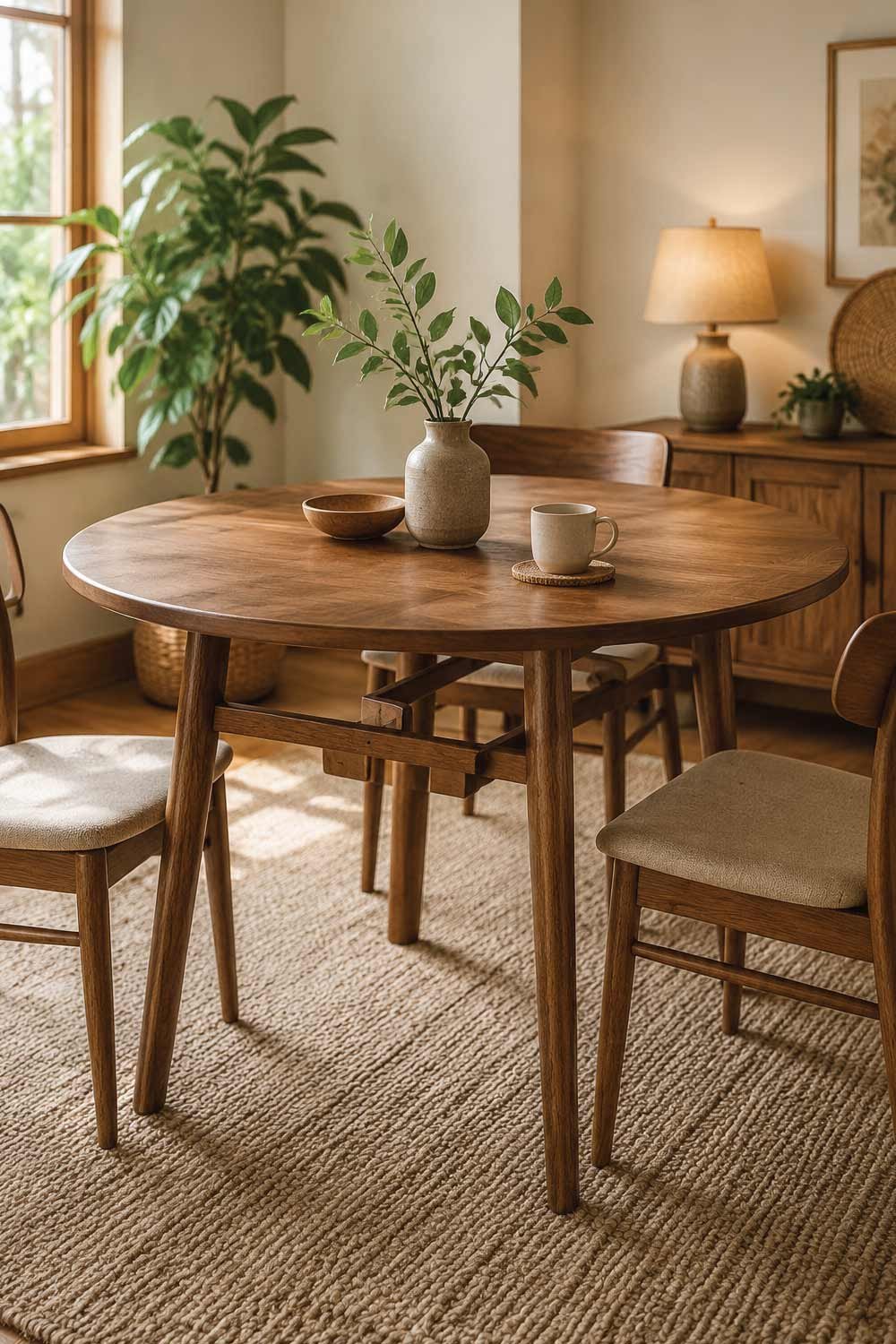
Maintenance tips:
- Check screws every 3–6 months
- Avoid dragging the table across the floor
- Clean up moisture spills quickly
- Keep wooden tables in stable humidity conditions
- Avoid leaning heavily on one side
Small habits can extend the life of your furniture significantly.
Common Mistakes to Avoid
When fixing a wobbly table, it’s easy to focus on quick solutions and overlook important details. Many common mistakes can actually worsen instability or shorten the life of the furniture. Understanding these errors helps you avoid unnecessary damage, saves time and effort, and ensures your repairs are effective and long-lasting.
1. Over-tightening screws
Over-tightening is a common mistake made when trying to quickly secure loose parts. While it may feel like tighter is better, excessive force can damage screw holes, weaken joints, and reduce holding power. This often leads to recurring wobble and makes future repairs more difficult or ineffective.
2. Ignoring the floor
Many people assume the table itself is always the cause of wobbling, but floors play a major role in stability. Uneven surfaces, sloped rooms, or worn flooring can create movement even in solid furniture. Failing to check the floor may result in unnecessary repairs that don’t solve the real issue.
3. Fixing only one leg
Focusing on a single loose or uneven leg can overlook hidden problems elsewhere in the table. Stability depends on the entire structure working together, so other legs or joints may also be contributing to the issue. Addressing only one point often leads to incomplete or short-term fixes.
4. Using unstable temporary fixes
Temporary fixes may seem convenient, but poorly chosen materials can compress, shift, or wear down over time. This can increase imbalance and cause further stress on the table frame. Relying on unstable solutions often creates recurring problems instead of providing reliable, long-term stability.
Also Read:
When to Replace the Table
Sometimes, even after multiple repair attempts, a dining table may no longer be worth fixing. Extensive structural damage can compromise safety, stability, and usability. In these situations, continuing repairs may cost more time and money than replacing the table altogether, making a new purchase the more practical and long-lasting solution.
- The frame is severely cracked
- Multiple joints are permanently damaged
- The wood is heavily warped
- Repairs don’t hold for long
In such cases, investing in a new table may be more cost-effective.
Final Thoughts
A wobbly dining table is one of those household problems that feels bigger than it actually is. In most cases, the fix is simple tightening screws, balancing legs, or adding small supports. With a bit of patience and basic tools, you can restore stability in under an hour.
The key is to diagnose carefully before jumping into repairs. Once you identify whether the issue is the legs, joints, frame, or floor, the solution becomes straightforward.
A stable table doesn’t just make meals more comfortable it also protects your dishes, improves safety, and makes your dining space feel more solid and reliable.
