
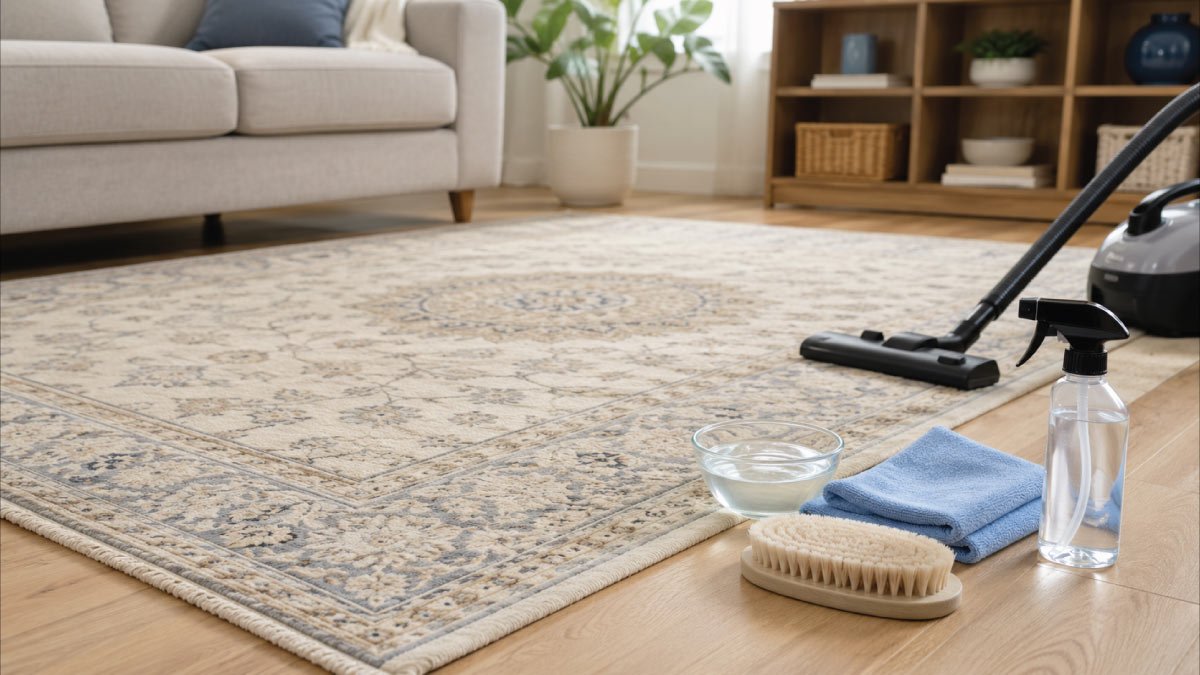
Rugs are more than just floor coverings they’re design statements, comfort boosters, and often valuable investments. Whether you own a handwoven Persian rug, a plush wool area rug, or a modern synthetic piece, cleaning it the wrong way can lead to color bleeding, fiber damage, shrinkage, or permanent wear.
The good news? You can clean a rug effectively without damaging it as long as you understand the material, use the right methods, and avoid common mistakes.
This guide walks you through everything you need to know, from routine maintenance to deep cleaning, stain removal, and drying so your rug stays beautiful for years.
Why Proper Rug Cleaning Matters
Proper rug cleaning is essential to preserving both beauty and longevity. Rugs are delicate investments, often carrying artistic, cultural, or sentimental value. When cleaned incorrectly, hidden damage can occur long before visible wear appears, shortening the rug’s lifespan and diminishing its overall quality.
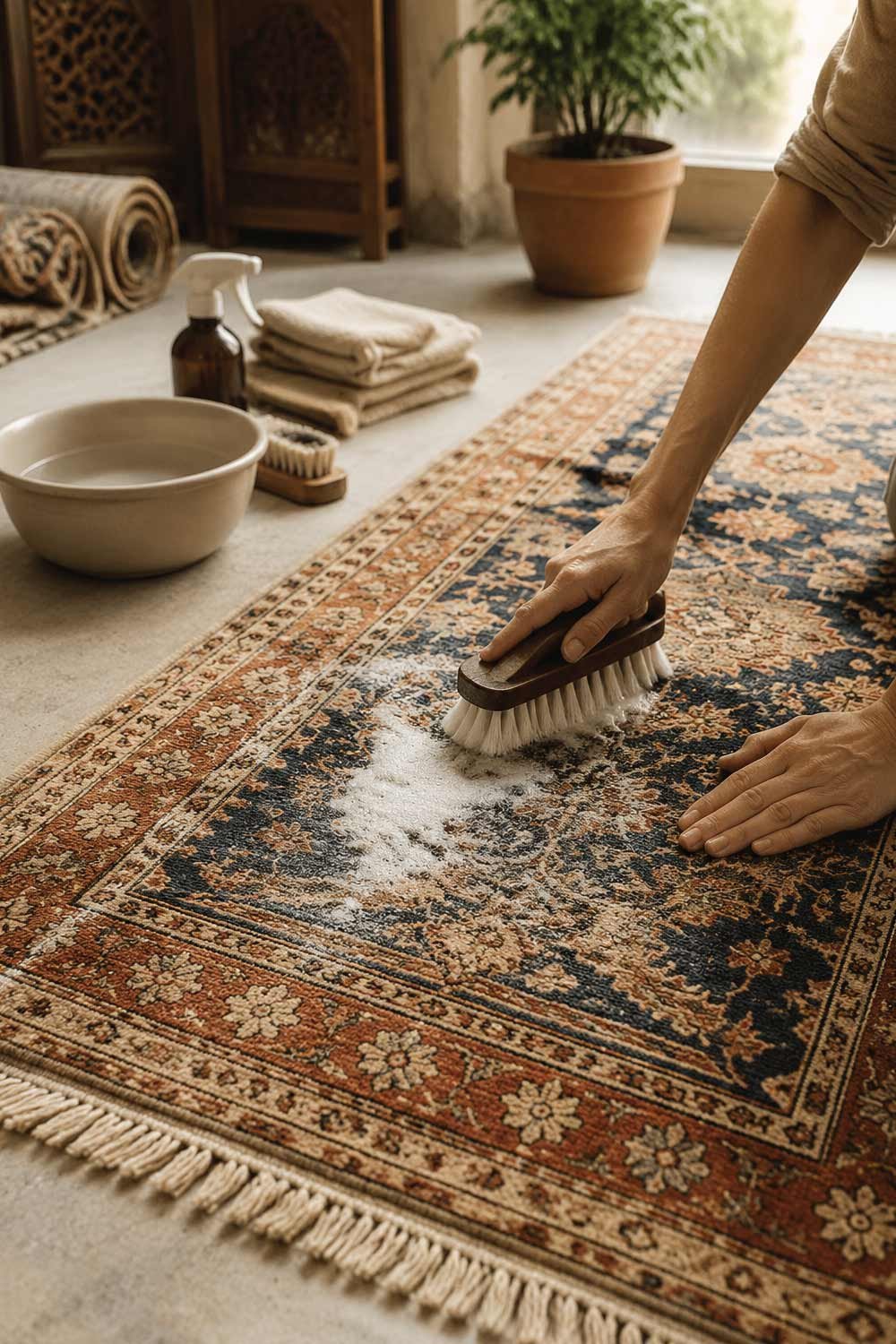
Improper cleaning is one of the top reasons rugs wear out prematurely. Harsh chemicals, excessive water, aggressive scrubbing, or incorrect drying can:
- Weaken rug fibers
- Cause dyes to bleed or fade
- Create mold or mildew
- Distort the rug’s shape
- Reduce resale or heirloom value
Gentle, informed cleaning protects both the appearance and structure of your rug.
Step 1: Identify Your Rug Type
Before you begin any cleaning process, it’s critical to understand what type of rug you own. Rugs are made from a wide range of materials, each reacting differently to water, chemicals, heat, and agitation. Correct identification helps prevent irreversible damage and ensures you choose the safest cleaning method.
Common Rug Materials
- Wool: Durable but sensitive to heat, harsh chemicals, and over-wetting
- Cotton: Easier to clean but prone to shrinking
- Silk: Extremely delicate usually requires professional cleaning
- Synthetic (nylon, polyester, polypropylene): More stain-resistant and DIY-friendly
- Natural fibers (jute, sisal, seagrass): Sensitive to moisture and best cleaned dry
👉 Tip: Check the manufacturer’s label or consult a professional if unsure.
Continue:
How to Decorate a Tiny Apartment: Maximizing Style in Small Spaces
Step 2: Routine Maintenance (The Most Important Step)
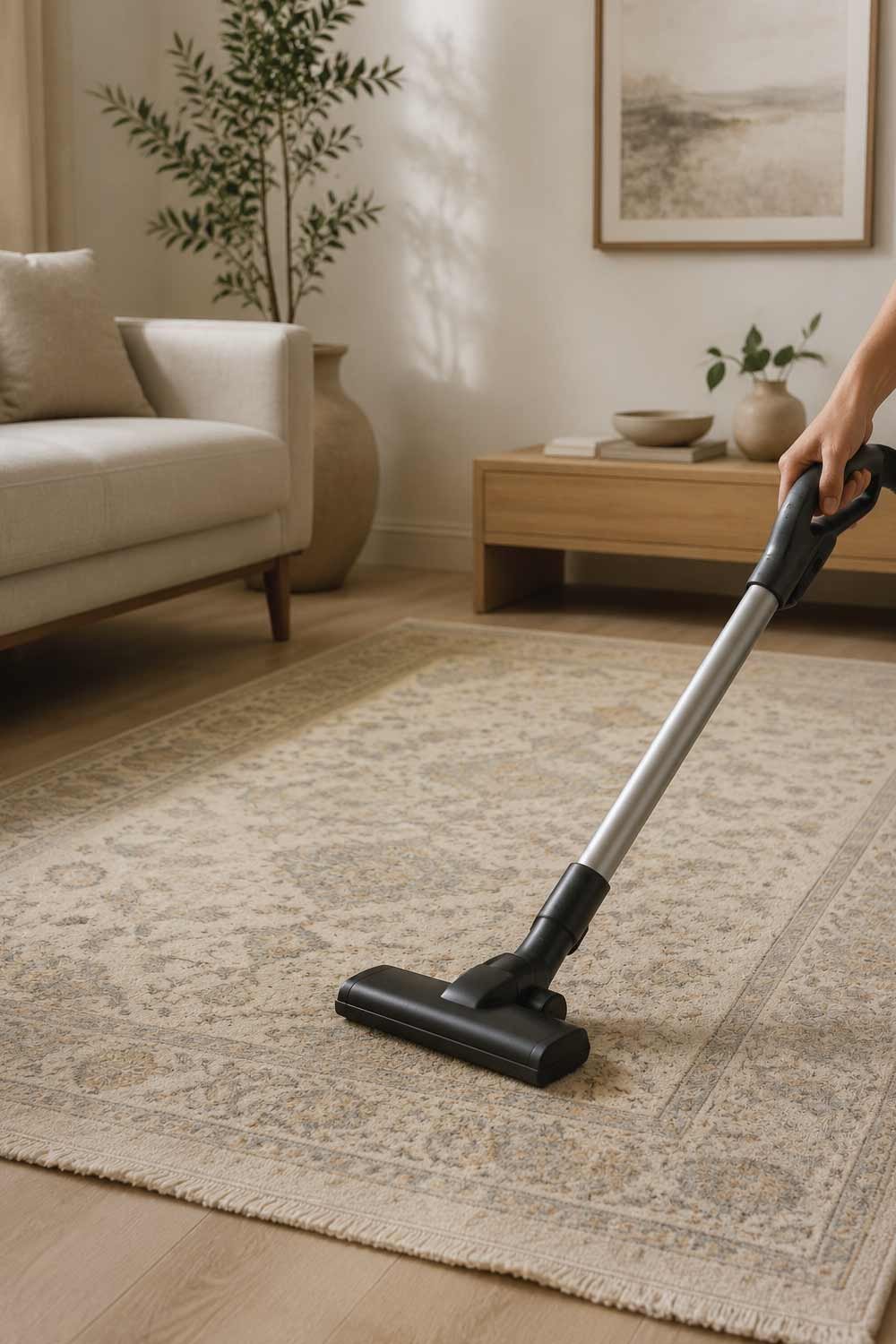
Routine maintenance is the foundation of proper rug care and the easiest way to extend a rug’s life. Regular cleaning prevents dirt, dust, and grit from settling deep into fibers, where they cause gradual abrasion, dull appearance, and long-term structural damage.
Vacuum Properly
- Vacuum once or twice a week for high-traffic areas
- Use a suction-only setting if possible
- Avoid beater bars on delicate or handwoven rugs
- Vacuum both sides of the rug every few months
Why it matters: Dirt acts like sandpaper, slowly wearing down fibers.
Step 3: Spot Test Before Cleaning
Spot testing is a simple but crucial step that helps prevent permanent color loss or fiber damage. Even mild or “natural” cleaners can react unpredictably with certain dyes or materials. Testing first ensures your cleaning solution is safe before applying it to the entire rug.
How to spot test:
- Apply solution to a small, hidden area
- Blot with a white cloth
- Check for color transfer or fiber damage
If dye transfers or fibers weaken, stop immediately.
Step 4: How to Remove Common Rug Stains Safely
Stains are inevitable, but improper treatment can permanently damage rug fibers and dyes. Using the right technique for each stain type is far more important than using strong cleaners. The goal is to lift the stain gently while preserving the rug’s structure and color integrity.
General Stain Removal Rules
Successful stain removal depends on quick, gentle action rather than aggressive scrubbing or strong chemicals. The goal is to lift the stain while protecting the rug’s fibers and dyes. Following these core rules reduces the risk of spreading stains or causing permanent damage.
- Act fast
- Blot don’t rub
- Work from the outside in
- Use minimal moisture
Food & Beverage Stains
Food and drink spills are among the most common rug stains, but they are usually manageable if treated promptly. Gentle cleaning prevents sugars, acids, and pigments from bonding permanently to the fibers.
- Blot excess liquid immediately
- Mix mild dish soap with cool water
- Dab gently with a soft cloth
- Rinse by blotting with clean water
- Dry with a towel
Pet Accidents
Pet accidents require fast attention to prevent lingering odors and bacteria from penetrating the rug’s foundation. Neutralizing the odor is just as important as removing visible moisture.
- Blot moisture immediately
- Use a vinegar-water solution (1:1) to neutralize odor
- Avoid ammonia it mimics urine scent
Grease or Oil Stains
Oil-based stains attract dirt and can darken over time if not treated correctly. Absorbing the grease before applying moisture is key to effective removal.
- Sprinkle baking soda or cornstarch
- Let sit 15–30 minutes
- Vacuum gently
- Spot clean residue with mild soap
Continue:
Step 5: Deep Cleaning a Rug (Safely)
Deep cleaning removes embedded dirt that regular vacuuming cannot reach, restoring freshness and extending the rug’s lifespan. This process should be done carefully and infrequently, as excessive deep cleaning can weaken fibers. When done correctly, it revitalizes appearance without causing harm.
Hand-Cleaning Method (Best for Most Rugs)
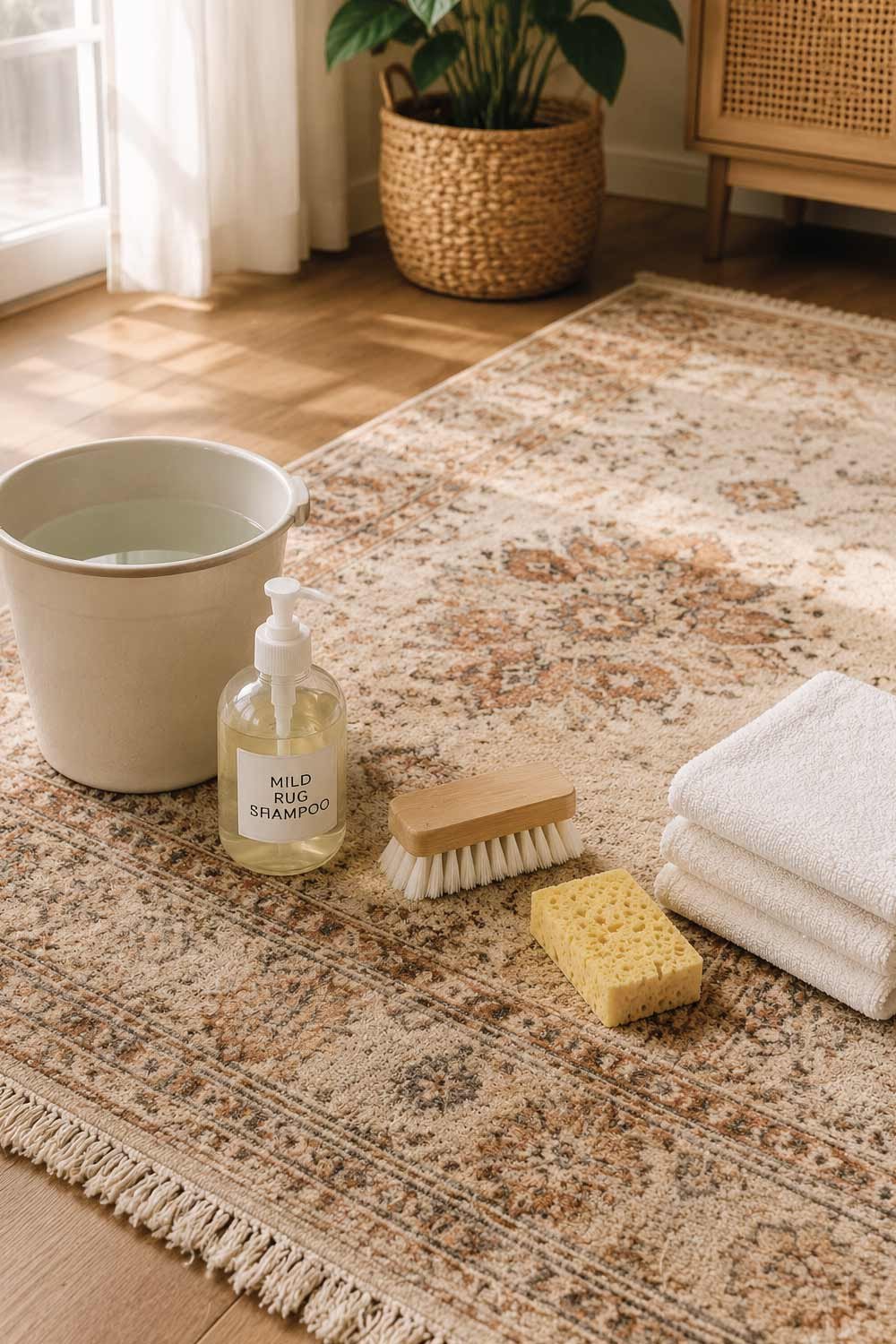
Hand-cleaning is the safest and most controlled way to clean the majority of rugs at home. This method minimizes moisture, reduces fiber stress, and allows you to focus on problem areas without risking dye bleeding or structural damage caused by machines or excessive water.
What you’ll need:
- Mild rug shampoo or dish soap
- Soft-bristle brush or sponge
- Bucket of cool water
- Towels
Steps:
- Vacuum thoroughly
- Mix cleaning solution with water
- Lightly scrub in direction of fibers
- Do not soak the rug
- Rinse by blotting not pouring water
- Remove excess moisture with towels
Never oversaturate this is a leading cause of rug damage.
Step 6: What to Avoid When Cleaning Rugs
Many rugs suffer irreversible damage not from neglect, but from overly aggressive cleaning methods. High heat, excess moisture, and harsh chemicals can quickly compromise fibers, dyes, and backing materials. Knowing what not to do is just as important as proper cleaning techniques.
Avoid These Common Errors
- Hot water (causes shrinkage & dye bleeding)
- Bleach or harsh chemicals
- Steam cleaners on wool, silk, or natural fibers
- Power scrubbing
- Leaving rugs wet for long periods
If a cleaning method feels aggressive it probably is.
Continue:
Step 7: Proper Drying Is Crucial
Drying is one of the most overlooked yet critical stages of rug care. Even when cleaning is done correctly, improper drying can trap moisture deep within fibers and backing. This leads to unpleasant odors, structural weakening, and long-term microbial growth that is difficult to reverse.
Best Drying Practices
- Blot excess water immediately
- Lay rug flat in a well-ventilated area
- Elevate slightly for airflow if possible
- Use fans but not direct heat
- Avoid sunlight for dyed or antique rugs
Never hang a wet rug it can stretch and distort the shape.
Step 8: Special Care for Delicate & Antique Rugs
Delicate and antique rugs are often irreplaceable, making cautious care essential. Their natural fibers, hand-tied knots, and aged dyes can easily be damaged by moisture or agitation. Minimal handling and conservative maintenance help preserve both beauty and historical value.
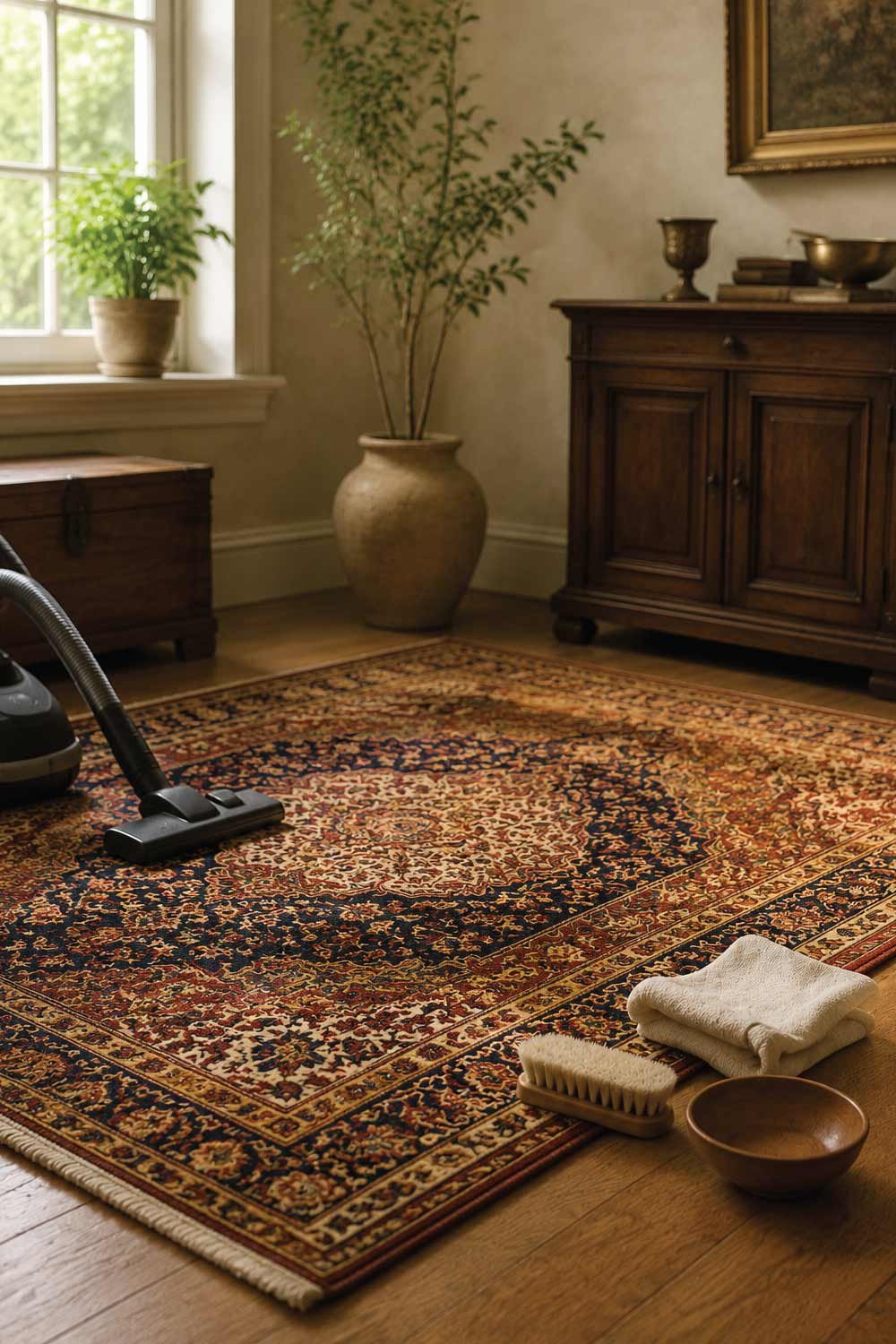
Best Practices
- Avoid DIY deep cleaning
- Limit cleaning to gentle vacuuming
- Address spills immediately but minimally
- Rotate rugs to prevent uneven wear
For valuable rugs, professional cleaning every 1–3 years is the safest choice.
Step 9: When to Call a Professional
Knowing when to stop DIY efforts can prevent costly mistakes. Certain rug issues require specialized tools, controlled environments, and expert knowledge. Professional cleaners can safely address complex problems while protecting fiber integrity, color stability, and overall structure.
Call a Professional If:
- The rug is silk, antique, or handmade
- There’s significant water damage
- Mold or mildew is present
- Dyes are bleeding
- Odors persist after cleaning
Professional rug cleaners use controlled moisture, pH-balanced solutions, and specialized drying techniques.
Continue:
Step 10: Prevent Future Damage
Preventive care is the final and often most effective step in proper rug maintenance. By reducing daily wear and environmental stress, you minimize the need for intensive cleaning and repairs. Consistent protective habits help rugs retain their color, texture, and structure for many years.
Rug Protection Tips
- Use rug pads to reduce friction
- Rotate rugs every 6 months
- Keep out of direct sunlight
- Remove shoes indoors
- Clean spills immediately
Small habits make a huge difference over time.
Final Thoughts
Cleaning a rug without damaging it isn’t about using the strongest cleaner it’s about using the right method. Understanding your rug’s material, avoiding excess moisture, and practicing gentle maintenance can extend its life dramatically.
When in doubt, less is more. Gentle cleaning, regular care, and professional help when needed will keep your rug looking beautiful, comfortable, and structurally sound for years to come.
