
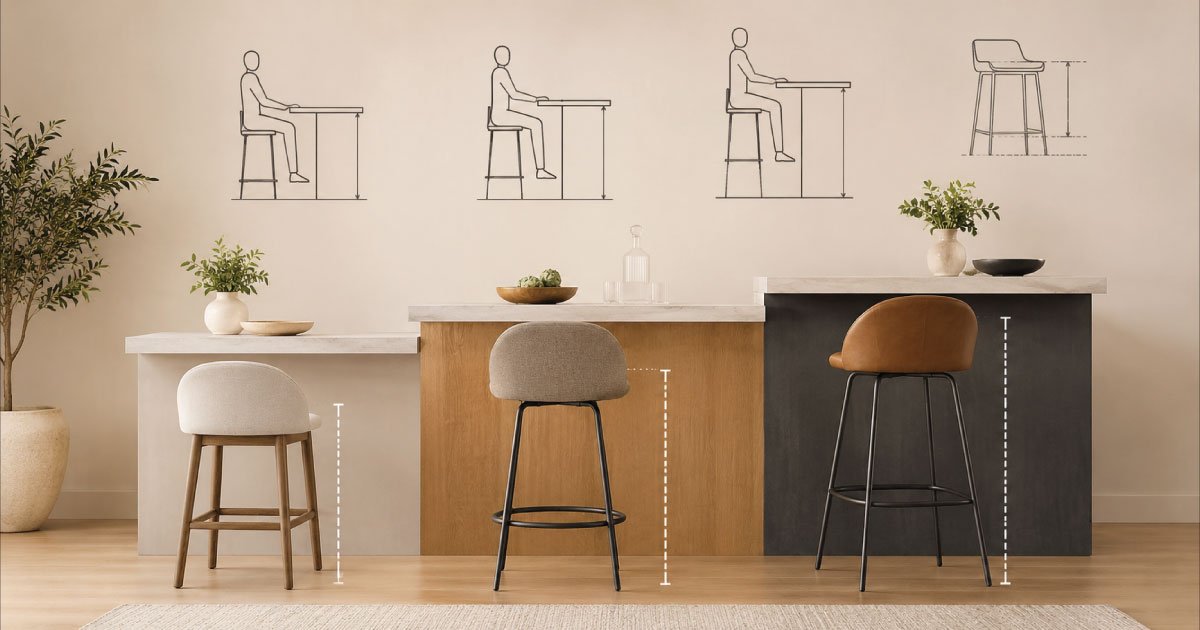
Choosing the right bar stool might look simple at first glance, but anyone who has ever bought the wrong height knows how frustrating it can be. A stool that is too tall makes sitting uncomfortable and awkward, while one that is too short ruins the entire purpose of a bar or counter seating area. That’s where a bar stool size chart becomes extremely useful.
This guide explains everything you need to know about bar stool heights, standard measurements, counter types, spacing guidelines, and how to pick the perfect stool for your kitchen island, home bar, café, or restaurant.
Why Bar Stool Size Matters
Bar stools are not just decorative furniture pieces—they are functional seating solutions designed to match specific counter or bar heights. Choosing the correct size is essential for both comfort and usability. When proportions are balanced, seating becomes more practical, visually appealing, and ergonomically supportive for everyday use in kitchens, dining areas, and commercial spaces.
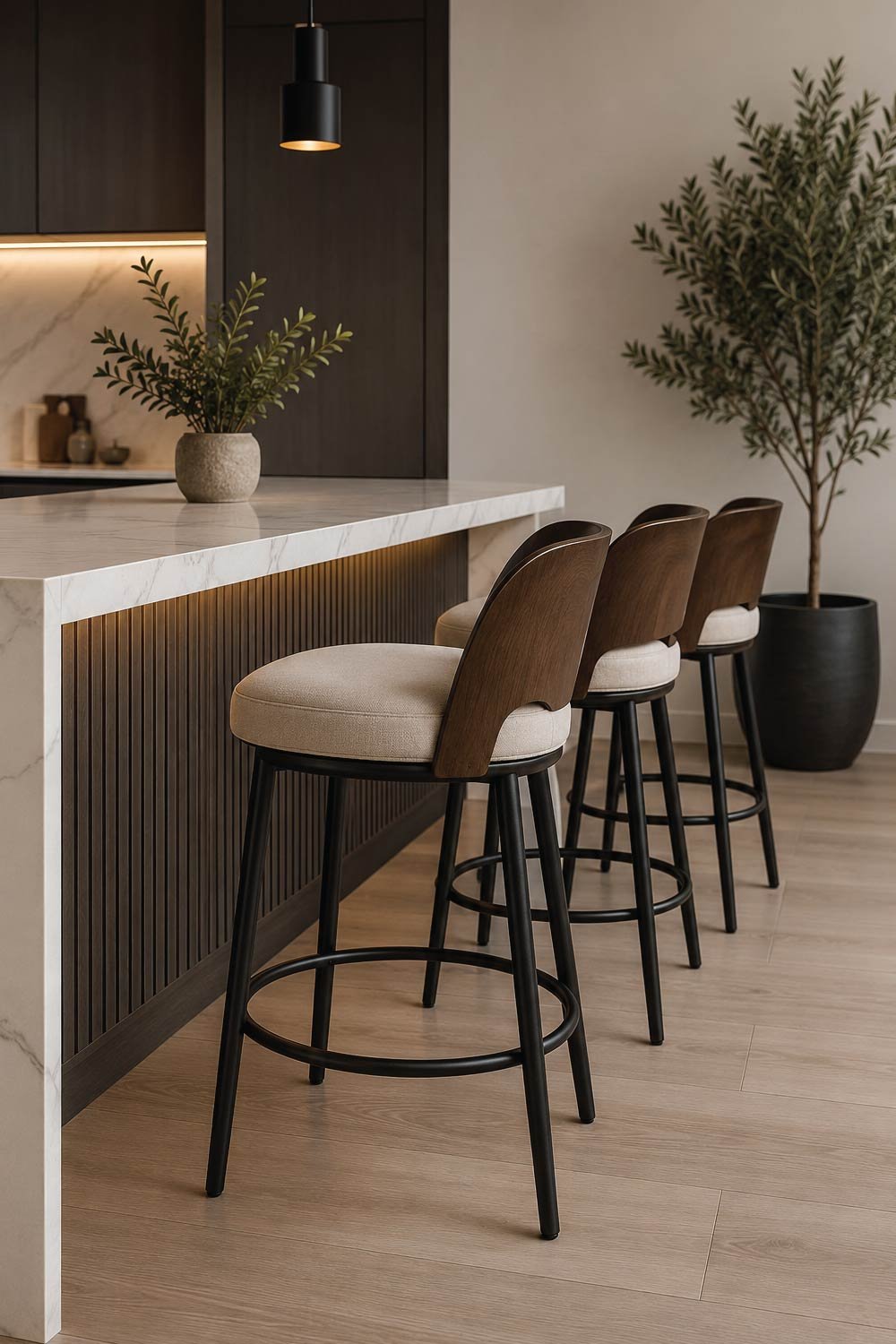
Proper sizing ensures:
- Comfortable seating posture
- Adequate legroom
- Safe and stable sitting position
- Better aesthetics and balance in the space
- Smooth movement in and out of seating
A well-matched stool height allows about 25–30 cm (10–12 inches) between the seat and the underside of the counter. This is the golden rule used in interior design.
Standard Bar Stool Size Chart
Bar stool sizes vary based on the height of the counter or table they are paired with. Understanding standard dimensions helps you choose the right fit for your space, ensuring both comfort and functionality without compromising on style or balance.
1. Counter Height Stool
Counter height stools are designed for everyday kitchen use. They offer a comfortable seating level that aligns perfectly with standard kitchen counters, making them ideal for casual dining, quick meals, and social gatherings in modern homes.
- Seat Height: 60–67 cm (24–26 inches)
- Counter Height: 86–91 cm (34–36 inches)
- Best For: Kitchen counters, breakfast bars, small islands
Counter height stools are the most common in modern homes. They are slightly shorter than bar stools and are designed for kitchen islands rather than tall bars.
2. Bar Height Stool
Bar height stools are taller and typically used in more formal or entertainment-focused settings. They are commonly found in home bars and commercial spaces, providing the right elevation for higher counters and enhancing the overall seating experience.
- Seat Height: 70–76 cm (28–30 inches)
- Bar Height: 101–109 cm (40–43 inches)
- Best For: Home bars, pubs, restaurants
This is the traditional bar stool size used in commercial bars and taller counters. It provides a comfortable seating position for higher surfaces.
3. Extra-Tall Stool (Bar Table Height)
Extra-tall stools are designed for elevated surfaces such as high-top tables and standing counters. These stools are less common in residential spaces but are widely used in modern, industrial, and commercial interior designs.
- Seat Height: 81–91 cm (32–36 inches)
- Surface Height: 114–122 cm (45–48 inches)
- Best For: High-top tables, standing desks with stools, exhibition counters
These stools are less common in homes but are often used in modern commercial or industrial-style interiors.
Quick Reference Bar Stool Size Chart
This quick reference chart provides an easy way to match stool height with counter height. It helps simplify the selection process and ensures you choose the correct size without needing detailed calculations every time.
| Counter Type | Counter Height | Stool Seat Height |
|---|---|---|
| Kitchen Counter | 86–91 cm | 60–67 cm |
| Standard Bar | 101–109 cm | 70–76 cm |
| Tall Bar Table | 114–122 cm | 81–91 cm |
How to Measure the Right Stool Height
Choosing the correct stool height starts with accurate measurements. Following a simple step-by-step method ensures that your seating is comfortable, functional, and proportionate to your counter or table height.
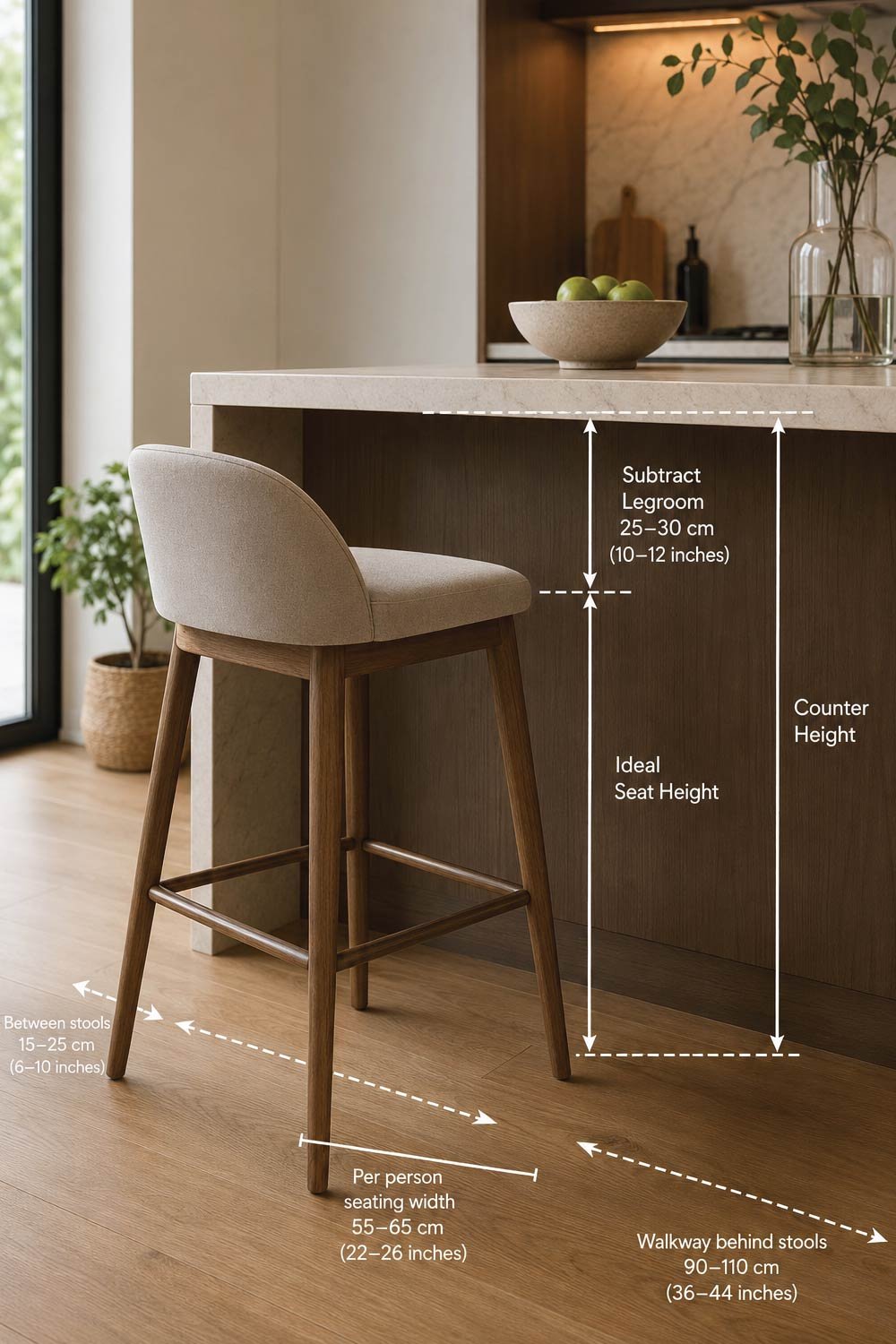
Step 1: Measure Counter Height
This step involves measuring the total height of your counter from the floor. It is the most important starting point, as all stool height calculations depend on this measurement.
Use a measuring tape to measure from the floor to the underside of the counter.
Step 2: Subtract Ideal Legroom
To ensure comfortable seating, you need to create enough space between the seat and the counter. This gap allows for proper leg movement and prevents a cramped sitting position.
Subtract 25–30 cm (10–12 inches) from the counter height. This gives you the ideal seat height.
Step 3: Consider Stool Cushion Thickness
Cushioned stools may compress when you sit on them, slightly reducing the actual seat height. Taking this into account ensures a more accurate and comfortable fit.If the stool has thick padding, account for compression when seated.
Example
This example helps you understand how to apply the measurement formula in a real-life scenario, making it easier to choose the perfect stool size without confusion.
- Counter height = 91 cm
- Ideal seat height = 91 – 28 = 63 cm
- Best stool = Counter height stool
Standard Clearance Guidelines
Comfort is not only about height; spacing plays an equally important role in creating a functional and inviting seating area. Proper clearance between stools and surrounding space ensures ease of movement, avoids crowding, and maintains a balanced layout that feels both comfortable and visually organized.
Recommended spacing:
- Between stools: 15–25 cm (6–10 inches)
- Per person seating width: 55–65 cm (22–26 inches)
- Walkway behind stools: 90–110 cm (36–44 inches)
If stools are too close, people will feel cramped. If they are too far apart, the seating area feels disconnected.
Types of Bar Stools and How They Affect Height Choice
Different bar stool designs influence how height feels in practical use. While measurements may be standard, the comfort level can vary depending on back support, structure, and flexibility, making it important to choose the right type based on both function and personal preference.
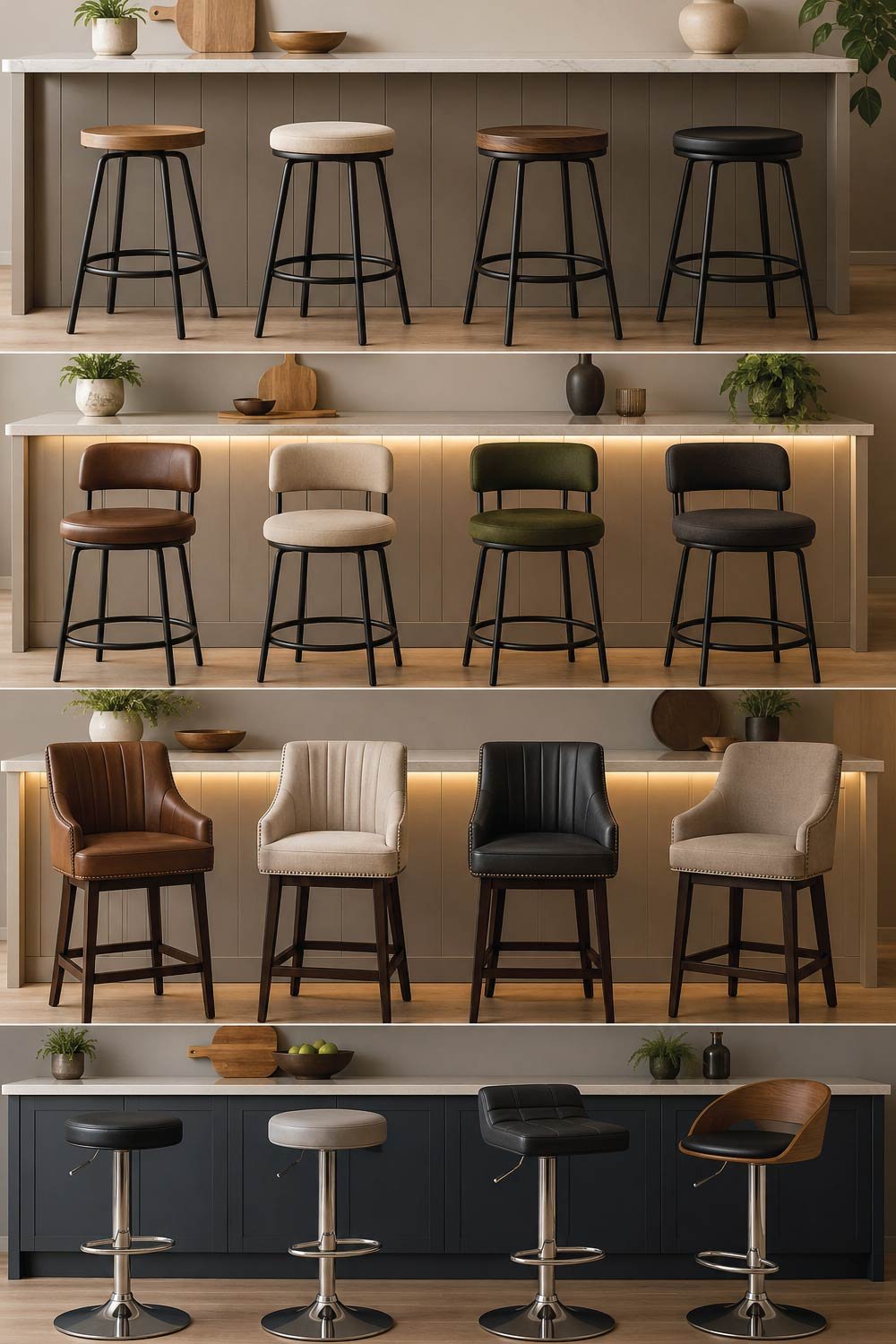
1. Backless Bar Stools
Backless stools are compact and versatile, making them ideal for small spaces. Their simple design allows more flexibility in sitting posture, which can slightly affect how height feels during use.
These are minimal and lightweight. Since they offer no back support, users can sit slightly higher comfortably.
2. Low-Back Bar Stools
Low-back stools strike a balance between style and support. They provide a subtle backrest while maintaining a clean and modern look, making them suitable for contemporary kitchen setups.
These provide partial support and work well in kitchens where aesthetics matter.
3. Full-Back Bar Stools
Full-back stools offer maximum comfort and support, especially for longer seating periods. However, their structured design means that height accuracy becomes more important for proper posture.
These are the most comfortable but require more careful height matching because posture is fixed.
4. Adjustable Height Stools
Adjustable stools provide flexibility for different users and counter heights. They are especially useful in multi-purpose spaces where seating needs may vary throughout the day.
These use hydraulic or screw mechanisms to change height. They are ideal when multiple users or surfaces are involved.
Common Mistakes When Choosing Bar Stool Size
Choosing the wrong bar stool size can lead to discomfort and poor usability. Many of these mistakes are simple but can significantly affect how practical and enjoyable your seating area becomes in everyday use.
1. Ignoring Counter Overhang
Counter overhang directly impacts legroom and seating comfort. Not considering this detail can lead to awkward sitting positions and reduced usability.If your counter has a deep overhang, legroom increases or decreases depending on design.
2. Choosing Style Over Function
While aesthetics are important, functionality should always come first. A visually appealing stool that lacks comfort will not serve its purpose effectively.A stylish stool that is uncomfortable will never be used properly.
3. Not Measuring All Counters
Different counters in the same space may have varying heights. Failing to measure each one can result in mismatched seating.Kitchen islands and breakfast counters may have different heights.
4. Forgetting Armrest Clearance
Armrests can interfere with how stools fit under counters. Ignoring this can lead to space and usability issues.Stools with armrests may not slide under counters properly.
5. Overcrowding the Space
Adding too many stools can make the area feel cramped and difficult to use. Proper spacing is essential for both comfort and movement.Too many stools make the area feel tight and unusable.
How Many Bar Stools Do You Need?
The number of bar stools depends on the length of your counter and the amount of space available for each person. Proper planning ensures that seating remains comfortable without overcrowding the area.
General rule:
- 60 cm (24 inches) per stool = comfortable spacing
Example:
- 180 cm counter → 3 stools
- 240 cm counter → 4 stools
Always leave space at the ends of the counter for movement and comfort.
Also Read:
Furniture Sizes Guide 2026: Find the Perfect Dimensions for Every Room
Material and Design Considerations
While height and spacing are crucial, the material of bar stools also affects durability, comfort, and overall style. Choosing the right material ensures that your stools match your interior design while remaining practical for daily use.
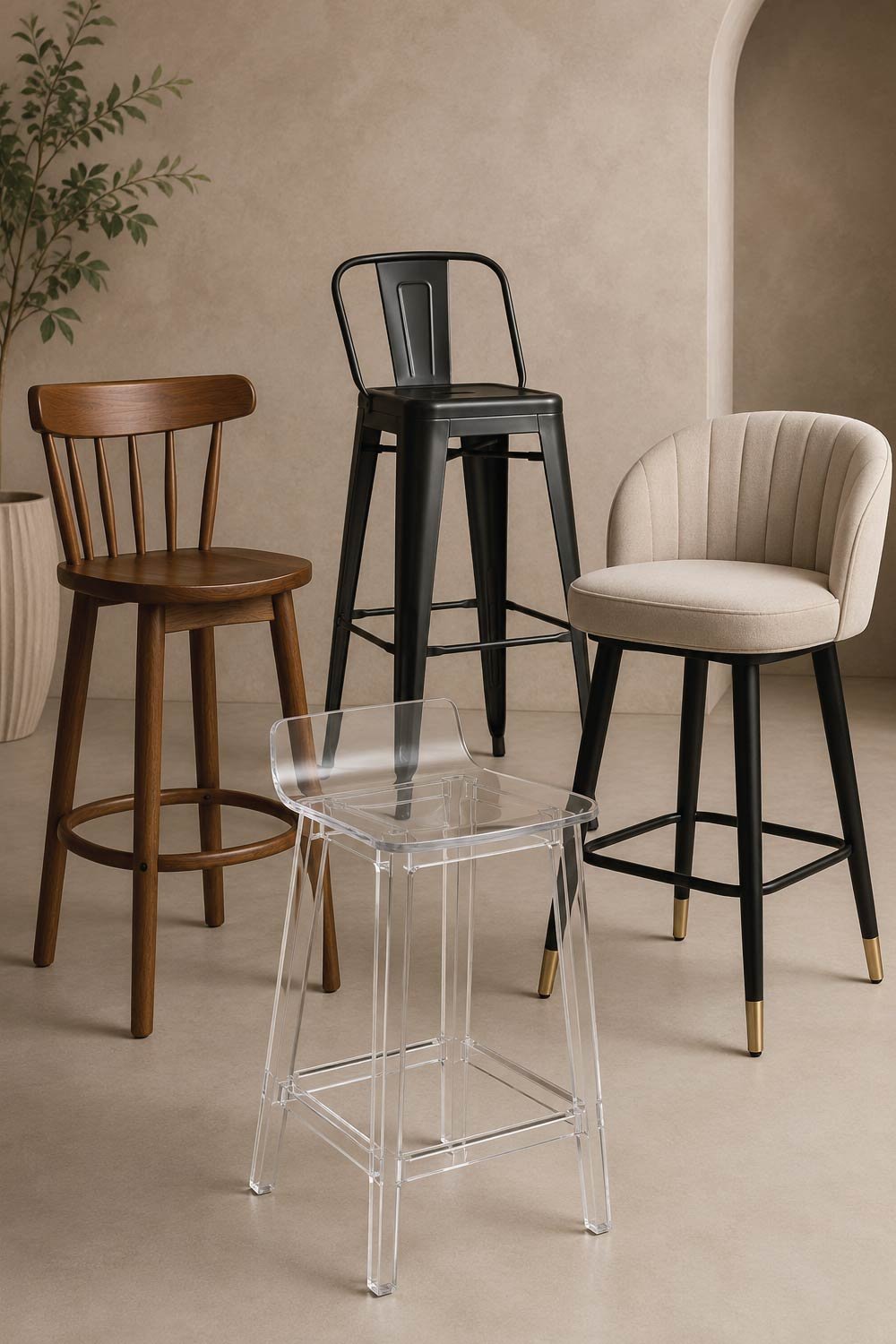
Wooden Stools
Wooden stools offer a timeless and sturdy option for traditional interiors. They blend well with classic kitchen designs and provide long-lasting durability.
- Classic and sturdy
- Best for traditional kitchens
Metal Stools
Metal stools are known for their strength and modern appeal. They are often used in industrial or contemporary spaces due to their sleek and durable design.
- Durable and modern
- Ideal for industrial-style interiors
Upholstered Stools
Upholstered stools provide the highest level of comfort, especially for extended seating. They add a soft and luxurious feel to the space.
- Most comfortable
- Best for long seating sessions
Plastic or Acrylic Stools
These stools are lightweight and budget-friendly, making them a practical choice for flexible seating arrangements. They are easy to maintain and move around.
- Lightweight and budget-friendly
- Easy to move and clean
Also Read:
Final Thoughts
Choosing the correct bar stool size is all about balance between height, comfort, and space. A good bar stool size chart helps eliminate guesswork and ensures your seating area looks good and functions even better.
Whether you’re furnishing a modern kitchen island or designing a full home bar, always measure first, follow standard height guidelines, and leave enough room for comfortable seating.
The right stool doesn’t just complete your space it makes it usable, comfortable, and inviting every single day.
