
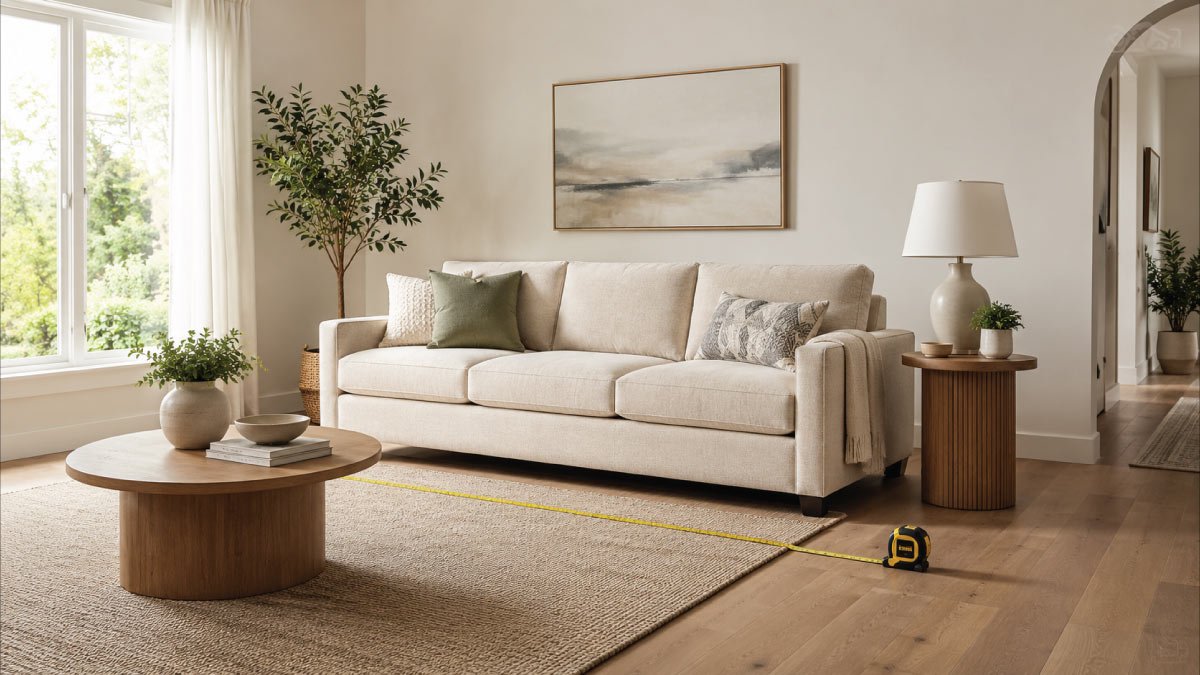
Buying a sofa is one of the biggest furniture decisions you’ll make for your home. It’s often the focal point of a living room, family room, or lounge and it needs to be both comfortable and visually balanced. Unfortunately, many people fall in love with a sofa online or in a showroom, only to discover after delivery that it’s too large, too small, or awkwardly placed.
The solution is simple but often overlooked: accurate measuring. Knowing how to measure for a sofa that fits your space can save you time, money, frustration, and the hassle of returns. This guide walks you step by step through everything you need to measure, consider, and plan so your new sofa fits perfectly the first time.
Why Measuring Before Buying a Sofa Is Essential
Measuring your space before buying a sofa is crucial because it ensures the furniture fits both physically and visually within your room. Without proper measurements, even a stylish sofa can become impractical, disrupt movement flow, and throw off the balance of your interior layout in unexpected ways.
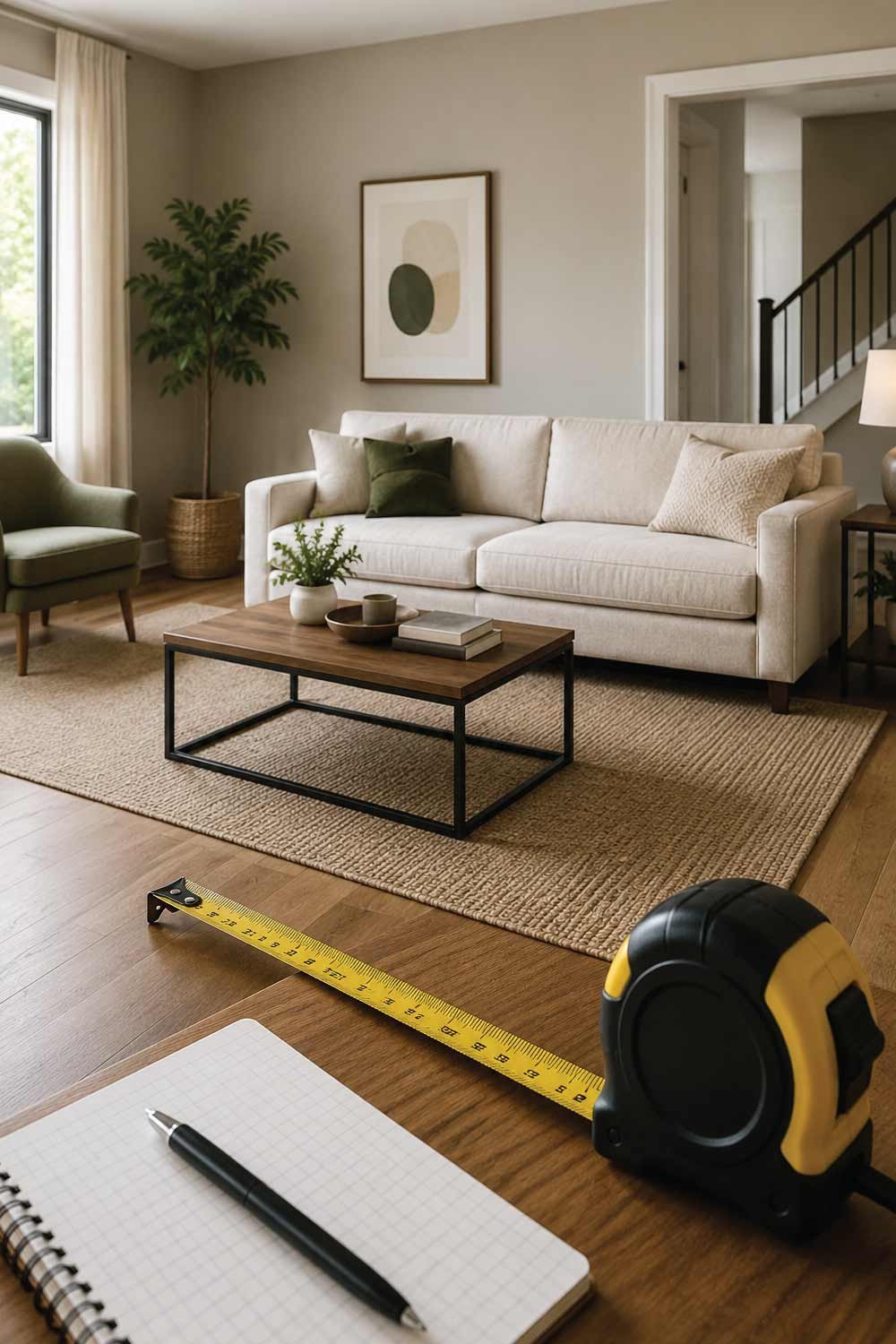
- Blocking walkways or doorways
- Overwhelming a small room
- Looking undersized in a large area
- Making the space feel cramped or unbalanced
- Being impossible to move through hallways or staircases
Even a few inches can make a big difference. Measuring properly ensures your sofa complements your room rather than competing with it.
Step 1: Measure Your Room, Not Just the Spot
Before deciding where a sofa might go, it is important to measure the entire room so you understand the overall proportions and available space. This helps you avoid choosing furniture that feels too large, too small, or poorly balanced once it is placed inside the room.
What to Measure
- Room length and width
- Ceiling height
- Window and door placement
- Permanent fixtures (fireplaces, built-ins, radiators)
Write these measurements down. A sofa should feel proportional to the room not dominate it or disappear within it.
Step 2: Define the Sofa’s Placement
Before taking precise sofa measurements, you should clearly decide where it will be placed. This step is essential because the same sofa can fit perfectly in one layout but feel awkward in another depending on direction, spacing, and surrounding furniture arrangement.
Ask yourself:
- Will it sit against a wall or float in the room?
- Will it face a TV, fireplace, or window?
- Will it be paired with chairs, a coffee table, or an ottoman?
Once placement is clear, measure the available space for the sofa, not just the wall length.
Leave Breathing Room
Good spacing is just as important as sofa size, because tight layouts can make even a well-chosen sofa feel uncomfortable and restrictive. Proper clearance ensures smooth movement and a visually balanced living area.
- Leave 12–18 inches of walking space around major furniture
- Avoid pushing a sofa tight against every wall unless space is very limited
Step 3: Measure the Maximum Sofa Width
The sofa width is the most important dimension because it determines how well the furniture fits along your chosen wall or placement area. If the sofa is too wide, it can block movement and overwhelm the layout; if too small, it may look lost in a larger room.
How to Measure
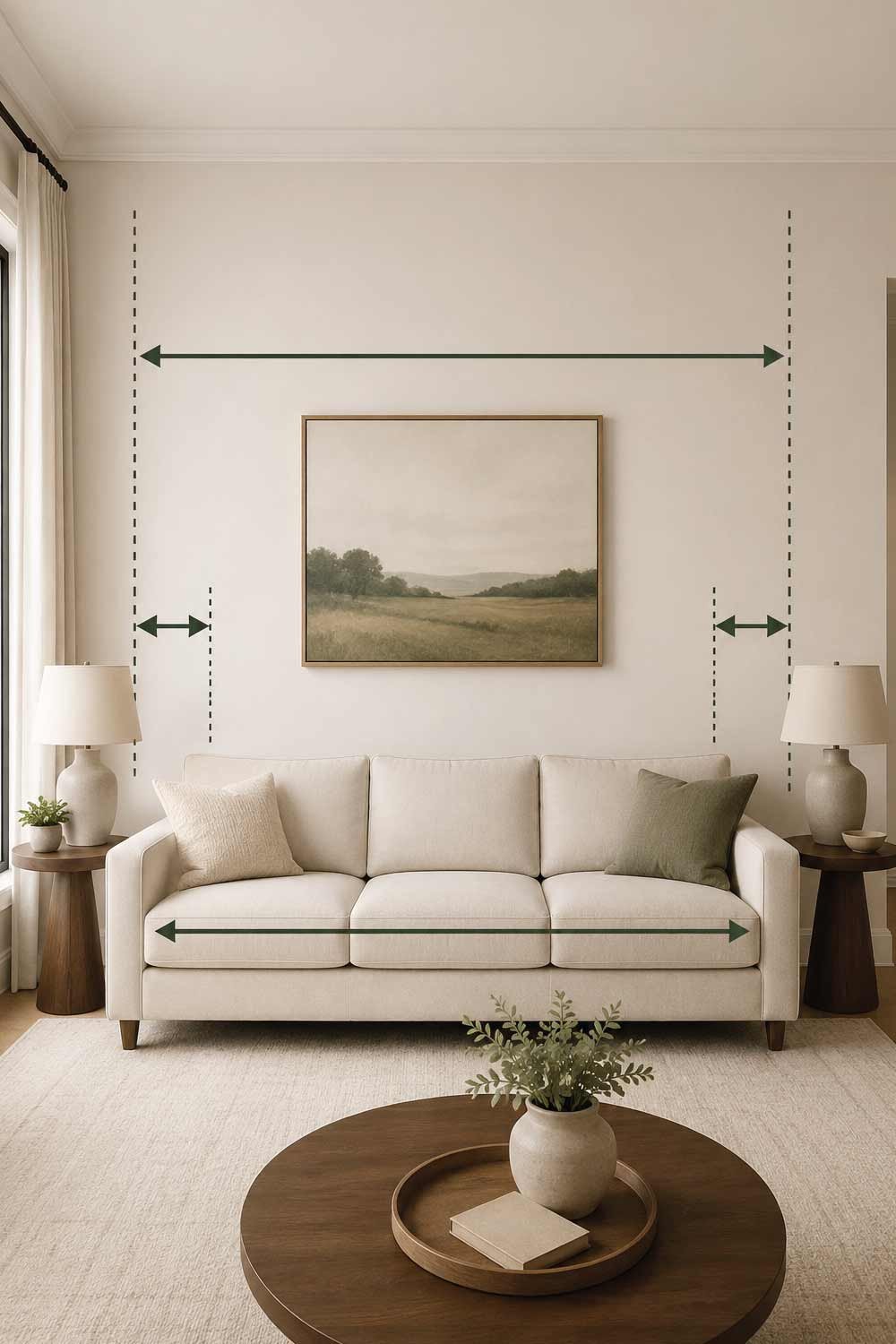
- Measure the wall or area where the sofa will sit
- Subtract space for:
- End tables
- Walkways
- Lamps or floor vents
Example:
If your wall is 120 inches wide, and you want 12 inches of space on each side, your sofa should be no wider than 96 inches.
Step 4: Measure Sofa Depth for Comfort and Flow
Sofa depth is often ignored, but it greatly affects both comfort and how easily you can move around the room. A sofa that is too deep may feel luxurious but can reduce walking space, while a shallow one may improve flow but sacrifice lounging comfort.
Standard Sofa Depths
- Shallow depth: 32–35 inches (good for small rooms)
- Standard depth: 36–38 inches
- Deep seating: 40–45 inches (great for lounging, but needs space)
Why Depth Matters
Sofa depth influences how open or crowded a room feels. It also affects seating posture and usability depending on your height and lifestyle. Proper depth ensures the sofa is comfortable without disrupting room circulation.
- Deep sofas can block walkways
- Shallow sofas may feel uncomfortable for tall people
- Excess depth can crowd coffee tables or traffic paths
Measure from the wall forward to ensure enough clearance for walking and tables.
Step 5: Measure Sofa Height and Back Clearance
Sofa height is just as important as width and depth because it affects how the furniture interacts with walls, windows, and the overall visual balance of the room. A well-sized sofa should feel integrated into the space rather than obstructing light, décor, or architectural features.
Key Height Measurements
- Back height of sofa
- Arm height (especially near windows)
- Seat height (for comfort and accessibility)
Watch Out For
- Blocking windows or light
- Interfering with wall art or shelving
- Clashing with low ceilings
In rooms with low ceilings, lower-profile sofas help maintain an open feel.
Step 6: Consider Scale and Proportion
Even when a sofa technically fits your measurements, it still needs to look proportionate within the room. Scale and visual balance determine whether the furniture feels harmonious or out of place compared to walls, ceiling height, and surrounding décor.
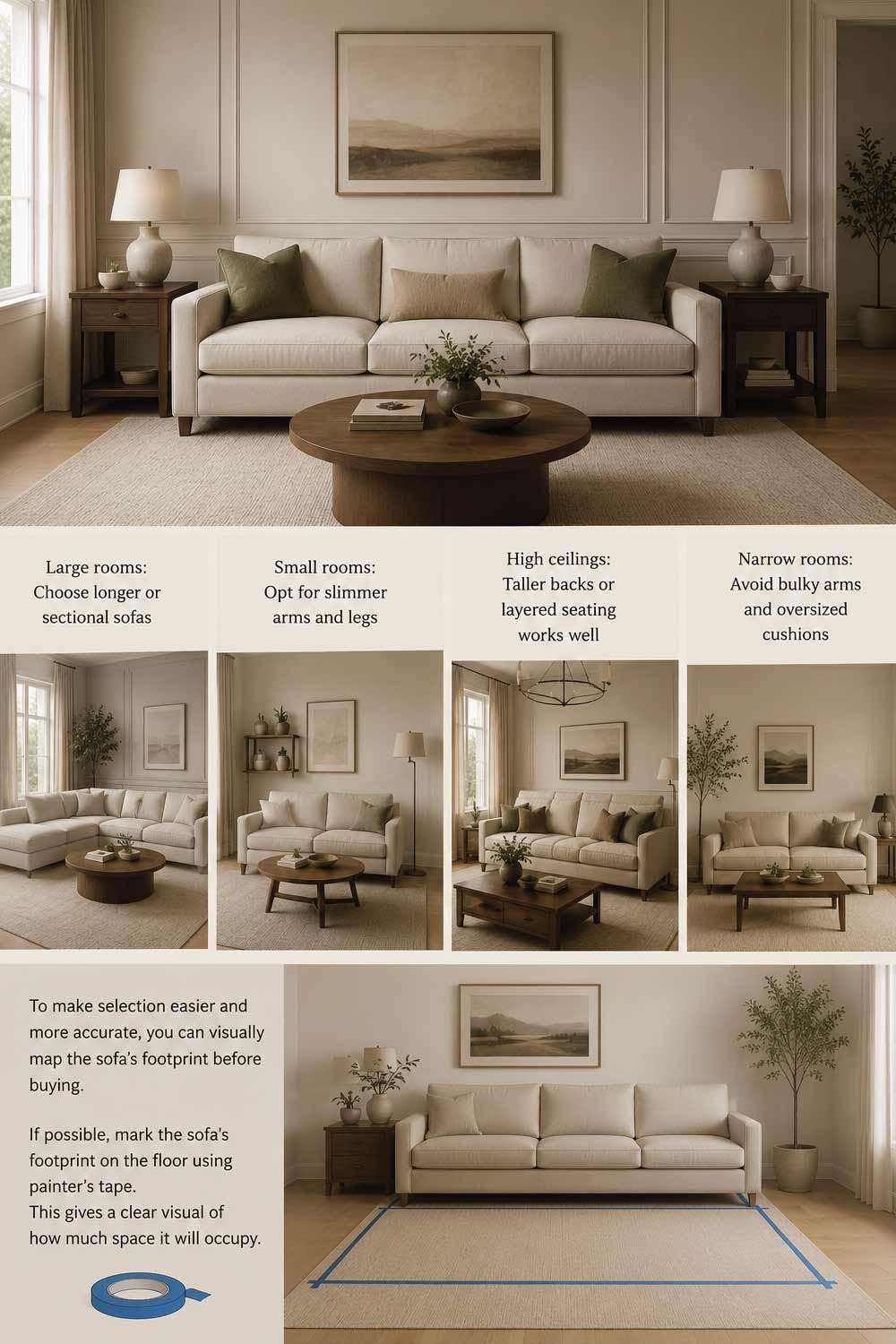
Visual Balance Tips
- Large rooms: Choose longer or sectional sofas
- Small rooms: Opt for slimmer arms and legs
- High ceilings: Taller backs or layered seating works well
- Narrow rooms: Avoid bulky arms and oversized cushions
To make selection easier and more accurate, you can visually map the sofa’s footprint before buying. This helps you clearly understand how much space it will occupy and how it will affect movement and layout.
If possible, mark the sofa’s footprint on the floor using painter’s tape. This gives a clear visual of how much space it will occupy.
Step 7: Measure Doorways, Hallways, and Staircases
One of the most overlooked steps when buying a sofa is ensuring it can actually be delivered into your home. Many sofas fit perfectly in a room but fail to pass through doors, narrow corridors, or tight stair turns, causing serious delivery issues or even returns.
Measure These Areas
- Front door width and height
- Hallways
- Staircases (width, height, and turns)
- Elevators (if applicable)
Key Sofa Dimensions to Compare
- Overall width
- Height (especially the back)
- Depth (front to back)
Some sofas have removable legs or modular sections, which can make delivery easier.
Step 8: Account for Other Furniture
A sofa should never be chosen in isolation because it directly interacts with the rest of your furniture. Proper spacing ensures your room feels balanced, functional, and easy to move through, rather than crowded or awkwardly arranged.
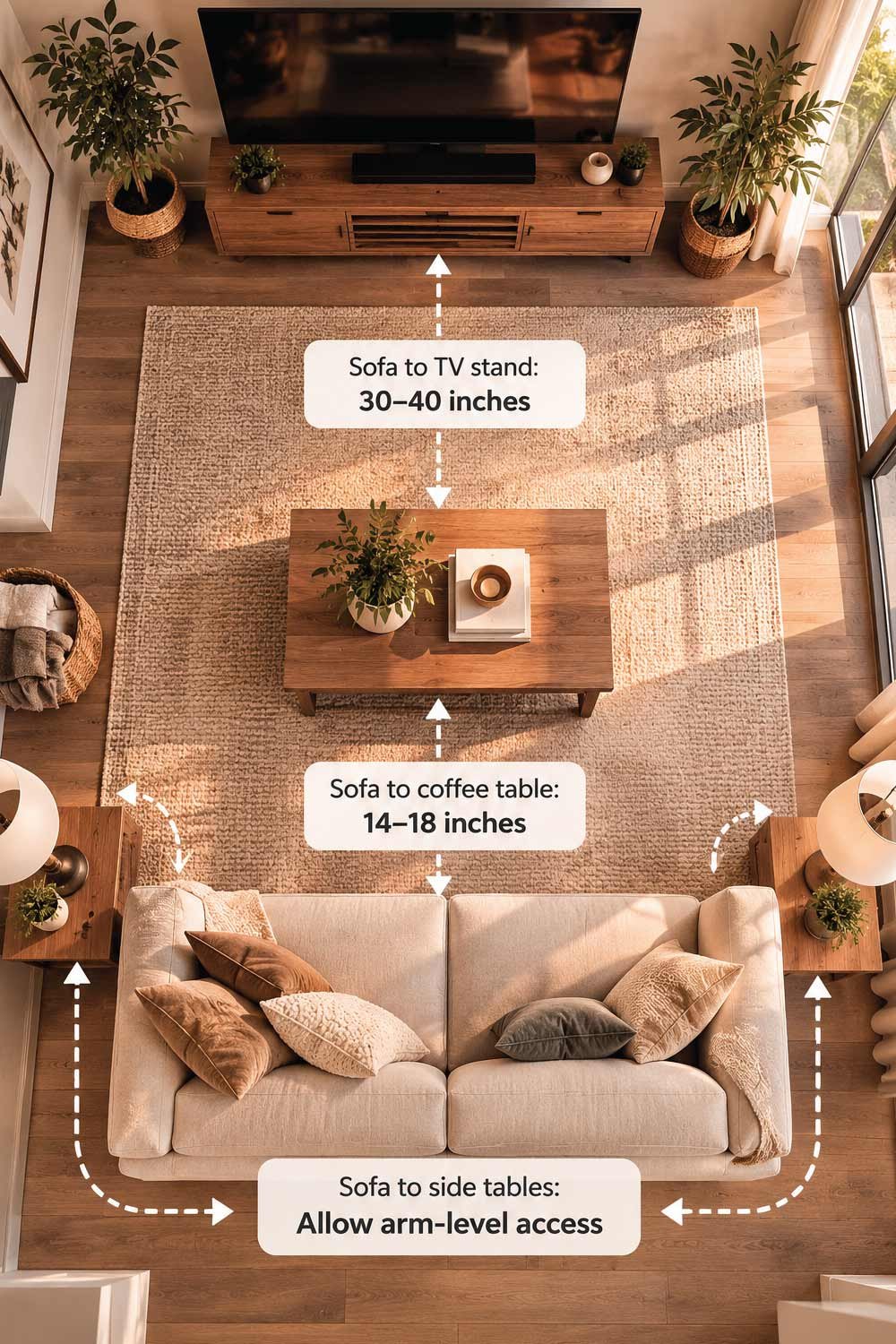
When planning placement, always consider how the sofa will relate to surrounding pieces like tables, entertainment units, and side furniture. This helps maintain comfort and visual harmony across the entire room.
Recommended Clearances
- Sofa to coffee table: 14–18 inches
- Sofa to TV stand: 30–40 inches
- Sofa to side tables: Allow arm-level access
If you already own other furniture, measure those pieces too to ensure harmony and flow.
Step 9: Choose the Right Sofa Style for Your Space
Sofa style is closely linked to measurements because the design you choose can significantly influence how large or open your room feels. Even with the same dimensions, different styles can either create a sense of spaciousness or make a room feel more compact and crowded.
Small Spaces
In smaller rooms, lighter and more compact sofa styles work best because they reduce visual bulk and improve movement flow. Designs with open space underneath or minimal armrests help the room feel less crowded and more breathable.
- Apartment-size sofas
- Loveseats
- Sofas with exposed legs
- Armless or narrow-arm designs
Large Spaces
Larger rooms can handle heavier, more substantial sofa designs that help fill the space and create a cozy, anchored seating area. These styles improve balance and prevent the room from feeling empty or disconnected.
- Sectionals
- Deep seating sofas
- Sofas with wide arms or tufted backs
The right style can make a room feel larger or more inviting—even without changing dimensions.
Step 10: Don’t Forget Seat Dimensions
Seat dimensions are critical because they directly affect comfort during daily use. Even if a sofa fits perfectly in your room, incorrect seat height or depth can make it uncomfortable for sitting, relaxing, or standing up easily.
Important Seat Measurements
- Seat height: Typically 17–19 inches
- Seat depth: 20–24 inches
- Seat width: Depends on number of cushions
Shorter users may prefer higher seats for easier standing, while taller users often benefit from deeper seating that provides better leg support and relaxation comfort.
Step 11: Use Online Product Dimensions Carefully
When buying a sofa online, relying only on images can be misleading, so checking detailed measurements is essential. Product photos may not accurately represent scale, making it easy to misjudge how the sofa will actually fit in your space.
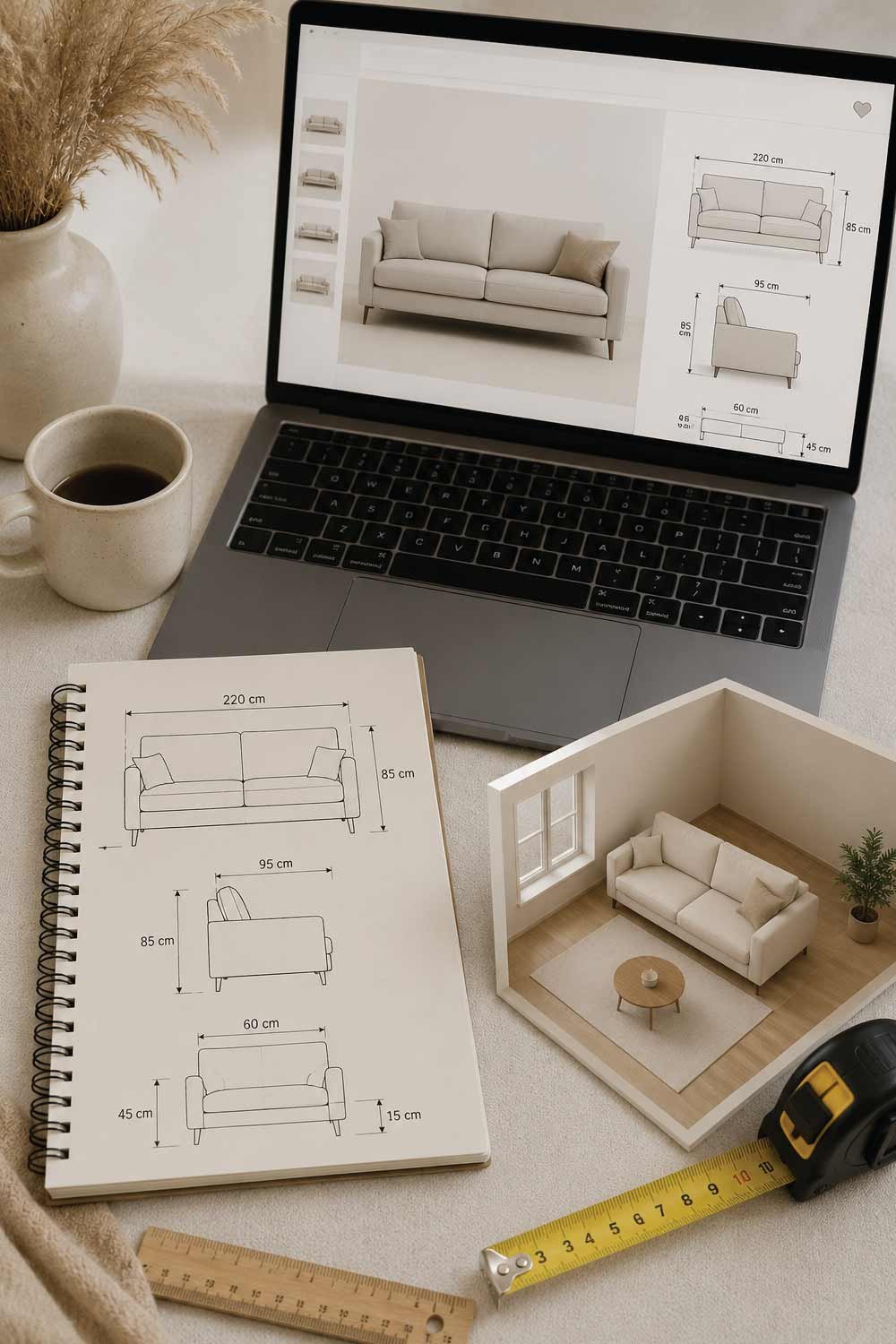
Always review full technical dimensions instead of focusing only on the listed width or appearance. This helps ensure the sofa matches your room expectations and avoids costly sizing mistakes.
Look for:
- Overall width, depth, and height
- Seat depth and height
- Arm height
- Leg height
Compare these directly with your room measurements to avoid surprises.
Step 12: Plan for the Future
A sofa is a long-term investment, so it should be chosen with future needs in mind, not just your current room layout. Thinking ahead helps ensure the furniture remains useful and adaptable even if your living situation changes.
Ask yourself:
- Will you move in the next few years?
- Will this sofa need to work in another room?
- Will your family size or lifestyle change?
Choosing a sofa that fits multiple potential spaces adds long-term value.
Common Measuring Mistakes to Avoid
When buying a sofa, even small measuring errors can lead to big problems in fitting, comfort, and overall room balance. Many people focus only on basic dimensions but overlook practical space usage and delivery constraints, which often results in a sofa that doesn’t work well in real-life conditions.
- Measuring only wall length
- Ignoring delivery pathways
- Forgetting space for tables and walkways
- Assuming showroom scale matches your home
- Overcrowding small rooms
Avoiding these mistakes makes the entire buying process smoother.
Final Thoughts
Measuring for a sofa isn’t just about numbers it s about creating a space that feels comfortable, functional, and visually balanced. Taking the time to measure your room, define placement, account for flow, and consider scale will help you choose a sofa that truly fits your space and your lifestyle.
A well-measured sofa doesn’t just fit it enhances how you live in your home every day.
Also Read:
