
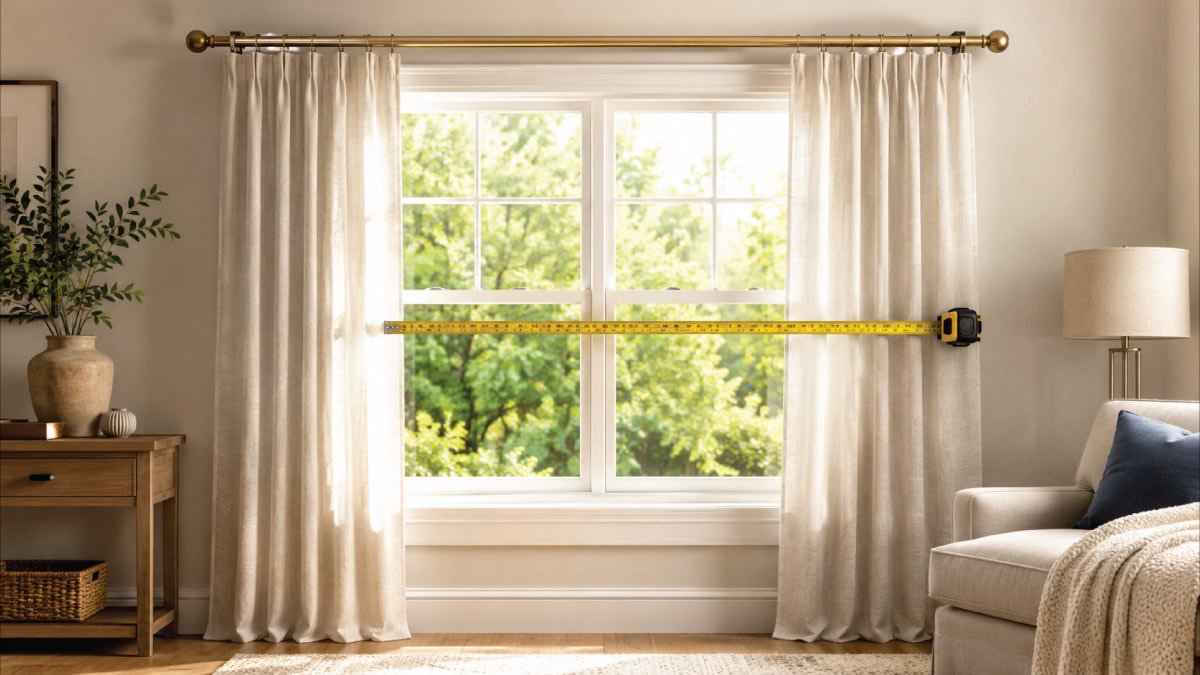
Measuring a window for curtains may seem simple, but it’s one of the most important steps in achieving a polished, professional-looking result. Curtains that are too short, too narrow, or poorly positioned can throw off the entire look of a room no matter how beautiful the fabric or color may be. On the other hand, properly measured curtains enhance proportions, improve light control, and elevate your interior design.
This comprehensive guide will walk you through exactly how to measure a window for curtains, whether you’re hanging them inside or outside the frame, using curtain rods or tracks, or aiming for a dramatic floor-length finish.
Why Accurate Curtain Measurements Matter
Curtains are not just decorative fabric pieces; they are functional elements that influence lighting, privacy, insulation, and overall room aesthetics, so precise measurements are essential to ensure they hang properly and enhance the space instead of disrupting its visual balance.
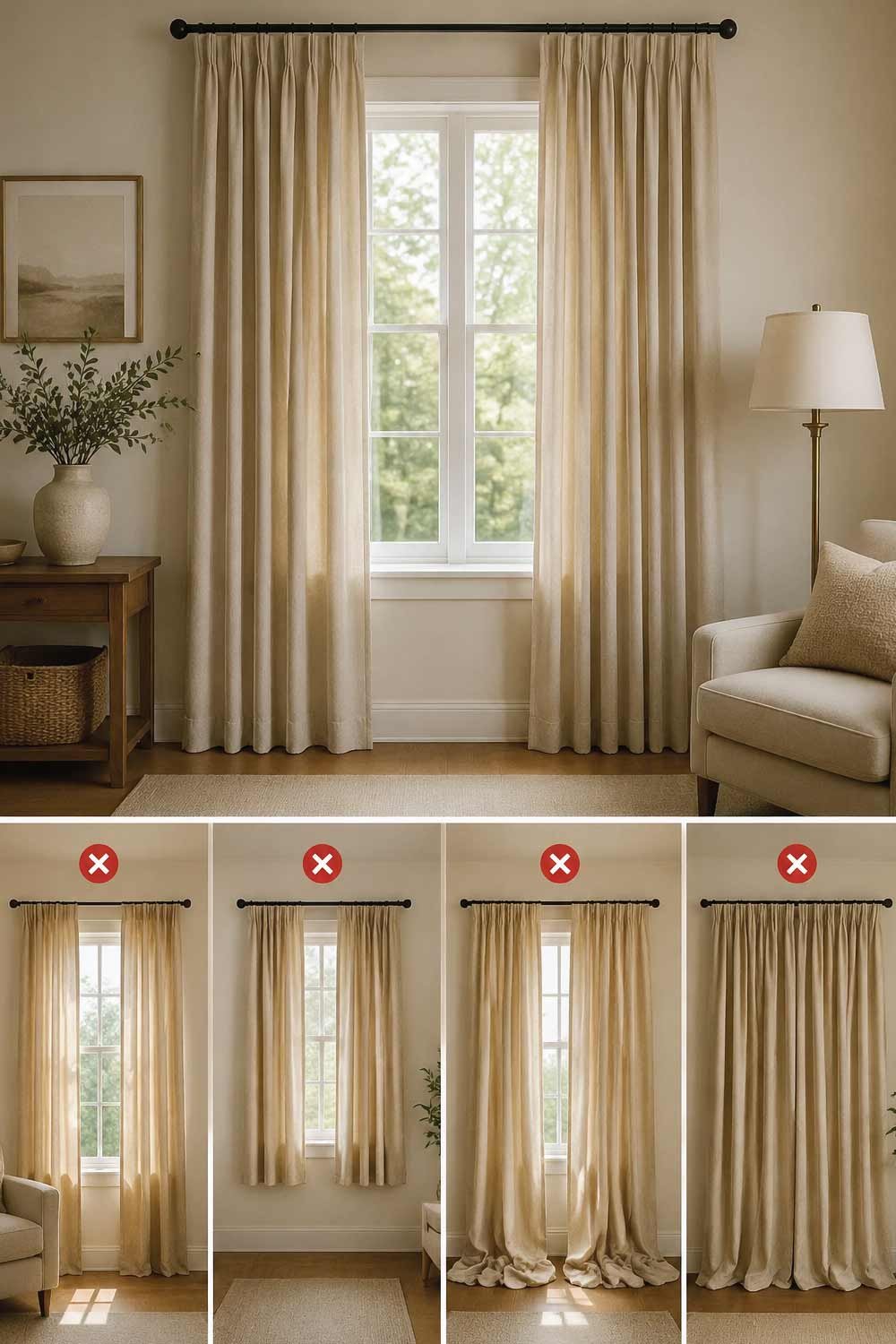
Curtains serve both functional and decorative purposes. They control light, provide privacy, improve insulation, and add softness to a space. Incorrect measurements can lead to:
- Gaps that let in unwanted light
- Curtains that look skimpy or overcrowded
- Awkward lengths that feel unfinished
- Extra costs due to reordering
Measuring correctly from the start ensures your curtains look intentional, balanced, and tailored to your room.
Tools You’ll Need Before You Start
Having the right tools ready before measuring helps ensure accuracy, saves time, and reduces the chances of mistakes that could affect the final fit and appearance of your curtains once installed.
- A metal tape measure (preferred for accuracy)
- Pencil and paper (or notes app)
- Step stool or ladder (for tall windows)
- Curtain rod or track (or its specifications)
Always measure in inches or centimeters consistently do not mix units.
Step 1: Decide How You will Hang the Curtains
Before taking any measurements, you first need to decide the mounting style because it directly changes both the width and height calculations, and affects how large, bright, and visually balanced your windows and room will appear once the curtains are installed.

Inside Mount vs Outside Mount
Inside Mount: Curtains hang inside the window recess. This creates a clean, tailored look and works best for minimal or modern spaces.
Outside Mount: Curtains hang above and beyond the window frame. This is the most popular option because it makes windows appear larger and allows more light when curtains are open.
Most decorative curtains use an outside mount, so this guide will focus primarily on that method.
Step 2: Measure the Curtain Width
Curtain width is not just about covering the glass it is about achieving the right visual fullness, proper light control, and balanced proportions that enhance the overall look of the window and room design.
Measuring the Window Width
Start by measuring the actual window opening or frame depending on your mounting choice, as this becomes the baseline for calculating rod size and curtain coverage.
Measure the width of the window from:
Frame to frame (inside mount)
Outer trim to outer trim (outside mount)
Write this number down.
Determining Curtain Rod Width (Outside Mount)
For outside-mounted curtains, the rod must extend beyond the window frame to ensure the curtains can fully open without blocking light or reducing the visible glass area.
Standard rule:
Extend the rod 6 to 12 inches on each side of the window
For small windows: 6 inches
For large windows or dramatic looks: 10–12 inches
Example:
- Window width: 48 inches
- Rod extension: 8 inches on each side
- Rod width = 64 inches
Calculating Curtain Panel Width
Curtain fullness determines how rich, layered, and elegant your curtains look when closed, so proper width calculation is essential for achieving a balanced and professional appearance.
General fullness guidelines:
- Minimal fullness: 1.5× rod width
- Standard fullness: 2× rod width
- Luxurious fullness: 2.5× rod width
Example:
Rod width: 64 inches
Standard fullness: 64 × 2 = 128 inches total curtain width
If using two panels, divide by two:
Each panel: 64 inches wide
Always check the actual panel width, not just the labeled size.
Step 3: Measure Curtain Length
Curtain length is one of the most visually powerful elements in interior design because it directly influences how tall, elegant, and well-proportioned a room feels, making accurate measurement essential for achieving the intended style and overall aesthetic impact.
Where to Measure From
The starting point of your measurement depends on how your curtain hardware is installed, since different heading styles (rings, grommets, or rod pockets) slightly change where the fabric actually begins to fall.
Measure from:
The top of the curtain rod
Or the bottom of the rings or grommets (depending on heading style)
Measure straight down to your desired endpoint.
Open Article: Chaise Lounge Size Guide with Chart: Complete Guide
Common Curtain Length Options
Each curtain length style creates a different mood and level of formality, so your choice should match both the function of the room and the visual effect you want to achieve.
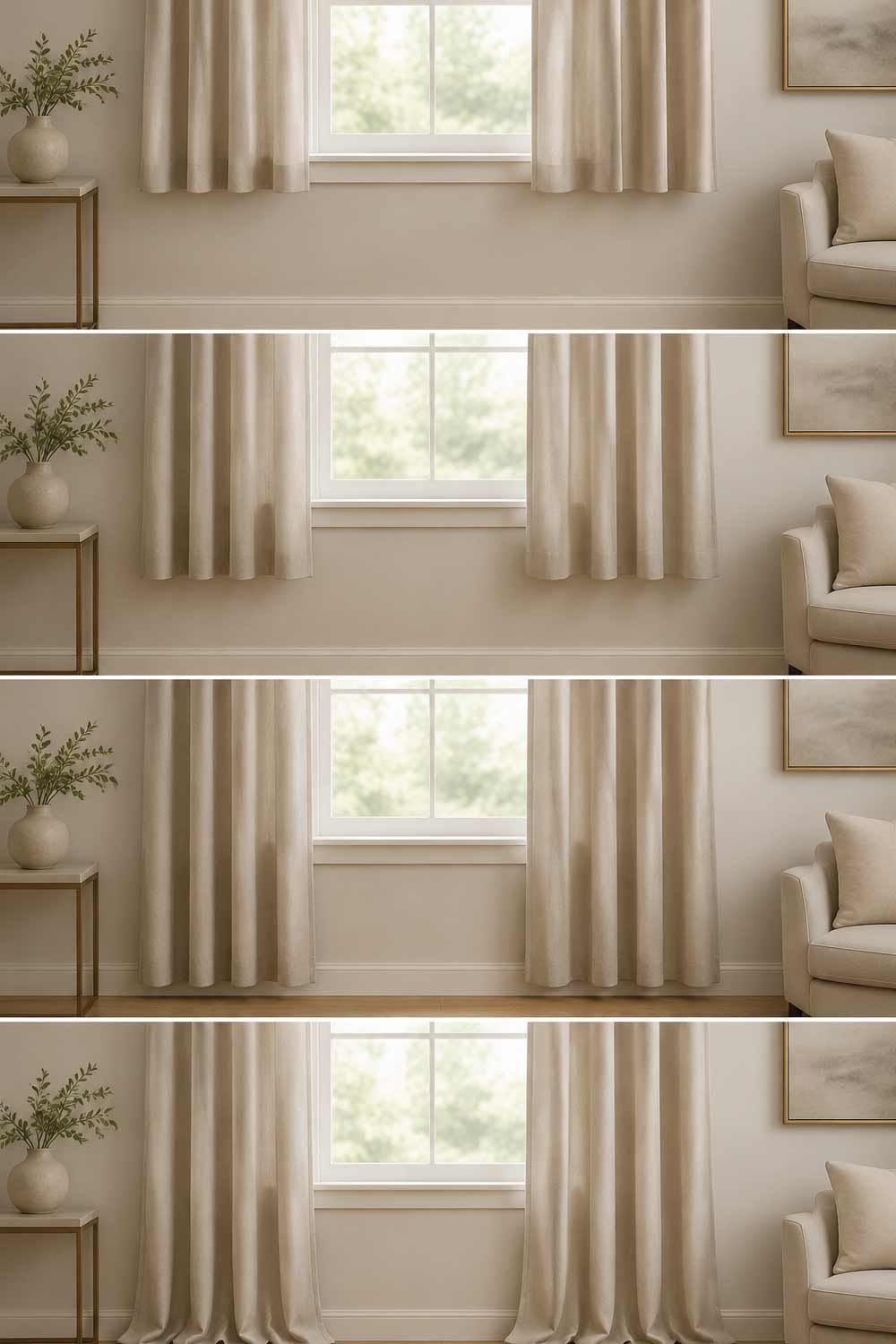
1. Sill Length
Ends about ½ inch above the window sill.
Best for kitchens, bathrooms, or casual spaces.
2. Apron Length
Ends about 4 inches below the window sill.
Ideal for windows with radiators or furniture below.
3. Floor Length (Most Popular)
Ends about ½ inch above the floor.
Creates a clean, tailored look suitable for living rooms and bedrooms.
4. Puddle Length
Extends 1–3 inches onto the floor.
Adds drama and elegance, best for formal rooms.
Ceiling Height Matters
Ceiling height and rod placement significantly affect how tall and spacious a room feels, and adjusting curtain height can visually elongate walls and improve the overall sense of vertical balance in the space.
For a taller, more elegant appearance:
Mount the curtain rod 4–6 inches above the window frame
Or halfway between the window frame and ceiling
In rooms with standard ceilings, you can mount rods close to the ceiling for a height-enhancing effect
Always measure from the final rod position, not the window frame.
Open Article: Sectional Sofa Size Guide: Choosing the Perfect Fit for Your Space
Step 4: Measuring for Different Curtain Styles
Different curtain heading styles affect how the fabric sits on the rod or track, which means your measurements must account for how each style naturally hangs, gathers, or drops to ensure the final length looks accurate and professionally finished.
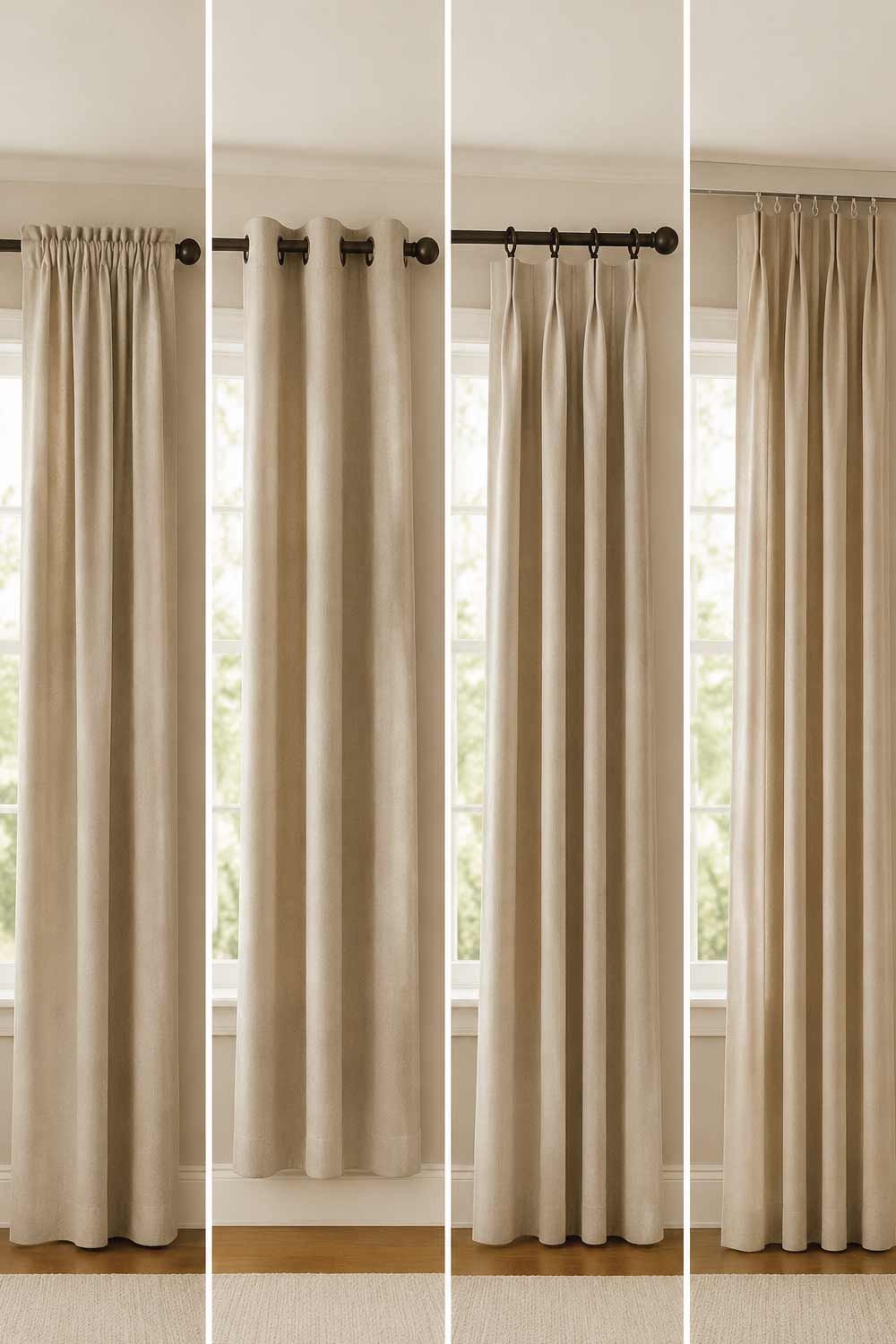
Rod Pocket Curtains
Rod pocket curtains create a gathered, traditional look because the fabric slides directly onto the rod, which slightly affects how high the curtain actually hangs compared to other styles.
Measure from the top of the rod to desired length
Account for the pocket depth, as fabric gathers on the rod
Grommet Curtains
Grommet curtains have metal rings built into the fabric, allowing them to glide smoothly on the rod, but also causing them to sit a bit lower due to the ring structure.
Measure from the top of the rod
These typically hang slightly lower due to the grommet placement
Ring Top Curtains
Ring top curtains use separate rings that attach above the fabric, adding extra height and slightly changing the final drop length compared to rod only measurements.
Measure from the bottom of the ring
Rings add height, so double-check final length
Track Systems
Curtain tracks are commonly used for a modern, clean ceiling-mounted look, so measurements must be based on the exact installed position of the track rather than the window frame.
Measure from the top of the track to the desired endpoint
Ensure track placement is finalized before measuring
Step 5: Measuring Special Window Types
Special window shapes and openings require adjusted measuring approaches because standard straight-window rules do not always apply, and each design demands tailored curtain planning for proper coverage and movement.
Bay Windows
Bay windows create angled sections that require individual measurement for each panel to ensure proper fit, alignment, and a smooth, coordinated curtain appearance across all sections.
Measure each window section separately. Use individual rods or a flexible track system for a seamless look.
Sliding Glass Doors
Sliding doors need wider curtain coverage than standard windows, as they are frequently used entry points, requiring smooth movement and full opening clearance without obstruction.
Treat doors like oversized windows. Measure the full width and ensure enough panel width for smooth operation.
Extra Tall Windows
Extra-tall windows often extend beyond standard curtain lengths, requiring careful measurement and sometimes custom solutions to maintain proportion, elegance, and proper floor alignment.
Custom-length curtains are often required. Measure carefully and consider ceiling-mounted tracks for best results.
Common Curtain Measuring Mistakes to Avoid
Even small measurement errors can significantly affect how your curtains look and function, often leading to poor fit, uneven coverage, or an unbalanced appearance that can be costly and frustrating to correct after installation.
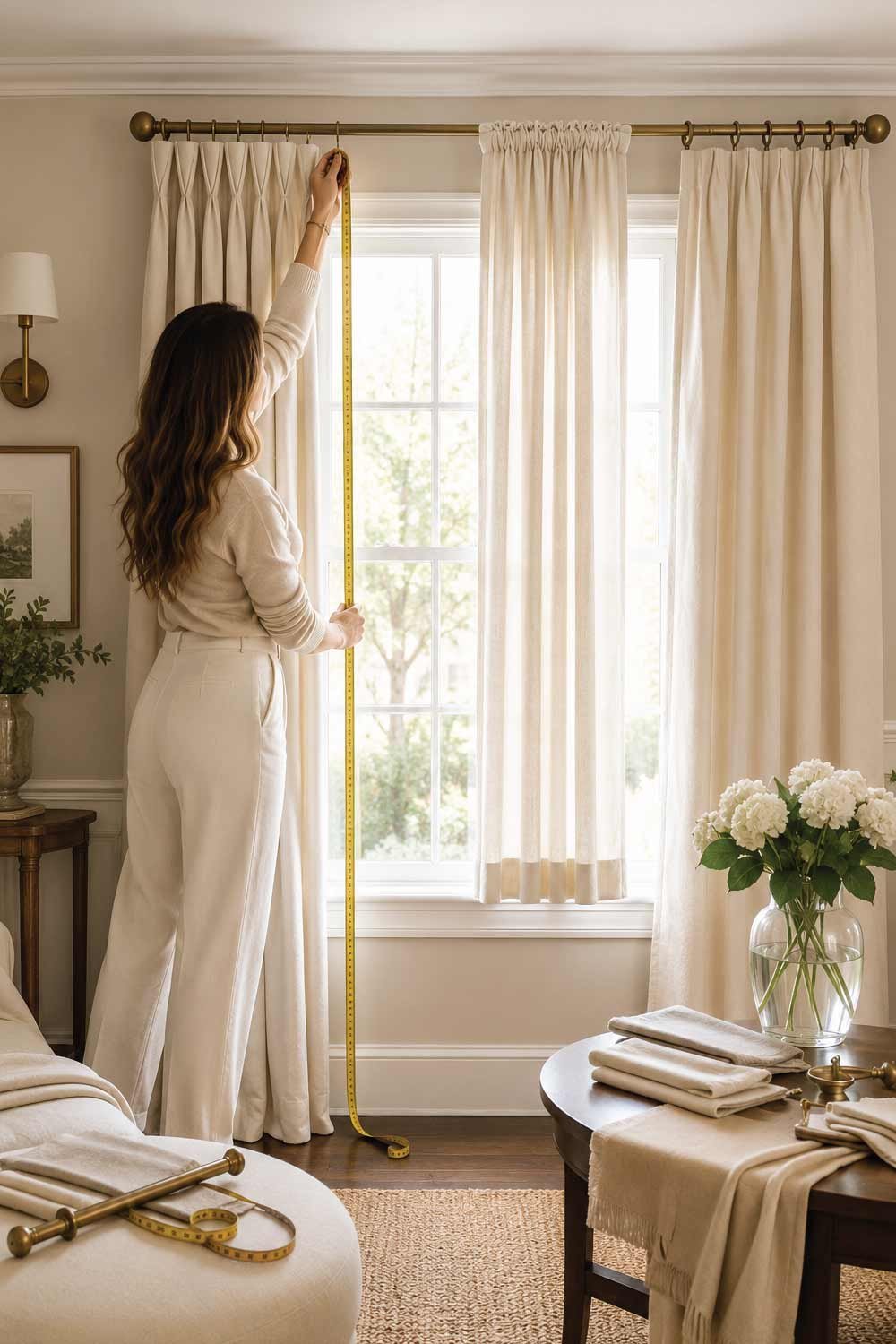
Avoid these common errors:
- Measuring only the window, not the rod
- Forgetting to add extra width for fullness
- Measuring before deciding rod placement
- Ignoring curtain heading style
- Ordering curtains that are too short
When in doubt, measure twice and write everything down.
Open Article: Small Room Furniture Size Guide: How to Choose the Perfect
Should You Size Up or Down?
When your measurements fall between standard curtain sizes, choosing the slightly larger option is almost always the better decision because it provides flexibility for adjustments and ensures better coverage and visual balance in the final setup.
If your measurement falls between two standard sizes, always size up. Curtains that are slightly longer or wider can often be adjusted, hemmed, or styled creatively. Curtains that are too small rarely work.
Measuring for Custom Curtains
Custom curtains require more precise and detailed measurements because manufacturers rely entirely on the information you provide to create a perfect fit tailored specifically to your window and design preferences.
For custom curtains, manufacturers typically ask for:
- Finished width per panel
- Finished length
- Heading style
- Mounting type (rod or track)
Provide precise measurements and clarify whether they include hems and headers.
Final Measurement Checklist
Before placing your order, confirm:
- Rod width (including extensions)
- Total curtain width needed
- Panel width and quantity
- Curtain length from correct starting point
- Curtain heading type
- Floor clearance or puddling preference
Final Thoughts
Learning how to measure a window for curtains is a small effort that delivers big rewards. Proper measurements ensure your curtains frame the window beautifully, enhance the room’s proportions, and function exactly as intended. Whether you’re going for a crisp modern look or a soft, luxurious drape, accurate measuring is the foundation of success.
Take your time, plan carefully, and don’t rush the process. With the steps outlined in this guide, you can measure with confidence and achieve stunning, well-fitted curtains that transform your space.
