
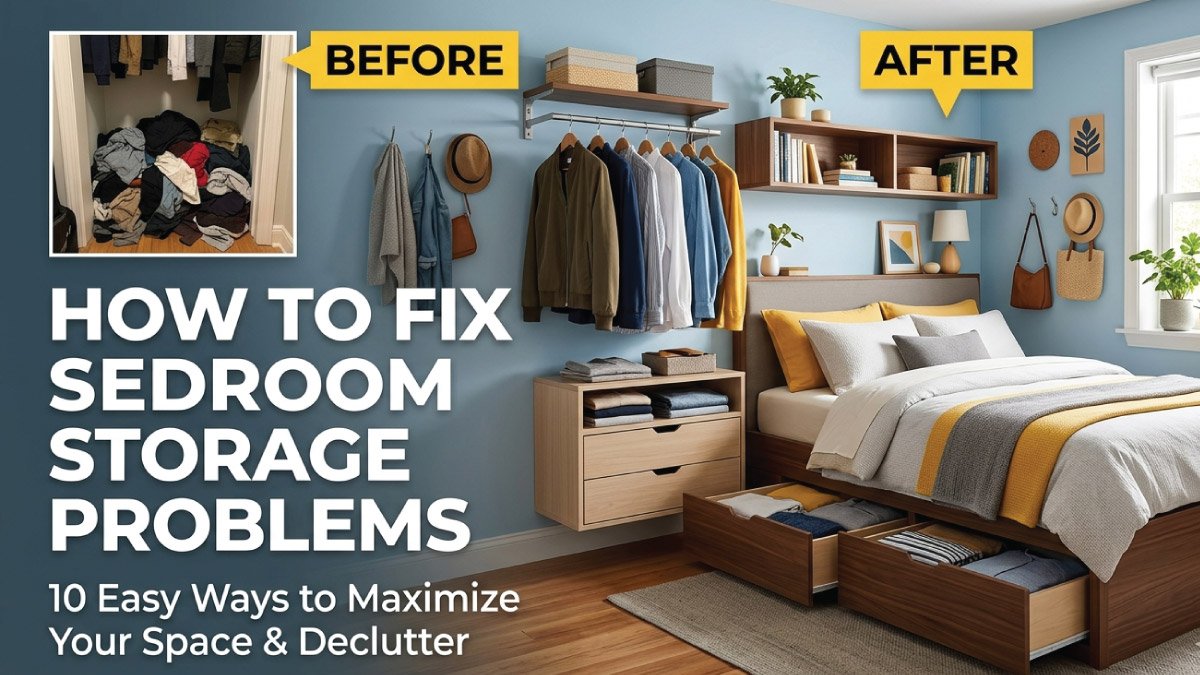
A small bedroom can quickly feel cluttered, stressful, and impossible to manage—especially when you’re trying to fit clothes, accessories, and daily essentials into a limited space. But the truth is, the problem isn’t always the size of the room. It’s how the space is used.
I’ve personally struggled with a small bedroom for years. At one point, I had clothes piled on chairs, shoes under the bed in random boxes, and no proper system for organizing anything. It felt overwhelming every single day. But once I started applying smart storage solutions, my room completely transformed—not by making it bigger, but by making it smarter.
In this guide, I’ll walk you through practical, proven strategies to fix small bedroom storage problems, along with personal insights that actually worked in real life.
1. Start with Decluttering (The Real Game-Changer)
Before you even think about buying storage boxes, shelves, or new furniture, you need to face the real issue: too much stuff in too little space.
Most people believe their bedroom is small, but in reality, the bigger problem is over-accumulation. When every drawer is full, every surface has items, and your wardrobe is overflowing, no amount of storage solutions will truly fix the issue.
Why Decluttering Comes First
Decluttering is not just about cleaning—it’s about resetting your relationship with your space. When you remove unnecessary items, you create breathing room. Your bedroom stops feeling suffocating and starts feeling functional.
A small room can feel spacious if it’s well-organized, while a large room can feel cramped if it’s cluttered.
My Personal Experience
I remember one weekend when I finally got frustrated with my room. Clothes were everywhere—on the chair, on the bed, even on the floor sometimes. My wardrobe was full, yet I felt like I had “nothing to wear.”
So I decided to take action.
I didn’t try to organize everything at once—that would’ve been overwhelming. Instead, I followed a simple method:
Step 1: Take Everything Out
Yes, everything. I emptied my wardrobe, drawers, and shelves. Seeing everything in one place was shocking. I didn’t realize how much I owned.
Step 2: Divide Into 3 Categories
- Keep – items I actually use and love
- Donate – items in good condition but no longer needed
- Trash – damaged or unusable items
At first, I was hesitant. “What if I need this later?” That thought kept coming back. But I pushed through.
Step 3: Be Honest
I asked myself simple questions:
- Have I used this in the last year?
- Do I actually like this?
- Would I buy this again today?
If the answer was no, it didn’t stay.
The Result
I removed nearly 40% of my belongings.
That’s not an exaggeration.
And instantly:
- My wardrobe had space
- My drawers were easier to use
- My room felt lighter
It wasn’t just physical—it was mental relief too.
Practical Tips for Decluttering
1. Follow the “1-Year Rule”
If you haven’t used something in a year, chances are you won’t.
2. Avoid Emotional Attachment
We often keep things for sentimental reasons:
- Old clothes
- Gifts
- “Just in case” items
But keeping everything holds you back. Keep memories, not clutter.
3. Declutter in Phases
Don’t try to do everything in one day:
- Day 1: Clothes
- Day 2: Accessories
- Day 3: Misc items
4. Use the “Box Method”
Put doubtful items in a box. If you don’t use them in 30 days, remove them permanently.
Final Thought
Decluttering is the foundation. Without it, every other storage solution is temporary.
👉 Less stuff = more space = less stress
2. Use Vertical Space (Walls Are Your Best Friend)
When your floor space is limited, the smartest thing you can do is build upward.
Most people ignore their walls, but in a small bedroom, walls are prime real estate.
Why Vertical Space Matters
In small rooms:
- Floor = limited
- Walls = underused
Using vertical space allows you to:
- Store more without crowding
- Keep the floor clean
- Make the room feel taller and more open
My Personal Experience
My room had almost no floor space left. I had a side table, a small cabinet, and still felt like I had nowhere to put things.
One day, I decided to try something simple: install floating shelves above my bed.
At first, I wasn’t sure it would make a big difference—but it completely changed the room.
Those 3 shelves replaced:
- My side table
- My book stack
- My random clutter zones
Now everything had a place:
- Books
- Phone charger
- Small decor
- Daily essentials
And the best part? My room looked clean and modern.
Smart Ways to Use Vertical Space
1. Floating Shelves
- Perfect for books and decor
- Doesn’t take floor space
- Easy to install
2. Wall-Mounted Cabinets
- Great for hidden storage
- Ideal for small items
- Keeps room looking clean
3. Hooks & Pegboards
- Hang bags, hats, accessories
- Super affordable
- Easy to rearrange
4. Over-the-Bed Storage
- Shelves or cabinets above bed
- Use for items you don’t need daily
Pro Tips
- Don’t overload shelves (keep it neat)
- Use matching colors for a clean look
- Keep frequently used items within reach
Final Thought
👉 Your walls are empty storage waiting to be used.
3. Invest in Multi-Functional Furniture
In a small bedroom, every piece of furniture should do more than one job.
If something only serves one purpose, it’s taking up valuable space.
Why Multi-Functional Furniture is Important
Small spaces require smart thinking. Instead of adding more furniture, you need to make each item work harder.
My Personal Experience
Switching to a storage bed was a game-changer.
Before:
- Wardrobe full
- Clothes everywhere
- No space for seasonal items
After:
- Winter clothes under bed
- Extra sheets stored neatly
- Shoes hidden but accessible
It freed up my wardrobe almost completely.
Best Multi-Functional Furniture Ideas
1. Storage Bed
- Drawers or lift-up storage
- Perfect for clothes and bedding
2. Ottoman Storage
- Seating + storage
- Great for small items
3. Foldable Desk
- Use when needed
- Save space when not
4. Storage Bench
- Works as seating + hidden storage
Tips
- Always check storage capacity before buying
- Choose compact designs
- Avoid bulky furniture
Final Thought
👉 Smart furniture = more space without expanding your room
Also Read:
4. Maximize Under-Bed Storage
The space under your bed is one of the most powerful hidden storage areas.
Yet most people waste it.
My Personal Experience
Initially, I used to just throw random boxes under my bed. It became messy and hard to manage.
Then I switched to organized storage bins with labels.
Now:
- Everything has a place
- I can find things easily
- No more mess
What to Store Under Bed
- Seasonal clothes
- Shoes
- Extra bedding
Storage Options
- Plastic bins
- Vacuum bags
- Rolling drawers
Tips
- Label everything
- Keep frequently used items accessible
- Clean under the bed regularly
Final Thought
👉 Hidden space is your secret weapon
5. Organize Your Wardrobe Like a Pro
A messy wardrobe creates a messy room.
Even if your room is clean, a cluttered wardrobe will ruin everything.
My Personal Experience
Switching to slim hangers was a simple but powerful change.
I gained space for 15–20 more clothes instantly.
Smart Hacks
- Use slim hangers
- Add shelf dividers
- Use hanging organizers
- Roll clothes
Tips
- Group items by type
- Keep daily items at eye level
- Store seasonal clothes separately
Final Thought
👉 An organized wardrobe = an organized life
6. Use the Back of Doors
Doors are one of the most ignored storage spaces.
My Personal Experience
I added a simple over-the-door organizer and used it for:
- Socks
- Belts
- Accessories
It completely cleared my drawers.
Ideas
- Hooks for bags
- Shoe organizers
- Accessory storage
Final Thought
👉 Small spaces = smart solutions
Also Read:
7. Go Minimal with Furniture
Too much furniture is one of the biggest mistakes in small bedrooms.
My Personal Experience
I removed one unused chair—and it made a huge difference.
The room instantly felt:
- Bigger
- Cleaner
- More breathable
What to Avoid
- Bulky wardrobes
- Extra furniture
- Oversized beds
What to Do Instead
- Keep essentials only
- Choose compact designs
- Use wall-mounted options
Final Thought
👉 Less furniture = more freedom
8. Use Storage Boxes & Baskets
Loose items are one of the biggest reasons a small bedroom feels messy—even when it’s technically “clean.” When things don’t have a defined place, they naturally spread across surfaces, shelves, and corners. This creates visual clutter, which makes your room feel smaller and more stressful.
That’s where storage boxes and baskets come in. They are simple, affordable, and incredibly effective.
Why Storage Boxes Matter
Think of storage boxes as “containers for control.” Instead of having:
- Random cables on a shelf
- Accessories scattered in drawers
- Clothes piled in corners
You group similar items into one place. This instantly creates order.
Best Uses for Storage Boxes
1. Under-Bed Storage
Use flat boxes to store:
- Seasonal clothes
- Shoes
- Extra bedding
This keeps items out of sight but still accessible.
2. Shelf Organization
Shelves can quickly become messy if items are not grouped. Use baskets to:
- Store books neatly
- Organize skincare or daily items
- Hide clutter
3. Closet Organization
Inside your wardrobe, boxes can:
- Separate accessories
- Store folded clothes
- Keep small items organized
My Personal Experience
Before using storage boxes, my room looked messy even after cleaning. Small things like chargers, socks, and random accessories were always lying around.
Then I bought a few simple baskets—and it changed everything.
Suddenly:
- My shelves looked clean
- My wardrobe felt organized
- My room looked more “designed”
Pro Tip: Matching Boxes
Using matching boxes or baskets creates a visual harmony. Even if your room is full, it still looks organized and aesthetic.
👉 When everything looks consistent, your brain sees less clutter.
Also Read:
9. Create Zones in Your Room
A small bedroom doesn’t mean you can’t have multiple functions. The key is to divide your room into zones.
Without zones, everything mixes together—sleeping, working, storage—which creates chaos.
Why Zones Are Important
Zoning helps:
- Improve organization
- Reduce clutter
- Create a sense of structure
Even in a small space, you can create separation.
Common Bedroom Zones
- Sleeping Area – Bed and essentials
- Work/Study Area – Desk or workspace
- Storage Area – Wardrobe, shelves
My Personal Experience
I used to do everything on my bed—sleep, work, eat, scroll phone. It made my room feel messy and unproductive.
Then I added a small foldable desk in one corner.
That simple change:
- Created a clear workspace
- Made my bed feel like a relaxing zone again
- Reduced clutter
Now, each area had a purpose.
How to Create Zones in a Small Room
- Use furniture placement to define areas
- Use rugs or lighting for visual separation
- Keep each zone clutter-free
Final Thought
👉 When everything has a place, your room feels bigger and calmer.
10. Use Light Colors and Mirrors
This may not seem like a storage solution—but it has a powerful effect on how your room feels.
A dark, crowded room feels smaller. A bright, open room feels larger—even if the size is the same.
Why It Works
Light colors:
- Reflect light
- Make spaces feel open
- Reduce visual heaviness
Mirrors:
- Create illusion of depth
- Reflect natural light
- Make rooms feel bigger
My Personal Experience
My room used to feel tight and cramped, especially at night.
Then I added:
- Light-colored bedsheets
- A medium-sized mirror
The difference was immediate.
The mirror reflected light from the window, making the room feel almost 30% larger visually.
Tips for Best Results
- Use white, beige, or soft pastel tones
- Avoid heavy, dark colors
- Place mirror opposite a window
Final Thought
👉 A brighter room feels like a bigger room.
11. Rotate Seasonal Items
One of the smartest ways to save space is simple: don’t keep everything accessible all year round.
Your wardrobe doesn’t need:
- Winter jackets in summer
- Summer clothes in winter
Why Rotation Matters
Keeping all items at once:
- Overfills your wardrobe
- Makes finding things harder
- Creates unnecessary clutter
My Personal Experience
I used to keep all my clothes in one place. My wardrobe was always full, and I struggled to find anything.
Then I started rotating items seasonally.
What I Did
- Packed winter clothes during summer
- Stored them in vacuum bags
- Kept them under the bed
The result:
- My wardrobe became spacious
- Daily use became easier
- My room felt less cluttered
Benefits
- Saves space
- Keeps wardrobe organized
- Protects clothes
Final Thought
👉 Not everything needs to be within reach all the time.
Also Read:
12. Use Hidden Storage Spaces
Small rooms often have unused hidden spaces—you just need to find them.
Where to Look
- Behind curtains
- Under tables
- Inside headboards
- Corners of the room
My Personal Experience
I discovered a small gap behind my curtain area. Initially, it was unused.
I placed a storage box there for rarely used items—and it worked perfectly.
Now I use that space for:
- Old files
- Extra items
- Seasonal stuff
Why Hidden Storage Works
- Keeps clutter out of sight
- Maximizes unused space
- Keeps room looking clean
Final Thought
👉 Hidden spaces = hidden opportunities
13. Keep Surfaces Clean
Even if your storage is perfect, cluttered surfaces can ruin everything.
Why It Matters
Your eyes go directly to visible areas:
- Bed
- Table
- Shelves
If these are messy, the whole room feels messy.
Simple Rule
👉 If you don’t use it daily, don’t keep it visible.
My Personal Habit
Every night, I spend just 5 minutes resetting my room:
- Clear table
- Fold clothes
- Put items back
It sounds simple—but it’s powerful.
Result
- Room stays clean daily
- No big cleaning sessions needed
- Less stress
Final Thought
👉 Clean surfaces = calm mind
14. Use Labels (Seriously Helpful)
Labels might seem small—but they make a huge difference.
Why Labels Work
They:
- Give everything a fixed place
- Make finding items easier
- Save time
My Method
I labeled:
- Storage boxes
- Drawers
- Seasonal items
Now I don’t waste time searching.
Example
Instead of opening 5 boxes, I just read:
- “Winter Clothes”
- “Accessories”
- “Documents”
Final Thought
👉 Labels turn chaos into system
15. Build a Simple Daily Routine
At the end of the day, storage isn’t just about space—it’s about habits.
You can organize your room perfectly once—but without habits, it will go back to messy.
My Daily Routine
- Make bed in the morning
- Put clothes back immediately
- 5-minute cleanup at night
Why It Works
Consistency keeps your room organized—not effort.
My Experience
Before this routine:
- Room got messy in 2–3 days
After:
- Room stays clean all the time
Final Thought
👉 Small daily actions create long-term results
Also Read:
Final Thoughts
Fixing a small bedroom storage problem isn’t about buying expensive furniture or having a bigger room.
It’s about:
- Smart planning
- Better habits
- Efficient use of space
I’ve personally gone from a cluttered, stressful room to a clean and functional space—without increasing size.
The biggest lesson?
👉 You don’t need more space—you need better systems.

I am Engineer Hassan, a professional engineer with over 15 years of experience in measurements, design accuracy, and furniture, appliance, and home product sizing. Through Size Helper, I provide research-based guides and trending 2026 home design ideas for living rooms, bedrooms, sofas, wall décor, fashion, and sports—helping users make confident, informed decisions. Every guide is written with real expertise, verified data, and a commitment to quality, usability, and style.