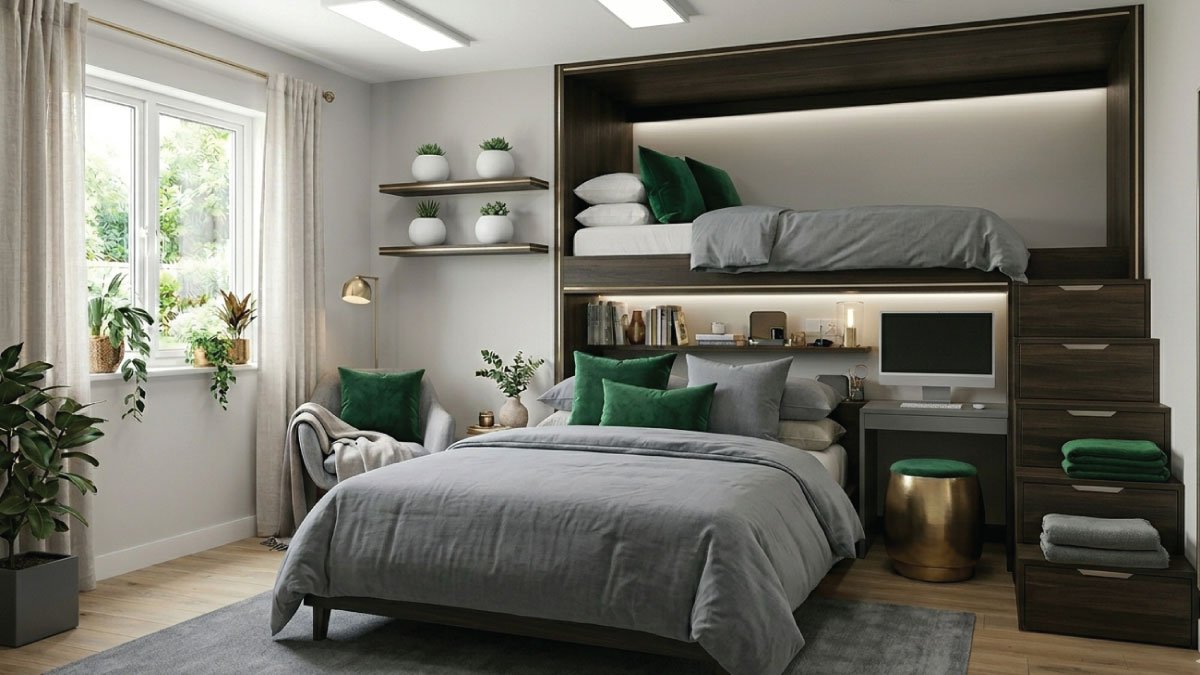
Creating a minimal bedroom is about more than just aesthetics—it’s a lifestyle choice. Minimalism emphasizes simplicity, functionality, and calmness, transforming your bedroom into a peaceful retreat.
Whether your room is small or spacious, minimal design can make it feel larger, more organized, and serene. Below, we explore 17 minimal bedroom ideas that balance style and practicality.
How I Transformed My Bedroom into a Minimal Peaceful Retreat
A few months ago, I walked into my bedroom after a long, exhausting day and felt something strange—it didn’t feel like a place to rest. Instead of calmness, I was greeted by clutter. Clothes were draped over a chair, my nightstand was filled with random items, and the room felt visually heavy. Even though I had decorated it with care over time, it somehow lost its purpose. It no longer felt like a sanctuary—it felt like another source of stress.
That night, as I tried to sleep, I realized how much my surroundings were affecting me. My mind felt just as cluttered as my room. I kept thinking about unfinished tasks, misplaced items, and the overwhelming feeling of “too much.” That’s when I understood something needed to change—not just for my room, but for my peace of mind.
The next morning, I decided to take a different approach. Instead of buying new décor or rearranging everything, I started by removing things. I picked up each item and asked myself a simple question: “Do I really need this here?” If the answer was no, it went away. Slowly, surfaces began to clear. My nightstand held only a lamp and a book. The chair was finally free of clothes. The room started to breathe again.
I then focused on simplifying the look. I chose soft, neutral tones for bedding and removed anything that felt too loud or distracting. I didn’t aim for perfection—I aimed for calmness. Even small changes, like folding blankets neatly or aligning furniture, made a noticeable difference.
At first, the room felt almost too simple. I wondered if I had taken it too far. But within a few days, I noticed something surprising. I felt more relaxed. Walking into my bedroom no longer overwhelmed me—it comforted me. Mornings felt lighter, and nights became more restful. There was a sense of clarity that I hadn’t experienced before.
What changed wasn’t just the appearance of the room—it was how it made me feel. I had created space, not just physically, but mentally as well.
That’s when I truly understood minimalism. It’s not about having less for the sake of it. It’s about removing distractions so you can focus on what truly matters. It’s about creating an environment that supports rest, clarity, and balance.
A minimalist bedroom doesn’t require expensive furniture or a complete redesign. It starts with intention. By keeping only what adds value and letting go of what doesn’t, you can transform your space into a peaceful retreat.
Sometimes, the most powerful change comes not from adding more—but from choosing less.
1. Monochromatic Palette
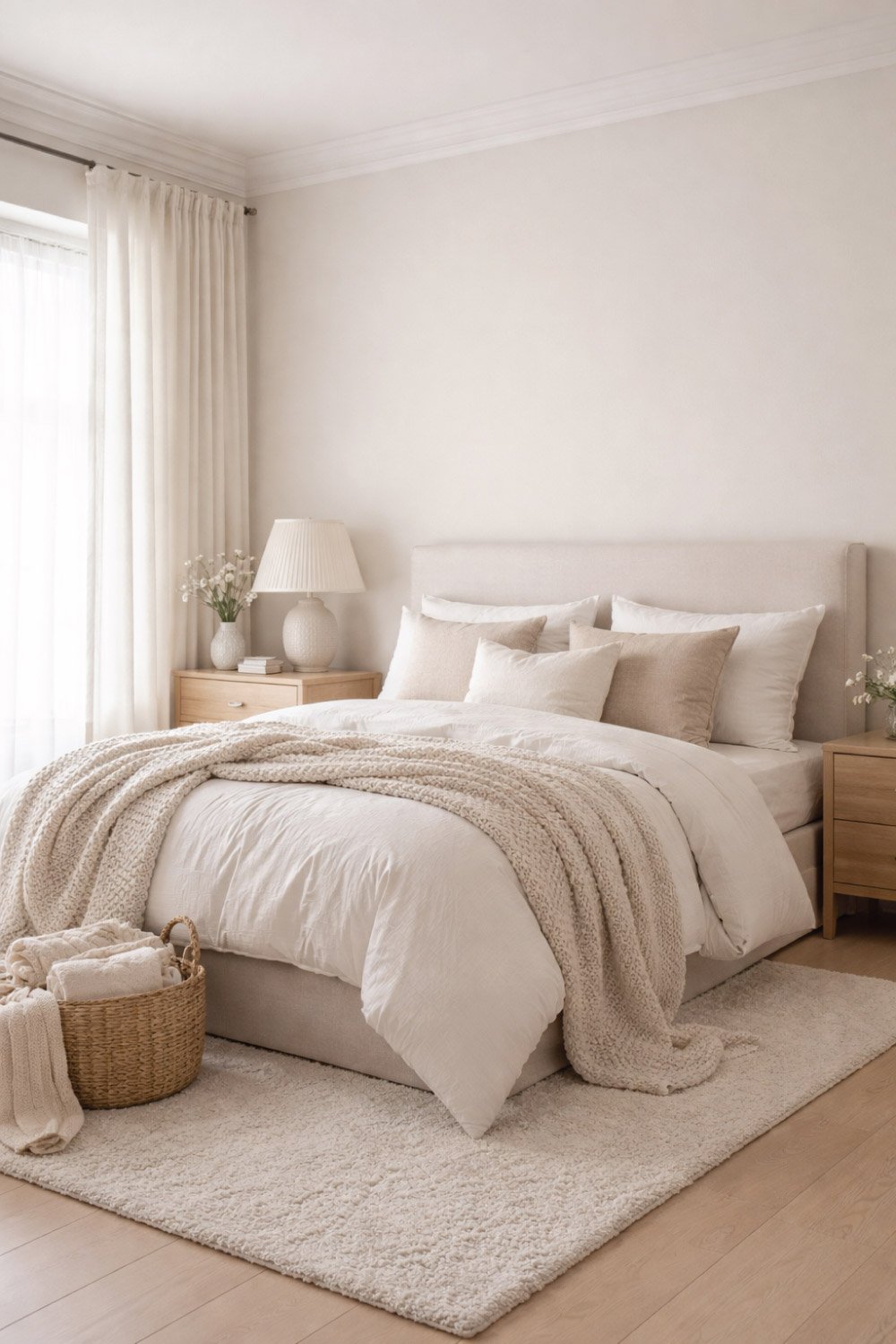
A monochromatic palette focuses on using a single base color and its different shades or tones throughout the bedroom. This design approach creates a calm, balanced environment that feels visually spacious and relaxing.
Light shades such as white, beige, cream, or soft pastels are often used because they reflect light and make the room feel airy. The key to making a monochromatic room interesting is layering textures like fabric, wood, or subtle patterns.
Instead of adding many colors, variation in materials and finishes adds depth while maintaining a minimalist appearance.
| Element |
Suggestion |
Reason |
| Walls |
Off-white or soft gray |
Keeps room light and airy |
| Bedding |
Light neutral tones |
Creates continuity and peace |
| Furniture |
White or matching wood tones |
Avoids visual clutter |
Key ideas for a monochromatic bedroom:
Choose one base color and vary it with lighter and darker shades.
Use textured fabrics such as linen, cotton, or knitted throws.
Keep furniture in similar tones to maintain harmony.
Add subtle patterns like stripes or woven textures.
Use soft lighting to enhance the calm atmosphere.
Limit accent colors to one or two small decorative pieces.
Tip: Add textures like a knitted throw or linen sheets to keep monochromatic rooms from feeling flat.
2. Floating Bed
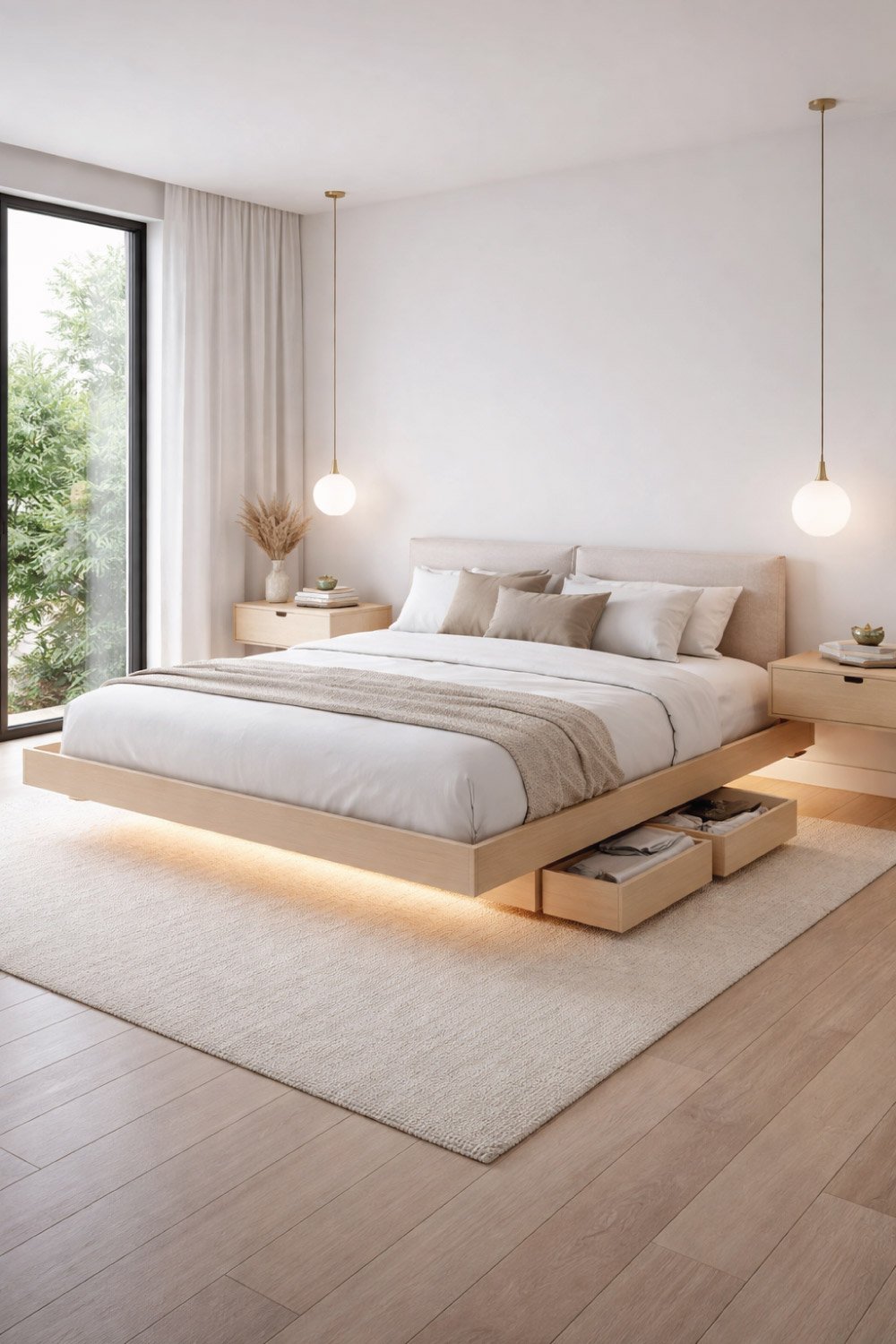
A floating bed is a modern design feature that creates the illusion that the bed is suspended slightly above the floor. This effect is achieved by hiding the legs or using a platform base that is recessed underneath.
In minimalist bedrooms, floating beds help the space feel more open and uncluttered. Because the base is visually lighter, the room appears larger and more organized.
Many floating beds also incorporate hidden storage drawers or lighting beneath the frame, combining style with practicality while maintaining a sleek and contemporary look.
| Feature |
Advantage |
| Floating bed frame |
Visual openness |
| Under-bed storage drawers |
Hidden functionality |
| Minimal headboard |
Keeps focus on simplicity |
Benefits of using a floating bed:
Makes the room appear larger and less crowded.
Creates a modern and elegant design statement.
Allows hidden storage without visible clutter.
Works well with minimalist and contemporary décor.
Easy to pair with neutral bedding styles.
Can include LED lighting for a stylish floating effect.
Keeps the floor area visually clean and open.
3. Minimalist Wall Art
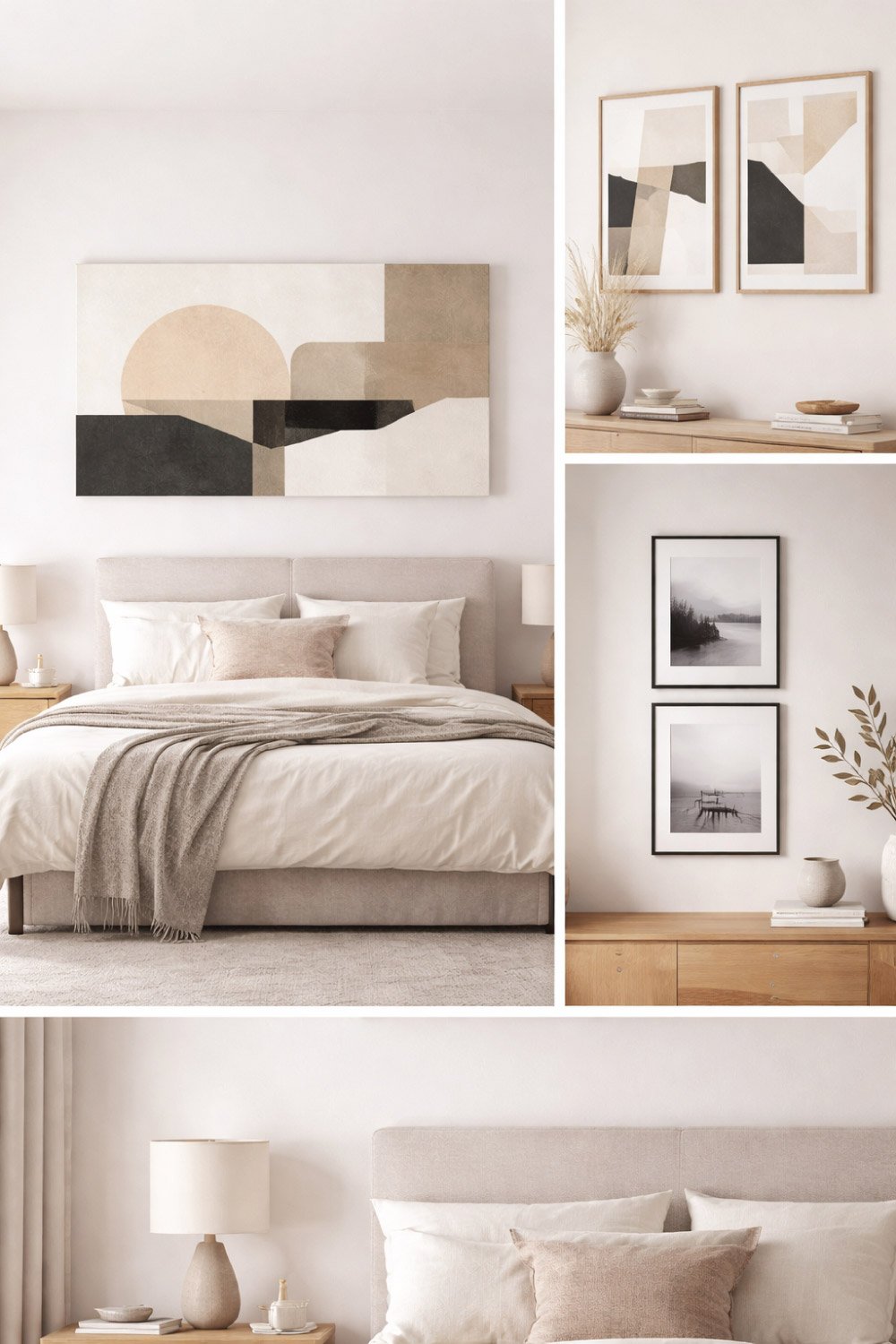
Minimalist wall art focuses on simplicity and intentional decoration. Instead of filling walls with multiple frames or decorations, the idea is to choose one or two meaningful pieces that stand out.
A single large artwork above the bed or a few carefully placed prints can create a focal point without overwhelming the space. Abstract designs, geometric shapes, or black-and-white photography work especially well in minimalist bedrooms.
These styles maintain visual interest while still keeping the room calm, balanced, and uncluttered.
| Type |
Placement |
Impact |
| Canvas art |
Above bed |
Creates focal point |
| Geometric prints |
Side wall |
Adds interest without clutter |
| Black & white photos |
Small frames |
Maintains minimalism |
Tips for choosing minimalist wall décor:
Select one large artwork instead of many small pieces.
Use neutral or soft color palettes.
Keep frames thin and simple.
Leave empty wall space to maintain balance.
Choose abstract or geometric designs.
Stick to a consistent theme or color scheme.
Avoid overly bright or complex artwork.
4. Scandinavian Influence
Scandinavian design is one of the most popular inspirations for minimalist bedrooms. It emphasizes light colors, natural materials, and functional furniture.
The goal is to create a warm yet simple environment that feels comfortable and uncluttered. Wood elements such as light oak or pine add natural warmth to neutral spaces, while soft fabrics like linen and cotton introduce subtle texture.
Scandinavian interiors also prioritize practicality, meaning each piece of furniture serves a purpose while maintaining clean lines and simple shapes.
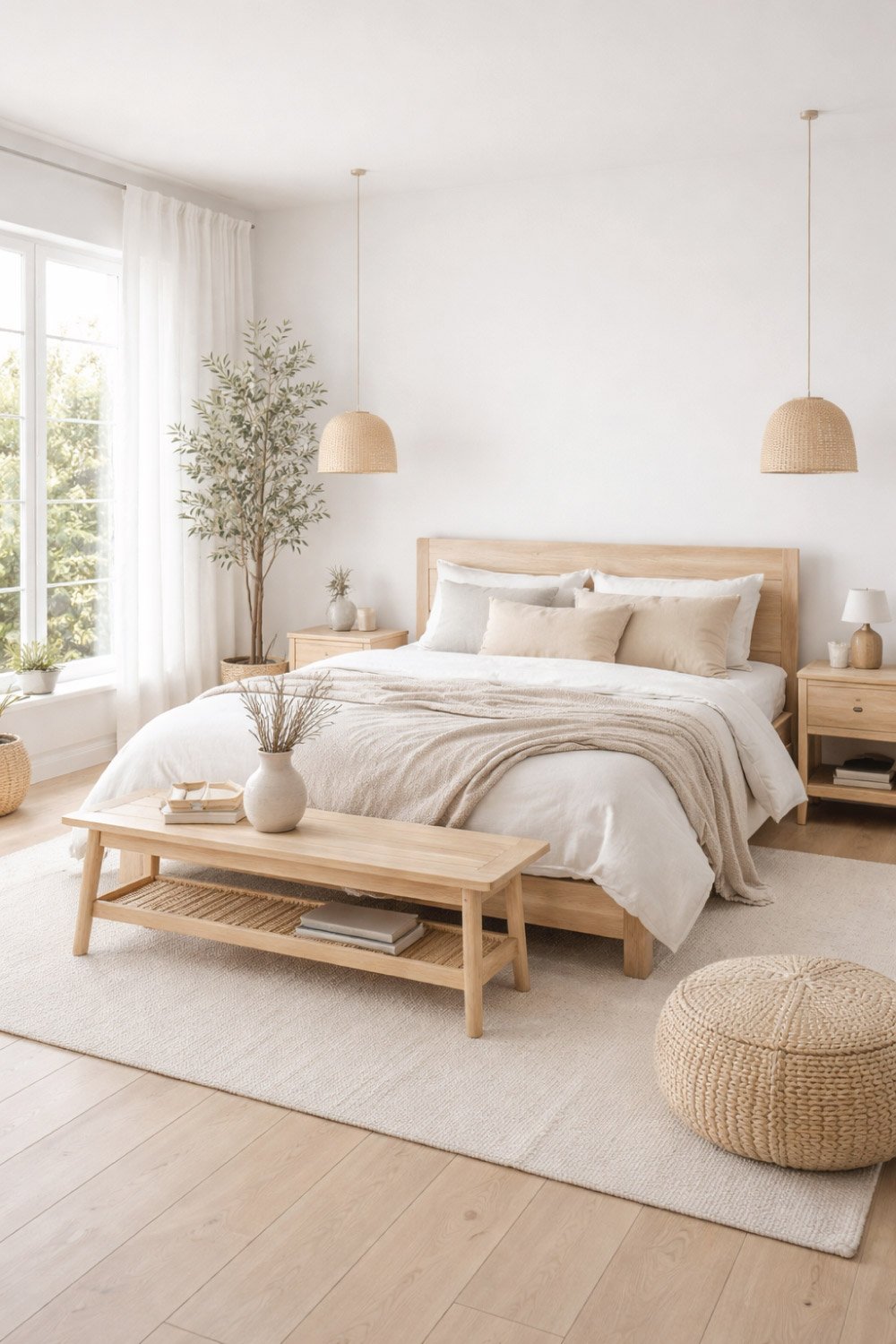
| Material |
Suggestion |
Benefit |
| Wood |
Light oak |
Brings warmth to neutral spaces |
| Bedding |
Linen or cotton |
Simple textures |
| Furniture |
Clean, functional designs |
Avoids unnecessary ornamentation |
Common Scandinavian bedroom features:
Light neutral color palettes.
Natural wood furniture and flooring.
Functional furniture with simple shapes.
Soft textiles such as wool or linen.
Plenty of natural light from windows.
Minimal decorative accessories.
Cozy elements like blankets or rugs.
5. Hidden Storage Solutions
Minimalist bedrooms require clean surfaces and minimal clutter, which makes hidden storage extremely important. Furniture that includes built-in storage helps keep everyday items organized while maintaining a tidy appearance.
Beds with lift-up mattresses, drawers beneath the frame, or storage benches provide extra space without adding additional furniture. Nightstands with drawers can hide personal items, keeping surfaces neat and simple.
These smart storage solutions allow homeowners to maintain a minimalist style while still having enough room to store clothing, bedding, and other essentials.
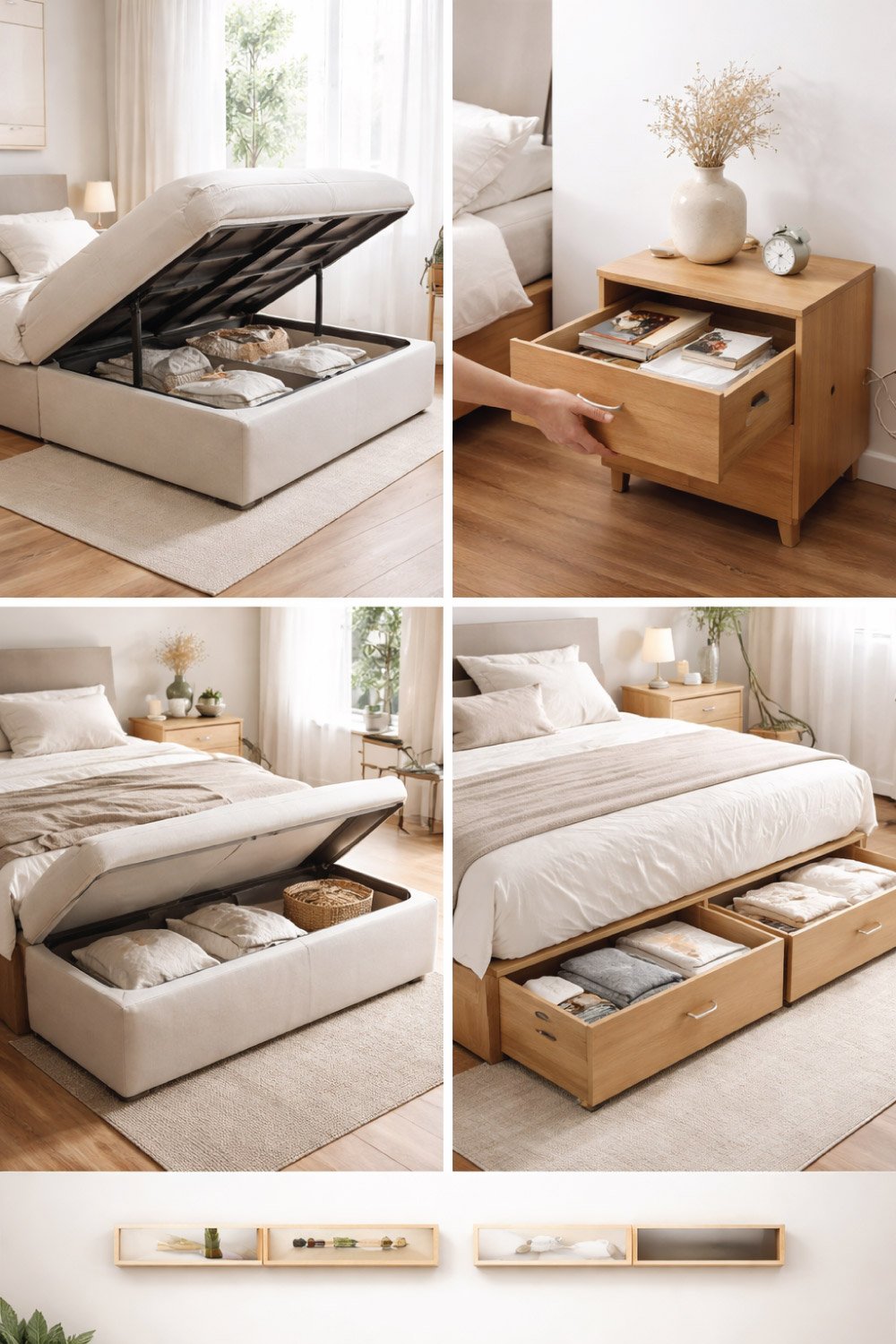
| Furniture Type |
Storage Option |
| Bed |
Lift-up mattress or drawers underneath |
| Nightstand |
Drawers instead of open shelves |
| Bench |
Storage inside at foot of bed |
Useful hidden storage ideas:
Use beds with built-in drawers.
Choose nightstands with closed storage compartments.
Add storage benches at the foot of the bed.
Use wall-mounted shelves with hidden cabinets.
Install under-bed boxes for seasonal items.
Keep surfaces clear by storing small items inside drawers.
Choose multifunctional furniture pieces.
6. Neutral Bedding with Texture
Neutral bedding is a key element in minimalist bedroom design because it maintains a calm and balanced atmosphere while still adding visual depth.
Instead of using bright colors or heavy patterns, neutral tones such as beige, cream, soft gray, or white create a peaceful sleeping environment.
The beauty of neutral bedding comes from its textures. Materials like linen, cotton, and velvet add subtle variety without making the room feel busy.
By layering different fabrics, the bed becomes a comfortable focal point that enhances warmth, softness, and elegance while still maintaining the minimalist style.
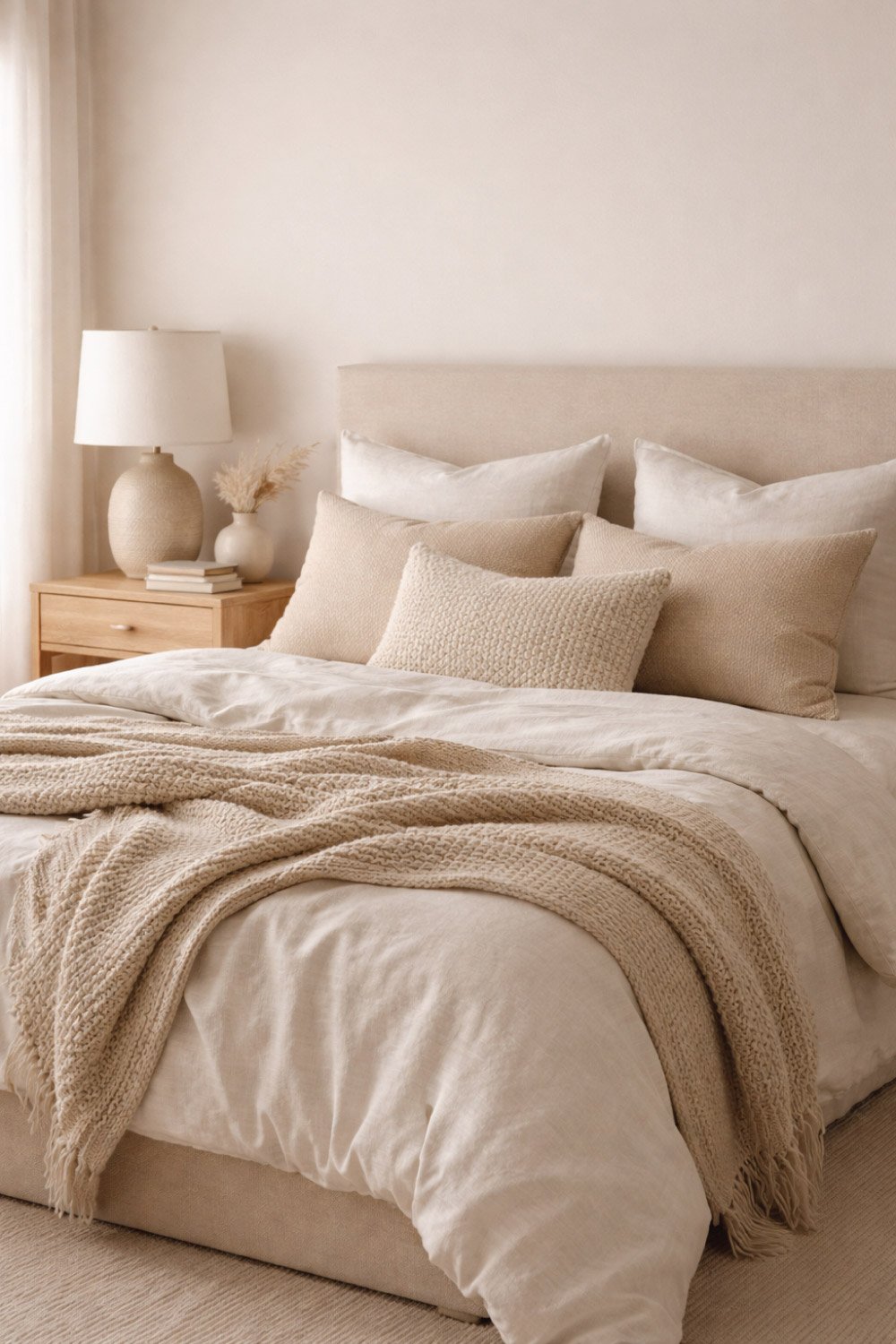
| Bedding Material |
Why Choose It |
| Linen |
Breathable, natural look |
| Cotton |
Easy to maintain |
| Velvet accents |
Adds cozy texture |
Ways to style neutral bedding:
Layer different fabrics to add texture without adding color.
Choose soft tones like beige, ivory, or light gray.
Add a textured throw blanket at the foot of the bed.
Use simple pillow arrangements instead of many decorative cushions.
Select high-quality natural fabrics for comfort.
Keep patterns subtle or completely plain.
Match bedding tones with wall or furniture colors.
Also Read:
7. Minimal Nightstands
Nightstands in a minimalist bedroom should be practical and visually simple. Their main purpose is to hold essential items needed at night, such as a lamp, clock, or small décor piece.
Instead of bulky or decorative furniture, minimalist nightstands focus on clean lines and compact design. Choosing a nightstand with drawers helps keep personal items out of sight, reducing visible clutter.
Materials like wood or metal with smooth finishes complement minimalist interiors. When styled correctly, a minimal nightstand contributes to a tidy and peaceful bedroom atmosphere.
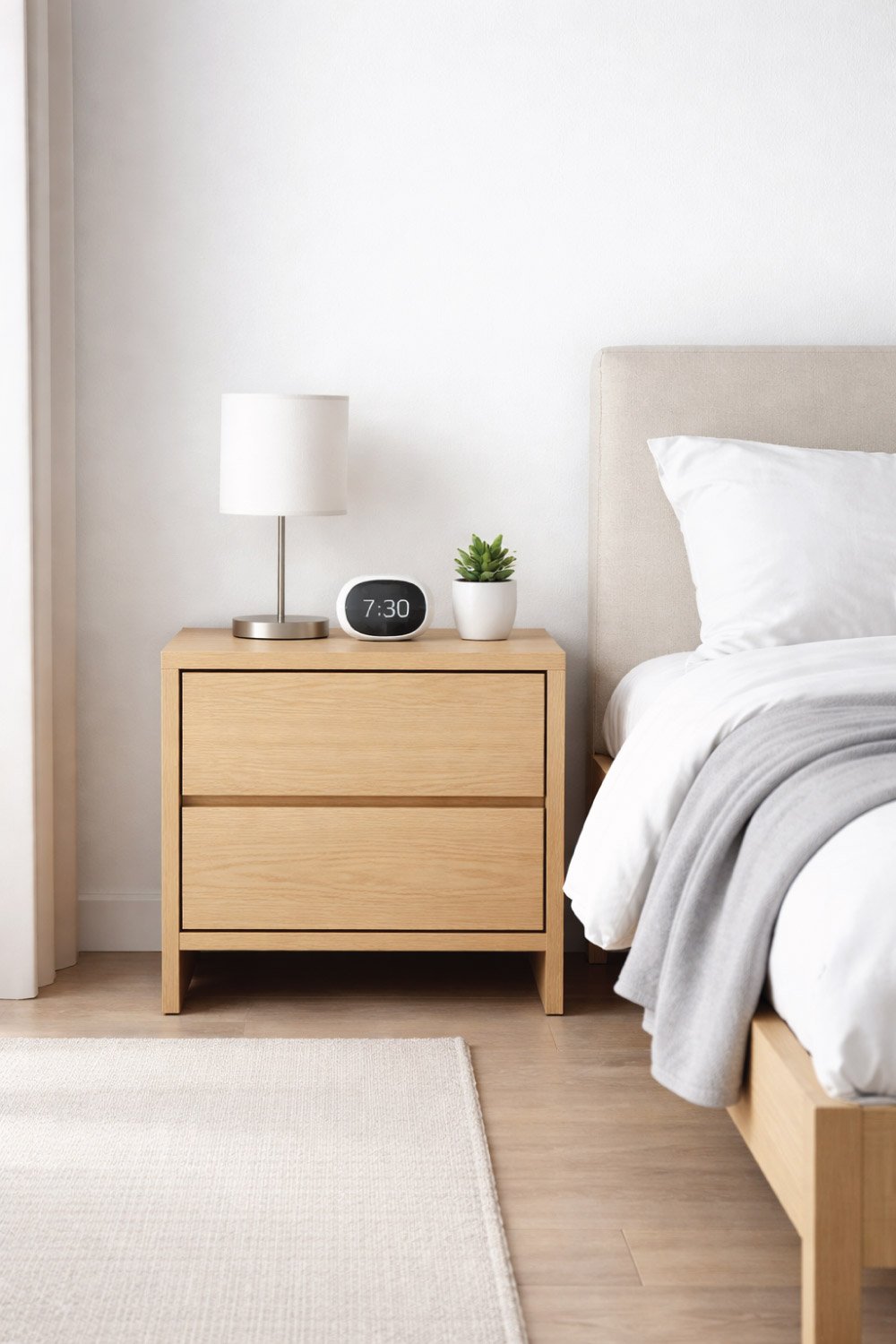
| Feature |
Minimal Approach |
| Surface |
Keep only a lamp, alarm, and small plant |
| Drawers |
Hide personal items |
| Material |
Wood or metal with simple design |
Tips for minimalist nightstand styling:
Keep only essential items on the surface.
Choose compact designs that do not dominate the space.
Use drawers to store personal belongings.
Select neutral colors like white, black, or natural wood.
Avoid decorative carvings or heavy details.
Match the nightstand style with the bed frame.
Leave some empty space on the surface for balance.
8. Simple Lighting
Lighting plays an important role in creating a relaxing minimalist bedroom. Instead of large chandeliers or decorative fixtures, minimalist lighting focuses on soft, functional, and subtle illumination.
The goal is to create a warm atmosphere without drawing too much attention to the light fixtures themselves. Options like pendant lights, recessed lighting, and simple bedside lamps offer both practicality and style.
Soft lighting helps the bedroom feel comfortable and calming, which is ideal for rest. Choosing simple designs ensures the lighting complements the room rather than overwhelming it.
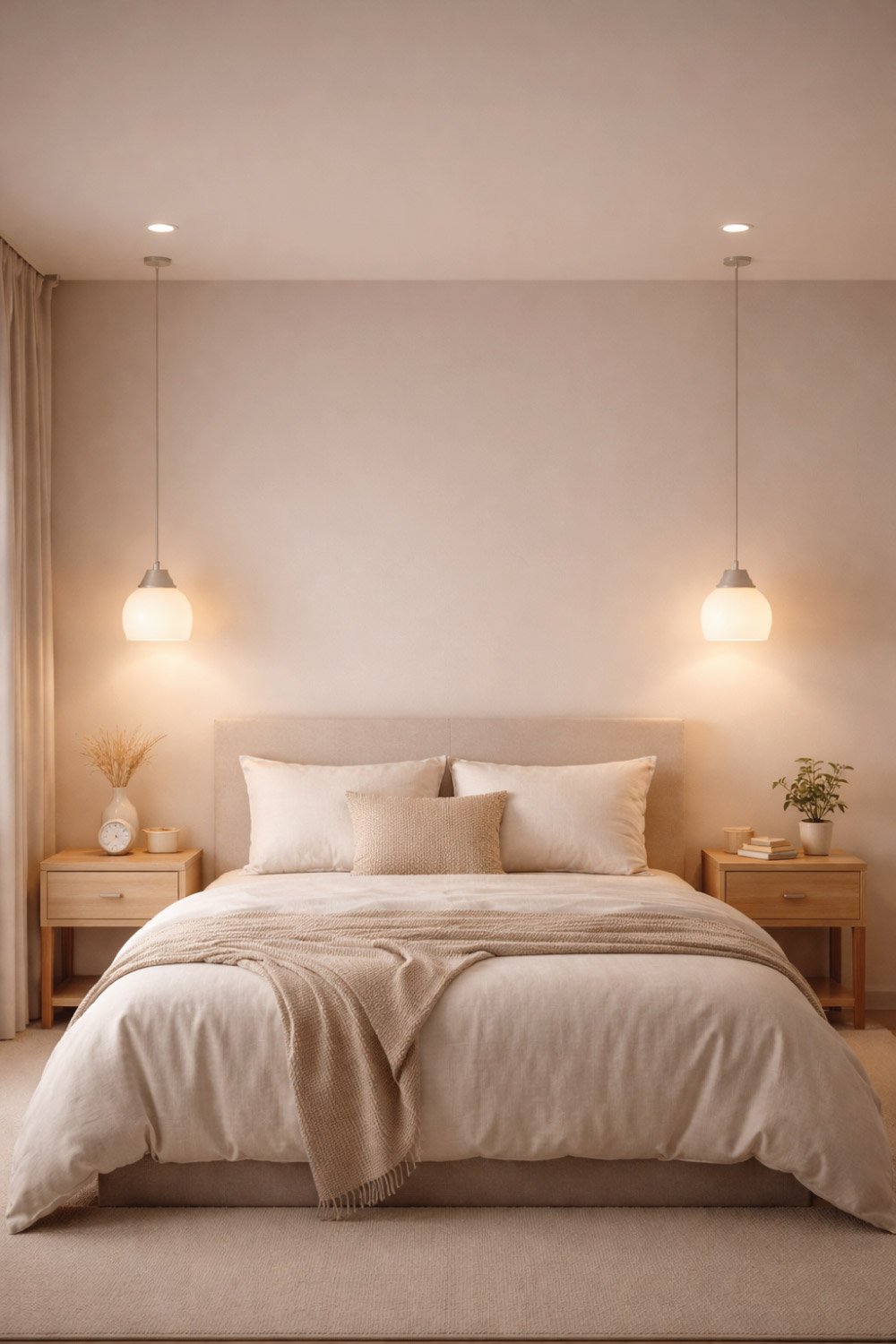
| Lighting Type |
Use Case |
Minimal Benefit |
| Pendant lights |
Over bed |
Saves floor space |
| Recessed lighting |
Roomwide |
Creates uniform glow |
| Bedside lamps |
Reading |
Functional & simple |
Minimalist lighting ideas:
Choose lamps with simple shapes and neutral colors.
Use warm white bulbs for a cozy atmosphere.
Install recessed lights for a clean ceiling look.
Hang pendant lights instead of bulky lamps.
Keep lighting fixtures small and elegant.
Use dimmers to adjust brightness levels.
Position lights for both function and ambiance.
Also Read:
9. Minimalist Rugs
Rugs can add warmth and comfort to a minimalist bedroom without disrupting the clean design. The key is to select rugs with simple patterns, neutral tones, and soft textures.
A well-placed rug can define the sleeping area and make the room feel more inviting. Minimalist rugs usually avoid bright colors or complex designs, focusing instead on subtle geometric patterns or solid shades.
Low-pile rugs work particularly well because they look sleek and are easy to maintain. When used thoughtfully, a rug can enhance the space while keeping the overall design calm and balanced.
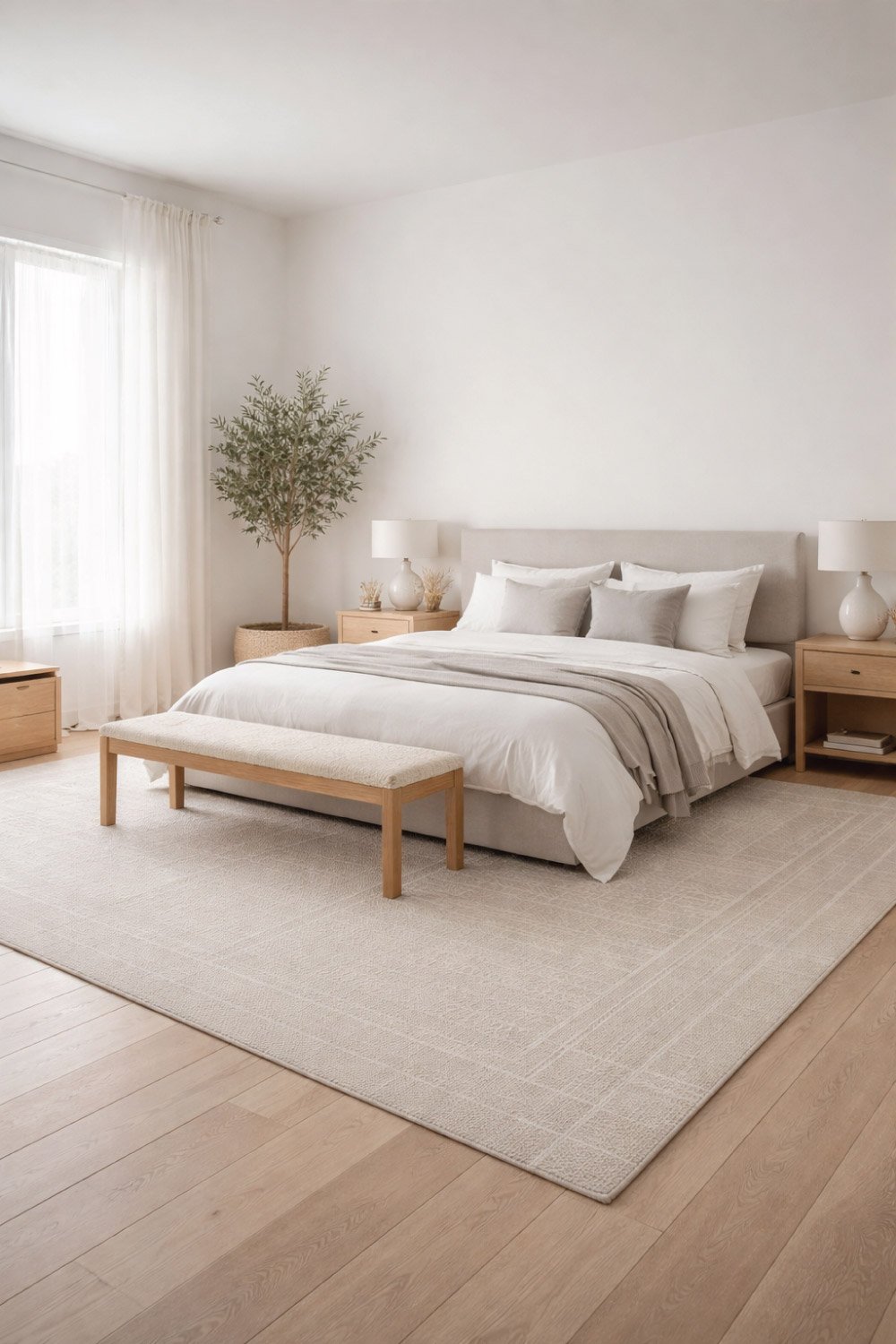
| Rug Type |
Placement |
Effect |
| Low-pile neutral rug |
Under bed |
Adds warmth without clutter |
| Geometric muted pattern |
Center of room |
Adds visual interest subtly |
Tips for choosing minimalist rugs:
Select neutral colors such as beige, gray, or cream.
Choose simple or subtle patterns.
Place the rug under the bed to frame the space.
Avoid overly thick or shaggy designs.
Match rug colors with bedding or walls.
Use natural materials like wool or cotton.
Keep the rug size proportional to the room.
Also Read:
10. Decluttered Surfaces
One of the most important principles of minimalist bedrooms is keeping surfaces clean and uncluttered. Empty or nearly empty surfaces create a sense of calm and organization.
When dressers, shelves, and nightstands are filled with too many items, the room can quickly feel crowded and distracting. Minimalism encourages keeping only a few meaningful or functional objects on display.
This approach not only improves the room’s appearance but also makes cleaning and organizing easier. By maintaining decluttered surfaces, the bedroom becomes a peaceful environment that promotes relaxation and focus.
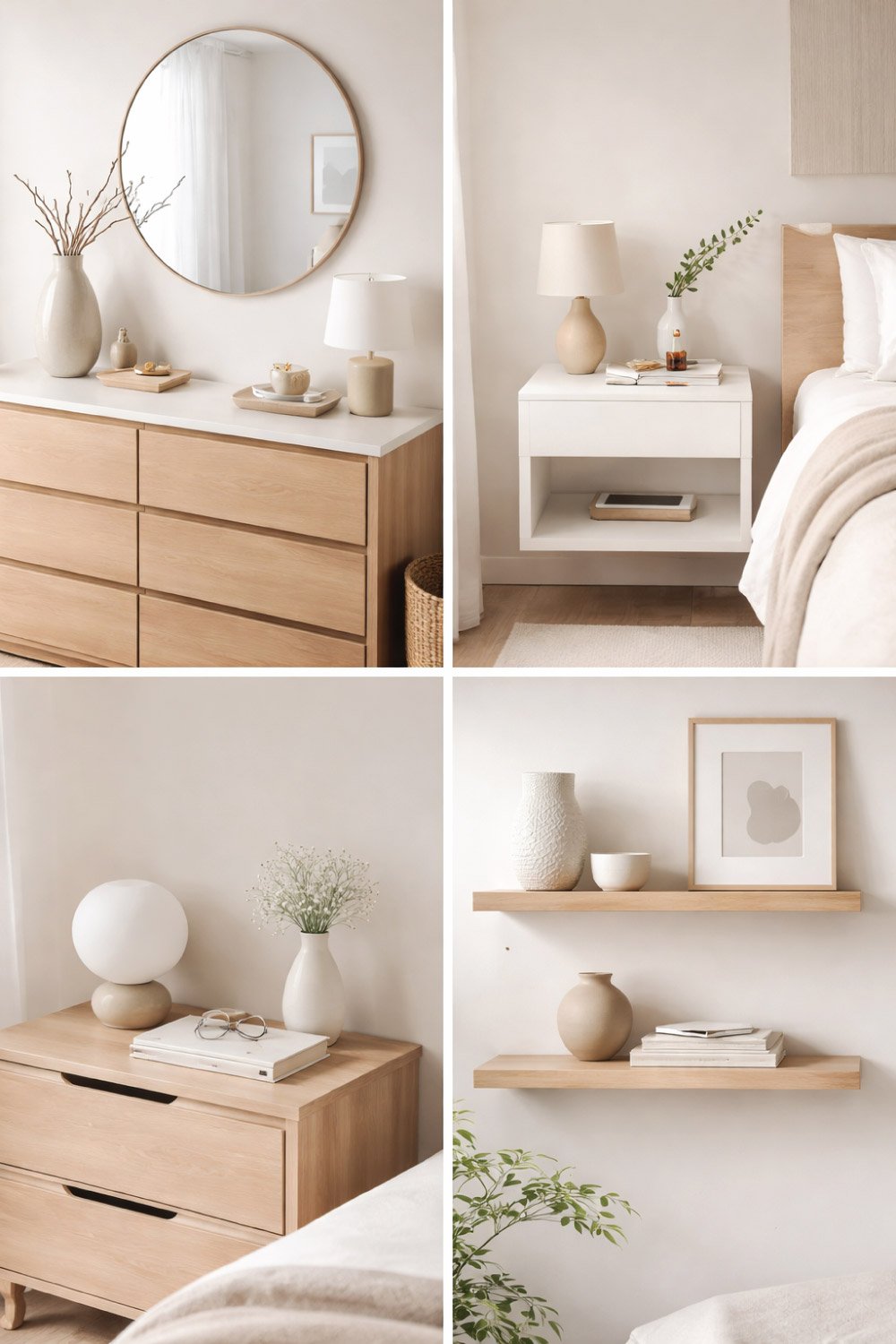
| Surface |
Minimal Rule |
| Dresser top |
Only essential items |
| Nightstand |
Max 3 items |
| Shelves |
Display 1–2 pieces of art or decor |
Ways to maintain decluttered surfaces:
Remove unnecessary decorative items.
Store small objects in drawers or cabinets.
Keep only functional items within reach.
Rotate decorative pieces occasionally.
Use trays to organize small items neatly.
Avoid stacking multiple objects together.
Clean and reorganize surfaces regularly.
11. Sliding Doors
Sliding doors are a practical and stylish feature in minimalist bedroom design. Unlike traditional hinged doors that require extra space to swing open, sliding doors move smoothly along a track, saving valuable floor area.
This makes them ideal for smaller bedrooms or spaces where maintaining an open and uncluttered layout is important. Sliding doors also contribute to a sleek, modern appearance that aligns with minimalist aesthetics.
Materials such as wood, glass, or mirrored panels can enhance both functionality and visual appeal while maintaining a simple, streamlined design.
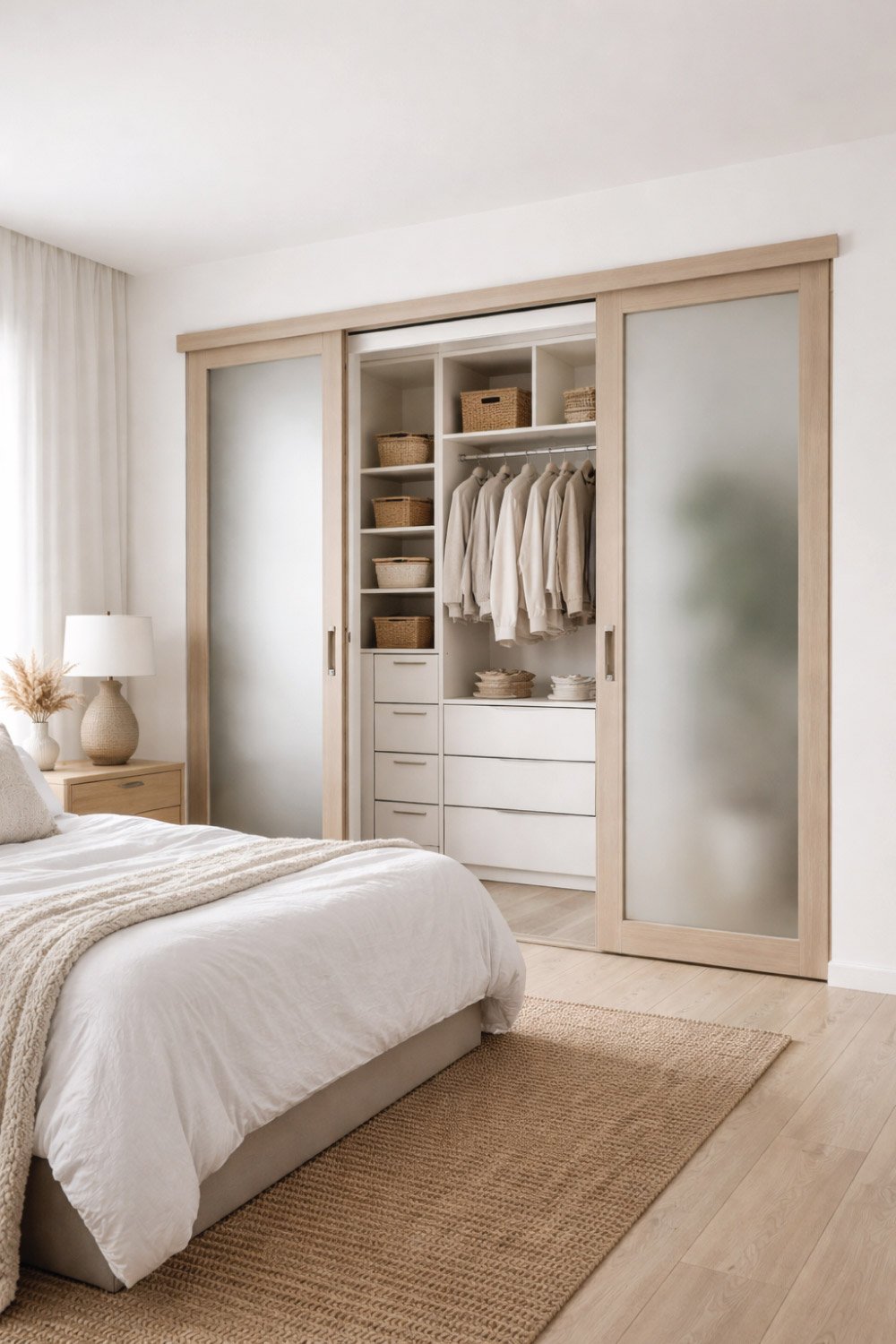
| Type |
Benefit |
| Sliding closet doors |
Saves floor space |
| Glass sliding doors |
Lets in natural light |
| Pocket doors |
Conceals storage neatly |
Advantages of sliding doors:
Save space compared to traditional doors.
Create a modern and sleek appearance.
Work well in small or compact bedrooms.
Allow flexible use of room layout.
Glass panels can increase natural light.
Help conceal closets or storage areas neatly.
Provide smooth and quiet operation.
Also Read:
12. Greenery in Moderation
Adding plants to a minimalist bedroom can bring life, freshness, and a touch of nature into the space. However, minimalism emphasizes balance, so it is best to limit the number of plants and place them thoughtfully.
A single statement plant or a small group of simple plants can enhance the room without making it feel crowded. Plants with clean shapes and easy maintenance are ideal for minimalist interiors.
Their natural color and texture help soften the room’s design while still maintaining simplicity and visual harmony.
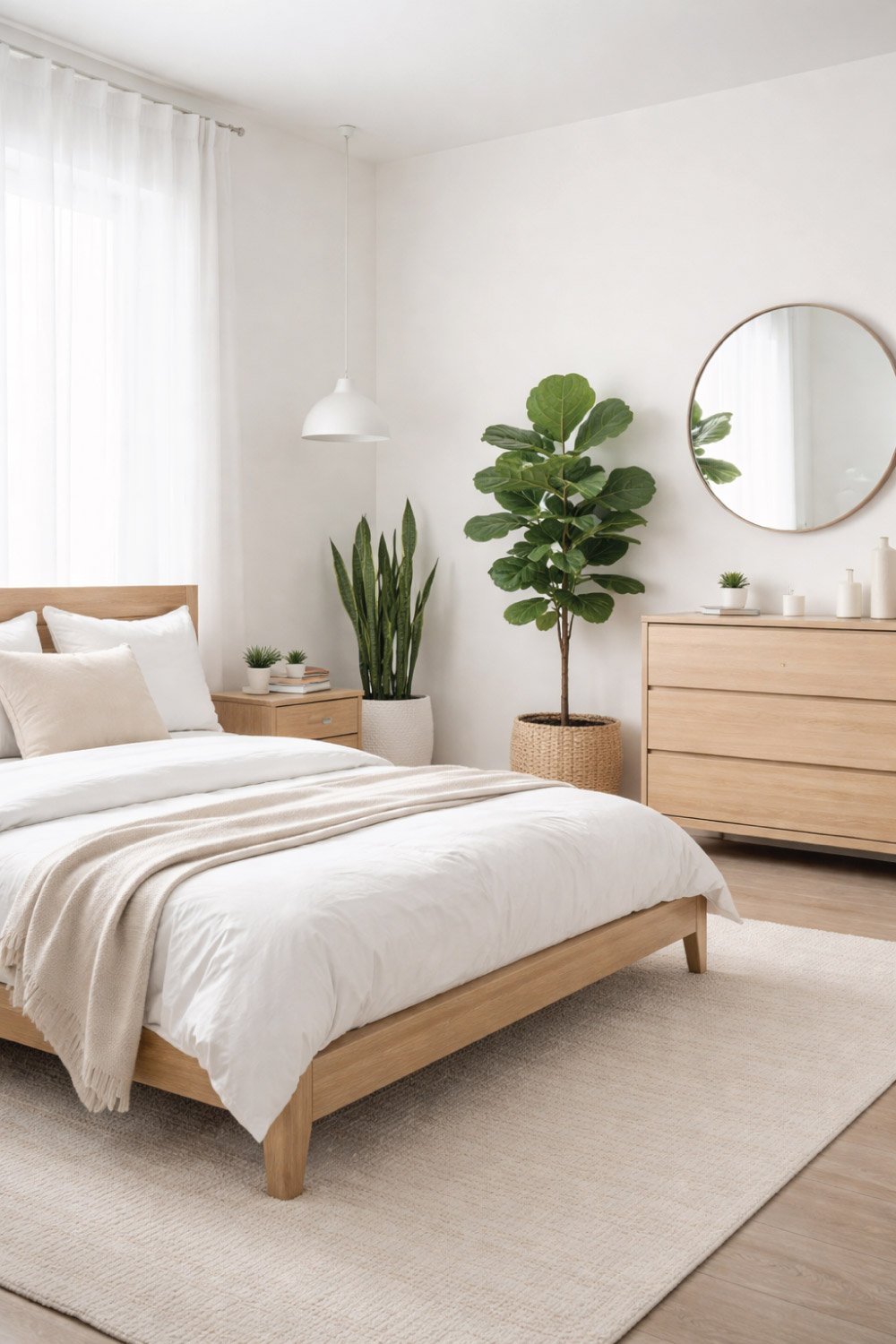
| Plant |
Placement |
Reason |
| Snake plant |
Corner of room |
Low maintenance, upright lines |
| Fiddle leaf fig |
Next to dresser |
Adds height and color |
| Small succulents |
Nightstand |
Minimal upkeep |
Tips for using plants in minimalist bedrooms:
Choose plants with simple shapes and clean lines.
Limit the number of plants to avoid clutter.
Use neutral or simple plant pots.
Place plants where they receive natural light.
Select low-maintenance indoor plants.
Use plants to fill empty corners naturally.
Keep arrangements balanced and uncluttered.
13. Minimal Window Treatments
Window treatments in a minimalist bedroom should enhance natural light while maintaining a clean and simple appearance. Heavy curtains, elaborate patterns, or layered drapes can make the space feel crowded and visually busy.
Instead, minimalist design favors light fabrics and neutral tones that allow sunlight to filter through gently. Materials like linen or sheer fabrics create a soft and airy feeling while still providing privacy.
Simple roller shades are another popular option because they are functional, discreet, and easy to operate.
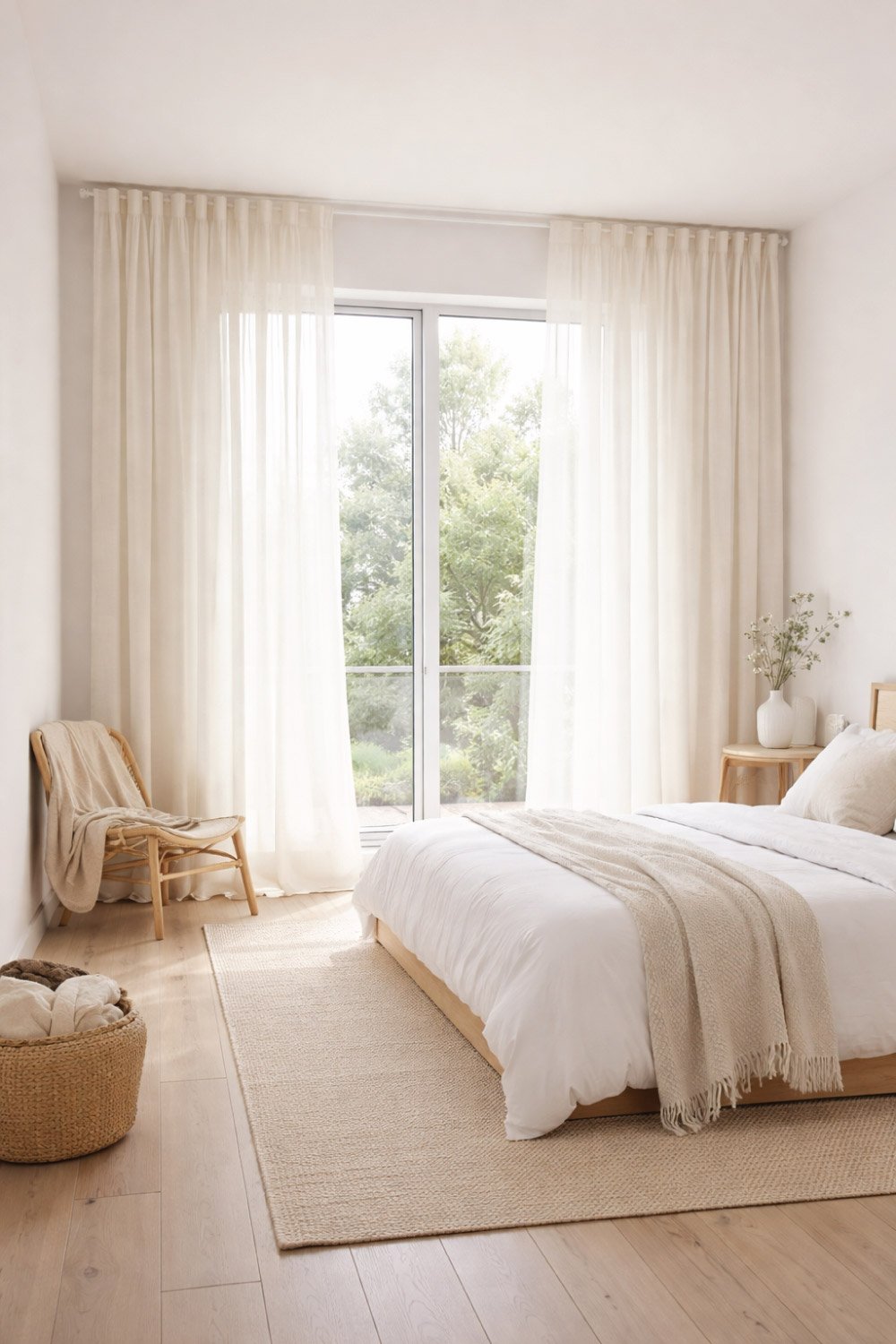
| Treatment |
Material |
Minimal Benefit |
| Linen curtains |
Soft neutrals |
Light diffusion, airy feel |
| Roller shades |
Neutral color |
Clean, functional |
| Sheer panels |
White |
Adds softness without clutter |
Ideas for minimalist window treatments:
Use light and breathable fabrics.
Stick to neutral colors like white or beige.
Avoid heavy or ornate curtain designs.
Choose simple curtain rods or hidden tracks.
Let natural light be the main focus.
Keep window coverings easy to operate.
Match curtains with wall or bedding colors.
Also Read:
14. Smart Technology Integration
Modern minimalist bedrooms often incorporate smart technology to improve convenience while maintaining a clean design. The goal is to keep technology functional but visually discreet.
Devices such as smart lighting systems, hidden charging ports, and voice-controlled assistants reduce the need for extra switches, cables, and bulky equipment.
These technologies help keep surfaces clear and organized while enhancing comfort and efficiency. When integrated carefully, smart features blend seamlessly into the room’s design without distracting from the minimalist aesthetic.
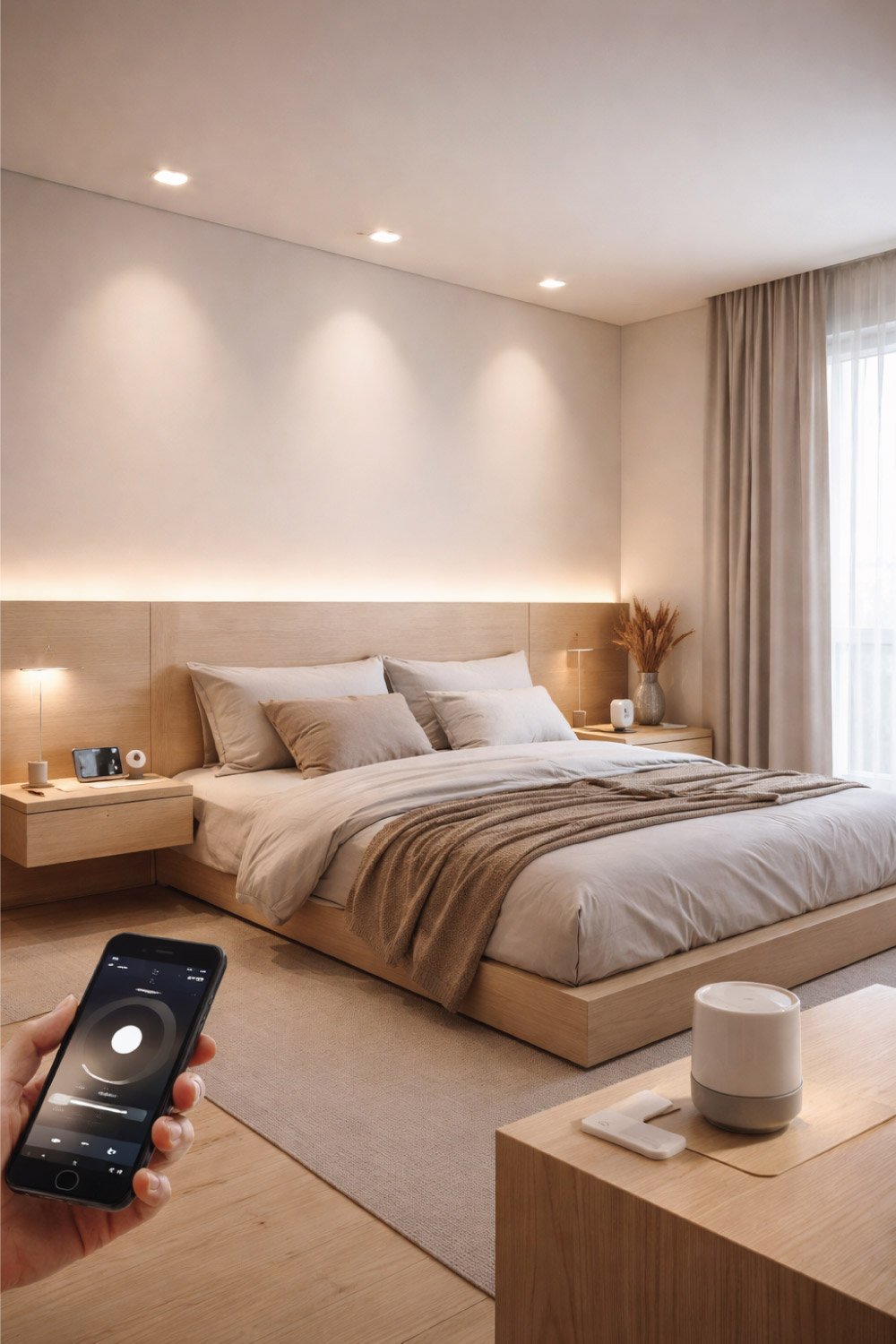
| Feature |
Example |
Benefit |
| Smart lights |
App-controlled bulbs |
Eliminates extra switches |
| Hidden chargers |
Bedside USB ports |
Reduces cord clutter |
| Voice control |
Smart assistant |
Hands-free, minimal impact |
Benefits of smart technology in minimalist bedrooms:
Reduces visible wires and cables.
Keeps surfaces clean and organized.
Allows easy control of lighting and devices.
Improves comfort with automated settings.
Saves space by combining functions.
Provides modern convenience without clutter.
Integrates smoothly with minimalist interiors.
15. Minimal Furniture Arrangement
Furniture arrangement plays a major role in maintaining a minimalist bedroom. The goal is to keep the layout functional while leaving enough open space for easy movement.
Instead of filling the room with many pieces of furniture, minimalism focuses on using only essential items such as a bed, nightstand, and perhaps a dresser. Proper placement helps create balance and harmony within the space.
An open layout allows the room to feel larger, brighter, and more relaxing while preserving the clean and uncluttered look that defines minimalist design.
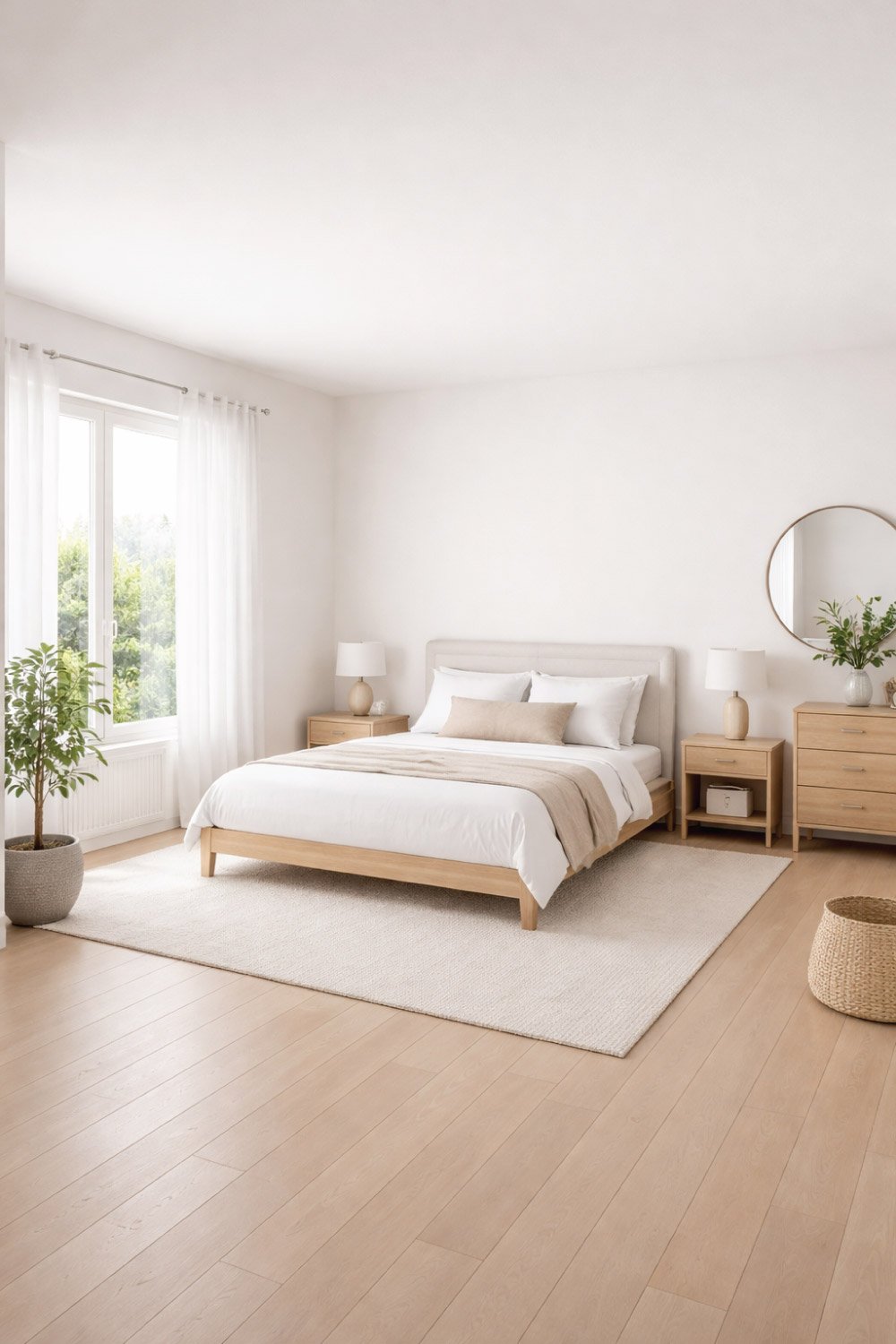
| Strategy |
Benefit |
| Center bed placement |
Balanced focus |
| Limit to essentials |
Avoids cramped feel |
| Open floor space |
Enhances minimal vibe |
Tips for arranging minimalist bedroom furniture:
Place the bed as the central focal point.
Keep furniture pieces limited and purposeful.
Maintain open walking space around the bed.
Avoid oversized or bulky furniture.
Align furniture with room symmetry when possible.
Use multifunctional pieces to save space.
Leave empty areas to enhance the minimalist feel.
Also Read:
16. Use of Mirrors
Mirrors are a powerful design element in minimalist bedrooms because they enhance both light and space. By reflecting natural or artificial light, mirrors make a room appear brighter and more open.
In smaller bedrooms, they can create the illusion of a larger area without adding extra furniture or decoration. Minimalist design favors mirrors with simple shapes and clean frames, or even frameless styles.
When placed strategically, mirrors can highlight certain parts of the room, balance the layout, and add elegance while maintaining a sleek and uncluttered look.
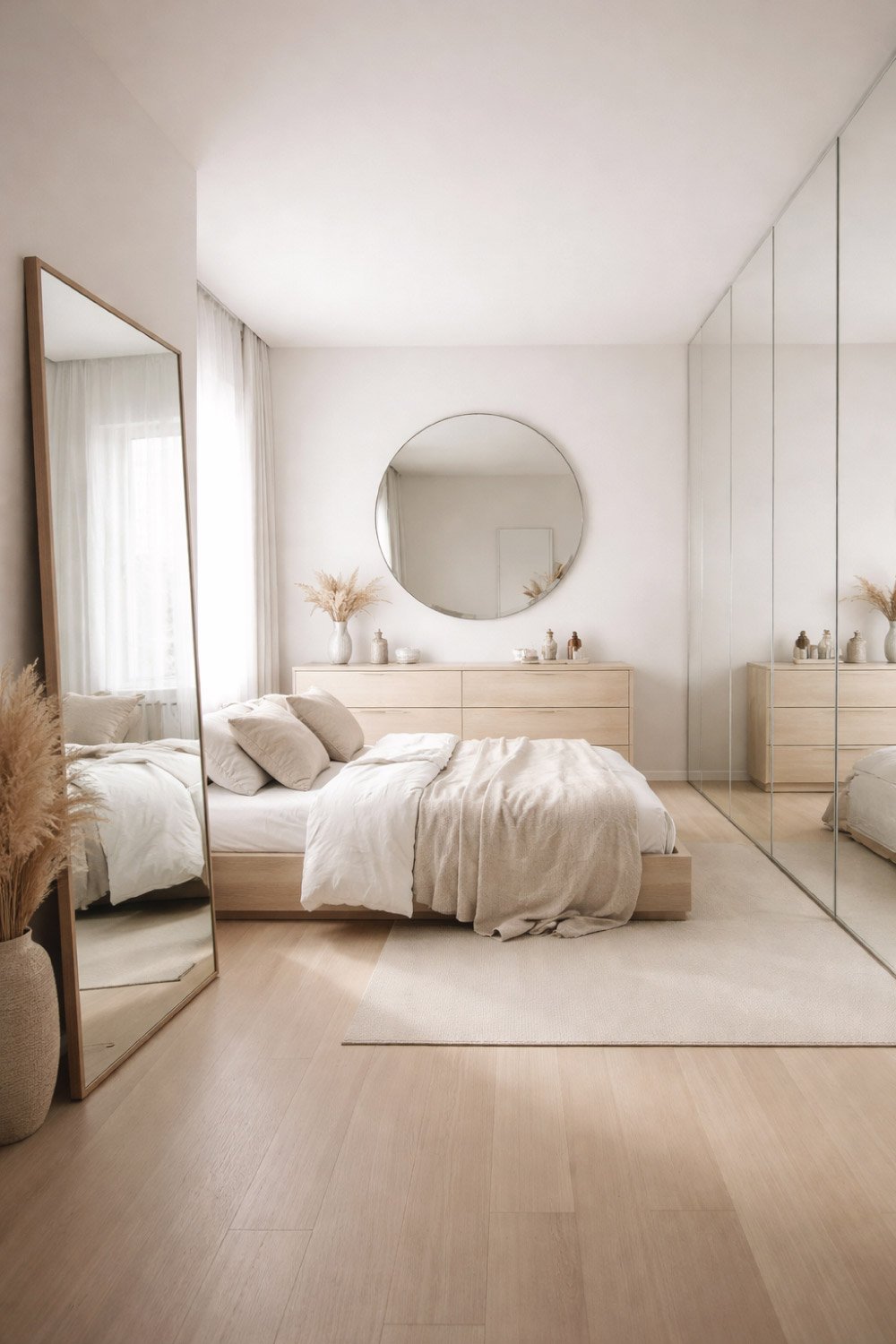
| Mirror Type |
Placement |
Effect |
| Floor-length |
Against wall |
Expands visual space |
| Circular wall mirror |
Above dresser |
Adds elegance |
| Frameless mirror panels |
Closet doors |
Clean and seamless look |
Ways to use mirrors in minimalist bedrooms:
Place mirrors opposite windows to reflect natural light.
Choose frameless or thin-framed mirror designs.
Use large mirrors to create the illusion of space.
Avoid overly decorative or ornate frames.
Position mirrors to highlight key areas like the bed or dresser.
Use mirrored closet doors for a seamless look.
Keep mirror placement balanced within the room layout.
17. Personal Touch Without Clutter
Minimalist bedrooms should still reflect the personality of the person living in them. The key is to include personal items in a thoughtful and limited way.
Instead of displaying many small decorations, choose a few meaningful pieces that tell a story or hold sentimental value.
A single photograph, a small stack of favorite books, or one decorative artifact can make the space feel personal without creating clutter.
By carefully selecting what to display, the room remains simple and organized while still feeling warm, inviting, and uniquely yours.
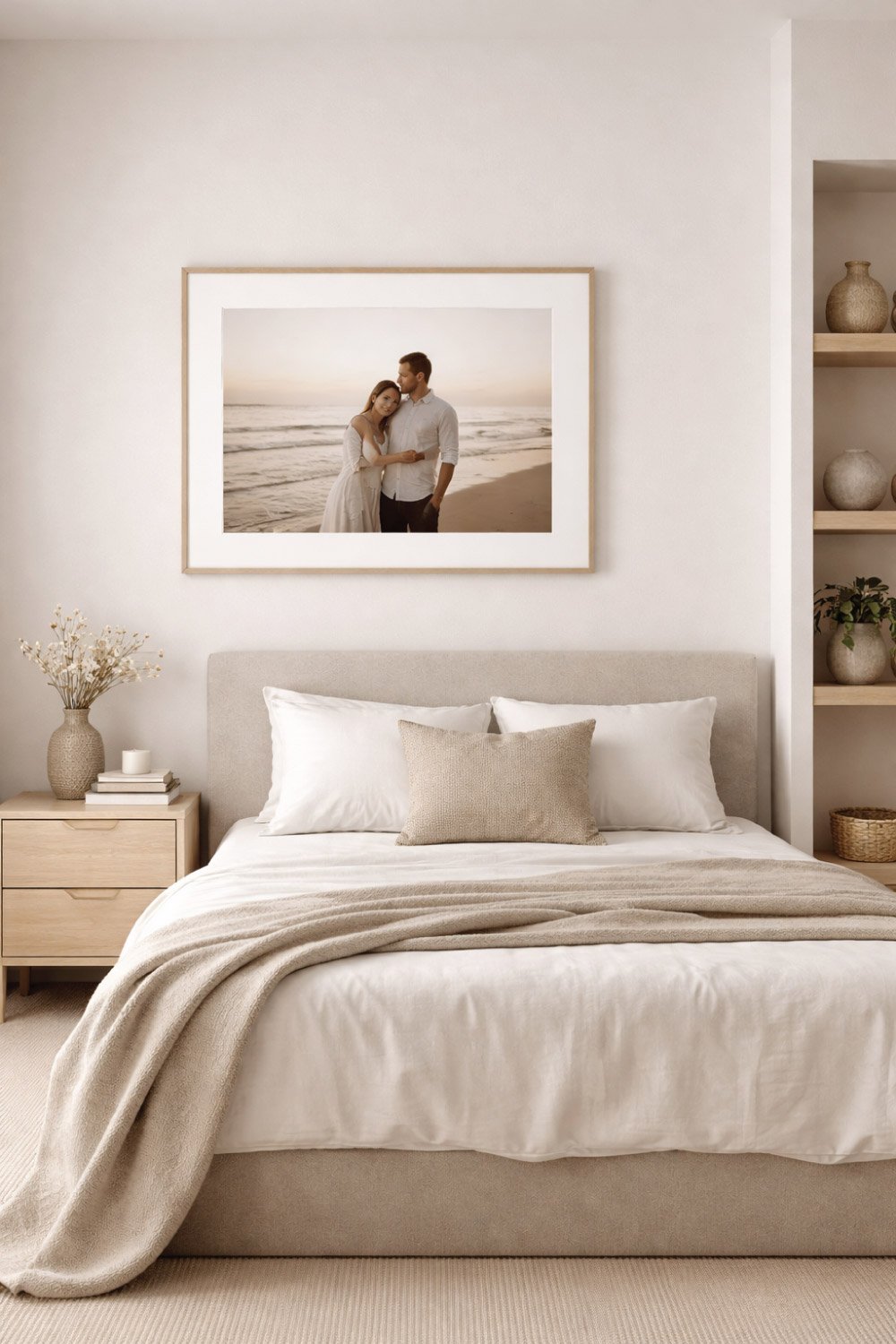
| Personal Element |
Minimal Approach |
| Photos |
One large framed photo instead of multiple |
| Books |
Stack 2–3 on nightstand |
| Artifacts |
Single statement piece per shelf |
Ideas for adding personal touches minimally:
Display one meaningful photo or artwork.
Keep a small stack of favorite books.
Use one decorative object per shelf.
Choose items that have sentimental value.
Avoid collecting too many small decorations.
Rotate personal items occasionally for variety.
Maintain balance between décor and empty space.
Also Read:
Final Tips for a Minimal Bedroom
Adopt the “Less is More” philosophy: Keep furniture and decor essential and intentional.
Organize and declutter regularly: A minimal bedroom only works if surfaces and storage remain clean.
Invest in multi-functional furniture: Beds with storage, nightstands with drawers, and benches help reduce clutter.
Focus on quality over quantity: A few high-quality pieces feel better than many cheap, unnecessary items.
Play with textures and layers: Neutral tones can feel flat; add interest through fabrics, rugs, and soft furnishings.
Let natural light lead the way: Avoid heavy curtains; light enhances minimalism.
Maintain consistency: Stick to a color palette and design style throughout to preserve a serene environment.
Final Thought
Designing a minimalist bedroom is not just about reducing the number of items in your space—it’s about creating an environment that supports calmness, clarity, and intentional living.
By focusing on simple color palettes, functional furniture, and thoughtful décor choices, you can transform your bedroom into a peaceful retreat that promotes relaxation and better rest.
Each element, from lighting to storage, plays a role in maintaining a clean and balanced atmosphere that feels both comfortable and visually pleasing.
Minimalism also encourages mindfulness in how you use and organize your space. Instead of filling a room with unnecessary objects, the focus shifts toward keeping only what is useful or meaningful.
This approach not only improves the look of the bedroom but also makes daily life easier by reducing clutter and distractions. Over time, maintaining a minimalist bedroom can even help develop habits of organization and simplicity that extend beyond the home.
Ultimately, the goal of a minimalist bedroom is to create a space that feels open, functional, and calming. Whether you adopt a few ideas or implement all seventeen, each step contributes to a more serene and organized environment.
By prioritizing simplicity, quality, and intentional design, you can enjoy a bedroom that truly supports rest, comfort, and a balanced lifestyle.
I am Engineer Hassan, a professional engineer with over 15 years of experience in measurements, design accuracy, and furniture, appliance, and home product sizing. Through Size Helper, I provide research-based guides and trending 2026 home design ideas for living rooms, bedrooms, sofas, wall décor, fashion, and sports—helping users make confident, informed decisions. Every guide is written with real expertise, verified data, and a commitment to quality, usability, and style.
Post Views: 82