T-shirts are a wardrobe staple for people of all ages and lifestyles. From casual wear to promotional apparel, t-shirts are versatile, comfortable, and timeless. However, buying the wrong size can be frustrating.
A too-tight t-shirt feels restrictive, while a loose one may look sloppy. That’s why understanding a standard t-shirt size chart is essential to ensure a perfect fit every time.
In this guide, we will cover t-shirt measurements, size conversion, fit styles, and practical tips for choosing the right t-shirt, whether you’re shopping online or in-store.
Why Proper T-Shirt Sizing Matters
A t-shirt might seem like a simple piece of clothing, but the fit plays a huge role in comfort, style, and confidence. Here’s why sizing matters:
-
Comfort: A well-fitted t-shirt allows you to move freely without feeling restricted.
-
Appearance: The right size enhances your body shape, making you look polished and put-together.
-
Durability: Oversized or undersized t-shirts can stretch or shrink faster, reducing longevity.
-
Confidence: Wearing a t-shirt that fits correctly boosts self-confidence and helps you feel at ease.
Understanding your measurements and consulting a t-shirt size chart eliminates guesswork and ensures you always pick the right fit.
Key Measurements for T-Shirt Fit
When choosing a t-shirt, there are five key measurements to keep in mind:
1. Chest Measurement
The chest measurement is the most important factor in t-shirt sizing. A t-shirt that is too tight across the chest can be uncomfortable, while one that’s too loose may look sloppy.
How to measure your chest:
- Stand upright and relax your arms at your sides.
- Wrap a measuring tape around the fullest part of your chest.
- Ensure the tape is snug but not tight.
- Record your measurement in inches or centimeters.
Tip: For a slightly relaxed fit, add 1–2 inches to your chest measurement.
2. Waist Measurement
The waist measurement ensures your t-shirt is comfortable around your midsection. T-shirts often taper slightly toward the waist, so this measurement is crucial for slim-fit or tailored styles.
How to measure your waist:
- Find the narrowest part of your torso, usually above your belly button.
- Wrap the measuring tape around your waist without squeezing.
- Note the measurement.
3. Shoulder Width
The shoulder width affects how the t-shirt sits on your upper body. A properly fitted t-shirt aligns with your shoulder bones and provides a neat silhouette.
How to measure shoulder width:
- Measure from the edge of one shoulder to the other, across the back.
- Keep the tape straight for accuracy.
- Ensure the shoulder seam of the t-shirt aligns with your natural shoulder line.
4. Sleeve Length
Sleeve length is crucial for comfort and style. Standard t-shirts have short sleeves that usually end around mid-bicep.
How to measure sleeve length:
- Measure from the shoulder seam to the end of the sleeve.
- Compare your measurement with the t-shirt’s size chart.
- Adjust size choice if you prefer slightly longer or shorter sleeves.
5. T-Shirt Length
T-shirt length determines whether it can be worn tucked in or left untucked comfortably. Standard t-shirts usually range from 26 inches to 30 inches in length for adults.
How to measure t-shirt length:
- Measure from the highest point of the shoulder near the collar to the bottom hem.
- Consider your height and preference for a longer or shorter fit.
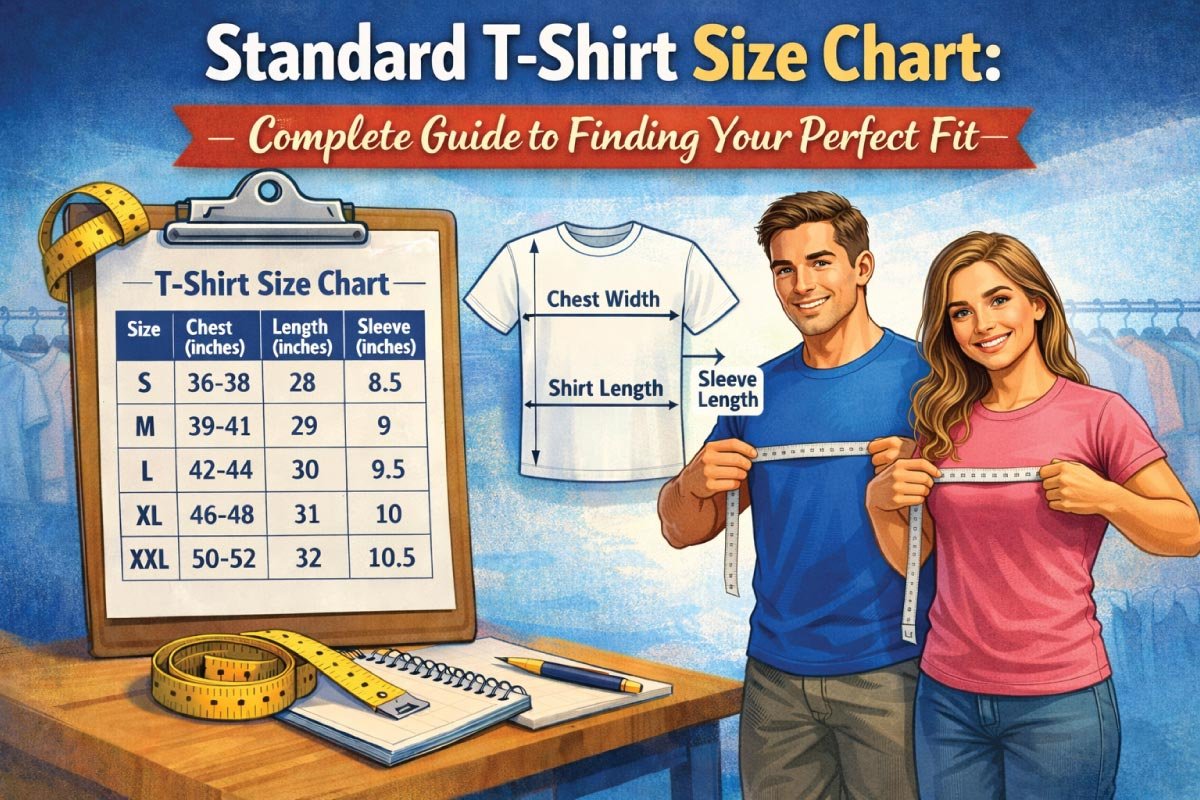
Standard T-Shirt Size Chart (Men)
Here’s a detailed men’s t-shirt size chart based on standard measurements:
| Size | Chest (in) | Waist (in) | Shoulder (in) | Sleeve Length (in) | Shirt Length (in) |
|---|---|---|---|---|---|
| S | 34-36 | 28-30 | 16-17 | 8-9 | 26-27 |
| M | 38-40 | 32-34 | 17-18 | 9-10 | 27-28 |
| L | 42-44 | 36-38 | 18-19 | 10-11 | 28-29 |
| XL | 46-48 | 40-42 | 19-20 | 11-12 | 29-30 |
| XXL | 50-52 | 44-46 | 20-21 | 12-13 | 30-31 |
Discover More:
Standard T-Shirt Size Chart (Women)
Women’s t-shirts are designed with different cuts and often include tailored, slim-fit, or relaxed options. Here’s a general size chart:
| Size | Bust (in) | Waist (in) | Hip (in) | Sleeve Length (in) | Shirt Length (in) |
|---|---|---|---|---|---|
| XS | 32-33 | 24-25 | 34-35 | 7-8 | 24-25 |
| S | 34-35 | 26-27 | 36-37 | 7.5-8.5 | 25-26 |
| M | 36-37 | 28-29 | 38-39 | 8-9 | 26-27 |
| L | 38-40 | 30-32 | 40-42 | 8.5-9.5 | 27-28 |
| XL | 41-43 | 33-35 | 43-45 | 9-10 | 28-29 |
Discover More:
Types of T-Shirt Fits
T-shirt fit types can vary depending on style, brand, or intended use. Understanding these will help you select the right size:
1. Regular Fit
- Straight cut from chest to hem
- Provides comfort and versatility
- Ideal for casual wear or layering
2. Slim Fit
- Tapered at the waist and chest
- Enhances body shape
- Often has shorter sleeves and shirt length
3. Relaxed or Loose Fit
- Roomier in chest, waist, and shoulders
- Ideal for casual comfort and active use
- Often used in oversized or streetwear styles
How to Choose the Right T-Shirt Size
Choosing the right t-shirt size is a mix of measurement, preference, and understanding the brand’s sizing. Follow these steps:
-
Measure Yourself: Always measure chest, waist, shoulder, and sleeve length.
-
Check Brand Size Charts: Sizes can differ across brands, so consult the chart before purchasing.
-
Consider Fit Preference: Decide whether you prefer slim, regular, or loose fit.
-
Layering Needs: If you plan to layer your t-shirt, consider sizing slightly larger.
-
Review Product Material: Cotton may shrink slightly after washing; blends usually stretch more.
International T-Shirt Size Conversion
T-shirt sizes differ globally. Here’s a simple international size conversion chart for easy shopping:
| US Size | UK Size | EU Size | Japan Size |
|---|---|---|---|
| S | S | 46 | M |
| M | M | 48 | L |
| L | L | 50 | LL |
| XL | XL | 52 | 3L |
| XXL | XXL | 54 | 4L |
This chart helps when purchasing t-shirts from international brands, ensuring you get the right size without confusion.
Common Mistakes When Buying T-Shirts
-
Buying Without Measuring: Sizes vary between brands; guessing can lead to ill-fitting t-shirts.
-
Ignoring Fit Type: Slim, regular, and relaxed fits require different sizing choices.
-
Neglecting Fabric Shrinkage: Cotton t-shirts may shrink after washing if pre-shrunk versions are not used.
-
Overlooking Sleeve and Length: Short sleeves or overly long t-shirts can ruin your look.
Tips for Online T-Shirt Shopping
-
Read Customer Reviews: They often reveal whether the t-shirt runs small, large, or true to size.
-
Check Material: Cotton, polyester, or blends affect how the t-shirt fits and feels.
-
Use Model References: Many websites provide model height and size worn for reference.
-
Look at Return Policies: Ensure you can exchange sizes if needed.
Conclusion
Finding the perfect t-shirt is simple when you know your measurements and understand standard t-shirt size charts. Whether shopping for men, women, or unisex t-shirts, keeping your chest, waist, shoulders, sleeve length, and shirt length in mind ensures a comfortable and flattering fit.
Key Takeaways:
- Always measure yourself before buying.
- Check brand-specific size charts.
- Understand the fit type: slim, regular, or relaxed.
- Use international size conversions when shopping globally.
- Consider fabric shrinkage and length preferences.
With this Standard T-Shirt Size Chart Guide, you can shop confidently and ensure that your t-shirts always fit perfectly, look stylish, and feel comfortable.
✅ Pro Tip: Keep a reference t-shirt you love and measure it. Compare it with new t-shirts to find your best fit instantly.
Also Read:
