
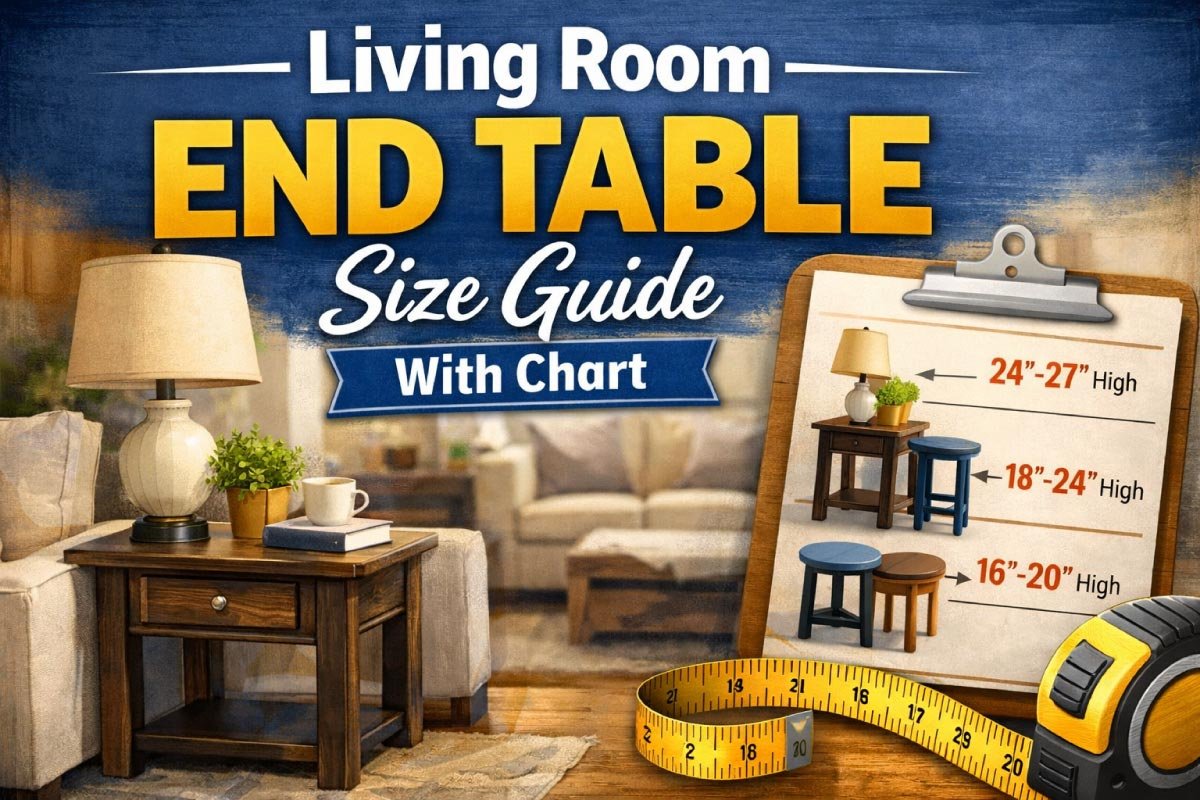
Choosing the right end table for your living room can be more challenging than it seems. End tables are small but essential pieces of furniture that balance functionality, style, and proportion in a room. Whether you want to hold a lamp, display decorative items, or simply provide a surface next to your sofa, the dimensions of your end table play a critical role.
Picking the wrong size can disrupt the flow, crowd the space, or even make your furniture appear awkwardly proportioned. This guide explores the ideal living room end table sizes, explains how to measure for perfect fit, and provides practical charts for quick reference.
Understanding Standard End Table Dimensions
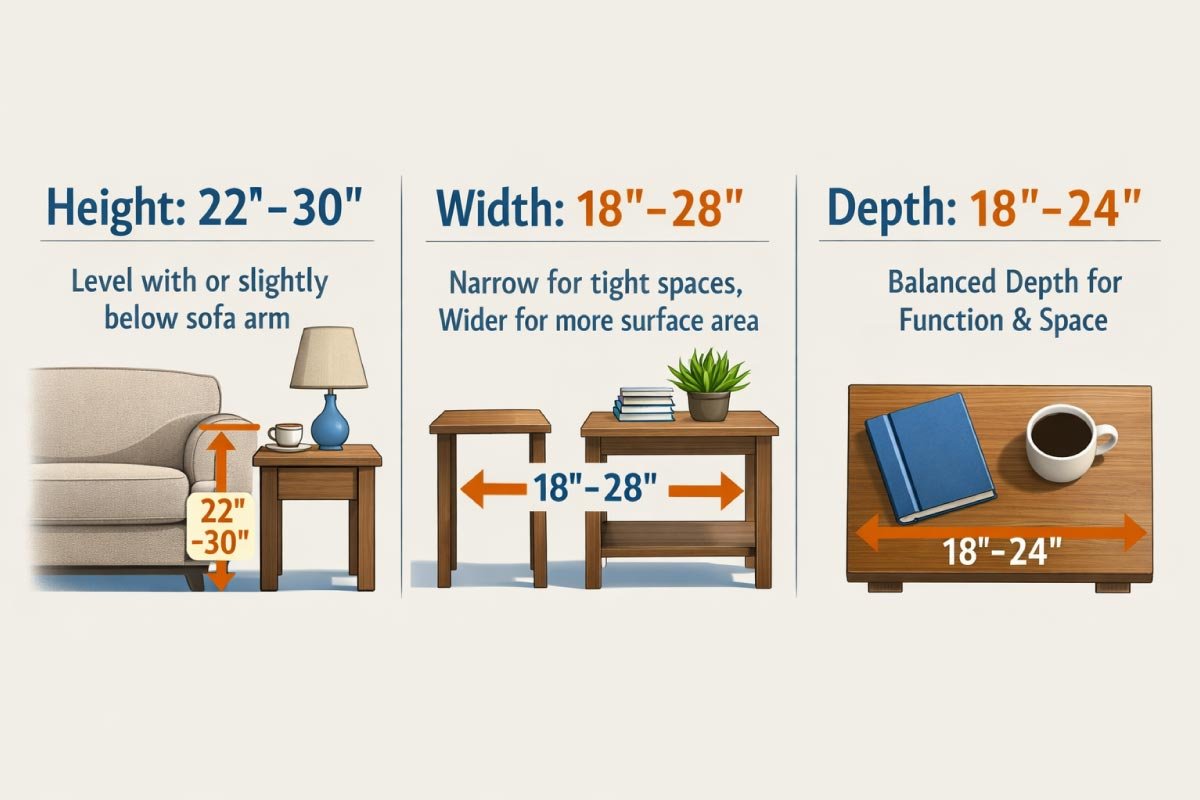
Choosing the right end table size is key for both style and function. Standard dimensions help ensure your table complements your sofa, fits your living space, and provides practical surface area. Consider height, width, and depth carefully to maintain comfort, accessibility, and visual balance.
-
Height: End tables should generally be level with or slightly below the arm of your sofa, usually between 22 to 30 inches. This ensures ease of access for items like drinks, remotes, and lamps.
-
Width: Most tables range from 18 to 28 inches, depending on space and function. Narrower tables suit tight spaces, while wider tables offer more surface area for décor or multitasking.
-
Depth: A depth of 18 to 24 inches balances functionality and walkable space in smaller rooms.
Selecting dimensions outside these ranges can make the table look disproportionate or cause practical issues. For instance, a very tall table may obstruct visibility and make reaching objects difficult.
Standard End Table Size Ranges
Understanding standard end table sizes is essential for creating a balanced and functional living space. Table 1 outlines typical height, width, and depth ranges, helping you choose a table that complements your sofa or armchair while providing enough surface area without overwhelming the room’s layout.
| Dimension | Typical Range | Ideal For |
|---|---|---|
| Height | 22–30 in | Matches sofa/armchair height |
| Width | 18–28 in | Provides surface without overcrowding space |
| Depth | 18–24 in | Ensures adequate surface area, easy passage |
Matching End Table Height to Sofa and Chair
Proper end table height ensures both comfort and style. Aligning the table with your sofa or chair arm makes items easily reachable and maintains a balanced visual flow. Height that is too high or low can disrupt functionality and aesthetic harmony in your living space.
-
Same Level or Slightly Lower: An end table that is the same height as the sofa arm or 1–2 inches lower creates a balanced look and ensures easy reach.
-
Too High: A table taller than the arm can feel awkward and block sightlines in your living room.
-
Too Low: A table significantly lower than the arm may be inconvenient to use and appear undersized.
Example: If your sofa arm measures 26 inches high, your end table should ideally fall between 24 and 26 inches. This alignment makes it functional for drinks, lamps, or decorative pieces without discomfort.
Recommended End Table Heights by Sofa/Chair Arm Height
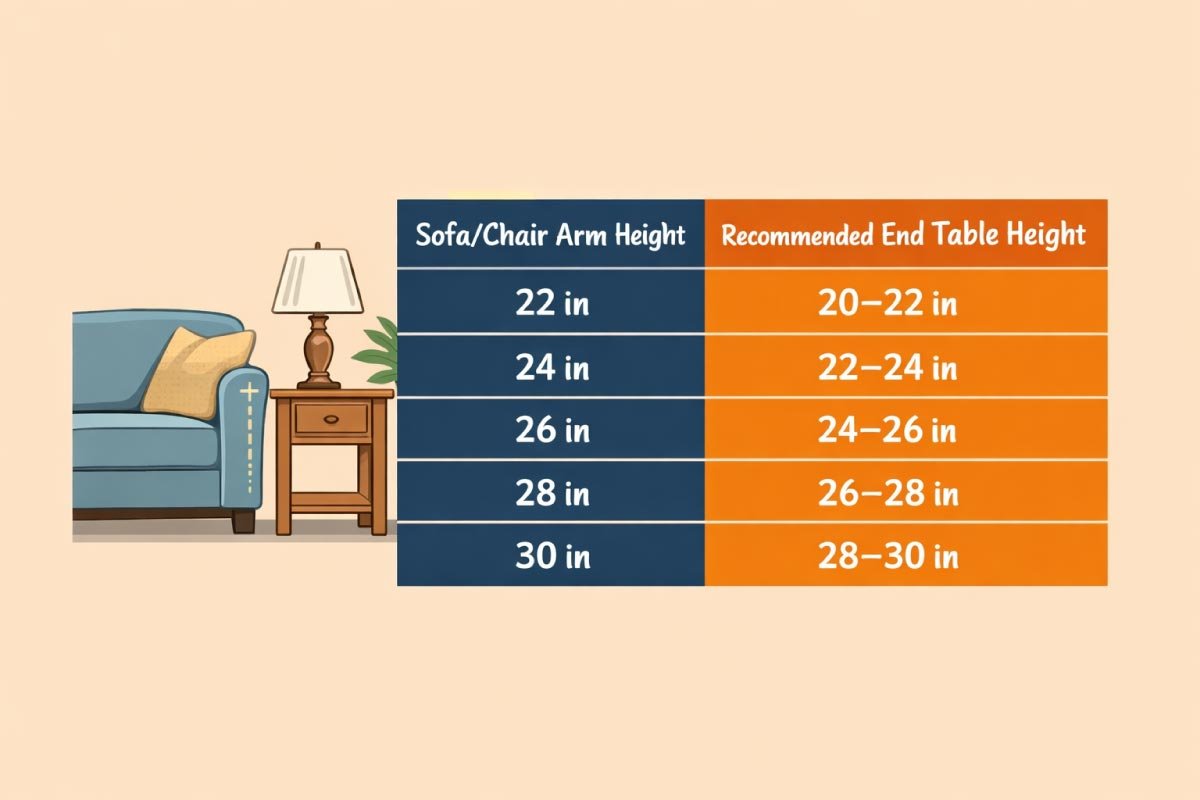
Choosing the right end table height ensures comfort and visual harmony in your living room. Table 2 provides recommended end table heights based on sofa or chair arm measurements, helping you select a table that aligns perfectly with seating, allowing easy access while maintaining a balanced, cohesive look.
| Sofa/Chair Arm Height | Recommended End Table Height |
|---|---|
| 22 in | 20–22 in |
| 24 in | 22–24 in |
| 26 in | 24–26 in |
| 28 in | 26–28 in |
| 30 in | 28–30 in |
Also Read:
16 Small Bedroom Ideas for Adults with Fairy Light Magic and Pink Decor
Width and Depth Considerations
Choosing the right width and depth ensures your coffee table complements the room’s layout. Proper sizing balances functionality and aesthetics, providing enough surface area for essentials without overcrowding. Thoughtful measurements create smooth movement and visual harmony, making your living space both practical and inviting.
-
Width: Narrow tables (18–20 inches) suit small apartments or side chairs, while wider tables (24–28 inches) offer space for lamps, books, and décor.
-
Depth: Deeper tables provide more surface area, but if too deep, they can intrude into walking paths or make the area feel cramped.
It’s also important to consider the spacing between furniture pieces. Ideally, leave 2–4 inches between the sofa/chair and the table to avoid bumping and allow for comfortable reach.
Recommended Width & Depth by Room Size
Selecting the right end table width and depth is key to maintaining flow and proportion in any room. Table 3 offers recommendations based on room size, helping you choose dimensions that optimize space, ensure functionality, and complement your décor—whether in small, medium, large, or open-concept living areas.
| Room Size | Table Width | Table Depth | Notes |
|---|---|---|---|
| Small (10×10 ft) | 18–22 in | 18 in | Compact, minimalistic |
| Medium (12×14 ft) | 20–24 in | 20–22 in | Balanced proportion, functional |
| Large (16×20 ft) | 24–28 in | 22–24 in | Spacious, allows décor placement |
| Open Concept | 22–28 in | 20–24 in | Flexible, multi-purpose |
Also Read:
Shape and Functionality
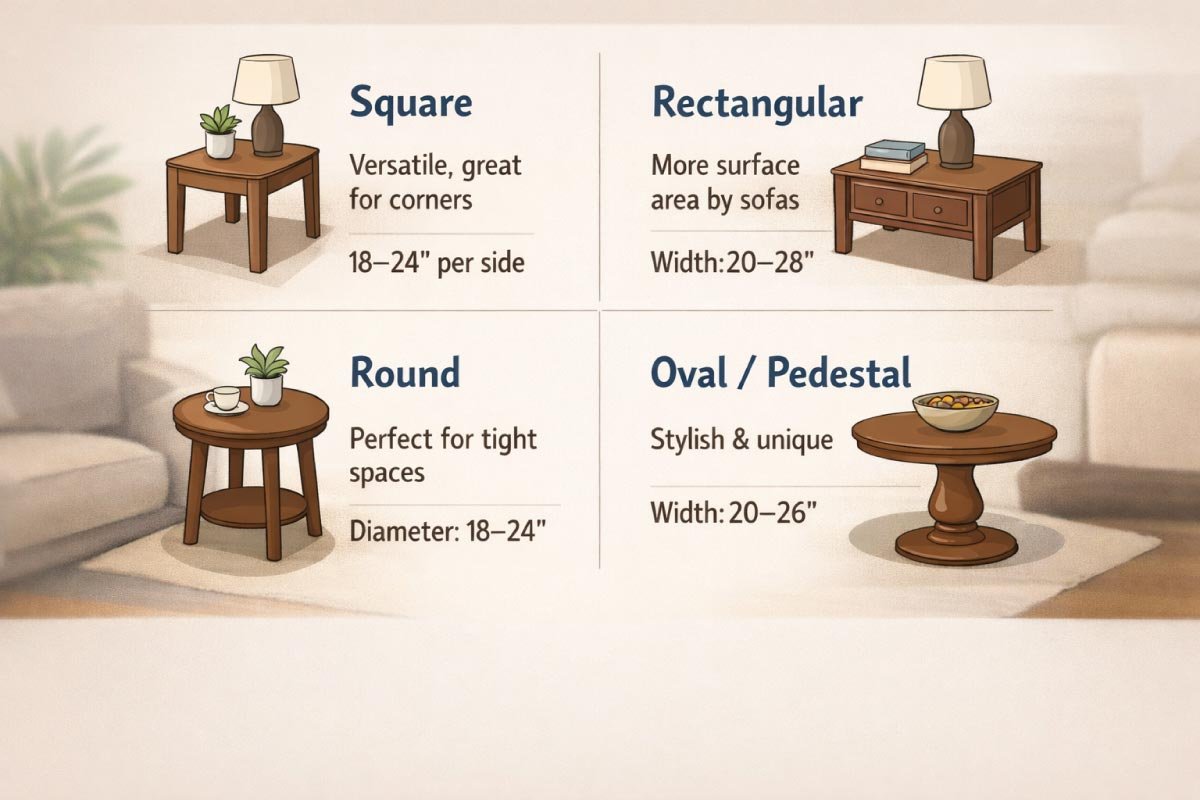
End tables come in various shapes, each influencing room flow, style, and practicality. Selecting the right shape enhances accessibility, complements furniture lines, and ensures a balanced look. Thoughtful consideration of shape and function helps maximize surface area without disrupting movement or visual harmony.
-
Square: Versatile, works well in corners, typically 18–24 inches per side.
-
Rectangular: Offers more surface area along the side of sofas; width ranges 20–28 inches.
-
Round: Ideal for tight spaces or when you want a soft visual touch; diameter usually 18–24 inches.
-
Oval or Pedestal: Stylish for unique layouts, can range from 20–26 inches in width.
Round or oval tables are particularly suitable for households with children because they reduce sharp corners. Shape also influences functionality: rectangular tables offer more storage and display area, while round tables excel in cozy or intimate seating arrangements.
End Table Shapes and Common Dimensions
End table shape affects both style and functionality in a room. Table 4 highlights common shapes with their typical dimensions, helping you select the right form—square, rectangular, round, or oval/pedestal—to fit your space, complement furniture placement, and enhance both practicality and aesthetic appeal.
| Shape | Typical Dimensions | Best Use Case |
|---|---|---|
| Square | 18–24 in each side | Small spaces, corners |
| Rectangular | 20–28 in width, 18–22 in depth | Next to sofas, provides surface space |
| Round | 18–24 in diameter | Child-friendly, narrow spaces |
| Oval/Pedestal | 20–26 in width, 16–22 in depth | Decorative, unique layouts |
Special Considerations for Multi-Functional End Tables
Some end tables offer more than surface space—they combine style, storage, and adaptability. Choosing multi-functional designs requires attention to dimensions, movement, and proportion. Thoughtful selection ensures practicality without sacrificing aesthetics, creating versatile pieces that enhance your living room’s organization and overall flow.
-
Nested Tables: Usually a set of 2–3 tables that fit under each other. These are space-efficient and flexible for entertaining. Check combined width when expanded.
-
Storage Tables: With drawers or shelves, these may require slightly larger dimensions to accommodate functionality without overwhelming the room.
-
Lift-Top or Adjustable Tables: Height-adjustable tables can be perfect for varied seating arrangements but make sure they match sofa arm height at their normal position.
Balancing style, proportion, and function ensures that end tables enhance your living room without creating clutter.
Also Read:
Visual Proportion and Aesthetic Balance
The right end table enhances a room’s visual harmony, ensuring furniture and décor feel cohesive. Considering proportion and scale helps avoid awkward gaps or overcrowding.
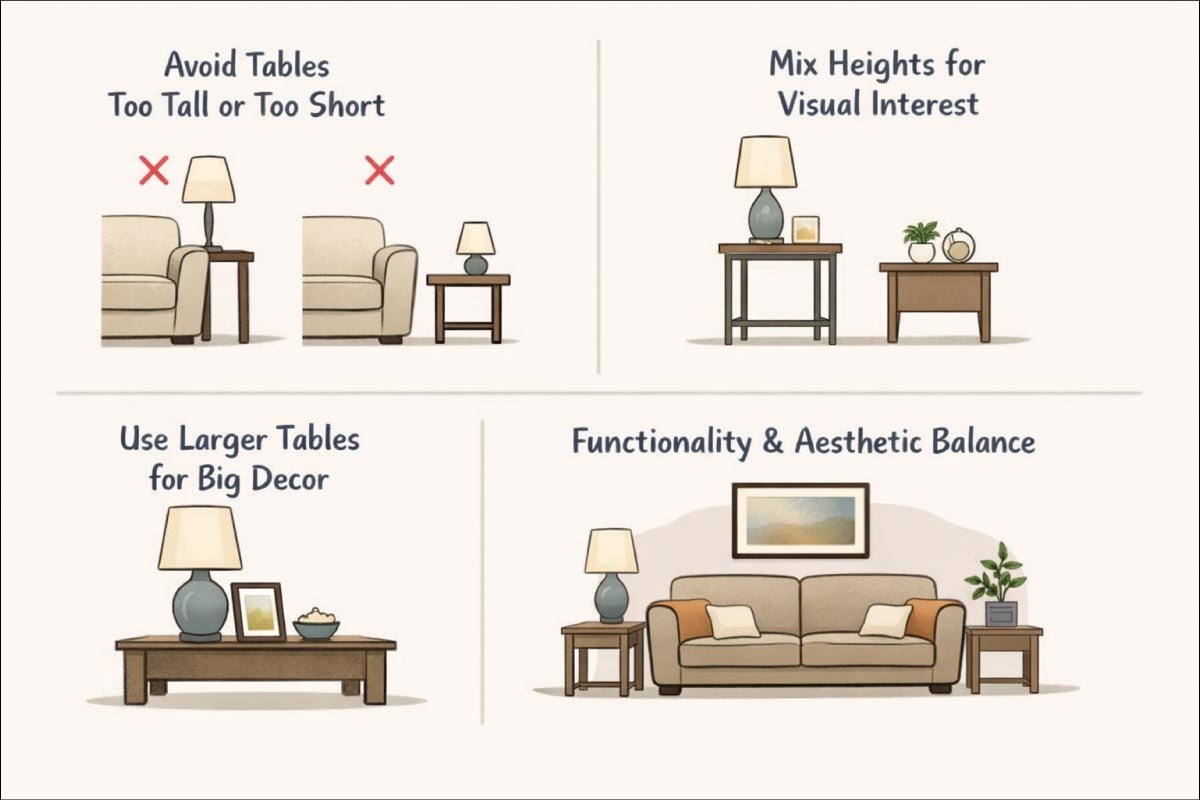
Thoughtful sizing supports both function and style, creating a balanced, inviting living space that feels comfortable, intentional, and visually pleasing.
-
Avoid tables that are significantly taller or shorter than your seating to prevent imbalance.
-
Pairing two tables of slightly different heights can add dynamic visual interest in large rooms.
-
Consider the scale of decorative items—large lamps or art pieces may require wider tables to avoid looking cramped.
Remember, functionality comes first, but aesthetic balance is what ties the room together.
Practical Tips for Measuring and Choosing
Selecting the perfect end table requires precise measurement and thoughtful planning. Assess furniture height, floor space, and décor scale to ensure the table fits seamlessly. Practical evaluation before purchase helps avoid mismatched proportions, ensures comfort, and creates a functional, visually appealing layout for your living space.
-
Measure Sofa Arm Height: Always start by measuring the height of the sofa or chair arms.
-
Check Room Space: Measure the available floor space to ensure the table doesn’t block walking paths.
-
Consider Lamp Size: Lamp shades typically sit 12–18 inches above table height to avoid glare.
-
Visual Test: Use painter’s tape to outline the table footprint on the floor to see how it fits in the room.
-
Adjust Proportionally: If your sofa is particularly large, scale up the table width and depth slightly to maintain proportion.
Also Read:
Conclusion
End tables may seem small, but selecting the right size is crucial for both functionality and visual appeal. Consider height first, then width and depth, and finally the shape and style that complements your living room. Use the charts provided to guide your selection, and don’t forget to account for multi-functional or decorative needs. Properly sized end tables make a room feel balanced, functional, and inviting.
