
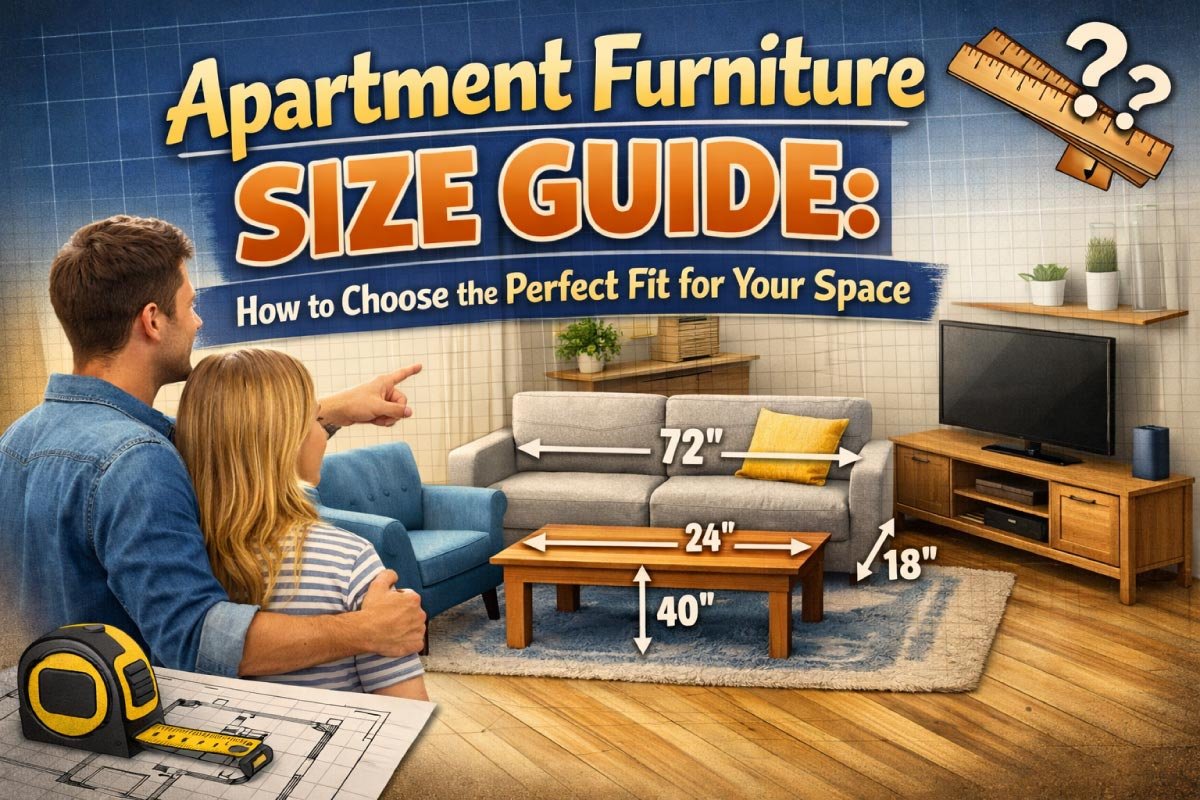
Furnishing an apartment can be a tricky balancing act. Unlike houses with spacious rooms, apartments often come with limited square footage, compact layouts, and unique design challenges.
Choosing the right furniture size is essential—not just for aesthetics but also for functionality, comfort, and traffic flow. Too large pieces make a space feel cramped, while too small furniture can leave your apartment feeling empty and disconnected.
This comprehensive apartment furniture size guide will walk you through the ideal dimensions for key furniture pieces, helping you maximize space, maintain proportion, and create a stylish, comfortable home. We’ll cover sofas, beds, dining tables, chairs, storage solutions, and multi-functional furniture. Plus, we’ve included four handy tables for quick reference.
Living Room Furniture Sizes
The living room sets the tone for your home’s comfort and style. Choosing the right furniture sizes ensures the space feels open, functional, and inviting. From sofas to coffee tables, proportion and scale make a huge difference in both aesthetics and usability. The size of your sofa, coffee table, and accent chairs plays a major role in this.
1- Sofas
Sofas often define the living room’s look and comfort, making size a key consideration. Choosing the right dimensions ensures the space feels balanced, functional, and cozy.
From compact loveseats to spacious sectionals, matching sofa size with your apartment type prevents overcrowding and enhances traffic flow.
-
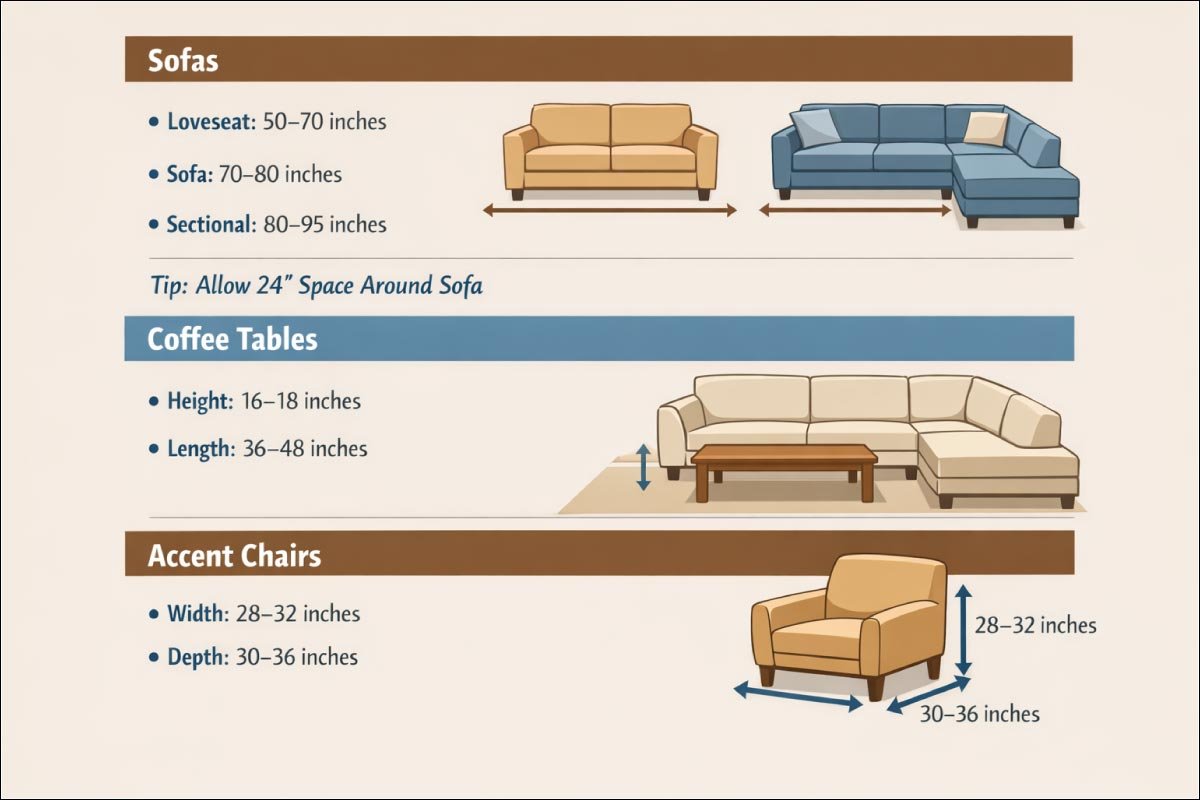
Studio apartments: A compact loveseat (50–70 inches) works best, avoiding overcrowding.
-
1-bedroom apartments: A 70–80 inch sofa fits comfortably without dominating the room.
-
2-bedroom apartments or larger: A 80–95 inch sofa or sectional can be accommodated, depending on room layout.
Tip: Measure wall space and allow at least 24 inches between the sofa and other furniture for traffic flow.
2- Coffee Tables
Coffee tables balance style and functionality in the living room. The right size ensures accessibility from the sofa and maintains clear walking paths. Choosing dimensions that complement your seating creates harmony and convenience, making the space both practical and visually appealing. Standard coffee table dimensions are 16–18 inches high and 36–48 inches long.
3- Accent Chairs
Accent chairs enhance both comfort and style, providing extra seating without overwhelming the room. Selecting the right size ensures they fit naturally alongside sofas and coffee tables, maintaining balance and flow.
Proportionate chairs also make small spaces feel open and inviting. Choose chairs 28–32 inches wide and 30–36 inches deep for small apartments.
4- Living Room Furniture Size Guide
| Furniture Type | Recommended Size (inches) | Notes |
|---|---|---|
| Loveseat | 50–70 W x 30–35 D x 30–36 H | Perfect for studios or small living rooms |
| Sofa | 70–95 W x 35–40 D x 30–36 H | Fits 1–2 bedroom apartments |
| Sectional | 80–120 W x 35–40 D x 30–36 H | L-shaped works in corner layouts |
| Coffee Table | 36–48 L x 18–24 W x 16–18 H | Should be proportional to sofa size |
| Accent Chair | 28–32 W x 30–36 D x 30–36 H | Offers flexible seating |
Bedroom Furniture Sizes
Bedrooms should feel cozy, functional, and uncluttered, even in limited apartment spaces. Choosing the right furniture sizes ensures comfort without restricting movement. From beds to dressers and nightstands, proportion and placement make a big difference in usability and visual balance. Bed size, nightstands, and dressers should maximize comfort while leaving walking room.
1- Beds
Beds are the centerpiece of any bedroom, defining both comfort and space. Selecting the right dimensions ensures restful sleep while maintaining room flow.
From compact twins to spacious kings, matching bed size to your apartment layout prevents overcrowding and enhances usability.
-
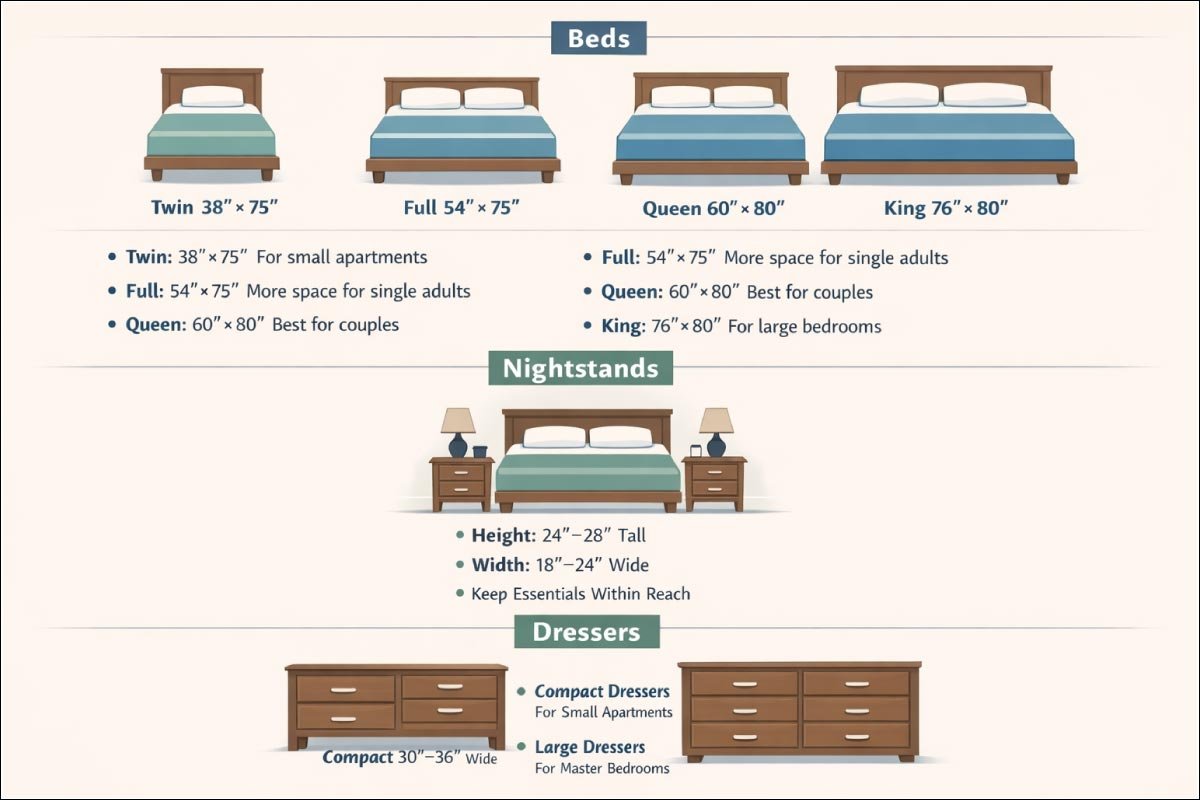
Twin: 38 x 75 inches, suitable for single sleepers in very small apartments.
-
Full: 54 x 75 inches, ideal for single adults wanting more space.
-
Queen: 60 x 80 inches, the most popular choice for couples in 1-bedroom apartments.
-
King: 76 x 80 inches, fits larger master bedrooms but can overwhelm small spaces.
2- Nightstands
Nightstands provide both style and convenience, keeping essentials within easy reach. Choosing the right height and width ensures they complement the bed without overcrowding the space. Properly sized nightstands maintain visual balance and improve bedroom functionality. Nightstands should be proportional to bed height, generally 24–28 inches high.
3- Dressers
Dressers provide essential storage while shaping the bedroom’s layout and style. Choosing the right width and height ensures they fit the space without restricting movement.
Properly sized dressers maintain balance and accessibility, making the room both functional and visually appealing.
Compact dressers (30–36 inches wide) work best for small apartments, while larger 60-inch dressers are suited to master bedrooms.
4- Bedroom Furniture Size Guide
Selecting the right bedroom furniture sizes ensures comfort, functionality, and a harmonious layout. This guide outlines recommended dimensions for beds, nightstands, and dressers, helping you optimize space in any bedroom—from compact studios to spacious master suites—while maintaining ease of movement and a balanced, inviting atmosphere.
| Furniture Type | Recommended Size (inches) | Notes |
|---|---|---|
| Twin Bed | 38 W x 75 L x 25 H | Fits small bedrooms or studio apartments |
| Full Bed | 54 W x 75 L x 25 H | Comfortable for single adults |
| Queen Bed | 60 W x 80 L x 25 H | Ideal for couples in 1-bedroom apartments |
| King Bed | 76 W x 80 L x 25 H | Best for large master bedrooms |
| Nightstand | 18–24 W x 16–20 D x 24–28 H | Should align with mattress height |
| Dresser | 30–60 W x 16–20 D x 30–36 H | Smaller units save space in apartments |
Dining Area Furniture Sizes
Dining areas in apartments need to balance comfort, style, and space efficiency. Choosing furniture with the right dimensions ensures easy movement, practical seating, and a cohesive look, even in shared spaces.
Properly sized tables and chairs make mealtime enjoyable without overwhelming the room. Many apartments combine the dining area with the living room or kitchen, so furniture must be functional and compact.
1- Dining Tables
Dining tables are the centerpiece of any eating space, and choosing the right size ensures comfort and functionality. Proper dimensions allow enough room for seating, movement, and serving. Matching table size to your apartment prevents overcrowding while maintaining flow and style. Table dimensions depend on seating needs:
-
Small apartments: 30–36 inches square for 2–4 people.
-
Medium apartments: 48–60 inches rectangular for 4–6 people.
-
Larger apartments: 72 inches or more for 6–8 people.
2- Dining Chairs
Dining chairs complete the table setup, providing comfort and proper posture during meals. Choosing the right height and proportion ensures ease of use and smooth movement around the table. Well-sized chairs enhance both functionality and aesthetics in the dining area.
Chair height should align with table height. Standard dining chair seat height is 18 inches, fitting standard table heights of 28–30 inches.
3- Dining Furniture Size Guide
Proper dining furniture sizing is key for comfort and functionality during meals. This guide provides recommended dimensions for tables and chairs, ensuring enough space for diners, smooth movement around the room, and a balanced look—whether you’re furnishing a cozy apartment or a larger dining area for family and guests.
| Furniture Type | Recommended Size (inches) | Notes |
|---|---|---|
| 2–4 Person Table | 30–36 W x 30–36 L x 28–30 H | Ideal for small apartments |
| 4–6 Person Table | 48–60 W x 30–36 L x 28–30 H | Fits medium spaces |
| 6–8 Person Table | 72–84 W x 36–40 L x 28–30 H | Suitable for larger apartments |
| Dining Chair | 16–20 W x 16–20 D x 18 H | Standard seat height fits most tables |
Storage Solutions
Efficient storage is essential in apartments to keep spaces organized and functional. Selecting furniture that combines style with hidden or built-in storage maximizes every inch without overcrowding the room.
Properly sized storage pieces maintain a clean, balanced look while making daily living more convenient. Choosing furniture with built-in storage can save space and reduce clutter.
1- TV Stands
TV stands anchor the entertainment area while providing storage and style. Choosing the right width ensures your television fits comfortably, and built-in shelves or cabinets help organize media, books, and décor. Properly sized stands maintain room balance and flow.
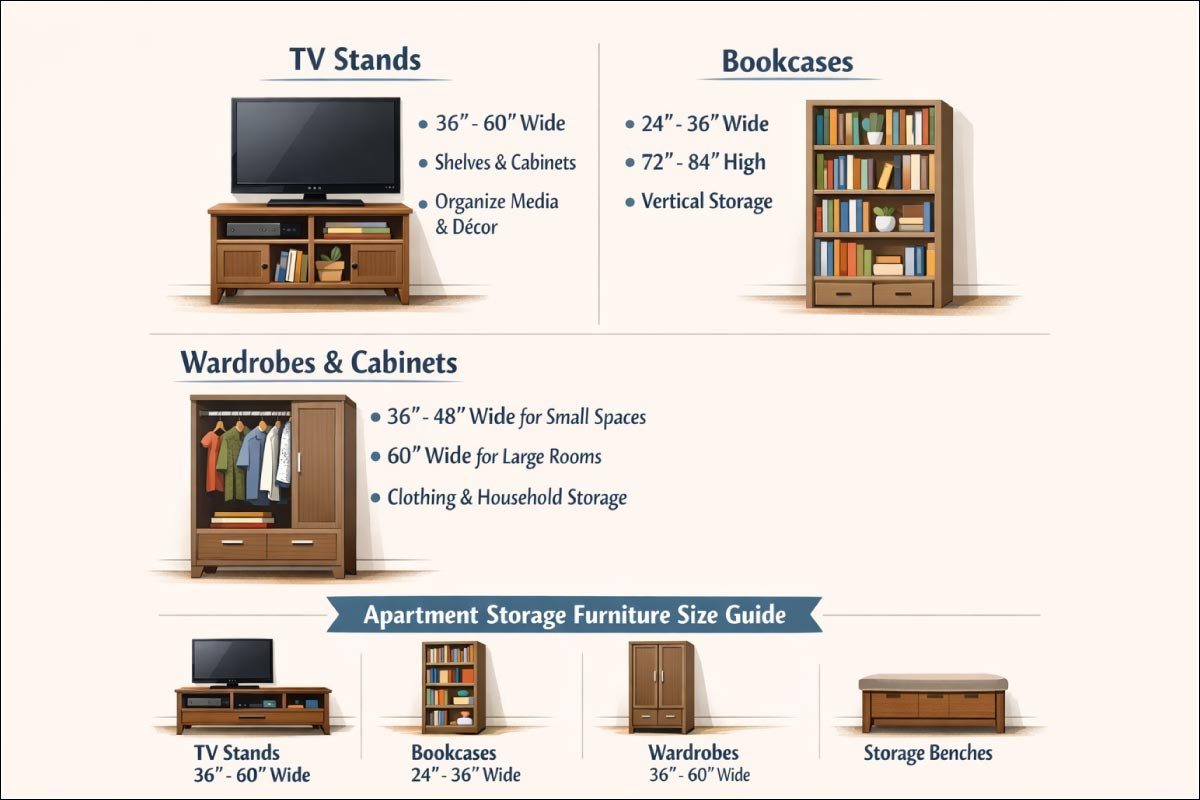
Compact TV stands range from 36–60 inches wide, depending on TV size. Choose units with shelves or cabinets to store electronics, books, or décor.
2- Bookcases
Bookcases provide both storage and a decorative element, making them ideal for organizing books, décor, and personal items. Choosing the right height and width ensures they fit the space without overwhelming it.
Vertical designs maximize storage in small apartments. Small apartments benefit from vertical bookcases (24–36 inches wide, 72–84 inches high).
3- Wardrobes & Cabinets
Wardrobes and cabinets are essential for organized living, providing ample storage for clothing and household items. Selecting the right width and height ensures they fit seamlessly without crowding the room. Properly sized units enhance both function and visual balance.
For studios and 1-bedroom apartments, wardrobes 36–48 inches wide are ideal, while larger apartments can accommodate 60-inch units.
4- Apartment Storage Furniture Size Guide
Efficient storage solutions are vital in apartment living to keep spaces organized and clutter-free. This guide outlines recommended sizes for key storage furniture—including TV stands, bookcases, wardrobes, and storage benches—helping you maximize vertical and horizontal space while maintaining a functional, stylish, and comfortable living environment.
| Furniture Type | Recommended Size (inches) | Notes |
|---|---|---|
| TV Stand | 36–60 W x 16–20 D x 20–24 H | Choose units with storage to minimize clutter |
| Bookcase | 24–36 W x 12–16 D x 72–84 H | Tall, narrow units save floor space |
| Wardrobe | 36–48 W x 20–24 D x 72–80 H | Essential for small bedrooms |
| Storage Bench | 36–48 W x 16–20 D x 18–20 H | Dual purpose: seating and storage |
Also Read:
Multi-Functional Furniture
Multi-functional furniture maximizes both space and usability in apartments, combining style with practicality. Pieces like sofa beds, storage ottomans, and foldable tables adapt to changing needs, keeping rooms open and organized.
Smartly sized multi-purpose furniture enhances comfort and flow. Multi-functional furniture is perfect for apartment living, allowing you to save space without sacrificing comfort.
1- Sofa Beds
Sofa beds combine seating and sleeping solutions, making them ideal for apartments with limited space. Choosing the right size ensures comfort for both lounging and overnight guests without overcrowding the room.
Properly proportioned sofa beds maintain flow and usability. Standard sofa bed width is 70–80 inches.
2- Nesting Tables
Nesting tables are versatile additions for apartments, offering both function and style. Their compact, stackable design allows extra surface space when needed without cluttering the room. Properly sized tables maintain balance and flow while maximizing utility in small living areas. They can be stacked when not in use, saving floor space.
3- Wall Beds / Murphy Beds
Wall beds, also called Murphy beds, maximize space in small apartments by combining sleeping and living areas. Choosing the right dimensions ensures comfort while keeping the room functional for other activities. Well-sized wall beds maintain flow and style.
For studios or single rooms, wall beds allow the room to serve multiple purposes—bedroom by night, living space by day.
Tips for Measuring and Planning Apartment Furniture
Proper planning is key to making the most of limited apartment space. Accurate measurements and thoughtful layouts prevent overcrowding, improve traffic flow, and ensure furniture fits perfectly. Considering vertical space and multi-functional pieces further maximizes usability.
-
Measure Twice, Buy Once: Always measure your space, including doorways, stairs, and elevators, before purchasing.
-
Consider Traffic Flow: Leave at least 24–36 inches of walking space between furniture pieces.
-
Use Scaled Layouts: Create a floor plan with scaled dimensions to test furniture placement.
-
Think Vertically: Tall storage units maximize space without crowding floors.
-
Opt for Multi-Functional Pieces: Beds with drawers, coffee tables with storage, and expandable tables save room.
Common Apartment Furniture Mistakes to Avoid
Choosing the wrong furniture can make even a well-designed apartment feel cramped and uncomfortable. Awareness of common sizing and layout mistakes helps maintain flow, balance, and functionality. Avoiding these errors ensures every piece fits purposefully and keeps your space open and inviting.
-
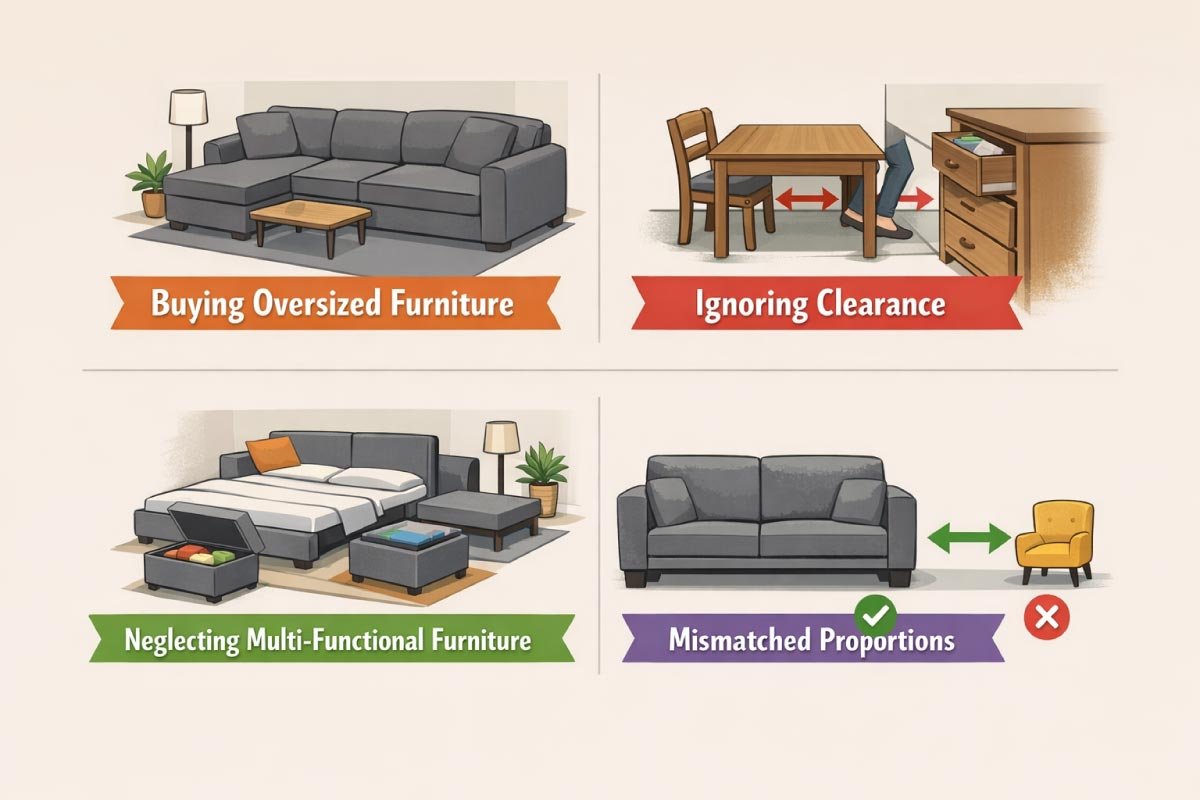
Buying oversized furniture: Large sofas and beds overwhelm small spaces.
-
Ignoring clearance: Not leaving enough room for walking or opening drawers leads to cramped layouts.
-
Neglecting multi-functional furniture: Single-purpose furniture can waste space in small apartments.
-
Mismatched proportions: Tiny chairs next to a huge sofa disrupt visual balance.
Final Thoughts
Selecting the right furniture size for your apartment is as much about function as it is about style. Proper measurements, smart layouts, and proportional pieces ensure your space feels open, comfortable, and cohesive.
From compact sofas and queen beds to multi-functional storage and dining solutions, this apartment furniture size guide provides the tools you need to furnish your home intelligently.
By using tables for quick reference, considering traffic flow, and prioritizing multi-functional pieces, even the smallest apartment can feel spacious, stylish, and perfectly tailored to your lifestyle.
Discover More:
