
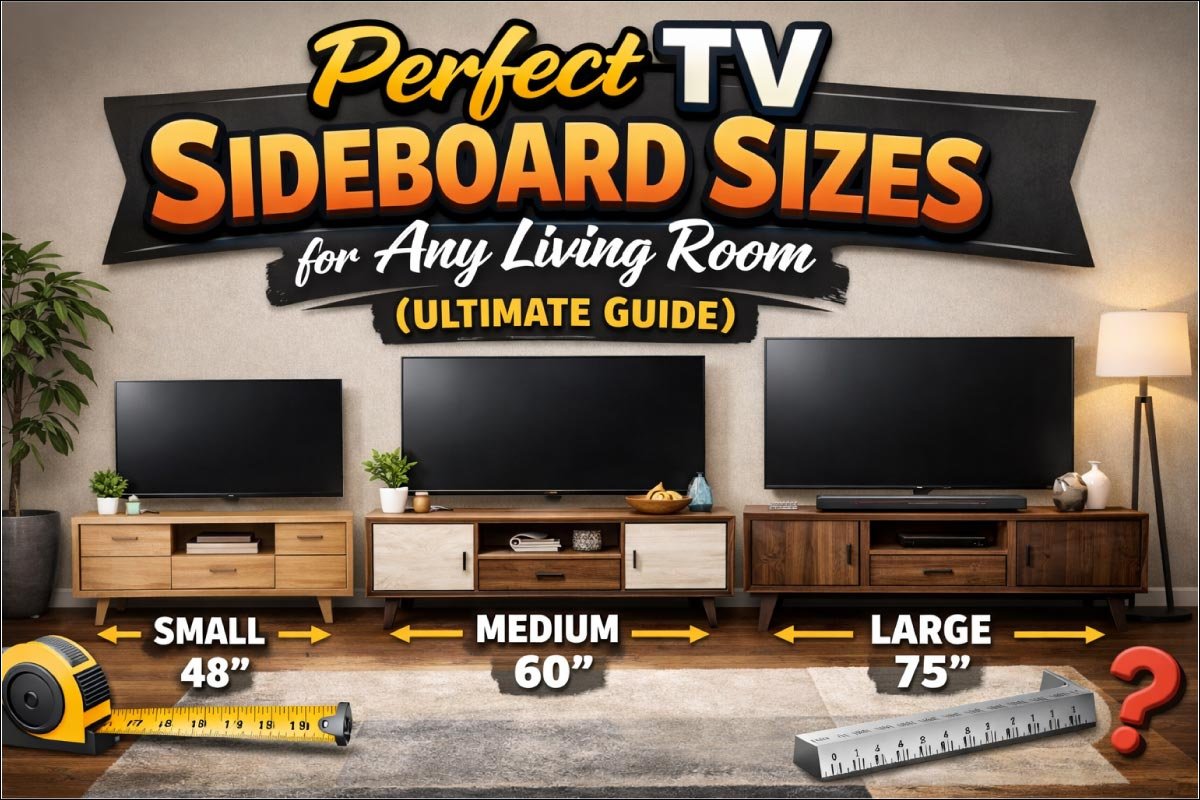
Choosing the right TV sideboard — often called a TV console, media unit, or entertainment center — is not just about aesthetics. The size of your sideboard affects viewing comfort, storage functionality, balance in your space, and even the way your living room “feels.” Too small, and your TV looks awkward; too large, and the space feels crowded.
In this guide, we’ll walk through everything you need to know about finding the perfect TV sideboard size for any living room.
Why TV Sideboard Size Matters
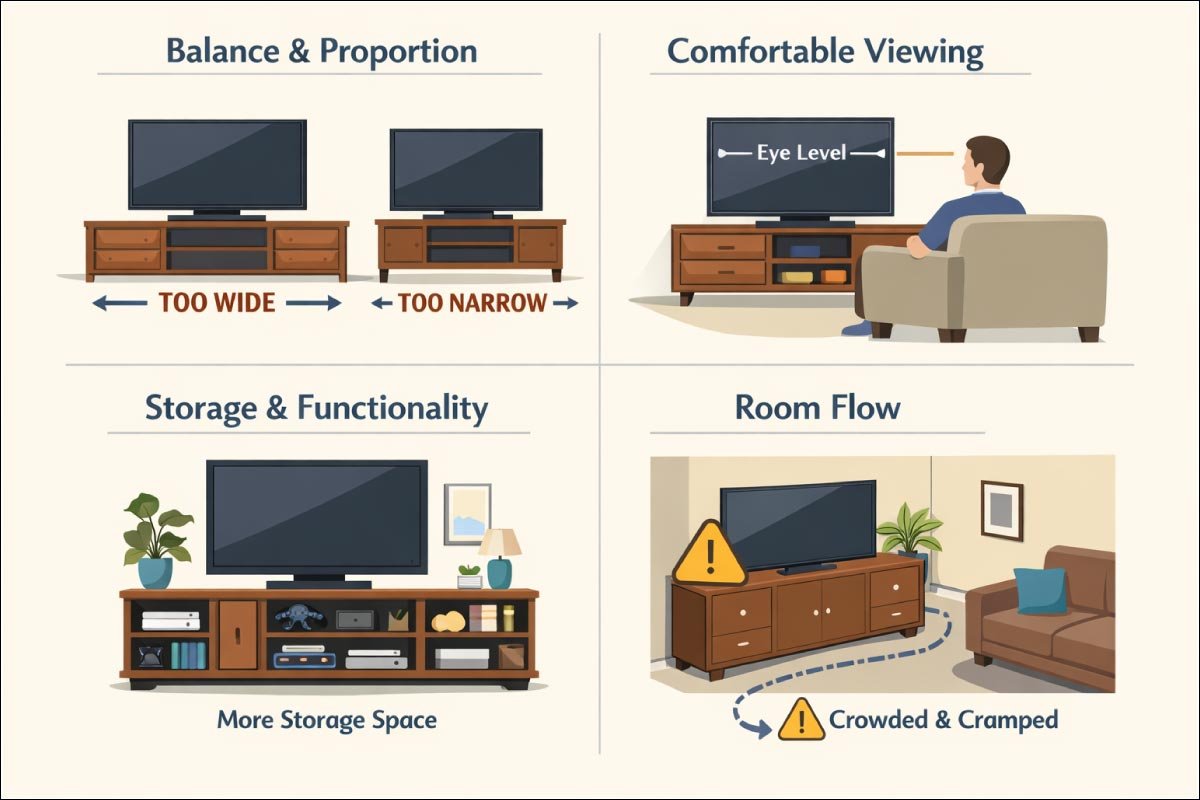
Choosing the right TV sideboard isn’t just about style — size plays a pivotal role in both functionality and aesthetics. The perfect dimensions ensure balanced proportions, comfortable viewing, ample storage, and smooth room flow. A well-sized sideboard enhances your living space while keeping your entertainment area practical and visually pleasing.
-
Balance & Proportion: A sideboard that’s too wide or too narrow compared to your TV can make your setup look off‑balance.
-
Comfortable Viewing: The height of the stand determines whether your TV sits at eye level — critical for neck comfort.
-
Storage & Functionality: Sideboards often provide storage for consoles, games, remotes, décor pieces, and media. Size equals storage.
-
Room Flow: A bulky piece in a small room can block walkways or make the space feel cramped.
General Rules for TV Sideboard Sizes
When selecting a TV sideboard, certain general rules can help guide your choice. These foundational tips ensure your sideboard complements your TV, fits your room, and provides practical storage without overwhelming the space. Following these guidelines makes it easier to achieve a balanced, functional, and stylish entertainment setup.
1. Width:
Width is one of the most important dimensions when choosing a TV sideboard. A sideboard that extends beyond the TV frame creates visual harmony, offers extra surface space for décor, and prevents the setup from feeling cramped. Proper width balances aesthetics with functionality for any living room arrangement.
2. Height:
Height is crucial for comfortable TV viewing. The ideal setup positions the screen’s center around 42 inches (107 cm) from the floor, reducing neck strain during seated viewing. Choosing a sideboard that supports this height ensures your TV sits at the perfect eye level while maintaining a balanced and stylish look.
3. Depth:
Depth is a key factor in both functionality and aesthetics. A sideboard should comfortably accommodate consoles, media devices, and cable management without sticking out into the room. Choosing the right depth ensures a clean, organized look while keeping pathways clear and maintaining a harmonious balance with your TV setup.
Sideboard Width by TV Size
Choosing the right sideboard for your TV is essential for both style and functionality. A properly sized console not only supports your TV but also balances the room and provides extra storage. This chart matches TV widths with recommended sideboard sizes to help you achieve a harmonious setup.
Tip: TV size is measured diagonally, but this chart converts that to approximate width.
| TV Size (Diagonal) | TV Width (Approx.) | Sideboard Width Recommendation | Why |
|---|---|---|---|
| 32″ | ~28″ (71 cm) | 36″ – 48″ (91 – 122 cm) | Gives side space & balance |
| 40–43″ | ~35–38″ (89 – 97 cm) | 48″ – 60″ (122 – 152 cm) | Maintains proportion |
| 50–55″ | ~44–48″ (112 – 122 cm) | 60″ – 72″ (152 – 183 cm) | Balanced and functional |
| 60–65″ | ~52–57″ (132 – 145 cm) | 72″ – 84″ (183 – 213 cm) | Spacious display/storage |
| 70″+ | ~61″+ (155+ cm) | 84″ – 96″+ (213 – 244+ cm) | Creates a strong focal point |
Pro Tip: Always choose a console wider than the TV width — never narrower.
Sideboard Height Guide
Sideboard height plays a key role in both comfort and style, affecting TV viewing, accessibility, and room flow. Choosing the right height ensures your console complements seating arrangements and daily use. This guide outlines recommended sideboard heights based on living room setups and seating types for optimal balance.
| Living Room Use | Recommended Sideboard Height | Best Seating Style |
|---|---|---|
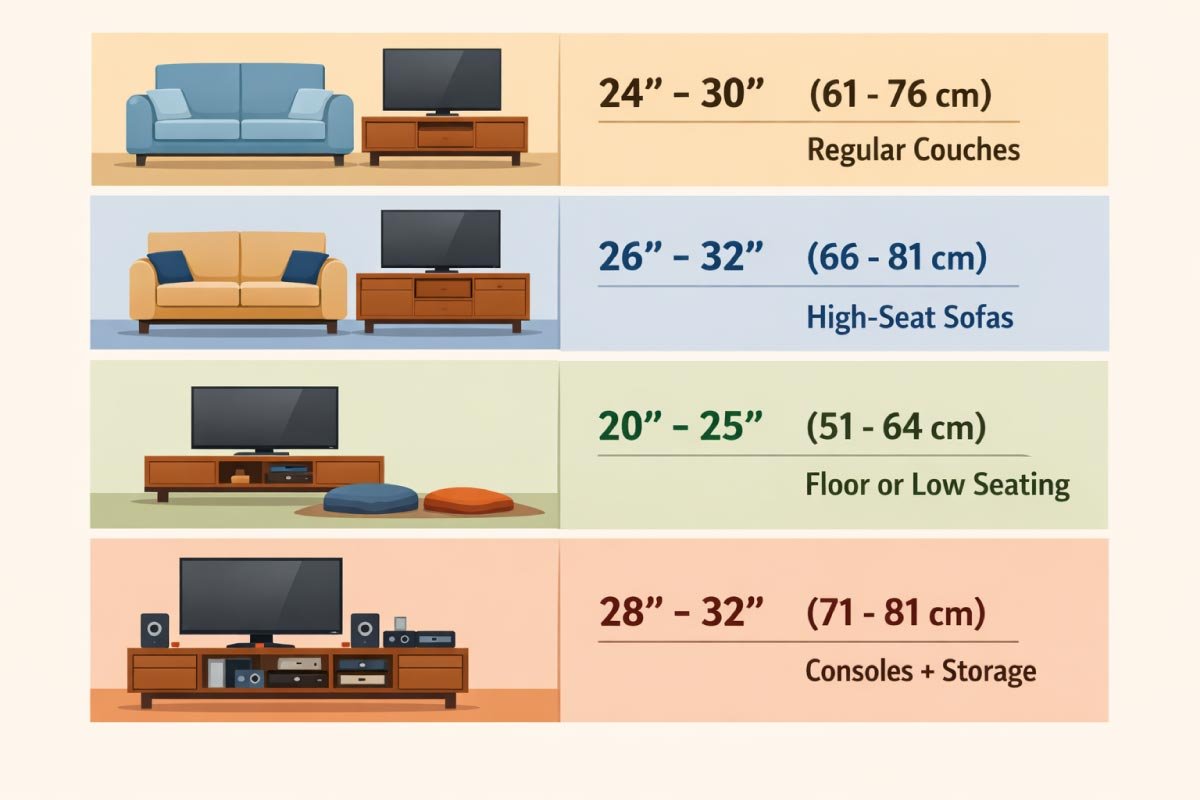
| Standard Sofa | 24″ – 30″ (61 – 76 cm) | Regular couches |
| Raised Seating | 26″ – 32″ (66 – 81 cm) | High‑seat sofas |
| Floor Seating | 20″ – 25″ (51 – 64 cm) | Floor or low seating |
| Multi‑device Setup | 28″ – 32″ (71 – 81 cm) | Consoles + storage |
Why Height Matters
Height plays a critical role in comfortable TV viewing. Positioning your screen too low or too high can cause neck strain and poor posture. Ensuring the center of your TV aligns with seated eye level creates a natural, ergonomic viewing angle while keeping your living room layout balanced and visually appealing.
Sideboard Depth & Functionality
Sideboard depth affects storage capacity, TV placement, and overall room balance. Choosing the right depth ensures your console meets practical needs without overwhelming the space. This guide breaks down recommended depths for different purposes, from minimal storage to electronics setups, helping you combine style, function, and spatial harmony.
| Purpose | Recommended Depth | Ideal For |
|---|---|---|
| Minimal Storage | 12–14″ (30–36 cm) | Just TV with small items |
| Electronics & Consoles | 15–18″ (38–46 cm) | Game consoles, A/V boxes |
| Generous Storage | 18–22″ (46–56 cm) | Books, décor, bulky items |
| Hidden Cable Management | 15–20″ (38–51 cm) | Keeps wires organized |
Note: Deep units can make small rooms feel busy. In tight spaces, choose sleeker profiles.
Sideboard Size by Room Size
Selecting the right sideboard depends on your living room’s size and layout. A properly scaled console ensures balance, functionality, and aesthetic harmony. This guide matches sideboard widths to common room dimensions, offering placement tips to maximize space, enhance flow, and create a stylish, comfortable living area for every room size.
| Room Size | Recommended Sideboard Width | Placement Tips |
|---|---|---|
| Small (10×12 ft) | 36″ – 60″ | Keep minimal; avoid crowding |
| Medium (12×16 ft) | 48″ – 72″ | Balanced proportions |
| Large (16×20 ft) | 60″ – 96″+ | Larger console, storage |
| Open Plan | 72″+ | Defines TV zone |
A Note on Scale
Scale ensures your TV sideboard fits the room’s proportions. A piece that’s too large can overwhelm a small space, while one that’s too small can feel lost in a larger room. Considering scale helps maintain visual harmony, balances the furniture arrangement, and enhances the overall flow of your living area.
Style & Design Tips That Impact Size Choices
Your TV sideboard’s style and design can affect how its size feels in a room. Features like legs, open shelving, or bulky cabinetry change perceived scale and functionality. Considering these elements alongside measurements ensures your sideboard not only fits physically but also complements your décor and enhances the room’s overall aesthetic.
1. Low & Long
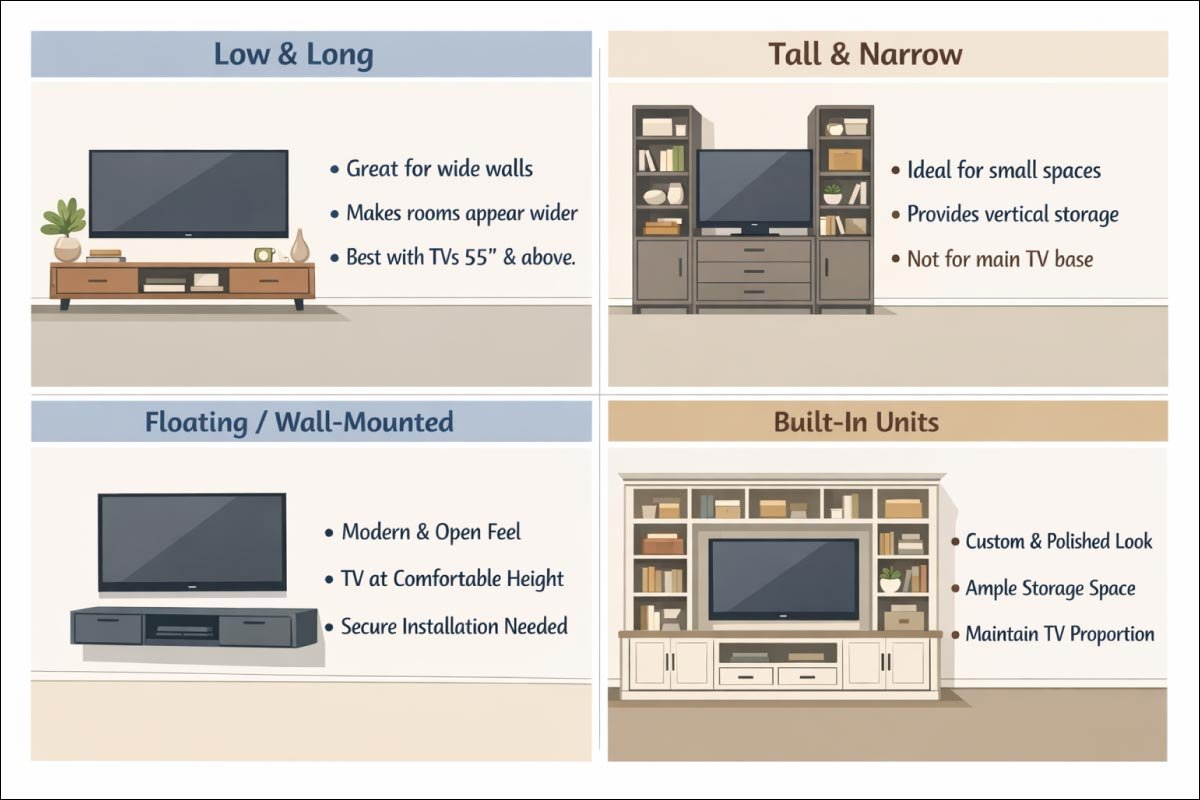
Low and long sideboards are ideal for wide walls and larger TVs. Their horizontal orientation visually stretches the room, making spaces feel more expansive. This design works especially well with TVs 55″ and above, offering ample surface area for décor, media devices, and balanced proportion in the living area.
-
Great for wide walls.
-
Makes rooms appear wider.
-
Best with TVs 55″ and above.
2. Tall & Narrow
Tall and narrow sideboards are perfect for rooms with limited floor space that require extra vertical storage. While they maximize storage capacity, they are not ideal as the main TV base unless paired thoughtfully with other furniture. Proper balance ensures the room remains functional and visually harmonious.
-
Works in small spaces with vertical storage needs.
-
Not ideal as the main TV base unless balanced.
3. Floating/Wall‑Mounted
Floating or wall-mounted sideboards create a sleek, modern look while freeing up floor space. Their narrow design keeps rooms feeling open and airy. However, it’s essential to position the TV at a comfortable viewing height and ensure proper support for both the console and media equipment for safety and functionality.
-
Wall consoles can be narrow but create a modern open feel.
-
Must ensure TV is mounted at comfortable height.
4. Built‑In Units
Built-in TV units offer a custom, polished look and can exceed standard sideboard dimensions. While they provide extensive storage and design flexibility, maintaining visual balance with your TV is crucial. Proper proportion ensures the unit enhances the room’s aesthetics without overwhelming the space or compromising functionality.
- Custom cabinetry can be wider than the recommended guidelines — but should still adhere to visual balance with your TV.
Storage Needs vs Sideboard Size
Sideboard size directly impacts how much storage you can incorporate and how organized your space remains. Choosing the right width ensures your console meets your practical needs without overwhelming the room. This guide compares sideboard sizes with typical storage capacities to help you select the perfect balance of style and function.
| Sideboard Width | Primary Uses | Storage Potential |
|---|---|---|
| 36″ – 48″ | Basic TV setup | Limited shelves/drawers |
| 48″ – 60″ | Moderate storage | Shelves + cabinets |
| 60″ – 72″ | Family room storage | Large drawers + media space |
| 72″ – 84″+ | Full entertainment hub | Abundant space for gear |
Bigger does not always mean better — it must suit your storage needs.
Also Read:
Placement Considerations
Where you place your TV sideboard greatly influences the ideal size. Wall space, viewing distance, and room layout all determine what dimensions will look balanced and function well. Considering placement ensures your sideboard complements the TV, maintains comfortable sightlines, and allows for smooth traffic flow throughout the living area.
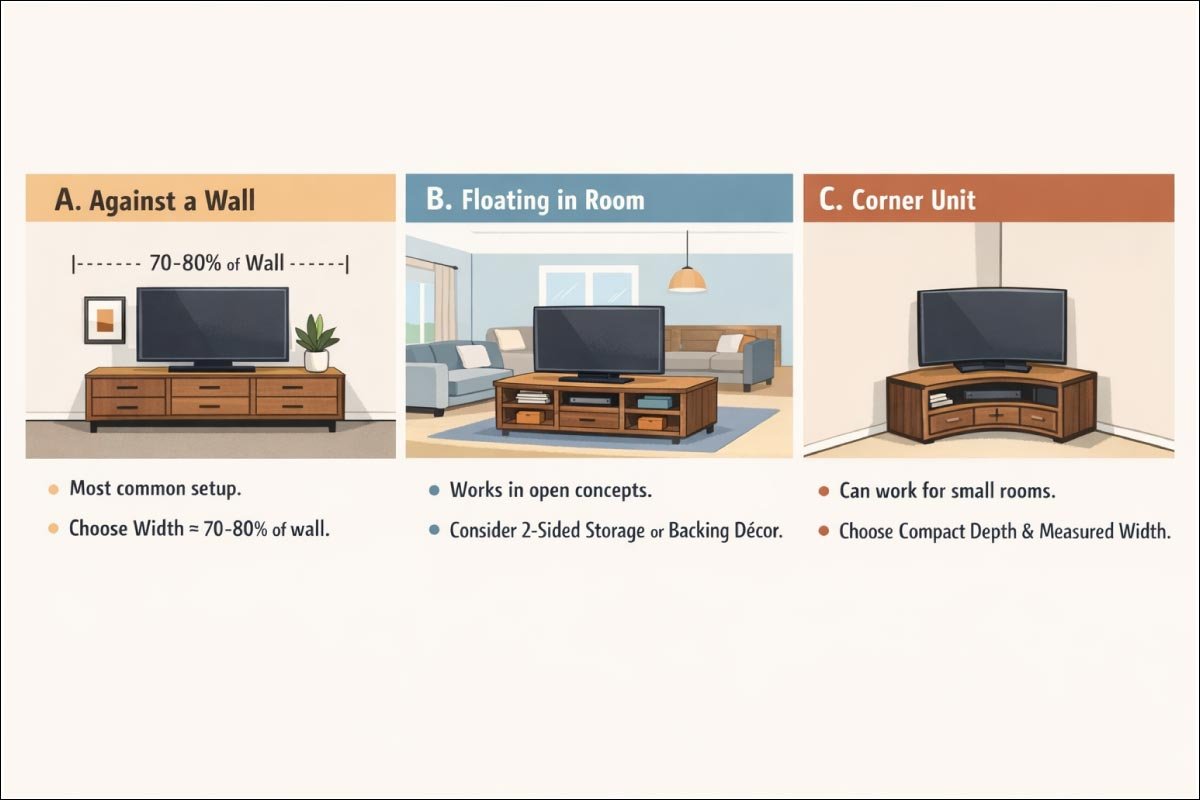
A. Against a Wall
Placing a TV sideboard against a wall is the most common and practical setup. This arrangement anchors the furniture and TV, creating a cohesive focal point. Ideally, the sideboard’s width should be about 70–80% of the wall to maintain visual balance and ensure the space feels neither cramped nor empty.
-
Most common setup.
-
Choose Width ≈ 70–80% of wall width.
B. Floating in Room
Floating a TV sideboard in the middle of a room works well in open-concept layouts, creating a functional divider and adding visual interest. When choosing this placement, consider two-sided storage or decorative backing elements to maintain balance, enhance aesthetics, and ensure the piece integrates seamlessly without disrupting the flow of the space.
-
Works in open concepts.
-
Consider 2‑sided storage or backing décor.
C. Corner Unit
Corner TV sideboards are ideal for small rooms or awkward layouts, making efficient use of otherwise unused space. Selecting a unit with a compact depth and carefully measured width ensures it fits snugly without overcrowding. Proper planning maintains functionality while keeping the room visually balanced and comfortable for viewing.
-
Can work for small rooms.
-
Choose compact depth and measured width.
Style & Decor Balance
A TV sideboard should complement your room’s style rather than dominate it. Achieving decor balance ensures the space feels harmonious, functional, and visually appealing. Thoughtful placement of decorations, symmetry, and breathing room around the TV and console creates a polished, inviting setup that highlights both your furniture and entertainment center.
Visual tips:
-
Keep space around decorations balanced.
-
Don’t overcrowd with décor — let the TV and stand breathe.
-
Use symmetry with speakers or plants.
Also Read:
Dryer Size Guide: Find the Perfect Dryer for Any Laundry Room
Choosing the Right Material & Shape
The material and shape of your TV sideboard affect both aesthetics and how large or small it appears in a room. Light, sleek materials can make a piece feel airy, while bulky or dark materials add visual weight. Thoughtful selection ensures the sideboard fits your space and style.
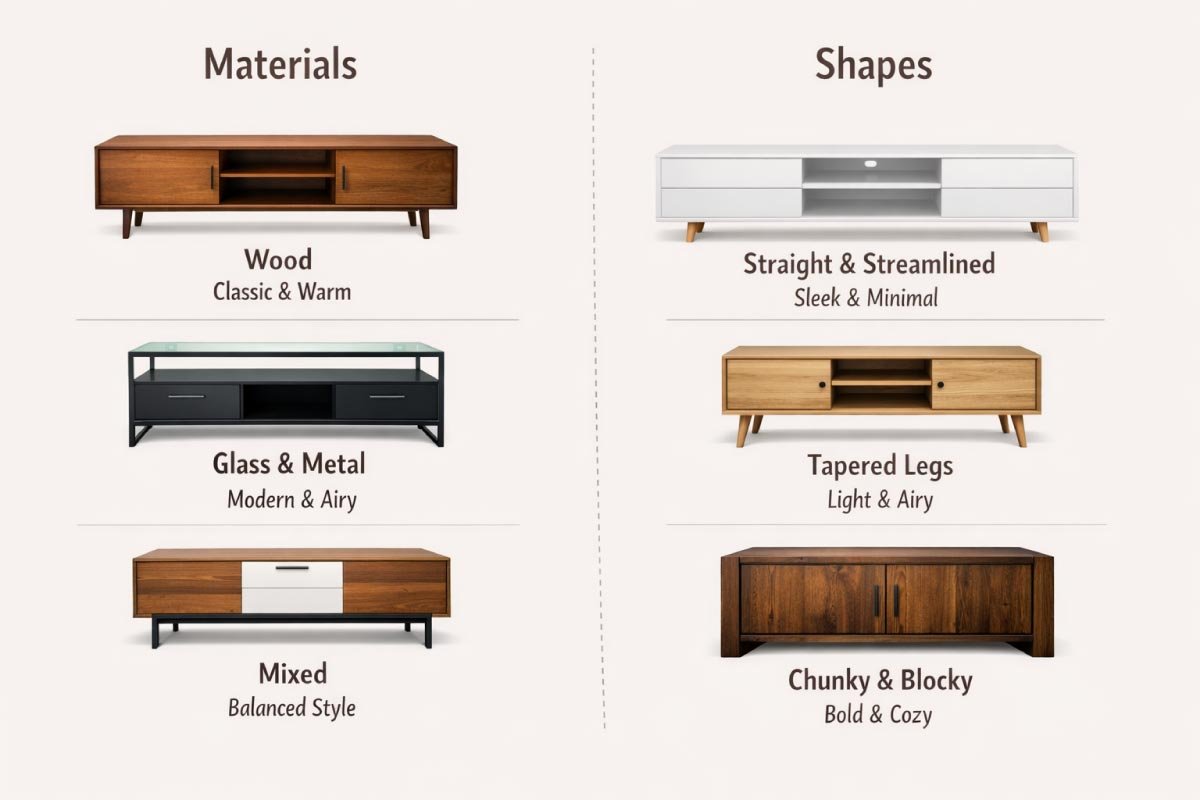
1. Materials:
The material of a TV sideboard plays a key role in both style and visual impact. Wood offers warmth and timeless appeal, glass and metal create a modern, airy feel, and mixed materials combine the best of both worlds. Choosing the right material enhances size perception and room harmony.
-
Wood: Classic, warm, can be bold or subtle.
-
Glass & Metal: Modern, lighter visual weight.
-
Mixed: Balance warmth and openness.
2. Shapes:
The shape of a TV sideboard influences both style and the room’s perceived space. Straight, streamlined designs suit modern minimalism, tapered legs create a sense of lightness, and chunky, blocky forms work well in rustic or cozy spaces. Choosing the right shape ensures balance, proportion, and functional flow.
-
Straight & streamlined: Best for modern minimal.
-
Tapered legs: Adds lightness.
-
Chunky, blocky forms: Great for rustic/cozy spaces — but pair with generous room size.
Also Read:
TV Size vs Ideal Sideboard Size Summary
Matching your sideboard to your TV ensures both style and functionality. This summary table provides quick reference for ideal sideboard width, height, and depth based on TV size. Use it to create a balanced setup that enhances viewing comfort, storage efficiency, and overall living room harmony.
| TV Size | Width | Height (Optimal) | Depth Range |
|---|---|---|---|
| 32″ | 36″ – 48″ | 24″ – 28″ | 12″ – 16″ |
| 43″ | 48″ – 60″ | 24″ – 30″ | 14″ – 18″ |
| 55″ | 60″ – 72″ | 26″ – 30″ | 15″ – 18″ |
| 65″ | 72″ – 84″ | 26″ – 32″ | 15″ – 20″ |
| 75″+ | 84″ – 96″+ | 28″ – 32″ | 16″ – 20″ |
This chart gives you a quick reference based on TV size.
Also Read:
Quick Checklist Before Buying
Before purchasing a TV sideboard, a few careful measurements and considerations can save time and ensure a perfect fit. Checking TV and wall dimensions, storage needs, height, depth, and style alignment helps create a balanced, functional, and visually appealing entertainment area that complements your living space effortlessly.
-
Measure TV width (not just screen size).
-
Measure wall width to avoid overwhelming the space.
-
Assess storage needs first.
-
Choose height based on eye level from your seating.
-
Confirm depth suits electronics you plan to store.
-
Match style to décor theme.
Also Read:
Final Thoughts
Selecting the right TV sideboard is about more than just measurements — it’s about creating a space that feels balanced, functional, and stylish. By considering size, height, depth, and design, you can ensure your media setup enhances comfort, storage, and overall living room aesthetics, no matter the room size.
-
Looks balanced and intentional
-
Offers storage you actually use
-
Enhances comfort while watching TV
-
Improves the overall feel of your living room
Whether you have a cozy apartment living room or a large open‑plan lounge, these sizing tables and guidelines will help you pick a console that fits beautifully.
Also Read:
