
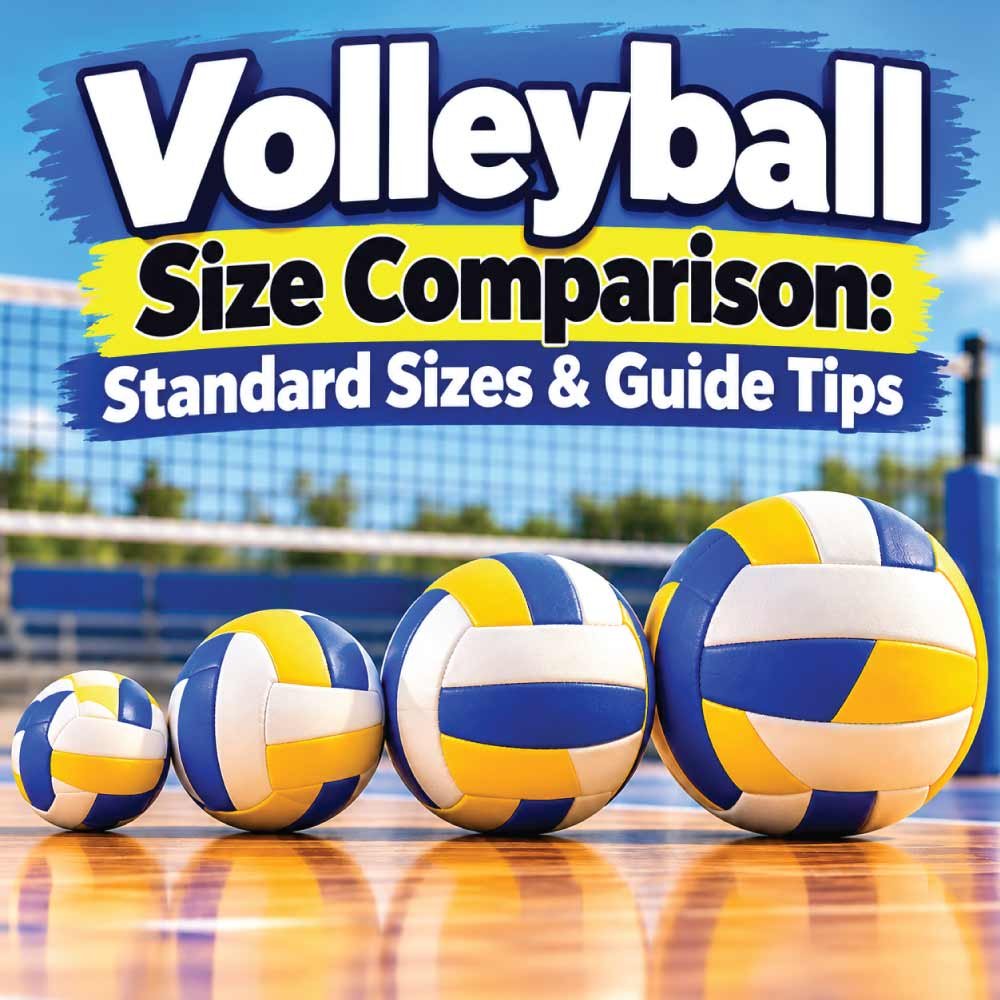
Choosing the right volleyball is easier when you understand how volleyball sizes compare. Although many volleyballs look similar, their circumference, weight, pressure, construction, and intended use can vary depending on the player, age group, competition level, and playing environment.
A standard indoor volleyball is generally designed around a specific size and weight range, while youth, training, and beach volleyballs may differ in construction or feel. Choosing the wrong ball can affect control, serving, passing, setting, and overall comfort.
This volleyball size comparison guide explains standard volleyball dimensions, youth sizes, indoor versus beach volleyballs, how to measure a volleyball, recommended sizes by age and use, and the factors to consider before buying one.
Volleyball Size Comparison Chart
For most players, the most important specifications are circumference and weight. The following chart provides a practical comparison of common volleyball categories.
| Volleyball Type | Typical Circumference | Typical Weight | Common Use |
|---|---|---|---|
| Standard Volleyball | 65–67 cm | 260–280 g | Adult indoor competition |
| Youth Volleyball | About 63–66 cm | About 200–260 g | Junior training and play |
| Lightweight Volleyball | Varies by model | Below standard weight | Beginners and training |
| Beach Volleyball | About 66–68 cm | About 260–280 g | Outdoor beach play |
| Mini Volleyball | Varies | Lighter than standard | Skills and introductory play |
| Training Volleyball | Usually near standard size | Varies | Practice and drills |
The exact dimensions can vary by manufacturer and model. For organized competition, always check the rules of the governing organization or the specifications supplied with the ball.
What Is the Standard Volleyball Size?
A standard adult volleyball has a circumference of approximately 65 to 67 centimeters, or about 25.6 to 26.4 inches. Its typical weight is approximately 260 to 280 grams, or around 9.2 to 9.9 ounces.
This is the size most people associate with competitive indoor volleyball.
A regulation-style volleyball is designed to provide a balance between:
- Ball control
- Passing accuracy
- Setting consistency
- Serving performance
- Hitting response
- Comfortable handling
- Appropriate flight characteristics
The ball is usually made with a synthetic or leather-like outer cover surrounding an internal bladder. Construction varies, so two balls with similar dimensions can still feel noticeably different when played.
Standard Volleyball Dimensions
| Specification | Standard Range |
|---|---|
| Circumference | 65–67 cm |
| Circumference in inches | 25.6–26.4 in |
| Weight | 260–280 g |
| Weight in ounces | 9.2–9.9 oz |
| Shape | Spherical |
| Typical use | Indoor volleyball |
The circumference is more useful than simply measuring the ball from one side to the other because a volleyball is spherical. A circumference measurement provides a consistent way to compare balls.
Volleyball Size by Age and Player Level
Not every player needs the same type of volleyball. Younger athletes often benefit from lighter or specially designed youth volleyballs because they can be easier to control.
However, there is no single universal age-to-ball-size chart that applies to every league. Youth programs may use different equipment depending on their rules and development goals.
| Player Group | Common Volleyball Choice | Why |
|---|---|---|
| Young beginners | Lightweight or youth ball | Easier handling |
| Junior players | Youth or standard-style ball | Skill development |
| Teen players | Standard or league-approved ball | Transition to competition |
| Adult recreational players | Standard volleyball | Familiar regulation-style feel |
| Adult competitive players | Competition volleyball | Designed for organized play |
| Training sessions | Standard or training ball | Depends on drill |
For children, weight can be just as important as circumference. A ball that is slightly smaller but still heavy may not provide the same benefit as a purpose-built lightweight training ball.
Youth Volleyball vs Standard Volleyball
The main difference between youth and standard volleyball equipment is often the weight and intended player level, rather than simply the physical diameter.
A standard adult volleyball can be difficult for young beginners to control. A lighter volleyball can help new players learn fundamental skills without struggling to generate enough force to pass or serve.
Why Use a Youth Volleyball?
A lighter ball can be useful for teaching:
- Underhand passing
- Forearm control
- Serving technique
- Setting
- Ball tracking
- Basic movement
- Hand-eye coordination
The objective is not necessarily to keep young players on a smaller ball forever. Instead, appropriately sized equipment can make skill development more comfortable before progressing toward standard competition equipment.
When Should Players Move to a Standard Ball?
The transition should depend on the player’s age, strength, skill level, league rules, and comfort.
A player who can consistently control a lighter ball may be ready to practice with a standard volleyball. Competitive programs should follow the equipment requirements of their specific age division.
Indoor Volleyball vs Beach Volleyball Size Comparison
Indoor and beach volleyballs are similar in overall circumference and weight, but they are designed for very different playing conditions.
An indoor volleyball is normally used in a controlled court environment. Beach volleyball is designed for outdoor play and must remain practical in conditions involving sand, wind, sunlight, and different playing surfaces.
| Feature | Indoor Volleyball | Beach Volleyball |
|---|---|---|
| Typical circumference | 65–67 cm | About 66–68 cm |
| Typical weight | 260–280 g | 260–280 g |
| Cover | Durable synthetic or leather-like material | Durable outdoor-friendly cover |
| Panel construction | Often more panels | Often fewer, larger panels |
| Playing environment | Indoor court | Sand/outdoor court |
| Primary consideration | Consistent indoor handling | Outdoor durability and feel |
One important point is that beach volleyball is not simply an indoor volleyball taken outside. The construction and playing characteristics are intended for outdoor conditions.
Why Volleyball Circumference Matters
Circumference affects how the ball feels in your hands and how comfortably you can control it.
If a ball is too large for a young player, reaching around it and controlling it during certain skills can be more difficult. If it is too small, it may not provide the same feel as the equipment expected in competition.
For adults using standard equipment, staying within the appropriate specification is generally more important than searching for a noticeably smaller or larger ball.
Circumference is especially useful when comparing:
- Competition volleyballs
- Youth volleyballs
- Training balls
- Mini volleyballs
- Recreational volleyballs
- Beach volleyballs
Volleyball Weight Comparison
Weight is another major part of volleyball sizing.
A standard adult volleyball generally falls within the 260–280 gram range. Lightweight youth or training volleyballs may be substantially lighter, depending on the design.
A lighter ball can make learning easier because the player does not have to generate as much force to move it. However, competition players should practice with equipment that matches the requirements of their competition.
| Ball Category | Weight Consideration | Typical Purpose |
|---|---|---|
| Standard | Around 260–280 g | Adult and competitive play |
| Lightweight | Below standard weight | Beginners and training |
| Youth | Often lighter than adult models | Junior development |
| Training | Varies by design | Skill-specific practice |
| Beach | Generally similar overall weight | Outdoor play |
Always check the manufacturer’s specification when exact weight matters.
Also Read:
How to Measure a Volleyball
If you already own a volleyball and want to determine its approximate size, measuring the circumference is the easiest method.
Step 1: Find a Flexible Measuring Tape
Use a flexible tape measure, such as a sewing tape. A rigid ruler is not ideal because you need to follow the curve of the ball.
Step 2: Wrap the Tape Around the Ball
Place the tape around the widest part of the volleyball. Keep it level around the center rather than wrapping it diagonally.
Step 3: Record the Circumference
Read the measurement where the tape overlaps.
For a standard volleyball, you should generally get a measurement around 65–67 cm.
Step 4: Compare the Result
Compare your measurement with the manufacturer’s specifications or the requirements of your volleyball organization.
If the ball is significantly outside the expected range, check whether you are measuring it correctly and whether it is intended to be a youth, mini, training, or specialty volleyball.
How to Check Volleyball Diameter
Diameter is not usually the primary specification used when buying a volleyball, but you can estimate it from circumference.
The relationship is:
Diameter = Circumference ÷ π
For example, if a volleyball has a circumference of approximately 66 cm:
66 ÷ 3.1416 ≈ 21.0 cm
So a standard volleyball with a 66 cm circumference has an approximate diameter of 21 cm, or about 8.3 inches.
| Circumference | Approximate Diameter |
|---|---|
| 65 cm | 20.7 cm |
| 66 cm | 21.0 cm |
| 67 cm | 21.3 cm |
| 68 cm | 21.6 cm |
These diameter figures are mathematical conversions rather than separate equipment standards. Volleyball specifications are normally expressed using circumference and weight.
Also Read:
Volleyball Size Comparison by Use
The best volleyball depends on what you intend to do with it.
Competitive Indoor Volleyball
For organized adult competition, choose a ball that meets the specifications required by the relevant competition or governing body.
Important characteristics include:
- Correct circumference
- Correct weight
- Appropriate internal pressure
- Durable cover
- Consistent shape
- Suitable construction
Recreational Volleyball
Recreational players have more flexibility. Comfort, durability, price, and playing environment may be more important than strict competition specifications.
For casual indoor play, a standard-size volleyball is usually a practical choice.
Youth Training
For younger athletes, look for equipment specifically intended for their age or skill level. Lightweight construction can make learning fundamental techniques easier.
Beach Volleyball
Choose a ball specifically intended for beach or outdoor volleyball. Outdoor balls are designed with construction and materials suited to that environment.
Also Read:
What Volleyball Size Should Beginners Use?
For adult beginners, a standard-size volleyball is generally a sensible choice if the goal is to learn the same basic equipment used in regular indoor volleyball.
For children and very young beginners, a lightweight youth ball may be more manageable.
The most important factors are:
- Player age
- Physical strength
- Skill level
- Playing environment
- League requirements
- Ball weight
- Ball circumference
- Comfort during practice
Beginners should not assume that a smaller ball is always better. The correct choice depends on who is using it and why.
Volleyball Pressure and Why It Matters
Size alone does not determine how a volleyball feels.
Internal air pressure can significantly affect the ball’s response. A ball that is underinflated may feel soft and behave differently during passing, serving, and setting. A ball that is inflated too much can feel excessively firm.
Competition equipment normally has a specified pressure range. For casual play, follow the manufacturer’s inflation instructions rather than trying to make the ball as firm as possible.
Use a suitable ball pump and, when exact pressure is important, a pressure gauge.
Signs Your Volleyball May Need Attention
Check the ball if you notice:
- Unusual softness
- Difficulty maintaining shape
- Inconsistent bounce or flight
- Visible damage
- Air loss between sessions
- A noticeably different feel from other volleyballs
Do not rely only on squeezing the ball with your hands when precise pressure matters.
How Volleyball Construction Affects Size and Feel
Two volleyballs can have almost identical dimensions but feel very different during play.
The reason is construction.
Cover Material
Volleyball covers may use synthetic materials or other specialized constructions. The cover affects grip, durability, and overall feel.
Panel Design
The number and shape of panels can influence the ball’s surface characteristics and flight response.
Bladder
The internal bladder holds the air and helps maintain the ball’s spherical shape. Its construction can affect consistency and air retention.
Surface Texture
A volleyball’s surface can influence how it feels during contact. This can matter particularly for players who spend considerable time practicing setting, serving, and passing.
For this reason, size comparison should not be the only factor when choosing a volleyball.
Common Volleyball Sizing Mistakes
Many equipment problems come from choosing a ball based only on appearance.
Choosing by Appearance
Most volleyballs look roughly the same size in photographs. Visual comparison is unreliable.
Ignoring Weight
A ball can have an appropriate circumference but still be unsuitable for a young player if its weight is too high.
Using the Wrong Ball Outdoors
Indoor and beach volleyballs are designed for different environments. Using the wrong type can affect durability and performance.
Ignoring Competition Rules
A recreational ball may be perfectly acceptable for casual games but not meet the equipment requirements of a particular competition.
Inflating Without Checking Specifications
More air does not automatically mean better performance. Follow the recommended pressure range.
Assuming One Size Fits Every Age
Children’s volleyball programs may use equipment that differs from adult competition equipment. Check the requirements of the specific program.
How to Choose the Right Volleyball
When comparing volleyball sizes, use a simple decision process.
For Adult Indoor Competition
Choose a standard competition volleyball that meets the applicable rules.
For Adult Recreation
A standard volleyball is usually appropriate, but prioritize comfort, durability, and your playing environment.
For Children
Look for a youth or lightweight volleyball designed for the player’s development level.
For Beach Games
Choose a volleyball specifically manufactured for beach or outdoor volleyball.
For Training
A standard ball is useful for realistic practice, while lightweight or specialized training balls can be useful for certain drills.
Volleyball Size vs Skill Development
The right equipment can support skill development, but the ball itself does not replace good technique.
A beginner needs opportunities to practice:
- Forearm passing
- Overhead setting
- Serving
- Attacking
- Positioning
- Footwork
- Communication
- Ball control
A ball that is comfortable and appropriate for the player’s level can make repeated practice easier.
As skills improve, transitioning toward the equipment used in competition helps players become comfortable with the required weight, circumference, pressure, and ball response.
Frequently Asked Questions About Volleyball Size
What is the standard volleyball size?
A standard adult volleyball generally has a circumference of 65–67 cm and weighs approximately 260–280 grams. These specifications are commonly associated with adult indoor volleyball, although exact requirements can vary by governing body and competition.
Are all volleyballs the same size?
No. Volleyballs can differ by intended use. Standard adult balls, youth balls, lightweight training balls, mini volleyballs, and beach volleyballs may have different dimensions, weights, construction, or playing characteristics.
What size volleyball should adults use?
Most adults playing standard indoor volleyball should use a standard volleyball around 65–67 cm in circumference and 260–280 g in weight, provided those specifications match the requirements of their league or competition.
What size volleyball is best for kids?
Children may benefit from a youth or lightweight volleyball, particularly when they are learning basic skills. The best choice depends on the child’s age, physical development, skill level, and the rules of the program.
Is a beach volleyball the same size as an indoor volleyball?
They are similar in overall size and weight, but they are not necessarily identical. Beach volleyballs are designed specifically for outdoor play and may differ in construction, panel design, surface, and feel.
How do you measure a volleyball?
The easiest method is to measure its circumference using a flexible measuring tape. Wrap the tape around the widest part of the spherical ball and compare the result with the relevant specifications.
How big is a volleyball in inches?
A standard volleyball has a circumference of approximately 25.6–26.4 inches. Its approximate diameter is around 8.1–8.4 inches, depending on its circumference.
How much does a standard volleyball weigh?
A standard adult volleyball generally weighs approximately 260–280 grams, equivalent to roughly 9.2–9.9 ounces. Youth and lightweight models can weigh less.
Does volleyball size affect performance?
Yes. Circumference, weight, pressure, surface, and construction can all influence how a volleyball feels and responds during play. Players should use equipment appropriate for their level and competition requirements.
Final Volleyball Size Comparison Guide
The key to understanding volleyball size comparison is to look beyond appearance. A standard adult volleyball is generally around 65–67 cm in circumference and 260–280 g in weight, while youth and lightweight options are designed to make learning and handling easier.
For indoor competition, follow the applicable equipment rules. For casual games, prioritize a comfortable, durable ball that suits your environment. For children, consider both circumference and weight rather than choosing based on size alone. For beach play, select a ball specifically designed for outdoor conditions.
Before buying, compare the circumference, weight, pressure, construction, intended use, and player level. This approach makes it much easier to select a volleyball that feels right and performs appropriately for the game.
