A t-shirt may seem like a simple wardrobe essential, but finding the perfect fit can be surprisingly tricky. Men’s t-shirts come in different sizes, cuts, and fabrics, and even the same size can feel different across brands.
Wearing the wrong size can make you look sloppy, feel uncomfortable, and even reduce the longevity of your clothing.
This comprehensive guide will cover everything you need to know about men’s t-shirt sizing, including measurements, fit types, international conversions, and practical tips for shopping online or in-store.
By the end, you will be confident in choosing t-shirts that fit perfectly and look stylish.
Why the Right T-Shirt Size Matters
Choosing the correct t-shirt size is not just about comfort—it’s about style, confidence, and durability. Here’s why it matters:
-
Comfort: A properly fitted t-shirt allows full movement without feeling tight or restrictive.
-
Appearance: The right size enhances your physique and creates a neat, polished look.
-
Durability: T-shirts that are too tight stretch quickly; oversized ones can lose shape over time.
-
Confidence: Wearing clothes that fit properly improves posture and self-confidence.
Using a men’s t-shirt size chart eliminates guesswork and ensures a perfect fit every time.
Key Measurements for Men’s T-Shirts
To select the perfect t-shirt, you need to know your measurements. The key measurements include chest, waist, shoulder width, sleeve length, and shirt length.
1. Chest Measurement
The chest measurement is the most critical for men’s t-shirts. It determines how tight or loose the shirt will feel around your torso.
How to measure:
- Stand upright with your arms relaxed at your sides.
- Wrap a soft measuring tape around the fullest part of your chest.
- Keep the tape snug but not tight.
- Record the measurement in inches or centimeters.
Tip: Add 1–2 inches for comfort if you prefer a relaxed fit.
2. Waist Measurement
The waist measurement helps you select a t-shirt that doesn’t feel restrictive around your midsection.
How to measure:
- Wrap the measuring tape around the narrowest part of your torso, just above your belly button.
- Keep it snug but not tight.
- Note the measurement.
3. Shoulder Width
Shoulder width ensures that the t-shirt sits properly across your upper body. A proper shoulder fit prevents fabric from pulling or bunching.
How to measure:
- Measure from the edge of one shoulder to the other.
- Keep the tape straight across the back.
- The t-shirt’s shoulder seams should align naturally with your shoulders.
4. Sleeve Length
Men’s t-shirts typically have short sleeves, ending mid-bicep. Sleeve length impacts both comfort and style.
How to measure:
- Measure from the shoulder seam to the end of the sleeve.
- Compare this measurement with the brand’s size chart.
- Adjust based on your preference for slightly longer or shorter sleeves.
5. T-Shirt Length
T-shirt length affects whether it can be worn tucked or untucked. Standard men’s t-shirts usually range from 26 to 30 inches in length.
How to measure:
- Measure from the highest point of the shoulder near the collar to the hemline.
- Ensure the length fits your height and intended style.
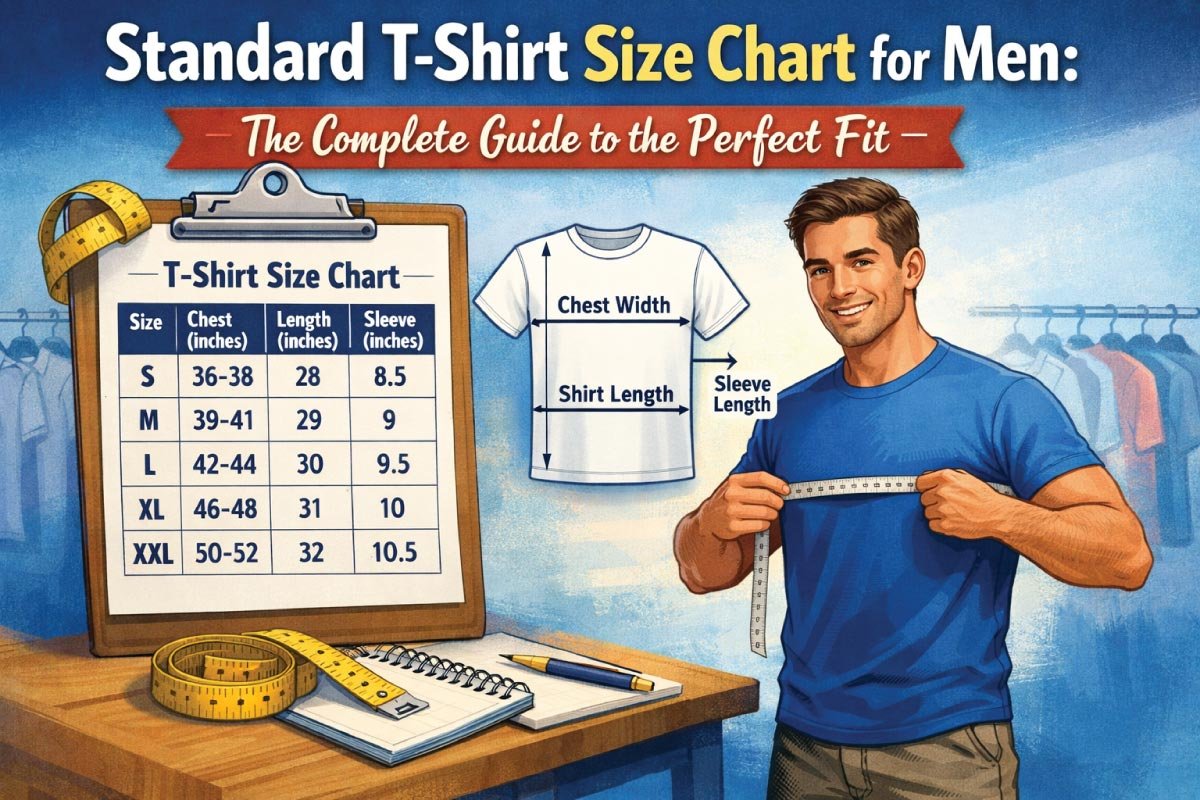
Standard Men’s T-Shirt Size Chart
Here’s a detailed men’s t-shirt size chart including chest, waist, shoulder width, sleeve length, and shirt length:
| Size | Chest (in) | Waist (in) | Shoulder (in) | Sleeve Length (in) | Shirt Length (in) |
|---|---|---|---|---|---|
| S | 34-36 | 28-30 | 16-17 | 8-9 | 26-27 |
| M | 38-40 | 32-34 | 17-18 | 9-10 | 27-28 |
| L | 42-44 | 36-38 | 18-19 | 10-11 | 28-29 |
| XL | 46-48 | 40-42 | 19-20 | 11-12 | 29-30 |
| XXL | 50-52 | 44-46 | 20-21 | 12-13 | 30-31 |
| XXXL | 54-56 | 48-50 | 21-22 | 13-14 | 31-32 |
Notes:
- Sizes may vary slightly across brands.
- Slim-fit t-shirts are slightly tapered at the waist and chest.
- Relaxed-fit or oversized t-shirts provide extra room for comfort.
Men’s T-Shirt Fit Types
Understanding fit types is essential to selecting the right size:
1. Regular Fit
- Straight cut from chest to hem
- Offers comfort and versatility
- Ideal for casual or layering outfits
2. Slim Fit
- Tapers at the chest and waist
- Accentuates physique
- Often shorter in sleeves and overall length
3. Relaxed / Loose Fit
- Extra room across chest, waist, and shoulders
- Provides maximum comfort
- Popular for casual or activewear
International Men’s T-Shirt Size Conversion
Men’s t-shirt sizes vary globally. Here’s a helpful international size conversion chart:
| US Size | UK Size | EU Size | Japan Size |
|---|---|---|---|
| S | S | 46 | M |
| M | M | 48 | L |
| L | L | 50 | LL |
| XL | XL | 52 | 3L |
| XXL | XXL | 54 | 4L |
| XXXL | XXXL | 56 | 5L |
This chart is especially useful for shopping from international brands online.
Discover More:
How to Choose the Right Men’s T-Shirt Size
-
Know Your Measurements: Always measure chest, waist, shoulders, sleeve length, and overall length.
-
Check Brand-Specific Charts: Sizes vary by brand, so refer to their chart before buying.
-
Consider Fit Type: Decide whether you want slim, regular, or relaxed fit.
-
Layering Needs: If planning to wear a t-shirt under a jacket or hoodie, size slightly larger.
-
Review Fabric: Cotton may shrink slightly; blends may stretch.
Common Mistakes When Buying Men’s T-Shirts
-
Buying Without Measuring: Sizes vary; guessing may lead to poor fit.
-
Ignoring Fit Type: Slim, regular, and relaxed fits require different sizing choices.
-
Overlooking Sleeve or Length: Short sleeves or overly long shirts can ruin style.
-
Neglecting Fabric Shrinkage: Cotton t-shirts may shrink after washing.
-
Not Considering Brand Differences: A medium in one brand may differ from another.
Tips for Shopping Men’s T-Shirts Online
-
Read Customer Reviews: Check if shirts run true to size or not.
-
Use Model References: Online stores often list the model’s height and size worn.
-
Check Return Policies: Ensure you can exchange or return if the fit is not perfect.
-
Consider Fabric Stretch: Cotton and cotton blends affect how a t-shirt fits after washing.
-
Layering Considerations: If layering, size up for comfort.
Men’s T-Shirt Sizes by Body Type
Different body types may require different sizing approaches:
1. Athletic Build
- Broad shoulders and narrow waist
- Slim-fit t-shirts can accentuate shape
- Ensure chest and shoulders fit without stretching
2. Average Build
- Standard measurements; regular fit t-shirts are ideal
- Can also choose slim fit for a tailored look
3. Larger Build
- Relaxed or loose-fit t-shirts are better for comfort
- Check sizing charts carefully to avoid overly tight shirts
Popular T-Shirt Styles for Men
Men’s t-shirts come in various styles that influence sizing:
-
Crew Neck: Classic neckline, suits all body types.
-
V-Neck: Provides a slimmer look for the chest area.
-
Henley: Buttons at the top; slightly fitted style.
-
Polo Shirt: Collared t-shirts with slightly structured fit.
-
Graphic T-Shirts: Often standard fit; check size if printed fabric stretches.
Each style may fit differently, so always refer to the size chart before purchasing.
Conclusion
Finding the right t-shirt size is easy when you know your measurements, understand fit types, and refer to a standard men’s t-shirt size chart. Properly fitted t-shirts enhance style, comfort, and confidence, whether worn casually, layered, or for active use.
Key Takeaways:
- Measure chest, waist, shoulders, sleeve length, and overall length.
- Understand different fits: slim, regular, and relaxed.
- Use international size conversions for global shopping.
- Check brand-specific charts and read reviews.
- Consider body type and style preference.
With this guide, you can shop confidently and ensure your t-shirts are comfortable, flattering, and stylish.
✅ Pro Tip: Keep your favorite t-shirt measurements handy for quick reference when buying new ones, ensuring consistent fit every time.
Discover More:

I am Engineer Hassan, a professional engineer with over 15 years of experience in measurements, design accuracy, and furniture, appliance, and home product sizing. Through Size Helper, I provide research-based guides and trending 2026 home design ideas for living rooms, bedrooms, sofas, wall décor, fashion, and sports—helping users make confident, informed decisions. Every guide is written with real expertise, verified data, and a commitment to quality, usability, and style.