
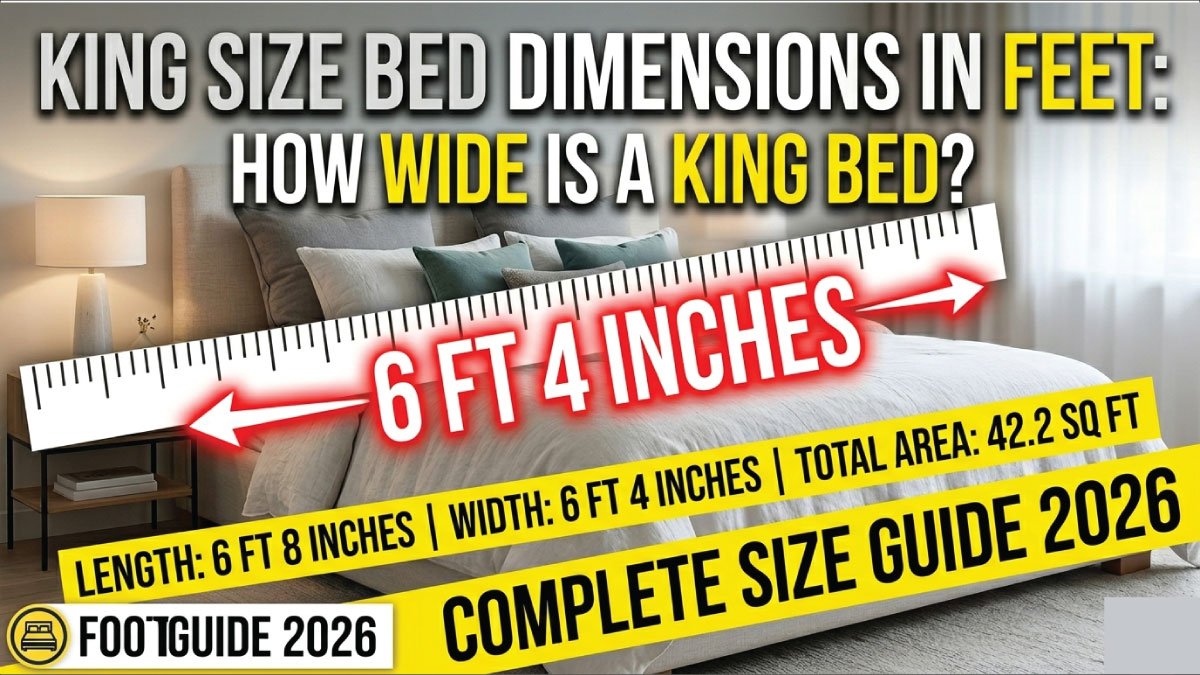
Choosing the right bed size is crucial for comfort, style, and functionality. Among all options, the king size bed stands out for its generous space, luxurious feel, and ability to accommodate couples or families comfortably. If you’re wondering about king size bed dimensions in feet, this complete guide will cover everything from standard sizes to room planning, bedding, and tips for choosing the perfect bed.
What Is a King Size Bed?
A king size bed is the largest standard bed available for residential bedrooms, designed to provide maximum sleeping space. It is ideal for couples who need extra room to stretch out, families with children who occasionally share the bed, and individuals who value comfort and luxury.
In feet, a standard king bed measures 6 feet 4 inches wide and 6 feet 8 inches long (6’4” x 6’8”), offering ample space for two adults. This size allows for personal comfort without feeling cramped and provides plenty of room for movement during sleep.
King Size Bed Dimensions in Feet vs Inches
Understanding dimensions in both feet and inches helps visualize the space accurately:
- Standard King Bed: 6’4” wide x 6’8” long (76 x 80 inches)
- California King Bed: 6’0” wide x 7’0” long (72 x 84 inches)
While the California king is slightly narrower, it provides extra length, making it perfect for taller individuals. The standard king, on the other hand, prioritizes width, making it ideal for couples who value space side-to-side.
Why Choose a King Size Bed?
A king size bed offers more than just luxury—it combines style, comfort, and functionality. Its generous width and length allow couples, families, or individuals to sleep comfortably, stretch freely, and enjoy better rest. Choosing a king bed ensures a spacious, relaxing, and versatile sleeping environment for years to come.
1. Maximum Sleeping Space
A king bed provides approximately 3 feet 2 inches of personal space per sleeper, similar to a twin bed. This extra room lets couples move freely without disturbing each other, reducing nighttime interruptions. Ample width enhances overall comfort, making it ideal for adults, light sleepers, or those who enjoy stretching during sleep.
2. Perfect for Families
Families with children benefit from the spacious design of a king bed. Whether kids join occasionally or pets share the space, everyone can sleep comfortably without feeling cramped. This makes mornings and bedtime routines easier while maintaining safety, comfort, and quality rest for parents and children alike.
3. Better Sleep Quality
The wide sleeping area reduces sleep disturbances caused by tossing, turning, or shifting partners. With more space to move freely, a king bed allows uninterrupted rest, improving overall sleep quality. Deep, restorative sleep promotes better energy, mood, and health while reducing stress, making it an excellent investment for long-term wellness.
King Size vs Other Bed Sizes
Understanding how a king bed compares to other popular bed sizes helps you make an informed decision.
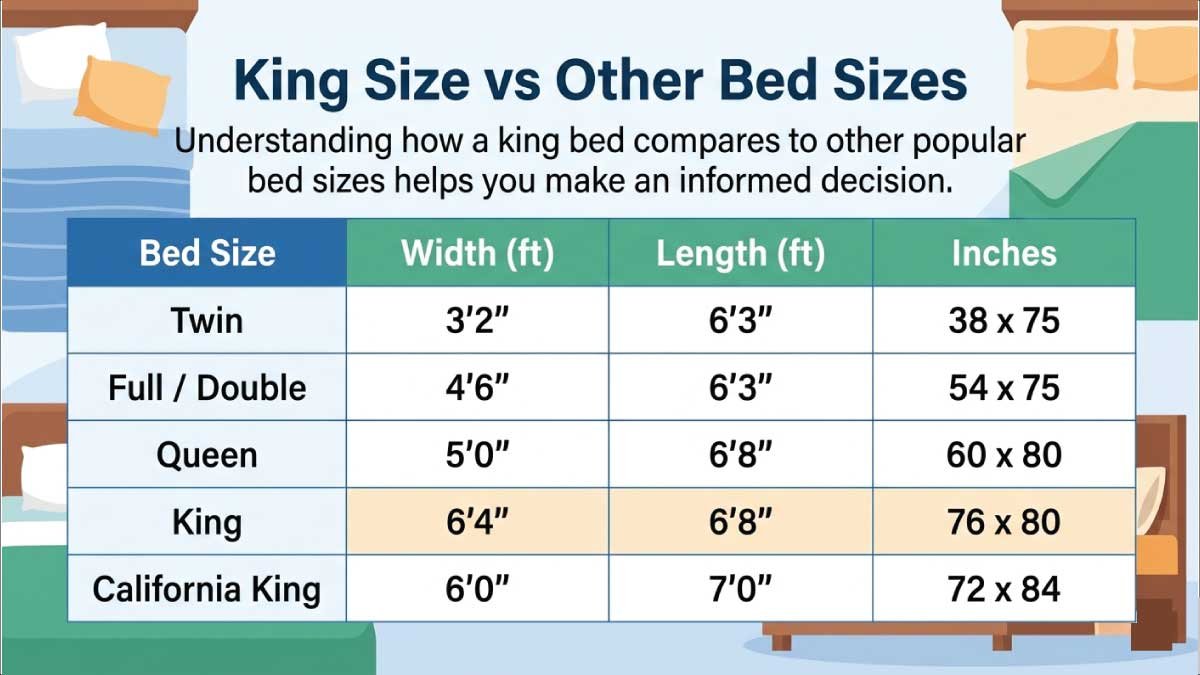
| Bed Size | Width (ft) | Length (ft) | Inches |
|---|---|---|---|
| Twin | 3’2” | 6’3” | 38 x 75 |
| Full / Double | 4’6” | 6’3” | 54 x 75 |
| Queen | 5’0” | 6’8” | 60 x 80 |
| King | 6’4” | 6’8” | 76 x 80 |
| California King | 6’0” | 7’0” | 72 x 84 |
As you can see, the king bed offers the widest sleeping area, making it the most comfortable option for two adults.
How Much Space Do You Need for a King Size Bed?
A king size bed requires proper room planning to maintain functionality and comfort.
Recommended Room Size
- Minimum room size: 12 x 12 feet
- Ideal room size: 12 x 14 feet or larger
This ensures you have enough space to place nightstands, dressers, or other furniture while maintaining at least 2 to 3 feet of walking space on each side.
Is a King Bed Too Big?
A king bed is perfect for couples who want space, families, or large bedrooms. However, it may feel overwhelming in small rooms, limit furniture placement, and reduce walking space if the room is less than 12 feet in width.
Types of King Size Beds
When exploring king size bed dimensions in feet, it’s essential to understand the different types available. Each type caters to specific needs, room sizes, and sleeping preferences. Knowing the variations helps you choose the best bed for comfort, space, and lifestyle, whether you prioritize width, length, or adjustable flexibility.
1. Standard King
The standard king is the most popular option, measuring 6’4” wide by 6’8” long. Its wide design provides maximum comfort for couples, small families, or anyone who enjoys spacious sleeping. Ideal for medium to large bedrooms, it allows freedom of movement and ensures a luxurious, restful experience every night.
2. Split King
A split king consists of two twin XL mattresses side by side, each measuring 3’2” by 6’8”. This configuration is perfect for adjustable beds, as it allows each sleeper to independently control firmness, angle, or position. It’s an excellent choice for couples with differing sleep preferences or medical needs.
3. California King
The California king measures 6’0” wide by 7’0” long, making it slightly narrower but longer than a standard king. This bed is ideal for taller individuals who require extra legroom. While it sacrifices a bit of width, it provides plenty of length for comfort and restful sleep without feeling cramped.
Also Read:
Benefits of a King Size Bed
A king size bed offers far more than just extra space—it enhances comfort, sleep quality, and versatility. Its generous dimensions make it ideal for couples, families, and individuals who value luxury. From reducing sleep disturbances to accommodating pets and children, king beds provide practical and lifestyle benefits for every home.
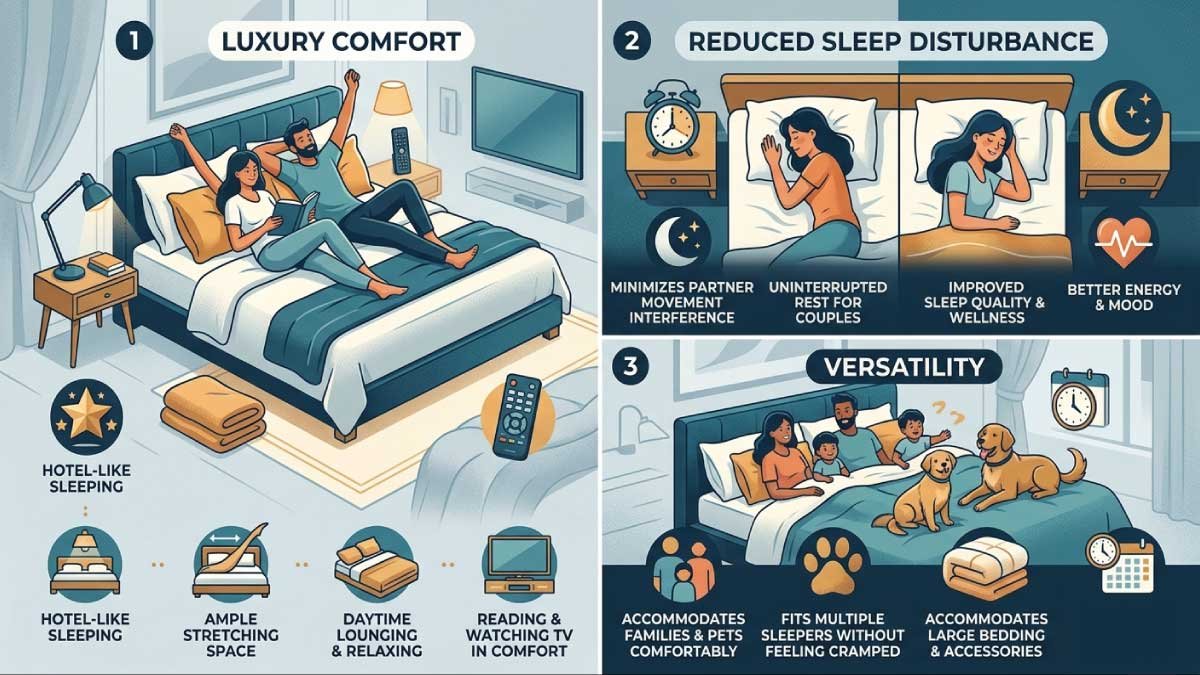
1. Luxury Comfort
King beds deliver a true hotel-like sleeping experience at home. With ample width and length, they allow sleepers to stretch, change positions, and even lounge comfortably during the day. This makes them perfect for relaxing, reading, or watching TV in bed while maintaining the ultimate comfort every night.
2. Reduced Sleep Disturbance
The extra width of a king size bed minimizes partner movement interference. Tossing, turning, or shifting is less likely to disrupt sleep, allowing couples to enjoy uninterrupted rest. Improved sleep quality leads to better energy, enhanced mood, and overall health, making a king bed a worthwhile investment for wellness.
3. Versatility
King beds are versatile, accommodating families, pets, and multiple sleepers without feeling cramped. They can easily fit large comforters, multiple pillows, and other bedding accessories. Whether for everyday use or occasional guests, the king bed adapts to various lifestyles while maintaining comfort, style, and convenience in the bedroom.
Drawbacks of a King Size Bed
While king size beds offer luxury and comfort, they come with some disadvantages. Their large size and higher cost may not suit every bedroom or budget. Understanding these drawbacks helps buyers make informed decisions, ensuring the bed matches both lifestyle needs and available space.
1. Requires More Space
King beds take up significant floor area, making them unsuitable for small bedrooms. Proper room planning is essential to maintain walking space and accommodate other furniture like nightstands or dressers. Without enough space, the bedroom can feel cramped and less functional, reducing the overall comfort and aesthetic appeal of the room.
2. Higher Cost
King size beds are more expensive than smaller beds. The mattress, frame, and bedding all cost more, which can significantly increase the overall budget. While the comfort is unmatched, prospective buyers should consider long-term affordability before investing in a king bed, especially if cost is a major concern.
3. Difficult to Move
Due to its large size, moving a king bed can be challenging. Transporting it through narrow doorways, staircases, or hallways often requires extra effort or professional help. Assembly and relocation can also be complicated, particularly in apartments or homes with limited space, making it less convenient than smaller bed options.
Bedding and Accessories
To match king bed dimensions in feet, you’ll need:
- King size mattress (6’4” x 6’8”)
- King fitted and flat sheets
- Large comforter or duvet
- King pillows
Properly sized bedding ensures comfort, neat appearance, and maximum usability.
Tips for Choosing the Right King Size Bed
Choosing the right king size bed requires careful planning and consideration. From room size to mattress type, every detail matters for comfort and functionality. Following practical tips ensures your investment is worthwhile, your bedroom remains spacious, and your sleep experience is both luxurious and restful.
1. Measure Your Room
Before buying a king bed, measure your bedroom accurately. Ensure there’s enough space for walking paths, nightstands, and other furniture without making the room feel crowded. Proper measurements help prevent buying a bed that overwhelms the space, allowing for a comfortable, functional layout that maximizes both style and usability.
2. Consider Your Lifestyle
Think about your personal habits when selecting a king bed. Do you sleep alone or with a partner? Do children or pets often share the bed? Understanding your lifestyle helps you choose the right size, type, and features, ensuring that the bed meets your practical needs while enhancing overall comfort.
3. Choose the Right Mattress
Selecting the proper mattress is as important as choosing the bed size. Memory foam, hybrid, and innerspring options are available, each offering different support and comfort levels. Consider your sleeping position, firmness preference, and durability requirements to find a mattress that maximizes the benefits of your king size bed.
4. Plan Furniture Layout
Plan your bedroom layout before purchasing a king bed. Leave at least 2–3 feet of space around the bed for movement, nightstands, and other furniture. Thoughtful placement ensures easy access, prevents a crowded feel, and maintains a balanced, aesthetically pleasing bedroom design that complements the king bed’s size and presence.
Common Mistakes to Avoid
Buying a king size bed requires careful planning to avoid common pitfalls. Mistakes like ignoring room dimensions, not measuring doorways, or prioritizing style over comfort can lead to frustration. Awareness of these issues ensures your bed fits perfectly, enhances your bedroom’s functionality, and provides long-lasting comfort.
1. Not Measuring Doorways
King bed frames and mattresses are large and may not fit through narrow doors, staircases, or hallways. Failing to measure can cause delivery problems or extra costs for disassembly and transport. Always check measurements in advance to ensure smooth installation and avoid unnecessary complications.
2. Ignoring Room Layout
Placing a king bed without planning can overcrowd the room and limit walking space. Nightstands, dressers, and other furniture may feel cramped, reducing functionality and comfort. Thoughtful furniture placement ensures a balanced, spacious, and practical bedroom while allowing the king bed to shine as a centerpiece.
3. Prioritizing Style Over Comfort
While design is important, comfort should always come first. Selecting a mattress that looks good but lacks support can negatively affect sleep quality. Test mattress firmness, support, and height before purchase to ensure long-term comfort. The right balance of style and function makes a king bed truly worthwhile.
Also Read:
Who Should Buy a King Size Bed?
A king size bed is ideal for anyone seeking maximum comfort, luxury, and sleeping space. Couples benefit from personal room, families enjoy space for children or pets, and individuals who move frequently in their sleep gain uninterrupted rest. Proper planning ensures it fits your lifestyle and bedroom dimensions.
Ideal Buyers
- Couples who want extra personal space
- Families with children or pets sharing the bed
- Individuals who toss and turn frequently at night
- Homeowners with medium to large bedrooms
- Anyone who values comfort, luxury, and long-term investment in quality sleep
King Size Bed Dimensions in Feet – FAQs
1. How wide is a king bed in feet?
A standard king bed is 6 feet 4 inches wide, providing ample personal space for two adults or a couple with children. This generous width reduces sleep disturbances, allows freedom of movement, and ensures a comfortable, restful sleep experience, making it one of the most spacious and luxurious bed options available.
2. How long is a king bed in feet?
The standard king length measures 6 feet 8 inches, offering plenty of legroom for adults of all heights. This extra length allows taller individuals to sleep comfortably without bending knees or feeling cramped, making it suitable for couples, families, and anyone who values space and uninterrupted, restorative sleep.
3. How does a king compare to a California king?
A California king bed measures 6 feet wide by 7 feet long, making it slightly narrower but longer than a standard king. It is ideal for taller sleepers who need extra legroom but do not require additional width. Standard kings provide more side-to-side space, perfect for couples seeking extra room.
4. Can a king bed fit in a small bedroom?
King beds are not recommended for small bedrooms. Rooms smaller than 12 x 12 feet may feel cramped, restricting movement and limiting space for furniture like nightstands or dressers. Proper room planning is essential to ensure comfort, functionality, and aesthetic balance while enjoying the luxurious benefits of a king size bed.
5. What sheets fit a king bed?
King beds require bedding specifically designed for dimensions of 6’4” x 6’8” for standard or 6’0” x 7’0” for California king. Properly sized sheets, including fitted, flat, and pillowcases, ensure a snug fit, prevent slipping, and maintain comfort. High-quality materials like cotton, linen, or microfiber enhance sleep quality and durability.
6. How much walking space should be around a king bed?
It is recommended to leave 2–3 feet of walking space on each side of a king bed. Adequate clearance ensures easy access to nightstands, dressers, and other bedroom furniture, allowing comfortable movement around the bed. Proper spacing improves functionality, maintains visual balance, and prevents the room from feeling overcrowded.
7. Is a king bed worth it?
A king size bed is worth the investment if you have a large room and value comfort, luxury, and extra sleeping space. Its generous dimensions reduce sleep disturbances, provide space for couples or families, and create a relaxing, hotel-like environment that enhances overall sleep quality and bedroom aesthetics.

I am Engineer Hassan, a professional engineer with over 15 years of experience in measurements, design accuracy, and furniture, appliance, and home product sizing. Through Size Helper, I provide research-based guides and trending 2026 home design ideas for living rooms, bedrooms, sofas, wall décor, fashion, and sports—helping users make confident, informed decisions. Every guide is written with real expertise, verified data, and a commitment to quality, usability, and style.