
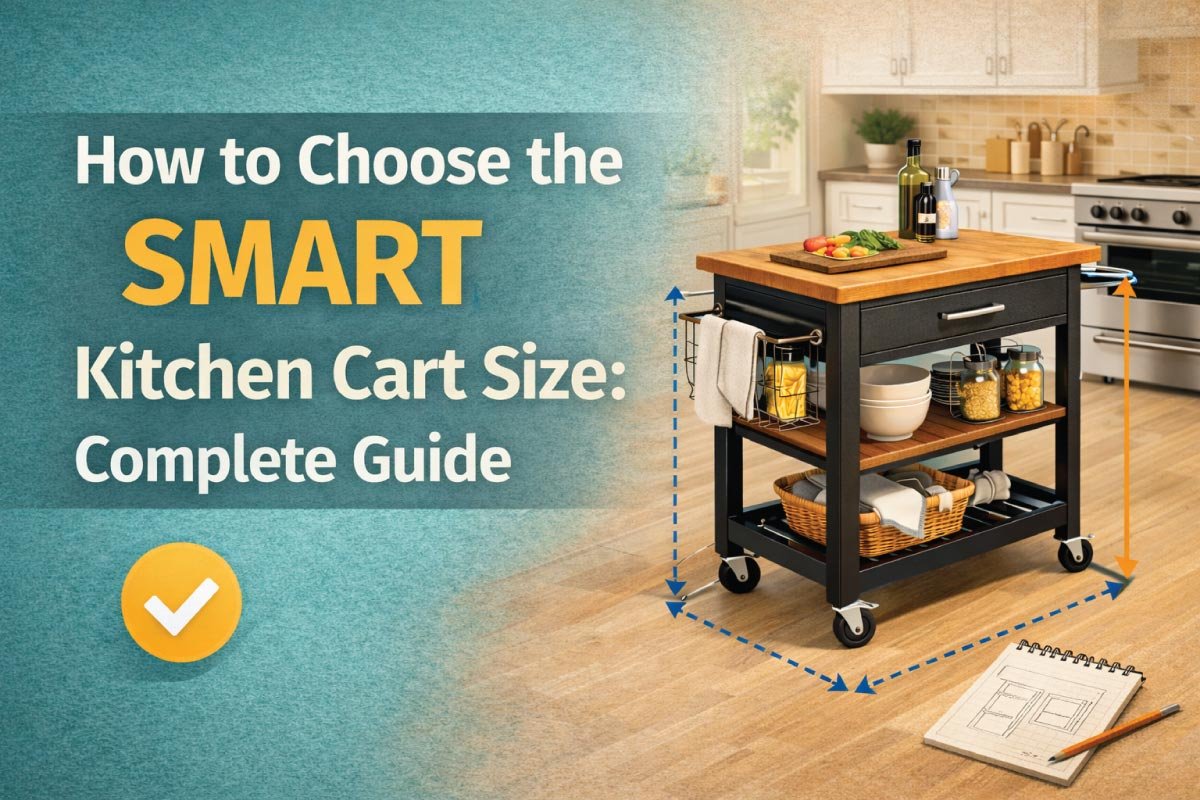
A kitchen cart can be one of the smartest additions to a kitchen — especially when space is limited. It adds extra storage, prep space, and flexibility without the commitment of a permanent island. But just like any kitchen furniture, choosing the wrong size can turn a helpful cart into an obstacle.
Many people buy a kitchen cart based on appearance alone, only to realize later that it blocks walkways, feels unstable, or doesn’t fit where they planned to place it. Choosing the smart kitchen cart size means balancing mobility, storage, clearance, and daily use.
This guide will walk you through everything you need to know to choose the ideal kitchen cart size for your space, lifestyle, and kitchen layout.
Why Kitchen Cart Size Matters
Before looking at dimensions, it’s important to understand why kitchen cart size is such a big deal. A cart is meant to move easily and fit into tight spaces — something a full island can’t always do.
The right cart size:
- Moves smoothly without blocking paths
- Fits between cabinets or appliances
- Provides useful workspace without feeling bulky
- Stores essentials efficiently
A cart that’s too large defeats the whole purpose of flexibility.
What Is a Kitchen Cart and How Is It Different from an Island?
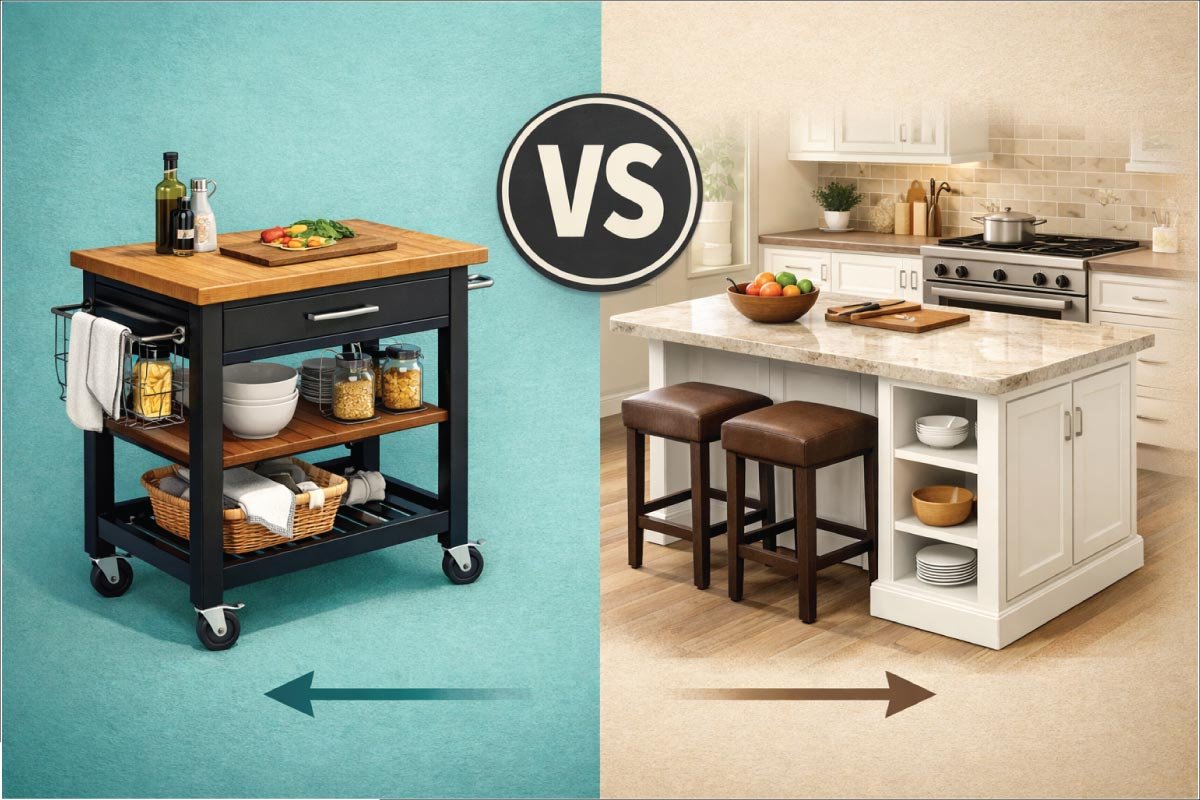
A kitchen cart is a movable piece of furniture, typically on wheels, designed to add temporary or flexible storage and workspace. Unlike a kitchen island, it doesn’t require permanent installation.
Key differences include:
- Smaller footprint
- Greater mobility
- Less storage capacity
- Lower cost
Understanding this difference helps you choose the right size without overestimating what a cart should do.
Standard Kitchen Cart Sizes Explained
Kitchen carts come in a wide range of sizes, but most fall into a few common categories designed for everyday kitchens.
Table: Standard Kitchen Cart Dimensions
| Feature | Common Size Range |
|---|---|
| Width | 20–36 inches |
| Depth | 16–24 inches |
| Height | 34–36 inches |
| Compact carts | 20–24 inches wide |
| Large carts | 30–36 inches wide |
These dimensions allow carts to fit comfortably in most kitchens without overwhelming the space.
Choosing Kitchen Cart Size Based on Kitchen Size
Your kitchen’s size should be the first factor when choosing a cart. A cart that works in a large kitchen may feel completely out of place in a smaller one.
1- Small Kitchens
In small kitchens, the cart should act as a space-saver, not a space-taker.
Best practices:
- Choose carts under 24 inches wide
- Keep depth under 18–20 inches
- Prioritize slim designs with shelves or drawers
Compact carts are easier to move and store when not in use.
2- Medium Kitchens
Medium-sized kitchens allow for more flexibility and functionality.
Ideal cart features:
- Width between 24–30 inches
- Additional drawers or cabinets
- Stable wheels with locking brakes
These carts can function as prep stations without blocking movement.
3- Large Kitchens
Large kitchens can support bigger carts with more storage.
Recommended options:
- Widths of 30–36 inches
- Thicker countertops
- Combination storage (drawers + cabinets)
Even in large kitchens, the cart should remain easy to move.
Clearance Space Needed Around a Kitchen Cart
Since a kitchen cart is meant to move, clearance space matters even more than with fixed furniture.
Table: Recommended Clearance for Kitchen Carts
| Area | Minimum Space |
|---|---|
| Walkway clearance | 36 inches |
| Working clearance | 40–42 inches |
| Parking space | 30 inches |
| Door/appliance clearance | 42 inches |
If a cart constantly needs to be moved out of the way, it’s probably too large.
Kitchen Cart Height and Comfort
Cart height affects both comfort and usability. Most carts are designed to align with standard kitchen counters.
Common Kitchen Cart Heights
- 34–36 inches: Matches standard countertops
- 36–38 inches: Comfortable for light prep
- Below 34 inches: Serving or utility carts
Matching cart height with counter height creates a seamless workspace.
Storage vs Workspace: Finding the Smart Balance
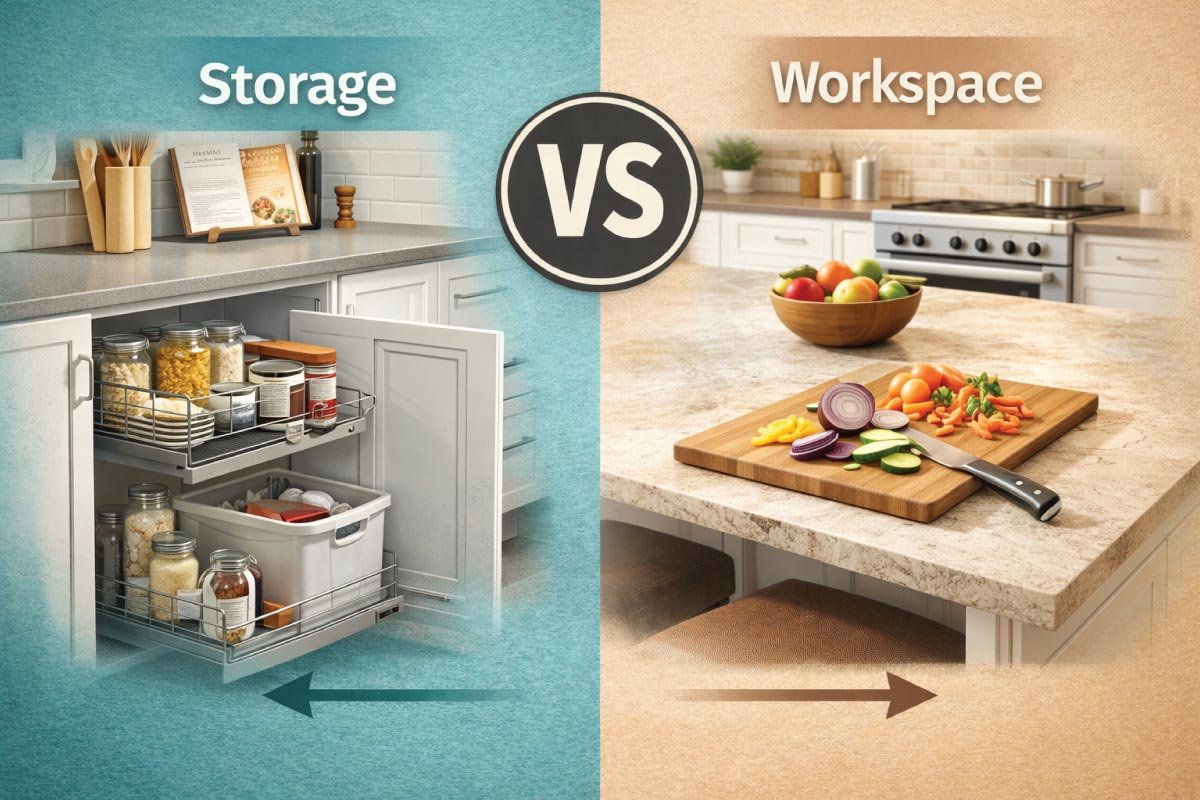
One of the biggest advantages of a kitchen cart is flexibility. The right size allows both storage and prep space without compromise.
Storage options include:
- Open shelves for quick access
- Drawers for utensils
- Cabinets for larger items
- Towel bars or spice racks
A slightly smaller cart with smart storage often works better than a bulky one.
Kitchen Cart Size for Seating (When Applicable)
Some kitchen carts include small seating overhangs, but this requires careful sizing.
Table: Seating Space Requirements for Kitchen Carts
| Feature | Recommended Space |
|---|---|
| Overhang depth | 10–12 inches |
| Space per stool | 24 inches |
| Cart width for 2 stools | 48 inches (minimum) |
Most kitchens are better served by carts without seating unless space is generous.
Mobility Features That Affect Cart Size
Wheels, handles, and brakes all influence how large a cart should be.
Consider:
- Larger carts need heavy-duty wheels
- Locking casters are essential for stability
- Side handles increase maneuverability
If a cart feels hard to move, it’s likely too big for its purpose.
Discover More:
Common Kitchen Cart Size Mistakes to Avoid
Many kitchen cart issues come from simple sizing errors.
Avoid:
- Buying oversized carts for small kitchens
- Ignoring clearance for movement
- Choosing height that doesn’t match counters
- Overloading carts with unnecessary features
Smart sizing keeps the cart useful and frustration-free.
Measuring Your Space for the Perfect Kitchen Cart

Before buying, measure:
- Available floor space
- Clearance paths
- Height alignment with counters
- Storage needs
Using tape to outline the cart footprint on the floor can prevent mistakes.
Final Thoughts: Choosing the SMART Kitchen Cart Size
The smart kitchen cart size is one that fits your kitchen, moves easily, and supports your daily routine. Unlike permanent islands, carts are about flexibility — and size is the key to keeping that flexibility.
When sized correctly, a kitchen cart:
- Adds functional workspace
- Improves storage without clutter
- Moves easily when needed
- Enhances kitchen efficiency
Discover Size Helper 📌 – your ultimate hub for smart sizing solutions! From furniture sizes 🛋️ to appliance sizes ⚡, sports sizes 🏀, and fashion sizes 👗, we provide clear size guides to make your life easier. Explore now 🔍 and never guess a size again!

I am Engineer Hassan, a professional engineer with over 15 years of experience in measurements, design accuracy, and furniture, appliance, and home product sizing. Through Size Helper, I provide research-based guides and trending 2026 home design ideas for living rooms, bedrooms, sofas, wall décor, fashion, and sports—helping users make confident, informed decisions. Every guide is written with real expertise, verified data, and a commitment to quality, usability, and style.