
Choosing the perfect refrigerator for your kitchen can feel overwhelming. With so many styles, sizes, and features, it’s essential to select one that fits both your space and lifestyle.
A fridge isn’t just a storage appliance—it affects your kitchen workflow, meal planning, and even energy costs.
This guide will help you understand how to choose the right fridge size for any kitchen, with practical tips, tables, and space considerations.
Measure Your Kitchen Space Accurately
Choosing the right fridge starts with understanding your kitchen’s layout. Accurate measurements prevent overcrowding and ensure functionality. Take note of all critical dimensions before shopping. Consider the following dimensions:
-
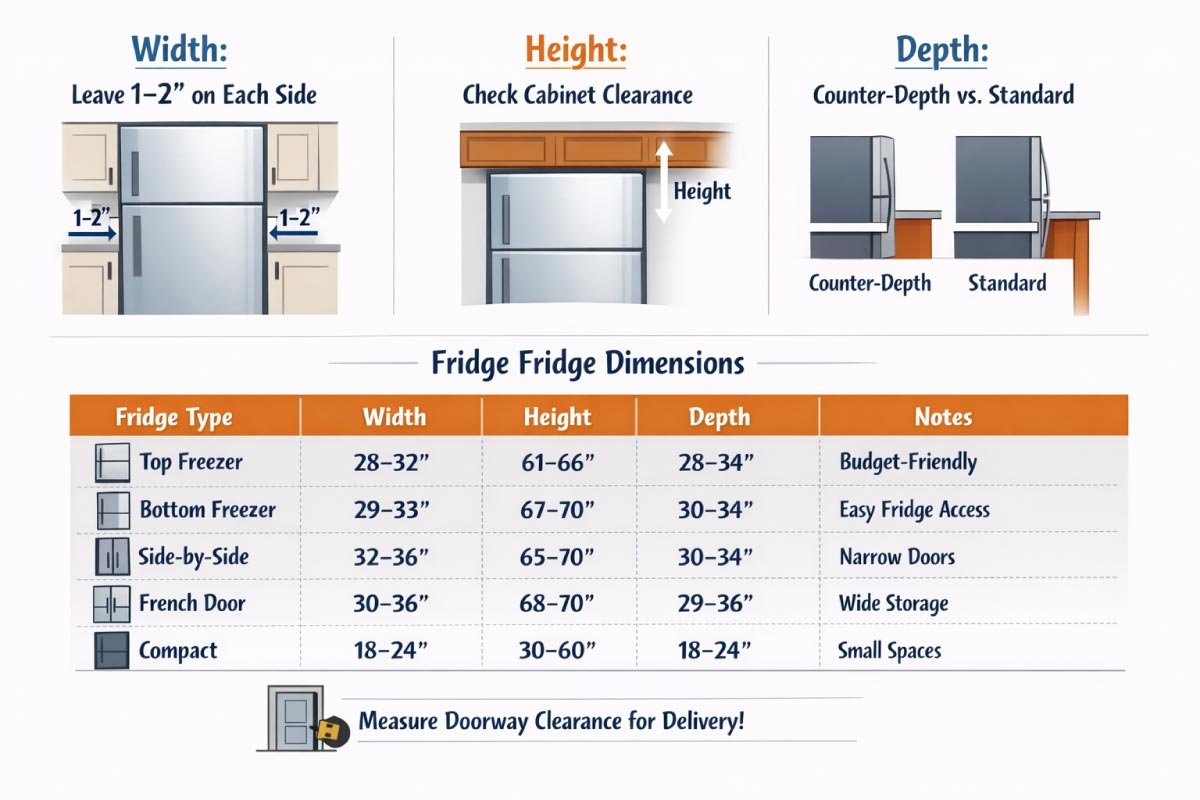
Width: Leave at least 1–2 inches on each side for ventilation.
-
Height: Ensure the fridge can clear cabinets or overhead shelves.
-
Depth: Counter-depth fridges align with your countertop but often have less storage.
Standard Fridge Dimensions
Understanding standard fridge dimensions is essential for choosing the right model that fits your kitchen and lifestyle.
Different types—top freezer, bottom freezer, side-by-side, French door, and compact—vary in width, height, and depth.
Proper measurements ensure smooth installation, optimal storage, and convenient access for daily use.
| Fridge Type | Width (inches) | Height (inches) | Depth (inches) | Notes |
|---|---|---|---|---|
| Top Freezer | 28–32 | 61–66 | 28–34 | Budget-friendly, traditional |
| Bottom Freezer | 29–33 | 67–70 | 30–34 | Easy fridge access |
| Side-by-Side | 32–36 | 65–70 | 30–34 | Narrow doors, less freezer space |
| French Door | 30–36 | 68–70 | 29–36 | Wide storage, premium look |
| Compact | 18–24 | 30–60 | 18–24 | Suitable for small apartments or offices |
Tip: Always measure doorway clearance for delivery, not just kitchen space.
Understand Fridge Capacity and Family Size
Selecting the right fridge isn’t just about style—it’s about space inside.
Capacity, measured in cubic feet, affects how much food you can store and how efficiently your family operates in the kitchen.
Choosing the right size depends largely on the number of household members and your cooking habits.
Fridge Capacity Guidelines by Household Size
Choosing the right fridge capacity depends on your household size and lifestyle.
Smaller fridges suit singles or couples, while larger models accommodate families or frequent entertainers.
Selecting the appropriate cubic-foot range ensures sufficient storage for fresh and frozen foods, reduces food waste, and keeps your kitchen organized efficiently.
| Household Size | Recommended Capacity (cubic feet) | Notes |
|---|---|---|
| 1 person | 4–7 | Small fridge, ideal for minimal groceries |
| 2 people | 7–10 | Standard fridge, suitable for weekly shopping |
| 3–4 people | 10–18 | Accommodates fresh and frozen foods comfortably |
| 5+ people | 18–26 | Large or double-door fridges for bigger families |
Tip: If you entertain often or meal prep, consider choosing the higher end of the capacity range.
Consider Fridge Layout and Door Configuration
The way a fridge opens and organizes its compartments impacts convenience and kitchen workflow.
Choosing the right layout ensures easy access to frequently used items and fits your kitchen style.
Different door styles suit different kitchens:
-
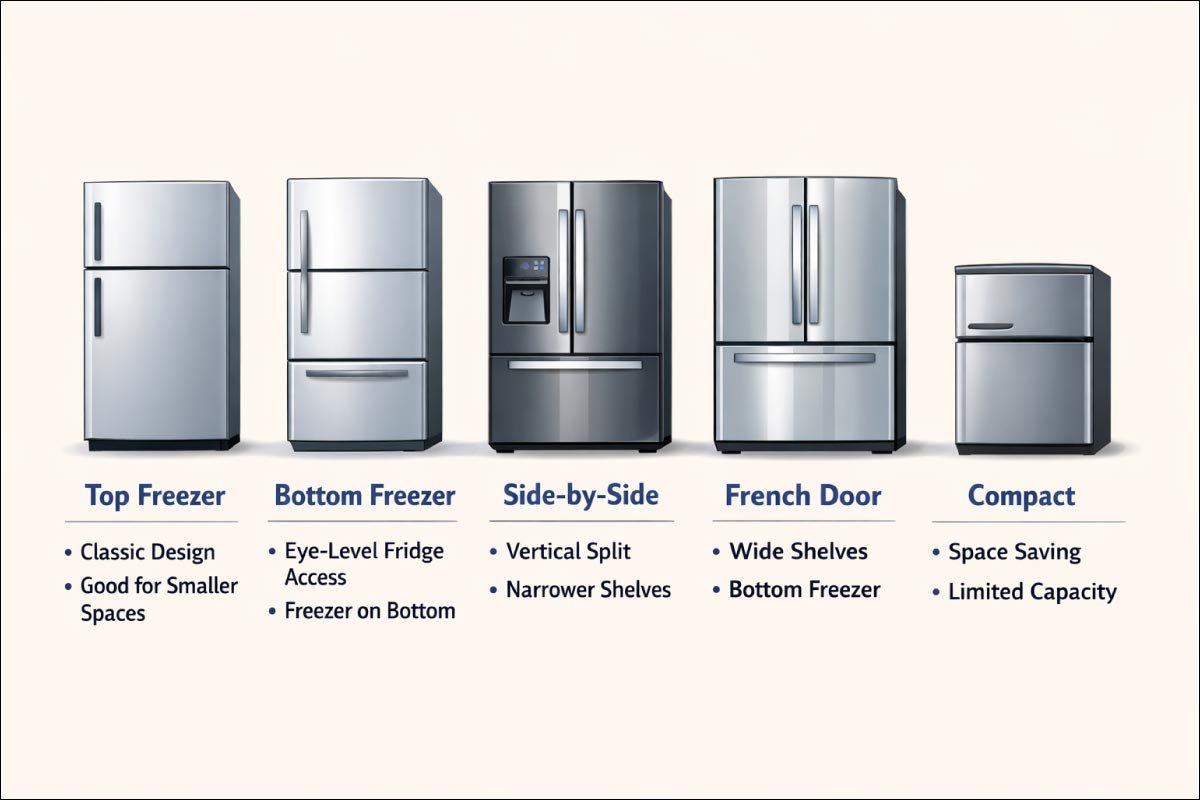
Top Freezer: Classic design, good for smaller spaces.
-
Bottom Freezer: Keeps frequently used items at eye level.
-
Side-by-Side: Vertical split, easy access to fridge and freezer but narrower shelves.
-
French Door: Wide, luxurious doors with large shelves and freezer at the bottom.
-
Compact: Small kitchens or secondary fridge spaces.
Pros and Cons of Fridge Layouts
Fridge layouts affect accessibility, storage, and kitchen efficiency.
Each design—top freezer, bottom freezer, side-by-side, French door, or compact—offers unique advantages and trade-offs.
Understanding the pros and cons helps you choose a layout that fits your space, cooking habits, and budget, ensuring convenience and optimal food organization.
| Layout Type | Pros | Cons | Best For |
|---|---|---|---|
| Top Freezer | Affordable, energy-efficient | Less stylish, lower fridge access | Small kitchens, tight budgets |
| Bottom Freezer | Easy fridge access, ergonomic | Freezer at bottom may be less convenient | Families, daily cooking |
| Side-by-Side | Narrow doors, ice/water dispenser | Limited freezer space | Kitchens with space constraints |
| French Door | Spacious, flexible storage | Expensive, wide footprint | Modern kitchens, large families |
| Compact | Fits tiny spaces | Limited capacity | Dorms, offices, small apartments |
Discover More:
Factor in Energy Efficiency and Cost
Energy efficiency is crucial for reducing utility bills.
Look for the Energy Star rating, which guarantees your fridge meets strict energy-efficiency guidelines.
A bigger fridge uses more energy, but modern models are more efficient than older, smaller units.
Average Energy Use by Fridge Type
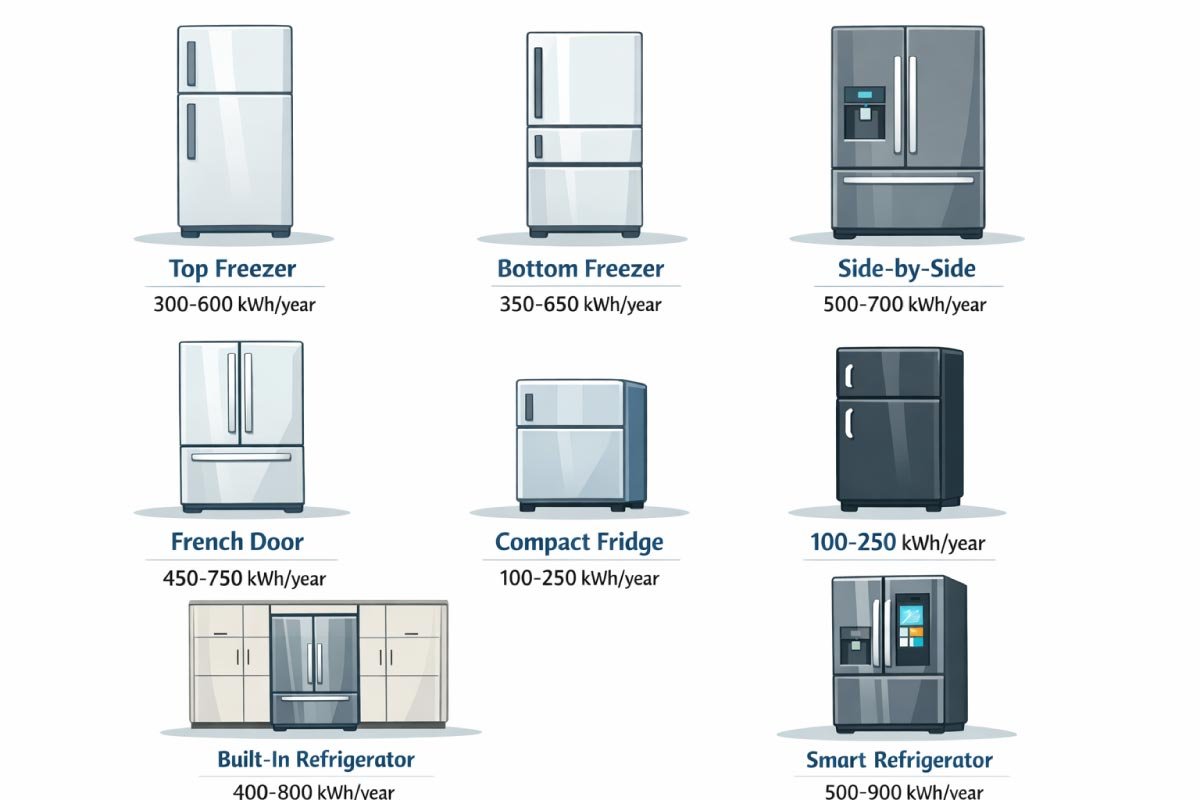
Refrigerators are essential household appliances, but their energy consumption varies significantly depending on type, size, and features.
Understanding the average energy use of different fridge types helps homeowners make cost-effective and environmentally conscious choices.
This guide breaks down seven common fridge types and their typical energy usage.
1. Top-Freezer Refrigerators
Top-freezer refrigerators are the most traditional and widely used type.
They typically consume between 300 and 600 kWh per year, depending on size and efficiency.
Their simple design without extra features allows them to be more energy-efficient compared to side-by-side or French door models, making them ideal for budget-conscious households.
2. Bottom-Freezer Refrigerators
Bottom-freezer refrigerators position the freezer compartment at the base, offering easier access to fresh foods.
These models generally use between 350 and 650 kWh annually.
While slightly less efficient than top-freezer units, modern designs with Energy Star certification can help minimize electricity usage without compromising storage convenience.
3. Side-by-Side Refrigerators
Side-by-side refrigerators feature vertical compartments for fridge and freezer sections.
They often consume around 500 to 700 kWh per year due to larger capacities and additional features like ice makers or water dispensers.
Their design provides convenient access to frozen and fresh foods but may increase overall energy bills.
4. French Door Refrigerators
French door refrigerators combine a bottom freezer with two side-by-side fridge doors on top.
Energy consumption ranges from 450 to 750 kWh annually. While offering style, spaciousness, and advanced features.
These models tend to use more electricity, so selecting energy-efficient models is essential for reducing long-term costs.
5. Compact Refrigerators
Compact or mini fridges are smaller units designed for dorm rooms, offices, or small apartments.
They typically consume 100 to 250 kWh per year, depending on size and features.
Although convenient and space-saving, frequent door openings or poor ventilation can increase energy use and reduce overall efficiency.
6. Built-In Refrigerators
Built-in refrigerators integrate seamlessly into cabinetry, offering a sleek appearance.
Energy use varies widely, usually between 400 and 800 kWh annually, depending on size and design.
Customization and advanced features like dual cooling systems may increase consumption, but energy-efficient models can balance aesthetics with electricity savings.
7. Smart Refrigerators
Smart refrigerators feature Wi-Fi connectivity, touchscreens, and advanced temperature controls.
These units typically consume 500 to 900 kWh per year due to technology-driven features.
While providing convenience and better monitoring, users should consider the impact of always-on digital components on overall energy consumption.
| Fridge Type | Energy Consumption (kWh/year) | Estimated Annual Cost ($0.13/kWh) |
|---|---|---|
| Top Freezer | 350–450 | $46–59 |
| Bottom Freezer | 400–500 | $52–65 |
| Side-by-Side | 450–600 | $59–78 |
| French Door | 500–650 | $65–85 |
| Compact | 200–300 | $26–39 |
Tip: A fridge with better insulation, LED lighting, and modern compressors can save money long-term.
Discover More:
Assess Kitchen Flow and Clearance
A fridge should fit seamlessly into your kitchen without disrupting movement or access.
Proper placement ensures doors open freely and daily tasks remain smooth. Key points:
-
Ensure doors can fully swing open without obstruction.
-
Maintain at least 36 inches of clearance in front of the fridge for walking space.
-
Check if handles or water dispensers require extra room.
Recommended Clearances for Fridge Placement
Proper fridge placement ensures optimal performance, safety, and ease of use.
Adequate side, top, and front clearances prevent overheating, allow full door swing, and improve airflow.
Following recommended spacing guidelines, including adjacent cabinet gaps, helps maintain efficiency while accommodating your kitchen layout and ensuring convenient access to all fridge compartments.
| Clearance Type | Recommended Space |
|---|---|
| Side clearance for ventilation | 1–2 inches |
| Top clearance for airflow | 1 inch |
| Front clearance for door swing | 36 inches |
| Adjacent cabinet spacing | 2–3 inches |
Tip: Counter-depth fridges reduce protrusion but may limit storage.
Discover More:
Match Fridge Size with Lifestyle Needs
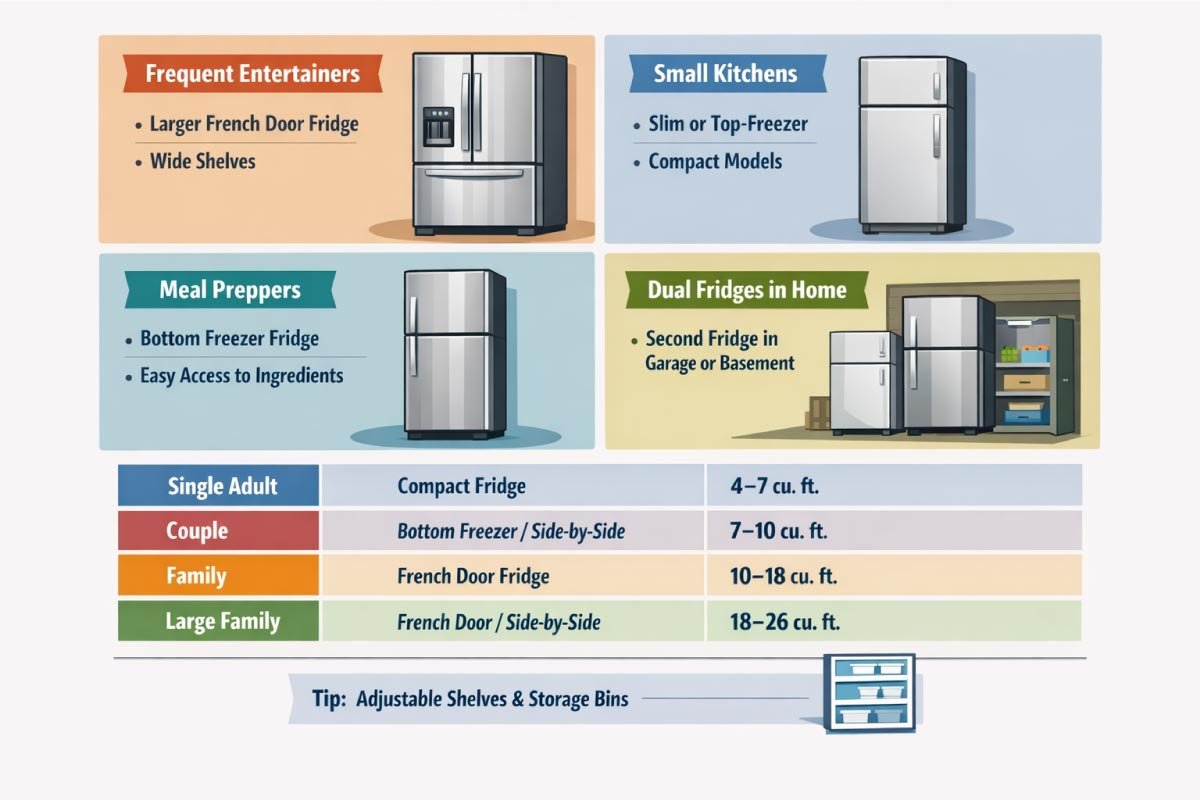
Choosing a fridge isn’t just about space—it’s about how you live. Your daily routines, cooking style, and entertaining habits all influence the best fit. Consider these scenarios:
-
Frequent Entertainers: Larger French door fridges with wide shelves.
-
Small Kitchens: Slim, top-freezer or compact models.
-
Meal Preppers: Bottom freezer models for easy access to fresh ingredients.
-
Dual Fridges: Some households benefit from adding a second, smaller fridge in garages or basements.
Fridge Size Recommendations Based on Lifestyle
Fridge choice should align with your lifestyle and household needs.
Singles, couples, families, and frequent entertainers benefit from different types and capacities.
Matching fridge style—compact, top freezer, bottom freezer, side-by-side, or French door—to your daily habits ensures adequate storage, convenience, and efficient organization for groceries and meal prep.
| Lifestyle Type | Recommended Fridge Type | Capacity Range (cubic feet) | Notes |
|---|---|---|---|
| Single adult / small space | Compact / Top freezer | 4–7 | Affordable, minimal groceries |
| Couple / moderate use | Bottom freezer / Side-by-side | 7–10 | Ideal for weekly shopping |
| Family with 3–4 members | French door / Bottom freezer | 10–18 | Ample space for fresh and frozen foods |
| Large family / entertainers | French door / Side-by-side | 18–26 | Maximize storage, host events comfortably |
Tip: Consider interior organization features like adjustable shelves, drawers, and door bins to maximize storage efficiency.
Bonus Tips for Choosing the Right Fridge Size
Beyond measurements and layout, small details can make a big difference in daily convenience.
Considering door options, adjustable shelves, and additional features ensures your fridge fits both your space and lifestyle.
Keep these points in mind:
-
Check Door Swing Options: Some models offer reversible doors for better placement.
-
Look for Adjustable Shelves: Flexible interiors accommodate tall items.
-
Consider Ice Makers & Water Dispensers: These add to door width and depth.
-
Think Long-Term: Fridges last 10–20 years, so plan for lifestyle changes.
-
Test Accessibility: Open doors fully and check if drawers slide easily.
Conclusion
Choosing the right fridge size requires a balance between kitchen space, household needs, lifestyle, and energy efficiency.
By measuring your kitchen accurately, understanding capacity requirements, and considering fridge layouts and clearances, you can select a fridge that fits perfectly and improves your daily life.
Remember, the right fridge isn’t just about storage—it’s about creating a functional, stylish, and efficient kitchen that serves your family for years to come.
Discover More:

I am Engineer Hassan, a professional engineer with over 15 years of experience in measurements, design accuracy, and furniture, appliance, and home product sizing. Through Size Helper, I provide research-based guides and trending 2026 home design ideas for living rooms, bedrooms, sofas, wall décor, fashion, and sports—helping users make confident, informed decisions. Every guide is written with real expertise, verified data, and a commitment to quality, usability, and style.