
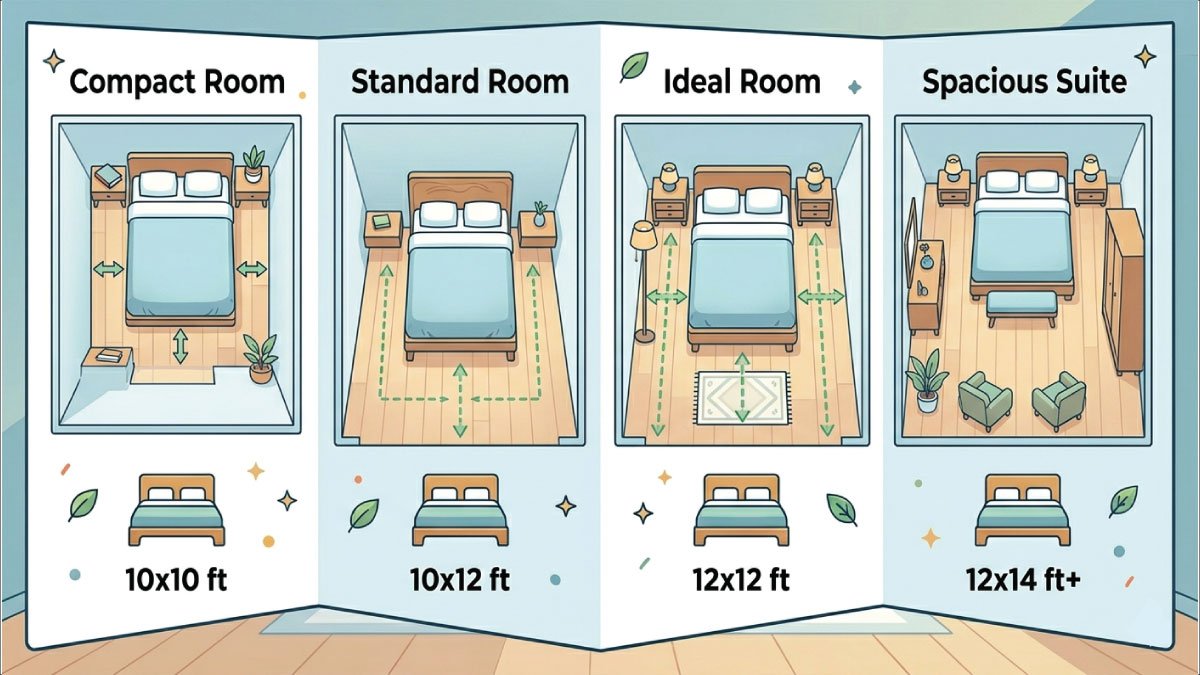
When planning a bedroom, one of the most important considerations is how much space you need for a queen bed. Over the years, I’ve helped friends rearrange rooms, moved houses multiple times, and experimented with layouts — and I’ve learned that understanding room size for queen bed is crucial for comfort, functionality, and aesthetics.
In this complete guide, we’ll cover minimum room size for queen bed, ideal bedroom size for queen bed, queen bed space requirements, clearance recommendations, and tips for fitting a queen bed into small rooms. I’ll also share my personal experiences with bed placement and layout ideas to help you optimize your space.
Standard Queen Bed Dimensions
Before discussing room size, let’s quickly review the standard queen bed dimensions. A typical queen mattress measures 60 inches wide by 80 inches long. Knowing this helps you plan your queen bed room layout effectively.
From my personal experience, I once tried placing a queen mattress in a room without measuring properly. The result was tight walking space and an awkward furniture arrangement — a mistake easily avoided by understanding the bed’s size first.
Minimum Room Size for a Queen Bed
The minimum room size for queen bed is the smallest area that allows you to fit the mattress comfortably while still being able to move around.
- Width: 10 feet (120 inches)
- Length: 10 feet (120 inches)
This setup leaves about 2–3 feet of walking space around the bed. Personally, I’ve found that rooms smaller than 10 x 10 feet feel cramped, especially if you add dressers, nightstands, or other furniture.
Ideal Bedroom Size for a Queen Bed
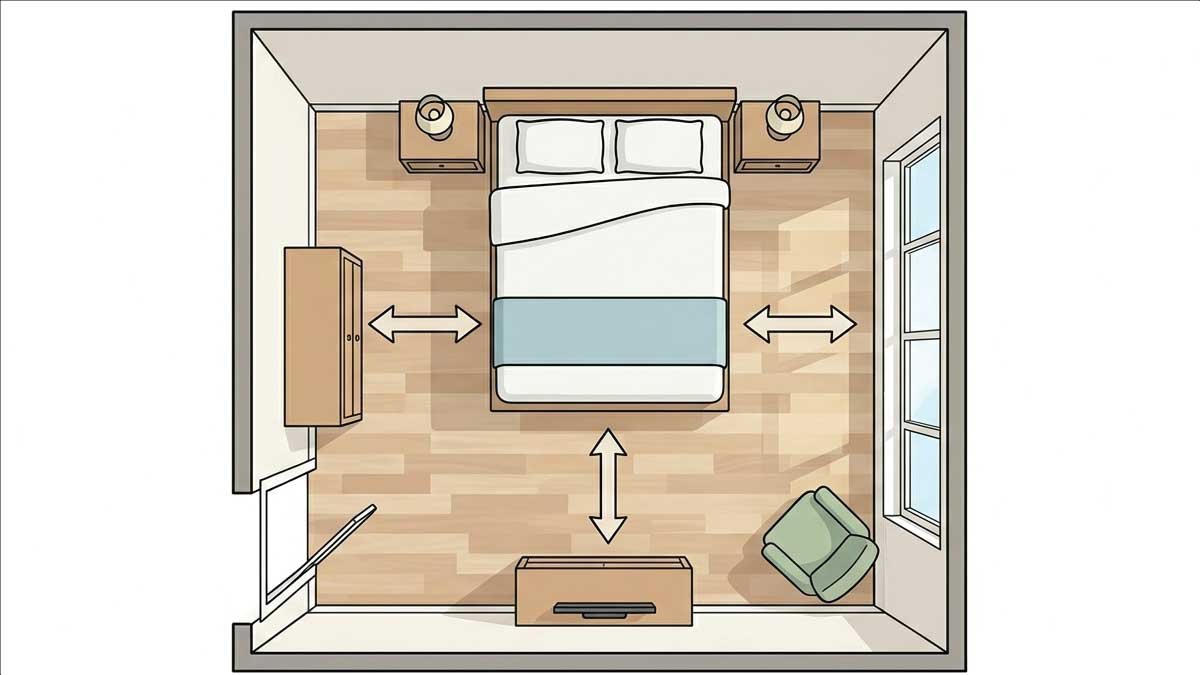
For maximum comfort and a more open feel, the ideal bedroom size for queen bed is slightly larger than the minimum.
- Width: 12 feet
- Length: 12–14 feet
This provides enough room for additional furniture like nightstands, benches, and dressers while maintaining proper circulation. From experience, I prefer a room of at least 12 x 12 feet for a queen bed — it balances space, movement, and style.
Queen Bed Space Requirements
Queen bed space requirements are not just about the bed itself but also about clearance for movement and furniture placement. Experts suggest:
- Side clearance: 24–36 inches on each side for easy access
- Foot clearance: 24–36 inches from the end of the bed to a wall or furniture
- Headboard space: 2–6 inches from the wall for airflow and bedding access
I always leave at least 30 inches on each side of my queen bed. This allows me to walk around comfortably and gives space for side tables and lamps.
Queen Bed Clearance Space
Proper queen bed clearance space ensures comfort, safety, and functionality:
- Adequate space prevents bumping into walls, dressers, or other furniture
- Clearance under the bed is useful for storage or vacuuming
- Walking space enhances the overall flow of the bedroom
In my apartment, I experimented with moving my queen bed closer to one wall to save space. While it worked in terms of footprint, the room felt unbalanced, and accessing the far side was inconvenient. Proper clearance is key.
Read Our Latest Guide:
How to Fit a Queen Bed in a Small Room
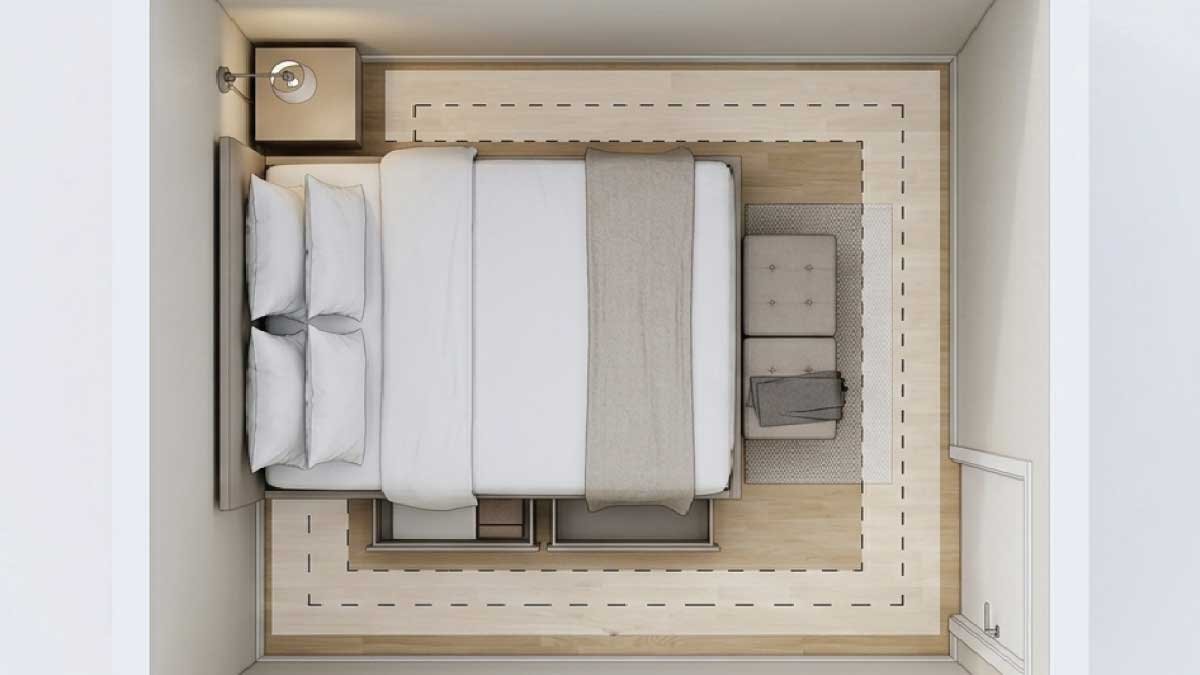
Fitting a queen bed in a small room may seem challenging, but with smart planning, it’s completely possible. By optimizing layout, choosing space-saving furniture, and reducing clutter, you can create a cozy, functional bedroom without sacrificing comfort or style, even in compact spaces.
1- Place the Bed Against a Wall
Placing your queen bed against a wall is one of the easiest ways to save space in a small room. This layout opens up more walking area and makes the room feel less cramped. It’s especially useful in tight spaces where centering the bed would limit movement and reduce usable floor space significantly.
2- Use Multifunctional Furniture
In a small bedroom, every piece of furniture should serve more than one purpose. Consider using a storage bed with built-in drawers, floating nightstands, or wall-mounted shelves. These options help reduce clutter while maximizing functionality, allowing you to keep essentials organized without overcrowding your limited floor space.
3- Minimize Clutter
Keeping your room clutter-free is essential when working with limited space. Opt for smaller dressers, vertical storage solutions, and only keep necessary items in the room. A clean and organized space not only looks bigger but also creates a more relaxing and comfortable environment for everyday living.
4- Measure First
Before placing your queen bed, always measure your room carefully. Aim to leave at least 24 inches of clearance on one side or at the foot of the bed for easy movement. Proper measurements ensure your layout feels comfortable and functional rather than cramped or restrictive.
5- Personal Experience Tip
From personal experience, fitting a queen bed into a small room is absolutely doable. I once arranged one in a 10 x 11 foot space by placing it against the wall and using under-bed storage. The room felt cozy yet practical, proving that smart design can transform even the smallest bedrooms.
Bedroom Dimensions for Queen Bed
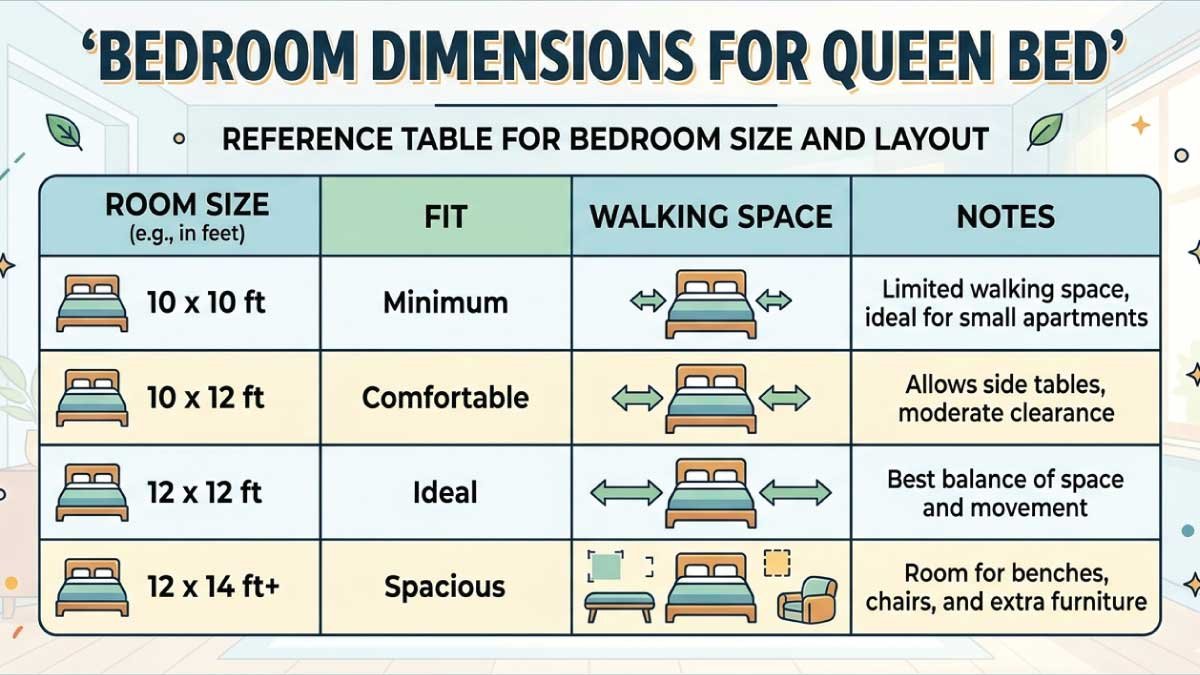
Here’s a reference table for bedroom dimensions for queen bed based on room size and layout:
| Room Size | Fit | Notes |
|---|---|---|
| 10 x 10 ft | Minimum | Limited walking space, ideal for small apartments |
| 10 x 12 ft | Comfortable | Allows side tables, moderate clearance |
| 12 x 12 ft | Ideal | Best balance of space and movement |
| 12 x 14 ft+ | Spacious | Room for benches, chairs, and extra furniture |
Personally, I prefer at least a 12 x 12 ft room for a queen bed. It allows me to place nightstands, a reading chair, and still maintain a clean layout.
Read Our Latest Guide:
Queen Bed Room Layout Tips
Designing a functional queen bedroom layout is all about balance, spacing, and smart placement. With the right arrangement, even a modest room can feel open and comfortable. By focusing on symmetry, clear pathways, and space-saving ideas, you can create a bedroom that looks stylish while remaining practical for daily use.
1- Center the Bed on a Wall
Centering your queen bed on a wall creates a clean, symmetrical look that instantly improves the room’s appearance. It also allows equal access from both sides, making it more convenient for couples. This layout works best when placed against the longest wall to maximize balance and visual harmony.
2- Leave Space for Nightstands
Nightstands add both function and style, but spacing is key. Aim for 24–30 inches of clearance on each side of the bed to comfortably fit small tables. This ensures enough room for essentials like lamps, books, or phones without making the space feel overcrowded or difficult to move around.
3- Keep Pathways Open
Maintaining clear walking paths is essential in any bedroom layout. Try to leave at least 24 inches of space around the bed, especially near entry points. Open pathways improve movement, prevent the room from feeling cramped, and make daily tasks like cleaning or getting dressed much easier.
4- Consider Furniture Placement
Carefully plan where you place larger furniture like dressers, wardrobes, or desks. Avoid blocking natural walking paths or doorways, as this can disrupt flow and make the room feel smaller. Position furniture along walls where possible to keep the center of the room open and functional.
5- Use Visual Tricks
Simple visual tricks can make a small bedroom appear bigger than it actually is. Use mirrors to reflect light and create depth, and choose light-colored walls or bedding for an airy feel. Minimal decor and cohesive color schemes also help the space look more open and less cluttered.
6- Personal Experience Tip
Personally, I prefer centering my queen bed against the longest wall. It creates a balanced and hotel-like look while leaving enough space for matching nightstands and lamps. This setup feels organized and comfortable, proving that thoughtful layout choices can completely transform a bedroom.
How Much Space for Queen Bed: Key Takeaways
Planning the right space for a queen bed is essential for comfort and functionality. Room size, clearance, and furniture placement all play a key role. Understanding minimum, comfortable, and ideal dimensions helps you create a bedroom layout that feels open, practical, and visually balanced for everyday living.
-
Minimum space: 10 x 10 feet
-
Comfortable space: 10 x 12 feet
-
Ideal space: 12 x 12 feet or larger
-
Side and foot clearance: 24–36 inches
-
Consider furniture placement: Nightstands, dressers, and seating
Knowing how much space for queen bed helps plan your bedroom layout and ensures your room feels spacious, functional, and comfortable.
Conclusion
Understanding room size for queen bed, minimum room size for queen bed, ideal bedroom size for queen bed, queen bed space requirements, queen bed clearance space, and bedroom dimensions for queen bed is essential for creating a comfortable and stylish bedroom.
Here’s a quick summary of the essentials:
- Minimum room size: 10 x 10 ft
- Comfortable/ideal room size: 12 x 12 ft
- Clearance: 24–36 inches around the bed
- Layout tips: Center bed, allow walking space, balance furniture placement
From personal experience, carefully planning queen bed placement guide ensures a bedroom that’s not only cozy but functional, allowing for smooth movement, furniture integration, and an aesthetically pleasing setup. Proper space planning makes all the difference in comfort and bedroom design.
Read Our Latest Guide:

I am Engineer Hassan, a professional engineer with over 15 years of experience in measurements, design accuracy, and furniture, appliance, and home product sizing. Through Size Helper, I provide research-based guides and trending 2026 home design ideas for living rooms, bedrooms, sofas, wall décor, fashion, and sports—helping users make confident, informed decisions. Every guide is written with real expertise, verified data, and a commitment to quality, usability, and style.