
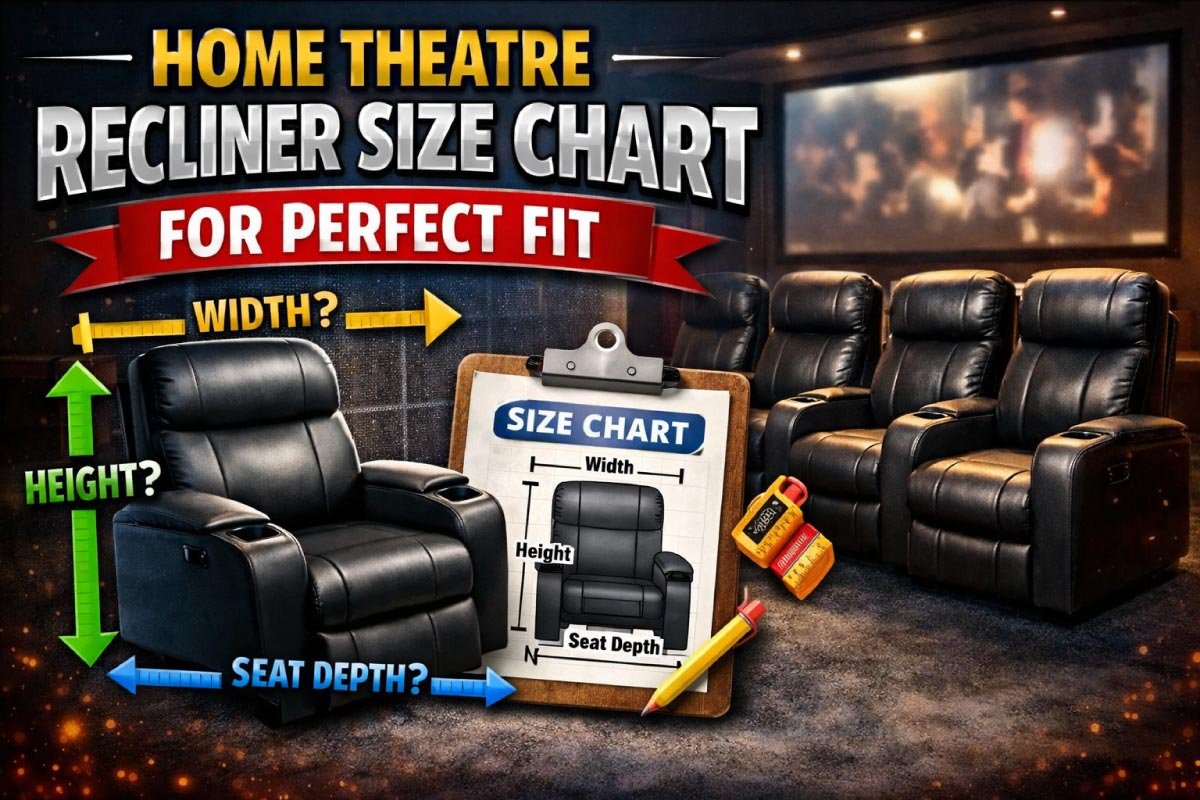
A home theatre setup is more than just a big-screen TV or surround sound system. The comfort and layout of your seating play a pivotal role in the overall cinematic experience. Among seating options, home theatre recliners have emerged as the gold standard for comfort, style, and functionality.
But one common challenge many homeowners face is selecting the right size recliner that fits their room perfectly without compromising comfort or aesthetics.
In this guide, we’ll break down everything you need to know about home theatre recliner dimensions, spacing, and layout, and provide five essential size charts to ensure the perfect fit in your space.
Why Recliner Size Matters
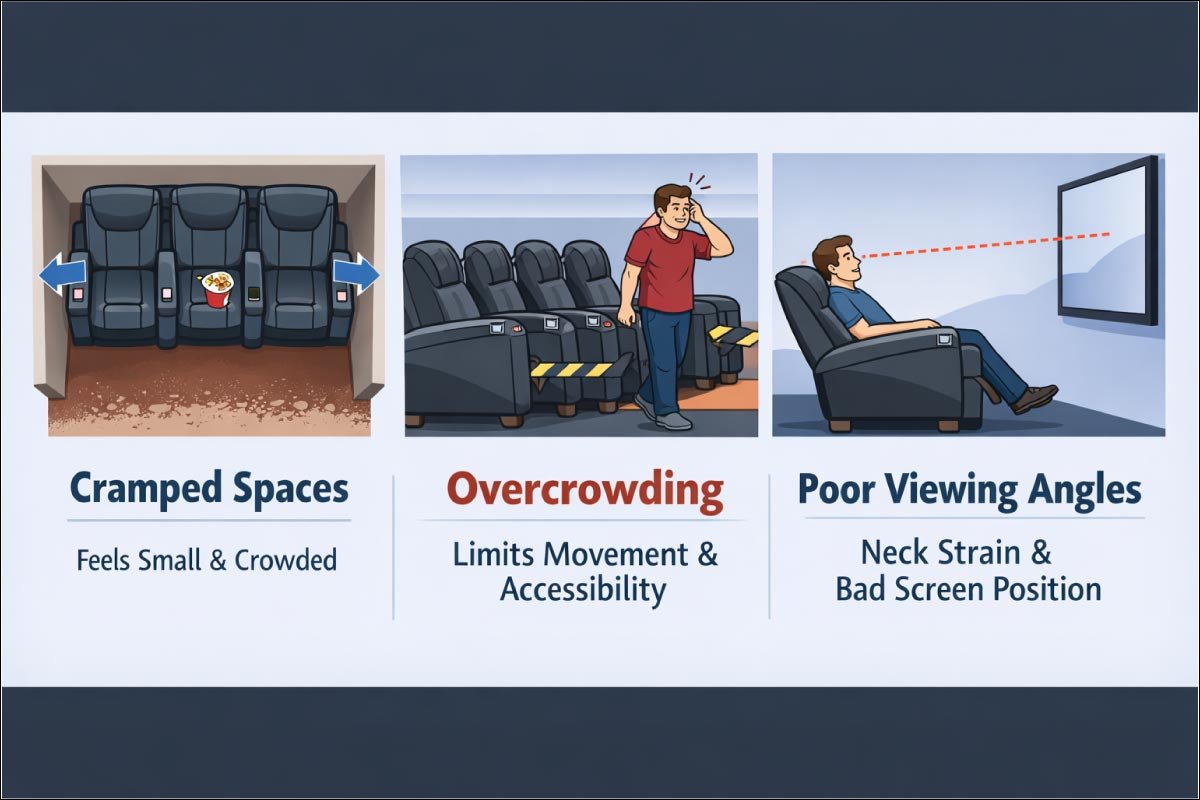
When it comes to home theatre seating, size isn’t just about fitting the furniture into your room—it’s about enhancing the viewing experience. Choosing the wrong size can lead to:
In a home theatre, recliner size affects far more than floor space—it shapes comfort, movement, and how well you see the screen. The right dimensions keep your layout open, improve viewing posture, and maintain a balanced look. Here’s what can happen when recliners are poorly sized:
-
Cramped spaces that make your theatre feel small.
-
Overcrowding that limits movement and accessibility.
-
Poor viewing angles and neck strain if the seat is too low or too far from the screen.
-
Aesthetic imbalance in the room, affecting the overall décor.
Selecting a recliner that matches both the room size and user comfort ensures that you can enjoy hours of uninterrupted movie time without discomfort.
Standard Home Theatre Recliner Sizes
Understanding standard home theatre recliner sizes helps you choose seating that fits both your room and comfort needs. By comparing width, depth, height, and seating capacity, you can plan a layout that maximizes space, ensures proper viewing angles, and delivers a relaxed, cinema-style experience at home.
| Recliner Type | Width (inches) | Depth (inches) | Height (inches) | Notes |
|---|---|---|---|---|
| Single Seat Standard | 32–38 | 35–40 | 38–42 | Fits most medium-sized rooms |
| Single Seat Wide | 38–44 | 36–42 | 38–42 | Ideal for larger body types or extra comfort |
| Loveseat Recliner | 50–60 | 36–42 | 38–42 | Can seat 2 people comfortably |
| Three-Seat Recliner | 72–84 | 36–42 | 38–42 | Best for larger home theatres |
| Sectional Recliner | 80–120 | 36–42 | 38–42 | Modular design for custom layouts |
Table 1: Standard Home Theatre Recliner Size Chart
Key Recliner Dimensions to Consider
Choosing the right recliner means paying attention to how it feels, how it fits, and how it impacts your theatre layout. Beyond width, measurements like depth and height affect leg support, clearance, viewing comfort, and the overall look of the room. Here are the most important recliner dimensions to check before buying:
-
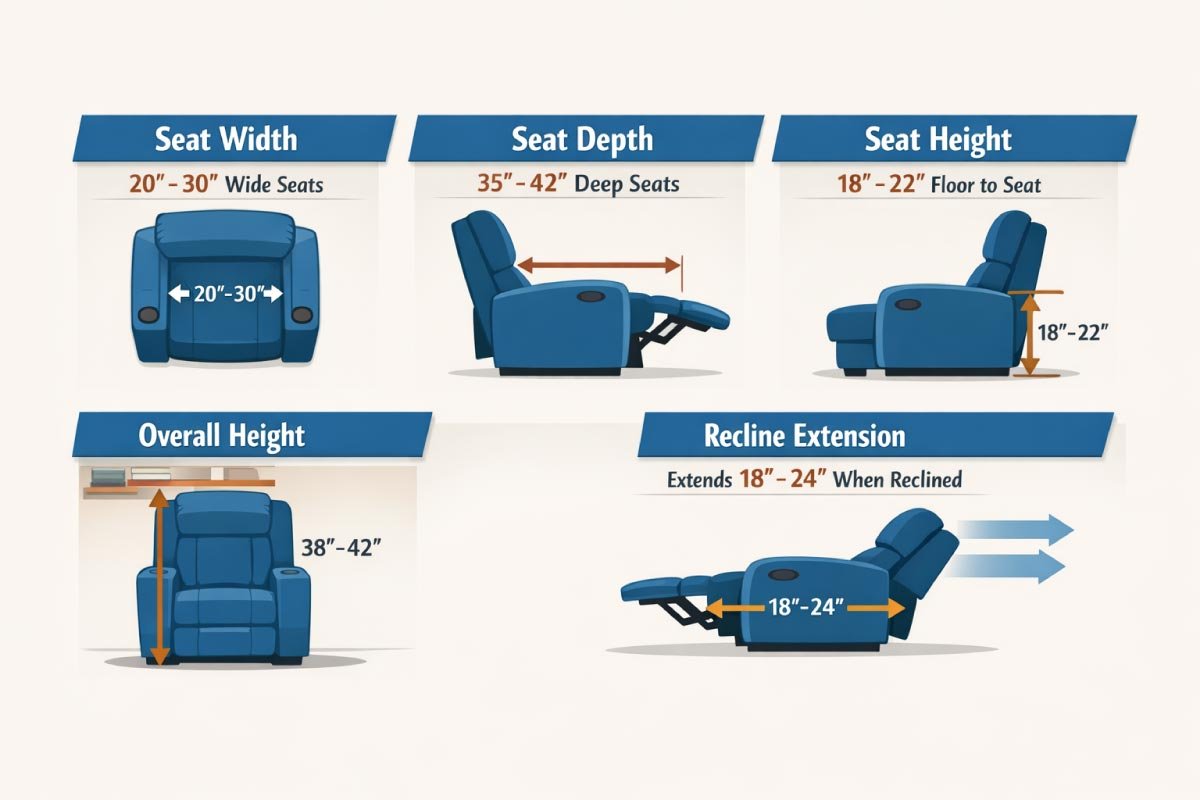
Seat Width: Determines how much room each person has. Standard single recliners offer 20–24 inches of seat width, while wide seats can go up to 30 inches.
-
Seat Depth: A deeper seat provides more leg support but requires more room in front of the recliner. Typical depths range from 35 to 42 inches.
-
Seat Height: Ideal for ensuring a comfortable line of sight to the screen. Most recliners are 18–22 inches from floor to seat.
-
Overall Height: Influences the aesthetics and whether the recliner will fit under shelves or in rooms with low ceilings.
-
Recline Extension: When fully reclined, the seat may extend an additional 18–24 inches, so always account for space behind and in front of the chair.
| Dimension Type | Standard Range (inches) | Notes |
|---|---|---|
| Seat Width | 20–30 | Wider seats = more comfort |
| Seat Depth | 35–42 | Deeper seats = better leg support |
| Seat Height | 18–22 | Proper height = ideal viewing angle |
| Overall Height | 38–42 | Ensure it fits your room layout |
| Recline Extension | 18–24 | Check for space in front of seating |
Table 2: Key Recliner Dimensions
Home Theatre Room Size and Recliner Fit
Matching your recliner size to your home theatre room is key to keeping the space comfortable and functional. Room dimensions determine how many seats you can fit, how much walking space remains, and whether viewing angles stay optimal. Use the guide below to choose recliners that prevent overcrowding while maximizing comfort.
| Room Size (sq. ft.) | Recommended Recliner Type | Notes |
|---|---|---|
| <100 sq. ft. | Single Seat Standard | Opt for compact models to avoid overcrowding |
| 100–200 sq. ft. | Single Seat Wide / Loveseat | Allows room for additional seating and walking space |
| 200–300 sq. ft. | Loveseat / Three-Seat Recliner | Ideal for small groups or family viewing |
| 300+ sq. ft. | Sectional Recliner | Can accommodate multiple viewers with extra comfort |
Table 3: Room Size vs. Recliner Recommendation
Spacing Guidelines for Optimal Comfort
Proper spacing is essential for a home theatre that feels open, comfortable, and easy to move around in. Adequate clearance allows recliners to function smoothly, prevents a cramped layout, and improves safety and visual balance. Use these spacing guidelines to ensure every seat offers maximum comfort without sacrificing accessibility:
-
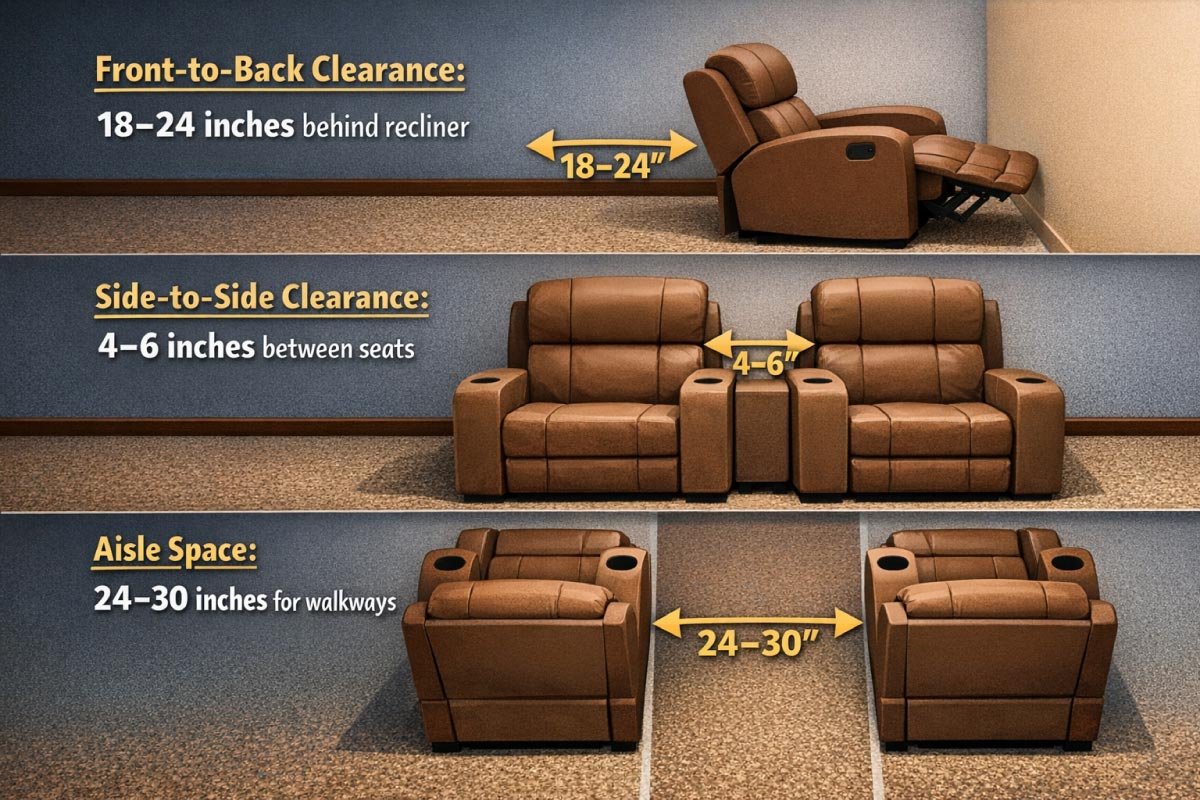
Front-to-Back Clearance: Ensure at least 18–24 inches between the back of the recliner and any wall to allow full recline.
-
Side-to-Side Clearance: Leave 4–6 inches between recliners for armrest clearance and movement.
-
Aisle Space: A minimum of 24–30 inches for walkways ensures comfort and safety.
| Clearance Type | Recommended Distance | Notes |
|---|---|---|
| Front-to-Back Clearance | 18–24 in | Needed for full recline |
| Side-to-Side Clearance | 4–6 in | Avoid cramped armrests |
| Aisle Space | 24–30 in | Easy walking and accessibility |
| Between Rows | 36–42 in | Allows reclining without obstruction |
| Wall Clearance | 12–18 in | Prevents wall damage and allows airflow |
Table 4: Home Theatre Recliner Spacing Guidelines
Special Considerations: Recliner Features and Sizes
Recliner features can boost comfort and convenience, but they also affect how much space each seat truly needs. Extras like consoles, power controls, and upgraded cushioning may increase width or depth, while powered models require planning for outlet access. Keep these feature-based size changes in mind when measuring:
-
Cup Holders & Storage Consoles: Typically add 6–8 inches to width.
-
Power Recliners: Require access to outlets, so allow extra side clearance.
-
Massage or Heated Recliners: Often have deeper seats, requiring more front-to-back space.
-
Modular Sectionals: Each section can vary in width from 30–40 inches, so calculate total length carefully.
| Feature Type | Width/Depth Adjustment | Notes |
|---|---|---|
| Cup Holders / Console | +6–8 in width | Adds convenience but requires space |
| Power Recliner | +2–4 in side clearance | Ensure access to outlets |
| Massage / Heated | +2–4 in depth | Deeper seat for comfort |
| Modular Sectional | 30–40 in per section | Total length must fit room dimensions |
| Recline Mechanism | +18–24 in front space | Needed for full recline |
Table 5: Feature Impact on Recliner Dimensions
Tips for Choosing the Perfect Recliner Fit
Finding the perfect recliner fit is all about balancing accurate measurements with real-life comfort. When you plan ahead, you avoid crowded layouts, improve viewing angles, and make your theatre easier to use every day. Use these practical tips to choose a recliner that fits your space now—and still works as your needs grow:
-
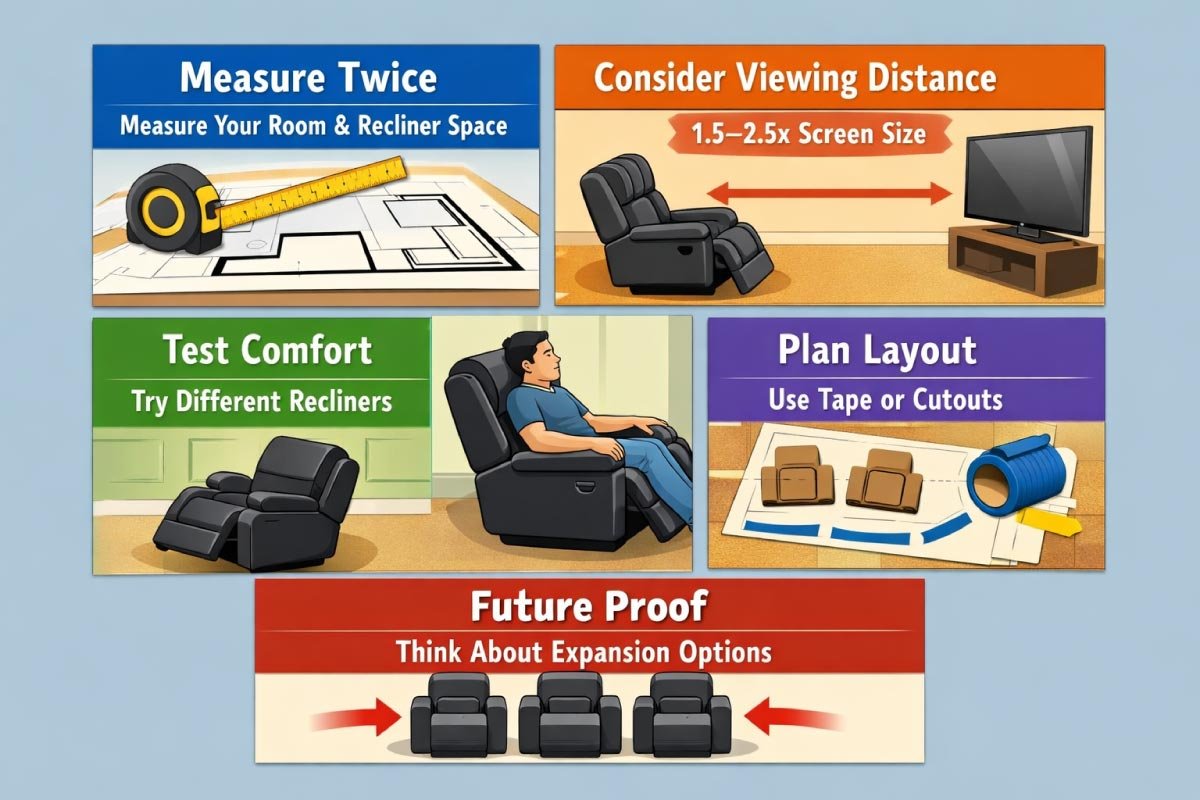
Measure Twice: Always measure your room and intended recliner space before purchasing.
-
Consider Viewing Distance: The distance from your recliner to the screen should be proportional to screen size—generally 1.5–2.5 times the diagonal screen size.
-
Test Comfort: Sit in different recliners if possible, paying attention to seat width, depth, and lumbar support.
-
Plan Layout: Use painter’s tape or cardboard cutouts to visualize recliner placement.
-
Future Proof: If you plan to expand your home theatre or add more seats, consider modular or slightly smaller recliners to accommodate future growth.
Also Read:
Conclusion
Choosing the right home theatre recliner size is about balancing comfort, room layout, and functionality. By carefully considering dimensions, spacing, and features, you can create a theatre setup that looks great, feels comfortable, and enhances your cinematic experience.
Whether you have a cozy 100-square-foot room or a spacious 300+ sq. ft. theatre, following the charts and guidelines provided ensures a perfect fit every time.
Investing time in proper planning will reward you with hours of comfortable, immersive viewing for family, friends, or solo movie nights.
Discover More:

I am Engineer Hassan, a professional engineer with over 15 years of experience in measurements, design accuracy, and furniture, appliance, and home product sizing. Through Size Helper, I provide research-based guides and trending 2026 home design ideas for living rooms, bedrooms, sofas, wall décor, fashion, and sports—helping users make confident, informed decisions. Every guide is written with real expertise, verified data, and a commitment to quality, usability, and style.