
Furnishing your home perfectly requires more than just picking styles or colors—it demands understanding furniture dimensions for every room. Choosing the right sizes ensures your space is functional, comfortable, and aesthetically balanced. This Furniture Sizes Guide 2026 covers all the essential furniture measurements, from beds and sofas to tables, chairs, and storage units, helping you plan layouts, avoid buying mistakes, and create a stylish, practical living environment.
Whether you are redesigning a bedroom, living room, dining area, home office, or outdoor space, this guide gives you standard dimensions, size charts, and layout tips for every major room.
Why Furniture Sizes Matter
Many homeowners underestimate furniture size when shopping. Oversized pieces overcrowd rooms, while undersized items feel awkward or incomplete. Knowing furniture dimensions helps ensure a balanced layout, improves comfort and functionality, prevents costly mistakes, and enhances overall aesthetic appeal, making spaces look well-proportioned and thoughtfully designed.
Efficient room layout: Ensure enough walking space and functional areas.
Balanced aesthetics: Properly sized furniture enhances the look and feel of a room.
Functional comfort: Chairs, sofas, and beds of correct height and depth improve ergonomics.
Smart purchases: Avoid returns and mismatched items.
In this guide, we break down standard furniture dimensions for all major home areas, including bedroom, living room, dining, office, storage, and outdoor spaces.
1. Bedroom Furniture Sizes
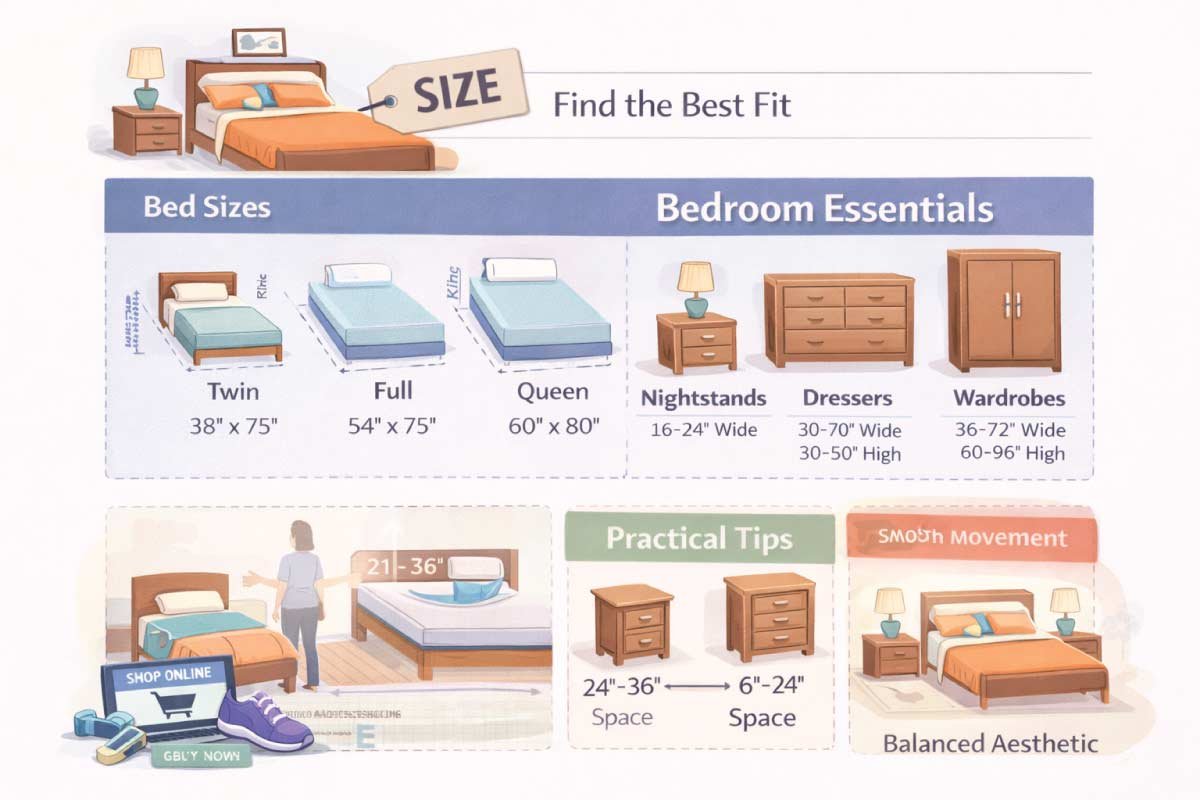
Selecting the right bedroom furniture sizes is crucial for comfort, style, and space optimization. From beds and mattresses to nightstands, dressers, and wardrobes, understanding standard dimensions ensures a functional layout, smooth movement, and a balanced aesthetic. Proper spacing also prevents overcrowding and helps you choose the perfect pieces for any bedroom size.
Beds & Mattresses
Choosing the right bed and mattress size is essential for comfort and room layout. Standard dimensions like Twin, Queen, or King help you plan space effectively, ensuring enough walking clearance while creating a cozy and functional bedroom environment.
| Bed Type | Width (inches/cm) | Length (inches/cm) |
|---|---|---|
| Twin | 38 in / 97 cm | 75 in / 191 cm |
| Twin XL | 38 in / 97 cm | 80 in / 203 cm |
| Full / Double | 54 in / 137 cm | 75 in / 191 cm |
| Queen | 60 in / 152 cm | 80 in / 203 cm |
| King | 76 in / 193 cm | 80 in / 203 cm |
| California King | 72 in / 183 cm | 84 in / 213 cm |
Tips:
- Allow 2–3 feet of clearance around the bed for walking.
- For small rooms, Twin or Full is ideal; Queen or King suits master bedrooms.
Nightstands
Nightstand size affects both storage and bedroom flow. Standard widths, depths, and heights help balance bedside space, allowing easy access to essentials without overcrowding. Selecting the right size complements your bed and overall room layout.
| Type | Width | Depth | Height |
|---|---|---|---|
| Standard Nightstand | 18–24 in / 46–61 cm | 16–20 in / 41–51 cm | 24–28 in / 61–71 cm |
Dressers & Wardrobes
Dressers and wardrobes provide storage while defining room aesthetics. Knowing standard dimensions ensures doors open easily, walking space is maintained, and furniture fits your bedroom size perfectly. Sliding doors are ideal for compact rooms.
| Furniture | Width | Depth | Height |
|---|---|---|---|
| Dresser | 30–70 in / 76–178 cm | 16–20 in / 41–51 cm | 30–40 in / 76–102 cm |
| Wardrobe | 36–72 in / 91–183 cm | 20–24 in / 51–61 cm | 72–84 in / 183–213 cm |
Tips:
- Leave at least 2–3 feet of space in front of dressers and wardrobes.
- Consider sliding doors for tight spaces.
Also Read:
2. Living Room Furniture Sizes
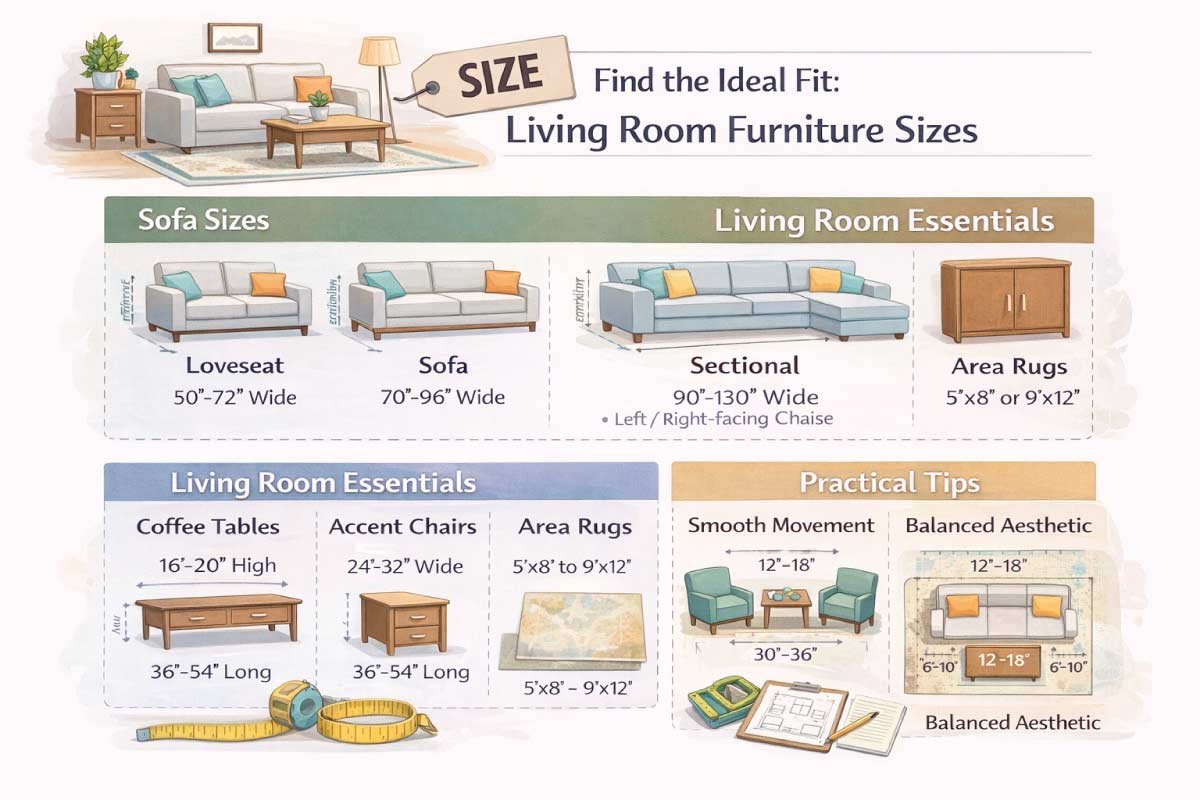
Choosing the right living room furniture sizes is essential for comfort, style, and functional layout. From sofas and sectionals to coffee tables and accent chairs, knowing standard dimensions helps prevent overcrowding, ensures smooth traffic flow, and creates a balanced, inviting space. Proper measurements maximize both usability and aesthetic appeal.
Sofas & Sectionals
Selecting the correct sofa or sectional size ensures comfort, functionality, and style. Standard widths, depths, and heights help plan seating arrangements, avoid overcrowding, and maintain clear traffic flow in living spaces.
| Type | Width | Depth | Height |
|---|---|---|---|
| Loveseat | 52–72 in / 132–183 cm | 30–40 in / 76–102 cm | 30–36 in / 76–91 cm |
| Standard Sofa | 72–96 in / 183–244 cm | 36–42 in / 91–107 cm | 30–36 in / 76–91 cm |
| Sectional Sofa | 90–144 in / 229–366 cm | 36–42 in / 91–107 cm | 30–36 in / 76–91 cm |
Tips:
- Keep 18 inches / 46 cm between sofas and coffee tables.
- Measure room first to avoid oversized sectional pieces.
Coffee Tables
Coffee table dimensions are critical for both aesthetics and usability. Standard sizes and spacing guidelines keep tables proportionate to sofas, provide convenient reach, and allow easy movement around the living area.
| Shape | Width | Depth | Height |
|---|---|---|---|
| Rectangular | 36–48 in / 91–122 cm | 18–24 in / 46–61 cm | 16–18 in / 41–46 cm |
| Square | 30–36 in / 76–91 cm | 30–36 in / 76–91 cm | 16–18 in / 41–46 cm |
| Round | 30–48 in / 76–122 cm | — | 16–18 in / 41–46 cm |
Tips:
- Keep coffee table 12–18 inches from sofa.
- Choose table size based on sofa length: table should be 2/3 the sofa length.
Side & Accent Chairs
Accent chairs add style and extra seating without cluttering the room. Knowing standard dimensions ensures comfortable spacing for conversation areas and smooth walking paths.
| Type | Width | Depth | Height |
|---|---|---|---|
| Accent Chair | 28–36 in / 71–91 cm | 28–36 in / 71–91 cm | 30–36 in / 76–91 cm |
Tips:
- Arrange chairs for conversation areas, leaving ~3 feet between chairs for walking.
Also Read:
3. Dining Room Furniture Sizes
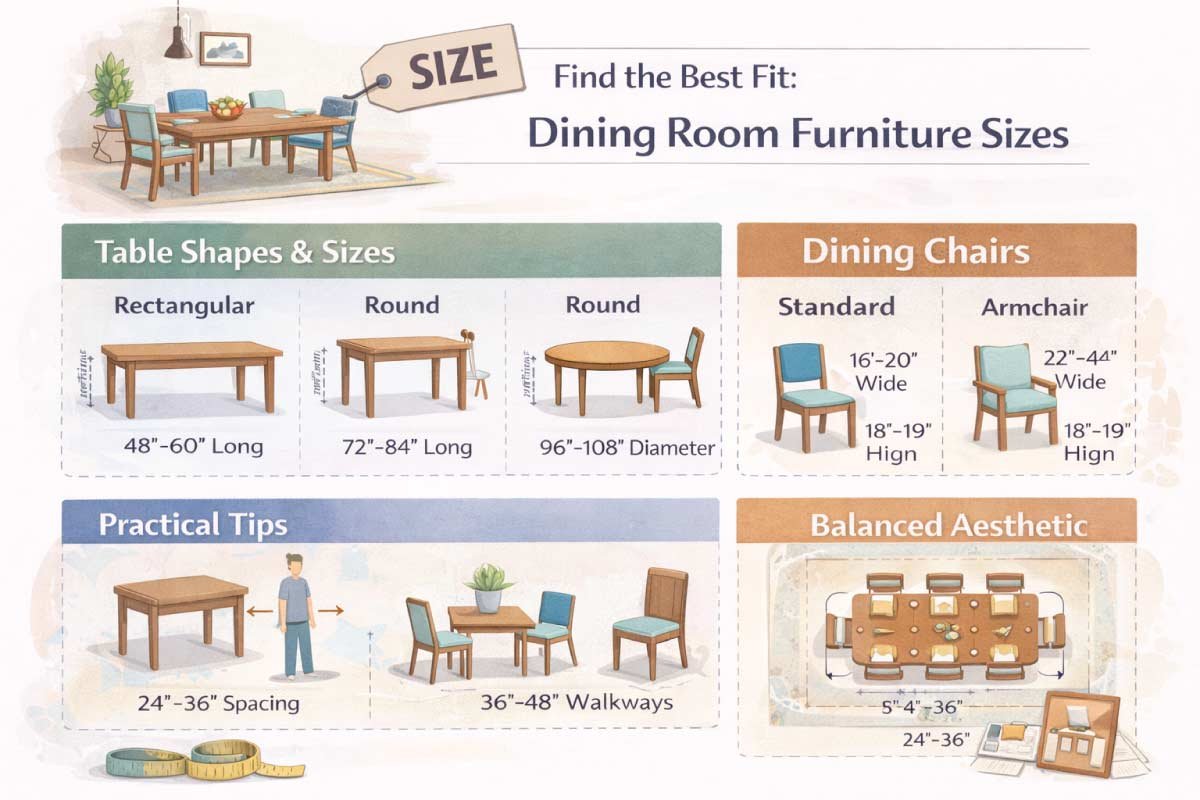
Selecting the right dining room furniture sizes is key for comfort, functionality, and style. From rectangular and round tables to standard and armchairs, knowing standard dimensions ensures enough legroom, smooth movement, and a balanced layout. Proper spacing makes mealtime more comfortable and creates a visually appealing dining area.
Dining Tables
Dining table size affects comfort, movement, and style. Standard dimensions for rectangular and round tables ensure enough seating, legroom, and space around the table for easy access.
| Table Type | Seats | Width | Length | Height |
|---|---|---|---|---|
| Rectangular | 4 | 36–40 in / 91–102 cm | 48–54 in / 122–137 cm | 28–30 in / 71–76 cm |
| Rectangular | 6 | 36–40 in / 91–102 cm | 60–72 in / 152–183 cm | 28–30 in / 71–76 cm |
| Rectangular | 8 | 36–40 in / 91–102 cm | 84–96 in / 213–244 cm | 28–30 in / 71–76 cm |
| Round | 4 | 36–48 in / 91–122 cm | — | 28–30 in / 71–76 cm |
| Round | 6 | 48–60 in / 122–152 cm | — | 28–30 in / 71–76 cm |
Dining Chairs
Correct chair dimensions provide comfort, functionality, and smooth table fit. Armchairs or standard chairs should allow adequate legroom and clearance, maintaining a balanced and functional dining area.
| Type | Width | Depth | Height |
|---|---|---|---|
| Standard Chair | 18–22 in / 46–56 cm | 18–20 in / 46–51 cm | 34–36 in / 86–91 cm |
| Armchair | 22–24 in / 56–61 cm | 22–24 in / 56–61 cm | 34–36 in / 86–91 cm |
Tips:
- Leave 36 inches / 91 cm from table edge to wall for easy movement.
- Chairs should fit comfortably under the table (legroom 10–12 inches / 25–30 cm).
Also Read:
4. Home Office Furniture Sizes
Choosing the right home office furniture sizes is key for productivity, comfort, and organization. From standard desks and executive tables to ergonomic chairs, knowing proper dimensions ensures enough workspace, promotes good posture, and maintains smooth movement. Proper planning helps create a functional, stylish, and efficient home office environment.
Desks
Desk size impacts workflow and room layout. Standard and executive desks vary in width, depth, and height to accommodate computers, paperwork, and storage, ensuring enough walking space and a clutter-free workspace.
| Type | Width | Depth | Height |
|---|---|---|---|
| Standard Desk | 48–72 in / 122–183 cm | 24–36 in / 61–91 cm | 28–30 in / 71–76 cm |
| Executive Desk | 60–84 in / 152–213 cm | 30–40 in / 76–102 cm | 28–30 in / 71–76 cm |
Office Chairs
Office chairs are essential for comfort and posture. Standard or ergonomic chairs with adjustable height and dimensions provide proper support, allow mobility, and prevent strain during long working hours.
| Type | Width | Depth | Height (Seat) |
|---|---|---|---|
| Standard Chair | 24–28 in / 61–71 cm | 24–28 in / 61–71 cm | 16–21 in / 41–53 cm |
| Ergonomic Chair | 26–30 in / 66–76 cm | 26–30 in / 66–76 cm | Adjustable |
Tips:
- Desk should allow 2–3 feet walking space around.
- Chairs should support proper posture; height adjustable chairs recommended.
Also Read:
5. Storage Furniture Sizes
Proper storage furniture sizing ensures a well-organized, functional, and visually appealing home. From bookshelves and cabinets to TV stands, knowing dimensions helps maximize space, maintain balance, and provide easy access to items. Correct sizing prevents overcrowding and ensures furniture fits seamlessly into any room layout.
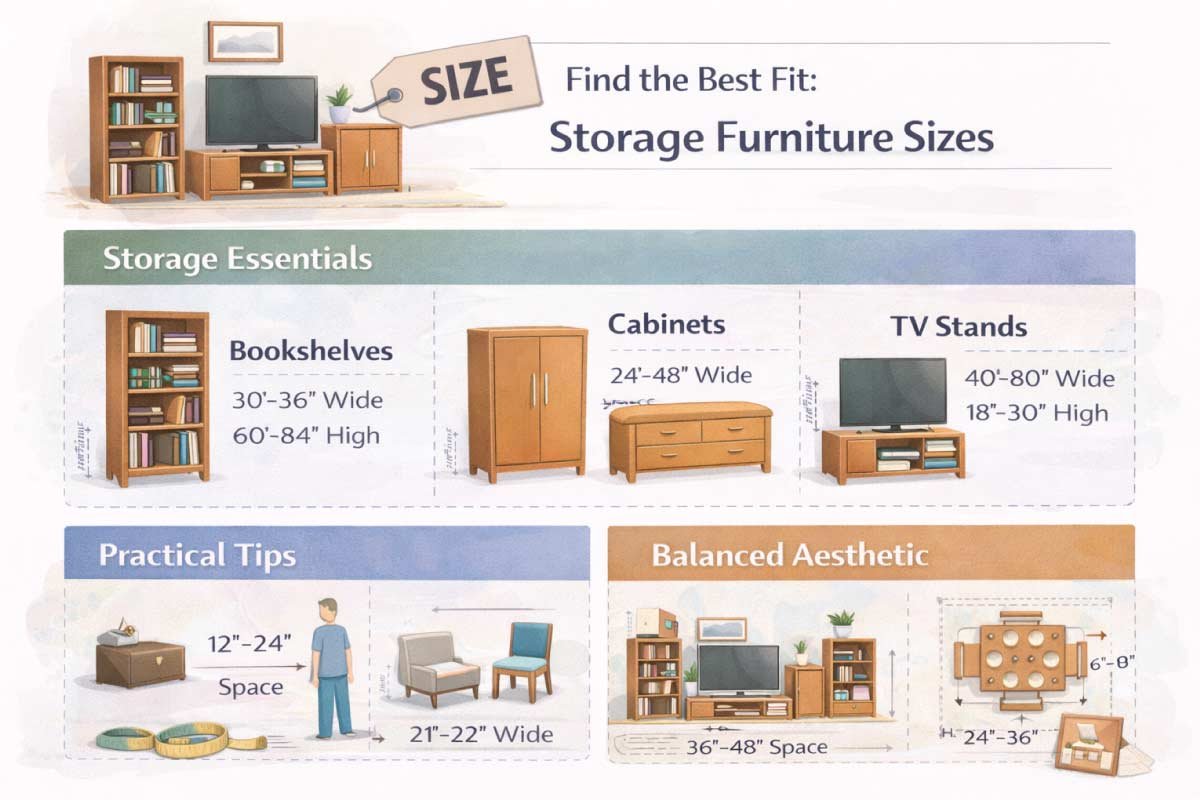
Bookshelves & Cabinets
Bookshelves and storage cabinets vary in width, depth, and height to store books, decor, or essentials. Correct sizing ensures items are accessible, space is optimized, and rooms feel organized and spacious.
| Type | Width | Depth | Height |
|---|---|---|---|
| Bookshelf | 24–36 in / 61–91 cm | 10–14 in / 25–36 cm | 72–84 in / 183–213 cm |
| Storage Cabinet | 30–60 in / 76–152 cm | 16–20 in / 41–51 cm | 30–72 in / 76–183 cm |
TV Stands / Media Units
TV stand dimensions affect viewing comfort and room aesthetics. Selecting a stand proportional to your TV size allows proper placement, clearance, and storage for media devices while keeping the living area balanced.
| Type | Width | Depth | Height |
|---|---|---|---|
| Standard TV Stand | 48–72 in / 122–183 cm | 16–20 in / 41–51 cm | 20–30 in / 51–76 cm |
Tips:
- Leave 2–3 inches / 5–8 cm between TV and stand edges.
- For larger TVs (75–85 inch), consider wider stands (60–72 inches).
Also Read:
6. Outdoor Furniture Sizes
Choosing the right outdoor furniture sizes is key for comfort, functionality, and aesthetic appeal. From patio tables and chairs to lounge sofas and chaise lounges, knowing standard dimensions ensures proper spacing, allows smooth movement, and creates inviting outdoor spaces that are both practical and stylish.
Patio Tables & Chairs
Patio table and chair dimensions impact seating comfort and accessibility. Correct width, depth, and height ensure enough space for dining or relaxing outdoors, while maintaining balance and avoiding overcrowding in patios, decks, or garden areas.
| Type | Width | Depth | Height |
|---|---|---|---|
| Patio Table | 30–40 in / 76–102 cm | 30–40 in / 76–102 cm | 28–30 in / 71–76 cm |
| Outdoor Chair | 24–28 in / 61–71 cm | 24–28 in / 61–71 cm | 30–36 in / 76–91 cm |
Lounge Chairs & Sofas
Outdoor lounge sofas and chaise lounges need proper sizing for comfort and flow. Standard dimensions allow multiple seating options, maintain smooth traffic paths, and create functional, stylish lounging areas for patios or poolside setups.
| Type | Width | Depth | Height |
|---|---|---|---|
| Outdoor Sofa | 72–96 in / 183–244 cm | 30–36 in / 76–91 cm | 28–34 in / 71–86 cm |
| Chaise Lounge | 28–32 in / 71–81 cm | 70–80 in / 178–203 cm | 30–36 in / 76–91 cm |
8. Entryway & Hallway Furniture Sizes
Entryway and hallway furniture should maximize space while maintaining flow. From console tables and shoe racks to storage benches, knowing standard sizes helps prevent overcrowding, ensures smooth walking paths, and provides functional storage. Proper planning keeps narrow areas organized and visually appealing.
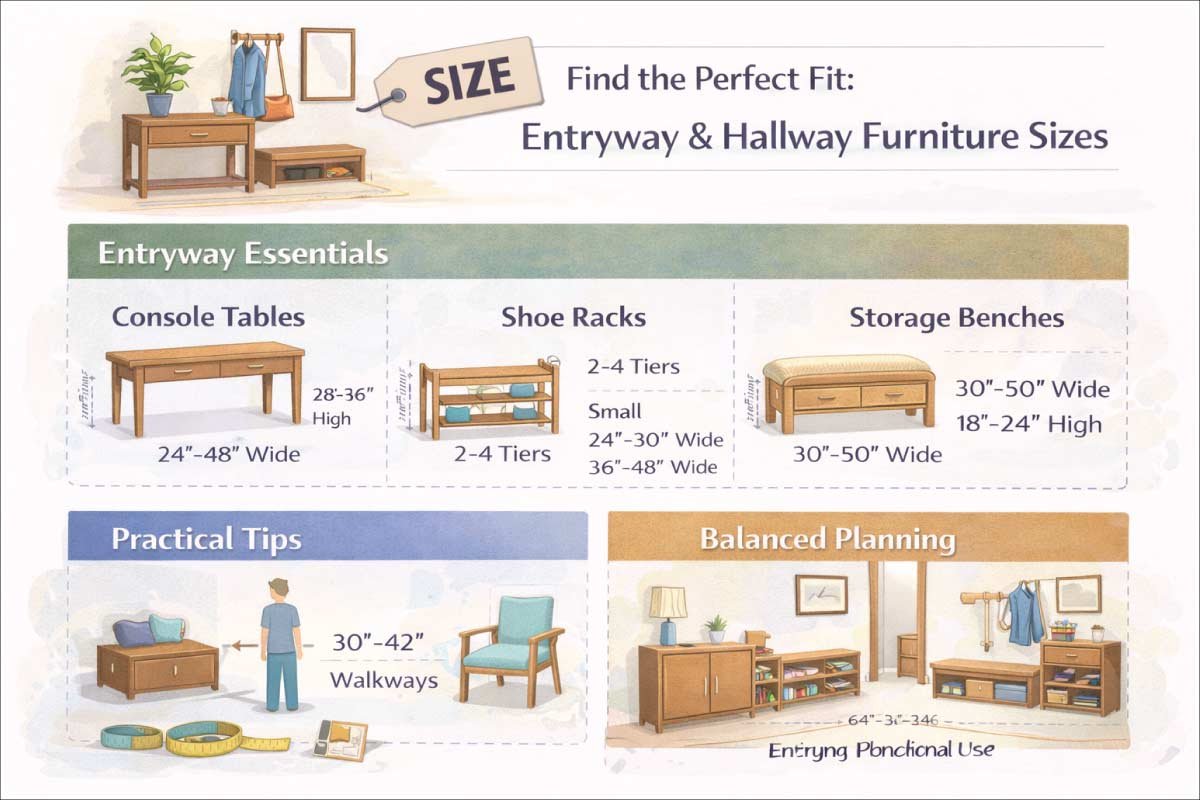
Console tables, shoe racks, coat stands, and storage benches
| Furniture | Width | Depth | Height |
|---|---|---|---|
| Console Table | 30–48 in / 76–122 cm | 12–18 in / 30–46 cm | 28–36 in / 71–91 cm |
| Shoe Rack | 24–36 in / 61–91 cm | 12–16 in / 30–41 cm | 24–36 in / 61–91 cm |
| Storage Bench | 36–60 in / 91–152 cm | 16–20 in / 41–51 cm | 18–24 in / 46–61 cm |
Tips: Keep at least 36 inches (91 cm) of clearance for hallways and avoid bulky items in narrow spaces.
9. Accent & Occasional Tables
Accent tables complement living spaces while providing functionality. Knowing standard sizes for side, end, nesting, and console tables ensures they match sofas and seating arrangements, provide adequate legroom, and maintain a balanced layout, enhancing both comfort and room aesthetics.
| Type | Width | Depth | Height |
|---|---|---|---|
| Side Table | 16–24 in / 41–61 cm | 16–24 in / 41–61 cm | 22–30 in / 56–76 cm |
| Nesting Table | 14–20 in / 36–51 cm | 14–20 in / 36–51 cm | 18–24 in / 46–61 cm |
| End Table | 18–24 in / 46–61 cm | 18–24 in / 46–61 cm | 22–28 in / 56–71 cm |
Tips: Tables should be roughly level with sofa arms and allow enough legroom for comfort.
10. Lighting & Accessories Furniture Sizes
Proper lighting and accessory furniture sizing enhances both function and décor. Lamp tables, floor lamps, and shelving units for décor should be proportional to surrounding furniture, provide clear pathways, and support aesthetic balance. Correct sizing ensures safety, accessibility, and harmonious interior design.
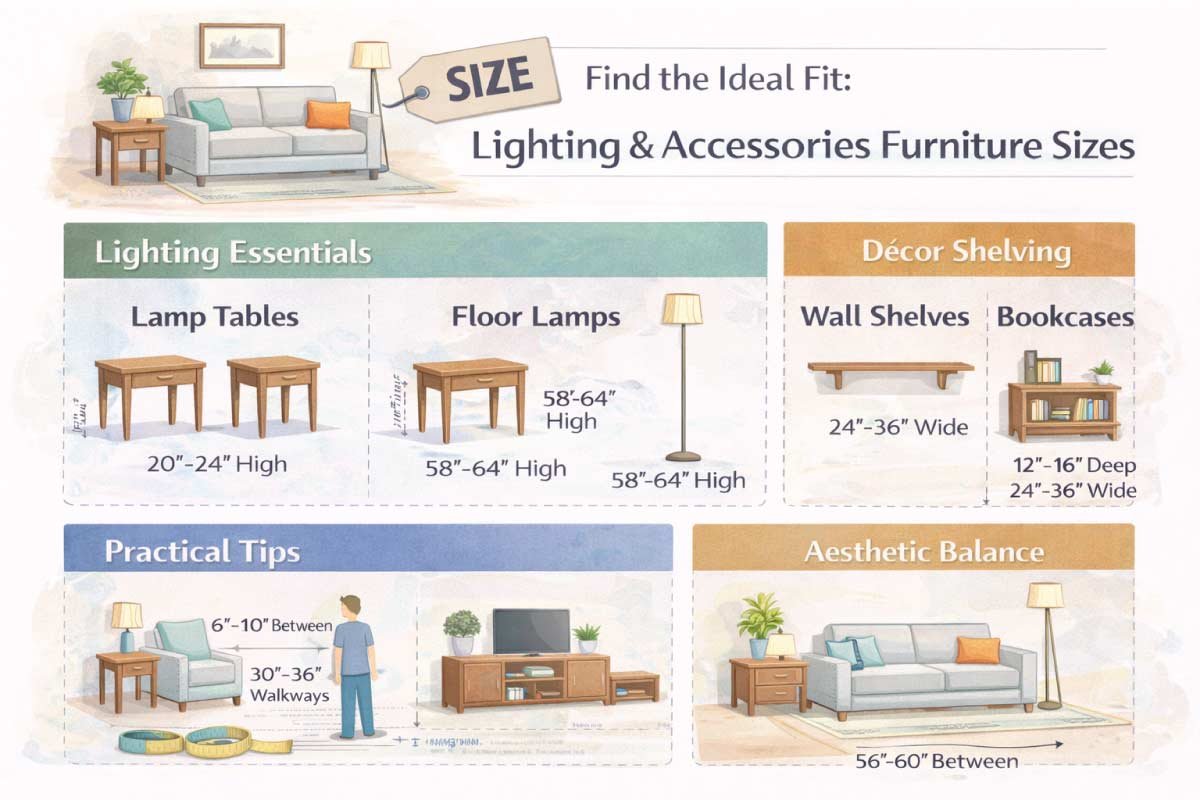
| Type | Width | Depth | Height |
|---|---|---|---|
| Lamp Table | 16–24 in / 41–61 cm | 16–20 in / 41–51 cm | 24–30 in / 61–76 cm |
| Shelving Unit (for décor) | 24–36 in / 61–91 cm | 12–16 in / 30–41 cm | 60–84 in / 152–213 cm |
Tips: Ensure tables are proportional to nearby furniture; lamps should not block views or pathways.
11. Kids & Teen Furniture Sizes
Selecting the right kids and teen furniture sizes is essential for comfort, safety, and functionality. From beds and desks to chairs and storage, knowing standard dimensions ensures proper fit, supports growth, and creates a safe, organized space. Rounded edges and adjustable furniture enhance usability and longevity.
| Furniture | Width | Depth | Height |
|---|---|---|---|
| Kids Bed | 28–39 in / 71–99 cm | 58–75 in / 147–191 cm | 20–25 in / 51–64 cm |
| Kids Desk | 36–48 in / 91–122 cm | 20–24 in / 51–61 cm | 22–28 in / 56–71 cm |
| Kids Chair | 12–16 in / 30–41 cm | 12–16 in / 30–41 cm | 20–24 in / 51–61 cm |
Tips: Consider growth-adjustable furniture and safe, rounded edges to protect children.
7. Tips for Measuring & Planning Layouts
Before buying furniture, measure your room accurately and consider walking space requirements: 2–3 feet in living areas, 36 inches in dining zones. Use painter’s tape to visualize furniture footprints, balance scale and proportion, and prioritize multifunctional pieces like storage ottomans or foldable desks for efficiency.
Measure your room first – know your dimensions before buying.
Allow walking space – 2–3 feet in living areas, 36 inches in dining areas.
Visualize with tape – use painter’s tape to mark furniture footprints.
Balance scale & proportion – large furniture in small rooms looks crowded.
Consider multifunctional pieces – ottomans with storage, extendable tables, foldable desks.
How to Read a Size Chart Correctly: A Complete Guide
Reading size charts correctly is crucial to prevent buying furniture, clothing, or accessories that don’t fit. Always check dimensions carefully, understand width, depth, and height, convert units when needed, account for space and clearance, and consider brand variations. Using charts properly ensures accurate choices and a perfect fit every time.
-
Understand width, depth, height, and length for accurate sizing.
-
Convert between inches and centimeters when needed.
-
Check brand-specific variations for consistency.
-
Account for walking space, clearance, and room layout.
-
Use charts to plan placement and ensure a perfect fit.
Conclusion
Proper furniture sizing is the foundation of a well-designed home. Following this Furniture Sizes Guide 2026 helps you plan room layouts efficiently, select furniture that fits perfectly, and avoid overcrowding or empty spaces. Whether furnishing a bedroom, living room, dining area, home office, or outdoor space, using standard dimensions and size charts ensures every piece complements your home. Measure, plan, and choose wisely for a functional, stylish, and comfortable environment.
Also Read:

I am Engineer Hassan, a professional engineer with over 15 years of experience in measurements, design accuracy, and furniture, appliance, and home product sizing. Through Size Helper, I provide research-based guides and trending 2026 home design ideas for living rooms, bedrooms, sofas, wall décor, fashion, and sports—helping users make confident, informed decisions. Every guide is written with real expertise, verified data, and a commitment to quality, usability, and style.