
Lighting plays a crucial role in interior design — not just for visibility, but also for creating mood, highlighting décor, and adding personality to a room. Among the many lighting options, end table lamps are one of the most versatile.
Used in living rooms, bedrooms, entryways, and even home offices, the right lamp can balance a space, provide functional light, and elevate the overall design. However, choosing the right lamp size can be tricky.
Too tall, and it overwhelms the table; too short, and it fails to illuminate properly. This guide will walk you through everything you need to know to select the perfect end table lamp size — including practical measurements, proportions, and tips for different room layouts.
Table of Contents
ToggleWhy Lamp Size Matters
Lamp size plays a crucial role in both lighting performance and interior styling. The right proportions enhance usability, support visual harmony, and complement surrounding furniture. A well-sized lamp feels intentional, functional, and visually balanced within the space rather than distracting or insignificant.
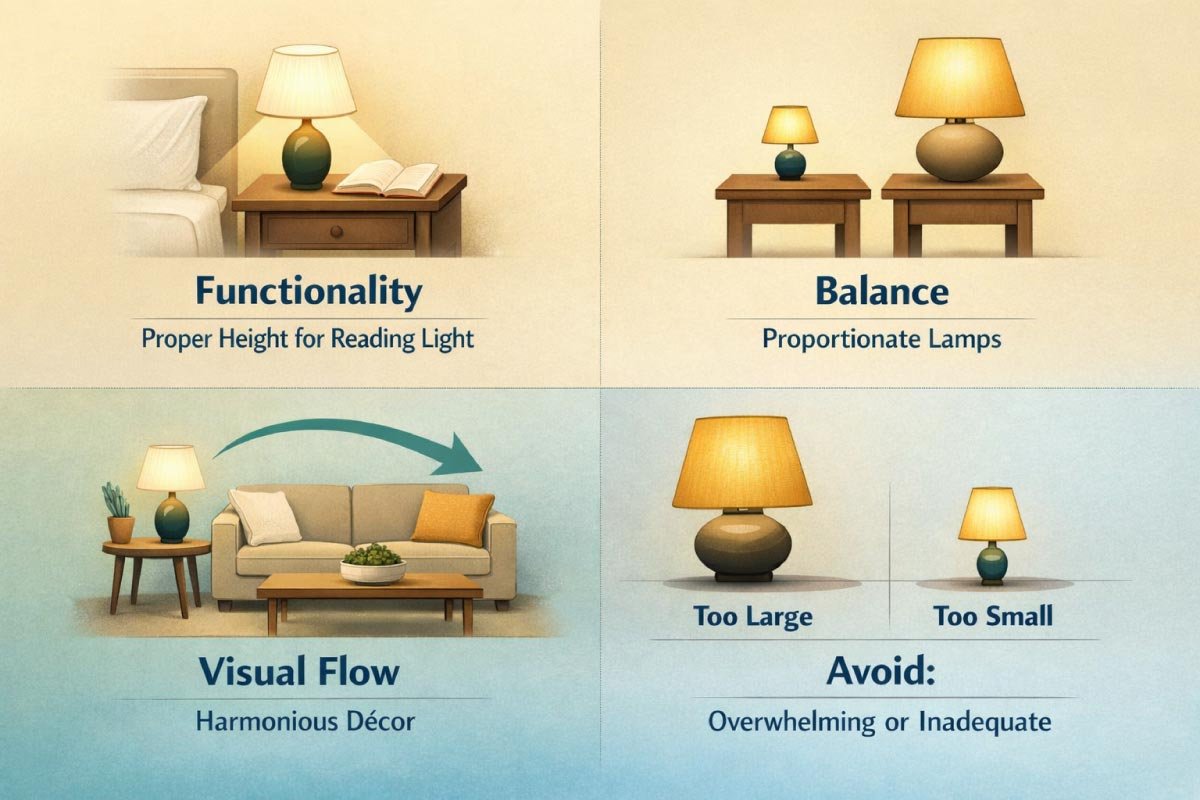
Choosing the right lamp size isn’t just aesthetic — it directly impacts:
- Functionality – Proper height ensures comfortable reading light.
- Balance – Proportionate lamps prevent tables from looking awkward or cluttered.
- Visual Flow – Correct scale helps the décor feel harmonious.
If a lamp is too large, it can dominate the table and draw attention away from other design elements. Too small, and it might look like an afterthought.
General Sizing Principles for End Table Lamps
Understanding basic lamp-sizing principles helps create a polished, comfortable living space. The right lamp height, shade width, and base proportion ensure proper lighting while maintaining balance with surrounding furniture. When sizing follows these guidelines, end table lamps look cohesive, purposeful, and visually pleasing rather than mismatched or overwhelming.
- Height Rule of Thumb
For most end table lamps, a good height range is:
24–32 inches (61–81 cm) from base to top of the shade.
This ensures the light is at eye level when seated — reducing glare and providing even illumination.
Proportion to Table Height
Choosing the right lamp height starts with understanding proportion. A lamp should feel balanced with the table beneath it, neither overpowering nor too small. Using a simple height ratio helps create visual harmony, comfortable lighting, and a polished look that works beautifully in any room and complements your overall decor.
To find the right lamp height:
- Lamp Height ≈ 1.5× Table Height
For example, if your end table is 20 inches tall, you’d want a lamp around 30 inches.
| Table Height (inches) | Ideal Lamp Height (inches) |
|---|---|
| 18″ | 27″ |
| 20″ | 30″ |
| 22″ | 33″ |
| 24″ | 36″ |
Note: Taller lamps work well on lower tables; shorter styles suit taller tables.
Width and Shade Diameter
Lamp width is just as important as height when it comes to visual balance. A properly sized shade keeps the lamp from overwhelming the table or appearing too delicate. Matching shade diameter to table width helps maintain proportion while ensuring the light spreads evenly and comfortably.
While height matters most, the width of the shade also plays a role.
- Rule of Thumb:
Shade Width ≈ ½ Table Width
So on an end table that’s 24″ wide:
Ideal shade diameter: approx. 12″
End Table Lamp Sizes by Room Type
Lamp size should match both the room and how the space is used. A living room lamp focuses on comfort, visibility, and style, while scale matters more in larger seating areas. The guide below helps you choose lamp heights and shade sizes that feel balanced, functional, and visually appealing.
Living Room (End Tables Beside Sofa / Chairs)
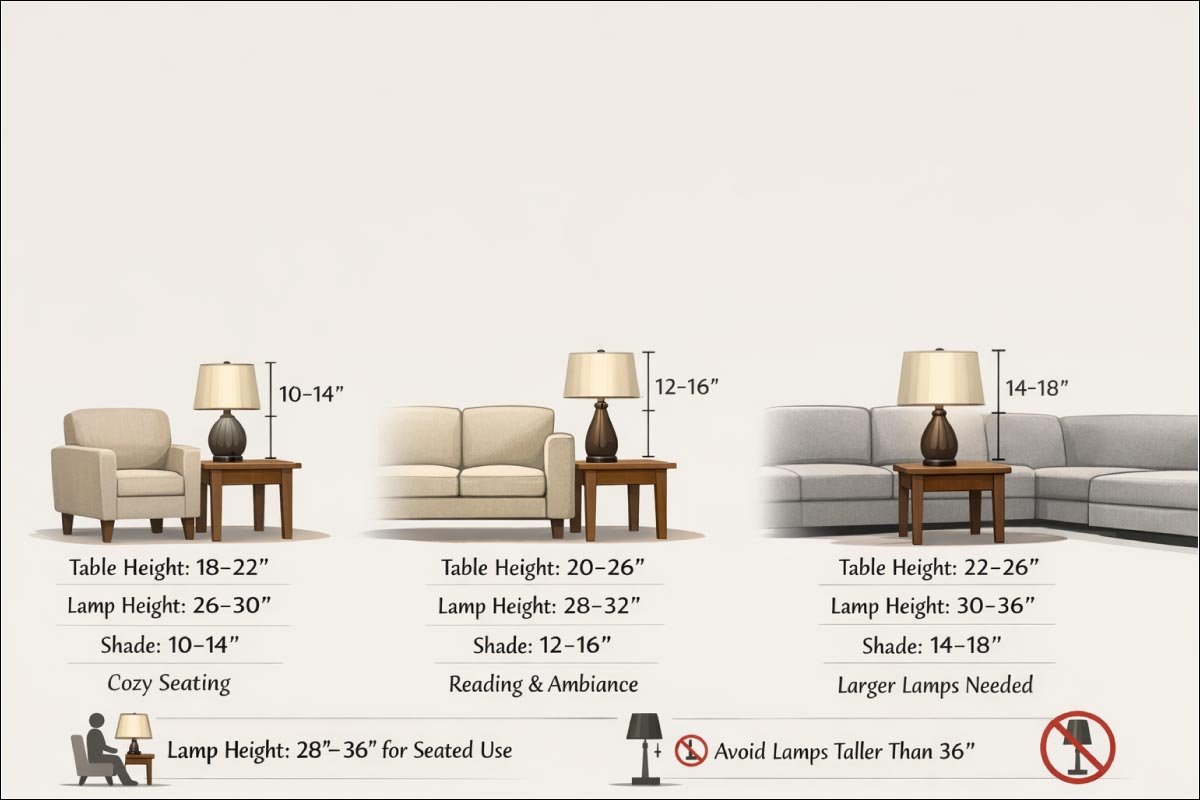
In living rooms, end table lamps must balance comfort and visibility. The right size provides enough light for reading while maintaining clear sightlines across seating areas. Use table height, seating scale, and lamp proportion together to achieve a functional yet visually pleasing setup.
| Room Type | Table Height (in) | Ideal Lamp Height (in) | Shade Diameter (in) | Notes |
|---|---|---|---|---|
| Living Room | 20–26 | 28–32 | 12–16 | Reading & ambiance |
| Lounge Corner | 18–22 | 26–30 | 10–14 | Cozy seating |
| Sectional Sofa | 22–26 | 30–36 | 14–18 | Needs larger lamps |
- Tips:
- The lamp should be tall enough for direct light while seated.
- Avoid styles taller than 36″ — they may block sightlines.
Bedroom (Bedside Tables)
Bedroom lamps should create a calm, functional glow while staying comfortable for reading in bed. Proper lamp height ensures the light reaches your pillow without glare. Matching the lamp scale to bed size and table height helps maintain balance and a relaxing, well-designed bedroom atmosphere.
| Bed Size | Table Height (in) | Perfect Lamp Height (in) | Shade Diameter (in) | Function |
|---|---|---|---|---|
| Twin | 18–22 | 26–30 | 10–14 | Task light |
| Full / Queen | 20–24 | 28–32 | 12–16 | Reading |
| King | 22–26 | 30–34 | 14–18 | Balanced look |
- Bedroom Tips:
- Ensure light level reaches the pillow for reading.
- A bedside lamp too tall can cast harsh shadows.
Home Office / Reading Nooks
In home offices and reading nooks, lighting must support focus without causing eye strain. Choosing the right lamp height improves visibility for tasks while still adding warmth to the space. Use these proportions to ensure your lamp delivers practical illumination and a comfortable working or reading environment.
| Space Type | Table Height (in) | Recommended Lamp Height (in) | Shade Diameter (in) | Use Case |
|---|---|---|---|---|
| Desk / Work | 28–30 | 30–36 | 14–18 | Task lighting |
| Reading Nook | 20–22 | 26–32 | 12–16 | Ambient & task |
For workspaces, prioritize task lighting — bright enough for reading/writing.
Measuring for Perfect Fit
Measuring ensures your lamp complements the table and room without looking awkward. By taking simple dimensions into account—table height, lamp height, and surrounding space—you can select a lamp that provides ideal lighting, maintains balance, and enhances the overall aesthetic of your living area.
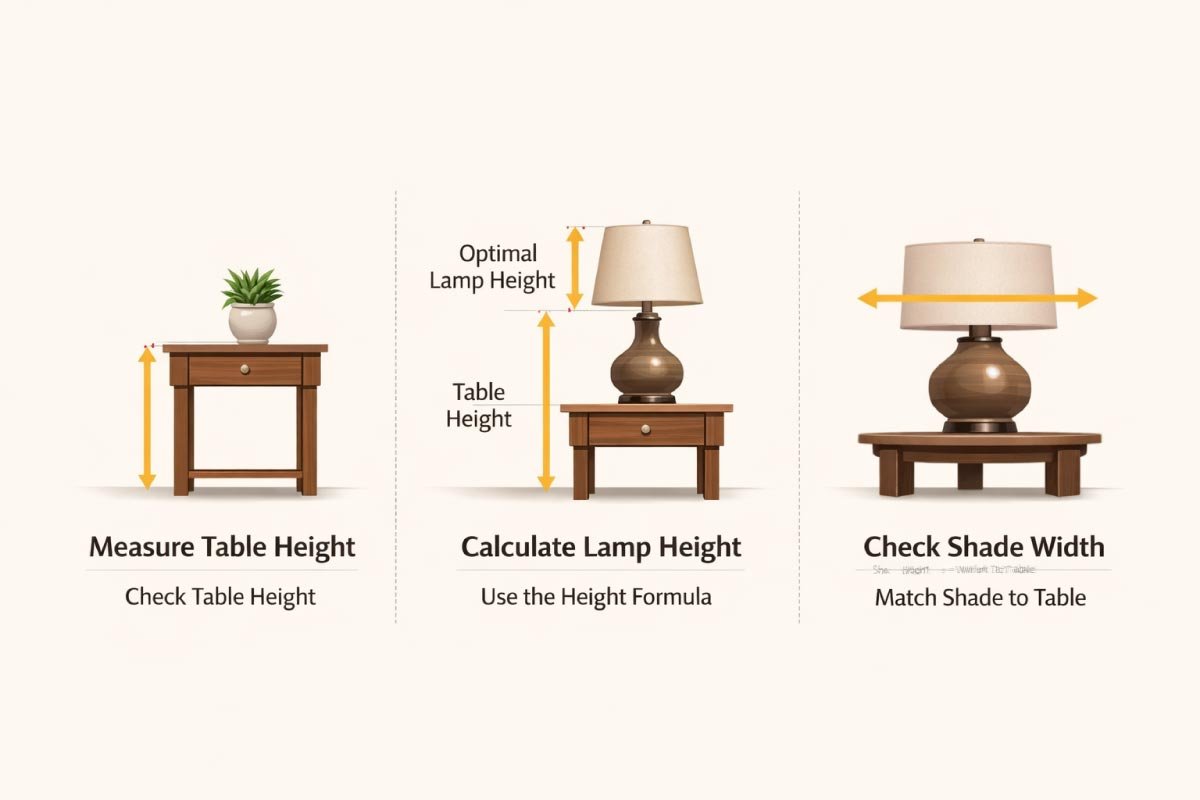
1. Measure Table Height
Knowing your table’s height is the first step to choosing a lamp that fits perfectly. Accurate measurement ensures the lamp provides comfortable lighting and maintains visual balance. This simple step prevents oversized or undersized lamps that can disrupt the room’s harmony.
2. Calculate Lamp Height
Once you know the table height, determining the ideal lamp height is straightforward. Using a simple formula ensures the lamp provides functional lighting while staying proportionate to the table. This method helps maintain balance and creates a cohesive, well-styled look.
3. Check Shade Width
Choosing the right shade width is key to visual balance. A shade that’s too wide or narrow can make the lamp look awkward. Using the table’s width as a guide ensures the lamp appears proportionate and complements the furniture seamlessly.
How Lamp Size Affects Lighting Quality
The size of a lamp significantly influences how light interacts with a room. It impacts brightness, coverage, and comfort, shaping both function and ambiance. Choosing the right lamp size ensures adequate illumination without harsh glare, enhances the visual appeal of your space, and provides practical lighting for tasks or relaxation, making size an essential factor in lighting design.
1. Brightness Depends on Shade Size and Bulb Capacity
Lamp size directly affects the type and number of bulbs it can hold. Taller or wider lamps can accommodate larger bulbs or even multiple bulbs, producing stronger light output. Smaller lamps may limit brightness, making them suitable for accent lighting rather than general illumination, so selecting the correct size is key for desired light intensity.
2. Wide Shades Improve Light Distribution
A larger lamp shade spreads light over a broader area, reducing dark corners and creating a more balanced room. Narrow or small shades focus light in a tight beam, suitable for reading or task lighting. The width and shape of the shade determine how evenly light is cast, influencing both functionality and the atmosphere of the space.
3. Glare Control Through Proper Height and Proportion
Lamp height relative to eye level influences glare. Short lamps or low shades can direct light into the eyes, causing discomfort. Taller lamps or well-proportioned shades soften illumination, creating a visually comfortable environment. Adjusting lamp size and placement ensures that light is diffused properly, maintaining a soothing and functional lighting experience.
Room Ambiance Is Shaped by Lamp Dimensions
The physical size of a lamp contributes to the mood of a room. Large lamps with expansive shades create a soft, welcoming glow, while small lamps deliver focused illumination for tasks or accent purposes. Choosing the right dimensions helps achieve the intended ambiance, balancing aesthetics, light coverage, and overall visual comfort.
Task Efficiency Relies on Appropriate Lamp Sizing
Lamp size impacts how well a space supports activities like reading, working, or crafting. A large, wide lamp can illuminate an entire work area efficiently, reducing eye strain. Conversely, a compact lamp may only provide limited light, suitable for decorative or secondary purposes. Matching lamp dimensions to intended tasks ensures both practicality and comfort.
Style & Decor Considerations
Lamp style impacts the overall look and feel of a room just as much as size. Choosing shapes, colors, and materials that complement your décor ensures the lamp feels intentional. Balancing aesthetics with functionality creates a cohesive, inviting, and visually appealing space.
1. Modern / Minimalist Spaces
In modern or minimalist interiors, simplicity and clean design are key. Selecting lamps with sleek lines and understated shapes ensures they blend seamlessly with the décor. Even slightly taller lamps work well, as long as they maintain proportion and contribute to the room’s streamlined aesthetic.
2. Traditional / Classic Rooms
In traditional or classic interiors, decorative and elegant lamps enhance the room’s timeless charm. Choosing pieces with curves, detailing, or rich finishes adds character while maintaining proportion. Properly sized shades ensure the lamp complements the table without overpowering the space.
3. Eclectic Interiors
Eclectic spaces thrive on creativity and variety, allowing for playful combinations of furniture and accessories. When using lamps of varying styles or sizes, maintaining proportion and visual balance is essential. This ensures the mix feels intentional rather than chaotic, creating a dynamic yet harmonious look.
Discover More:
Special Situations
Certain room features call for adjustments in lamp size to maintain comfort and proportion. Ceiling height, table size, and overall space all influence the ideal lamp choice. Selecting lamps with these factors in mind ensures functionality, visual balance, and a cohesive, well-styled environment.
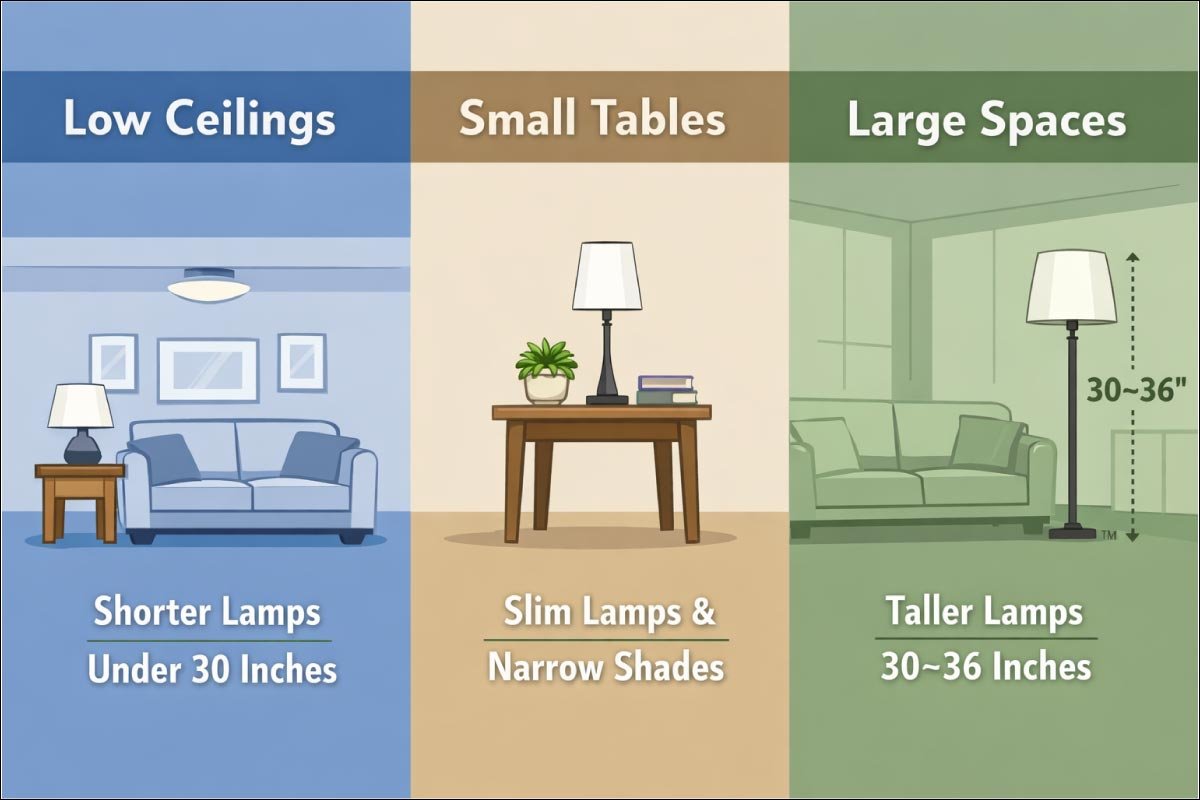
- Low Ceilings
Opt for shorter lamps — typically under 30 inches — to keep sightlines clear and the room feeling open.
- Small Tables
Slim lamps with narrow shades prevent overcrowding.
- Large Spaces
Rooms with tall ceilings can accommodate taller lamps — between 30–36 inches.
Choosing the Right Bulb and Lighting Temperature
Choosing the right bulb and color temperature is key to creating the desired ambiance. Warm white bulbs provide cozy, relaxing light, while cool white or daylight bulbs enhance focus and clarity for reading or work. Matching bulb type to room function ensures both comfort and practicality in every space.
| Lighting Type | Color Temperature | Best For |
|---|---|---|
| Warm White | 2700–3000K | Cozy rooms, bedrooms |
| Cool White | 3500–4100K | Reading areas, task lighting |
| Daylight | 5000–6500K | Offices, studios |
Suggestion: For living rooms and bedrooms, stick with warm white bulbs. For tasks and work areas, cool or daylight bulbs are brighter and more energizing.
Discover More:
Practical Examples
Seeing lamp-sizing principles applied in real rooms makes selection easier. By considering table height, lamp height, and shade width, you can achieve a balanced, functional, and visually pleasing setup. These examples illustrate how proper proportions enhance both lighting and overall room harmony.
Example 1: Small Living Room
-
Table height: 20″
-
Ideal lamp height: 30″
Shade width: 10–12″
Result: Balanced lighting without overwhelming the space.
Example 2: King Bedroom
-
Table height: 24″
-
Lamp height: 36″
Shade width: 16–18″
Result: Generous lighting and soft glow for nighttime reading.
Conclusion
Choosing the perfect end table lamp is both an art and a science. When you match lamp size to table height, room scale, and function, you unlock better lighting and elevate your interior design. Remember:
- Measure accurately
- Keep proportions in mind
- Match size to use and room layout
- Don’t ignore style and décor harmony
Discover More:

I am Engineer Hassan, a professional engineer with over 15 years of experience in measurements, design accuracy, and furniture, appliance, and home product sizing. Through Size Helper, I provide research-based guides and trending 2026 home design ideas for living rooms, bedrooms, sofas, wall décor, fashion, and sports—helping users make confident, informed decisions. Every guide is written with real expertise, verified data, and a commitment to quality, usability, and style.