
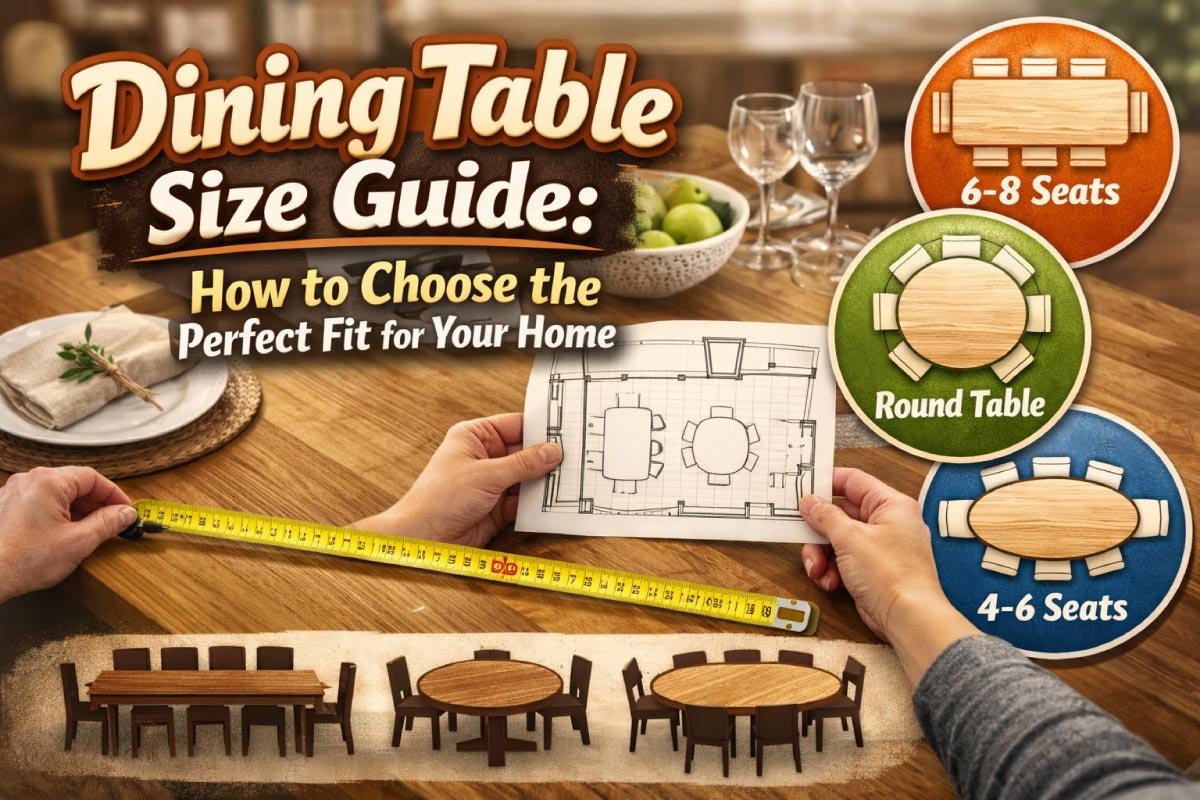
Choosing the right dining table is about more than style—it’s about comfort, space planning, and functionality. A dining table that is too large can overwhelm a room, while one that is too small may feel impractical for daily meals or gatherings.
This dining table size guide will help you understand standard dimensions, seating requirements, room spacing, and table shapes so you can confidently select the perfect dining table for your home.
Whether you live in a compact apartment or a spacious house, understanding dining table sizes ensures better movement, comfort, and visual balance. From small two-seater tables to large family-style dining sets, this guide covers everything you need to know.
Why Dining Table Size Matters
Dining table size plays a crucial role in both comfort and usability. A well-sized table allows everyone to sit comfortably, move chairs easily, and enjoy meals without feeling cramped. It also ensures that the dining area flows naturally with the rest of the room.
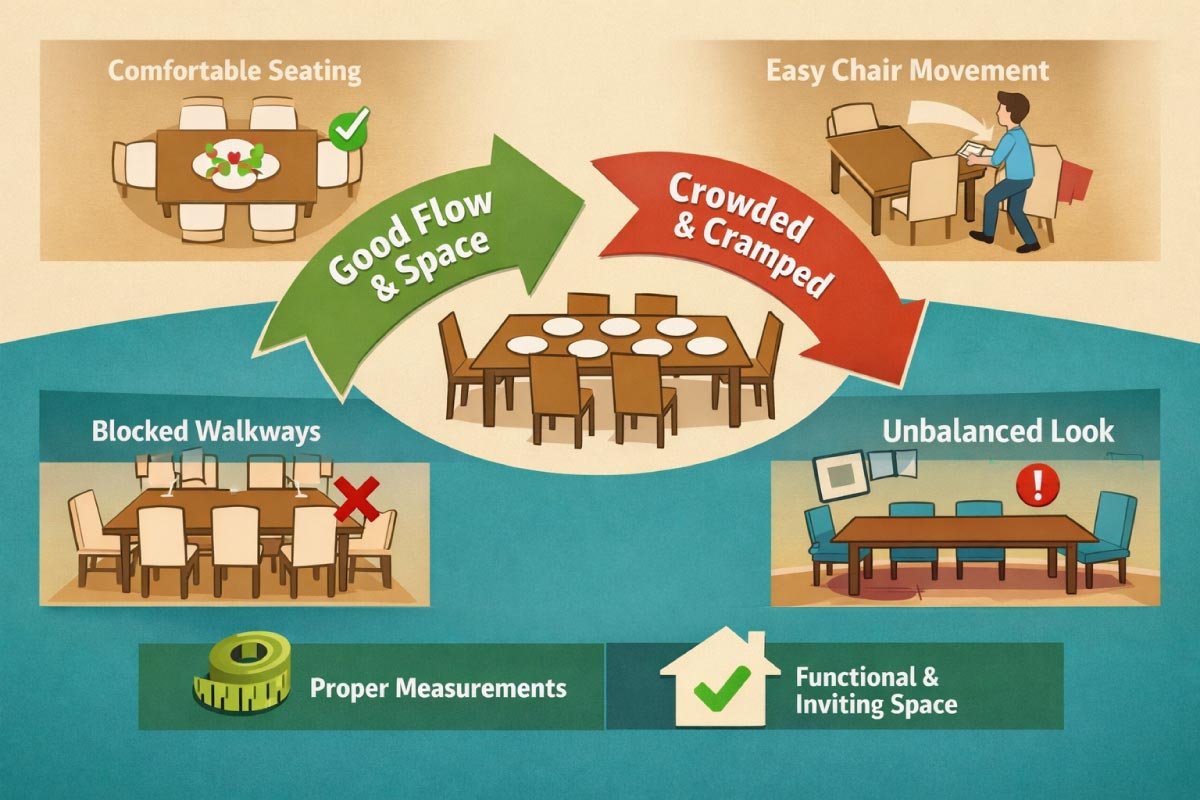
Incorrect sizing can lead to poor spacing, blocked walkways, and an unbalanced look. Proper measurements help you avoid these problems and make your dining space more inviting, functional, and aesthetically pleasing.
Standard Dining Table Height
Standard dining table height is designed to provide comfort, balance, and proper posture during meals. Choosing the correct height ensures chairs fit well underneath, legroom feels natural, and dining remains enjoyable for long periods. Understanding these measurements helps create a functional and comfortable dining space.
-
Standard dining table height: 28–30 inches (71–76 cm)
-
Standard dining chair seat height: 17–19 inches (43–48 cm)
-
Ideal legroom clearance: 10–12 inches between seat and tabletop
This height works well for most adults and is suitable for everyday dining. Counter-height and bar-height tables exist, but standard height remains the most popular choice for homes.
Dining Table Size by Seating Capacity
Choosing the right dining table size depends largely on how many people you plan to seat regularly. Proper dimensions ensure comfort, easy movement, and enough elbow room for everyone. Understanding standard table sizes by seating capacity helps you select a table that fits your space while making meals relaxed and enjoyable.
Standard Dining Table Sizes by Seating Capacity
| Seating Capacity | Table Length (inches) | Table Width (inches) | Suitable For |
|---|---|---|---|
| 2 Seater | 30–36 | 30–36 | Small apartments, kitchens |
| 4 Seater | 48–54 | 30–36 | Small families |
| 6 Seater | 60–72 | 36–40 | Medium families |
| 8 Seater | 72–96 | 36–44 | Large families, guests |
| 10 Seater | 96–120 | 40–48 | Formal dining rooms |
These dimensions ensure comfortable seating without crowding, making meals more enjoyable.
Dining Table Shapes and Their Size Guidelines
Dining table shape plays a key role in both space planning and seating comfort. Different shapes suit different room layouts, traffic flow, and social interaction. Understanding size guidelines for rectangular, round, square, and oval tables helps you choose a design that maximizes seating while fitting harmoniously within your dining area.
1- Rectangular Dining Tables
Rectangular dining tables are a practical and popular choice for many homes due to their flexible design and efficient use of space. Their elongated shape comfortably accommodates multiple diners, making them suitable for everyday meals as well as special occasions and larger social gatherings.
-
Best for families and gatherings
-
Can be placed against walls if needed
-
Works well with benches or chairs
2- Square Dining Tables
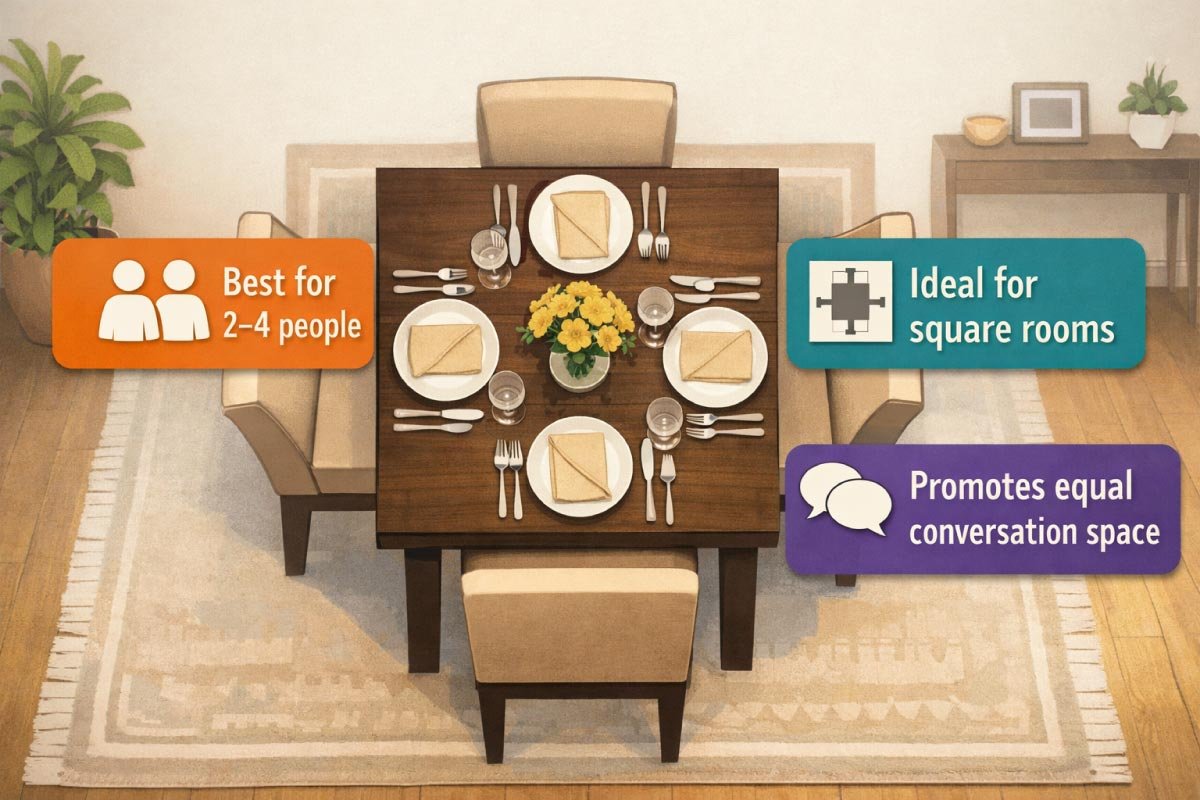
Square dining tables are an excellent choice for compact dining areas, offering a balanced and cozy layout. Their equal sides create a sense of symmetry, making meals feel more personal and engaging. These tables are especially suitable for smaller households and limited spaces.
-
Best for 2–4 people
-
Ideal for square rooms
-
Promotes equal conversation space
3- Round Dining Tables
Round dining tables are perfect for creating a warm, inviting atmosphere, fostering conversation, and maximizing space in smaller rooms. Their smooth edges make movement around the table easier, while the circular design ensures everyone feels included. They are functional, safe, and stylish for intimate dining settings.
-
Great for compact spaces
-
Easy to navigate around
-
Limited seating expansion
4- Oval Dining Tables
Oval dining tables offer a versatile design that blends the space-efficiency of rectangular tables with the smooth, inviting shape of round tables. Their elongated curves create a softer aesthetic while providing ample seating, making them ideal for medium to large dining spaces and both casual and formal gatherings.
-
Softer visual look than rectangular tables
-
Seats more people than round tables
-
Suitable for medium to large rooms
5- Dining Table Size Guide by Shape
Dining table shape influences seating capacity, comfort, and room layout. Each shape—rectangular, square, round, or oval—has typical size ranges that accommodate different numbers of diners. Understanding these dimensions ensures you select a table that fits your space, promotes easy movement, and provides an enjoyable dining experience for family and guests.
| Table Shape | Seating Capacity | Typical Dimensions |
|---|---|---|
| Rectangular | 4–10 | 48–96 in L × 30–44 in W |
| Square | 2–4 | 36–48 in × 36–48 in |
| Round | 2–6 | 36–60 in diameter |
| Oval | 6–10 | 72–96 in L × 36–44 in W |
Dining Table Size Based on Room Dimensions
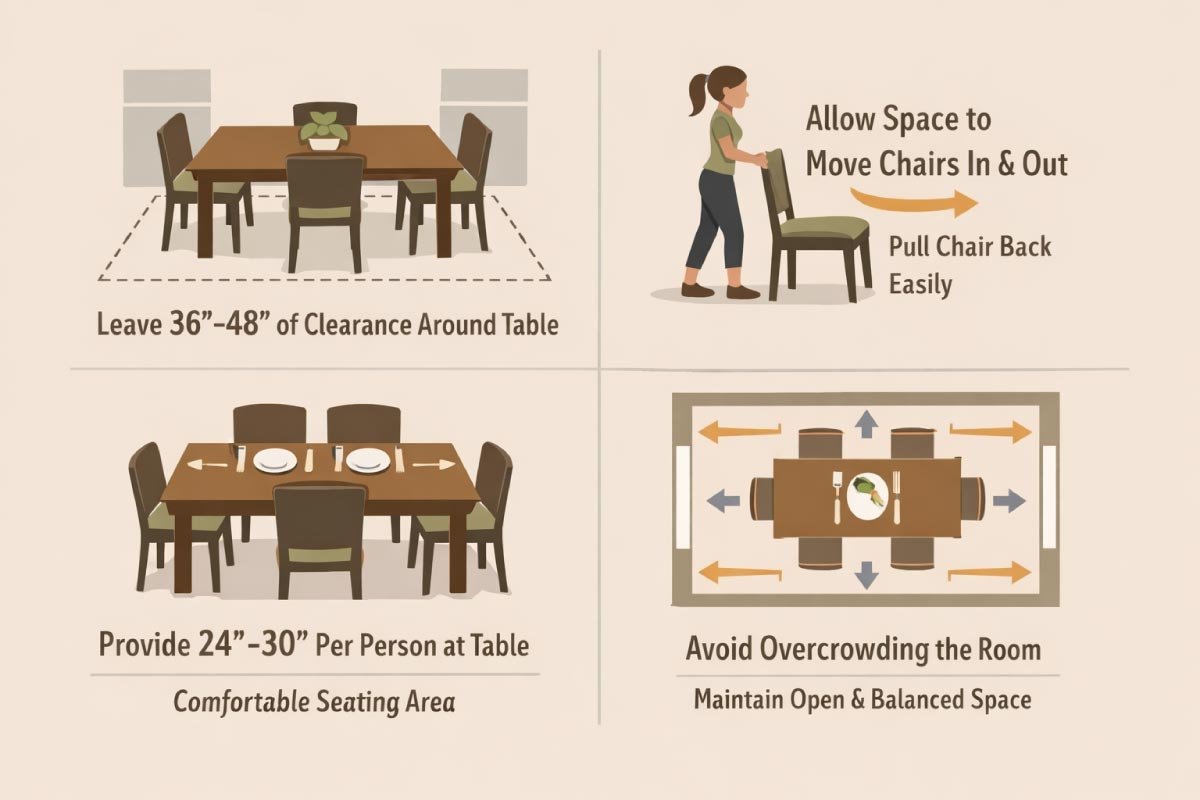
Choosing the right dining table size depends on your room dimensions to ensure comfort, accessibility, and functionality. Proper spacing allows diners to move freely and chairs to fit without crowding. Understanding clearance requirements helps maintain a balanced layout and prevents the dining area from feeling cramped or cluttered.
Minimum Space Requirements
-
36 inches: For basic movement and chair use
-
42–48 inches: For high-traffic areas or walkways
-
48+ inches: For open-plan layouts
Recommended Dining Table Size by Room Size
Choosing the right dining table also depends on your room size. Properly scaled tables allow comfortable seating while maintaining enough space for movement around the table. This guide links room dimensions with ideal table sizes, helping you select a dining table that fits perfectly without overcrowding or restricting traffic flow.
| Room Size (ft) | Ideal Table Size | Seating Capacity |
|---|---|---|
| 8 × 8 | 30–36 in round | 2–4 |
| 10 × 10 | 48 in square / 48–54 in rectangle | 4 |
| 12 × 12 | 60 in rectangle / 54 in round | 6 |
| 14 × 14 | 72 in rectangle / oval | 6–8 |
| 16 × 16+ | 84–96 in rectangle | 8–10 |
Always measure doorways and pathways to ensure the table can be moved into the room easily.
Dining Table Size and Chair Spacing
Proper dining table and chair spacing ensures a comfortable and enjoyable dining experience. Adequate room between chairs, tables, and walls allows diners to sit, move, and interact freely without feeling cramped. Paying attention to these measurements creates a functional, inviting, and well-organized dining area.
-
Chair width: 18–20 inches
-
Space per person: 24 inches of table edge
-
Chair clearance from wall: Minimum 36 inches
For armchairs, allow slightly more space to avoid crowding. Benches can save space and accommodate more people when needed.
Extendable Dining Tables
Extendable dining tables provide versatility for homes that require both everyday functionality and occasional extra seating. With removable leaves or panels, these tables adapt to different group sizes, making them perfect for hosting guests without permanently occupying extra space. They combine convenience, style, and practicality in one solution.
Benefits of Extendable Tables
-
Space-saving for daily use
-
Flexible seating for guests
-
Available in multiple styles and shapes
Extendable Dining Table Size Guide
Extendable dining tables provide flexibility for everyday use and larger gatherings. By adjusting the table length, you can accommodate more guests without permanently occupying extra space. Understanding the typical closed and extended dimensions helps you choose a table that balances functionality, style, and comfortable seating for any occasion.
| Table Type | Closed Length | Extended Length | Seating Capacity |
|---|---|---|---|
| Small Extendable | 48 in | 60–66 in | 4–6 |
| Medium Extendable | 60 in | 78–84 in | 6–8 |
| Large Extendable | 72 in | 96–120 in | 8–10 |
These tables offer excellent versatility without compromising style.
Dining Table Size for Different Lifestyles
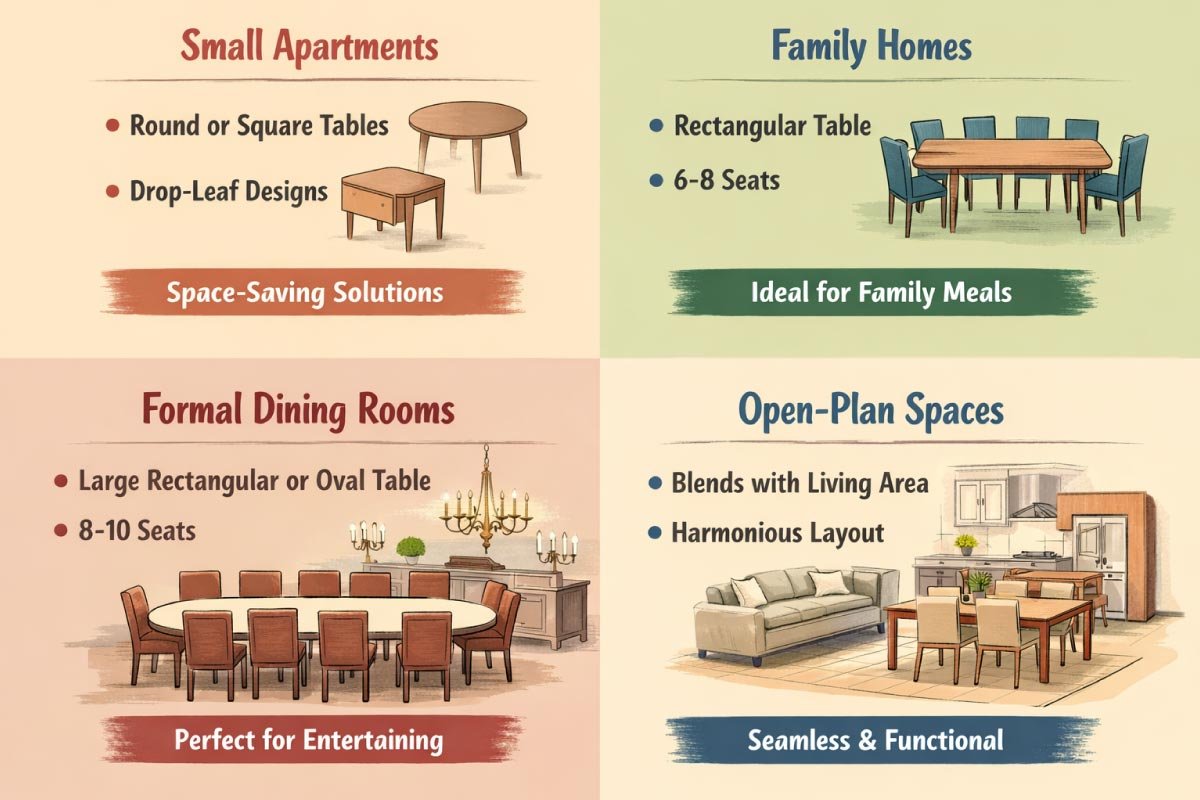
1. Small Apartments
Living in a small apartment requires smart furniture choices to optimize space without sacrificing style or functionality. Prioritize pieces that are versatile, compact, and easy to move. Focus on designs that offer storage or adaptability, making your living area feel open, organized, and comfortable.
-
Round or square tables
-
Drop-leaf designs
These maximize seating while minimizing floor space.
2. Family Homes
For family homes, dining spaces need to balance comfort, functionality, and style. Choose tables that accommodate everyday meals and social gatherings. Prioritize shapes and sizes that allow everyone to sit together comfortably while keeping the room spacious and inviting.
-
Rectangular tables with 6–8 seats
These are ideal for daily family meals and occasional gatherings.
3. Formal Dining Rooms
Formal dining rooms demand elegance, space, and comfort for hosting guests. Opt for tables that make a statement while providing ample seating. Consider designs that balance style and functionality, allowing smooth movement around the room and enhancing the overall dining experience.
-
Large rectangular or oval tables with 8–10 seats
These work best for formal entertaining and dinner parties.
4. Open-Plan Spaces
In open-plan homes, dining areas need to blend seamlessly with living and kitchen zones. The table should define the space without overwhelming it. Focus on size, shape, and placement that complement surrounding furniture while maintaining open pathways and ensuring comfort for everyday use and entertaining.
-
Choose a size that complements nearby furniture and maintains clear walkways.
Common Mistakes to Avoid When Choosing Dining Table Size
Selecting the wrong dining table can lead to discomfort, cramped spaces, or wasted money. Awareness of common pitfalls helps ensure your table fits both your room and lifestyle. Focus on clearance, seating, comfort, and flexibility to create a functional and inviting dining area.
-
Ignoring room clearance and walkways
-
Choosing style over comfort
-
Not accounting for chair size
-
Overestimating seating needs
-
Forgetting expandable options
Avoiding these mistakes ensures long-term satisfaction with your dining table.
Final Thoughts
Selecting the right dining table size is essential for comfort, functionality, and visual harmony. By understanding standard dimensions, seating requirements, room spacing, and table shapes, you can make an informed decision that suits your home and lifestyle.
Use this dining table size guide as a reference before purchasing, measure your space carefully, and consider how you use your dining area daily. The right dining table will not only fit your room perfectly but also create a welcoming space for meals, conversations, and memories.
Discover More:

I am Engineer Hassan, a professional engineer with over 15 years of experience in measurements, design accuracy, and furniture, appliance, and home product sizing. Through Size Helper, I provide research-based guides and trending 2026 home design ideas for living rooms, bedrooms, sofas, wall décor, fashion, and sports—helping users make confident, informed decisions. Every guide is written with real expertise, verified data, and a commitment to quality, usability, and style.