
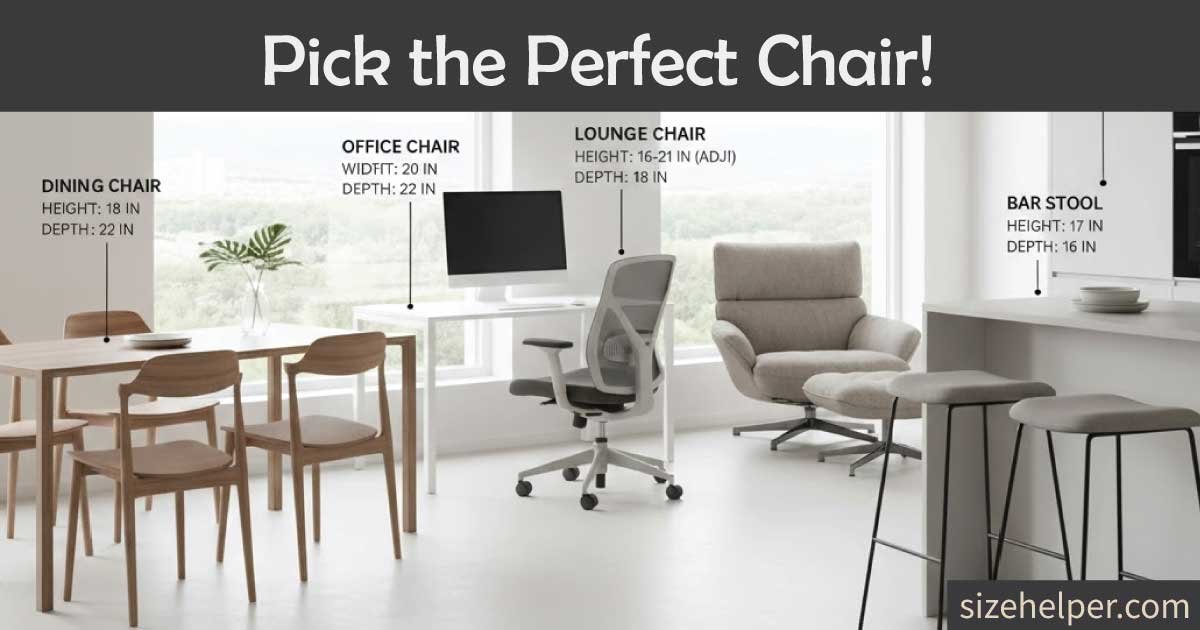
It might sound easy to say that the selection of the appropriate chair is connected with the dissimilarity of the comfort, position, and health condition. Regardless of whether it is a dining chair, a workspace chair or a recreational chair, the size and dimensions of a chair influence the level of support it gives to your body and its fit into your environment. An oversized chair may be uncomfortable and cause bad posture, whereas the oversized one may be bumped and disrupt the balance of the room. The knowledge of the chair size, seat height, backrest angles, and design would make the experience of sitting very comfortable and enjoyable.
Why Chair Size Matters
A chair is not only a piece of furniture, it is a major factor that influences the posture, circulation, and comfort during the day. All the right sizes of chairs help to relieve fatigue, avoid back and neck pains, and increase work stations. In the case of homes, the chair is the perfect match to table levels, offers ergonomic comfort, and enhances aesthetic room balance. Chair size therefore is very important in choosing the right chair to use based on health and functionality.
Understand Different Chair Types
There are numerous types of chairs with special consideration of their size. Dining chairs are intended to be used in a normal size table and can be of varying depth and width of the seat. Chairs in the office can provide comfort and relaxation, whereas the lounge chairs emphasize the ergonomic features and can be adjusted. The dimensions of bar stools, accent chairs, recliners, and others influence their usability and location. Knowledge of the use of the chair assists in establishing the optimal size of the chair to use.
Common Chair Types and Standard Dimensions
| Chair Type | Seat Height (inches) | Seat Width (inches) | Seat Depth (inches) | Notes |
|---|---|---|---|---|
| Dining Chair | 17 – 19 | 16 – 20 | 16 – 18 | Standard for table seating |
| Office Chair | 16 – 21 | 18 – 20 | 16 – 18 | Adjustable, ergonomic support |
| Lounge Chair | 15 – 18 | 20 – 24 | 18 – 22 | Designed for relaxation |
| Bar Stool | 28 – 30 | 15 – 18 | 15 – 17 | For high counters |
| Accent Chair | 17 – 19 | 18 – 22 | 16 – 20 | Stylish, decorative seating |
Measure Your Seating Area
Precise sizing of the space available will help fit in the chairs well and have a lots of movement. Measuring the distance between tables, desks, or walls, and the total floor area. In the case of dining chairs, make sure that there is 12 inches of space between the seat and the table of legroom. In the case of office or lounge chairs, swivel space and recline space should be considered. The correct measurements ensure that there is no overcrowding and accessibility.
Recommended Clearance Around Chairs
| Chair Type | Clearance Behind Chair (inches) | Clearance Side to Side (inches) |
|---|---|---|
| Dining Chair | 24 – 30 | 12 – 15 |
| Office Chair | 36 – 42 | 24 – 30 |
| Lounge Chair | 18 – 24 | 18 – 24 |
| Bar Stool | 12 – 15 | 8 – 12 |
| Accent Chair | 18 – 24 | 12 – 18 |
Determine Seat Height
One of the most important consideration areas is seat height which should be comfortable. Office chairs are adjustable between 16 and 21 inches whereas the standard dining chairs are 17 19 inches. The lounge chairs are usually lower in seat height, approximately 15 -18 inches, so that the sitter can sit in a relaxed position. Adjusting the height of the seat to the height of the table or desk is to provide the correct height of the elbows, knees, and posture.
Understand Seat Depth and Width
Seat depth influences the support of your thighs. A shallow seat will not be supportive enough and a deep seat will overstretch the lower back. The seat depths of standard dining and office chairs are 16-18 inches, and the seat depth of the lounge and accent chairs is 18-22 inches. The width of the seat is also a matter of lateral comfort that fits all types of bodies. Lounge chairs should be wider and should be used in larger spaces whereas narrow ones should be used in small spaces.
Recommended Chair Seat Dimensions by Type
| Chair Type | Seat Width (inches) | Seat Depth (inches) | Ideal User Height (ft) |
|---|---|---|---|
| Dining Chair | 16 – 20 | 16 – 18 | 4’10” – 6’2” |
| Office Chair | 18 – 20 | 16 – 18 | 5’0” – 6’2” |
| Lounge Chair | 20 – 24 | 18 – 22 | 4’10” – 6’4” |
| Bar Stool | 15 – 18 | 15 – 17 | 5’0” – 6’2” |
| Accent Chair | 18 – 22 | 16 – 20 | 5’0” – 6’2” |
Backrest Height and Angle
The backrest is very important in support of ergonomics. The standard chair backrest heights are depending on the chair type: the dining chair has a backrest 32-34 inches above the ground, office chairs can be higher with lumbar support, and the lounge chair is lower with angled backrest to relax. The backrest angle affects the posture; a 100-110 degree angle is usually comfortable when eating, and a 110-120 degree angle is comfortable in lounges.
Armrest Considerations
Armrests are comfortable but must be sized. Armrests are available on a standard office chair and adjust between 710 inches to the seat, whereas lounge and accents do not have adjustable armrests. Make sure that the armrests are high enough so that the elbows can lie flat without ramming shoulders or flattening the torso. Footrests can be removed or adjusted to suit different seating requirements.
Chair Materials and Cushioning
The materials and cushioning influence the comfort and durability. Upholstered chairs are more comfortable, whereas wooden or metal ones are firmer. The padding of seats needs to be thick to take away the pressure but need to be firm to keep the posture. The material also affects the sizes of the chair since the denser the padding, the higher the seat and the depth of the seat is raised slightly. This is because taking these factors into consideration will result in a balance of style, comfort, and ergonomics.
Chair Material Considerations
| Material | Cushioning Needed | Comfort Level | Durability |
|---|---|---|---|
| Wood | Optional | Medium | High |
| Metal | Optional | Medium | Very High |
| Upholstered | Yes | High | Medium |
| Plastic | Optional | Low-Medium | Medium |
| Leather | Yes | High | High |
Common Mistakes to Avoid
A lot of individuals commit mistakes in the selection of chairs. Among the errors made is choosing a chair without regard to the height of the table and thus sitting on it uncomfortably. The other one is failing to take care of space clearance that may hamper movement. Both too thick and too thin seats can be uncomfortable in the long-term. Measurements of the correct size, dimensions, and ergonomics will help avoid these problems.
Mini List: Key Factors for Select Chair Size
The size of the chair must be in accordance with the room plan. Wherever there is a dining table, there should be sufficient distance between two or more chairs. In offices, offer space in swivel and rotation. The lounge chairs and accent chairs must make walkways and have visual balance. Modest sizing makes the chair part of the room, so that it does not look crammed.
Matching Chairs to Room Layout
The size of the chair must be in accordance with the room plan. Wherever there is a dining table, there should be sufficient distance between two or more chairs. In offices, offer space in swivel and rotation. The lounge chairs and accent chairs must make walkways and have visual balance. Modest sizing makes the chair part of the room, so that it does not look crammed.
Conclusion
Choose the appropriate chair size is important to be comfortable, in good position, and functional in other words. Through knowledge of the type of chairs to be used, the space available to be used, and the dimensions of the seats, it is possible to select chairs that are not only comfortable but also pleasing to the eye. Do not make typical errors like not following the clearance, the mismatched table height, or seat depth. A furnished chair is also a good chair to enhance everyday comfort, maintain a proper posture position, and match your home or office setup. Proper planning guarantees an ergonomic and enjoyable seating experience so that a chair in your home or office would be just right in its use.
📚 Bookshelf Size Guide makes choosing the right shelves for small and large rooms simple. With easy-to-read charts and practical tips, you can plan your space efficiently and maximize storage. Read the full post to discover the perfect bookshelf dimensions for your home and avoid sizing mistakes.

I am Engineer Hassan, a professional engineer with over 15 years of experience in measurements, design accuracy, and furniture, appliance, and home product sizing. Through Size Helper, I provide research-based guides and trending 2026 home design ideas for living rooms, bedrooms, sofas, wall décor, fashion, and sports—helping users make confident, informed decisions. Every guide is written with real expertise, verified data, and a commitment to quality, usability, and style.