
Choosing the right window blinds is more than a matter of aesthetics—it’s about function, fit, and enhancing your space. Ill-fitting blinds can compromise privacy, block sunlight incorrectly, or make a room look unbalanced. To achieve the perfect fit, understanding blinds sizes and types is crucial. This comprehensive guide will walk you through measurements, styles, and practical tips to ensure your blinds complement your windows perfectly.
Why Blinds Size Matters
Blinds that are too small or too large can drastically affect the look and functionality of a room. Too narrow blinds may let sunlight seep through, compromising privacy and glare control, while overly wide blinds may overlap awkwardly or prevent smooth operation. Similarly, height is critical for full coverage without dragging or leaving gaps.
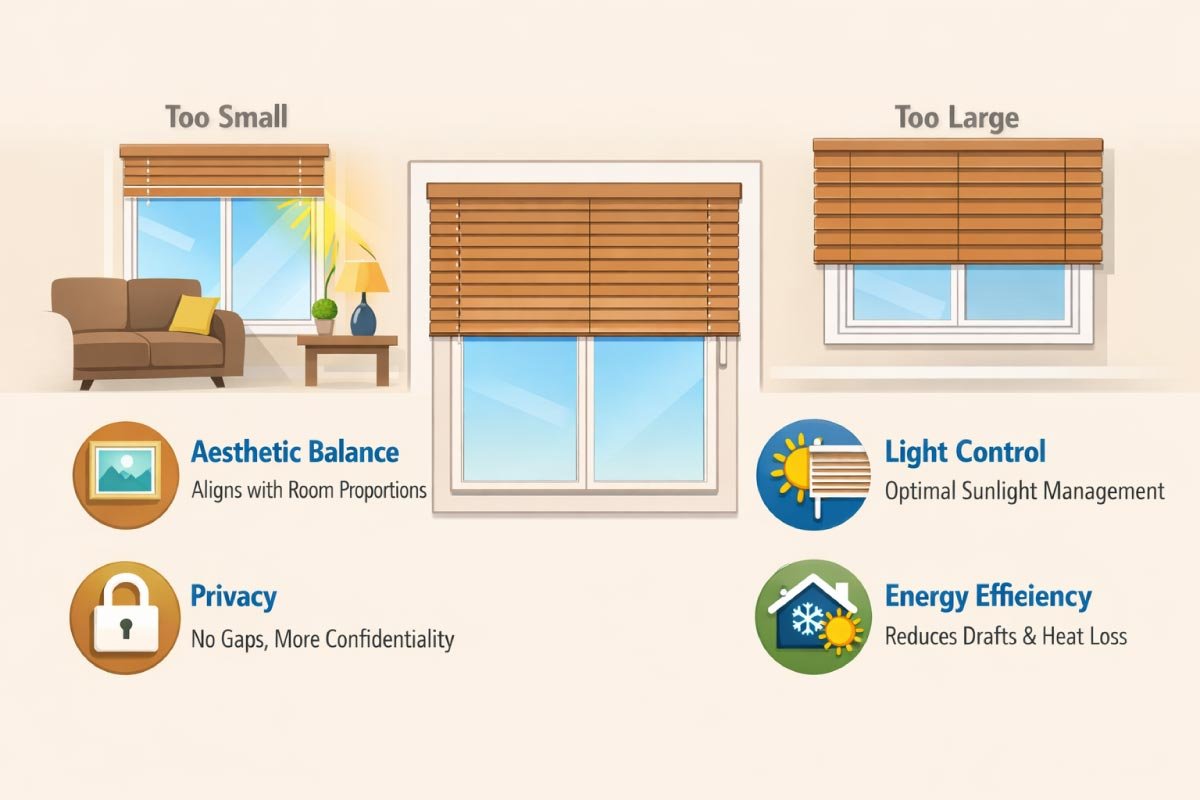
Correctly sized blinds improve:
-
Aesthetic Balance: Aligns with your window frame and room proportions.
-
Light Control: Ensures optimal sunlight management.
-
Privacy: Prevents gaps that compromise confidentiality.
-
Energy Efficiency: Minimizes drafts and heat transfer.
Types of Blinds and Sizing Considerations
Choosing the right blinds goes beyond style—it’s about functionality, light control, and fit. Different types of blinds have unique mechanisms, materials, and installation requirements, making accurate measurements crucial. Understanding each type ensures proper coverage, smooth operation, and aesthetic appeal. Below is a guide to seven popular blinds and their sizing considerations to help you make informed choices.
1. Venetian Blinds
Venetian blinds feature horizontal slats made of metal, wood, or faux wood. For an inside mount, measure the exact width of the window frame to ensure a snug fit. For an outside mount, add a few extra inches on each side to block light effectively and enhance privacy.
2. Roller Blinds
Roller blinds are simple fabric rolls that pull down over the window. Measure slightly wider than the window for outside mounts to prevent gaps. For inside mounts, ensure the width fits precisely within the frame. Consider the drop length, allowing the blind to fully cover the window for optimal light control.
3. Roman Blinds
Roman blinds use soft fabric that folds into elegant pleats when raised. Accurate width and height measurements must include allowances for fold stacking. Outside mounts need extra width and drop length for full coverage. Proper sizing prevents gaps and ensures the folds fall neatly for a polished, uniform appearance.
4. Vertical Blinds
Vertical blinds are ideal for sliding doors or large windows. Each vertical slat must align precisely with the window height and width for smooth operation. Measure from top of the frame to the floor or sill, and confirm the total width accommodates all slats without crowding or excessive gaps for a seamless look.
5. Cellular / Honeycomb Blinds
Cellular blinds provide excellent insulation with a unique honeycomb structure. Exact width and height measurements ensure maximum energy efficiency and a clean fit. Inside mounts should be precise for a snug seal, while outside mounts require additional coverage. Correct sizing prevents light leaks and optimizes thermal performance in any room.
6. Pleated Blinds
Pleated blinds feature fabric folded into crisp, accordion-like pleats. Accurate measurements for width and drop are crucial, especially for inside mounts, to avoid uneven folds. Outside mounts need extra width to fully cover the window. Proper sizing ensures smooth raising and lowering, while maintaining the structured, decorative look.
7. Panel Track Blinds
Panel track blinds are sliding fabric panels often used for wide windows or patio doors. Each panel’s width must be measured carefully to ensure overlap and smooth sliding. Height measurements should allow the panels to fully cover the window or door opening. Correct sizing guarantees functionality, prevents gaps, and creates a clean, modern aesthetic.
How to Measure for Blinds
Measuring for blinds is the first and most crucial step in ensuring a perfect fit and smooth operation. Accurate measurements prevent gaps, overlapping, or uneven installation. Whether you prefer inside or outside mounts, understanding window dimensions and following systematic measurement steps guarantees functionality and aesthetic appeal. Proper planning also saves time, effort, and costly adjustments.
1. Inside Mount vs Outside Mount
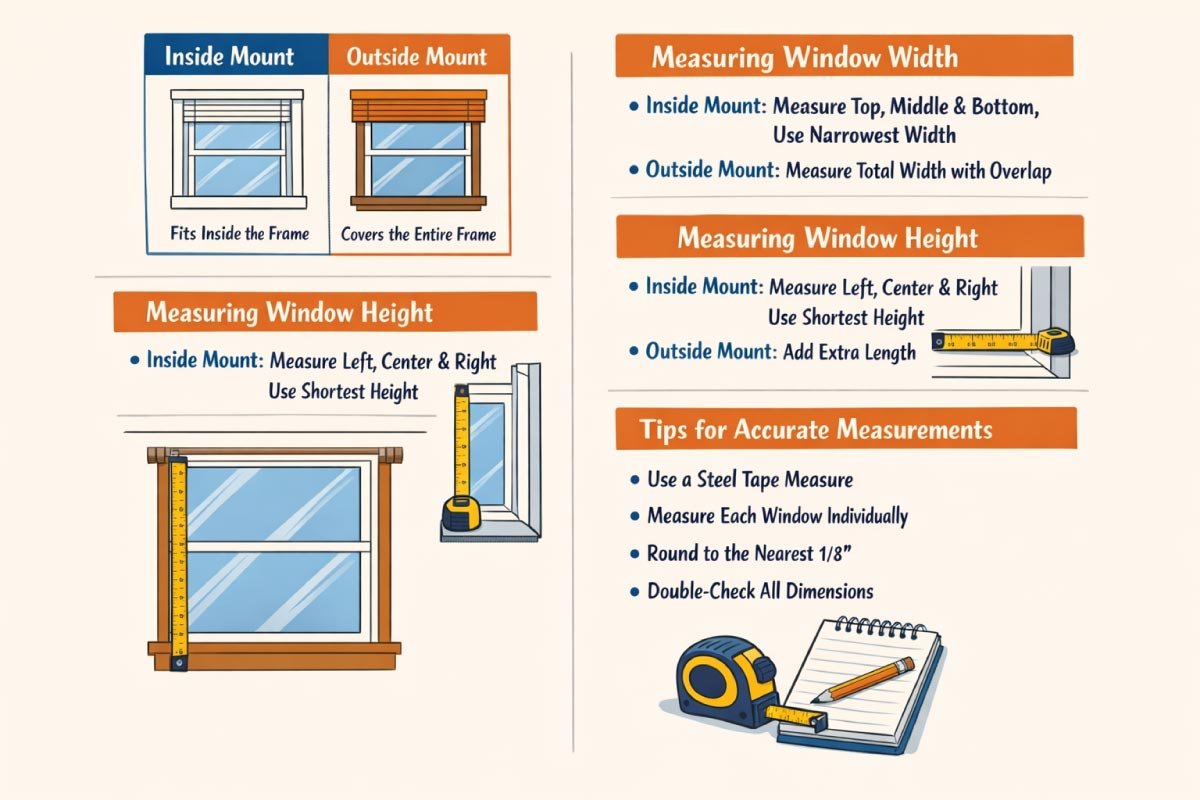
Choosing between inside and outside mounts impacts both appearance and measurement technique. Inside mount blinds fit snugly within the window frame, creating a clean, minimalist look but requiring precise width, height, and depth measurements. Outside mount blinds cover the frame completely, ideal for shallow windows or when you want to visually enlarge small windows.
2. Measuring Window Width
Accurate width measurement is critical for a proper fit. For inside mounts, measure the window at the top, middle, and bottom, and always use the narrowest width to avoid tight or unusable fits. For outside mounts, measure the total width you want the blinds to cover, including any extra overlap for full coverage.
3. Measuring Window Height
Height measurement determines how far your blinds will extend. Measure the inside frame from top to sill or desired endpoint at the left, center, and right. Choose the shortest height for inside mounts to ensure smooth operation. For outside mounts, add extra length for full coverage and to prevent light gaps at the bottom.
4. Measuring Window Depth
Depth is essential for inside-mounted blinds to fit without interference. Measure the distance from the front of the window frame to the glass or obstruction. Ensure the chosen blind type can operate within this depth. Insufficient depth may prevent mounting brackets from fitting properly, causing installation issues or limited movement.
5. Tips for Accurate Measurements
Use a steel tape measure for precision and measure each window individually, even if sizes appear identical. Record dimensions carefully, rounding to the nearest 1/8 inch. Consider window trim, handles, or obstructions. Double-check measurements before ordering. Taking time now ensures perfectly fitted blinds, smooth operation, and an attractive, professional finish in every window.
Standard Blinds Sizes by Window Type
Choosing the right blinds size is crucial for both function and style. Properly fitted blinds enhance privacy, light control, and the overall look of each room. This table provides standard size ranges for different window types, helping you select the perfect fit for kitchens, bathrooms, bedrooms, living rooms, and sliding doors.
| Window Type | Typical Width (inches) | Typical Height (inches) | Notes |
|---|---|---|---|
| Small Kitchen | 24–36 | 36–48 | Inside mount preferred |
| Bathroom | 18–30 | 36–48 | Moisture-resistant materials ideal |
| Bedroom | 30–60 | 48–72 | Blackout options recommended |
| Living Room | 36–72 | 48–84 | Consider light control options |
| Sliding Door | 72–120 | 72–96 | Vertical blinds recommended |
Blinds Sizes by Type
Choosing the right blind size ensures both functionality and aesthetic appeal. Each style—whether roller, Venetian, or Roman—has unique measurement needs. Accurate sizing prevents light gaps, ensures smooth operation, and enhances your room’s look. Below is a breakdown to guide your choices.
Venetian Blinds
Venetian blinds combine style and functionality, allowing you to control light and privacy with ease. Available in various materials like wood, aluminum, and faux wood, they suit both modern and classic interiors. Their slatted design makes them adaptable to most window sizes. They work well for most window sizes.
Venetian Blinds Sizes
Venetian blinds offer versatile light control and a sleek look for any room. Choosing the right width, slat size, and mount type ensures smooth operation and aesthetic appeal. This table outlines recommended Venetian blind sizes for different window widths, along with helpful tips for wider windows and proper installation.
| Window Width (inches) | Recommended Blind Width (inches) | Slat Size (mm) | Mount Type |
|---|---|---|---|
| 24–36 | Exact width | 25/35/50 | Inside |
| 36–60 | Exact width | 25/50 | Inside or Outside |
| 60–72 | Add 1–2 inches | 50 | Outside |
| 72–96 | Add 2–4 inches | 50 | Outside |
Tip: Wider windows may benefit from two separate blinds for easier operation.
Roller Blinds
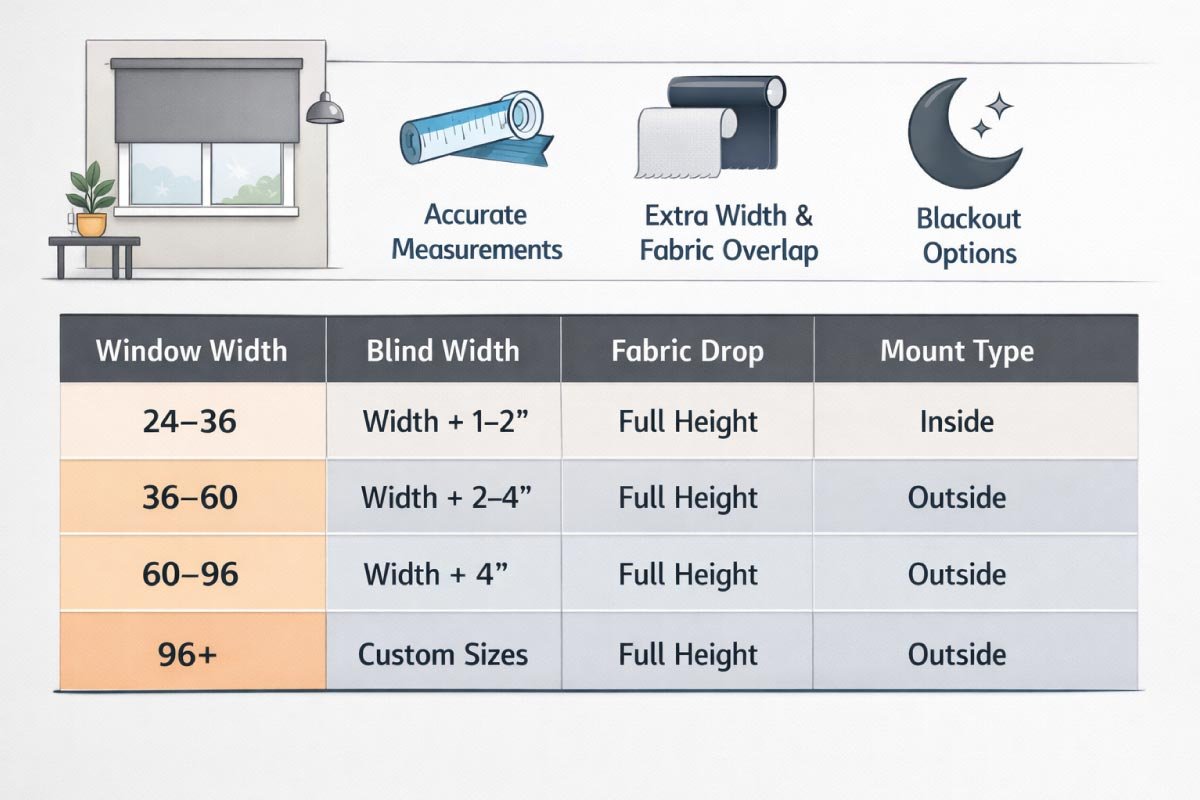
Roller blinds offer a clean, minimalistic look and are ideal for modern spaces. Accurate measurements are essential to prevent light gaps and ensure smooth operation. For blackout or patterned fabrics, extra width and fabric overlap may be needed. They also need sufficient fabric overlap for blackout options.
Roller Blinds Sizes
| Window Width (inches) | Blind Width (inches) | Fabric Drop (inches) | Mount Type |
|---|---|---|---|
| 24–36 | Width + 1–2 | Full height | Inside |
| 36–60 | Width + 2–4 | Full height | Outside |
| 60–96 | Width + 4 | Full height | Outside |
| 96+ | Custom sizes | Full height | Outside |
Roman Blinds
Roman blinds add elegance with soft, cascading folds that enhance any room’s decor. Because of their fold design, precise measurements are crucial to ensure proper drape and coverage. Allowing extra fabric for the folds guarantees full functionality and a polished look. The width is slightly wider than the window frame.
Roman Blinds Sizes
| Window Width (inches) | Recommended Width (inches) | Fold Allowance (inches) | Mount Type |
|---|---|---|---|
| 24–36 | Width + 2 | 3–4 | Inside |
| 36–60 | Width + 3 | 4–5 | Inside/Outside |
| 60–72 | Width + 4 | 5–6 | Outside |
| 72–96 | Custom | 6+ | Outside |
Vertical Blinds
Vertical blinds offer a practical solution for tall windows and sliding doors, providing excellent light control and easy operation. Proper measurements are essential to ensure the panels glide smoothly and cover the entire window. Accurate width and height ensure both functionality and a neat appearance. Width and height must match the window for smooth sliding.
Vertical Blinds Sizes
Vertical blinds are ideal for tall windows and sliding doors, offering adjustable light control and easy maintenance. Choosing the right slat width, height, and mount type ensures both functionality and style. This table outlines recommended vertical blind sizes for different window widths, including guidance for larger or custom installations.
| Window Width (inches) | Slat Width (inches) | Recommended Height (inches) | Mount Type |
|---|---|---|---|
| 36–60 | 3.5 | 48–72 | Inside |
| 60–96 | 3.5–4 | 72–96 | Outside |
| 96+ | 4–5 | Custom | Outside |
Cellular / Honeycomb Blinds
Cellular blinds, also called honeycomb blinds, combine style with energy efficiency by trapping air in their unique cells. Accurate measurements are essential, as even small gaps can compromise insulation and light control. Proper sizing ensures maximum energy savings and a clean, tailored look. Even minor gaps reduce their efficiency.
Cellular Blinds Sizes
Cellular blinds provide excellent insulation and light control, making them both energy-efficient and stylish. Selecting the correct width, cell size, and mount type ensures optimal performance and a clean fit. This table details recommended cellular blind sizes for various window widths, including tips for wider windows and outside mounting.
| Window Width (inches) | Recommended Blind Width (inches) | Cell Size (inches) | Mount Type |
|---|---|---|---|
| 24–36 | Exact width | 1/2, 3/4 | Inside |
| 36–60 | Exact width | 3/4, 1 | Inside |
| 60–72 | Add 1–2 inches | 1 | Outside |
| 72–96 | Add 2–4 inches | 1–1.5 | Outside |
Discover More:
Tips for Perfect Fit
Getting the perfect blind fit combines careful measurement with thoughtful planning. Small errors can cause gaps, poor operation, or a mismatched look. Following key guidelines ensures your blinds function smoothly, look tailored, and complement your space.
-
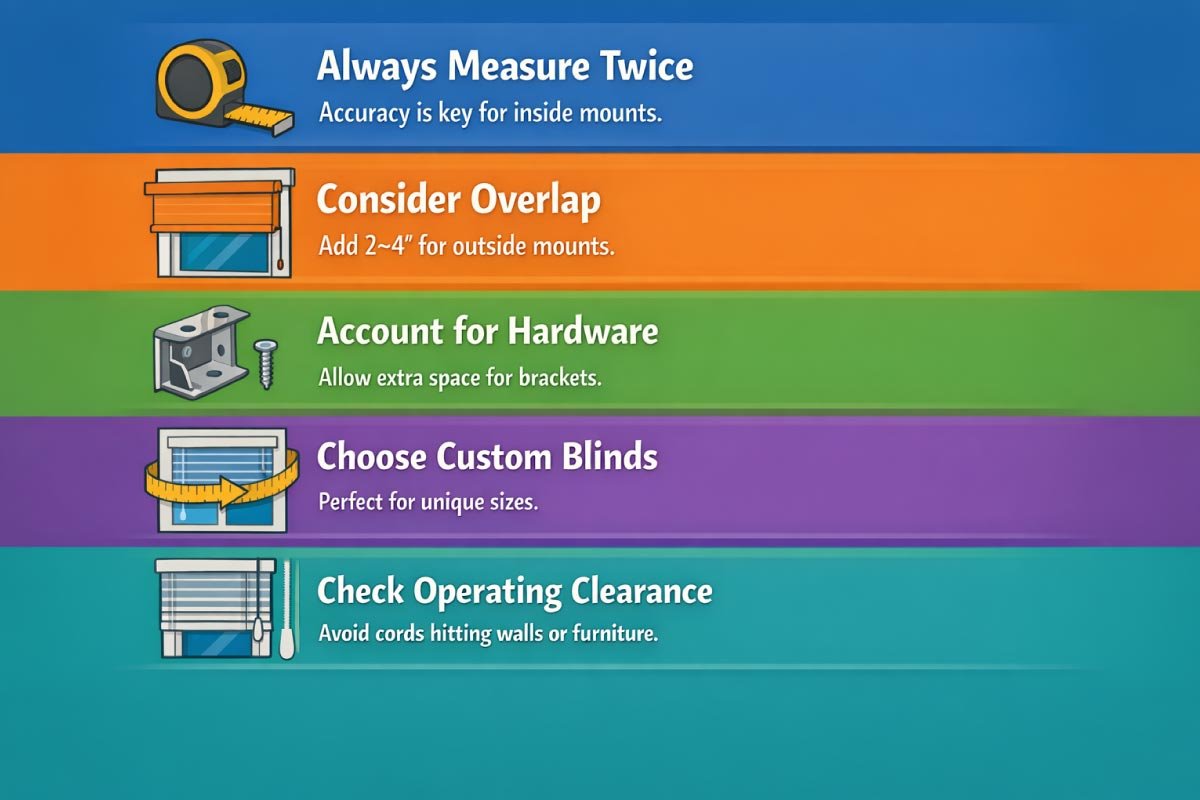
Always Measure Twice: Accuracy is key for inside mounts.
-
Consider Overlap: For outside mounts, adding 2–4 inches prevents gaps.
-
Account for Hardware: Some blinds require extra clearance for brackets.
-
Choose Custom Blinds for Unique Sizes: Many windows are non-standard; custom blinds ensure a perfect fit.
-
Check Operating Clearance: Ensure cords or wands won’t hit walls, handles, or furniture.
Common Blinds Mistakes
Even small errors in choosing or installing blinds can affect both function and appearance. Being aware of common pitfalls helps you avoid light gaps, poor operation, and wasted investment. Proper planning ensures your blinds look seamless and perform as intended.
-
Buying Off-Size Blinds: Ill-fitting blinds can’t be corrected easily.
-
Ignoring Window Depth: Some blinds need at least 2–3 inches of depth for proper mounting.
-
Overlooking Room Function: Blackout blinds for bedrooms, moisture-resistant blinds for bathrooms.
-
Neglecting Stack Height: For roller or Roman blinds, the fabric stack reduces window coverage if ignored.
Final Thoughts
Choosing the correct blinds size transforms both functionality and aesthetics. From Venetian to cellular blinds, each style has specific measurement requirements. Using the charts above ensures you select the right width, height, and slat size, resulting in a perfect window fit. Take your measurements carefully, consider the room’s purpose, and don’t hesitate to opt for custom blinds for non-standard windows. Properly fitted blinds provide comfort, privacy, and style for years to come.
Discover More:

I am Engineer Hassan, a professional engineer with over 15 years of experience in measurements, design accuracy, and furniture, appliance, and home product sizing. Through Size Helper, I provide research-based guides and trending 2026 home design ideas for living rooms, bedrooms, sofas, wall décor, fashion, and sports—helping users make confident, informed decisions. Every guide is written with real expertise, verified data, and a commitment to quality, usability, and style.