
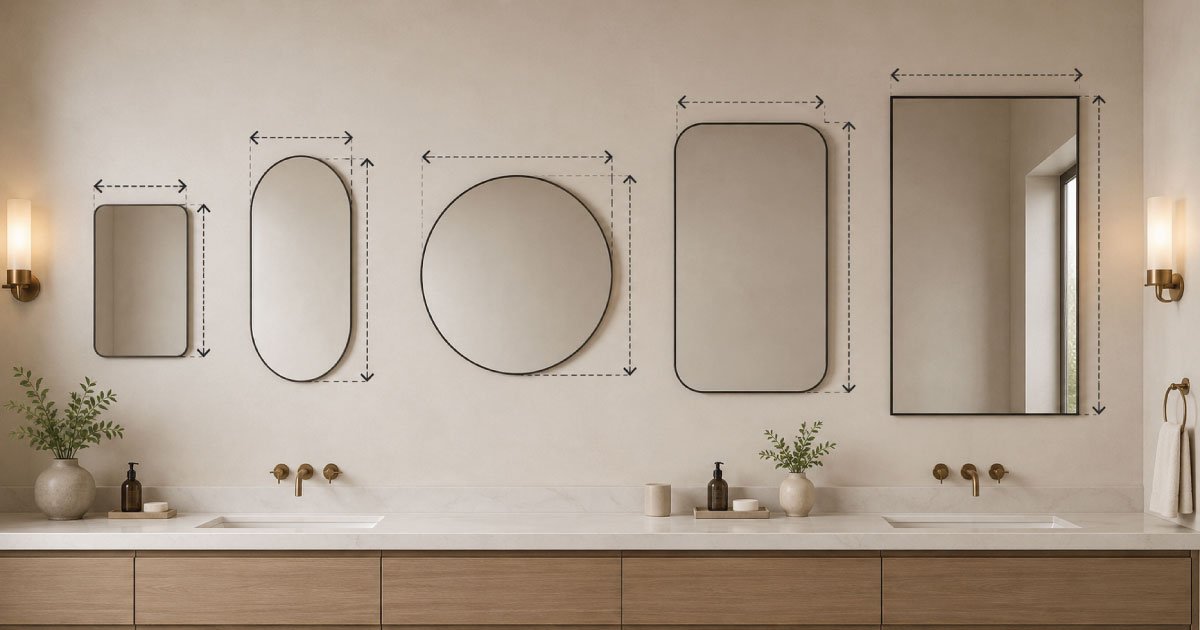
Choosing the right bathroom mirror size is more important than most people realize. A mirror is not just a functional item for grooming; it also plays a major role in lighting, aesthetics, and the overall sense of space in your bathroom. A poorly sized mirror can make even a well-designed bathroom feel awkward, cramped, or unbalanced. On the other hand, the right mirror can visually expand the room and elevate the entire design.
This detailed guide provides a practical bathroom mirror size chart, explains standard sizing rules, and helps you choose the ideal mirror for different vanity widths, bathroom sizes, and design styles.
Why Bathroom Mirror Size Matters
Bathroom mirror sizing is a key element in both functionality and interior aesthetics, influencing how balanced and usable the space feels. The correct mirror size improves visibility, lighting distribution, and overall design harmony. Poor sizing can disrupt proportion, reduce practicality, and negatively affect the visual appeal of the bathroom layout.
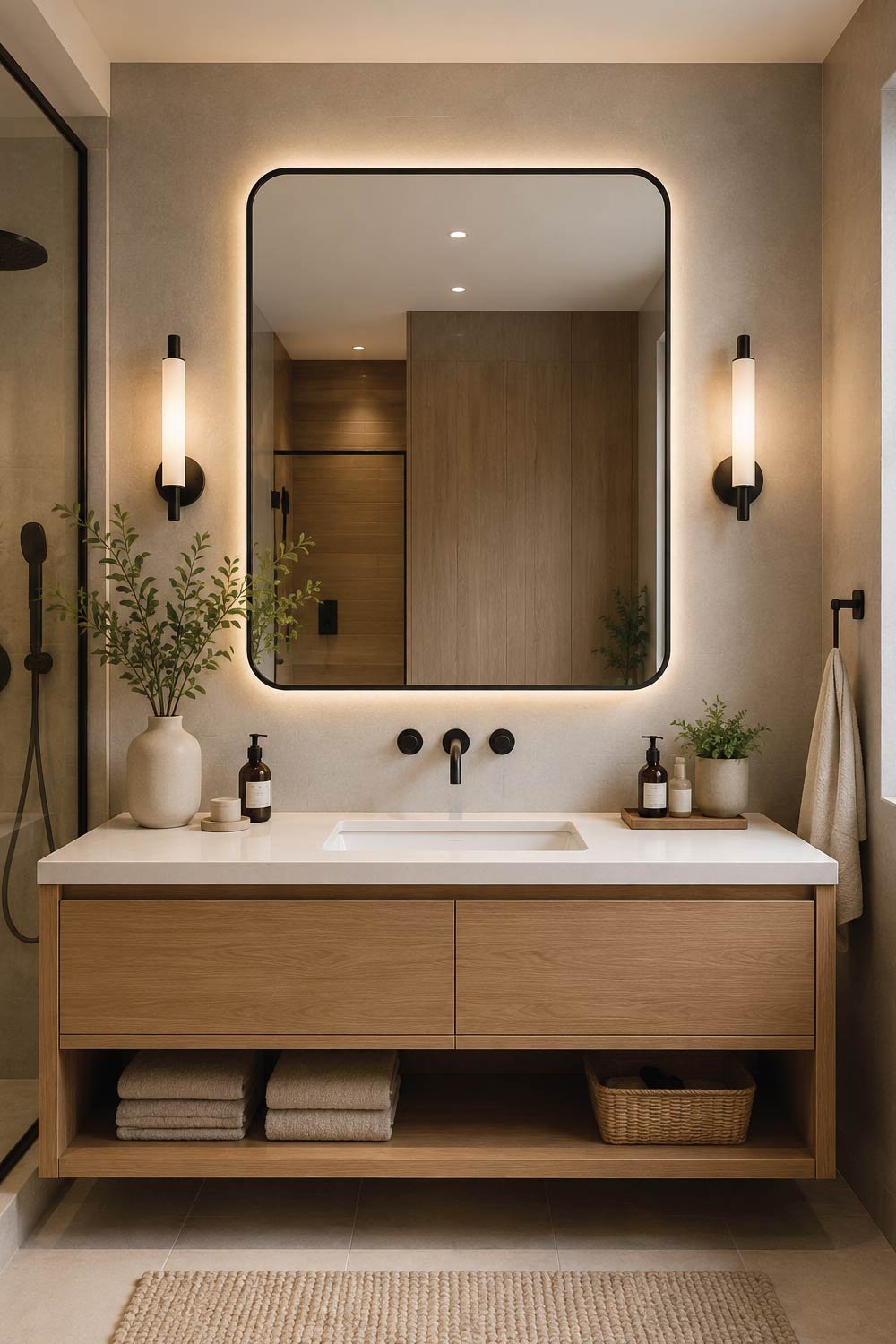
Before diving into measurements, it’s important to understand why mirror sizing is such a critical design decision.
A bathroom mirror impacts:
Visual balance: A mirror that is too small looks disconnected from the vanity, while an oversized mirror can overwhelm the wall.
Lighting efficiency: Properly sized mirrors reflect light better, making small bathrooms appear brighter and larger.
Functionality: The mirror should comfortably fit all users, including height variations within the household.
Design harmony: It ties together the sink, vanity, lighting fixtures, and wall space into one cohesive look.
Brands like IKEA and Kohler often design bathroom mirror collections based on standard vanity widths to simplify selection for homeowners.
Standard Bathroom Mirror Size Guidelines
Bathroom mirror sizing follows a simple design principle focused on proportional balance with the vanity below. This guideline ensures symmetry, visual comfort, and practical usability while maintaining a clean and modern bathroom aesthetic.
A widely accepted rule in interior design is:
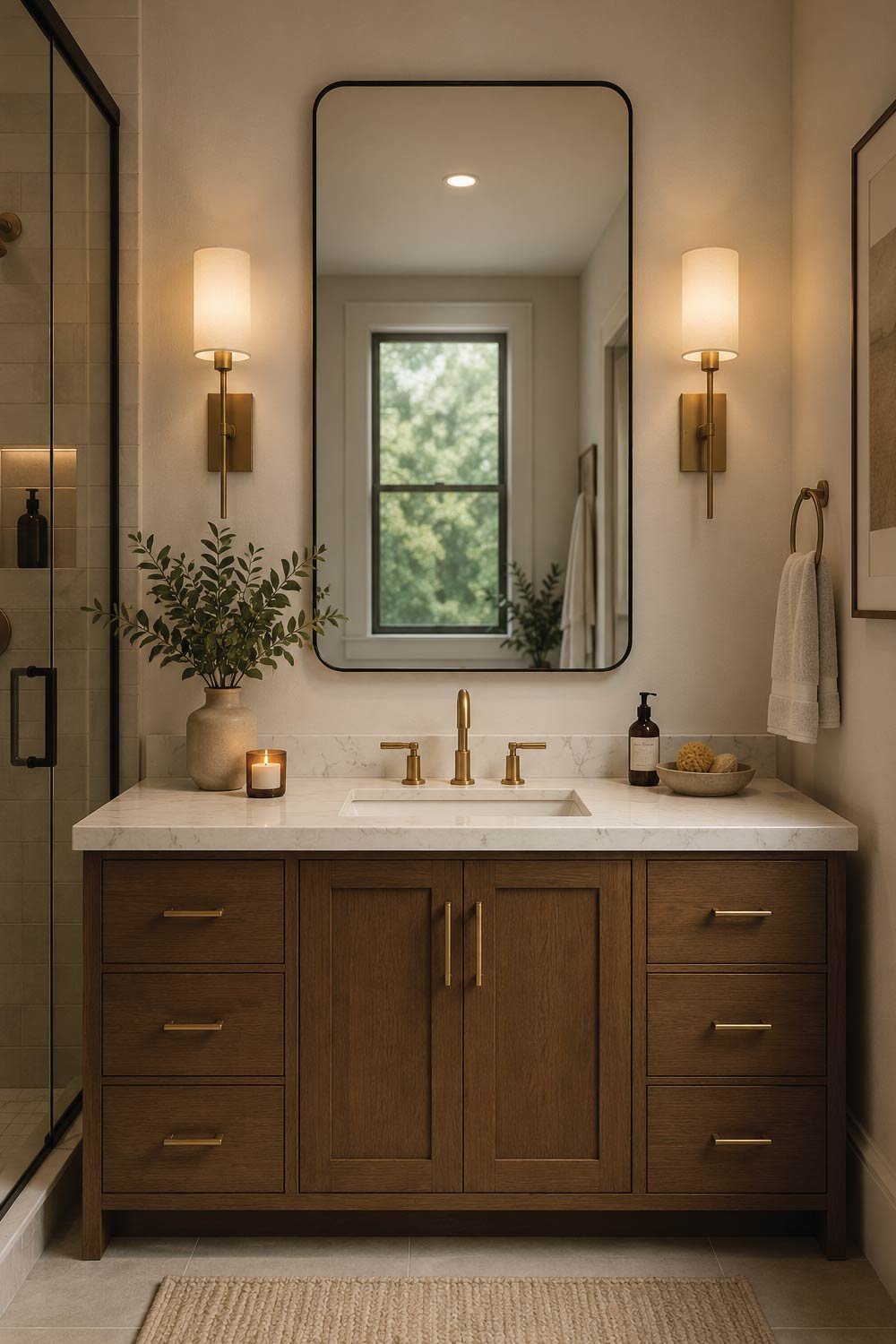
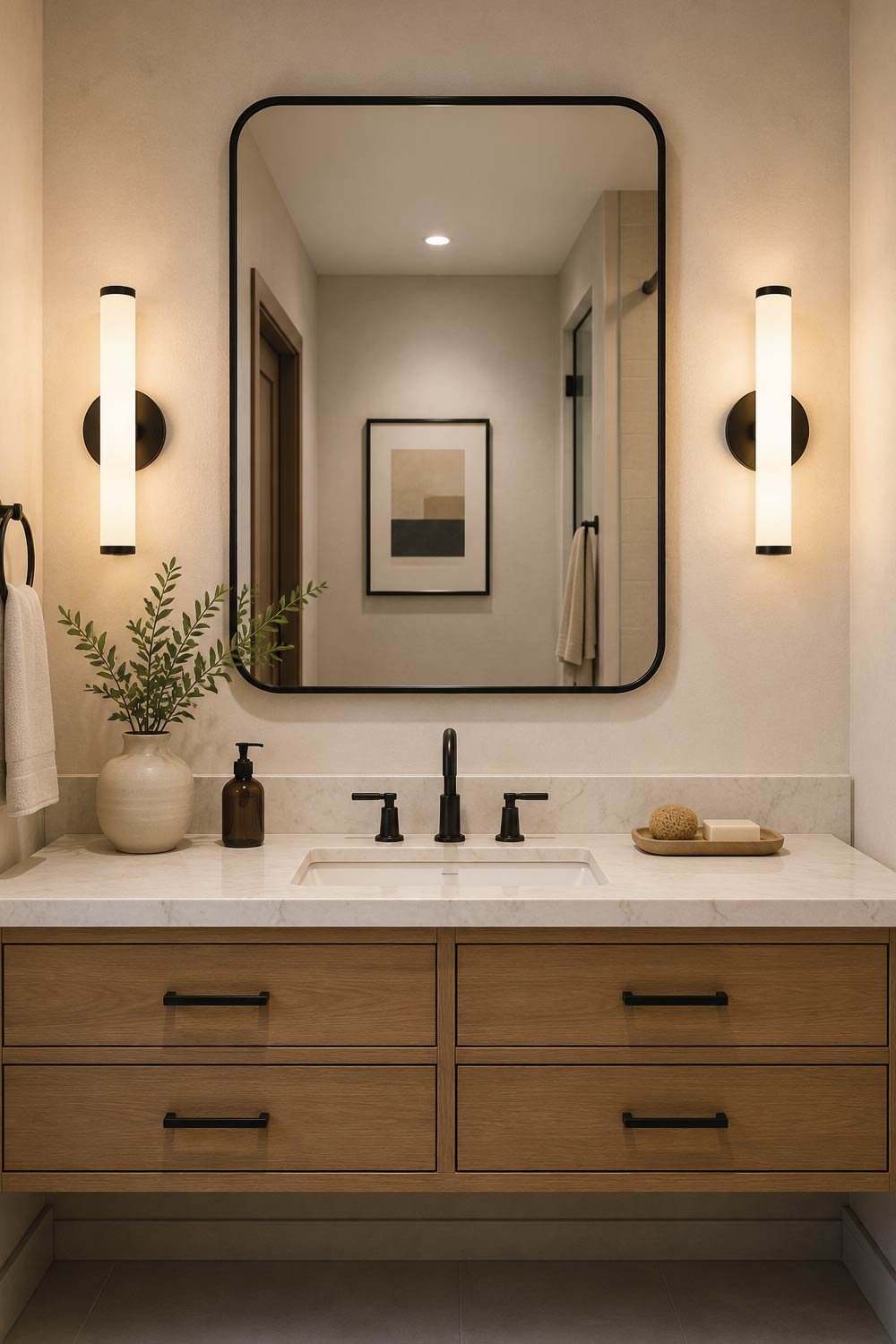
The bathroom mirror should be slightly narrower than or equal to the width of the vanity.This creates a balanced, symmetrical appearance and avoids the mirror “hanging over” the edges of the sink area.
Basic Sizing Formula
This formula helps achieve correct proportions between the vanity and mirror, ensuring both functional usability and visual balance. It is widely used in modern interior design practices for residential bathrooms of all sizes.
- Mirror width = Vanity width − 2 to 6 inches (total reduction)
- Mirror height = 70% to 100% of wall space above vanity (depending on style)
Bathroom Mirror Size Chart (Standard Vanity-Based Guide)
A vanity-based mirror size chart simplifies selection by matching mirror dimensions to common sink and cabinet widths. This ensures proportional design consistency and helps avoid sizing errors during bathroom planning or renovation.
| Vanity Width | Recommended Mirror Width | Recommended Mirror Height |
|---|---|---|
| 18 inches | 14–16 inches | 24–30 inches |
| 24 inches | 20–22 inches | 30–36 inches |
| 30 inches | 26–28 inches | 30–40 inches |
| 36 inches | 32–34 inches | 36–42 inches |
| 42 inches | 38–40 inches | 36–48 inches |
| 48 inches | 44–46 inches | 36–48 inches |
| 60 inches | 56–58 inches (or dual) | 36–48 inches |
Double Vanity Mirror Size Chart
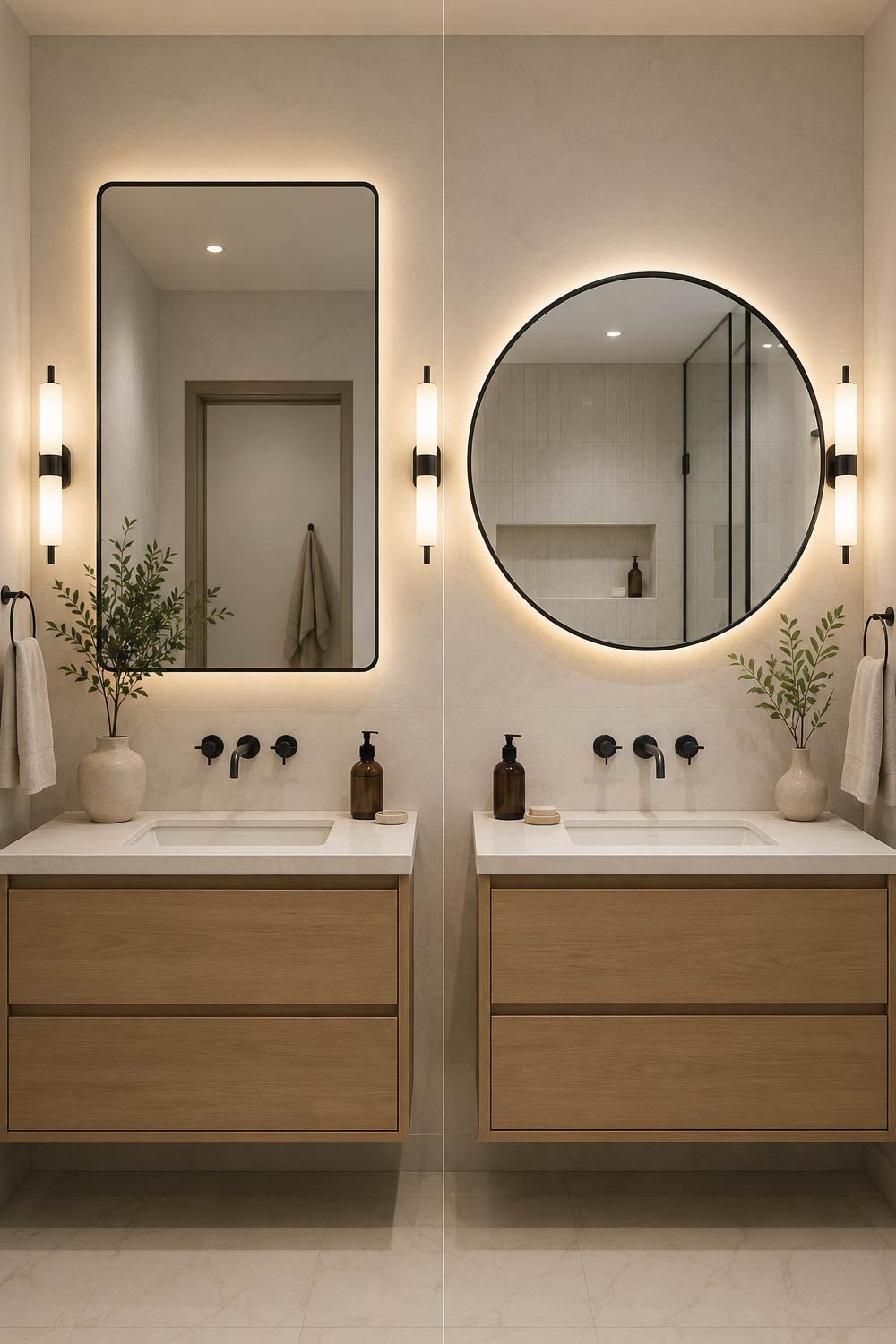
Double vanity mirror sizing plays an important role in achieving symmetry, balance, and practical usability in shared bathrooms. The correct mirror arrangement ensures both users have comfortable viewing space while maintaining visual harmony with the vanity below. Choosing between one large mirror or two separate mirrors depends on style preference, wall space, and functional needs in modern bathroom design layouts.
| Vanity Width | Mirror Option | Recommended Size |
|---|---|---|
| 60 inches | One large mirror | 56–58 inches wide |
| 60 inches | Two mirrors | 24–28 inches each |
| 72 inches | One large mirror | 68–70 inches wide |
| 72 inches | Two mirrors | 30–34 inches each |
| 84 inches | Two mirrors | 36–40 inches each |
Final Thoughts
Selecting the right bathroom mirror size is a blend of practical measurement and design awareness. While the bathroom mirror size chart provides a strong foundation, the final decision should also consider lighting, wall space, ceiling height, and personal style.
A well-sized mirror improves daily functionality, enhances lighting, and elevates the entire bathroom design. Whether you’re upgrading a small powder room or designing a luxury master bath, following these guidelines ensures a balanced and visually pleasing result.
