
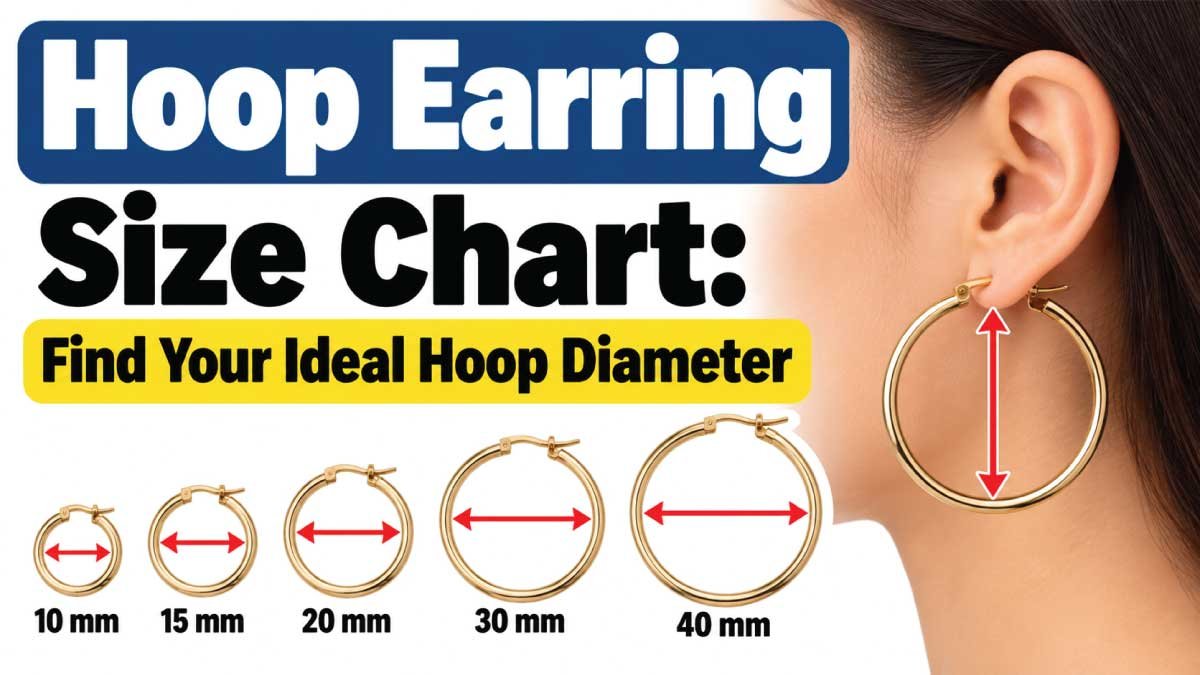
Choosing the right hoop earrings can transform your look, whether you prefer small, subtle hoops for everyday wear or large statement hoops for a bold style. The key to finding the perfect pair is understanding hoop diameter, thickness, and how different sizes look when worn.
Hoop earrings are typically measured by their diameter, which determines how large or small the circular earring appears. However, the diameter alone does not tell you everything about the fit. The hoop’s thickness, inner opening, closure design, and your earlobe size can also affect comfort and appearance.
This guide explains common hoop earring sizes in millimeters, centimeters, and inches, how to measure hoop diameter, and how to choose the right size for your face shape, ear placement, and personal style.
Understanding Hoop Earring Sizes
Hoop earrings are generally measured by their diameter, which is the distance across the circular shape. Depending on the manufacturer, this measurement may refer to the outer diameter or the inner diameter.
The distinction matters because a thick hoop has a smaller inner opening than a thin hoop with the same outer diameter. If you need enough space for a particular piercing or want a hoop to sit comfortably around your earlobe, check which measurement the seller provides.
What Is Hoop Diameter?
Diameter is the straight-line distance from one side of a circular hoop to the opposite side, passing through the center. It is usually measured in millimeters.
For example, a 20 mm hoop has a diameter of 2 cm, while a 40 mm hoop has a diameter of 4 cm.
A larger diameter generally creates a larger-looking hoop, but the overall appearance also depends on the hoop’s thickness, shape, and how it hangs from the ear.
How Hoop Earring Sizes Are Measured
Hoop earrings are commonly measured in three ways:
Outer diameter: The measurement across the outside edges of the hoop.
Inner diameter: The measurement across the open space inside the hoop.
Wire thickness: The thickness of the metal used to form the hoop.
For a quick size comparison, diameter is the most important measurement. For comfort and fit, inner diameter and wire thickness are also useful.
Common Hoop Earring Sizes and Their Appearance
Hoop earrings come in a wide range of sizes, from tiny hoops that sit close to the earlobe to oversized hoops that extend well below it. The following measurements provide a practical guide to common styles.
Hoop Earring Diameter Guide
| Diameter (MM) | Diameter (CM) | Diameter (Inches) | Typical Appearance |
|---|---|---|---|
| 6 mm | 0.6 cm | 0.24 in | Tiny, close-fitting hoop |
| 8 mm | 0.8 cm | 0.31 in | Very small, subtle hoop |
| 10 mm | 1 cm | 0.39 in | Small, understated hoop |
| 12 mm | 1.2 cm | 0.47 in | Small everyday hoop |
| 15 mm | 1.5 cm | 0.59 in | Compact, noticeable hoop |
| 20 mm | 2 cm | 0.79 in | Small to medium hoop |
| 25 mm | 2.5 cm | 0.98 in | Medium hoop |
| 30 mm | 3 cm | 1.18 in | Classic medium-large hoop |
| 40 mm | 4 cm | 1.57 in | Large, eye-catching hoop |
| 50 mm | 5 cm | 1.97 in | Oversized statement hoop |
| 60 mm | 6 cm | 2.36 in | Extra-large hoop |
| 70 mm | 7 cm | 2.76 in | Dramatic, oversized hoop |
| 80 mm | 8 cm | 3.15 in | Very large statement hoop |
| 100 mm | 10 cm | 3.94 in | Extra-large fashion hoop |
These measurements are general size references. The actual appearance depends on the hoop’s shape, thickness, and whether the stated diameter is measured internally or externally.
Small Hoop Earrings: 6 MM to 15 MM
Small hoops are ideal for people who prefer a discreet, minimal look. They sit close to the earlobe and can be suitable for daily wear, professional outfits, and simple jewelry combinations.
6 MM Hoops
Six-millimeter hoops are extremely small and may resemble tiny rings or close-fitting huggie earrings. Their inner opening can be limited, particularly when the metal is thick.
These hoops are often chosen for a snug appearance, but the fit depends on the size and shape of your earlobe. Always check the inner diameter before purchasing.
8 MM Hoops
Eight-millimeter hoops provide a slightly more noticeable look while remaining compact. They are useful for minimalist jewelry styles and may work well for people who prefer earrings that stay close to the ear.
Because the opening is small, these hoops may not fit comfortably around every earlobe.
10 MM Hoops
Ten-millimeter hoops are a popular compact option for understated everyday jewelry. They create a subtle circular shape without extending far below the earlobe.
They can work well with simple outfits and other small earrings, provided the hoop’s inner opening suits your piercing.
12 MM to 15 MM Hoops
These sizes offer a little more visibility while maintaining a compact appearance. They can be suitable for daily wear, casual outfits, and minimalist styling.
If you want small hoops that are noticeable without becoming a statement accessory, this range is a useful starting point.
Medium Hoop Earrings: 20 MM to 30 MM
Medium hoops provide a balance between subtlety and visibility. They are versatile enough for everyday outfits while still creating a recognizable hoop-earring look.
20 MM Hoops
Twenty-millimeter hoops measure 2 cm across. They typically create a small-to-medium circular shape and can complement casual, work, and evening outfits.
This size may suit people who want a hoop that is more visible than a tiny huggie without extending too far down the ear.
25 MM Hoops
Twenty-five-millimeter hoops measure 2.5 cm across. They create a noticeable but generally balanced appearance.
This size is useful for people who prefer medium hoops that can transition between casual and dressier settings. The overall effect depends on the hoop’s thickness and the wearer’s ear size.
30 MM Hoops
Thirty-millimeter hoops measure 3 cm across. They are often considered a classic medium-to-large style and create more movement and visibility than smaller hoops.
They can work well with loose hairstyles, pulled-back hair, and outfits that benefit from a more prominent accessory.
Large Hoop Earrings: 40 MM to 60 MM
Large hoops create a stronger visual statement. They extend farther from the earlobe and can make a simple outfit look more distinctive.
40 MM Hoops
Forty-millimeter hoops measure 4 cm across. They are a versatile choice for people who want larger hoops without moving into an oversized style.
Depending on the design, they can look polished with everyday clothing or more dramatic with evening outfits.
50 MM Hoops
Fifty-millimeter hoops measure 5 cm across. They are noticeable and can become a focal point of an outfit.
These hoops may work particularly well with simple clothing because their larger size naturally attracts attention.
60 MM Hoops
Sixty-millimeter hoops measure 6 cm across. They create a bold appearance and extend farther below the earlobe.
Consider weight as well as diameter when choosing this size. A lightweight hollow hoop may be more comfortable for extended wear than a thick, heavy metal design.
Oversized Hoop Earrings: 70 MM to 100 MM
Oversized hoops are designed to stand out. Their large diameter creates a dramatic circular shape that can complement fashion-forward, party, and statement looks.
70 MM Hoops
Seventy-millimeter hoops measure 7 cm across. They create a prominent look without reaching the largest commonly available fashion sizes.
They can be suitable for people who enjoy large earrings and want an accessory that stands out clearly.
80 MM Hoops
Eighty-millimeter hoops measure 8 cm across. Their larger diameter makes them a strong statement accessory.
Consider how the hoops move when walking or turning your head, especially if the earrings are thick or heavy.
100 MM Hoops
One-hundred-millimeter hoops measure 10 cm across. They are extra-large earrings that create a dramatic, highly visible appearance.
Because of their size, weight and construction are especially important. Lightweight materials may provide a more comfortable option for occasional wear.
Also Read:
How to Measure Hoop Earring Diameter at Home
If you already own hoop earrings or want to check whether a particular size will suit you, you can estimate the diameter using a ruler or measuring tape.
Method 1: Measure an Existing Hoop
- Open or lay the hoop flat if its design allows.
- Place a ruler across the widest part of the circular shape.
- Measure from one outer edge to the opposite outer edge.
- Record the measurement in millimeters or centimeters.
- Compare it with the size guide to identify the closest standard diameter.
If the hoop is not perfectly circular, measure across its widest point.
Method 2: Measure the Inner Diameter
If you want to know how much space is available inside the hoop, measure across the opening from one inner edge to the opposite inner edge.
This measurement is particularly useful for small hoops and huggies because a thick hoop may have significantly less inner space than its outer diameter suggests.
Method 3: Convert Inches to Millimeters
If the product listing provides inches instead of millimeters, multiply the measurement in inches by 25.4 to convert it to millimeters.
For example, a hoop measuring 1 inch across has a diameter of 25.4 mm. A hoop measuring 2 inches across has a diameter of 50.8 mm.
These conversions make it easier to compare products that use different measurement systems.
Also Read:
Outer Diameter vs. Inner Diameter
Understanding the difference between outer and inner diameter can prevent sizing mistakes when buying hoop earrings online.
Outer Diameter
Outer diameter measures the entire hoop from its outside edge to the opposite outside edge. It is commonly used to describe the visible size of the earring.
A larger outer diameter generally creates a larger-looking hoop, although thickness also influences its appearance.
Inner Diameter
Inner diameter measures the open space inside the hoop. It determines how much room the earring provides around the ear or earlobe.
For a thick hoop, the inner diameter may be noticeably smaller than the outer diameter.
Why the Difference Matters
Imagine two hoops with the same outer diameter. If one is thin and the other is thick, the thicker hoop will usually have a smaller inner opening.
When shopping for huggies or snug-fitting hoops, check the inner diameter and the closure design. For fashion hoops, outer diameter may be more useful for comparing the overall appearance.
Also Read:
Choosing the Right Hoop Size for Your Face Shape
Face shape can help guide your jewelry choices, but there are no strict rules about which hoop sizes you should wear. Personal preference, hairstyle, and the overall look you want are just as important.
Round Faces
Medium or larger hoops can create a longer visual line when paired with certain hairstyles. Oval or elongated hoop shapes may also provide contrast with softer facial contours.
However, small hoops can look equally attractive if you prefer a subtle style.
Oval Faces
Oval faces can work well with many hoop sizes and shapes. Small hoops provide a minimal look, while larger hoops create a stronger statement.
Choose a diameter that complements your hairstyle and the amount of attention you want the earrings to attract.
Square Faces
Rounded hoops can provide contrast with more angular facial features. Medium and large hoops may create a softer visual effect, depending on their shape and thickness.
Thin hoops can provide a delicate appearance, while thicker designs create a bolder style.
Heart-Shaped Faces
Medium hoops and rounded designs can complement a variety of heart-shaped face proportions. Consider the overall balance between the earrings, hairstyle, and neckline.
The most suitable size is ultimately the one you feel comfortable wearing.
How to Choose Hoop Earrings for Everyday Wear
Everyday earrings should balance appearance, comfort, and practicality. The best size depends on how frequently you wear earrings and what activities you do throughout the day.
For Work or School
Small and medium hoops are often practical because they are relatively understated and can pair with many outfits.
Sizes around 10 to 25 mm are useful starting points if you prefer a compact appearance, although your workplace or school may have specific jewelry rules.
For Casual Outfits
Medium hoops around 20 to 40 mm can complement everyday clothing without necessarily dominating the overall look.
Choose a thickness and material that feel comfortable for your usual routine.
For Parties and Special Events
Larger hoops, including sizes around 40 to 60 mm, can create a more dramatic appearance. Oversized hoops may also work for statement styling.
Consider the weight and closure security, especially if you expect to wear the earrings for several hours.
For Multiple Ear Piercings
Small hoops are often convenient for upper-ear or stacked-ear styling, but suitability depends on the piercing location and anatomy.
Never force a hoop into a piercing that does not accommodate its diameter, wire thickness, or closure. For a new or healing piercing, follow the advice of a qualified piercer rather than changing jewelry based only on appearance.
Hoop Earring Thickness and Weight Guide
Diameter determines how large the hoop looks, but thickness affects its visual impact and comfort.
Thin Hoops
Thin hoops create a delicate, minimal appearance. They may be suitable for people who prefer lightweight jewelry, although durability depends on the metal and construction.
Medium-Thickness Hoops
Medium-thickness hoops provide a balanced appearance between subtle and bold. They can be versatile for everyday wear and dressier occasions.
Thick Hoops
Thick hoops have a more prominent appearance and may contain more material. Depending on their construction, they can feel heavier than thin hoops of the same diameter.
Why Weight Matters
Large earrings can place more downward pressure on the earlobe, particularly when they are made from solid or heavy materials. Diameter alone does not determine weight.
If comfort is important, compare the stated weight when available and consider lightweight designs. Remove earrings if they cause pain, irritation, or excessive pulling.
Common Mistakes When Choosing Hoop Earring Sizes
Choosing Based Only on Diameter
Two hoops with the same diameter may look and feel different because of their thickness, shape, and material. Check more than one measurement before buying.
Confusing Inner and Outer Diameter
A listing may show the outer diameter even though you need to know the available opening. Read the product specifications carefully, especially when purchasing small hoops.
Ignoring Weight
Large hoops are not always heavy, and small hoops are not always lightweight. Construction and material make a difference, so check the weight if it is provided.
Assuming Every Brand Measures the Same Way
Some sellers list outer diameter, while others provide inner diameter or overall height. Confirm the measurement method before comparing products.
Buying a Hoop That Does Not Suit the Piercing
The hoop’s wire thickness and opening must be suitable for the piercing. Diameter alone does not guarantee that an earring will fit.
Overlooking the Closure
Hinged, clicker, and latch-back hoops may have different opening mechanisms and usable space. Make sure the closure is secure and comfortable.
Hoop Earring Size Chart: Frequently Asked Questions
What Is the Most Common Hoop Earring Size?
Hoops around 20 to 40 mm are common choices for everyday and fashion jewelry. Smaller sizes create a subtle appearance, while larger sizes provide more visibility.
The best diameter depends on your preferred style, earlobe proportions, and the hoop’s thickness.
Is a 20 MM Hoop Small or Medium?
A 20 mm hoop measures 2 cm across and is generally considered small to medium. It is a useful option for people who want a noticeable hoop without an oversized appearance.
How Big Is a 30 MM Hoop Earring?
A 30 mm hoop measures 3 cm, or approximately 1.18 inches, across. It generally creates a medium-sized hoop appearance.
What Does a 40 MM Hoop Look Like?
A 40 mm hoop measures 4 cm, or approximately 1.57 inches, across. It creates a more noticeable look than small hoops and can work well for casual or dressier outfits.
How Many Inches Is a 50 MM Hoop?
A 50 mm hoop measures approximately 1.97 inches across, which is nearly 2 inches.
Are 60 MM Hoops Too Large for Everyday Wear?
Not necessarily. A 60 mm hoop is relatively large, but whether it works for everyday wear depends on its weight, design, and your personal preference.
Lightweight construction may make larger hoops more comfortable.
What Is the Difference Between Huggie Earrings and Hoop Earrings?
Huggies are generally small hoops designed to sit close to the earlobe. Traditional hoop earrings come in a much broader range of diameters, from tiny designs to oversized statement styles.
The distinction is based mainly on size and fit rather than a single universal measurement.
How Do I Know Which Hoop Size Is Right for Me?
Consider your preferred appearance, earlobe proportions, daily activities, and the hoop’s weight. Compare the outer diameter for visual size and the inner diameter for available space.
If possible, compare the measurements with a pair you already own.
Final Thoughts
Finding your ideal hoop earring size becomes easier when you understand diameter, thickness, inner opening, and weight. Small hoops offer a subtle appearance, medium hoops provide versatility, and larger hoops create a bold statement.
Use the size guide to compare millimeters, centimeters, and inches, then check the manufacturer’s measurements before buying. Pay attention to whether the listed diameter is internal or external, especially when choosing huggies or thick hoops.
Ultimately, the best hoop earrings are those that match your personal style, fit your piercing appropriately, and feel comfortable enough for the occasion. By considering both measurements and practical fit, you can select hoops that complement your look with confidence.
