
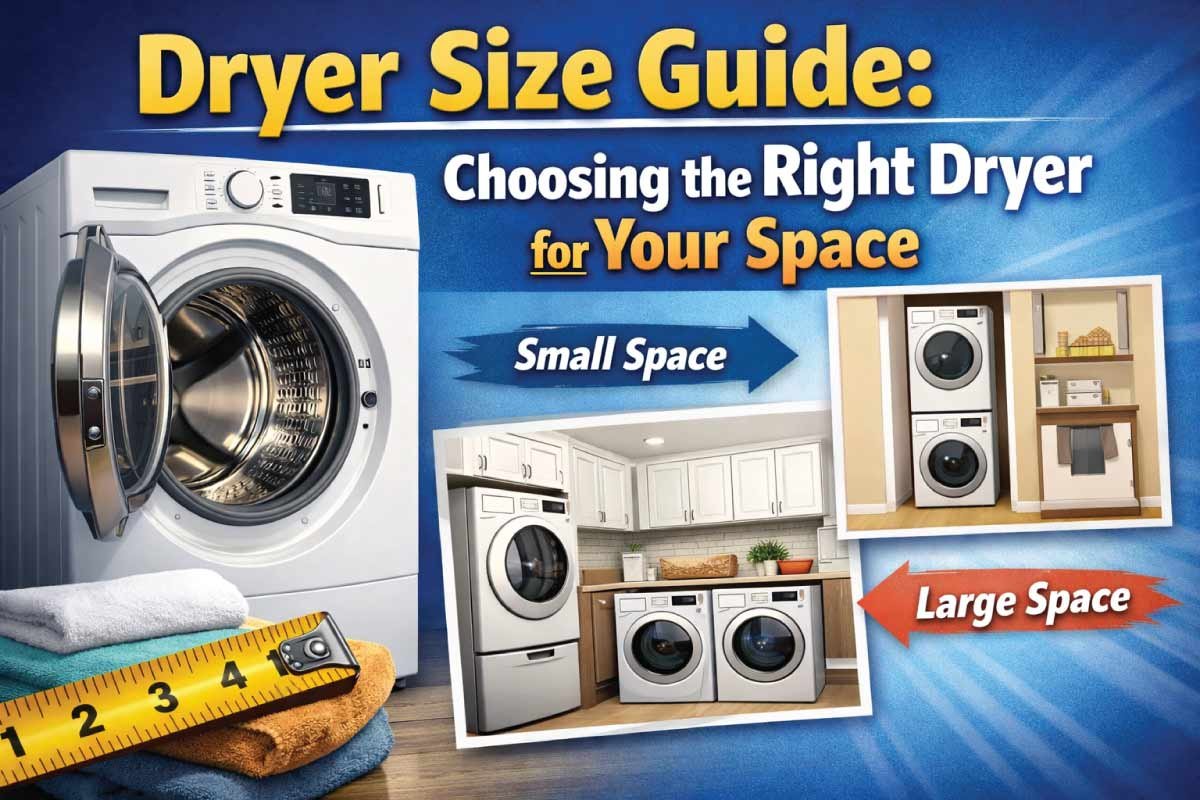
Selecting the right dryer size is crucial for efficient laundry management. A dryer that’s too small may lead to longer drying times, overworked appliances, and wasted energy. Conversely, an oversized dryer can consume unnecessary energy and space. Understanding dryer capacities, dimensions, and features helps you choose a model that fits your household size, laundry habits, and kitchen or utility room layout. This comprehensive guide explores dryer sizes, types, capacity considerations, and expert recommendations to ensure you make the best choice.
Why Dryer Size Matters
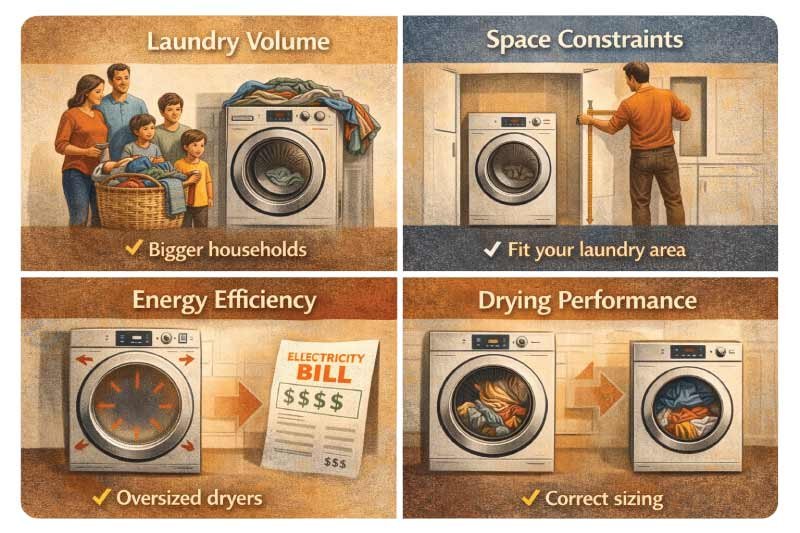
Choosing the right dryer size is crucial for optimal performance and longevity. The correct size balances your household’s laundry needs, available space, and energy use. Selecting too large or too small a dryer can lead to inefficiency, higher bills, and wear on clothes and the appliance.
-
Laundry volume: Bigger households require larger dryers to manage frequent loads.
-
Space constraints: Dryer dimensions must fit your designated laundry area.
-
Energy efficiency: Oversized dryers consume more energy if underutilized.
-
Drying performance: Correct sizing ensures faster and uniform drying.
Standard Dryer Sizes
Dryers are generally categorized by width, which is the key factor for fitting into your laundry space. While depth and height can vary slightly between models, selecting the correct width ensures proper installation. Understanding standard dryer sizes helps match the appliance to your household’s laundry needs efficiently.
Standard Dryer Widths
| Dryer Width | Common Use Case | Suitable For |
|---|---|---|
| 24 inches | Compact spaces | Apartments, small households |
| 27 inches | Mid-size households | Moderate laundry needs |
| 29–30 inches | Standard full-size | Families, heavy laundry |
| 36 inches | Extra-large or professional | Large households, shared laundry |
Dryer Capacity Explained
Dryer capacity indicates how much laundry a dryer can handle in a single cycle, usually measured in pounds or kilograms. Selecting the correct capacity prevents overloading, reduces drying time, and minimizes wrinkles. Matching dryer size to your typical load ensures efficient performance, energy savings, and better care for your clothes.
Dryer Capacity Guide
| Capacity (lbs) | Typical Load Size | Best For |
|---|---|---|
| 3–5 lbs | Small laundry | Singles or couples |
| 6–8 lbs | Medium loads | Small families |
| 9–12 lbs | Large loads | Families of 4+ |
| 13+ lbs | Extra-large loads | Heavy-duty laundry, shared housing |
Measuring Your Laundry Space
Accurate measurements are essential before buying a dryer to ensure it fits perfectly and operates safely. Consider all dimensions, including extra space for ventilation and door clearance. Proper measurement prevents installation issues, protects your walls and floors, and ensures efficient airflow for optimal drying performance.
Key Measurements:
-
Width: Allow 1–2 inches for side clearance.
-
Depth: Include space for venting hoses (usually 4–6 inches behind the unit).
-
Height: Stackable units require precise stacking clearances.
Typical Dryer Dimensions
Understanding typical dryer dimensions helps you select a model that fits your laundry space and meets your household needs. Dryers come in compact, standard, large, and stackable designs, each with varying widths, depths, and heights. Knowing these measurements ensures proper installation, efficient use, and convenient access for daily laundry tasks.
| Dryer Type | Width (in) | Depth (in) | Height (in) |
|---|---|---|---|
| Compact | 24 | 24–26 | 33–35 |
| Standard | 27 | 27–29 | 36–39 |
| Large | 29–30 | 28–32 | 36–39 |
| Stackable | 24–27 | 24–28 | 70–75 |
Household Size and Dryer Recommendations
Selecting the right dryer depends heavily on household size. Singles or couples usually only need compact models, while larger families require higher-capacity dryers to handle frequent loads efficiently. Matching dryer capacity to your household prevents overuse, saves energy, and ensures laundry is dried effectively without unnecessary strain on the appliance.
Recommended Dryer Sizes by Household
| Household Size | Recommended Capacity | Suggested Dryer Type |
|---|---|---|
| 1–2 people | 3–5 lbs | Compact or small standard |
| 3–4 people | 6–8 lbs | Standard dryer |
| 5+ people | 9–12 lbs | Large capacity dryer |
| Shared housing | 13+ lbs | Extra-large or commercial |
Types of Dryers and Size Implications
Choosing the right dryer goes beyond just picking a model. Different types of dryers have unique size requirements, energy sources, and installation needs. Understanding the size implications of each type helps ensure your laundry area is functional, safe, and efficient, while meeting your household’s drying demands without wasting space or energy.
1. Electric Dryers
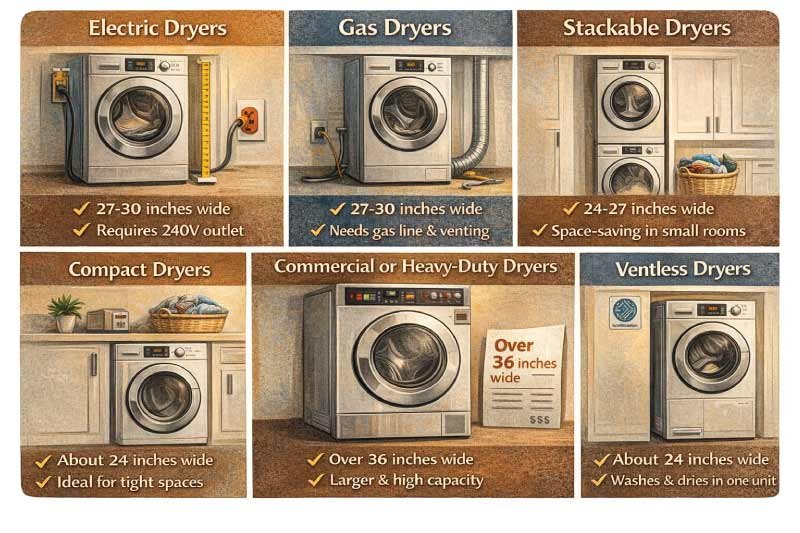
Electric dryers are the most common type in homes, typically requiring a 240V outlet. They come in standard widths of 27 to 30 inches and depths of 28 to 34 inches. While they fit most laundry spaces, proper electrical access and clearance are crucial to ensure safe and efficient operation.
2. Gas Dryers
Gas dryers offer faster drying times and energy efficiency but need a gas line connection. Their dimensions are generally similar to electric dryers, with standard widths around 27 to 30 inches. Careful measurement is needed to accommodate venting, gas supply, and sufficient clearance for safe installation.
3. Stackable Dryers
Stackable dryers pair with matching washers, making them ideal for small laundry rooms or apartments. Typically around 24 to 27 inches wide, they save floor space by stacking vertically. Proper installation requires sturdy support, venting considerations, and enough clearance for opening doors and loading laundry.
4. Compact Dryers
Compact dryers are perfect for limited spaces like studio apartments or tiny homes. Usually around 24 inches wide, they handle smaller loads and are easier to fit under counters. While space-saving, their reduced capacity means multiple loads may be necessary for larger households.
5. Commercial or Heavy-Duty Dryers
Commercial dryers are designed for large households, laundromats, or heavy-duty use. They are wider and deeper than residential models, often exceeding 36 inches in width. Extra space is required for installation, ventilation, and handling high-capacity laundry loads efficiently and safely.
6. Vent less or Condenser Dryers
Vent less dryers don’t require an external vent, making them suitable for apartments or homes without venting options. Slightly bulkier to accommodate internal condensation systems, they usually measure around 24 to 27 inches wide. Proper airflow and occasional water disposal are needed to maintain efficiency.
7. Washer-Dryer Combos
Washer-dryer combo units combine washing and drying in one machine, ideal for compact spaces. Typically 24 inches wide, they save room but have smaller drying capacities compared to standalone dryers. Careful planning is needed to ensure they fit under counters or within laundry closets without restricting functionality.
Stackable vs. Side-by-Side Dryers
Choosing between stackable and side-by-side dryers depends on space and convenience. Stackable units save floor space by stacking the dryer over the washer, making them ideal for apartments, though they have smaller capacities and harder access. Side-by-side models offer larger loads and easier access but require more floor space.
Table: Stackable vs Side-by-Side Dryer Sizes
| Type | Width (in) | Depth (in) | Height (in) | Pros | Cons |
|---|---|---|---|---|---|
| Stackable | 24–27 | 24–28 | 70–75 | Space-saving, ideal for apartments | Smaller capacity, harder access |
| Side-by-Side | 27–30 | 28–32 | 36–39 | Easier access, larger loads | Requires more floor space |
Energy Efficiency and Dryer Size
Selecting the right dryer size affects both energy consumption and utility costs. Oversized dryers running small loads waste electricity, while properly sized units maximize efficiency. Understanding your household’s typical laundry volume helps you choose a dryer that saves energy, lowers bills, and minimizes environmental impact.
Tips for Energy Savings:
-
Avoid running small loads in large dryers.
-
Choose Energy Star-rated models.
-
Use moisture sensors instead of timed drying cycles.
Door Clearance and Venting
Ensuring proper door clearance and venting is essential for safe and efficient dryer operation. Adequate space prevents obstruction, reduces wear on doors, and allows optimal airflow. Correct vent placement also minimizes overheating risks, improves drying performance, and extends the life of both your appliance and laundry.
-
Allow at least 1–2 inches on the sides.
-
Ensure rear vent space of 4–6 inches.
-
Stackable dryers may require additional top clearance.
Over-the-Range and Compact Dryers
Compact and over-the-range dryers are ideal for small spaces like apartments or tiny laundry rooms. These units typically measure 24–27 inches wide and fit neatly under cabinets or above ranges, saving floor space. They are best suited for singles or couples who need efficient drying without a bulky appliance.
Over-the-Range & Compact Dryer Size Chart
| Feature | Compact Dryers | Over-the-Range Dryers |
|---|---|---|
| Typical Width | 24–27 inches | 24–27 inches |
| Typical Height | 33–34 inches | 17–18 inches |
| Typical Depth | 24–26 inches | 24–26 inches |
| Drying Capacity | 3.5–4.5 cu. ft. | 3.5–4.3 cu. ft. |
| Best For | Apartments, small homes | Space-saving laundry setups |
| Installation Style | Freestanding or stacked | Mounted above washer/range |
How to Choose the Right Dryer Size
Selecting the right dryer size is crucial for efficiency, convenience, and energy savings. Choosing a dryer that fits both your laundry space and your household’s washing habits ensures smooth daily use. Oversized dryers waste energy, while undersized models cause frequent overloading and longer drying times. Here’s a guide to making the best choice.
1. Measure Your Available Space Accurately
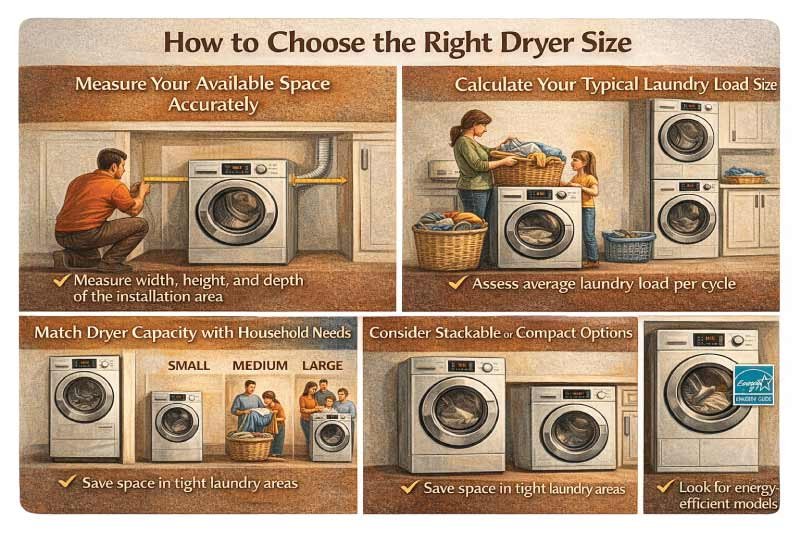
Before purchasing a dryer, measure the width, height, and depth of the installation area. Include clearance for door openings and proper ventilation. Measuring accurately helps avoid installation issues and ensures the dryer fits seamlessly into your laundry room. Consider extra room for maintenance and airflow to keep your appliance operating efficiently.
2. Calculate Your Typical Laundry Load Size
Assess how much laundry you typically wash in a single cycle. Families with frequent washing require larger capacity dryers, while singles or couples may only need compact models. Matching the dryer size to your average load prevents overloading, reduces drying time, and avoids unnecessary wear and tear on clothes, extending their lifespan.
3. Match Dryer Capacity with Household Needs
Choose a dryer whose capacity complements your household size. For one to two people, smaller dryers are usually sufficient. Medium-size families benefit from standard dryers, while larger households need high-capacity models. Proper capacity selection ensures optimal drying performance, prevents energy waste, and allows you to handle both small daily loads and larger weekly washes comfortably.
4. Consider Stackable or Compact Options
If space is limited, consider stackable washer-dryer combinations or compact dryers. These designs save floor space while providing efficient drying performance. Compact options are ideal for apartments, small laundry rooms, or homes with limited storage. Ensure the chosen unit still meets your load requirements to maintain convenience and efficiency without overcrowding your laundry area.
5. Check Energy Efficiency Ratings
Energy-efficient dryers save money on utility bills and reduce environmental impact. Look for dryers with high energy star ratings and modern sensors that prevent over-drying. Efficient dryers not only consume less electricity but also dry clothes faster, protecting fabrics and reducing wear. Choosing energy-efficient models is a smart long-term investment for both your wallet and the planet.
Also Read:
Common Dryer Size Mistakes
Choosing the wrong dryer size can lead to inefficiency, higher energy bills, and frustration. Many homeowners focus on a single dimension or overlook household laundry needs. Understanding common sizing errors helps you avoid costly mistakes and ensures your dryer fits your space, handles your load, and operates efficiently.
-
Selecting a dryer too small for the household.
-
Ignoring depth for vent hoses.
-
Overlooking stackable options for tight spaces.
-
Focusing on width only, ignoring height or depth.
Benefits of Choosing the Right Size
Selecting the correct dryer size offers multiple advantages for your household. It ensures faster drying, reduces energy consumption, protects fabrics, and maximizes available space. A properly sized dryer also streamlines your laundry routine, making everyday chores more efficient, convenient, and cost-effective while extending the appliance’s lifespan.
-
Shorter drying times
-
Lower energy bills
-
Less wear on fabrics
-
Efficient use of space
-
Smoother laundry workflow
Also Read:
Drying Multiple Loads Efficiently
For households that regularly handle multiple laundry loads, selecting a dryer with slightly more capacity than your typical load is essential. This prevents overloading, which can prolong drying time and reduce efficiency. A properly sized dryer ensures faster cycles, consistent drying, and lower energy consumption, making laundry days smoother and more manageable.
Dryer Dimensions Cheat Sheet
Choosing the right dryer starts with understanding its dimensions and capacity. This cheat sheet provides a quick reference for popular dryer types, including compact, standard, large, stackable, and commercial models. Knowing width, depth, height, and typical load capacity helps ensure a perfect fit for your laundry space and household needs.
| Dryer Type | Width | Depth | Height | Capacity |
|---|---|---|---|---|
| Compact | 24″ | 24″ | 33″ | 3–5 lbs |
| Standard | 27″ | 27″ | 36″ | 6–8 lbs |
| Large | 29–30″ | 28–32″ | 36″ | 9–12 lbs |
| Stackable | 24–27″ | 24–28″ | 70–75″ | 6–8 lbs |
| Commercial/Extra-Large | 36″ | 30–32″ | 40″ | 13+ lbs |
Also Read:
Special Considerations for Gas vs Electric Dryers
When choosing between gas and electric dryers, size isn’t the only factor. Installation requirements, energy source, and venting space play key roles. Understanding the differences helps you select a dryer that fits your laundry needs, your space, and your household’s utility setup efficiently.
-
Electric dryers: More common, simple installation, available in standard sizes.
-
Gas dryers: Slightly more expensive, require a gas line, similar width but may need extra venting space.
Conclusion
Selecting the right dryer size is essential for efficient laundry care. Consider household size, load capacity, available space, and dryer type. Measuring your laundry area accurately and understanding dryer dimensions prevents installation issues. By following this guide, you can find a dryer that saves energy, handles your laundry needs, and fits seamlessly into your home.
Also Read:
Complete Guide to Standard Appliance Sizes
FAQs:
What is a standard dryer size?
A standard dryer is usually about 27 inches wide, 36 inches tall, and 25–30 inches deep, with a drying capacity between 7 and 8.5 cubic feet. These dryers are ideal for most family homes and fit standard laundry room spaces.
How many kg dryer for a family of 4?
A family of four typically needs a dryer with a 7–9 kg capacity. This size can handle larger laundry loads such as bedding and towels efficiently, reducing the number of drying cycles while saving time and energy.
How big is a 4.5 kg dryer?
A 4.5 kg dryer is considered compact and usually measures around 24 inches wide, 33–34 inches tall, and 24–25 inches deep. It is suitable for apartments, small households, or limited laundry spaces with lighter drying needs.
What is the most common size dryer?
The most common dryer size is a 27-inch wide model with a capacity of about 7–8 kg. This size offers a good balance between capacity and space efficiency, making it popular in most residential homes.
What size dryer for 2 people?
For two people, a dryer with a 5–7 kg capacity is usually sufficient. This size can handle regular clothing loads without taking up too much space, making it ideal for small families, couples, or apartments.
How do I know what size dryer I need?
To determine the right dryer size, consider your household size, laundry frequency, and available space. Measure your laundry area, check load sizes, and choose a capacity that matches your washing machine for efficient drying results.
