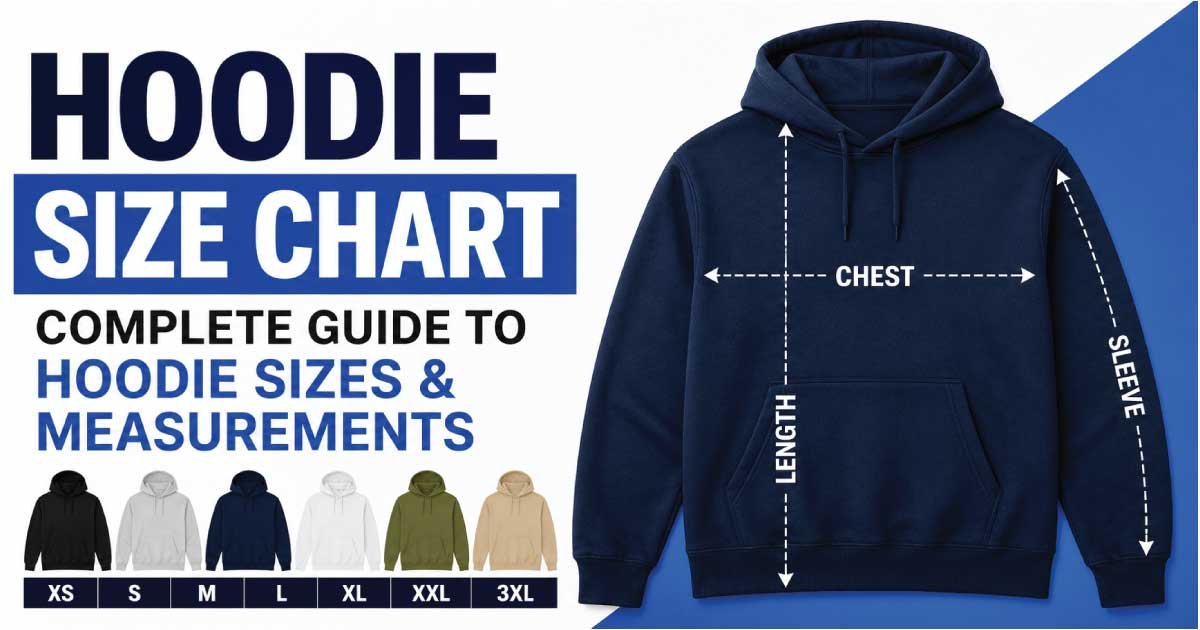
Finding the right hoodie size can be surprisingly difficult because hoodie sizing varies between brands, styles, countries, and fits. A hoodie labeled Medium from one brand may fit more like a Small or Large from another. Oversized hoodies, slim-fit hoodies, regular-fit hoodies, and unisex hoodies can also have noticeably different measurements.
A reliable hoodie size chart makes it easier to choose the right size before ordering. Instead of relying only on S, M, L, or XL labels, you can compare important measurements such as chest, body length, shoulder width, and sleeve length.
Whether you’re shopping for a men’s hoodie, women’s hoodie, unisex sweatshirt, oversized hoodie, or children’s hoodie, understanding hoodie measurements can help you get a comfortable fit.
Hoodie Size Chart
The following chart provides general hoodie measurements for adults. Actual measurements can vary by brand and style, so always check the specific manufacturer’s size guide when available.
| Size | US/UK Chest | Chest Measurement | Body Length | Sleeve Length |
|---|---|---|---|---|
| XS | 32–34 in | 32–34 in | 25–26 in | 32–33 in |
| S | 35–37 in | 35–37 in | 26–27 in | 33–34 in |
| M | 38–40 in | 38–40 in | 27–28 in | 34–35 in |
| L | 41–43 in | 41–43 in | 28–29 in | 35–36 in |
| XL | 44–46 in | 44–46 in | 29–30 in | 36–37 in |
| XXL | 47–49 in | 47–49 in | 30–31 in | 37–38 in |
| 3XL | 50–52 in | 50–52 in | 31–32 in | 38–39 in |
| 4XL | 53–55 in | 53–55 in | 32–33 in | 39–40 in |
These measurements are general guidelines rather than universal standards. Hoodie sizing can differ considerably between manufacturers.
What Is a Hoodie Size Chart?
A hoodie size chart shows the measurements associated with different hoodie sizes. Instead of choosing a size based only on a letter, you can compare your body measurements with the measurements provided in the chart.
Common hoodie measurements include:
- Chest
- Waist
- Shoulder width
- Sleeve length
- Body length
- Hood dimensions
- Cuff width
The chest measurement is usually one of the most important measurements when selecting a hoodie because hoodies are designed to provide comfortable upper-body coverage.
How Hoodie Sizes Work
Hoodie sizes are commonly represented by letters such as:
- XS — Extra Small
- S — Small
- M — Medium
- L — Large
- XL — Extra Large
- XXL — Double Extra Large
- 3XL — Triple Extra Large
- 4XL — Four Extra Large
However, these labels are not standardized across every brand.
A Medium hoodie may have a relatively loose fit from one manufacturer and a more fitted design from another. This is why comparing actual measurements is more reliable than choosing a size based solely on the label.
Men’s Hoodie Size Chart
Men’s hoodies generally have a broader shoulder and chest construction compared with women’s fitted hoodies.
| Men’s Size | Chest | Waist | Body Length |
|---|---|---|---|
| XS | 32–34 in | 26–28 in | 25–26 in |
| S | 35–37 in | 29–31 in | 26–27 in |
| M | 38–40 in | 32–34 in | 27–28 in |
| L | 41–43 in | 35–37 in | 28–29 in |
| XL | 44–46 in | 38–40 in | 29–30 in |
| XXL | 47–49 in | 41–43 in | 30–31 in |
| 3XL | 50–52 in | 44–46 in | 31–32 in |
| 4XL | 53–55 in | 47–49 in | 32–33 in |
Men’s hoodie sizing can still vary depending on whether the garment is regular fit, athletic fit, relaxed fit, or oversized.
Women’s Hoodie Size Chart
Women’s hoodies can have a more shaped or fitted silhouette than traditional men’s or unisex hoodies.
| Women’s Size | Bust | Waist | Typical Hoodie Length |
|---|---|---|---|
| XS | 31–32 in | 24–25 in | 24–25 in |
| S | 33–34 in | 26–27 in | 25–26 in |
| M | 35–37 in | 28–29 in | 26–27 in |
| L | 38–40 in | 30–32 in | 27–28 in |
| XL | 41–43 in | 33–35 in | 28–29 in |
| XXL | 44–46 in | 36–38 in | 29–30 in |
| 3XL | 47–50 in | 39–42 in | 30–31 in |
Women’s hoodie sizes can vary significantly depending on whether the hoodie is fitted, cropped, relaxed, or oversized.
Unisex Hoodie Size Chart
Unisex hoodies are designed to work across men’s and women’s sizing systems. They often have a relaxed shape and may run larger than women’s fitted hoodies.
| Unisex Size | Chest Range | Approx. Garment Chest | Approx. Length |
|---|---|---|---|
| XS | 30–32 in | 36–38 in | 25–26 in |
| S | 33–35 in | 38–40 in | 26–27 in |
| M | 36–38 in | 40–42 in | 27–28 in |
| L | 39–41 in | 44–46 in | 28–29 in |
| XL | 42–44 in | 48–50 in | 29–30 in |
| XXL | 45–48 in | 52–54 in | 30–31 in |
The garment measurements are intentionally larger than body measurements because a hoodie needs additional room for comfort and movement.
How to Measure for a Hoodie
Taking your own measurements is one of the best ways to choose the correct hoodie size.
Measure Your Chest
Wrap a flexible measuring tape around the fullest part of your chest.
Keep the tape level and avoid pulling it too tightly.
Your chest measurement is one of the most useful measurements for determining hoodie size.
Measure Your Waist
Measure around the natural waist area.
Although chest size is usually more important for hoodies, waist measurements can help when choosing fitted styles.
Measure Your Shoulder Width
Measure from one shoulder point to the other across the upper back.
This measurement is particularly useful when comparing garment size charts.
Measure Your Sleeve Length
Measure from the shoulder point down the outside of your arm toward your wrist.
Sleeve measurements can vary depending on the hoodie construction and whether the shoulders are dropped.
Measure Your Body Length
Measure from the highest point of the shoulder down to where you want the hoodie to end.
This helps determine whether a hoodie will look cropped, regular, or oversized.
How to Measure a Hoodie You Already Own
If you already have a hoodie that fits perfectly, measuring that garment can be even easier than measuring your body.
Place the hoodie flat on a clean surface without stretching the fabric.
Chest Width
Measure straight across the hoodie from one armpit to the other.
Multiply the measurement by two to estimate the full garment chest circumference.
Body Length
Measure from the highest shoulder point down to the bottom hem.
Shoulder Width
Measure from one shoulder seam to the other.
Sleeve Length
Measure from the shoulder seam to the end of the cuff.
Then compare these measurements with the new hoodie’s size chart.
Hoodie Size Chart in Centimeters
Many international clothing websites provide measurements in centimeters instead of inches.
| Size | Chest | Body Length | Sleeve Length |
|---|---|---|---|
| XS | 81–86 cm | 64–66 cm | 81–84 cm |
| S | 89–94 cm | 66–69 cm | 84–86 cm |
| M | 97–102 cm | 69–71 cm | 86–89 cm |
| L | 104–109 cm | 71–74 cm | 89–91 cm |
| XL | 112–117 cm | 74–76 cm | 91–94 cm |
| XXL | 119–124 cm | 76–79 cm | 94–97 cm |
| 3XL | 127–132 cm | 79–81 cm | 97–99 cm |
| 4XL | 135–140 cm | 81–84 cm | 99–102 cm |
These are approximate conversions and general size ranges.
Oversized Hoodie Size Chart
Oversized hoodies are intentionally designed with extra room through the chest, shoulders, sleeves, and body.
Because of this, you should not automatically size up if you want an oversized look. Some oversized designs are already cut larger than standard hoodies.
| Size | Typical Fit | Body Shape |
|---|---|---|
| XS | Slightly oversized | Relaxed |
| S | Oversized | Loose |
| M | Oversized | Loose and roomy |
| L | Very oversized | Wide and relaxed |
| XL | Extra oversized | Very loose |
| XXL | Extremely oversized | Extra roomy |
Always check the garment measurements because “oversized” does not have one universal measurement standard.
Also Read: Loveseat Size Chart: Complete Loveseat Size Guide
Regular Fit vs. Oversized Hoodie
The biggest difference between regular and oversized hoodies is the amount of extra fabric.
Regular-Fit Hoodie
A regular hoodie generally follows the natural shape of the body while leaving enough room for comfortable movement.
It is suitable for everyday wear and layering.
Oversized Hoodie
An oversized hoodie has additional room through the chest, shoulders, sleeves, and body.
It creates a relaxed streetwear-inspired appearance.
If a hoodie is already labeled oversized, your normal size may be enough.
Slim-Fit Hoodie Sizes
Slim-fit hoodies are cut closer to the body.
They may have:
- Narrower shoulders
- Smaller chest width
- Tapered waist
- More fitted sleeves
- Shorter or standard body length
If you’re between sizes, a larger size may provide a more comfortable fit, particularly when layering over a T-shirt.
Hoodie Size for Different Body Types
Body shape can influence how a hoodie fits.
Slim Body Type
A regular or slim-fit hoodie can create a clean silhouette.
Athletic Build
A relaxed or regular-fit hoodie may provide additional chest and shoulder room.
Broad Shoulders
Pay particular attention to shoulder and chest measurements.
Larger Midsection
A relaxed or oversized hoodie may provide greater comfort than a fitted style.
The most important consideration is not the letter size but how the garment measurements correspond to your body.
Hoodie Size by Height
Height can provide a useful starting point, but it should not be used alone.
| Height | Possible Hoodie Size Range |
|---|---|
| 5’0″–5’4″ | XS–S |
| 5’4″–5’7″ | S–M |
| 5’7″–5’10” | M–L |
| 5’10″–6’1″ | L–XL |
| 6’1″–6’4″ | XL–XXL |
| 6’4″+ | XXL–3XL+ |
These are only general guidelines. Two people with the same height can require completely different hoodie sizes because of differences in chest, shoulder, waist, and preferred fit.
Hoodie Size by Weight
Weight can sometimes provide a rough estimate, but it is not a reliable sizing measurement by itself.
Two people with the same weight can have very different body proportions.
For better results, prioritize:
- Chest measurement
- Shoulder width
- Body length
- Sleeve length
- Preferred fit
Use weight only as a secondary reference when a brand provides it.
Also Read: Area Rug Size Chart: The Complete Guide to Perfect Size
How Should a Hoodie Fit?
A well-fitting hoodie should provide enough room for movement without looking excessively loose unless an oversized appearance is intended.
Check the following areas:
Shoulders
The shoulder seams should sit where intended by the design. Dropped shoulders are normal on oversized hoodies.
Chest
The chest should have enough room to move comfortably.
Sleeves
Sleeves should reach approximately the wrist for a traditional fit, although oversized styles may extend farther.
Body Length
The bottom hem should provide adequate coverage without being excessively long.
Hood
The hood should sit comfortably around the head and neck without pulling excessively on the back of the garment.
Hoodie Size Conversion Chart
Different countries may use different sizing systems.
| US/UK | EU Approx. | General International Size |
|---|---|---|
| XS | 44 | XS |
| S | 46 | S |
| M | 48–50 | M |
| L | 52 | L |
| XL | 54–56 | XL |
| XXL | 58 | XXL |
| 3XL | 60–62 | 3XL |
| 4XL | 64+ | 4XL |
International sizing is not perfectly standardized, so the brand’s own measurements should always take priority.
How Much Room Should a Hoodie Have?
A hoodie should generally have some additional room beyond your exact body measurements.
This extra space is called ease.
The amount of ease depends on the style:
- Slim fit: Less extra room
- Regular fit: Moderate extra room
- Relaxed fit: More extra room
- Oversized fit: Substantial extra room
A hoodie that matches your exact chest measurement may feel too tight because the garment needs additional room for movement and layering.
What Size Hoodie Should I Buy?
The best approach is to compare your measurements with the specific brand’s size chart.
For example, if your chest measurement falls between two sizes, consider:
- Choosing the smaller size for a closer fit
- Choosing the larger size for a relaxed fit
- Checking shoulder measurements
- Checking the garment’s actual chest measurement
- Considering whether you will layer clothing underneath
If the hoodie is already oversized, you may not need to size up.
Common Hoodie Sizing Mistakes
Choosing Based Only on S, M, or L
Letter sizes vary between brands. Actual measurements are more reliable.
Ignoring the Fit Description
A Medium regular-fit hoodie and a Medium oversized hoodie can have very different dimensions.
Sizing Up Automatically
If you want an oversized hoodie, first check whether the garment is already designed with an oversized cut.
Ignoring Sleeve Length
Tall people may need to pay extra attention to sleeve measurements.
Measuring Your Body Incorrectly
The measuring tape should remain level and should not be pulled excessively tight.
Forgetting Shrinkage
Some cotton hoodies may shrink after washing. Always follow the care instructions.
Also Read: TV Stand Size Chart: Find the Perfect Stand for Any TV
Frequently Asked Questions About Hoodie Sizes
What is the standard hoodie size chart?
Common adult hoodie sizes range from XS through 4XL. A typical Medium corresponds to a chest measurement around 38–40 inches, while Large is often around 41–43 inches. Exact measurements vary significantly between brands and hoodie styles.
How do I know what hoodie size to buy?
Measure your chest, shoulder width, sleeve length, and body length, then compare those measurements with the manufacturer’s size chart. If you’re between sizes, consider your preferred fit and whether you plan to layer clothing underneath.
Should I size up for an oversized hoodie?
Not necessarily. Many oversized hoodies are already designed with extra room. Check the garment’s actual measurements before sizing up. Your regular size may provide the intended oversized appearance.
What size is a Medium hoodie?
A Medium adult hoodie commonly corresponds to a chest measurement of approximately 38–40 inches, but actual garment measurements vary by brand, fit, and gender category.
What size is a Large hoodie?
A Large hoodie commonly corresponds to an adult chest measurement around 41–43 inches. However, the actual garment dimensions may be considerably larger because hoodies include additional ease.
What size hoodie should a 6-foot man wear?
Height alone cannot determine hoodie size. A person around 6 feet tall may wear anything from Medium to XXL depending on chest, shoulder, body measurements, brand sizing, and preferred fit.
How should an oversized hoodie fit?
An oversized hoodie should have noticeably more room through the shoulders, chest, sleeves, and body. The garment should look intentionally loose rather than simply being too large.
Is hoodie size the same as T-shirt size?
Not always. Hoodie sizing can differ from T-shirt sizing because hoodies are thicker, designed for layering, and often have a different fit. Always compare the garment’s measurements before choosing a size.
Final Thoughts on Hoodie Sizes
Choosing the right hoodie size becomes much easier when you focus on actual measurements instead of relying only on XS, S, M, L, or XL labels. Chest measurement is one of the most useful starting points, but shoulder width, sleeve length, body length, and preferred fit also matter.
For a traditional fit, choose a hoodie that provides comfortable room without excessive fabric. For a relaxed appearance, consider a larger or relaxed-fit style. If you want an oversized hoodie, check whether the garment is already designed with an oversized cut before automatically sizing up.
Because hoodie measurements vary between manufacturers, use this Hoodie Size Chart as a general reference and compare it with the specific brand’s size guide whenever possible.
Taking a few minutes to measure yourself—or a hoodie you already own and love—can make online hoodie shopping much more accurate and help you find a comfortable fit the first time.
