
Choosing the right appliances for your home goes far beyond picking a brand or style—it’s about making sure each appliance fits perfectly, functions efficiently, and complements your layout. Whether you are planning a new kitchen, upgrading laundry facilities, or installing climate control systems, understanding appliance sizes is critical for convenience, comfort, and functionality.
This Appliance Sizes Guide 2026 covers all standard household appliances, including kitchen, laundry, and climate control units, with detailed size charts, dimensions in inches and centimeters, and practical placement tips. By following this guide, you can ensure every appliance fits seamlessly into your home while maintaining space efficiency and style.
Why Appliance Dimensions Matter
Many homeowners overlook appliance dimensions until it’s too late. Installing an appliance that is too large for your kitchen or laundry space can create functional issues, while smaller units may underperform or look out of place. Proper planning offers several benefits:
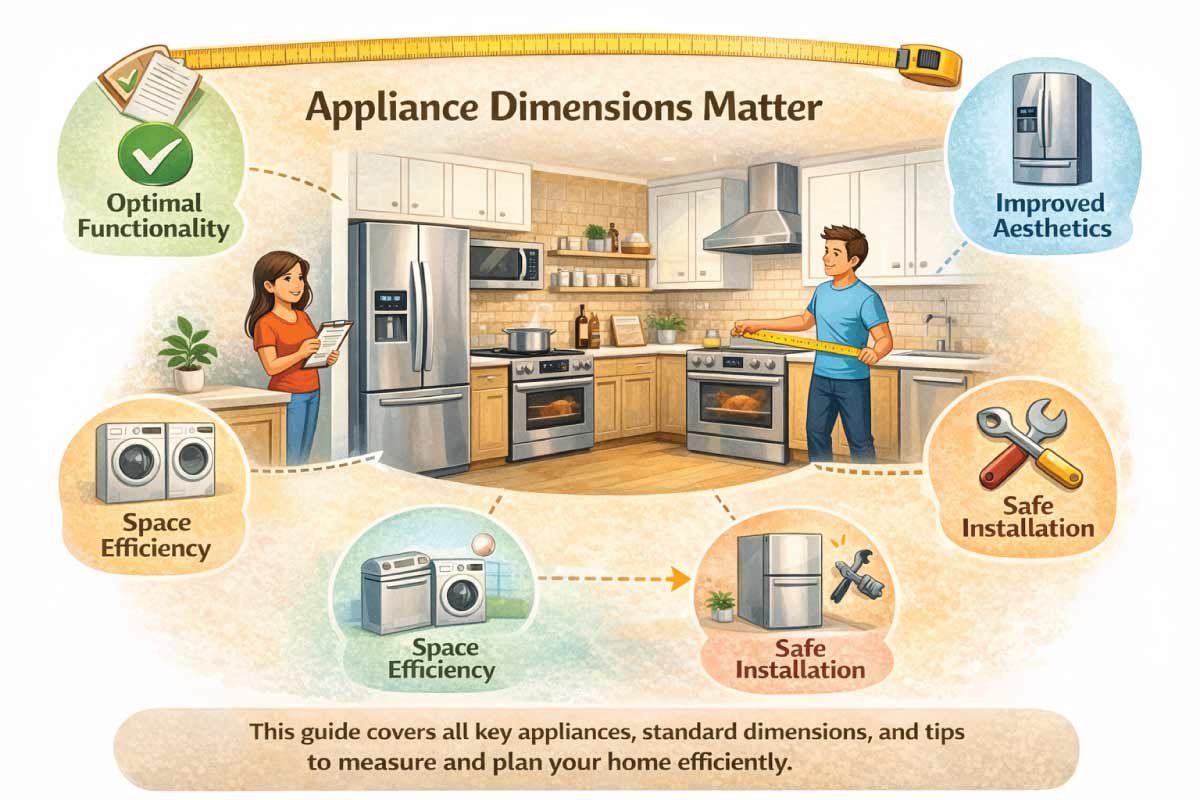
Optimal functionality: Properly sized appliances operate efficiently.
Space efficiency: Avoid overcrowded kitchens, laundry rooms, and utility areas.
Improved aesthetics: Appliances that fit the space look visually balanced.
Safe installation: Adequate clearance prevents heat buildup and allows ventilation.
This guide covers all key appliances, standard dimensions, and tips to measure and plan your home efficiently.
Refrigerators Sizes Guide
Refrigerators are essential in every kitchen, providing storage for fresh and frozen foods. Their dimensions vary by type, from compact top freezers to spacious French door models. Choosing the right size ensures food accessibility, energy efficiency, and proper kitchen layout. Understanding standard measurements helps in planning installation and maintaining clearance for ventilation and door swing.
| Type | Width | Depth | Height | Notes / Tips |
|---|---|---|---|---|
| Top Freezer | 28–32 in / 71–81 cm | 28–34 in / 71–86 cm | 61–67 in / 155–170 cm | Ideal for small kitchens |
| Bottom Freezer | 28–32 in / 71–81 cm | 28–34 in / 71–86 cm | 67–70 in / 170–178 cm | Freezer at the bottom, easier access to fridge |
| Side-by-Side | 32–36 in / 81–91 cm | 28–34 in / 71–86 cm | 65–70 in / 165–178 cm | Good for narrow spaces, ice/water dispensers |
| French Door | 30–36 in / 76–91 cm | 29–36 in / 74–91 cm | 68–72 in / 173–183 cm | Wide shelves, high capacity |
Tips:
- Leave 2–3 inches / 5–8 cm clearance on each side for ventilation.
- Allow at least 2 feet / 61 cm in front for door swing.
- Consider the appliance’s depth with handles when planning cabinetry.
Ovens & Ranges Sizes Guide
Ovens and ranges come in various widths and configurations, designed to fit seamlessly into kitchen cabinetry. Standard sizes help ensure compatibility, efficient cooking, and safety. Whether you choose a freestanding, slide-in, or wall oven, knowing the dimensions allows proper spacing, ergonomic use, and ventilation. This guide helps select the perfect oven or range for your kitchen.
| Type | Width | Depth | Height | Notes / Tips |
|---|---|---|---|---|
| Freestanding Range | 30 in / 76 cm | 25–28 in / 64–71 cm | 36 in / 91 cm | Most common kitchen range |
| Slide-In Range | 30 in / 76 cm | 25–28 in / 64–71 cm | 36 in / 91 cm | Flush fit with countertops |
| Wall Oven (Single) | 24–30 in / 61–76 cm | 24–28 in / 61–71 cm | 27–30 in / 68–76 cm | Fits in built-in cabinetry |
| Wall Oven (Double) | 27–30 in / 68–76 cm | 24–28 in / 61–71 cm | 50–52 in / 127–132 cm | Two ovens stacked for efficiency |
Tips:
- Maintain 36-inch / 91 cm clearance around freestanding ranges for safety.
- Slide-in and wall ovens should align with countertop height for ergonomic use.
Microwaves Sizes Guide
Microwave sizes vary based on type and capacity, whether countertop, over-the-range, or built-in. Proper sizing ensures convenient placement, safety, and accessibility while cooking or reheating food. Understanding dimensions helps you integrate a microwave into your kitchen layout without blocking cabinets or counters, and ensures compliance with ventilation and ergonomic installation standards.
| Type | Width | Depth | Height | Notes / Tips |
|---|---|---|---|---|
| Countertop | 20–24 in / 51–61 cm | 14–20 in / 36–51 cm | 12–16 in / 30–41 cm | Flexible, easy to move |
| Over-the-Range | 29–30 in / 74–76 cm | 15–16 in / 38–41 cm | 16–18 in / 41–46 cm | Requires proper ventilation |
| Built-In | 24–30 in / 61–76 cm | 18–24 in / 46–61 cm | 17–20 in / 43–51 cm | Integrated with cabinetry |
Tips:
- Check ventilation requirements for over-the-range microwaves.
- Ensure built-in microwaves are installed at comfortable eye level.
Dishwashers Sizes Guide
Dishwashers differ in width, depth, and height depending on type, from standard built-in models to compact or drawer-style designs. Correct sizing ensures they fit under countertops, align with cabinetry, and allow proper plumbing connections. Knowing dimensions in advance prevents installation issues, maximizes kitchen efficiency, and maintains ease of access for loading and unloading dishes.
| Type | Width | Depth | Height | Notes / Tips |
|---|---|---|---|---|
| Standard Built-In | 24 in / 61 cm | 24 in / 61 cm | 34 in / 86 cm | Most common in U.S. kitchens |
| Compact | 18 in / 46 cm | 22 in / 56 cm | 32–34 in / 81–86 cm | Perfect for small apartments |
| Drawer Dishwasher | 24 in / 61 cm | 22–24 in / 56–61 cm | 34 in / 86 cm | Two drawers for flexibility |
Tips:
- Leave at least 1 inch / 2.5 cm on sides for cabinet adjustment.
- Ensure plumbing and electrical connections are accessible.
Washing Machines & Dryers Sizes Guide
Laundry appliances vary in size depending on capacity and configuration, including front-load, top-load, or stackable units. Accurate measurements are crucial for fitting machines in laundry rooms or closets while maintaining ventilation and access for maintenance. Understanding standard dimensions helps prevent space constraints and ensures appliances function efficiently.
| Appliance | Width | Depth | Height | Notes / Tips |
|---|---|---|---|---|
| Front-Load Washer | 27 in / 68 cm | 30–34 in / 76–86 cm | 38–40 in / 97–102 cm | Energy efficient, stackable |
| Top-Load Washer | 27–28 in / 68–71 cm | 27–28 in / 68–71 cm | 42–44 in / 107–112 cm | Easier loading without bending |
| Dryer (Electric/Gas) | 27–30 in / 68–76 cm | 27–34 in / 68–86 cm | 36–42 in / 91–107 cm | Stackable options save space |
Tips:
- Maintain 1–2 inches / 2.5–5 cm clearance for ventilation and maintenance.
- Stackable washer-dryer sets need floor-to-ceiling height measurement.
Also Read:
Air Conditioners & HVAC Units Sizes Guide
Air conditioners and HVAC units come in multiple types and sizes, from window and portable units to split-system indoor and outdoor components. Proper sizing ensures efficient cooling or heating and fits your room layout. Accurate measurements help maintain airflow, clearance, and easy maintenance while avoiding obstructions that can reduce performance.
| Type | Width | Depth | Height | Notes / Tips |
|---|---|---|---|---|
| Window AC | 18–36 in / 46–91 cm | 12–24 in / 30–61 cm | 12–18 in / 30–46 cm | Measure window size carefully |
| Portable AC | 12–20 in / 30–51 cm | 12–18 in / 30–46 cm | 24–36 in / 61–91 cm | Easy to move between rooms |
| Split AC Indoor Unit | 28–44 in / 71–112 cm | 8–12 in / 20–30 cm | 10–14 in / 25–36 cm | Mounting height matters |
| Split AC Outdoor Unit | 30–36 in / 76–91 cm | 12–16 in / 30–41 cm | 20–28 in / 51–71 cm | Place on flat surface with airflow |
Tips:
- Ensure 3–6 inches / 7–15 cm clearance around units.
- Avoid blocking vents with furniture.
Also Read:
Freezers (Upright & Chest) Sizes Guide
Freezers are essential for long-term food storage, with sizes ranging from compact units to large chest or upright models. Understanding their dimensions helps you optimize kitchen or garage space, ensure proper airflow, and allow convenient access to stored items. Correct sizing also supports energy efficiency and safe clearance for lids and doors.
| Type | Width | Depth | Height | Notes / Tips |
|---|---|---|---|---|
| Upright Freezer | 28–36 in / 71–91 cm | 28–34 in / 71–86 cm | 61–72 in / 155–183 cm | Vertical shelves, easier access |
| Chest Freezer | 28–60 in / 71–152 cm | 28–34 in / 71–86 cm | 32–36 in / 81–91 cm | Large capacity, requires floor space |
| Compact Freezer | 20–24 in / 51–61 cm | 20–24 in / 51–61 cm | 30–34 in / 76–86 cm | Ideal for apartments or small kitchens |
Tips:
-
Leave at least 2–3 inches / 5–8 cm on sides for airflow.
-
Chest freezers need extra clearance for lid opening.
Garbage Disposals & Waste Systems Sizes Guide
Kitchen waste management appliances vary in size, from under-sink disposals to pull-out bins and built-in compactors. Choosing the right dimensions ensures proper fit under sinks or within cabinetry while allowing plumbing access. Proper sizing maximizes workspace efficiency and keeps your kitchen functional, organized, and hygienic.
| Type | Width | Depth | Height | Notes / Tips |
|---|---|---|---|---|
| Under-Sink Garbage Disposal | 6–9 in / 15–23 cm | 12–15 in / 30–38 cm | 12–16 in / 30–41 cm | Fits standard sinks |
| Built-In Trash Compactor | 15–18 in / 38–46 cm | 22–24 in / 56–61 cm | 32–34 in / 81–86 cm | Integrates with cabinetry |
| Pull-Out Waste Bin | 12–18 in / 30–46 cm | 20–24 in / 51–61 cm | 24–30 in / 61–76 cm | Ideal for small kitchens |
Tips:
-
Ensure plumbing does not interfere with disposal installation.
-
Pull-out bins work best in cabinets with full-extension slides.
Water Heaters & Boilers Sizes Guide
Water heaters and boilers differ in width, depth, and height depending on type, such as tank, tankless, or electric boilers. Correct sizing ensures proper installation, maintenance access, and heating efficiency. Understanding dimensions prevents space issues, facilitates connections to water and gas lines, and ensures safety and convenience in your home.
| Type | Width | Depth | Height | Notes / Tips |
|---|---|---|---|---|
| Tank Water Heater (Residential) | 18–24 in / 46–61 cm | 18–24 in / 46–61 cm | 48–60 in / 122–152 cm | Most common for small households |
| Tankless Water Heater | 14–20 in / 36–51 cm | 6–8 in / 15–20 cm | 24–36 in / 61–91 cm | Saves space, heats on demand |
| Electric Boiler | 12–18 in / 30–46 cm | 12–16 in / 30–41 cm | 36–48 in / 91–122 cm | Typically for hydronic heating systems |
Tips:
-
Maintain 6–12 inches / 15–30 cm of clearance for maintenance.
-
Tankless heaters require professional installation for water and gas lines.
Vent Hoods & Exhaust Fans Sizes Guide
Vent hoods and exhaust fans are critical for maintaining air quality, removing smoke, heat, and odors. Proper sizing ensures they fit above cooktops or islands, provide adequate ventilation, and complement kitchen aesthetics. Understanding dimensions helps with safe installation, efficient airflow, and integration with cabinetry or ceiling space.
| Type | Width | Depth | Height | Notes / Tips |
|---|---|---|---|---|
| Under-Cabinet Range Hood | 24–36 in / 61–91 cm | 18–20 in / 46–51 cm | 6–12 in / 15–30 cm | Standard kitchen installation |
| Wall-Mounted Chimney Hood | 30–36 in / 76–91 cm | 18–24 in / 46–61 cm | 24–36 in / 61–91 cm | Adds aesthetic appeal, powerful ventilation |
| Island Hood | 36–48 in / 91–122 cm | 18–24 in / 46–61 cm | 24–36 in / 61–91 cm | Installed over island cooktops |
Tips:
-
Install vent hood at 24–30 inches / 61–76 cm above cooktop.
-
Ensure ductwork fits within ceiling or cabinet space.
Small Kitchen Appliances Sizes Guide
Small kitchen appliances like toasters, coffee makers, and blenders may seem easy to place, but proper sizing is still important. Correct dimensions prevent countertop clutter, allow cabinet storage, and ensure ergonomic use. Measuring your space beforehand helps integrate these appliances efficiently, keeping your kitchen organized and functional.
| Appliance | Width | Depth | Height | Notes / Tips |
|---|---|---|---|---|
| Toaster | 12–16 in / 30–41 cm | 6–8 in / 15–20 cm | 8–10 in / 20–25 cm | Countertop space management |
| Coffee Maker | 6–12 in / 15–30 cm | 8–12 in / 20–30 cm | 10–15 in / 25–38 cm | Height matters for cabinet clearance |
| Blender / Mixer | 6–10 in / 15–25 cm | 8–12 in / 20–30 cm | 14–18 in / 36–46 cm | Store under upper cabinets |
Planning Tips for Appliance Layout
Efficient appliance placement is key to a functional and comfortable kitchen or laundry space. Proper planning ensures smooth workflow, safety, and accessibility while maximizing available space. By considering measurements, clearance, and future needs, you can avoid installation issues and make your kitchen or utility area both practical and adaptable for years to come.
-
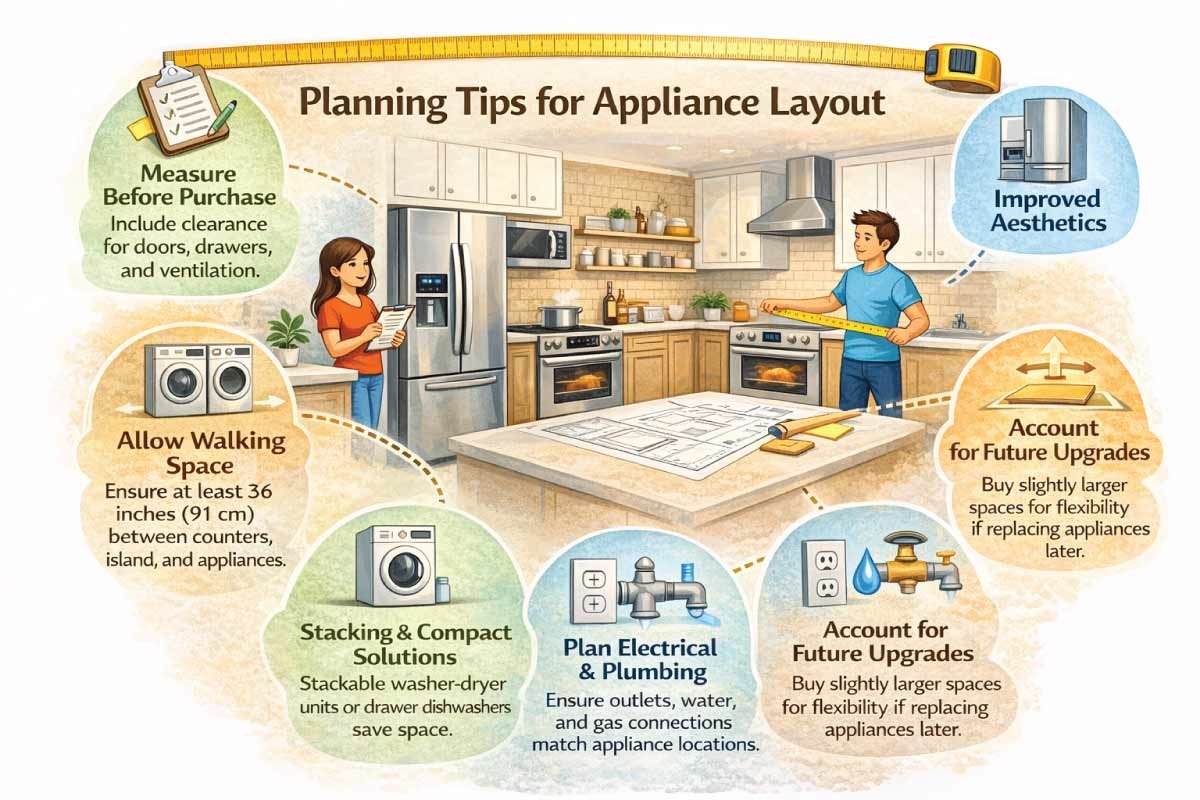
Measure before purchase – Include clearance for doors, drawers, and ventilation.
-
Allow walking space – Ensure at least 36 inches (91 cm) between counters, island, and appliances.
-
Stacking & compact solutions – Stackable washer-dryer units or drawer dishwashers save space.
-
Plan electrical & plumbing – Ensure outlets, water, and gas connections match appliance locations.
-
Account for future upgrades – Buy slightly larger spaces for flexibility if replacing appliances later.
How to Read Appliance Size Charts Correctly
Understanding appliance size charts is essential for selecting products that fit your kitchen, laundry, or utility space. Correctly reading measurements prevents installation issues, ensures proper clearance, and helps maintain functionality. By learning how to interpret width, height, and depth, you can confidently choose the right appliance for your home.
1. Identify the Appliance Type
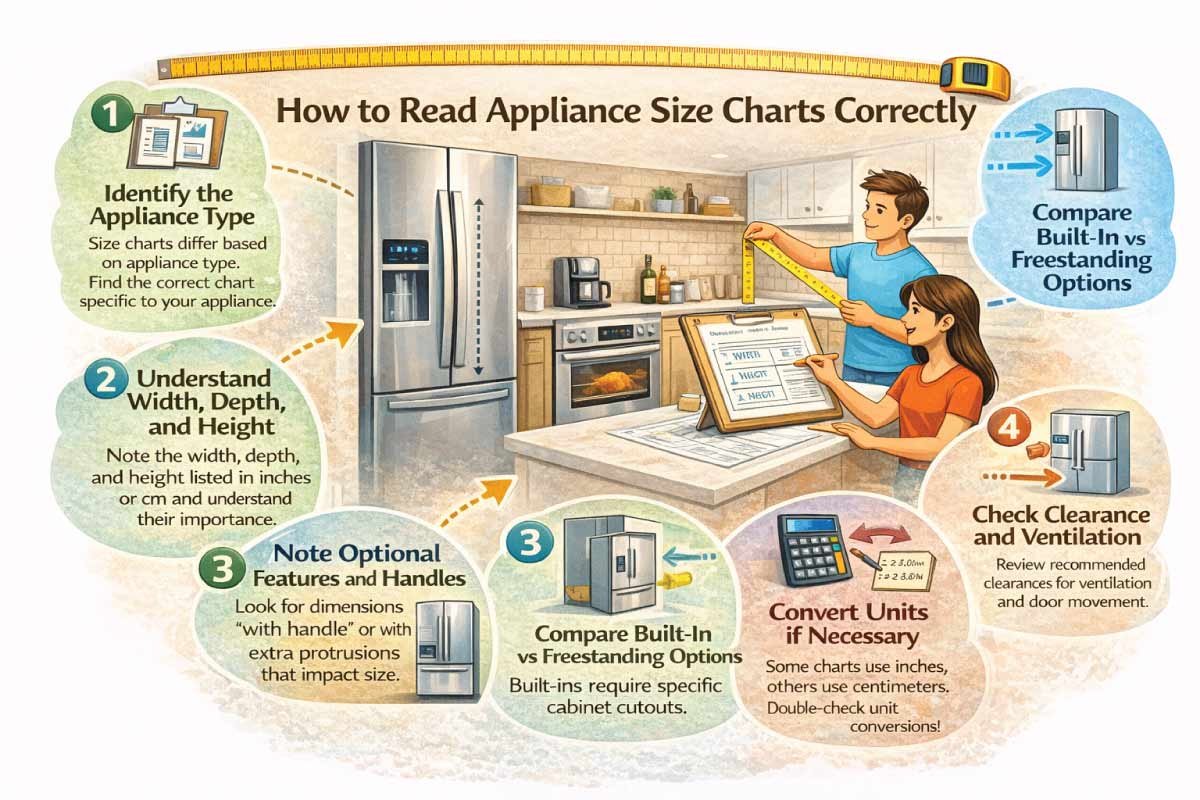
Size charts differ based on appliance type, such as refrigerators, ovens, or dishwashers. Start by locating the chart specific to your appliance. Comparing measurements across models ensures you consider width, height, and depth while matching your kitchen or utility space requirements accurately.
2. Understand Width, Depth, and Height
Appliance charts usually list width, depth, and height in inches or centimeters. Width determines how it fits between cabinets, depth affects counter alignment and door clearance, and height ensures stacking or built-in placement. Always check all three dimensions to avoid surprises during installation.
3. Note Optional Features and Handles
Some appliances include handles, protrusions, or extra compartments that affect overall size. Size charts may list “with handle” or “without handle” dimensions. Accounting for these ensures appliances don’t block cabinets, walls, or walkways, maintaining a smooth, functional layout in your kitchen or laundry area.
4. Check Clearance and Ventilation
Size charts often provide recommended spacing for doors, drawers, and ventilation. This is critical for proper airflow, energy efficiency, and appliance longevity. Always add the suggested clearance to measurements to avoid overheating, door obstruction, or maintenance difficulties after installation.
5. Compare Built-In vs Freestanding Options
Charts can vary between built-in and freestanding appliances. Built-in models may require precise cabinet cutouts, while freestanding units need floor space and side clearance. Understanding the differences allows you to plan cabinets, countertops, and surrounding areas for a perfect fit.
6. Convert Units if Necessary
Some charts use inches while others use centimeters. Accurate unit conversion is crucial when comparing appliances from different brands or regions. Small discrepancies in conversion can cause installation problems, so double-check measurements before purchase to ensure your chosen appliance fits perfectly.
7. Consider Future Flexibility
Reading size charts also helps plan for upgrades or replacements. Buying slightly larger spaces or accounting for appliance expansion ensures flexibility if you replace or upgrade models in the future. Proper planning prevents costly remodeling or adjustment after purchase.
Conclusion
Understanding appliance sizes is the first step toward a functional, efficient, and visually balanced home. From refrigerators and ovens to washers, dryers, and AC units, knowing standard dimensions ensures each appliance fits your space perfectly. By consulting this Appliance Sizes Guide, you can confidently plan layouts, make informed purchases, and avoid costly mistakes, all while maximizing comfort, efficiency, and style in your home.
Whether it’s a compact apartment, a spacious kitchen, or a utility-focused laundry area, proper appliance sizing is the key to seamless living. Always measure, compare, and plan carefully—your home and family will thank you.
