
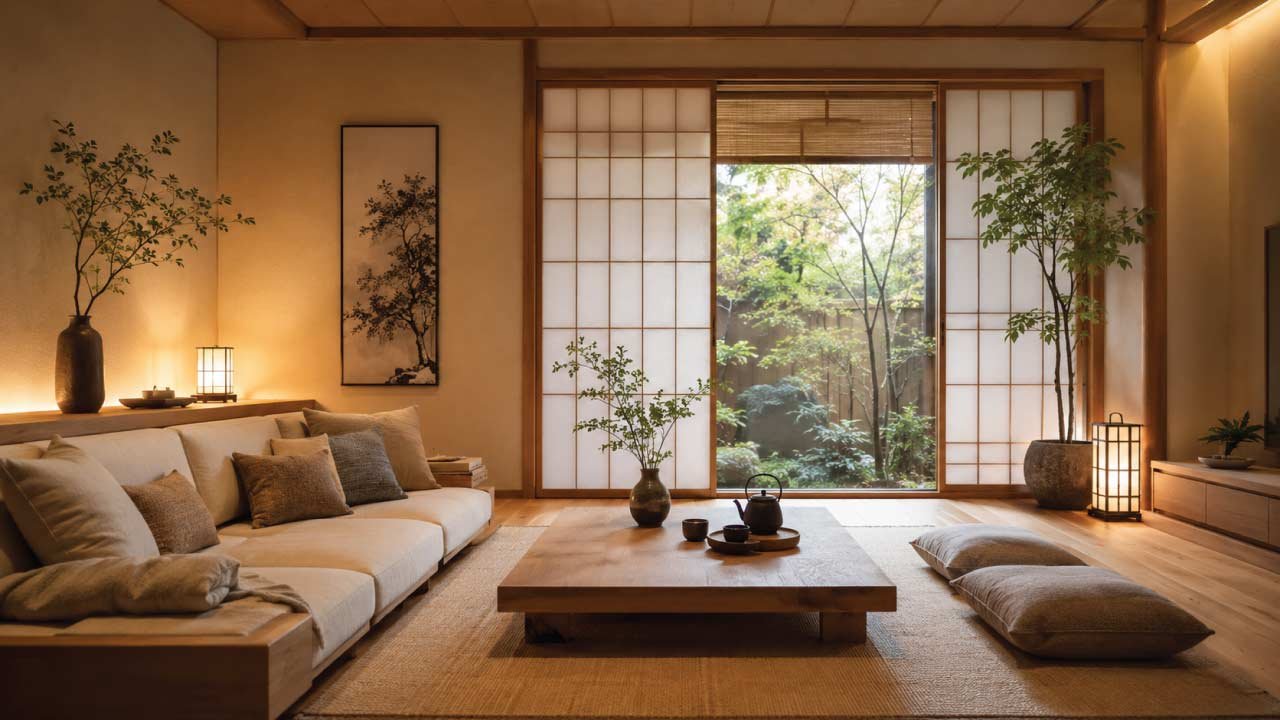
Japanese-inspired interior design has become one of the most admired styles in modern homes because it blends simplicity, nature, and calmness into a deeply peaceful living experience. Rooted in traditions like wabi-sabi (the beauty of imperfection) and ma (the importance of empty space), Japanese aesthetics focus on balance rather than excess.
A Japanese-inspired living room is not about filling a space it’s about refining it. Every element has intention, and every corner supports a sense of calm. Whether you live in a small apartment or a spacious home, these 12 ideas will help you create a living room that feels serene, minimal, and naturally beautiful.
1. Embrace Minimalism with Purpose
Japanese-inspired design focuses on intentional simplicity rather than emptiness. Every item has meaning and function, creating balance and calm. Purposeful minimalism removes distractions, allowing the space to feel open, peaceful, and thoughtfully arranged instead of sparse or unfinished.
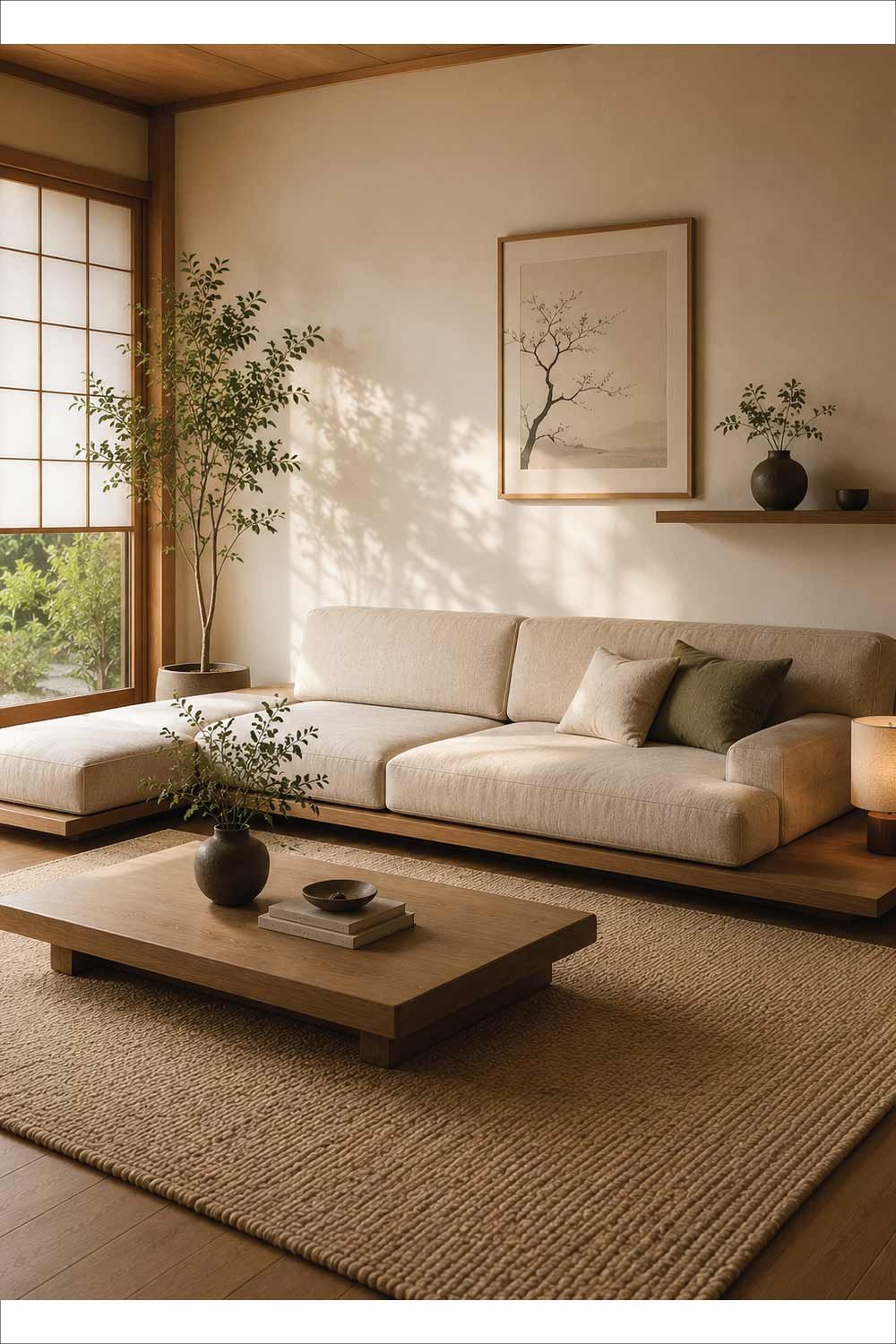
- Purposeful minimalism focuses on intention rather than removing everything from the room.
- Fewer furniture pieces help the living room feel calm and breathable.
- Each item should serve a clear functional or emotional purpose.
- Low-profile sofas enhance simplicity and visual balance.
- Simple coffee tables keep layouts clean and uncluttered.
- Limited décor highlights quality over quantity.
Start by reducing visual clutter. Keep only essential furniture and meaningful décor. A low sofa, a simple coffee table, and one or two accent pieces are often enough. The goal is to let the room “breathe,” creating a sense of calm and openness.
Personal Experience
When I removed unnecessary décor and kept only meaningful pieces, the room felt instantly calmer. Cleaning became easier, and the space felt more intentional. Minimal furniture helped the living room feel open while still warm and welcoming.
2. Use Natural Materials Everywhere
Natural materials are essential in Japanese-inspired interiors because they connect the home with nature. Wood, bamboo, linen, and stone add warmth and texture. These materials soften minimalist spaces, creating a grounded and organic atmosphere that feels comforting rather than stark.
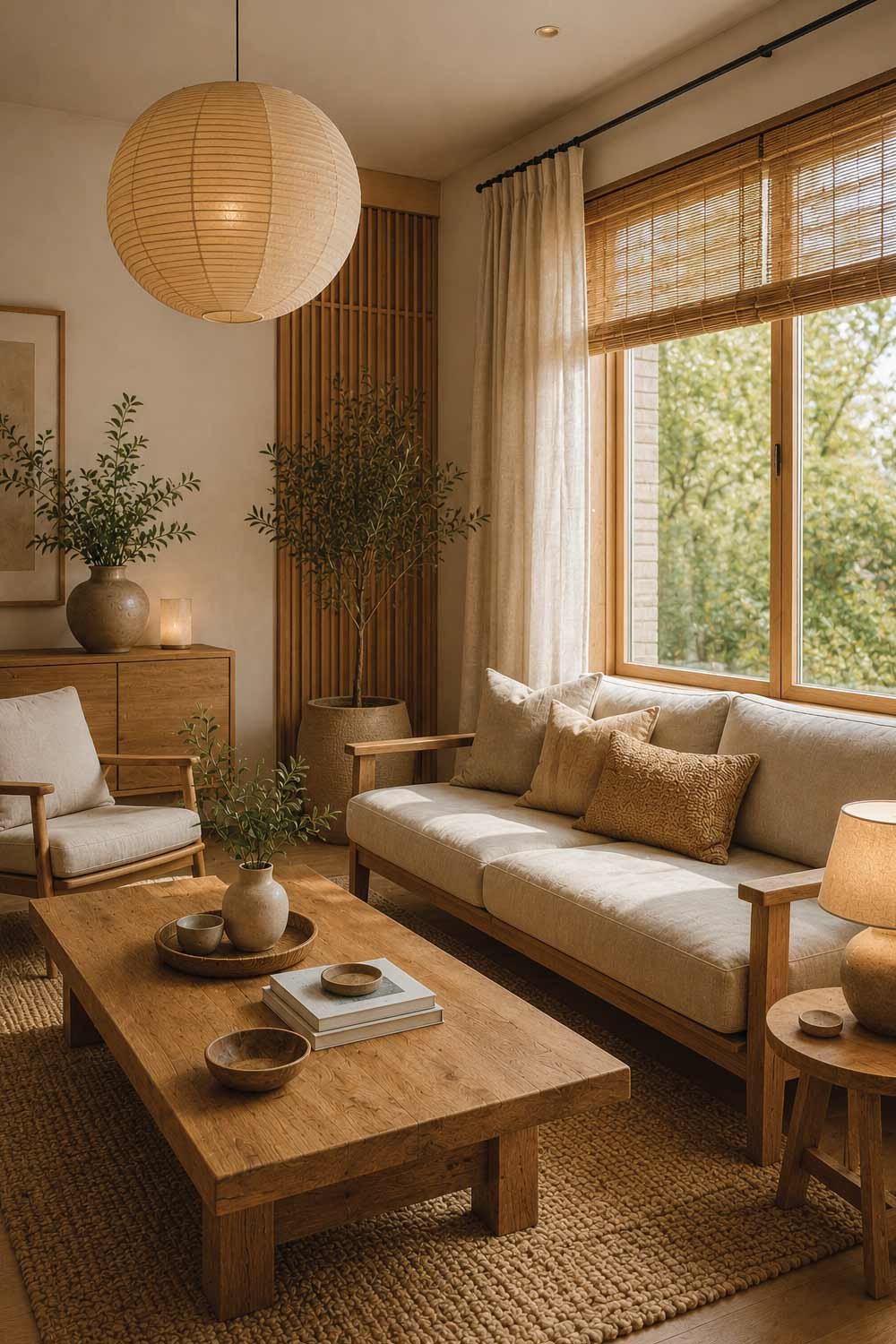
- Natural materials bring warmth and authenticity to minimalist interiors.
- Wooden furniture adds texture and visual depth.
- Bamboo elements introduce lightness and organic character.
- Linen and cotton fabrics feel soft and breathable.
- Visible wood grain enhances natural beauty.
- Stone accents balance softness with subtle contrast.
Opt for light or medium-toned wood furniture, especially oak, ash, or walnut. A wooden coffee table with visible grain, bamboo blinds, or linen curtains instantly brings organic warmth into the space. These textures soften minimalism and prevent the room from feeling sterile.
Personal Experience
After switching to wooden furniture and linen curtains, my living room felt more relaxed. The natural textures softened the space. It no longer felt plain, but calm, warm, and connected to nature in a subtle way.
3. Stick to a Neutral Earthy Color Palette
Japanese interiors rely on soothing, nature-inspired colors to create harmony. Neutral and earthy tones reduce visual noise and promote relaxation. These colors blend seamlessly, making the living room feel cohesive, grounded, and emotionally calming without appearing dull.
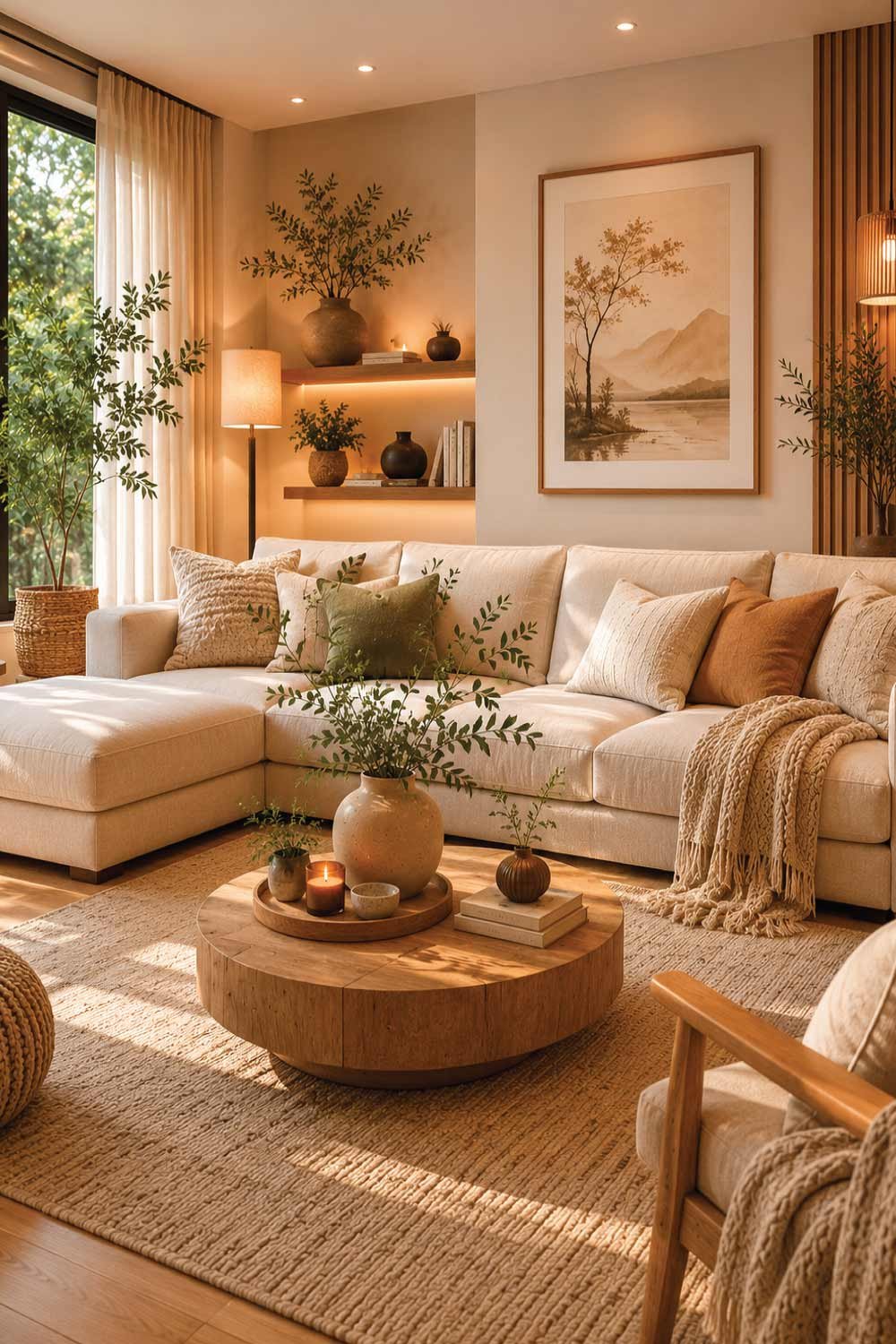
- Earthy tones create a calm and balanced visual environment.
- Soft whites keep spaces bright yet gentle.
- Warm beiges add subtle warmth and comfort.
- Muted browns reinforce natural material choices.
- Stone grays add understated elegance.
- Gentle greens reflect natural surroundings indoors.
Think soft whites, warm beiges, muted browns, stone gray, and gentle greens. These shades mimic natural environments and create a cohesive, relaxing atmosphere. Avoid overly bright or saturated colors, as they disrupt the sense of harmony.
Personal Experience
Using neutral tones completely changed the mood of my living room. The space felt calmer and more cohesive. Bright colors were distracting before, but earthy shades made everything feel balanced and restful.
4. Low Profile Furniture for a Grounded Feel
Low-profile furniture reflects traditional Japanese living and encourages a grounded, relaxed atmosphere. Keeping furniture closer to the floor enhances horizontal flow. This approach increases perceived ceiling height and makes small living rooms feel more spacious and serene.
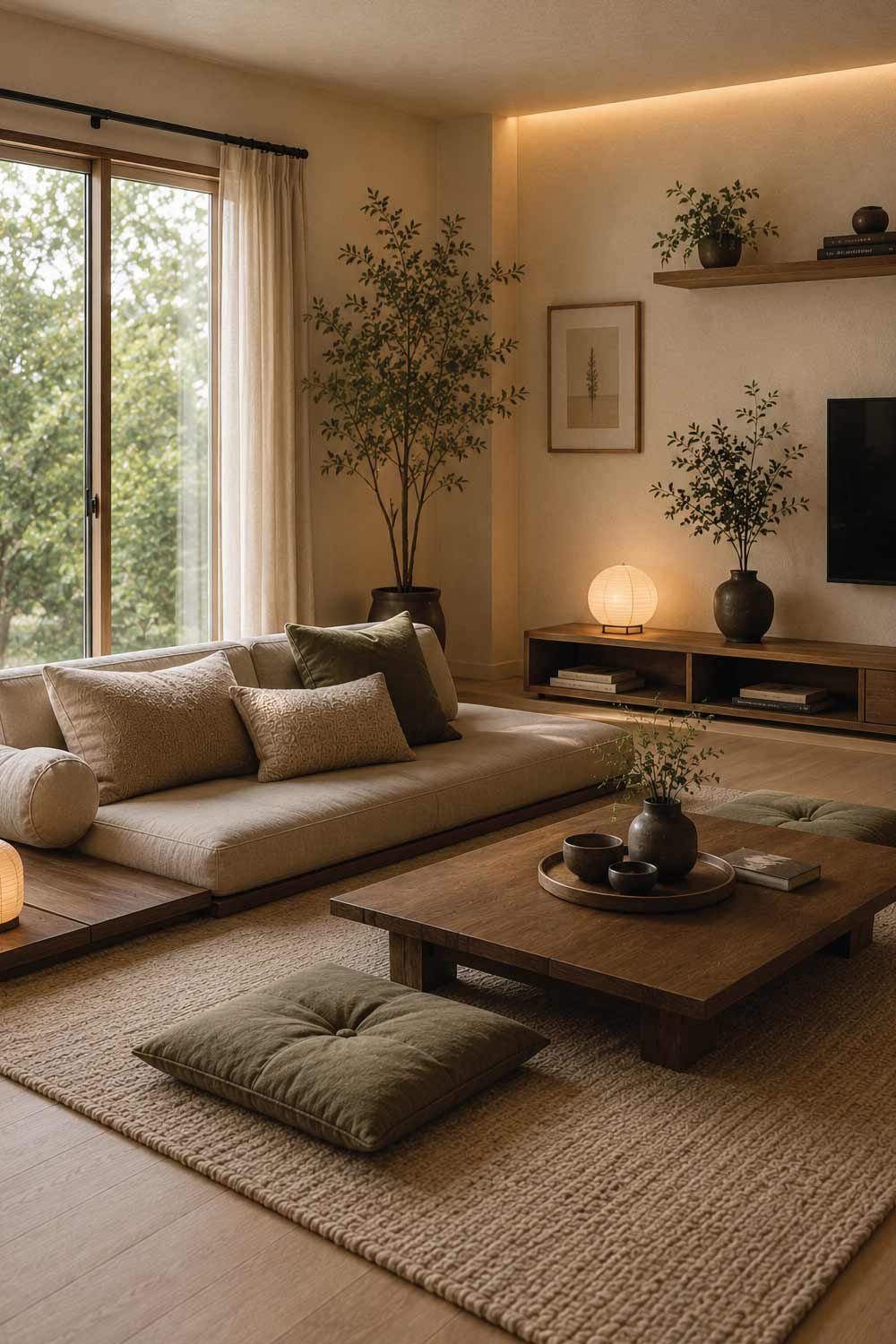
- Low seating promotes calm and grounded living.
- Low sofas reduce visual weight in the room.
- Floor cushions add flexibility and comfort.
- Low coffee tables anchor the seating area.
- Horizontal layouts enhance openness and flow.
- Lower furniture makes ceilings feel higher.
Choose low sofas, floor cushions (zabuton), or even minimalist floor seating arrangements. A low coffee table can help anchor the space and reinforce the horizontal flow typical of Japanese design.
Personal Experience
After using a low sofa and table, my living room felt more peaceful. Sitting closer to the ground felt relaxing. The ceiling seemed higher, and the room felt wider without changing the actual layout.
5. Incorporate Shoji Inspired Elements
Shoji-inspired elements introduce traditional Japanese aesthetics without heavy construction. Their wooden grids and translucent surfaces soften light and define space gently. These features maintain openness while adding cultural character and visual interest.
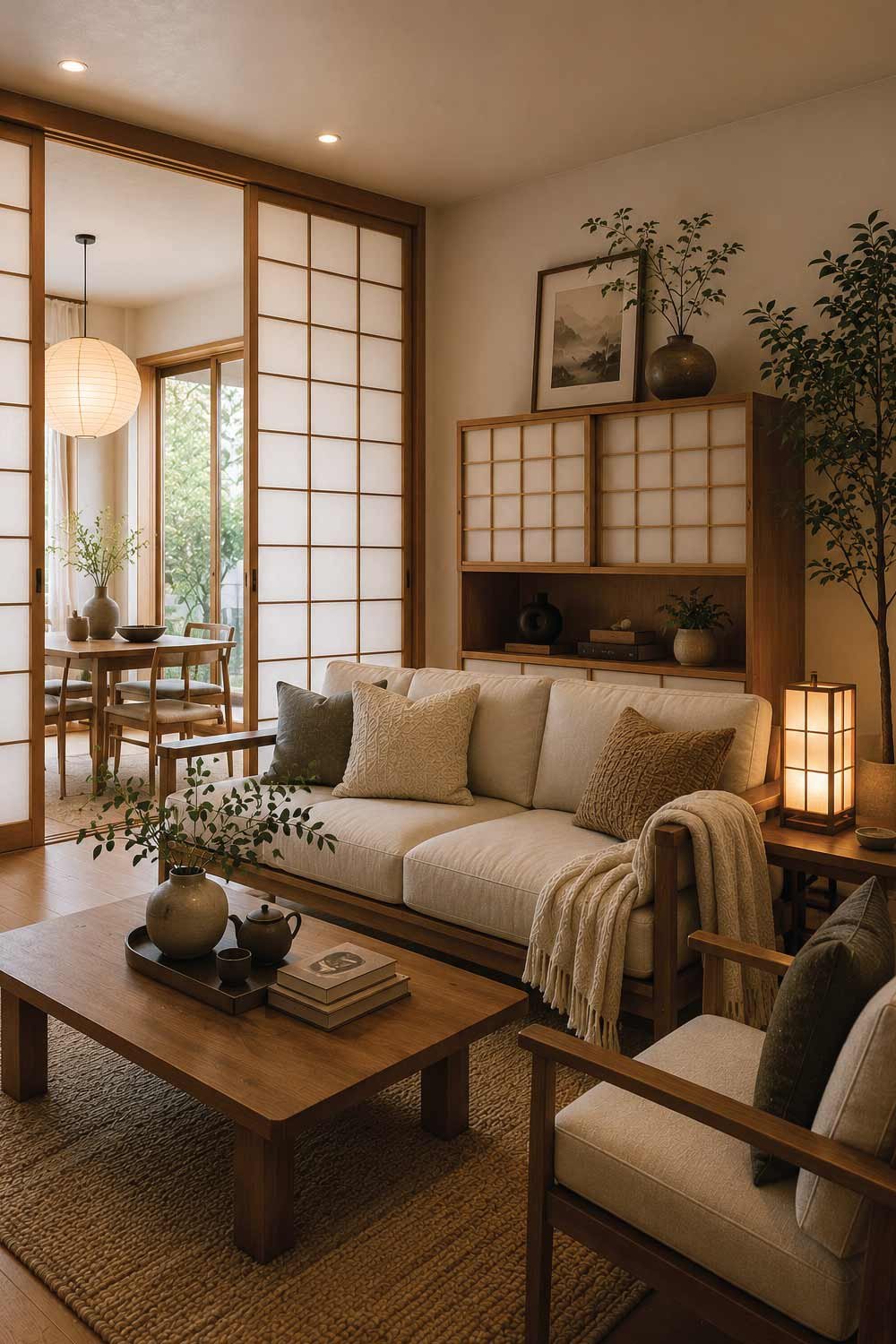
- Shoji-style designs diffuse light softly.
- Wooden grid patterns add subtle structure.
- Sliding elements save space and improve flow.
- Shoji-inspired dividers create gentle boundaries.
- Translucent panels maintain openness and brightness.
- Cabinet fronts can mimic shoji aesthetics easily.
While you may not install full shoji partitions, you can incorporate their aesthetic through sliding doors, room dividers, or even cabinet fronts with grid-like wooden frames. These elements diffuse light beautifully and create soft visual boundaries without blocking openness.
Personal Experience
Adding shoji-style panels instantly softened my living room lighting. The space felt peaceful and elegant. Even without full partitions, the subtle design made the room feel thoughtfully divided and serene.
6. Prioritize Natural Light and Soft Lighting
Lighting in Japanese-inspired spaces supports calmness and natural rhythm. Soft, diffused light replaces harsh brightness. By maximizing daylight and using warm artificial lighting, the living room becomes relaxing and emotionally soothing throughout the day.
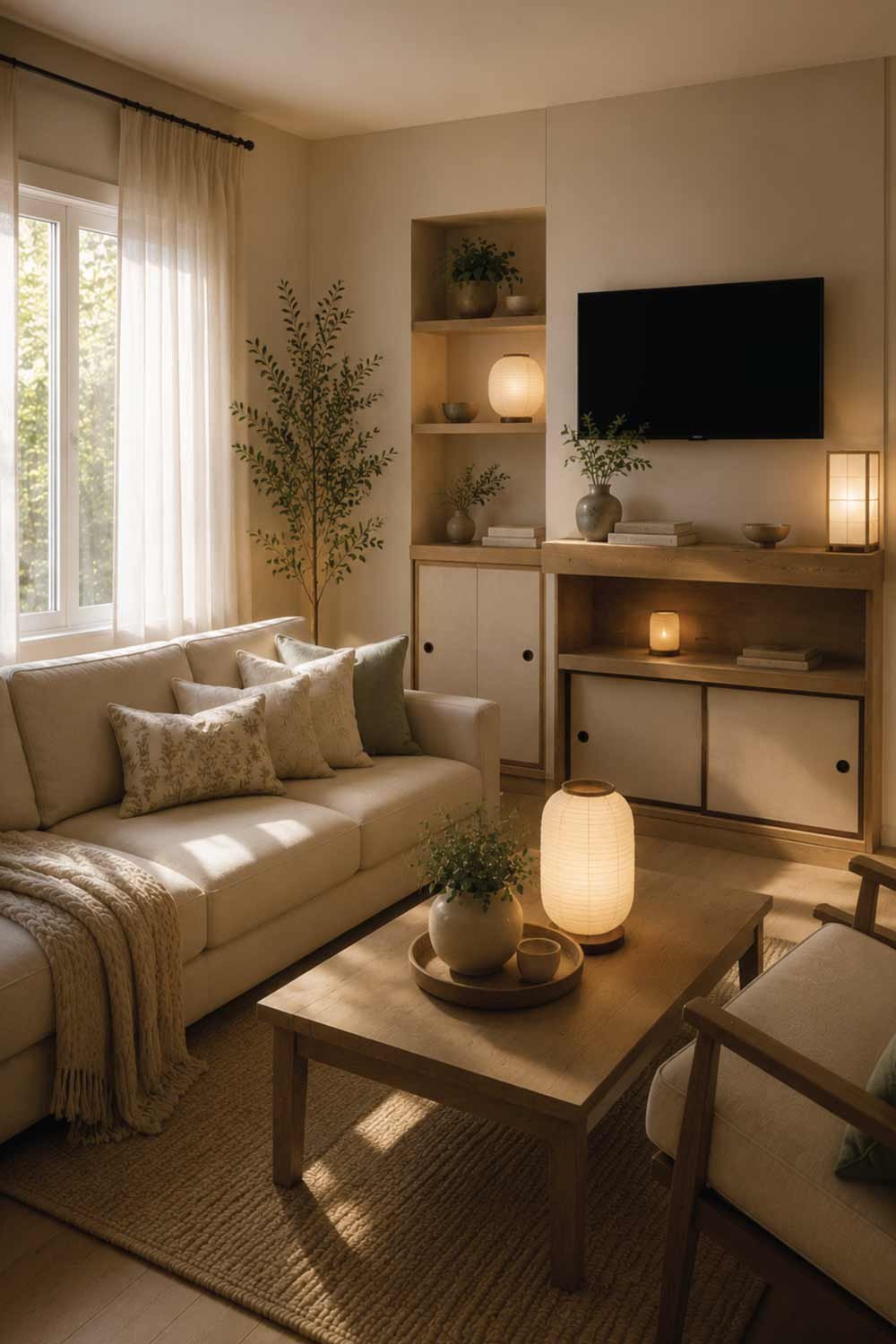
- Natural light enhances openness and positivity.
- Sheer curtains allow daylight to filter gently.
- Soft lighting reduces harsh contrasts.
- Paper lanterns create warm ambient glow.
- Fabric shades soften artificial lighting.
- Indirect lighting supports relaxation in evenings.
Maximize daylight by using sheer curtains or rice-paper-style window coverings. In the evening, opt for warm lighting such as paper lantern lamps, fabric shades, or indirect LED lighting.
Personal Experience
Switching to soft lighting transformed my evenings at home. The room felt calmer and less stressful. Gentle light made the space cozy, encouraging relaxation without feeling dark or overly bright.
Also Read:
17 Apartment Living Room Design Ideas for Stylish Small Spaces
7. Bring Nature Indoors with Greenery
Plants play a vital role in Japanese-inspired interiors because they strengthen the connection between indoor living and the natural world. Carefully chosen greenery adds life, softness, and organic beauty without overwhelming the minimalist structure of the room. The focus is on simplicity and balance rather than quantity or excess decoration.
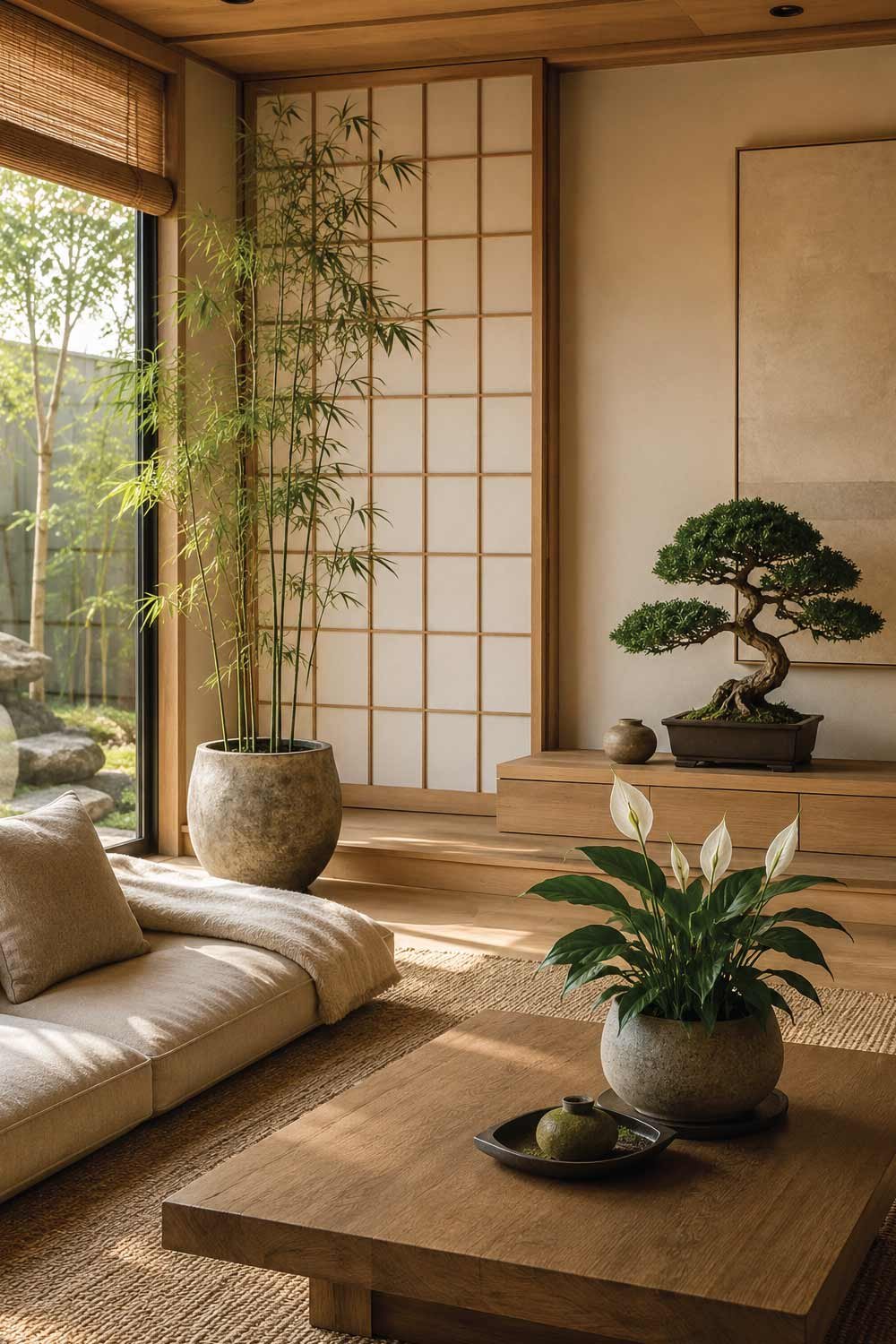
- Small, sculptural plants enhance calm and natural atmosphere indoors.
- Bonsai trees bring traditional Japanese artistic expression into living rooms.
- Bamboo plants create vertical elegance without taking much floor space.
- Peace lilies add softness with clean, simple white blooms.
- Minimal plant placement avoids visual clutter and maintains balance.
Choose simple, sculptural plants like bonsai trees, bamboo, peace lilies, or small potted maples. Avoid overcrowding—one or two carefully placed plants can have more impact than a large collection.
Personal Experience
Adding just one bamboo plant near my window completely changed the atmosphere. The room felt fresher and more peaceful. Instead of many decorations, a single plant created a strong natural focal point that made the space feel alive yet calm.
8. Highlight Imperfect Beauty (Wabi-Sabi Aesthetic)
Wabi-sabi is a Japanese design philosophy that values imperfection, simplicity, and authenticity. Instead of striving for flawless interiors, it embraces natural wear, irregular textures, and handmade objects. This approach creates a deeply human and emotionally comforting environment that feels honest rather than artificial or overly styled.
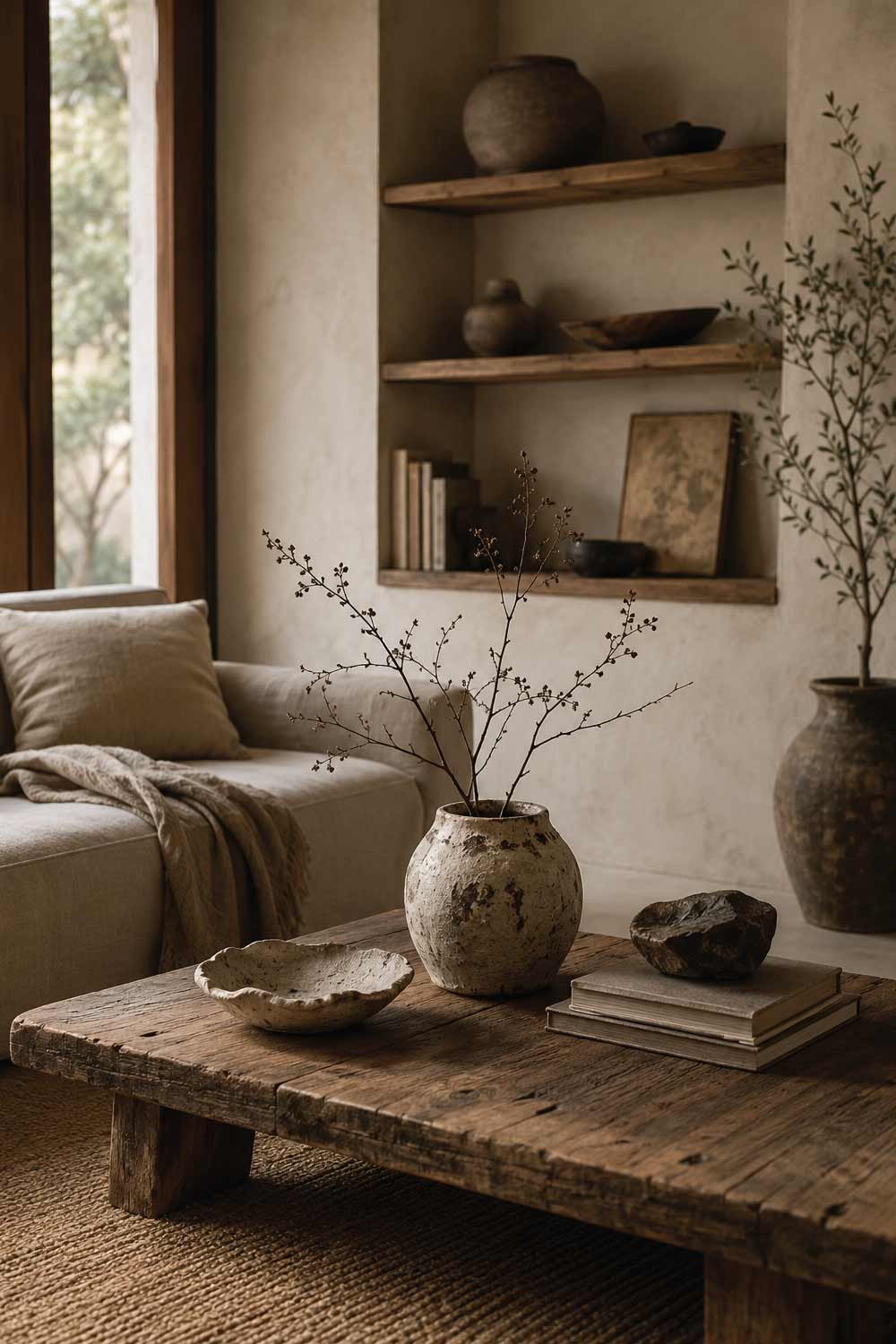
- Wabi-sabi celebrates natural imperfections in materials and design.
- Handmade ceramics add unique character and artistic warmth.
- Weathered wood introduces depth and natural storytelling.
- Asymmetrical objects create organic visual interest.
- Imperfect textures enhance emotional connection to the space.
- Subtle irregularities make interiors feel more authentic and lived-in.
Instead of perfectly polished décor, choose handmade ceramics, uneven textures, or slightly weathered wood. A cracked pottery vase or a rough stone sculpture can become a meaningful focal point.
Personal Experience
I replaced a perfectly polished décor piece with a handmade ceramic bowl, and the space immediately felt more meaningful. The imperfections made it feel real and warm, as if the room had its own quiet personality and history.
Also Read:
16 Gray Living Room Design Ideas for a Modern & Elegant Home
9. Keep Decorative Items Minimal but Meaningful
In Japanese-inspired design, decoration is intentional rather than excessive. Each object is carefully chosen for meaning, beauty, or emotional value. Instead of filling every surface, the design emphasizes restraint, allowing each piece to stand out and the space to remain calm and visually balanced.
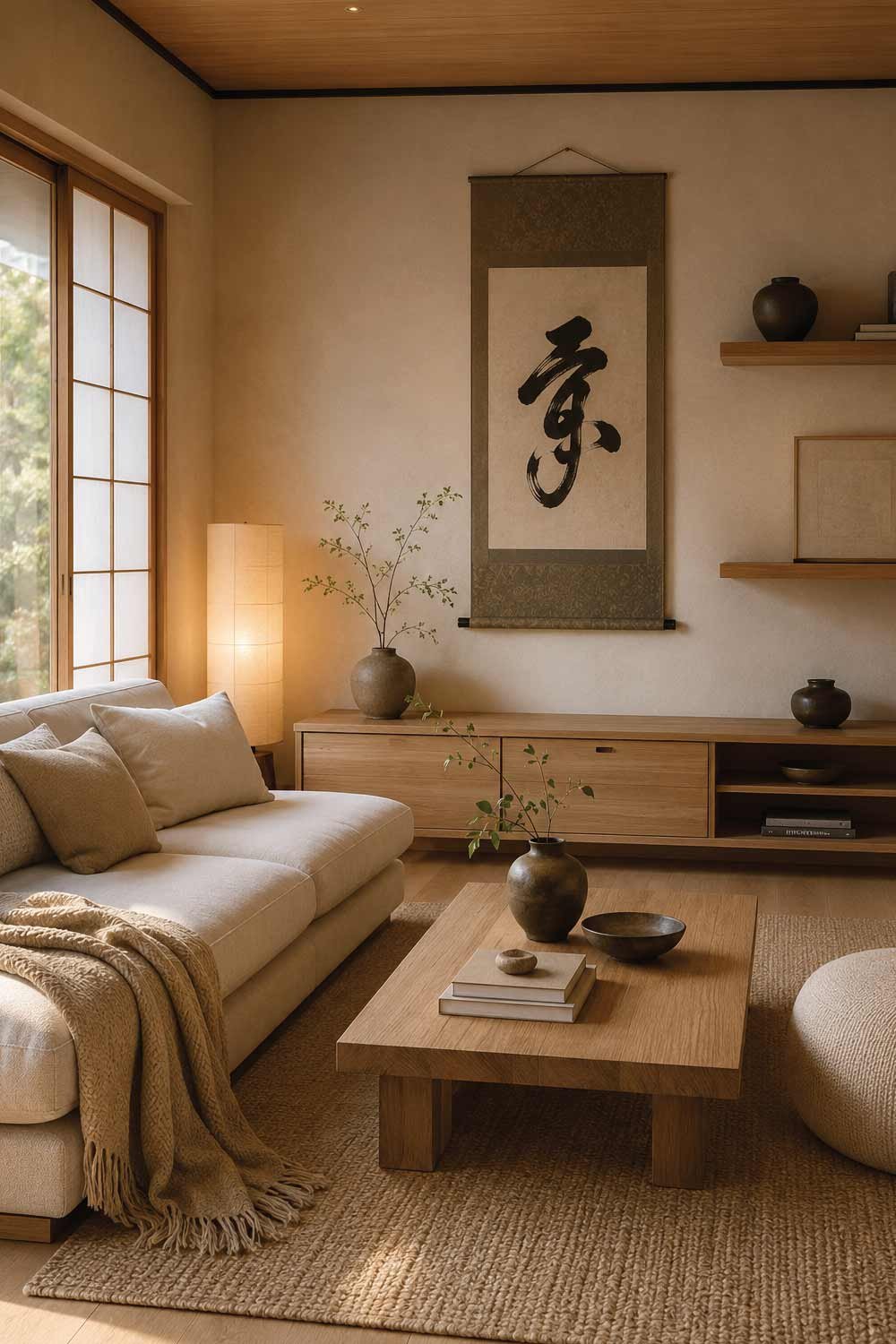
- Minimal décor enhances focus on carefully chosen items.
- Each object should carry emotional or aesthetic significance.
- Empty space increases visual clarity and calmness.
- Single artwork pieces create strong focal points.
- Ceramic objects add subtle elegance without clutter.
- Shelves remain visually light with limited styling.
A single artwork, a calligraphy scroll, or a carefully selected ceramic bowl can define the room’s character. Empty space is just as important as filled space it allows each object to stand out.
Personal Experience
After reducing my décor to just a few meaningful pieces, the room felt more peaceful. Instead of visual noise, each item stood out clearly. The emptier shelves actually made the space feel more intentional and refined.
10. Use Sliding Doors or Flexible Space Dividers
Sliding doors and flexible dividers are key elements of traditional Japanese interiors. They allow spaces to change function without losing openness. This adaptability is especially useful in modern homes, where maximizing flexibility and maintaining flow are essential for small or multifunctional living areas.
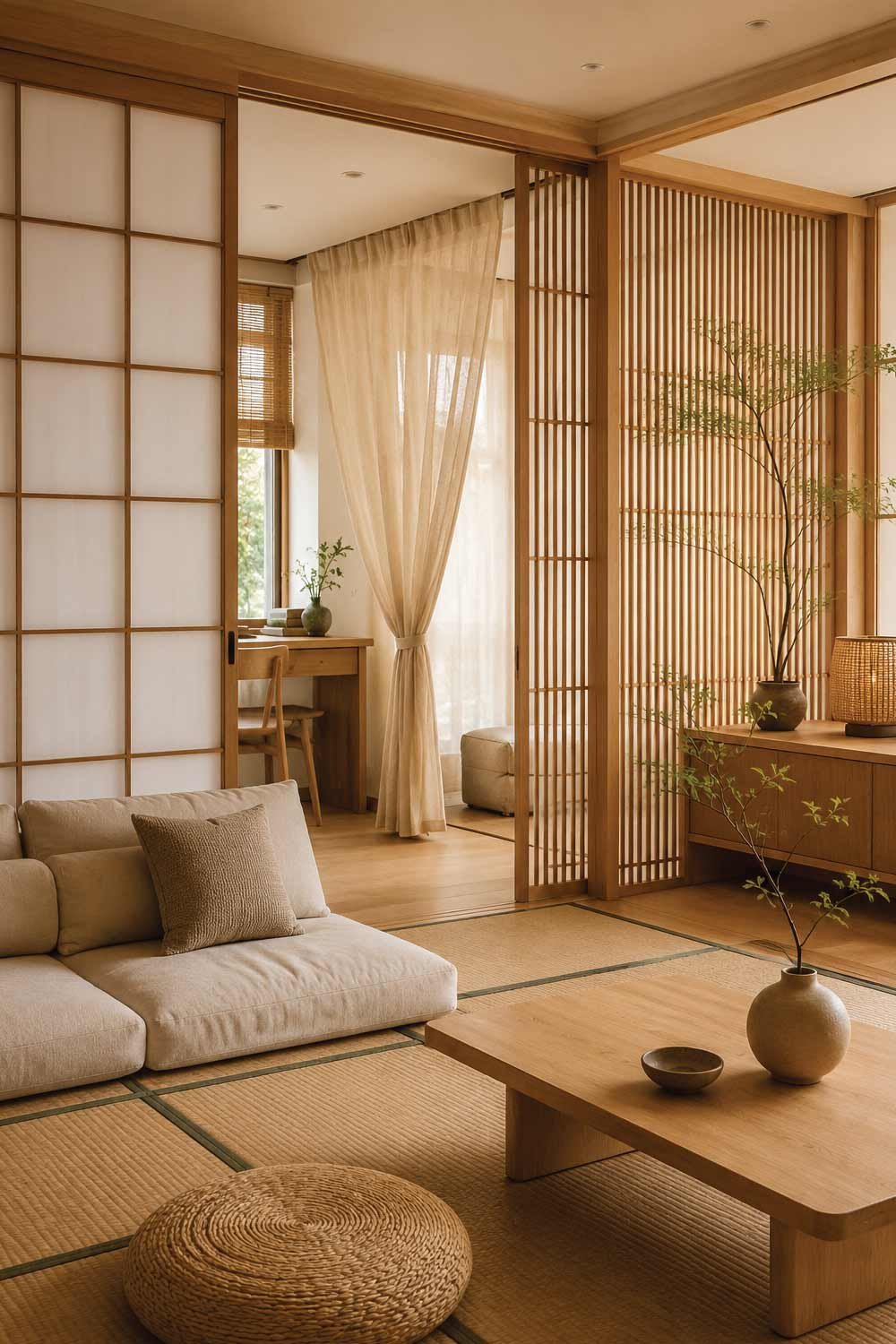
- Sliding systems allow flexible room arrangements when needed.
- Lightweight dividers preserve openness while defining spaces.
- Curtains or panels create soft separation without heaviness.
- Modular layouts improve functionality in small apartments.
- Movable partitions support changing daily needs easily.
- Open design is maintained even with divided areas.
Use lightweight sliding panels, curtains, or wooden screens to separate areas without permanently dividing them. This adds flexibility and maintains openness, which is essential to Japanese-inspired interiors.It’s especially useful in studio apartments or open-plan living rooms.
Personal Experience
Using a simple curtain divider helped me separate my workspace from the living room. It didn’t block light or space, but gave enough privacy. The flexibility made my home feel more functional without losing openness.
Also Read:
11. Choose Simple, Elegant Textiles
Textiles in Japanese-inspired interiors are understated and natural. The focus is on comfort, softness, and texture rather than bold patterns. Linen, cotton, and wool help maintain a calm and cohesive environment, supporting the minimalist aesthetic while still adding warmth and comfort.
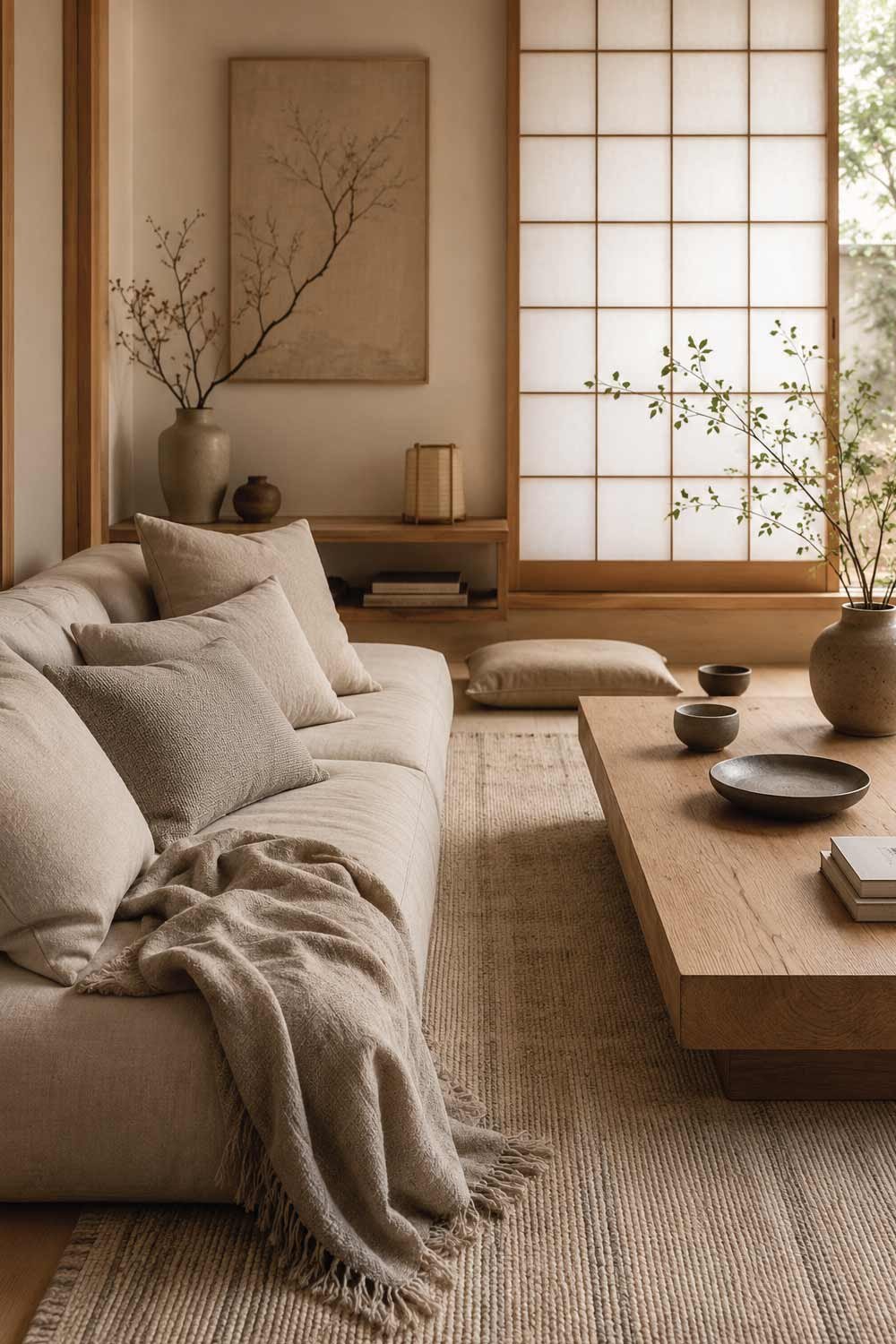
- Natural fabrics enhance softness and visual calmness.
- Linen and cotton provide breathable, lightweight comfort.
- Neutral colors maintain harmony in the space.
- Simple cushions avoid visual overload in seating areas.
- Textures replace the need for bold patterns.
- Layered fabrics add warmth without clutter.
Use neutral-colored cushions, plain throws, and simple rugs with minimal patterns. Avoid heavy prints or overly decorative fabrics. The texture itself should provide visual interest rather than bold design elements.
Personal Experience
Switching to plain linen cushions and cotton throws made my living room feel more relaxed. The absence of loud patterns helped everything blend smoothly. The textures added warmth while keeping the space visually simple.
12. Maintain Balance Through Empty Space (Ma)
Ma is a core Japanese design principle that values intentional emptiness. Instead of filling every area, space is treated as an essential design element. This balance between objects and emptiness creates harmony, clarity, and emotional calm within the living environment.
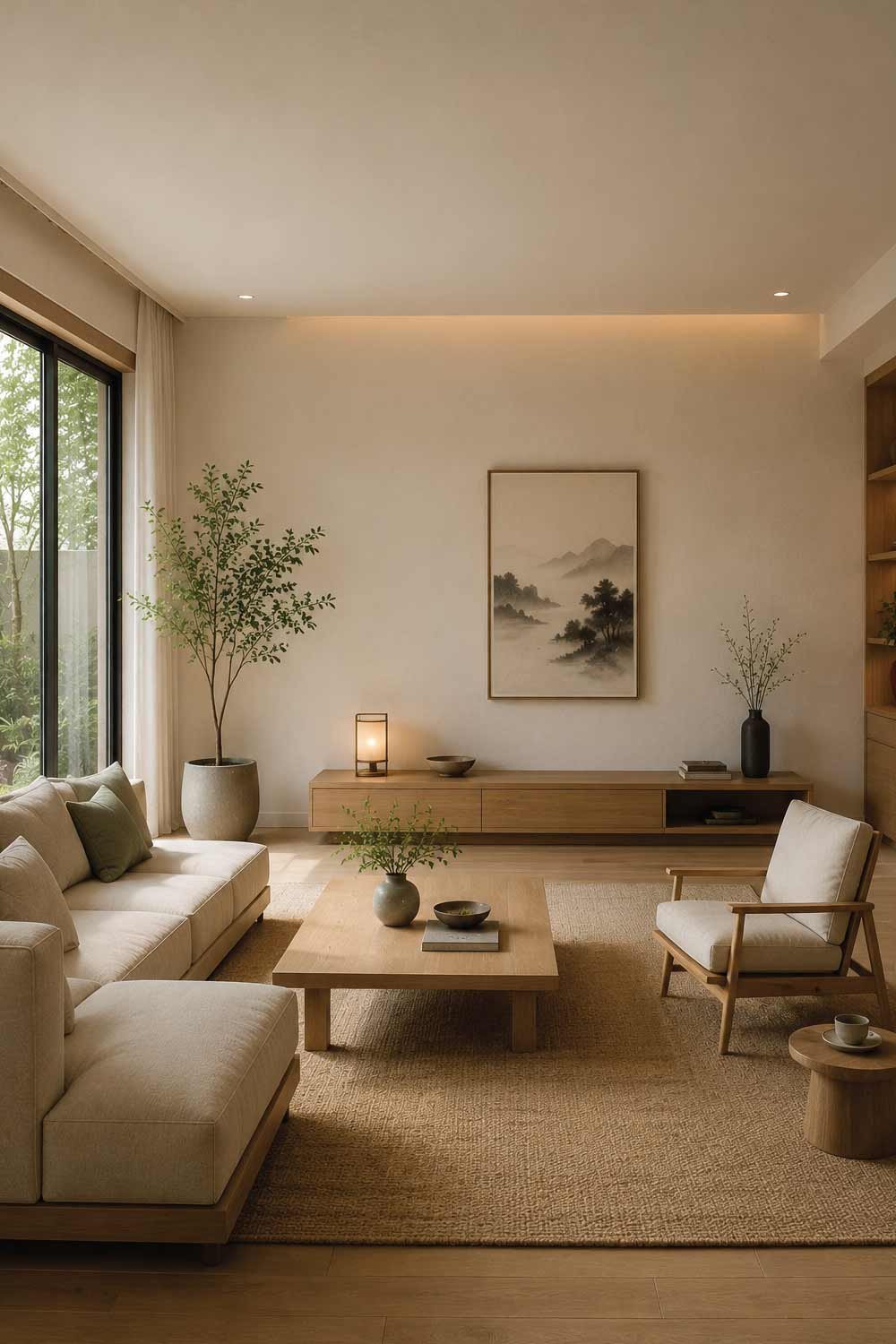
- Ma emphasizes the importance of intentional empty areas.
- Negative space improves visual balance and clarity.
- Furniture spacing prevents overcrowded layouts.
- Empty walls enhance focus on selected décor.
- Open areas support mental calmness and relaxation.
- Balance between objects and space creates harmony.
Instead of filling every corner, allow negative space to exist. Leave breathing room between furniture pieces. Avoid overcrowding walls or floors.
Personal Experience
When I stopped filling every corner of my room, it started feeling more peaceful. The empty spaces actually made the furniture and décor stand out better. The overall atmosphere became calmer, lighter, and easier to relax in.
Also Read:
Final Thoughts
A Japanese-inspired aesthetic living room is not just a design choice it is a lifestyle shift toward simplicity, mindfulness, and connection with nature. By focusing on natural materials, soft colors, minimal décor, and intentional space, you can create an environment that feels peaceful and restorative.
The beauty of this style lies in its restraint. It teaches that comfort does not come from abundance, but from clarity and balance. Whether you adopt a few elements or fully transform your space, Japanese-inspired design offers a timeless way to bring calm into everyday living.
