
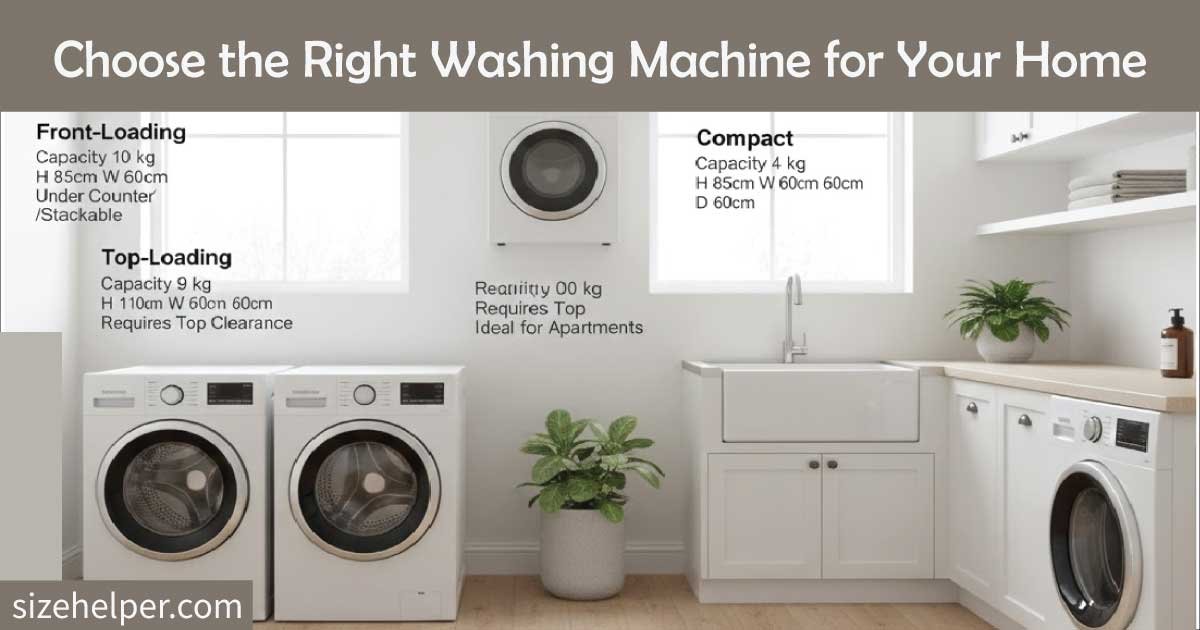
Selecting the appropriate washing machine is not simply a matter of picking a machine that has a good appearance. The efficiency of your laundry, the amount of energy used and the way your washing machine fits into your home design directly depend on its size and capacity. Having a machine that is excessively huge in your space can clog your laundry room whereas having a machine that is too small would mean more than one load will need which wastes time and energy. Knowledge on the dimensions, capacities, and installation requirements of the washing machines is essential in determining the model that suits your household and also features well within your house.
Why Washing Machine Size Matters
Washing machine is one of the most demanded appliances in a house and size influences utility as well as comfort. Making a poor choice in size may result in waste of water and electricity, clumsy installation, and inability to cope with laundry. Conversely, the appropriate size will prevent ineffective cleaning, minimize the wear and tear of clothes and will make laundry easier. Right planning will save money, inconvenience, and have your laundry area set to order.
Types of Washing Machines
Before choosing the appropriate size, one needs to know the variety of washing machines. Front-loading machines are energy efficient and are able to carry heavy loads yet they need adequate clearance to swing the doors. Top loading machines tend to be simpler to load and off load although they tend to consume more water. Small and mini machines are used in small areas or upscale apartments. Washer-dryer combos have the benefit of being space-saving although they are not necessarily larger-capacity. The first step in identifying the appropriate size of washing machine is to know what kind of washing machine would be appropriate in one specific home layout.
Table Guide: Washing Machine Types and Typical Dimensions
| Type | Width (inches) | Height (inches) | Depth (inches) | Typical Capacity (kg) | Notes |
|---|---|---|---|---|---|
| Front-loading | 24 – 27 | 33 – 39 | 24 – 34 | 6 – 12 | Efficient, larger loads |
| Top-loading | 27 – 30 | 36 – 44 | 26 – 28 | 6 – 10 | Easier access, more water |
| Compact | 18 – 24 | 30 – 36 | 17 – 22 | 3 – 6 | Small spaces, apartments |
| Portable | 18 – 22 | 30 – 36 | 17 – 22 | 2 – 5 | Lightweight, movable |
| Washer-Dryer Combo | 24 – 27 | 33 – 39 | 24 – 34 | 6 – 10 | Saves space, smaller loads |
Measuring Your Laundry Space
Your laundry area should be measured accurately. Determine the width, height and depth of the area available with allowance of hose, ventilation and door opening. Front-loading machines need additional space to swing doors normally of about 15-18 inches. Make it with 2-3 inches of ventilation and connection on the sides and the back. Recording of these measurements will guarantee that your selected machine will fit freely without any hindrance and the machine can operate smoothly.
Table Guide: Recommended Clearance for Washing Machine Installation
| Clearance Type | Recommended Space |
|---|---|
| Sides | 2 – 3 inches |
| Back | 2 – 3 inches |
| Front (door open) | 15 – 18 inches |
| Overhead (if top-loading) | 6 – 12 inches |
Determining Washing Machine Capacity
Washing machine capacity is quantified in kilograms and it shows the amount of dry laundry that can be washed at a time. A rough guide is 5-7kg per individual, 7-9kg per couple and 9-12kg per family of four or above. The bigger the capacities, the less loads and the higher the efficiency but they occupy more space. A larger capacity machine is suggested to those households whose laundry is a frequent activity or those items that are heavy like bedding.
Table Guide: Recommended Washing Machine Capacity by Household Size
| Household Size | Recommended Capacity (kg) | Suggested Type |
|---|---|---|
| Single person | 5 – 6 | Compact, top-loading |
| Couple | 7 – 8 | Front-loading or top-loading |
| Family (3–4 people) | 9 – 12 | Front-loading or combo |
| Large family (>4) | 12+ | Front-loading large drum |
Understand Washing Machine Depth
Depth affects both installation and ergonomics. Standard front-loading machines have depths between 24 and 34 inches, while top-loaders typically range from 26 to 28 inches. Deep tubs allow more laundry per load, but may protrude into walkways. Shallow models save space and are ideal for smaller laundry areas or apartment layouts. Selecting the right depth balances functionality with spatial efficiency.
Height Considerations
Height is important as an accessibility factor. The normal machines are between 33 and 44 inches. Front-loaders tend to be lower and therefore it involves bending or use of pedestal stand to reduce strain whereas top-loaders are taller, hence it is easier to reach without bending. It should also be taken into account the height of the ceiling, in particular when mounting washer-dryer combos or when the machines have to be installed beneath the shelves or counters.
Washer-Dryer Combos and Space Efficiency
Washer-dryer combos are great in small apartments or in homes that lack the separate laundry spaces. They have both a washing and a drying unit, which is space saving but typically with less capacity. Make proper ventilation arrangements and make sure that the floor has sufficient strength to sustain the weight of the unit when loaded. Although convenient, combos might take longer with large loads resulting in them being ideal in small homes.
Energy Efficiency and Usage
Size of washing machine is a very important consideration in terms of energy efficiency. When not loaded properly, larger machines can use more electricity and more water, and small machines have to be run several times on large loads. The machines used in front loading tend to be more water and energy-efficient. Energy star rating or manufacturer specifications should always be verified to assure cost effectiveness and environmental friendliness.
Table Guide: Estimated Energy and Water Usage by Machine Capacity
| Capacity (kg) | Energy Use per Cycle (kWh) | Water Use per Cycle (Liters) |
|---|---|---|
| 5 – 6 | 0.8 – 1.0 | 40 – 50 |
| 7 – 8 | 1.0 – 1.2 | 50 – 60 |
| 9 – 10 | 1.2 – 1.5 | 60 – 70 |
| 12+ | 1.5 – 2.0 | 70 – 90 |
Common Mistakes to Avoid
Most home owners commit the mistake of choosing size of washing machines. The first error is to purchase a machine that is not the size of the available space and has problems with installation along with unutilized capacity. A second error is that domestic laundry requirements are underestimated and hence more than one load is being done in a week. The inability to consider door clearance, ventilation, or support of the floor may be an issue as well. These problems can be prevented by means of proper measurement, evaluation of laundry habits and awareness with regard to the specifications of the machine.
Mini List: Key Factors to Consider
When selecting the right washing machine, keep in mind: household size, drum capacity, available space, type (front vs top-loading), water and energy efficiency, door clearance, and any extra features such as delayed start or steam cleaning. Balancing these factors ensures that your washing machine meets both your daily and occasional needs.
Placement and Home Layout Integration
When buying a washing machine, think about the space of your laundry room. Space-saving machines can be placed under countertops or stacked with the dryers but must be measured carefully. The freestanding machines are flexible, although they might require more space. In the kitchen or bathrooms, the machine should not have cabinets, sinks, and walkways blocked by the machine. The location should be planned to make your laundry area convenient and appealing to the sight.
📌 Find out What Size Is a Double Bed? The Complete Guide! Learn about standard dimensions, mattress types, and room fit to choose the perfect double bed. Get expert tips and detailed insights—read the full guide now!
Conclusion
Size of washing machine should be chosen based on its efficiency, comfort and maximum utilization of space. Knowing the types of washing machines, calculating the size of your laundry area, paying attention to the capacity, depth, and height of the washing machine, and thinking about energy efficiency, you will be able to make a final and correct choice that would suit the needs of your household. Some of the common mistakes that should be avoided include over-sizing, under-estimating laundry needs, or not considering clearance and ventilation. Having an appropriately sized washing machine makes work easier when doing laundry and also fits very well in the home set up so that it not only saves energy, but also gives off comfort and even satisfaction in the long run. Proper planning would turn your laundry into a productive and efficient place to carry out daily tasks and enjoy them.
