
Choosing the right bed size is one of the most important decisions for your bedroom. Whether you’re setting up a new home, upgrading your mattress, or optimizing a small space, understanding bed measurements in inches helps you make the right choice for comfort, space, and lifestyle.
In this complete guide, you’ll learn standard bed sizes, dimensions in inches, how to choose the right one, and practical tips to make your bedroom more functional and cozy.
Why Bed Measurements Matter
Before diving into sizes, it’s important to understand why measurements matter. Choosing the right bed size is about more than comfort—it affects the overall functionality and aesthetics of your bedroom. A poorly sized bed can make a small space feel cramped or leave a large room looking empty.
1- Room fit:
A bed that’s too large can make your room feel cramped. Imagine a large king-size bed in a tiny 10×12 room—there may be barely enough space to walk around or place essential furniture like dressers, nightstands, or chairs. On the other hand, a small bed in a spacious master bedroom can make the room feel empty and unbalanced. Understanding your room dimensions before picking a bed is crucial.
2- Sleep comfort:
Proper width and length ensure better sleep. Sleeping comfortably isn’t just about the mattress quality; it’s about having enough space to stretch, turn, and sleep without bumping into your partner or falling off the edge. For taller individuals, an extra length can make all the difference in getting restful sleep.
3- Furniture placement:
Knowing the exact bed measurements helps you plan side tables, dressers, and walking space. It also ensures there’s room for under-bed storage, rugs, or any other decorative elements. A well-planned layout improves both function and style.
4- Bedding compatibility:
Sheets, duvets, and frames must match your mattress size. Buying the wrong mattress size can cause issues with fitted sheets, comforters, or even bed frames. Standardized bed measurements make shopping for bedding easier and prevent mismatched linens.
Even a few inches can make a big difference in comfort and usability. For example, a bed that is just 5 inches longer may allow a tall sleeper to fully stretch out comfortably. Similarly, adding a couple of inches in width can prevent overcrowding if two people are sharing a bed. Understanding these measurements ensures your bedroom feels comfortable, functional, and stylish.
Standard Bed Sizes in Inches
Here are the most common bed sizes with their exact measurements. This section will guide you in selecting the right bed for your bedroom size, lifestyle, and personal comfort.
1. Twin Bed Size (Best for Kids & Small Rooms)
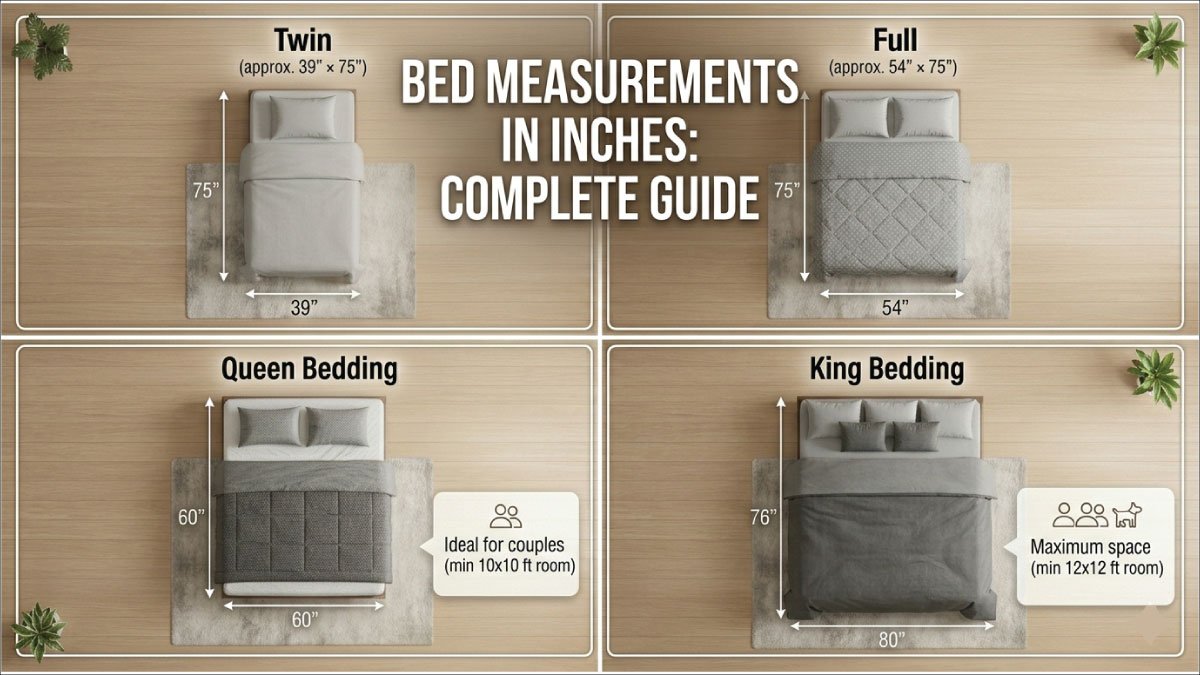
Dimensions: 38 inches wide × 75 inches long
A twin bed is ideal for children, teenagers, or single sleepers with limited space. Its compact size makes it versatile and easy to move. Twin beds are commonly used in:
- Kids’ bedrooms
- Guest rooms
- Dormitories
Pros:
- Space-saving: Perfect for small rooms or shared bedrooms.
- Affordable: Typically costs less than larger beds, making it ideal for growing families or budget-conscious buyers.
- Easy to move: Lightweight and manageable, making rearranging or relocating simple.
Cons:
- Too small for adults who need more space: Adults may feel cramped, especially if they toss and turn at night.
- Not suitable for couples: Sharing a twin bed can be uncomfortable due to limited width.
A twin bed is often the first choice for growing children because it fits standard sheets, mattresses, and bedding sets without occupying too much floor space. Additionally, twin beds can be paired with trundle beds to create extra sleeping arrangements for guests.
2. Twin XL Bed Size (Extra Length for Taller Sleepers)
Dimensions: 38 inches wide × 80 inches long
The Twin XL offers the same width as a twin but adds 5 extra inches in length, which is perfect for taller teens or adults.
Best for:
- Tall teenagers
- College students
- Narrow rooms
Tip: Two Twin XL beds can be combined to create a king-size sleeping area. This is especially useful in college dorms or guest rooms where you want flexibility. The extra length prevents your feet from hanging over the edge, ensuring a more comfortable sleep for taller individuals.
3. Full (Double) Bed Size
Dimensions: 54 inches wide × 75 inches long
A full-size bed gives more width than a twin, making it suitable for:
- Single adults
- Small guest rooms
- Teenagers who need extra space
Pros:
- More room to move: Provides 16 extra inches of width compared to a twin, allowing single sleepers more freedom.
- Fits in smaller bedrooms: Ideal for apartments or rooms where space is limited but comfort is still desired.
Cons:
- Not ideal for couples (tight fit): Sharing a full bed can feel cramped for two adults, especially if they are taller or prefer personal space.
Full beds are a practical option for young adults or single adults who want more comfort than a twin bed but don’t have room for a queen. They also offer a balance between affordability and space.
4. Queen Bed Size (Most Popular Choice)
Dimensions: 60 inches wide × 80 inches long
The queen bed is the most commonly used size because it balances comfort and space, making it versatile for many bedroom layouts.
Best for:
- Couples
- Master bedrooms
- Single sleepers who like extra room
Why people love it:
- Enough space for two: Two adults can sleep comfortably without feeling overcrowded.
- Fits most bedrooms: Works well in standard master bedrooms without overwhelming the space.
- Easy to find bedding: Queen-size sheets, mattresses, and frames are widely available, making shopping easy.
Queen beds are ideal for couples who don’t have the room for a king bed but still want personal space. They are also suitable for single sleepers who like to stretch out or have pets sleeping on the bed.
5. King Bed Size (Maximum Comfort)
Dimensions: 76 inches wide × 80 inches long
A king-size bed offers luxurious space, perfect for couples who want personal sleeping space and comfort.
Ideal for:
- Large bedrooms
- Couples with kids or pets
Pros:
- Maximum comfort: Allows two adults to sleep comfortably with plenty of room to stretch.
- Plenty of personal space: Reduces disturbances if one partner moves during the night.
Cons:
- Requires a large room: Can overwhelm a small bedroom and reduce space for other furniture.
- More expensive: King mattresses, frames, and bedding tend to cost more than smaller beds.
King beds are often chosen for master suites and rooms with extra space. They are especially beneficial for parents who share a bed with children or pets occasionally.
6. California King Bed Size
Dimensions: 72 inches wide × 84 inches long
The California king is slightly narrower but longer than a standard king, making it ideal for tall individuals who need extra legroom.
Best for:
- Tall individuals
- Spacious bedrooms
Key advantage:
- Extra legroom: Perfect for people over 6 feet tall who find standard king beds slightly short.
California king beds are popular in luxury homes and spacious master bedrooms. They provide ample sleeping space without taking up as much width as a standard king, making them ideal for rooms that are longer rather than wider.
Bed Size Comparison Chart (In Inches)
| Bed Type | Width (inches) | Length (inches) |
|---|---|---|
| Twin | 38 | 75 |
| Twin XL | 38 | 80 |
| Full (Double) | 54 | 75 |
| Queen | 60 | 80 |
| King | 76 | 80 |
| California King | 72 | 84 |
How to Choose the Right Bed Size
Choosing the right bed is not just about the mattress size—it’s about lifestyle, room space, comfort, and future needs. A bed that is too small will leave you cramped and uncomfortable, while a bed that is too large can overwhelm a room, making it difficult to move around or fit in other furniture. In this guide, we’ll walk through all the factors to consider, practical tips, and common mistakes to avoid when selecting the perfect bed size.
1. Measure Your Room First
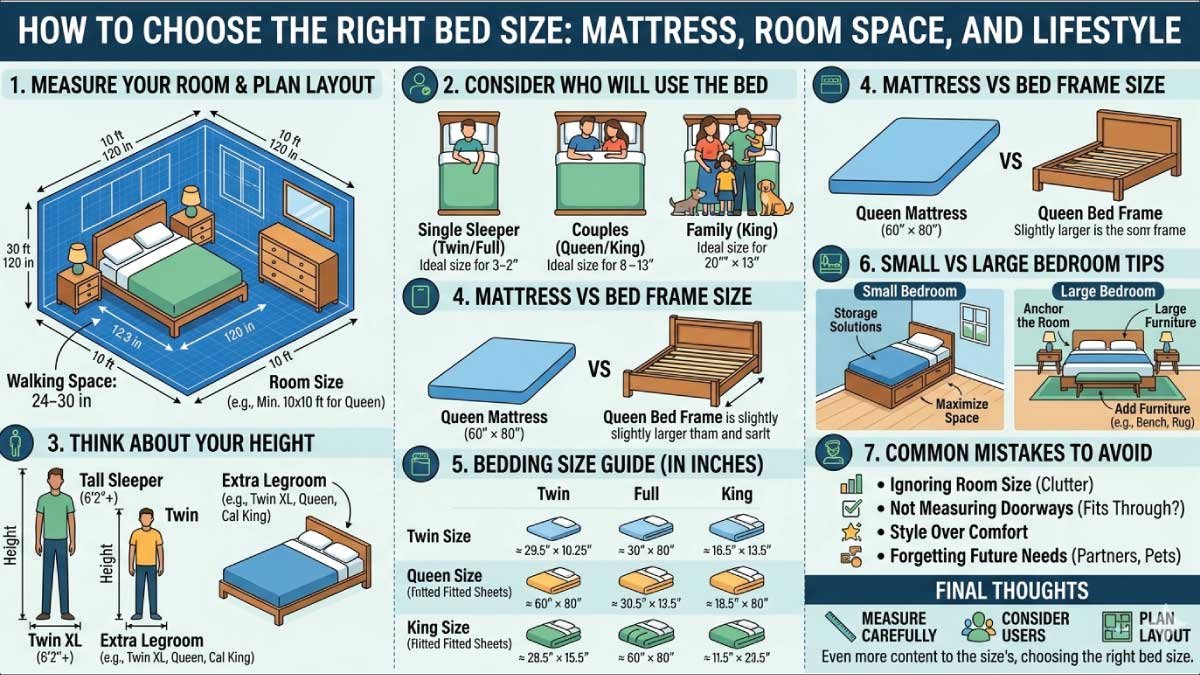
Before buying any bed, the most important step is to measure your room accurately. You need to know exactly how much space you have to ensure the bed fits without restricting movement or making the room feel crowded.
Steps to measure your room:
Measure in inches: Take the length and width of the room using a tape measure. Include all nooks and corners.
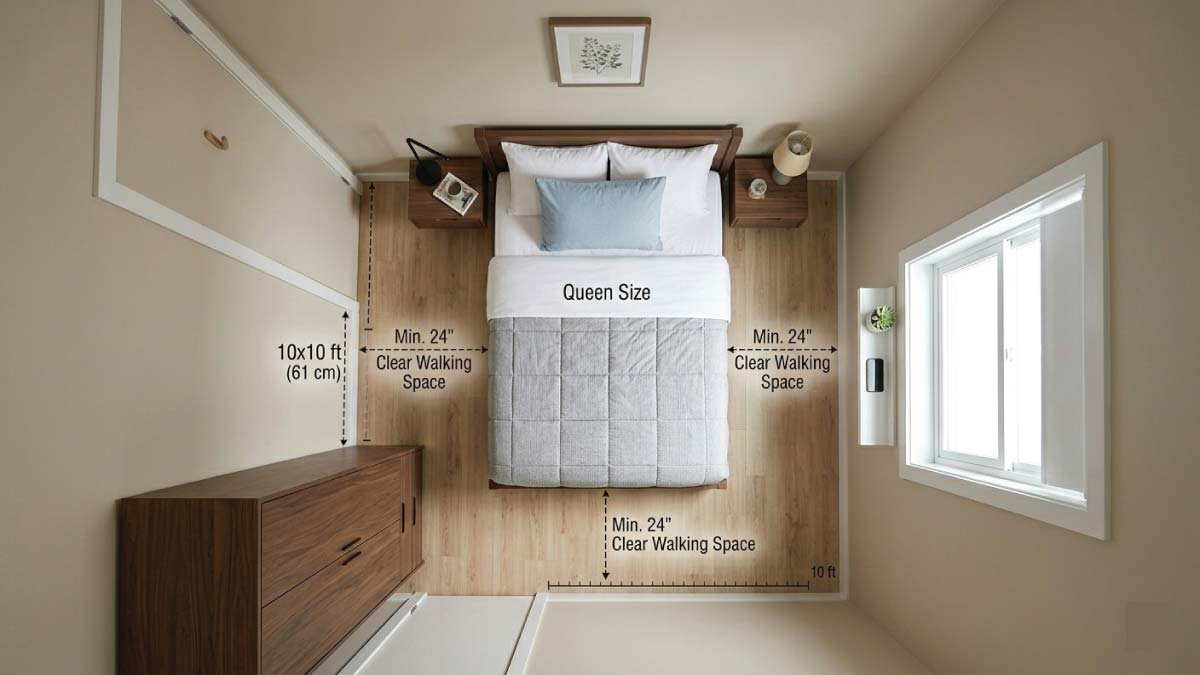
Leave walking space: Ideally, leave 24–30 inches of walking space around the bed. This ensures you can move freely without bumping into walls, dressers, or other furniture.
Check doorways and windows: Make sure your bed frame can pass through the doorway and that it doesn’t block windows, radiators, or vents.
Example:
A queen bed (60 × 80 inches) fits best in a room that is at least 10 × 10 feet. In a smaller room, the bed may feel too tight, leaving very little space for side tables or a dresser.
Taking precise room measurements prevents costly mistakes and ensures your new bed will complement your space.
2. Consider Who Will Use the Bed
Your bed size should reflect who will sleep in it. Different users have different needs:
Single sleeper: Twin, Twin XL, or Full bed
Couples: Queen or King bed
Families (kids/pets sharing the bed): King size
If you live alone, a full bed may give you more room to stretch without taking up unnecessary space. For couples, a queen bed is usually sufficient, while a king bed is ideal for maximum personal space or if children or pets sometimes join you.
3. Think About Your Height
Your height is another key factor when choosing a bed size. Standard lengths may not suit taller individuals.
Tips for tall sleepers:
- Choose Twin XL, Queen, or California King for extra legroom.
- Avoid standard Twin or Full beds—they may feel cramped.
Example:
A person who is 6’2” may feel uncomfortable on a standard twin (75 inches long) but will sleep comfortably on a Twin XL (80 inches) or Queen. The California King provides the longest sleeping surface for very tall individuals.
4. Plan Your Furniture Layout
A bed should enhance your room layout rather than dominate it. Proper planning ensures functionality and aesthetic balance.
Consider what other furniture will be in the room:
Nightstands: Leave room for bedside tables on each side of the bed.
Wardrobe or dresser: Make sure there’s enough clearance to open drawers and doors comfortably.
Walking area: Avoid cramped paths; aim for a comfortable flow around the bed.
A properly sized bed improves both comfort and room aesthetics, making your bedroom a relaxing space rather than a cluttered one.
5. Bed Frame vs Mattress Size
Many people confuse bed frame size with mattress size. Understanding the difference is essential.
Mattress size: The exact sleeping surface
Bed frame size: Slightly larger due to the frame structure
Tip: Always check frame dimensions before buying. For example, a queen mattress is 60 × 80 inches, but the bed frame may add several extra inches in width and length depending on the style. Accounting for this ensures the bed fits your room properly.
6. Bedding Size Guide (In Inches)
To match your mattress, you need the right bedding. Here are typical sizes:
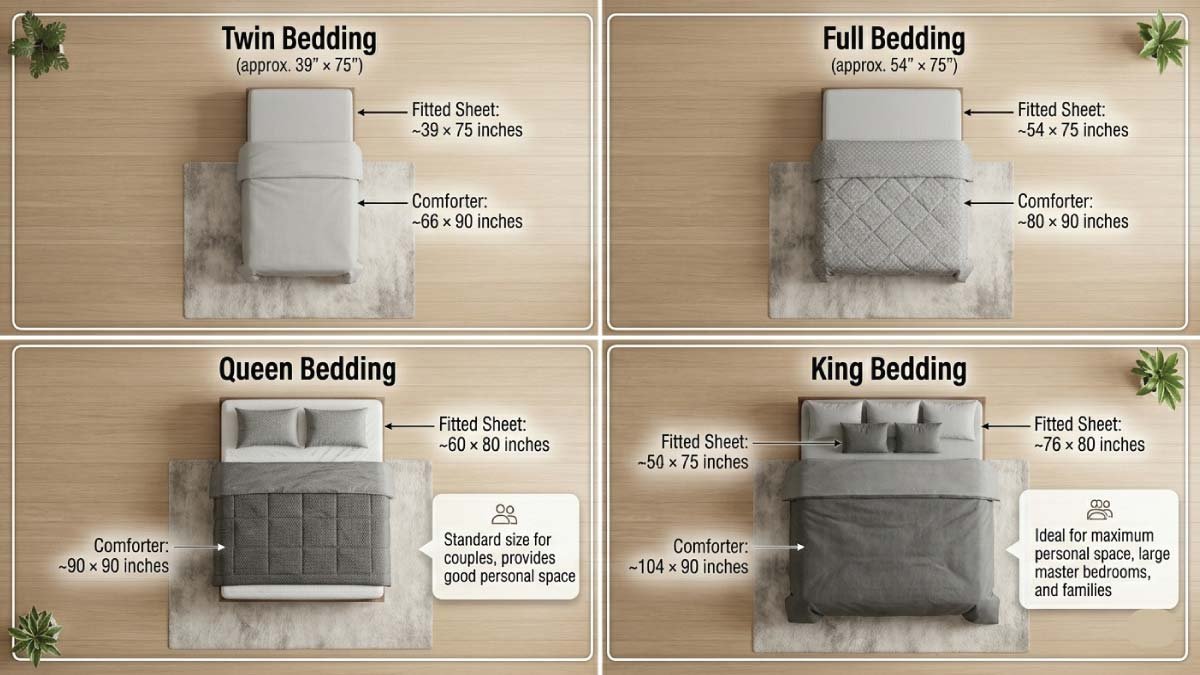
Twin Bed Bedding
- Fitted sheet: ~39 × 75 inches
- Comforter: ~66 × 90 inches
Full Bed Bedding
- Fitted sheet: ~54 × 75 inches
- Comforter: ~80 × 90 inches
Queen Bed Bedding
- Fitted sheet: ~60 × 80 inches
- Comforter: ~90 × 90 inches
King Bed Bedding
- Fitted sheet: ~76 × 80 inches
- Comforter: ~104 × 90 inches
Choosing the correct bedding ensures your sheets fit snugly, comforters drape evenly, and the bed looks neat and inviting.
7. Tips for Small Bedrooms
In small rooms, bed size selection is critical to maximize space and functionality.
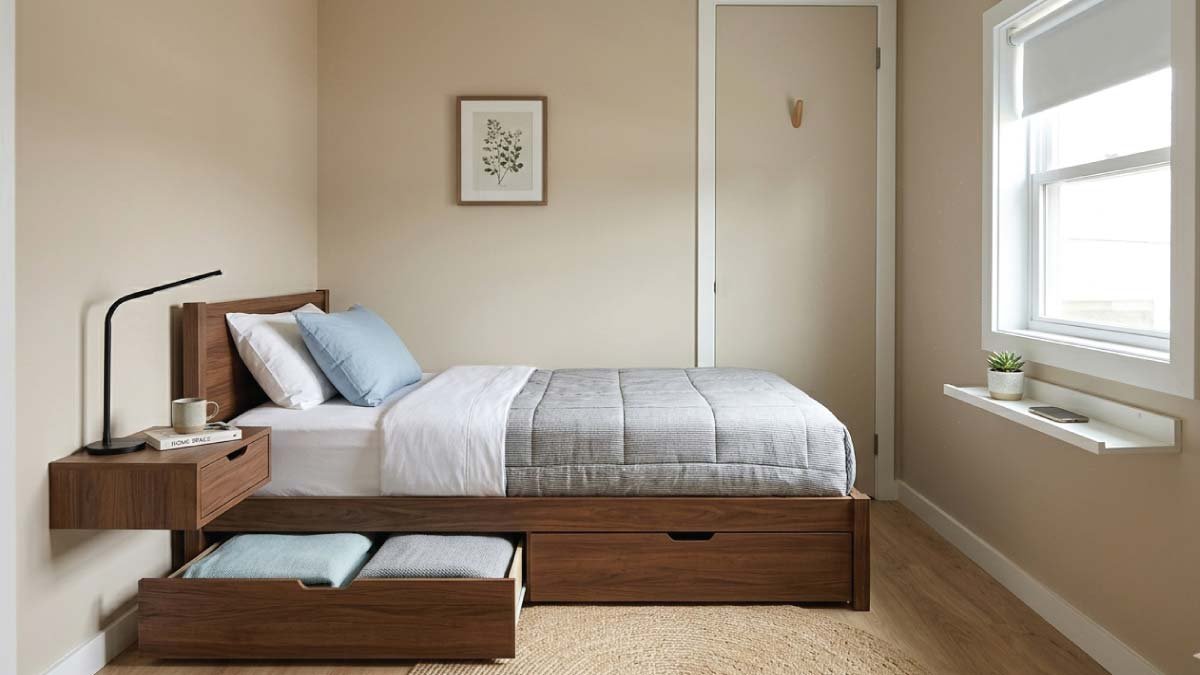
Smart solutions:
- Choose a Twin or Full bed to save space.
- Use storage beds with drawers for extra storage.
- Place the bed against a wall to free up walking space.
- Use minimal furniture to avoid overcrowding.
These strategies allow you to enjoy comfort while keeping the room open and organized. Even in tight spaces, the right bed can make the room feel spacious and functional.
8. Tips for Large Bedrooms
A large room requires balance to make it feel cohesive. Choosing the right bed helps anchor the space.
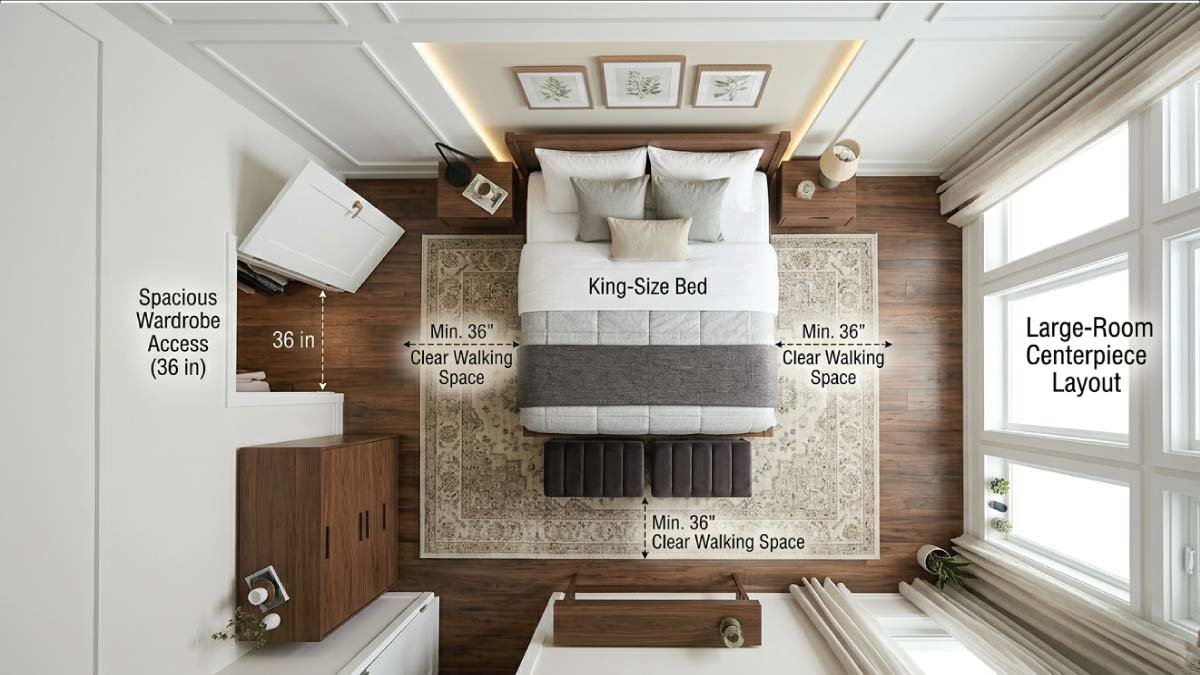
Best choices:
- Queen or King bed depending on room size.
- Add rugs, benches, and side tables for a complete look.
- Center the bed in the room for a premium and symmetrical layout.
A bigger bed in a spacious room makes the bedroom feel luxurious and inviting, turning it into a centerpiece rather than leaving the space feeling empty.
9. Common Mistakes to Avoid
Avoid these common pitfalls when choosing a bed:
Ignoring room size: Buying a king bed for a small room leads to clutter and discomfort.
Not measuring doorways: Ensure the bed frame can pass through doors, stairs, or elevators.
Choosing style over comfort: A trendy bed is not worth it if it is uncomfortable or too small.
Forgetting future needs: Consider lifestyle changes—moving in with a partner, kids, or pets may require a larger bed in the future.
By avoiding these mistakes, you can choose a bed that is functional, comfortable, and long-lasting.
10. Custom Bed Sizes
Sometimes standard sizes don’t fit your specific needs. In these cases, consider:
- Custom-built beds: Tailored to your exact room dimensions.
- Extended length mattresses: Ideal for very tall individuals.
- Adjustable bed frames: Useful for unique layouts or ergonomic preferences.
Custom solutions allow you to maximize comfort and fit, especially in irregularly shaped rooms or homes with unusual layouts.
11. Bed Measurements in Inches vs Feet
Understanding both units helps with room planning and visualizing space.
Conversion tip:
1 foot = 12 inches
Examples:
- Queen bed (60 × 80 inches) = 5 × 6.7 feet
- King bed (76 × 80 inches) = 6.3 × 6.7 feet
Knowing both inches and feet allows you to better plan furniture placement and ensures your bed will fit through doors and into your desired space.
Final Thoughts
Understanding bed measurements is essential for a comfortable, functional, and aesthetically pleasing bedroom. Whether choosing a compact twin or a luxurious king, the right bed depends on your room, lifestyle, and comfort preferences.
Before making a decision:
- Measure your space carefully
- Consider who will use the bed
- Plan your furniture layout
A well-chosen bed not only improves your sleep but also enhances your overall living experience. Investing time in selecting the right size ensures your bedroom is both functional and inviting for years to come.
