
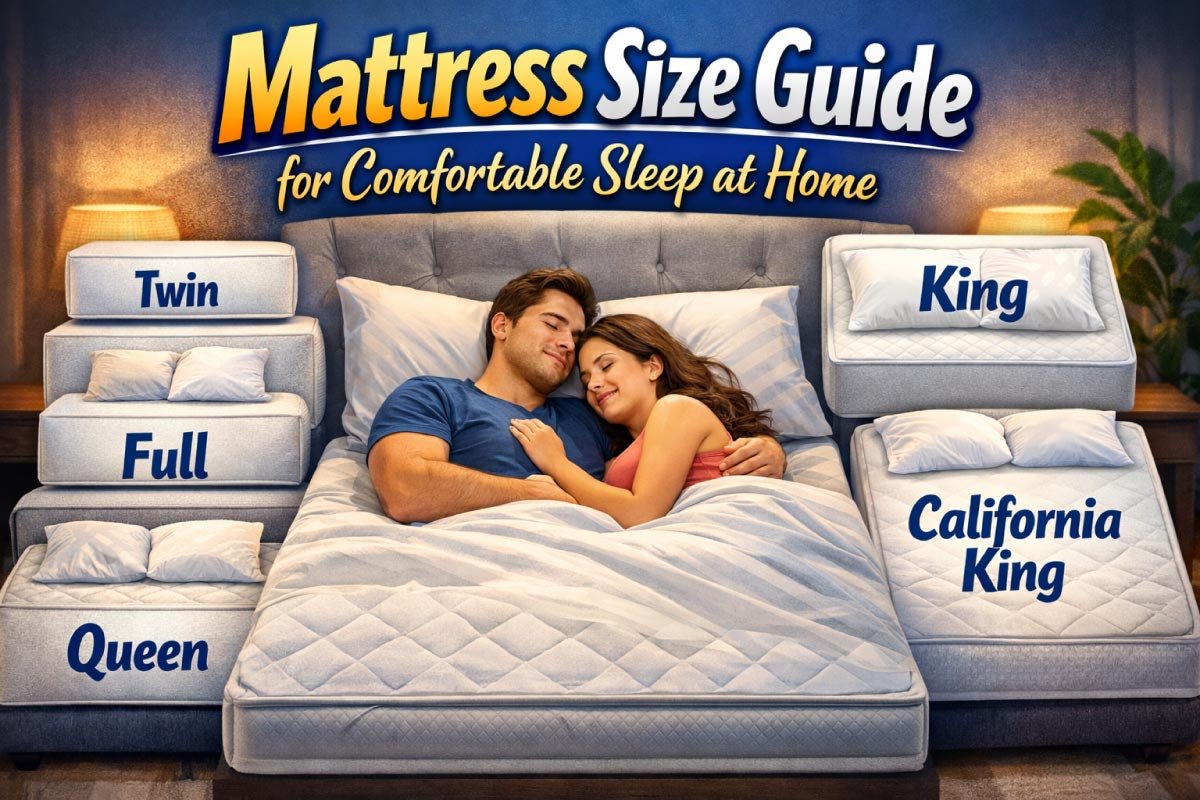
Choosing the right mattress size is one of the most crucial decisions for a good night’s sleep. A mattress that is too small can restrict movement, disrupt sleep, and even cause back or joint pain.
On the other hand, a mattress that is too large may overwhelm a room, waste space, or complicate bed setup.
This mattress size guide provides everything you need to know about selecting the perfect mattress for your home, ensuring comfort, proper support, and restful sleep for years to come.
From standard mattress dimensions to room space considerations and sleeping positions, this guide will help you make an informed choice.
Understanding Standard Mattress Sizes
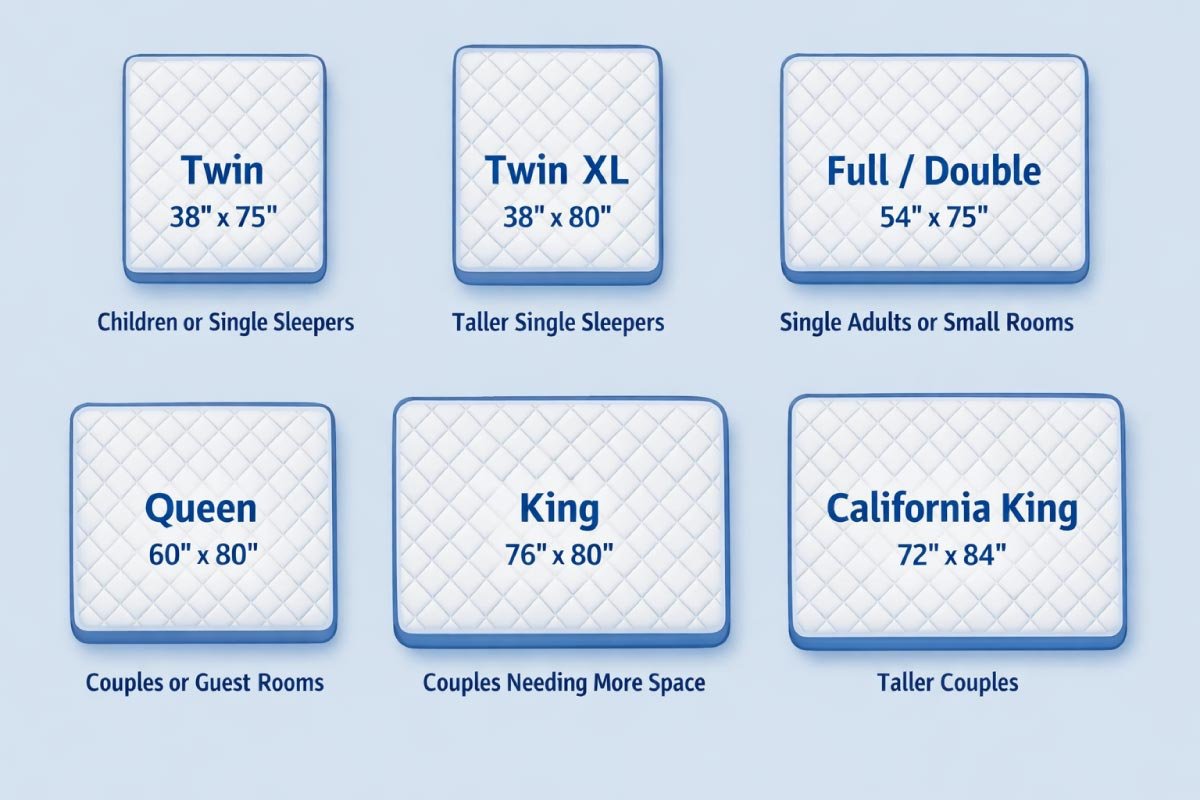
Mattresses come in a variety of standard sizes, each designed to meet different needs. Knowing the standard dimensions helps you choose a mattress that fits your body, sleeping habits, and bedroom space.
In most countries, mattress sizes are categorized as Twin, Twin XL, Full, Queen, King, and California King. Each size offers varying lengths and widths, which affect comfort and mobility.
For example, a Twin mattress is suitable for children or single sleepers, while a King or California King is ideal for couples needing ample personal space.
| Mattress Size | Width (inches) | Length (inches) | Ideal For |
|---|---|---|---|
| Twin | 38 | 75 | Children or single sleepers |
| Twin XL | 38 | 80 | Taller single sleepers |
| Full / Double | 54 | 75 | Single adults or small rooms |
| Queen | 60 | 80 | Couples or guest rooms |
| King | 76 | 80 | Couples needing more space |
| California King | 72 | 84 | Taller couples |
By understanding these dimensions, you can align your mattress choice with your personal comfort needs, bedroom size, and sleeping style.
How to Choose a Mattress Based on Bedroom Size
Choosing the right mattress involves more than comfort—it requires considering the bedroom size. Selecting a mattress that fits well ensures both functionality and aesthetics.
A mattress that’s too large can overcrowd the room, while one that’s too small may reduce comfort.
Proper space around the bed allows for movement, furniture placement, and a visually balanced, relaxing environment.
1. Assess Your Bedroom Dimensions
Before selecting a mattress, measure the bedroom’s length and width accurately. Consider doorways, windows, closets, and furniture placement to avoid overcrowding.
Ensure there’s at least 2–3 feet of walking space around the bed for ease of movement. Accurate measurements prevent purchasing a mattress that feels cramped or dominates the room unnecessarily.
2. Consider Mattress Size Options
Mattresses come in standard sizes: Twin, Twin XL, Full, Queen, King, and California King. Smaller rooms suit Twin, Twin XL, or Full mattresses, while medium and large rooms can handle Queen or King sizes comfortably.
Choosing the right size ensures the bed fits the space without restricting furniture layout or the room’s visual flow.
3. Balance Comfort and Room Functionality
A mattress should not only be comfortable but also allow room for other essentials like nightstands, dressers, and seating.
Avoid overcrowding the space with a mattress that leaves minimal clearance. Maintaining functionality ensures the bedroom remains practical, organized, and safe, enhancing the overall living experience without sacrificing comfort.
4. Evaluate Movement Space Around the Bed
Adequate walking space is crucial for convenience and safety. At least 2–3 feet of clearance on each side ensures easy bed access, cleaning, and smooth navigation.
Sufficient movement space also contributes to the room’s visual openness, preventing a heavy, cramped look while making the bedroom feel more spacious and welcoming.
5. Plan for Aesthetic and Visual Balance
The mattress should harmonize with the room’s proportions. Oversized mattresses can overwhelm small rooms, while too small a bed may look out of place in a large space.
Consider headboard height, frame design, and bedding style. Proper visual balance creates a cohesive and inviting bedroom environment, complementing the overall interior design.
| Room Size | Recommended Mattress Size | Notes |
|---|---|---|
| Small (10×10 ft) | Twin / Full | Leaves space for storage and movement |
| Medium (12×12 ft) | Full / Queen | Fits furniture comfortably |
| Large (15×15 ft) | Queen / King | Provides luxury and movement space |
| Extra Large (>18 ft²) | King / California King | Ideal for master suites and spacious rooms |
Proper measurement of the room ensures that your mattress fits seamlessly, providing a balance between comfort and practicality.
Discover More:
Matching Mattress Size to Sleeping Habits
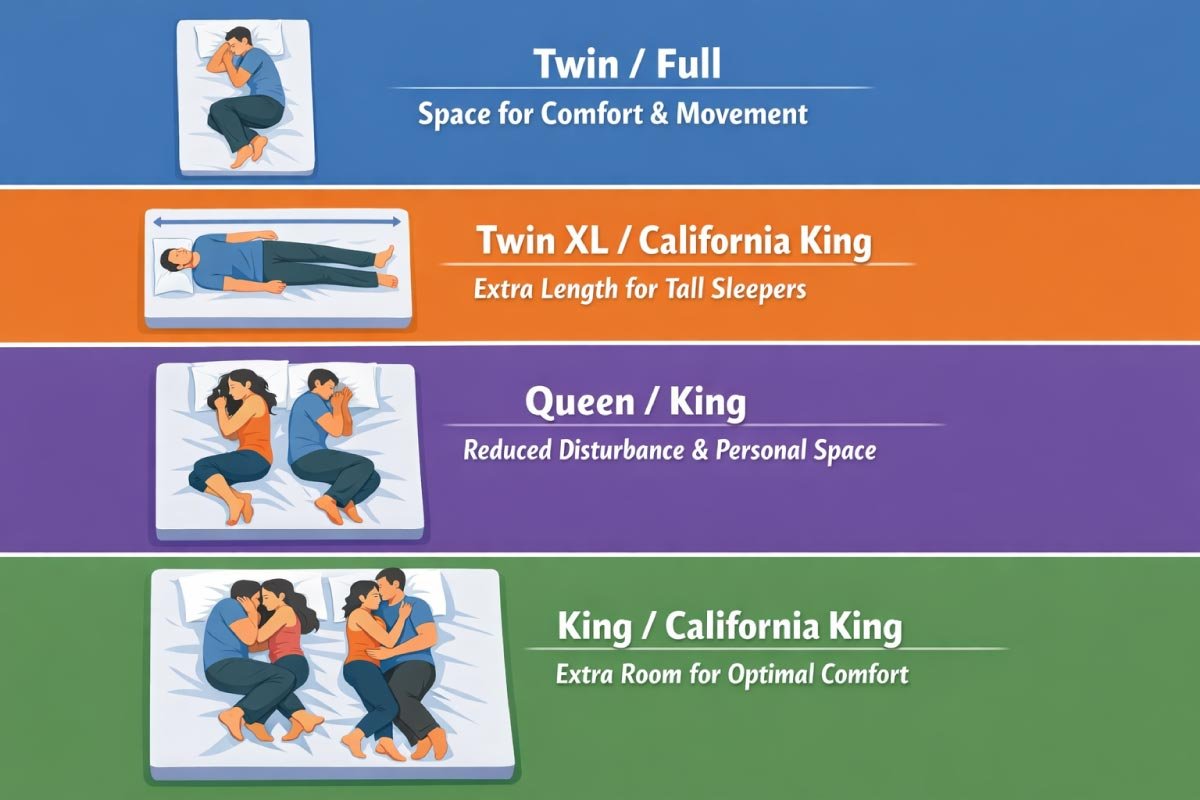
Individual sleeping habits greatly influence the ideal mattress size. Couples, for example, need enough width to avoid disturbing each other during the night.
Taller individuals benefit from extra length to prevent feet from hanging off the edge. Additionally, side sleepers often prefer wider mattresses to stretch comfortably, while back sleepers may require a standard size with proper support.
| Sleeping Type | Recommended Mattress Size | Reason |
|---|---|---|
| Single adult | Twin / Full | Sufficient space for movement and comfort |
| Taller individual | Twin XL / California King | Extra length to accommodate height |
| Couples | Queen / King | Reduces disturbance and offers personal space |
| Couples with taller partner | King / California King | Extra length and width for maximum comfort |
Understanding your sleep patterns, movement, and body dimensions ensures you choose a mattress that maximizes rest and minimizes discomfort.
Mattress Sizes for Children and Teenagers
Children and teenagers require mattresses that offer proper support and space for growth. Twin and Twin XL mattresses are ideal for children, with Twin XL giving extra length for growing teens.
Full mattresses work for older children who may need more room or share a bed. Safety is also a factor—make sure beds for children have guardrails if necessary, especially for loft or bunk bed setups.
| Age Group | Recommended Mattress Size | Notes |
|---|---|---|
| Toddlers (3–5 years) | Twin / Crib mattress | Ensure proper support and firm surface |
| Young Children (6–12) | Twin | Standard size, easy to fit in small rooms |
| Teenagers (13–18) | Twin XL / Full | Extra length and room for growth |
| Growing Teen Couples | Full / Queen | Comfortable for shared sleeping arrangements |
Choosing the right mattress for children ensures their spinal alignment, proper sleep, and healthy growth.
Discover More:
Mattress Size for Couples and Shared Beds
For couples, mattress size is critical for quality sleep. A Queen mattress is the most popular choice for couples due to its balance of width and room compatibility.
However, couples who value personal space or have different sleep schedules may benefit from a King or California King mattress. Sleep disturbances are minimized when each partner has enough space to move freely without rolling into each other.
| Couple Type | Recommended Mattress Size | Considerations |
|---|---|---|
| Average height couples | Queen | Fits most master bedrooms comfortably |
| Couples needing extra space | King / California King | Minimizes disturbances from partner movement |
| Couples with tall partners | California King | Provides extra length for taller individuals |
| Budget-conscious couples | Full / Queen | Adequate comfort while saving space and money |
Selecting the right mattress size can significantly improve sleep quality, reduce back pain, and enhance overall health for both partners.
6. Special Mattress Types and Sizes
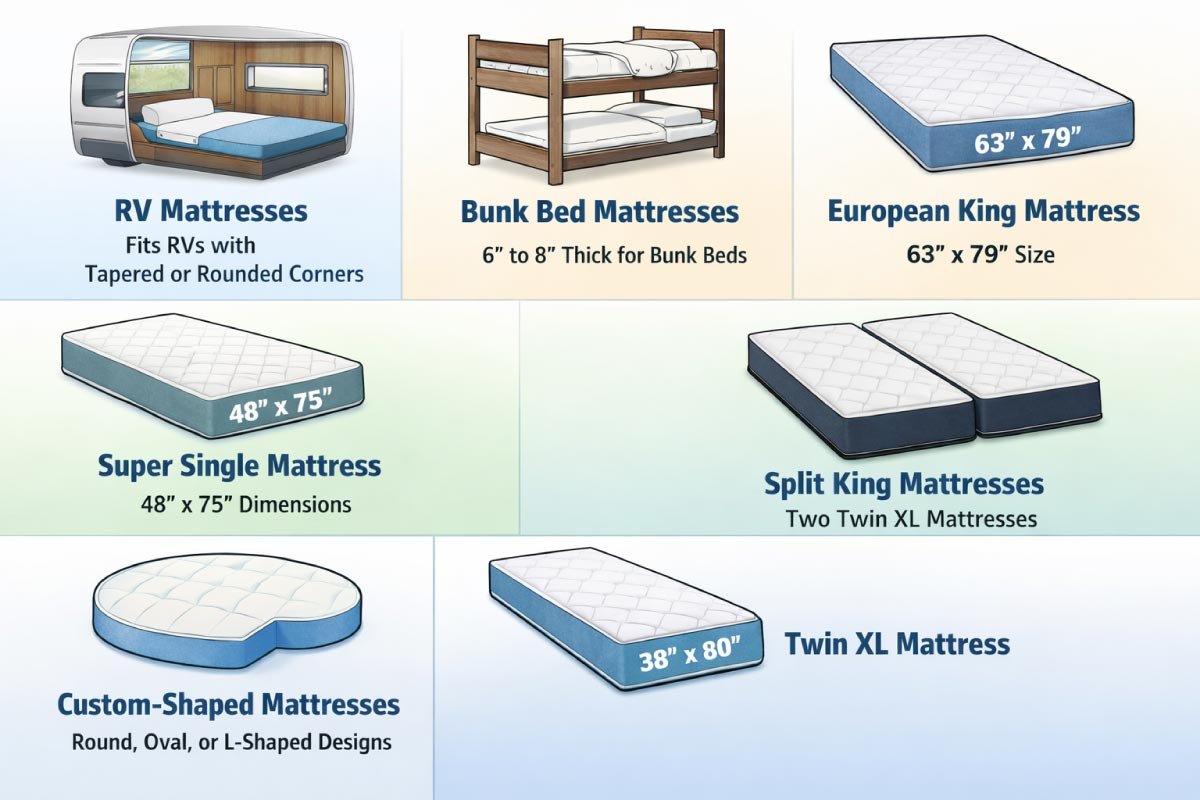
Specialty mattresses are designed for unique spaces or specific needs. Unlike standard U.S. sizes, these mattresses include options for small bedrooms, RVs, bunk beds, and international dimensions.
Choosing the right specialty mattress requires careful measurement of your bed frame and room to ensure a perfect fit while maintaining comfort, support, and usability.
1. RV Mattresses
RV mattresses are designed to fit the irregular dimensions of recreational vehicles. They often come in non-standard lengths and widths, including tapered or rounded corners.
Many RV mattresses are foam-based to allow flexibility and ease of installation, ensuring comfort in small or uniquely shaped sleeping areas.
2. Bunk Bed Mattresses
Bunk bed mattresses are thinner than traditional mattresses to provide adequate headroom between tiers. They usually range from 6 to 8 inches thick and are designed to fit twin or custom-sized frames.
Firm support is recommended for safety, especially on upper bunks, and easy handling for changing sheets.
3. European King Mattresses
European King mattresses are wider than standard U.S. Kings, typically measuring 63 inches by 79 inches. They are ideal for large bedrooms or couples seeking more sleeping space.
Buyers should ensure compatibility with European bed frames and bedding, as dimensions often differ from U.S. mattresses and sheets.
4. Super Single Mattresses
Super Single mattresses are popular in Asia and smaller apartments, typically measuring 48 inches by 75 inches. They offer more width than a twin but remain compact enough for tight spaces.
They provide a good balance between comfort and space efficiency for single sleepers with limited room.
5. Split King Mattresses
Split King mattresses consist of two separate twin XL mattresses placed together to form a king-size bed.
This setup allows adjustable bases for each side, perfect for couples with different sleep preferences. It also simplifies moving and handling, especially in tight hallways or staircases.
6. Custom-Shaped Mattresses
Custom-shaped mattresses can be cut to fit round, oval, or L-shaped beds. They are designed for unique bedroom layouts or furniture pieces that standard sizes cannot accommodate.
Materials and firmness levels are often chosen specifically for individual comfort and support preferences.
7. Twin XL Mattresses
Twin XL mattresses are longer than standard twins, usually 38 inches by 80 inches. They are commonly used in college dorms or for taller individuals.
Twin XL offers extra legroom without increasing width, making it suitable for shared spaces or rooms where a full-size bed would be too large.
| Mattress Type | Common Size (inches) | Notes |
|---|---|---|
| RV / Camper Mattress | 28–36 x 75 | Designed for tight spaces in RVs or campers |
| Bunk Bed Mattress | 38 x 75 | Standard Twin size, must fit frame snugly |
| European King | 63 x 79 | Slightly narrower than U.S. King |
| Custom Mattress | Variable | Customizable for unusual bed frames or rooms |
Understanding these variations ensures you can find a mattress that fits perfectly, even in unconventional spaces.
Discover More:
Tips for Measuring Mattress Size Correctly
Accurate measurement is key to ensuring the mattress fits your bed frame and room. Measure both the width and length of your existing bed frame or room space.
Don’t forget to account for mattress thickness, bedding, and clearance space for movement around the bed. It’s also wise to measure doorways, staircases, and hallways to ensure the mattress can be delivered easily.
| Measurement Tip | Recommended Action |
|---|---|
| Room Size | Measure length, width, and doorways |
| Bed Frame | Measure internal dimensions for mattress fit |
| Mattress Thickness | Account for sheets, mattress toppers |
| Clearance Space | Leave at least 2–3 ft around the bed |
Proper measurement ensures hassle-free setup and avoids the disappointment of a mattress that doesn’t fit.
Considerations for Mattress Height and Thickness
Beyond width and length, mattress height or thickness is an essential factor. Thicker mattresses offer more comfort layers, ideal for side sleepers, couples, or those with joint pain.
Thinner mattresses may be better for bunk beds or futons. Ensure your bed frame can accommodate the mattress height and that getting in and out of bed is comfortable for all users.
| Mattress Thickness | Ideal For |
|---|---|
| 6–8 inches | Kids, bunk beds, budget-friendly options |
| 9–12 inches | Average adults, good balance of comfort & support |
| 12–14 inches | Side sleepers, couples, extra plush comfort |
| 15+ inches | Luxury beds, deep comfort, heavy individuals |
Choosing the right thickness complements mattress size to provide the best sleep ergonomics and support.
Accessories That Affect Mattress Comfort
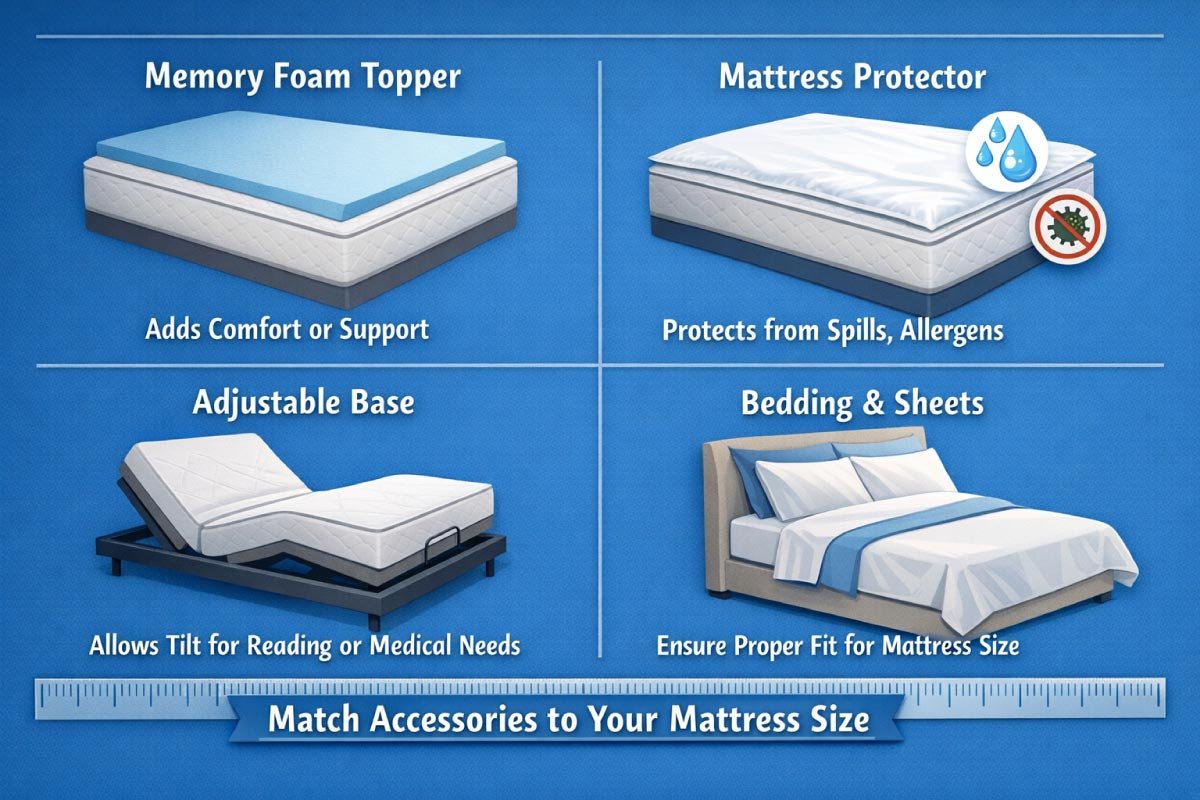
The mattress isn’t the only factor in comfort—bedding, mattress toppers, and adjustable bases can enhance sleep quality.
For example, a memory foam topper can add softness to a firm mattress, while an adjustable base allows sleeping at different angles, benefiting those with back or acid reflux issues.
Always ensure that accessories match your mattress size for a seamless fit.
| Accessory | Purpose |
|---|---|
| Mattress topper | Adds comfort or support |
| Mattress protector | Protects from spills, allergens |
| Adjustable base | Allows tilt for reading or medical needs |
| Bedding & sheets | Ensure proper fit for mattress dimensions |
Using the right accessories can optimize your mattress for personalized comfort, longevity, and hygiene.
Discover More:
Final Recommendations for Choosing the Perfect Mattress Size
Selecting the right mattress size is a balance of comfort, bedroom space, and personal sleeping habits. Twin and Full mattresses work best for single sleepers and children, while Queen, King, or California King beds suit couples or taller individuals.
Always measure your room, consider your sleep style, and test mattresses when possible. Investing in the correct size ensures restful sleep, long-term support, and a healthier lifestyle.
Conclusion
A mattress is more than just a place to sleep—it’s an investment in your health and daily well-being.
By considering mattress dimensions, bedroom space, sleeping habits, and additional features like thickness and accessories, you can create the ultimate sleep environment.
Use this mattress size guide to make an informed choice that ensures comfort, quality sleep, and long-term satisfaction for every member of your household.
