
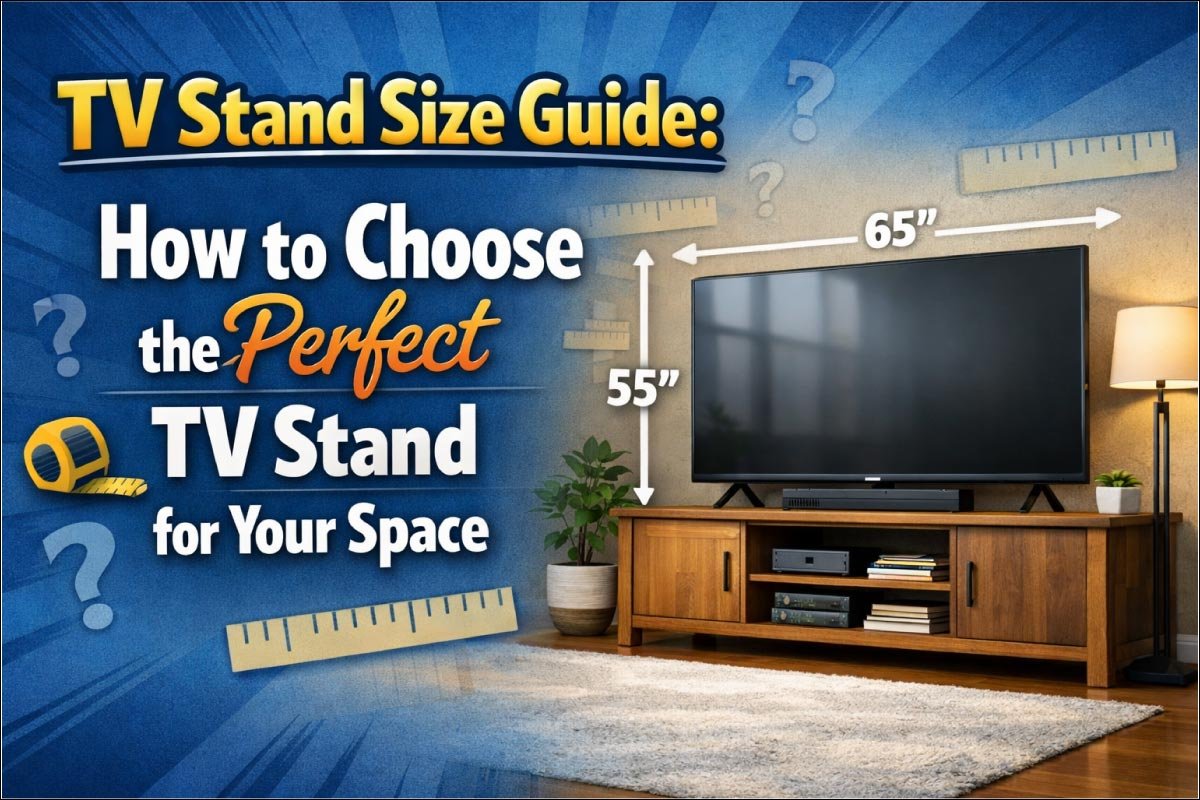
Choosing the right TV stand is more than just aesthetics—it is about functionality, stability, and matching your living space. With the rise of larger televisions, the importance of selecting a properly sized TV stand has grown. A stand that is too small can make your TV look awkward and unstable, while an oversized stand can overpower your room.
This guide will walk you through everything you need to know about TV stand dimensions, types, and placement tips to create a comfortable and stylish entertainment area.
Why TV Stand Size Matters
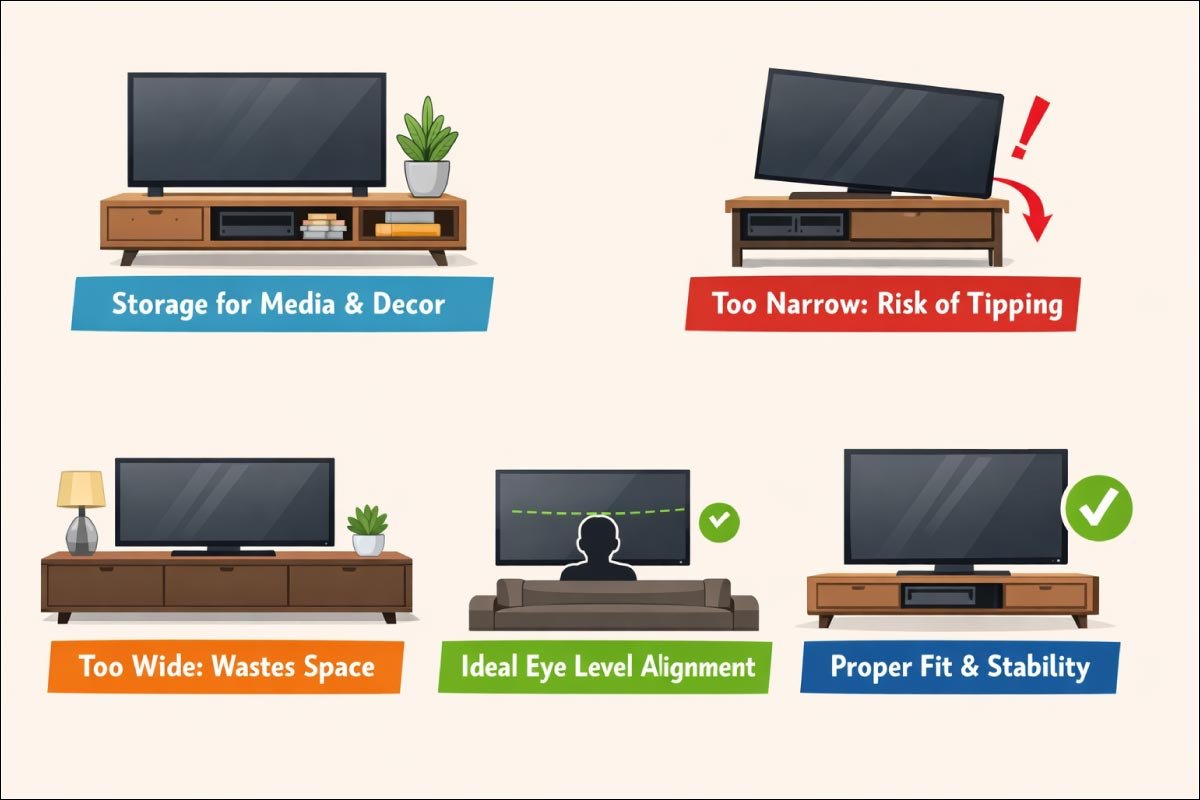
TV stands serve multiple purposes beyond holding your television. They provide storage for media devices, games, books, and decorative items. The right dimensions ensure safety and functionality. If a TV stand is too narrow, the TV may overhang, increasing the risk of tipping. Too wide, and it can dominate your space unnecessarily. Proper sizing also enhances the viewing experience by aligning the screen at an ideal eye level.
Standard TV Stand Dimensions
-
Small: 36–48 inches – Ideal for TVs up to 50 inches
-
Medium: 48–60 inches – Best for 50–65 inch TVs
-
Large: 60–72 inches – Suitable for 65–75 inch TVs
Height
TV stand height directly affects viewing comfort and posture. Selecting the correct height ensures the center of the screen aligns with your eye level when seated, reducing neck strain. Standard height ranges are designed to suit different seating arrangements, room layouts, and personal viewing preferences.
-
Low: 18–22 inches
-
Standard: 24–28 inches
-
Tall: 30–36 inches
Depth
The depth of a TV stand determines how securely your television sits and how well it accommodates media devices. Adequate depth prevents overhang, improves stability, and allows space for cable boxes, gaming consoles, and ventilation, making it an important factor in both safety and functionality.
-
Standard: 15–18 inches
-
Deep: 20–24 inches (for larger TVs or extra storage)
Standard TV Stand Size Chart
Choosing the right TV stand size is essential for both viewing comfort and room aesthetics. This chart outlines standard TV stand dimensions, including width, height, and depth, helping you match your television size with a stable, well-proportioned stand that fits your space and enhances overall functionality.
| TV Stand Size | Width (inches) | Height (inches) | Depth (inches) | Suitable TV Size |
|---|---|---|---|---|
| Small | 36–48 | 18–22 | 15–18 | Up to 50″ |
| Medium | 48–60 | 24–28 | 16–20 | 50–65″ |
| Large | 60–72 | 28–32 | 18–24 | 65–75″ |
| Extra Large | 72+ | 30–36 | 20–24 | 75″+ |
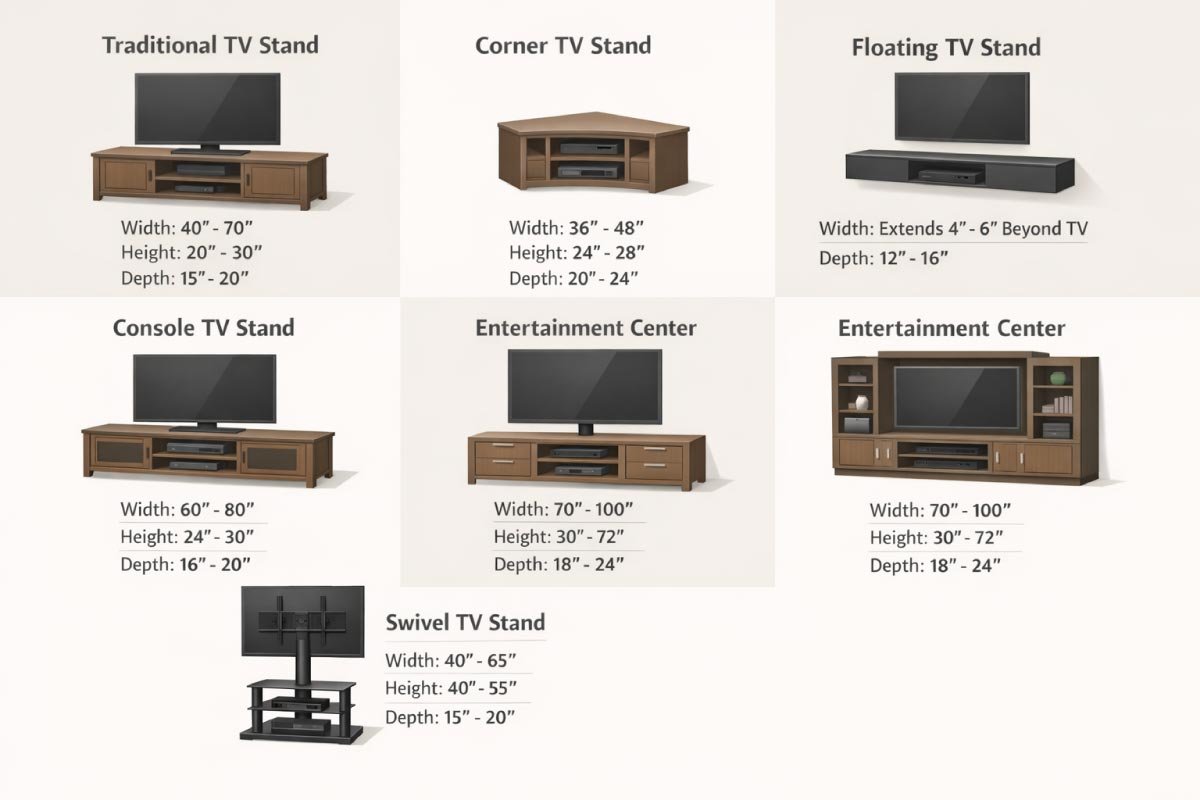
TV Stand Types and Dimensions
TV stands come in various styles, each designed to suit different room layouts, storage needs, and design preferences. This table highlights common TV stand types along with their typical dimensions, making it easier to choose a style that complements your space, supports your television securely, and enhances overall room functionality and appearance.
| Type | Width (inches) | Height (inches) | Depth (inches) | Ideal For |
|---|---|---|---|---|
| Traditional | 40–70 | 20–30 | 15–20 | Living rooms, family rooms |
| Corner | 36–48 | 24–28 | 20–24 | Small rooms, corners |
| Floating | 40–70 | 16–24 | 12–16 | Minimalist or modern spaces |
| Console | 60–80 | 24–30 | 16–20 | Large living rooms |
| Entertainment Center | 70–100 | 30–72 | 18–24 | Formal living spaces |
Discover More:
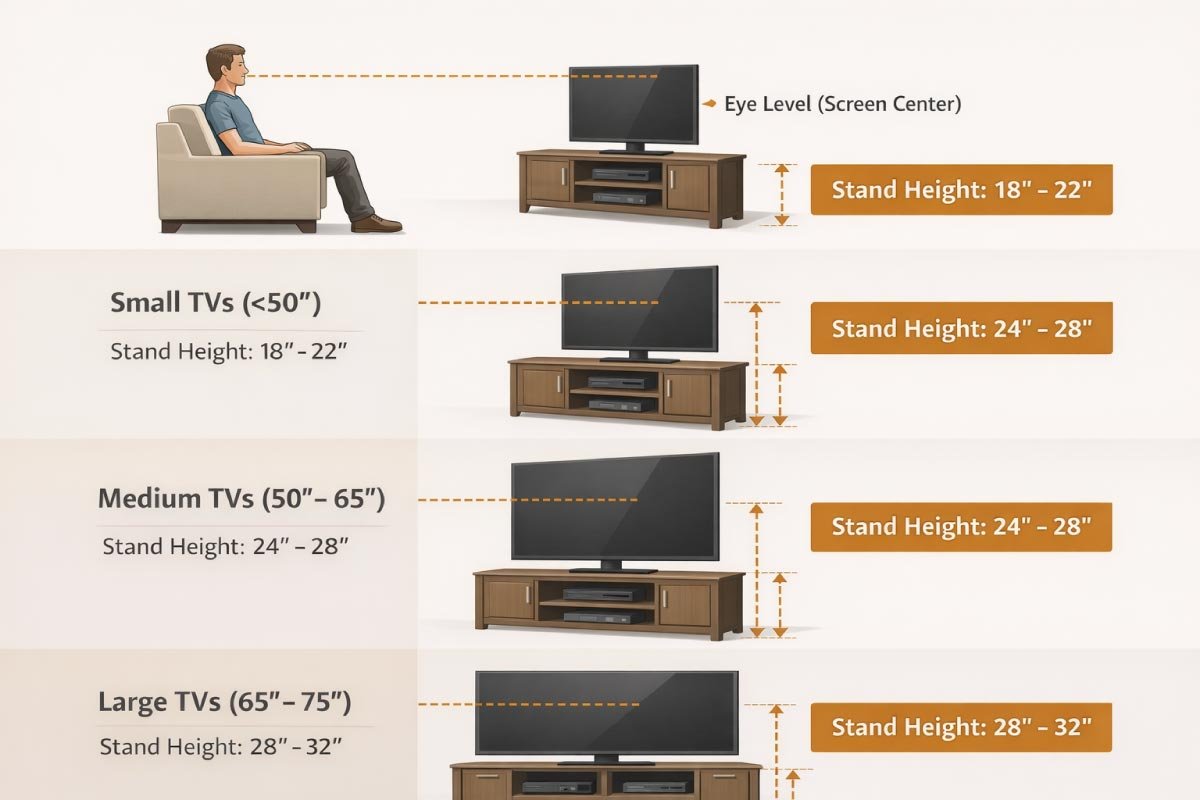
TV Stand Height and Viewing Comfort
TV stand height plays a major role in viewing comfort and long-term posture. When the screen’s center aligns with your eye level, it reduces neck strain and enhances the viewing experience. Factors such as seating height, viewing distance, and TV size help determine the most suitable stand height.
-
Small TVs (<50 inches): Stand height 18–22 inches
-
Medium TVs (50–65 inches): 24–28 inches
-
Large TVs (65–75 inches): 28–32 inches
Recommended TV Stand Height by TV Size
Selecting the correct TV stand height is crucial for comfortable, strain-free viewing. This table provides recommended stand heights based on TV size and viewing distance, helping ensure your screen is positioned at eye level for an optimal viewing experience while maintaining balanced proportions within your room layout.
| TV Size (inches) | Ideal Stand Height (inches) | Viewing Distance (feet) |
|---|---|---|
| Up to 50 | 18–22 | 4–6 |
| 50–65 | 24–28 | 6–8 |
| 65–75 | 28–32 | 8–10 |
| 75+ | 30–36 | 10+ |
Discover More:
Buffet Cabinet Size Guide with Chart for Small and Large Spaces
TV Stand Width vs TV Size
Matching TV stand width with TV size is essential for both safety and visual balance. A stand that is wider than the television provides better stability and a more polished look. Proper proportions help prevent tipping risks while ensuring the setup feels cohesive within your living space design.
-
TV stand width should be 4–6 inches wider on each side
-
A too-narrow stand can be unstable and unsafe
-
A much larger stand may feel disproportionate
Recommended TV Stand Width by TV Size
Choosing the right TV stand width ensures stability and complements your television’s size. This table outlines the minimum and ideal stand widths for different TV sizes, helping you select a stand that not only supports your TV securely but also enhances the overall balance and aesthetics of your living space.
| TV Size (inches) | Minimum Stand Width (inches) | Ideal Stand Width (inches) |
|---|---|---|
| Up to 50 | 40 | 48 |
| 50–65 | 48 | 60 |
| 65–75 | 60 | 72 |
| 75+ | 70 | 80+ |
Discover More:
TV Stand Depth and Device Storage
Choosing the right depth for your TV stand ensures all devices fit comfortably without overcrowding. Depth affects both functionality and aesthetics, allowing space for soundbars, consoles, and media players. Consider the size of your TV and additional devices when selecting the ideal depth:
-
15–18 inches: Small TVs, minimalist setup
-
18–24 inches: Medium to large TVs, multiple devices
-
20–24 inches: Entertainment centers with extra storage
Recommended TV Stand Depth by Devices
TV stand depth is key to accommodating your devices comfortably while maintaining a tidy setup. This table recommends appropriate depths based on the number of devices, from minimal setups to full entertainment centers, ensuring sufficient space for consoles, sound bars, and other electronics without overcrowding or compromising stability.
| Number of Devices | Recommended Depth (inches) | Notes |
|---|---|---|
| 1–2 | 15–18 | Ideal for minimal setups |
| 3–4 | 18–20 | Includes consoles, small soundbars |
| 5+ | 20–24 | Large entertainment centers, multi-device |
Discover More:
Placement Tips for Your TV Stand
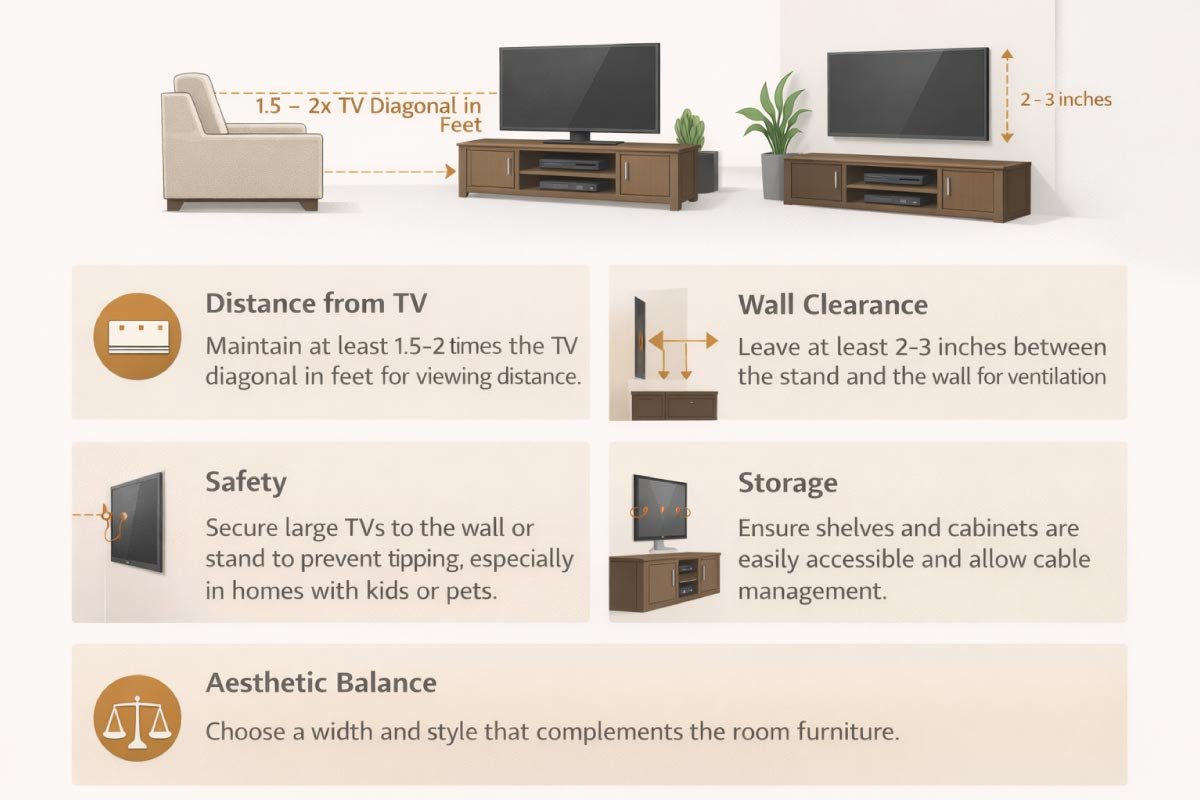
Correct placement of your TV stand is essential for comfort, safety, and style. Consider viewing distance, wall clearance, and device accessibility to create an organized, functional setup. Proper placement also prevents accidents, improves ventilation, and ensures your entertainment area looks balanced and complements the room’s decor.
-
Distance from TV: Maintain at least 1.5–2 times the TV diagonal in feet for viewing distance.
-
Wall clearance: Leave at least 2–3 inches between the stand and the wall for ventilation.
-
Safety: Secure large TVs to the wall or stand to prevent tipping, especially in homes with kids or pets.
-
Storage: Ensure shelves and cabinets are easily accessible and allow cable management.
-
Aesthetic balance: Choose a width and style that complements the room furniture.
Conclusion
Selecting the right TV stand is a balance of size, function, and style. Width, height, and depth must match your TV and living space, while the stand type should reflect your storage needs and room layout. Always prioritize safety, proper viewing height, and aesthetic harmony. By following this detailed TV stand size guide, you can make an informed decision that enhances both your entertainment experience and your home décor.
Discover More:

I am Engineer Hassan, a professional engineer with over 15 years of experience in measurements, design accuracy, and furniture, appliance, and home product sizing. Through Size Helper, I provide research-based guides and trending 2026 home design ideas for living rooms, bedrooms, sofas, wall décor, fashion, and sports—helping users make confident, informed decisions. Every guide is written with real expertise, verified data, and a commitment to quality, usability, and style.