
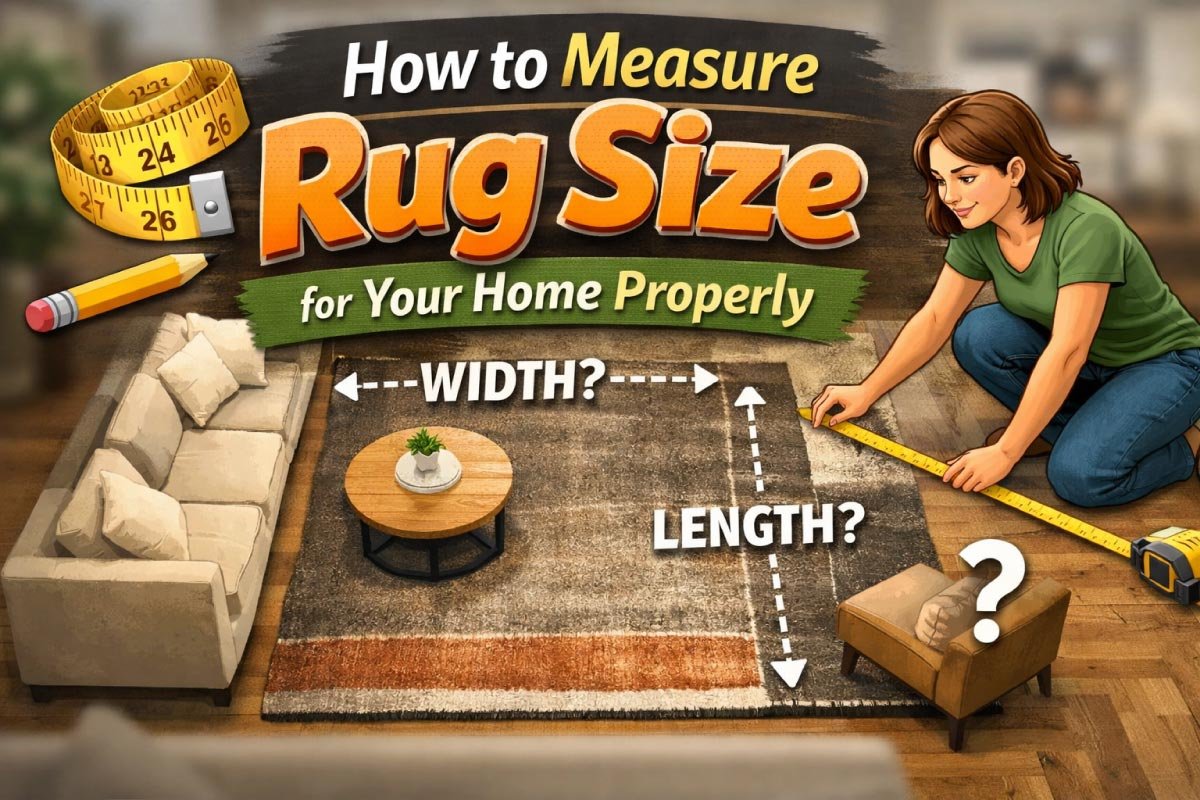
A rug can transform any room, adding warmth, style, and personality. But selecting the right rug size is crucial. Too small, and it can feel lost; too large, and it can overwhelm the space.
Measuring your rug properly ensures balance, comfort, and cohesion with your furniture and décor.
In this guide, we will walk you through everything—from understanding room proportions to creating a layout plan—so you can confidently pick the perfect rug size for your home.
Understand Your Room Dimensions First
Before choosing a rug, you must know your room dimensions. Measure the length and width of your room carefully using a tape measure.
Note any architectural features such as built-in furniture, columns, or fireplaces that might influence the rug layout. Measuring accurately is essential because it gives you a foundation to visualize how different rug sizes will fit.
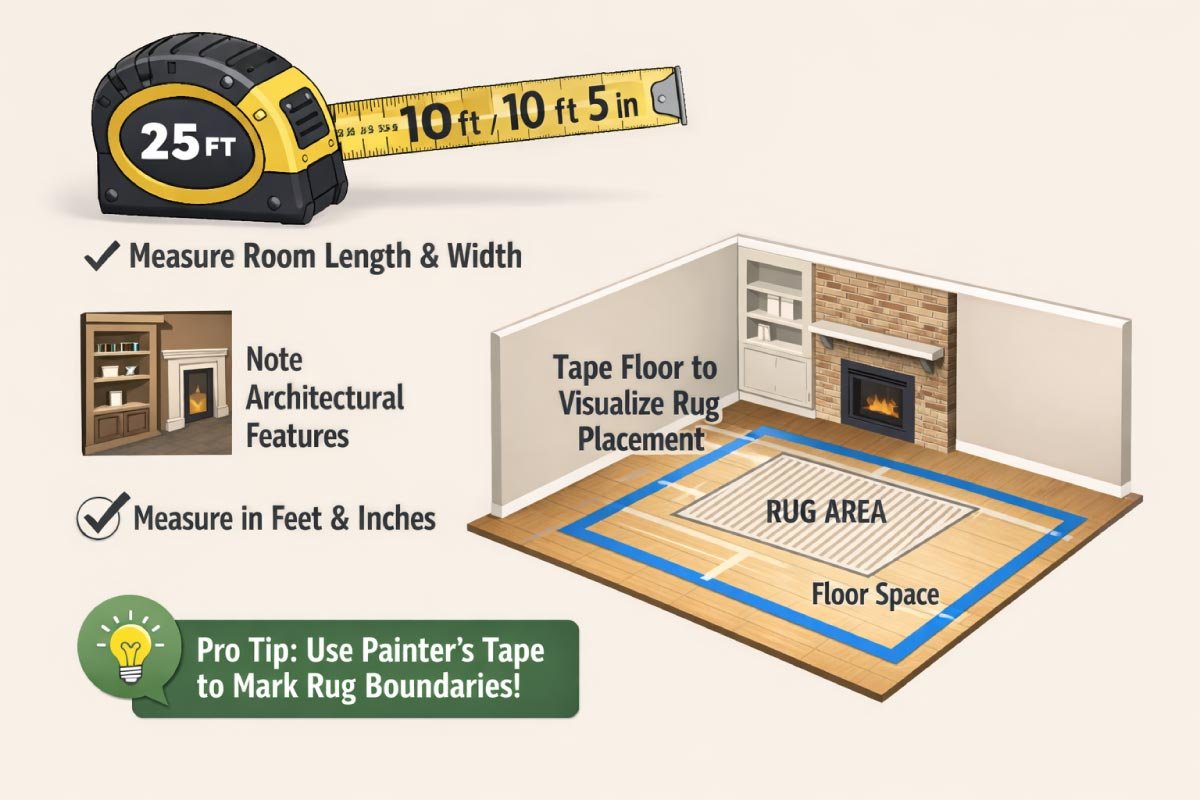
Pro Tip: Always measure in feet and inches to match standard rug sizes. Also, mark the floor boundaries with painter’s tape to simulate the rug placement. This helps prevent misjudgments about how much floor will remain exposed around the rug.
Common Room Sizes and Rug Recommendations
| Room Type | Average Room Size (ft) | Suggested Rug Size (ft) | Notes |
|---|---|---|---|
| Living Room | 12 × 18 | 8 × 10, 9 × 12 | Large rugs anchor furniture clusters |
| Bedroom | 10 × 12 | 5 × 8, 6 × 9 | Place under bed, leaving some floor exposed |
| Dining Room | 10 × 14 | 6 × 9, 8 × 10 | Ensure rug extends beyond chair movement |
| Entryway / Hall | 3 × 10 | 2 × 5, 2.5 × 6 | Runner rugs are ideal for narrow spaces |
Identify Your Furniture Layout
The furniture layout largely dictates the rug size and shape. Rugs can unify furniture and create a focal point, so understanding where sofas, chairs, tables, and beds will go is critical. There are a few common placement strategies:
-
All Legs On: The rug sits completely under furniture. Suitable for larger rooms.
-
Front Legs On: Only the front legs of furniture are on the rug, creating a cohesive but not overwhelming look.
-
All Legs Off: The rug acts as a visual accent in open spaces, not anchored by furniture.
Measuring your furniture dimensions first helps you select a rug that accommodates it comfortably. Leave at least 12–18 inches of bare floor around the rug perimeter for balance.
Furniture Layout & Rug Placement Guide
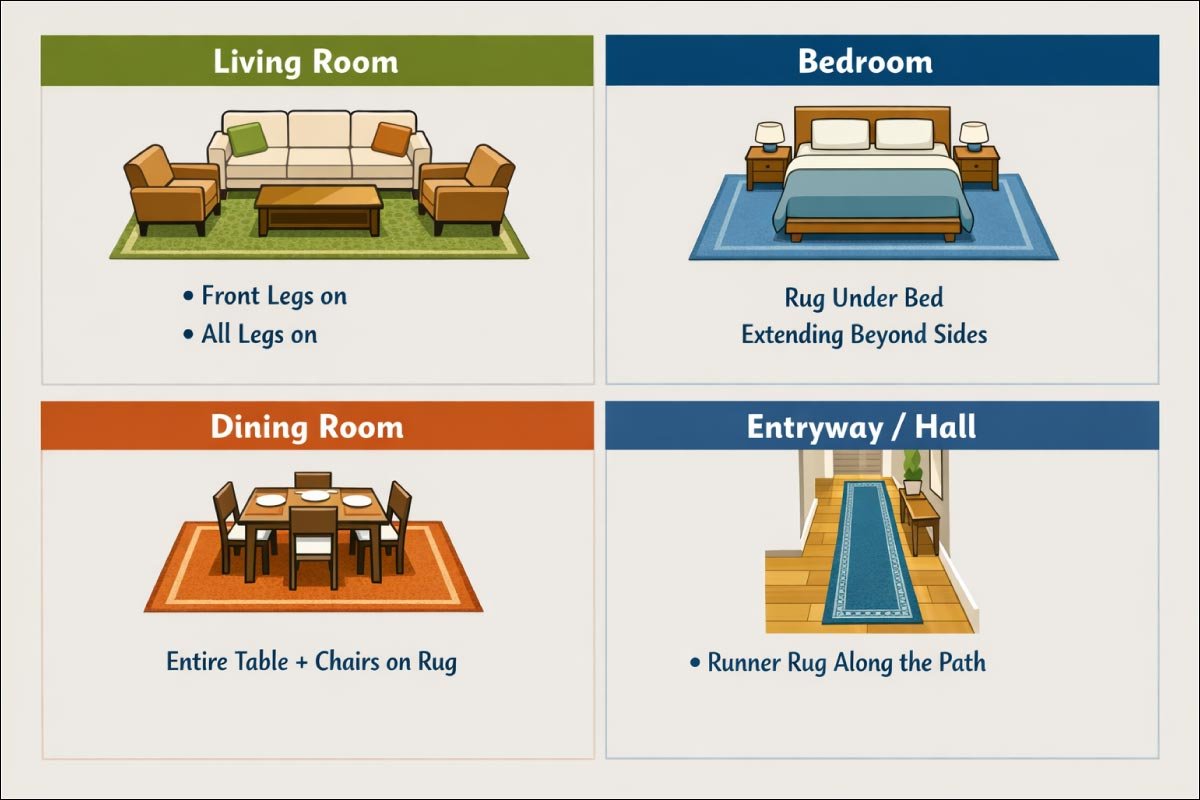
This table highlights how furniture arrangement influences rug placement. Understanding the relationship between layout and rug strategy helps ensure comfort, visual harmony, and practicality, allowing rugs to define spaces clearly while supporting everyday movement and furniture use.
| Layout Type | Description | Recommended Rug Strategy |
|---|---|---|
| Living Room | Sofa, chairs, coffee table | Front legs on / All legs on |
| Bedroom | Bed with side tables | Rug under bed extending beyond sides |
| Dining Room | Table and chairs | Entire table + chair space on rug |
| Entryway / Hall | Narrow walkway | Runner rug along the path |
Consider Rug Shape and Room Shape
Rugs come in various shapes: rectangular, square, round, and oval. Choosing a shape that complements your room ensures visual harmony. Rectangular rugs are the most versatile and suit most living rooms and dining rooms.
Round rugs are ideal for small spaces or under round tables, while oval rugs can soften sharp angles in hallways or entryways.
The key is proportion. A rug should leave a border of exposed floor around the edges, usually 12–24 inches, depending on room size. For irregularly shaped rooms, custom rugs or layering multiple smaller rugs can solve design challenges.
Rug Shapes and Ideal Placement
This table outlines how different rug shapes complement specific spaces. Choosing the right shape enhances flow, balances room proportions, and highlights key areas.
Proper placement ensures the rug works harmoniously with furniture while adding comfort and visual interest to the overall design.
| Rug Shape | Best For | Tips |
|---|---|---|
| Rectangular | Living rooms, bedrooms, dining | Align with furniture edges |
| Square | Small rooms, kids’ areas | Creates cozy corners |
| Round | Dining tables, reading nooks | Adds softness to sharp angles |
| Oval | Entryways, narrow spaces | Softens linear room layouts |
Read More:
Use Standard Rug Sizing as a Reference
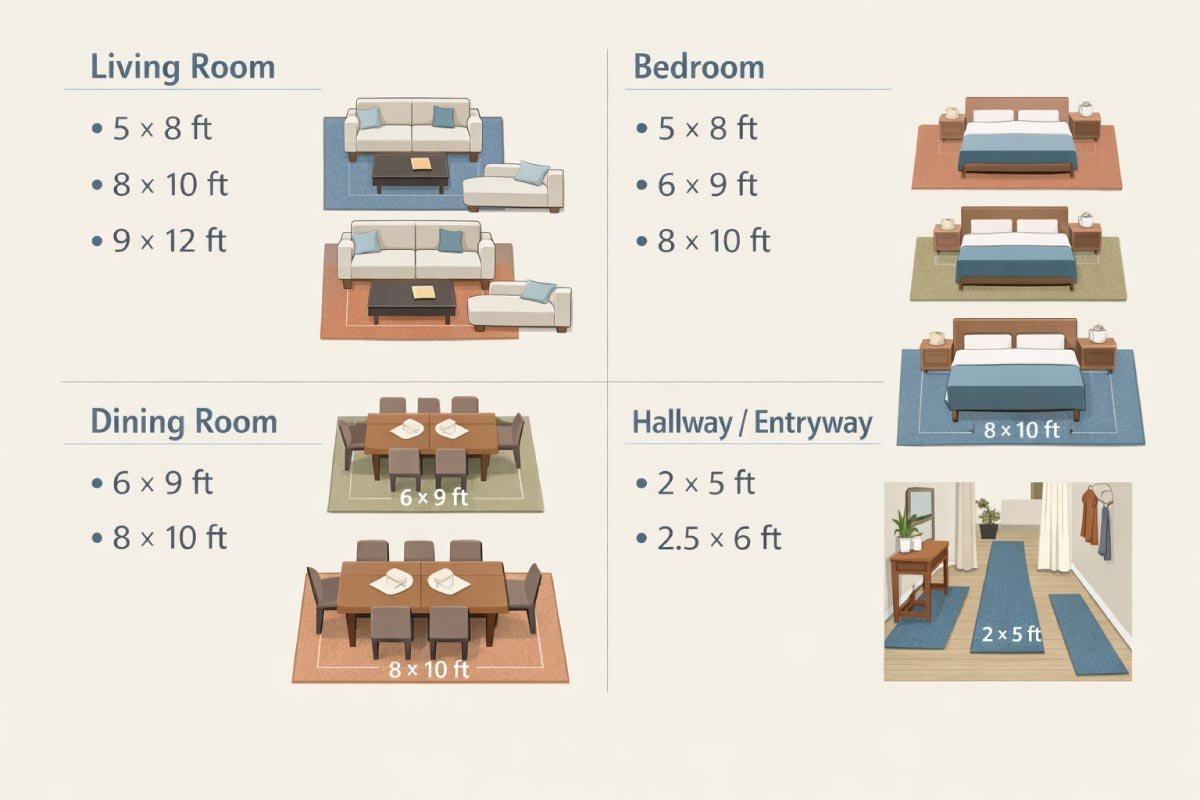
While measuring and layout are important, standard rug sizes provide a helpful starting point. Standard sizes simplify shopping and help you visualize how a rug will fill your room. Here are some commonly used sizes for different rooms:
-
Living Room: 5 × 8 ft, 8 × 10 ft, 9 × 12 ft
-
Bedroom: 5 × 8 ft, 6 × 9 ft, 8 × 10 ft
-
Dining Room: 6 × 9 ft, 8 × 10 ft
-
Hallway/Entryway: 2 × 5 ft, 2.5 × 6 ft
Matching standard sizes with your room dimensions ensures that the rug complements the space without being too small or overpowering.
Standard Rug Sizes & Room Recommendations
This table summarizes standard rug sizes and their best room applications. It helps you quickly match rug dimensions with room types, ensuring proper coverage, balanced furniture placement, and a cohesive look that enhances both comfort and overall interior design.
| Rug Size (ft) | Room Type | Coverage / Placement Tips |
|---|---|---|
| 5 × 8 | Bedroom / Small Living Room | Under bed or sofa front |
| 6 × 9 | Medium Bedroom / Dining Room | Extends beyond furniture |
| 8 × 10 | Living Room / Dining Room | Anchors furniture group |
| 9 × 12 | Large Living Room | All legs on furniture, center-focused |
Read More:
Measure with Tape and Visualization Tools
Once you have the room dimensions and furniture placement, measure for your rug carefully. Use painter’s tape to outline potential rug sizes on the floor. This allows you to “test” how the rug will look without purchasing it first.
For larger areas, measure diagonally as well to ensure your furniture arrangement doesn’t interfere with doorways or walkways. You can also use online visualization tools or apps that let you input room dimensions and overlay rug sizes to see how they’ll fit.
Layering Rugs and Special Considerations
Rug layering is a popular trend that adds texture, dimension, and warmth. When layering, start with a larger base rug and place a smaller, decorative rug on top. Ensure both rugs complement each other in terms of color, texture, and style.
For special spaces such as high-traffic areas or irregular rooms, consider custom-sized rugs. High-traffic zones may need rugs with non-slip backing, while living rooms with odd shapes can benefit from modular rugs or multiple smaller pieces to cover the floor evenly.
Practical Tips to Ensure Perfect Rug Fit
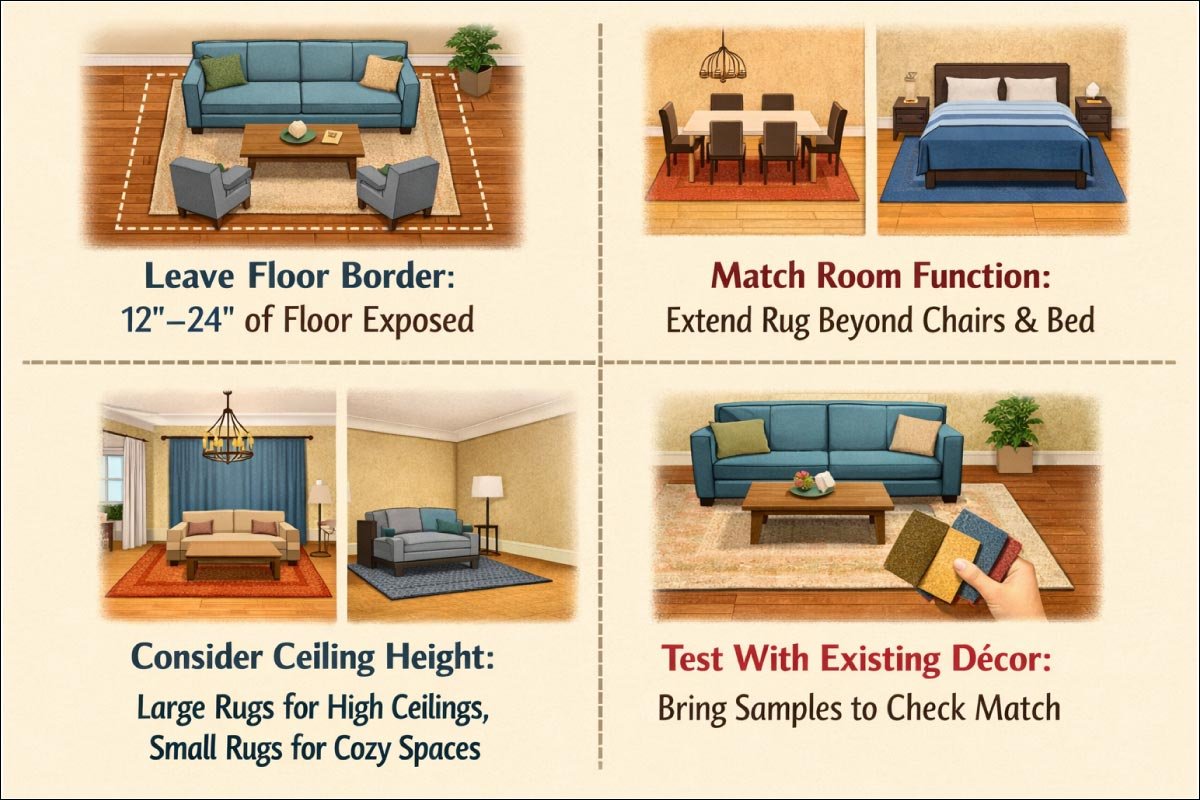
Practical tips help turn measurements into real-world results. The right rug fit balances proportion, comfort, and functionality.
By considering borders, room purpose, ceiling height, and existing décor, you can avoid common mistakes and ensure your rug enhances the space rather than overpowering it.
-
Leave Floor Border: Keep at least 12–24 inches of floor exposed around the rug for proportion.
-
Match Room Function: A rug in a dining room should extend beyond the chair movement area, while a bedroom rug should extend beyond bed edges.
-
Consider Ceiling Height: Large rugs suit rooms with higher ceilings; smaller rugs suit cozier spaces.
-
Test With Existing Décor: Bring swatches or samples to see how the rug complements your furniture and flooring.
Read More:
Final Thoughts
Measuring rug size for your home properly is a blend of art and science. By understanding room dimensions, furniture layout, rug shapes, and standard sizes,
you can choose a rug that fits perfectly, enhances comfort, and elevates your décor.
Do not forget to visualize, measure carefully, and consider your lifestyle needs before making the final purchase.
A well-chosen rug can be the centerpiece that ties your room together beautifully.

I am Engineer Hassan, a professional engineer with over 15 years of experience in measurements, design accuracy, and furniture, appliance, and home product sizing. Through Size Helper, I provide research-based guides and trending 2026 home design ideas for living rooms, bedrooms, sofas, wall décor, fashion, and sports—helping users make confident, informed decisions. Every guide is written with real expertise, verified data, and a commitment to quality, usability, and style.