
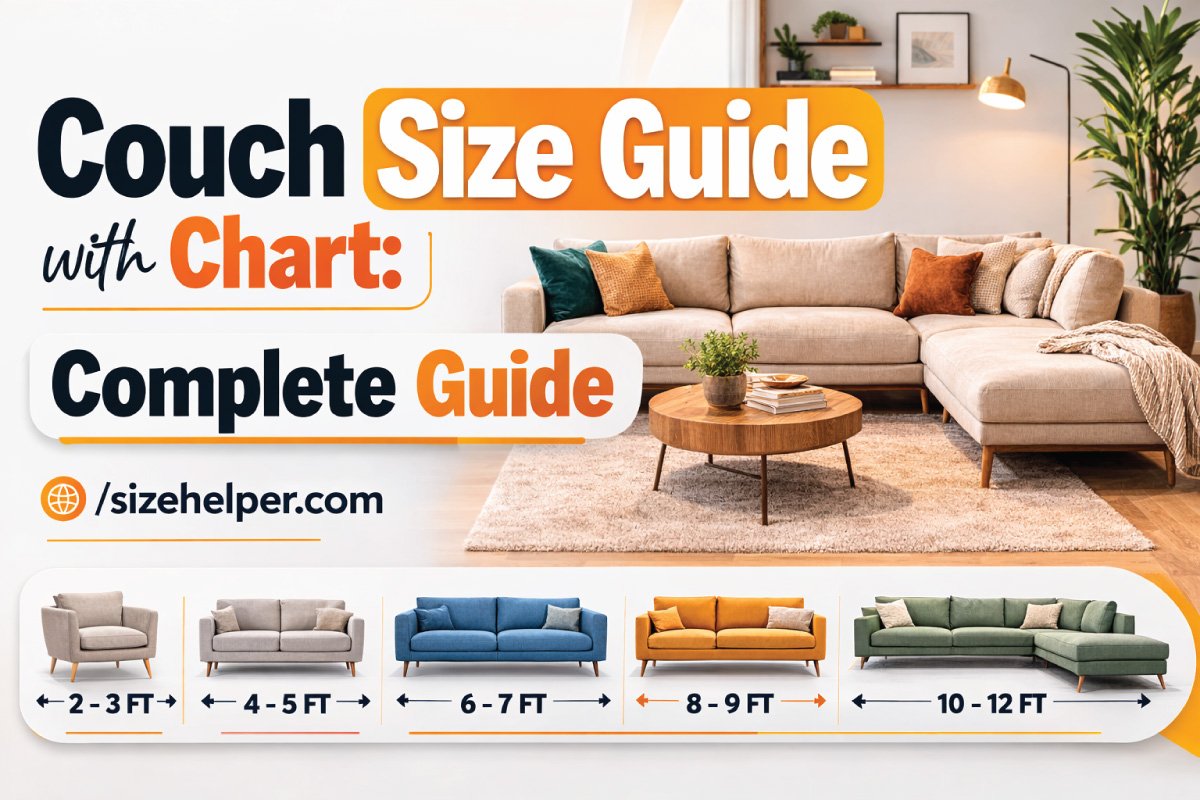
Buying a couch seems simple—until you actually try to do it. Measure wrong, and suddenly your beautiful new sofa blocks the hallway, overwhelms the room, or looks awkwardly small against an empty wall.
I have been there myself, tape measure in hand, convinced I’d done everything right… only to realize on delivery day that I hadn’t accounted for door clearance or arm width.
This complete couch size guide is designed to save you from those mistakes. We will cover standard couch dimensions, a detailed size chart, room-by-room recommendations, measuring tips, layout planning, and personal lessons I’ve learned from choosing (and replacing) sofas over the years.
Why Couch Size Matters More Than Style
A couch is not just a piece of furniture it’s the anchor of your living space. Even the most stylish sofa will feel wrong if the size doesn’t match your room.
Here’s why size matters:
Comfort: Seat depth and height affect posture and relaxation.
Flow: Oversized couches restrict movement and block walkways.
Visual balance: A couch that’s too small can make a room feel unfinished.
Functionality: Reclining, sleeping, entertaining—all depend on dimensions.
I once bought a gorgeous deep-seated couch because it looked luxurious online. In reality, it swallowed my small apartment living room and forced guests to shuffle sideways just to sit down. Lesson learned: size always comes first.
Standard Couch Dimensions (Quick Overview)
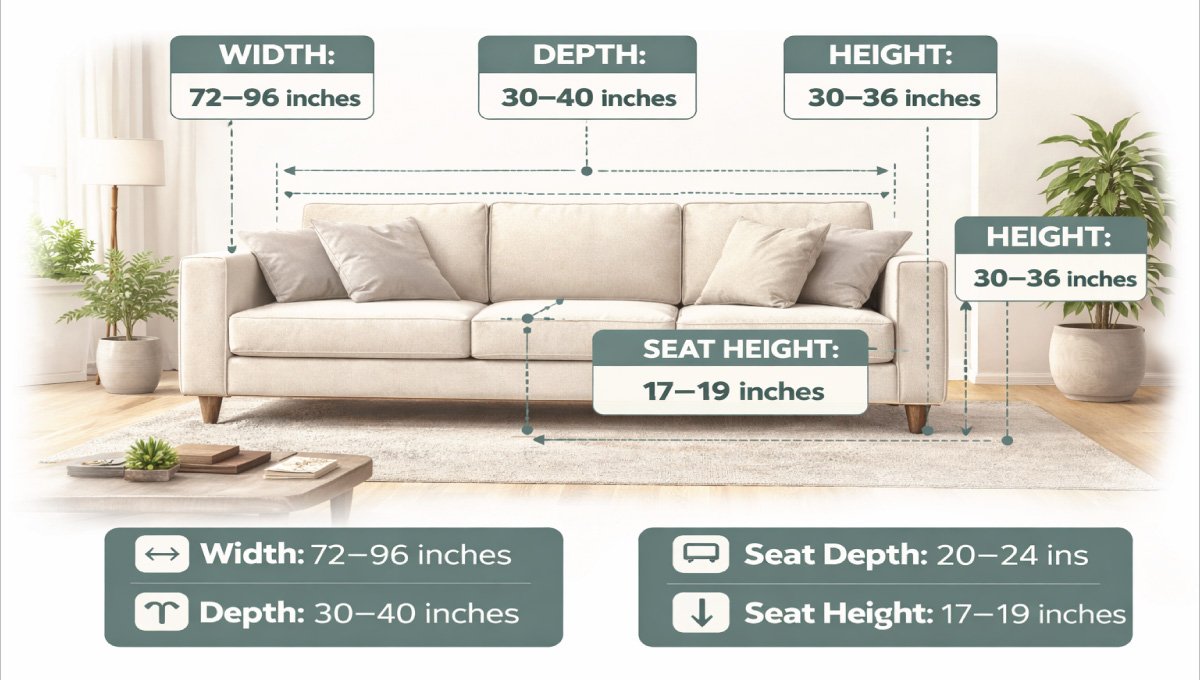
Typical Couch Measurements
Width: 72–96 inches
Depth: 30–40 inches
Height: 30–36 inches
Seat Height: 17–19 inches
Seat Depth: 20–24 inches
These numbers are a starting point—not a rulebook. Your room size, ceiling height, and how you use your couch matter just as much.
Couch Size Chart: Compare Sofa Types at a Glance
| Couch Type | Width (inches) | Depth (inches) | Height (inches) | Best For |
|---|---|---|---|---|
| Loveseat | 48–72 | 30–38 | 30–36 | Small rooms, couples |
| Standard Sofa | 72–96 | 32–40 | 30–36 | Living rooms |
| Sectional Sofa | 94–156+ | 34–40 | 30–36 | Families, large spaces |
| Sleeper Sofa | 72–96 | 35–40 | 30–36 | Guests, apartments |
| Apartment Sofa | 60–78 | 28–34 | 30–35 | Tight layouts |
| Modular Sofa | Varies | 30–40 | 30–36 | Flexible layouts |
This chart helped me immensely when I downsized from a house to a condo. I quickly ruled out sectionals and focused on apartment-sized sofas that actually fit my space.
How to Measure Your Space Correctly
Step-by-Step Measuring Guide
Room width and length: Measure wall to wall.
Entry points: Doorways, staircases, elevators, and hallways.
Ceiling height: Especially important for tall-backed sofas.
Walking clearance: Leave 30–36 inches for pathways.
Other furniture: Coffee tables, side tables, TV stands.
Read More:
Choosing the Right Couch Size by Room
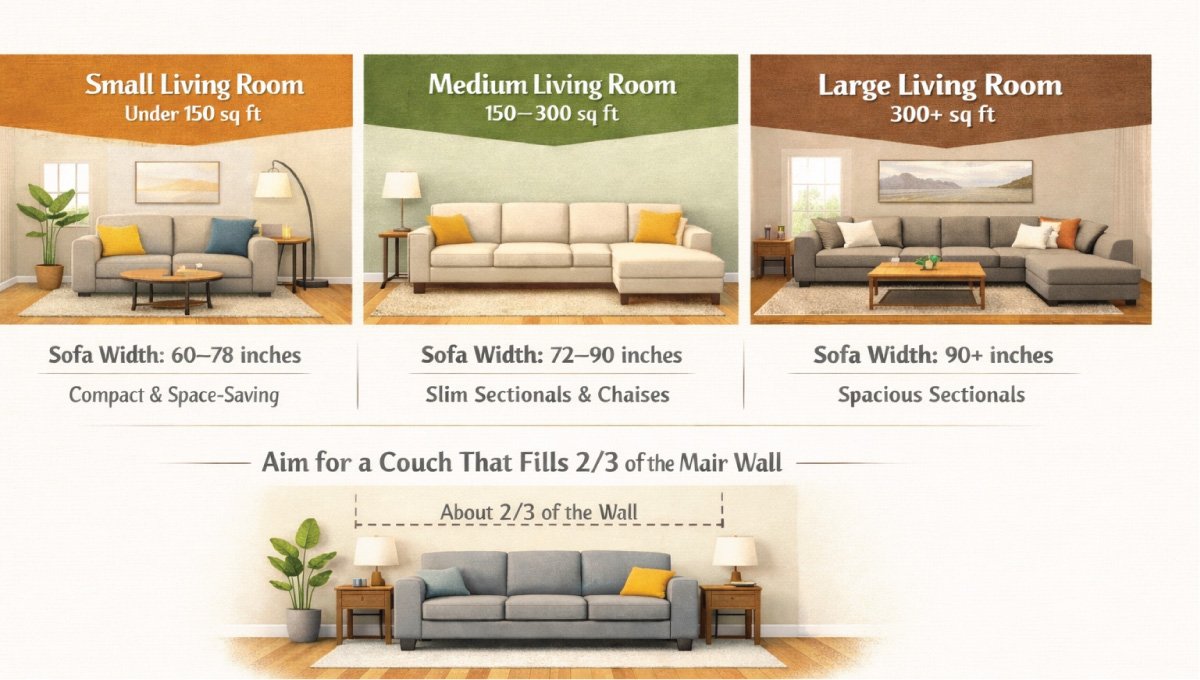
Living Room Couch Size Guide
Small living rooms (under 150 sq ft):
Sofa width: 60–78 inches
Avoid bulky arms and deep seats
Medium living rooms (150–300 sq ft):
Sofa width: 72–90 inches
Consider slim sectionals or chaise sofas
Large living rooms (300+ sq ft):
Sofa width: 90+ inches
Sectionals or modular sofas work well
Personally, I prefer a couch that fills about two-thirds of the main wall—it creates balance without overpowering the space.
Read More:
Couch Size for Apartments and Condos
Best dimensions:
Width: 60–80 inches
Depth: Under 35 inches
Height: Under 35 inches
Look for:
Narrow arms
Raised legs (makes rooms feel larger)
Tight backs instead of overstuffed cushions
Couch Size for Family Rooms
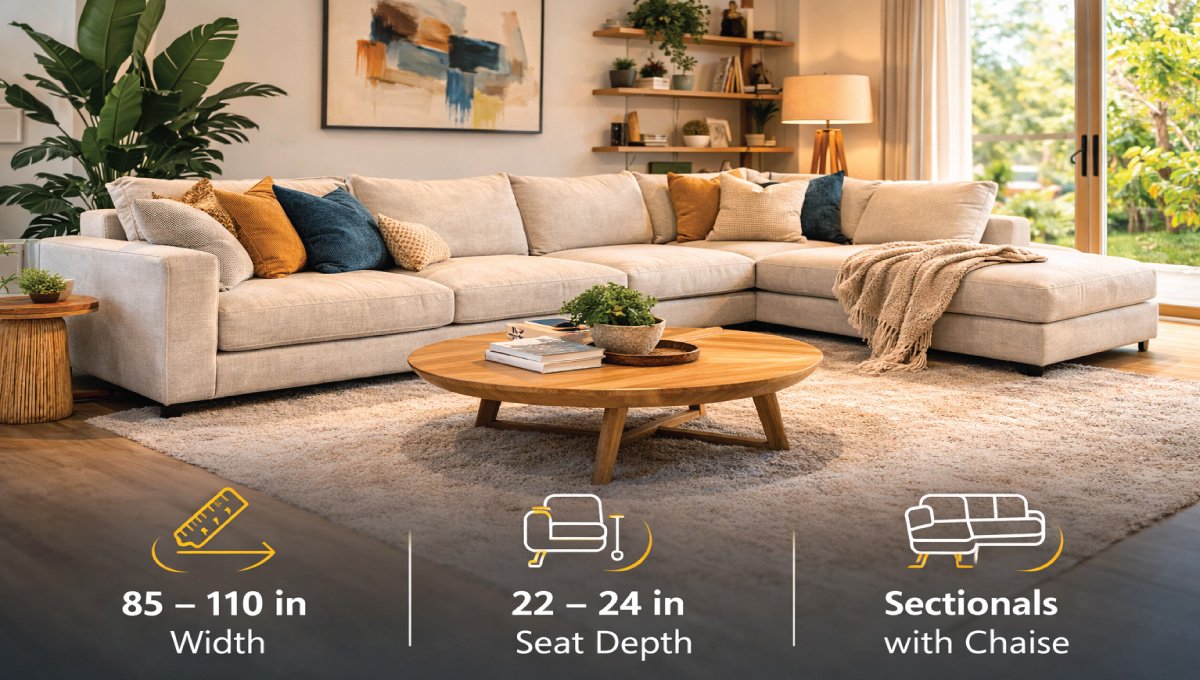
Recommended sizes:
Width: 85–110 inches
Seat depth: 22–24 inches
Sectionals with chaise extensions
In my family room, a sectional became the hub for movie nights, naps, and weekend lounging. The extra width made all the difference.
Read More:
Understanding Seat Depth, Height, and Comfort
Choosing a couch isn’t just about its width—it’s also about how it feels when you sit. Seat depth and height greatly affect comfort, posture, and usability, so understanding these dimensions helps you pick a sofa that’s not only stylish but truly enjoyable for everyday lounging.
Seat Depth
20–21 inches: Upright seating, good for posture
22–24 inches: Relaxed lounging
24+ inches: Best for tall users or lying down
Seat Height
17–18 inches: Modern, low-profile
18–19 inches: Standard and most comfortable
19+ inches: Easier to stand up from
I learned that deep seats look cozy but can be uncomfortable if your feet don’t touch the floor. Always test seat depth if possible.
Sectional Couch Size Planning Tips
Sectionals can transform a living space, but their size and layout require careful planning. Knowing key measurements and visualizing the footprint ensures your sectional fits comfortably without crowding the room, making it both functional and inviting.
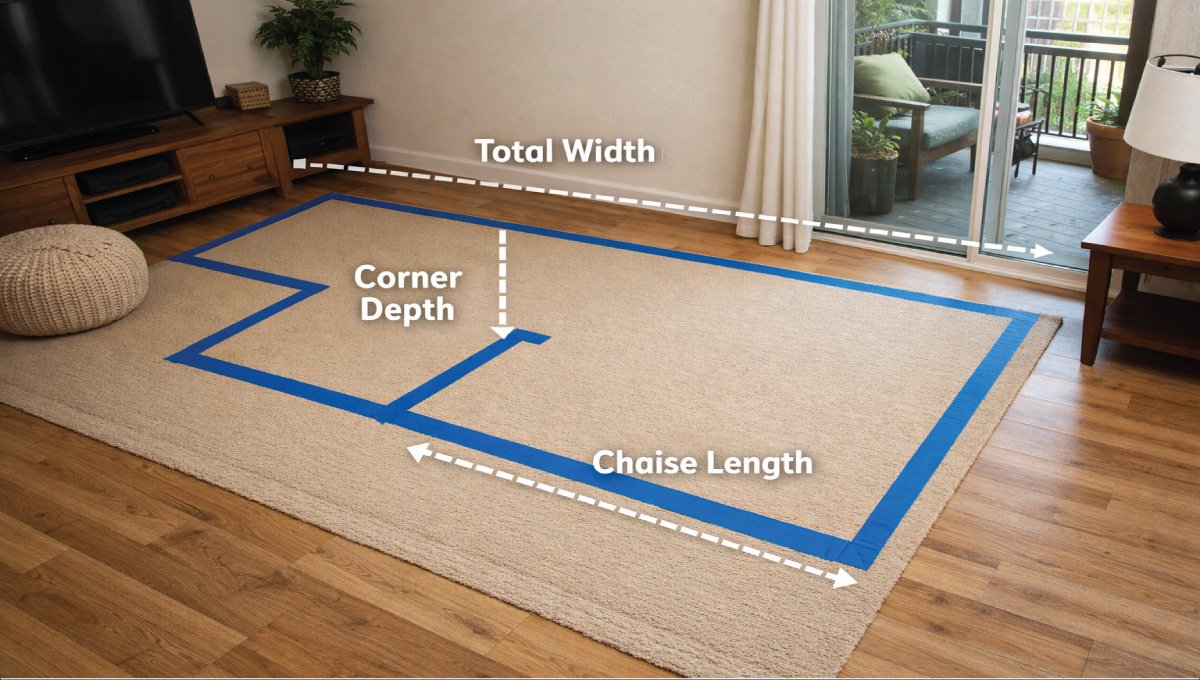
Key measurements:
Total width (end to end)
Chaise length
Corner depth
Planning tip:
Use painter’s tape on the floor to outline the sectional shape. This simple trick saved me from buying a chaise that would’ve blocked my balcony door.
Read More:
Couch Size vs. Coffee Table and Rug
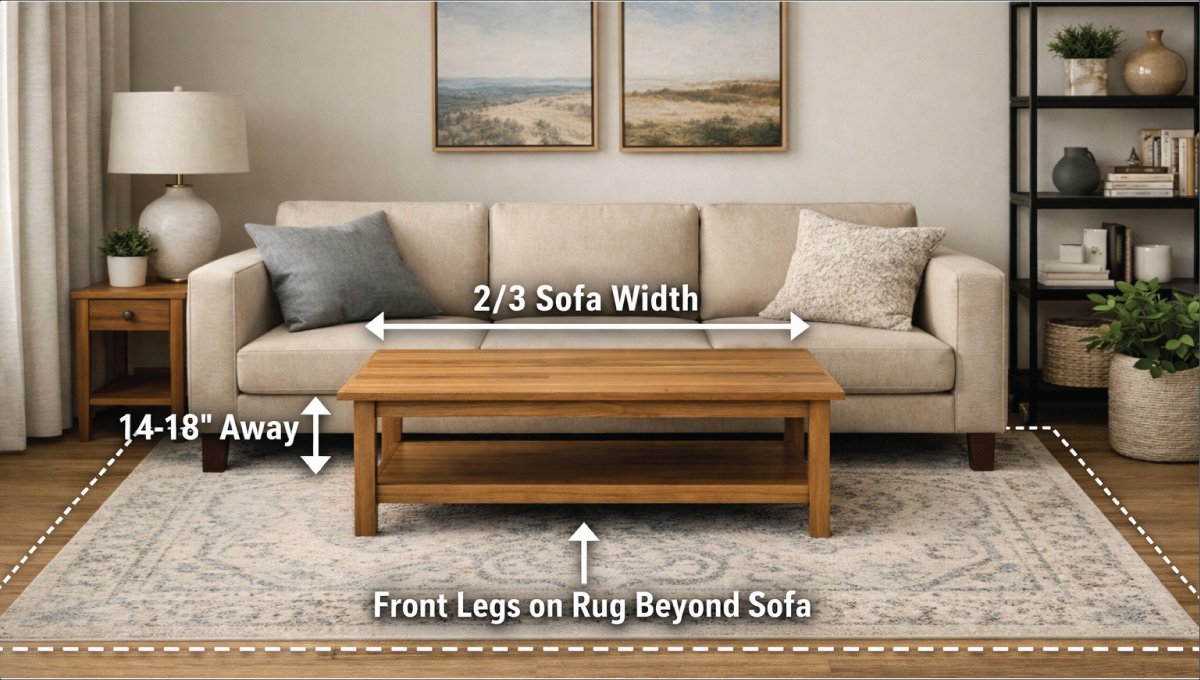
Coffee Table Rules
Length: About two-thirds of the couch width
Distance from couch: 14–18 inches
Rug Sizing Tips
Front legs of the couch should sit on the rug
Rug should extend 6–12 inches beyond couch sides
When I finally sized my rug correctly, my living room instantly felt more polished—even though the couch stayed the same.
Common Couch Size Mistakes (I’ve Made Most of These)
Buying based on looks, not measurements
Ignoring arm width (it adds more inches than you think)
Forgetting delivery clearance
Choosing deep seats for small rooms
Oversizing sectionals
Every couch mistake I’ve made came from skipping one of these steps.
Read More:
How to Choose the Perfect Couch Size (Quick Checklist)
Does it fit the room and the entryway?
Does the seat depth suit my height?
Will it leave enough walking space?
Does it match how I use the room daily?
If the answer isn’t “yes” to all four, keep looking.
Final Thoughts: My Personal Couch-Buying Rule
After years of moving, upgrading, and learning the hard way, here’s my golden rule Measure first, imagine daily life second, and choose style last.
A couch should support how you live—not just how your living room looks in photos. With the size chart, tips, and real-world advice.
In this guide, you will be able to choose a couch that fits your space, your comfort needs, and your lifestyle perfectly. If you’re on the fence between two sizes, go smaller—you can always add chairs, ottomans, or accent seating. Fixing an oversized couch, though, is much harder (trust me).

I am Engineer Hassan, a professional engineer with over 15 years of experience in measurements, design accuracy, and furniture, appliance, and home product sizing. Through Size Helper, I provide research-based guides and trending 2026 home design ideas for living rooms, bedrooms, sofas, wall décor, fashion, and sports—helping users make confident, informed decisions. Every guide is written with real expertise, verified data, and a commitment to quality, usability, and style.