
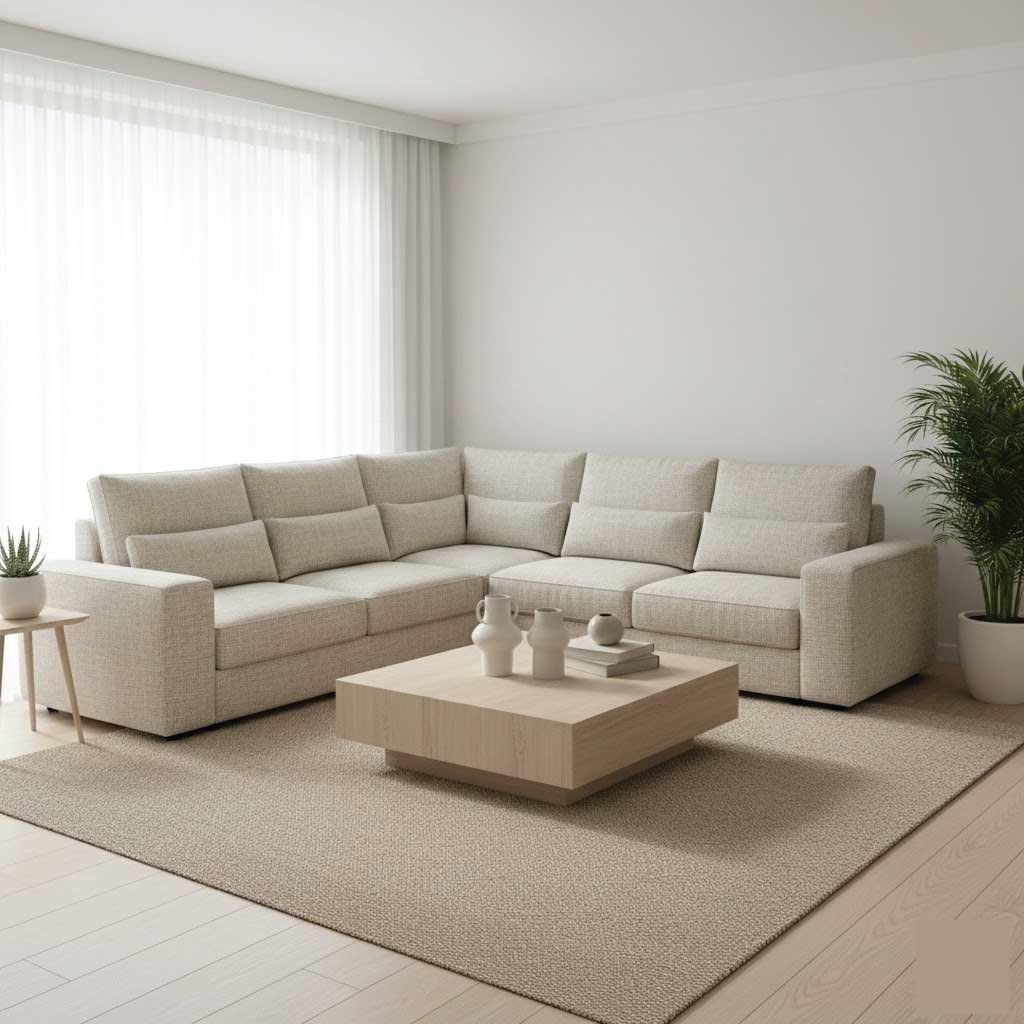
Coffee tables are more than just functional furniture pieces they are the centerpiece of your living room, reflecting your style while serving practical purposes like holding beverages, decor, or storage items. Choosing the right coffee table size is crucial for creating a balanced and aesthetically pleasing living space. In this guide, we’ll explore standard coffee table dimensions, room fit considerations, shape options, and tips to maximize both functionality and style.
Why Coffee Table Size Matters
Comfort: Ensuring easy reach from seating areas without stretching or crouching.
Traffic flow: Maintaining smooth pathways around furniture to prevent accidents.
Visual balance: Achieving a harmonious look without overcrowding or leaving empty spaces.
Functionality: Allowing space for storage, decor, and practical use without being intrusive.
Standard Coffee Table Dimensions
1. Standard Height
The height of a coffee table is typically aligned with the sofa’s seat, usually 16–18 inches, ensuring easy reach for drinks, books, or decor while maintaining visual harmony in the room.
| Sofa Seat Height (inches) | Recommended Coffee Table Height (inches) |
|---|---|
| 16 – 18 | 14 – 16 |
| 19 – 21 | 16 – 18 |
| 22 – 24 | 18 – 20 |
Rule of thumb: A coffee table should be 2-4 inches lower than the sofa seat height for optimal reach and comfort.
2. Standard Length
| Sofa Length (inches) | Recommended Coffee Table Length (inches) |
|---|---|
| 48 – 60 | 36 – 44 |
| 61 – 80 | 48 – 60 |
| 81+ | 60 – 72 |
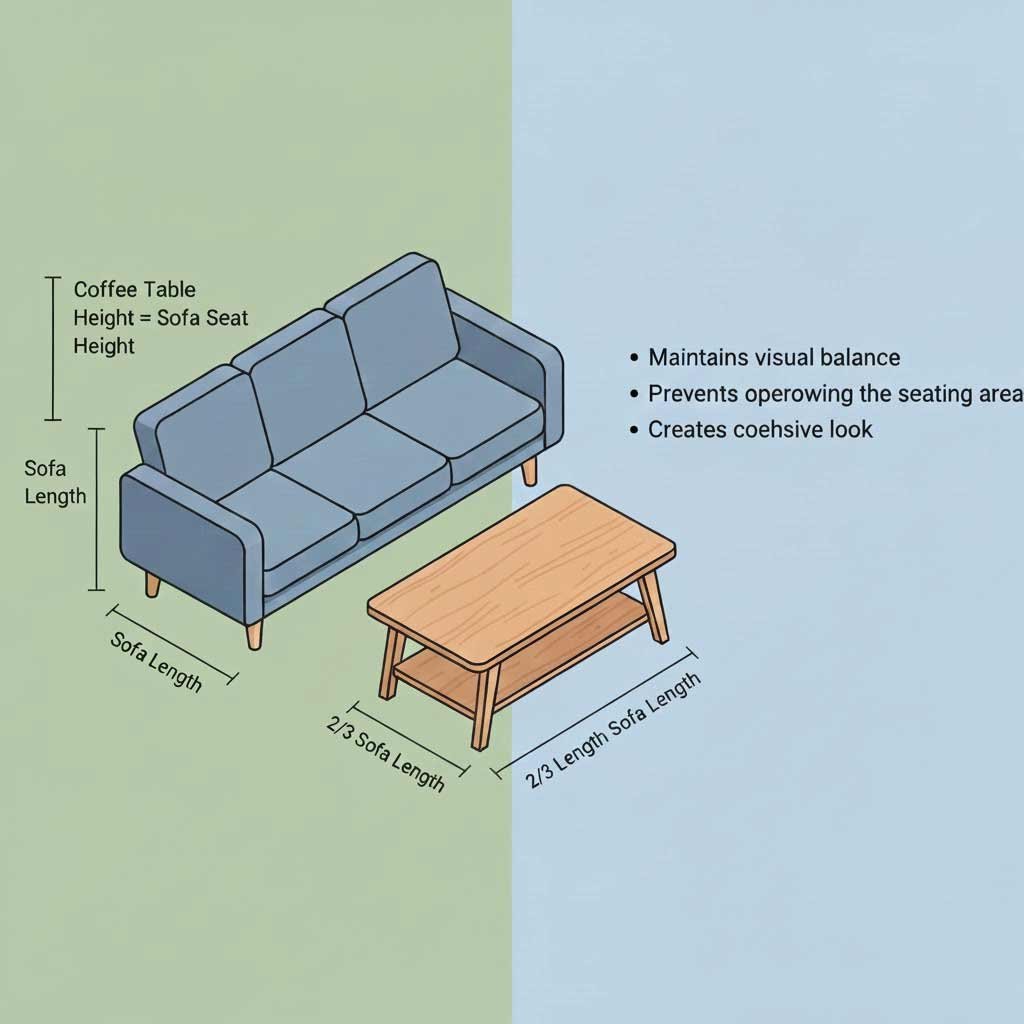
Tip: A coffee table should ideally be 2/3 the length of your sofa. This creates balance without overcrowding the space.
3. Standard Width
The width of coffee tables usually ranges between 18–30 inches, allowing ample surface space without blocking walking areas. Consider the distance between the sofa and table:
| Room Space Between Sofa & Table | Recommended Coffee Table Width |
|---|---|
| 12 – 18 inches | 18 – 24 inches |
| 18 – 24 inches | 24 – 30 inches |
Pro tip: Ensure at least 18 inches of clearance around the coffee table for comfortable movement.
Common Coffee Table Shapes and Size Considerations
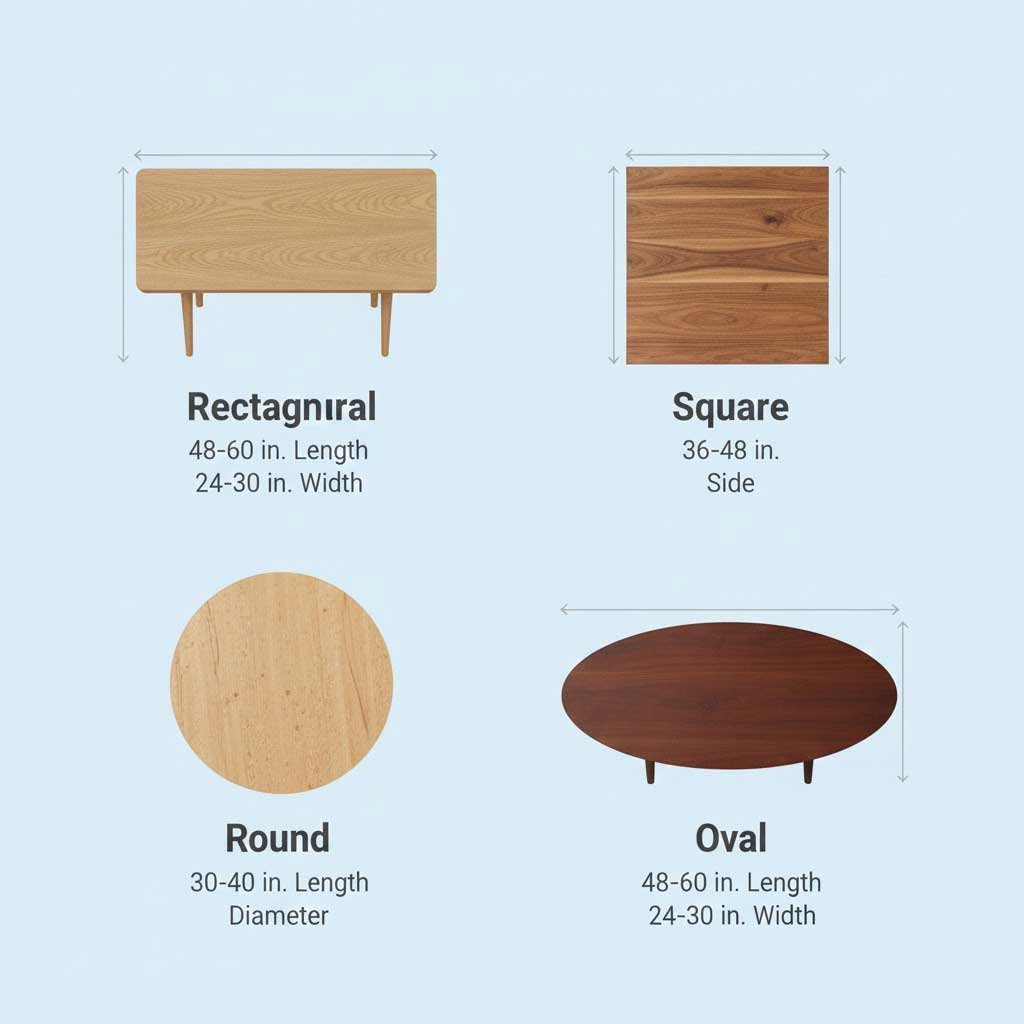
1. Rectangular Coffee Tables
Most popular for traditional living rooms.
Works well with standard-length sofas.
Recommended dimensions: 48 inches long × 24 inches wide × 16–18 inches high.
Advantages:
Provides ample surface area.
Easy to align with sofas and sectionals.
2. Square Coffee Tables
Ideal for square-shaped living rooms.
Perfect with sectionals or paired sofas.
Recommended dimensions: 36–40 inches per side × 16–18 inches high.
Advantages:
Creates a symmetrical focal point.
Can double as ottoman seating with soft upholstery.
3. Round Coffee Tables
Best for small or high-traffic areas.
Encourages fluid movement due to absence of sharp edges.
Recommended dimensions: 30–48 inches diameter × 16–18 inches high.
Advantages:
Safer for children.
Complements curved or modular sofas.
4. Oval Coffee Tables
Combines the surface area of rectangular tables with the softness of round tables.
Recommended dimensions: 48–60 inches long × 24–30 inches wide × 16–18 inches high.
Advantages:
Softens a room with angular furniture.
Provides large surface area without sharp corners.
Coffee Table and Sofa Relationship
Maintaining proportionality between your sofa and coffee table is essential for both comfort and aesthetics. A well-sized table complements the sofa’s height and length, ensures easy reach, and creates a balanced, harmonious look that enhances the overall flow of the living space
| Sofa Type | Table Shape Recommendation | Table Length vs Sofa | Table Height vs Sofa |
|---|---|---|---|
| 2-Seater Sofa | Square or Round | 2/3 of sofa | 2–4 inches lower |
| 3-Seater Sofa | Rectangular or Oval | 2/3 of sofa | 2–4 inches lower |
| Sectional Sofa | Rectangular, Oval, or Modular | Fit central area | 2–4 inches lower |
Tip: Keep pathways clear around the table. Ideally, maintain 18 inches of space between the sofa and coffee table edges.
Adjusting Coffee Table Sizes for Room Dimensions
Your coffee table size should account for the room’s overall dimensions. A table that’s too large can overcrowd the space, while one that’s too small may feel lost. Proper sizing ensures smooth traffic flow and a visually balanced living area.
| Room Size (sq ft) | Recommended Coffee Table Size | Notes |
|---|---|---|
| Small (<150 sq ft) | 36–42 inches length × 18–24 inches width | Use compact shapes like round or square |
| Medium (150–300 sq ft) | 42–48 inches length × 24–28 inches width | Rectangular tables work well |
| Large (>300 sq ft) | 48–60 inches length × 28–30 inches width | Consider multi-level or double tables |
Multi-Functional Coffee Tables
Modern living rooms often demand versatility, and multi-functional coffee tables deliver just that. They allow for extra storage, transform into workspaces or dining surfaces, and can even include hidden compartments or adjustable heights. These tables maximize functionality without sacrificing style, making them ideal for compact or busy living spaces.
Storage: Hidden compartments or drawers.
Convertible options: Lift-top tables for work or dining.
Nested tables: Flexible arrangement for small and large gatherings.
Nested Table Dimensions
| Nesting Table | Dimensions (inches) |
|---|---|
| Large | 40 × 20 × 16 |
| Medium | 30 × 18 × 16 |
| Small | 24 × 16 × 16 |
Tip: Nesting tables are perfect for maximizing space in small living rooms while offering additional surface area when needed.
Also Read:
Choosing the Right Height for Comfort
The height of a coffee table plays a critical role in ensuring ergonomic comfort and usability in your living space. A table that is too low forces you to bend down repeatedly, which can strain your back and make everyday activities, such as reaching for a drink or a book, uncomfortable. On the other hand, a table that is too high can feel awkward, interfere with natural arm movements, and disrupt the visual balance of the room.
As a general guideline, a coffee table should be slightly lower than the seat of your sofa, typically around 16 to 18 inches in height. This allows for easy access while seated and ensures a comfortable, natural reach.
For sectionals or seating arrangements with varying seat heights, modular or adjustable coffee tables are ideal. They provide flexibility, maintain comfort across different seating areas, and can adapt to multiple functions, such as work, dining, or relaxation, while keeping the room visually balanced and cohesive.
Material Considerations and Size Impact
The size of your coffee table affects material selection, as larger tables may require sturdier materials for stability, while smaller tables allow for lighter options. Material choice also influences durability, aesthetics, and overall room balance.
| Material | Size Consideration | Pros |
|---|---|---|
| Glass | Works in small rooms to create airy feel | Visually lightweight, modern |
| Wood | Can be large and substantial | Warm, traditional, durable |
| Metal | Suitable for small or industrial rooms | Sleek, space-saving |
| Upholstered | Best for compact or cozy spaces | Adds comfort, doubles as seating |
Tip: Transparent or light-colored materials make rooms appear more spacious, especially with larger tables.
Tips for Perfect Living Room Fit
-
Maintain Clearance: Leave at least 18 inches between the sofa and coffee table. This clearance allows for easy movement, prevents tripping hazards, and ensures a comfortable reach for drinks, books, or decor.
-
Proportion Matters: Ideally, the coffee table should be about two-thirds the length of your sofa. This proportion maintains visual balance, prevents the table from overpowering the seating area, and creates a cohesive look.
-
Consider Room Shape: Match the table shape to the room layout. Round or square tables work best in square rooms, while rectangular or oval tables complement longer, rectangular spaces. This helps maintain harmony and improves traffic flow.
-
Functional Height: The table should sit 2–4 inches lower than the sofa seat to provide ergonomic comfort for all users.
-
Visual Balance: Avoid oversized tables in small rooms, which can feel cramped, and tiny tables in large rooms, which can look lost or disproportionate.
-
Flexibility: For multifunctional spaces, consider nesting, modular, or adjustable tables. These options provide versatility, extra surface area, and storage while maintaining style and balance.
Also Read:
Coffee Table Placement Guide
The placement of a coffee table directly influences both traffic flow and room aesthetics. Proper positioning ensures easy movement around the seating area while maintaining a balanced, visually appealing focal point in the space.
| Placement Type | Guidelines |
|---|---|
| Centered in front of sofa | Ideal for traditional layouts |
| Between sectional seats | Use rectangular or modular tables for access |
| Offset from sofa | Works for asymmetrical or open-plan living rooms |
| Against a wall | Perfect for narrow rooms, as console-style tables |
Rule of thumb: Keep pathways at least 24 inches wide for comfortable walking around the table.
Coffee Table Size Quick Reference Chart
| Table Shape | Length / Diameter (in) | Width (in) | Height (in) | Ideal Room Size (sq ft) |
|---|---|---|---|---|
| Rectangular | 48–60 | 24–30 | 16–18 | Medium to large |
| Square | 36–40 | 36–40 | 16–18 | Small to medium |
| Round | 30–48 | 30–48 | 16–18 | Small to medium |
| Oval | 48–60 | 24–30 | 16–18 | Medium to large |
| Nesting | 24–40 (varies) | 16–20 | 16 | Small to medium |
Final Thoughts
Choosing the perfect coffee table size goes beyond simply matching your living room décor It’s about creating a space that is both functional and visually harmonious. The right table enhances comfort, facilitates easy movement, and complements the proportions of your sofa and room. Factors such as height, length, and shape play a crucial role in ensuring the table works seamlessly within your seating arrangement while maintaining aesthetic balance.
When selecting a coffee table, consider how it interacts with your sofa and the overall room layout. Ensure there’s enough clearance for movement, maintain proper proportions relative to your sofa, and choose a height that allows for ergonomic reach. Multi-functional, adjustable, or nesting tables can add versatility, providing extra storage or adaptable surfaces for various activities.
Always measure carefully, visualize the table in your space, and balance style with practicality. Whether you opt for a rectangular, round, or modular design, the right coffee table will enhance your living room’s comfort, usability, and visual appeal, creating a welcoming and well-organized environment.
Also Read:

I am Engineer Hassan, a professional engineer with over 15 years of experience in measurements, design accuracy, and furniture, appliance, and home product sizing. Through Size Helper, I provide research-based guides and trending 2026 home design ideas for living rooms, bedrooms, sofas, wall décor, fashion, and sports—helping users make confident, informed decisions. Every guide is written with real expertise, verified data, and a commitment to quality, usability, and style.