
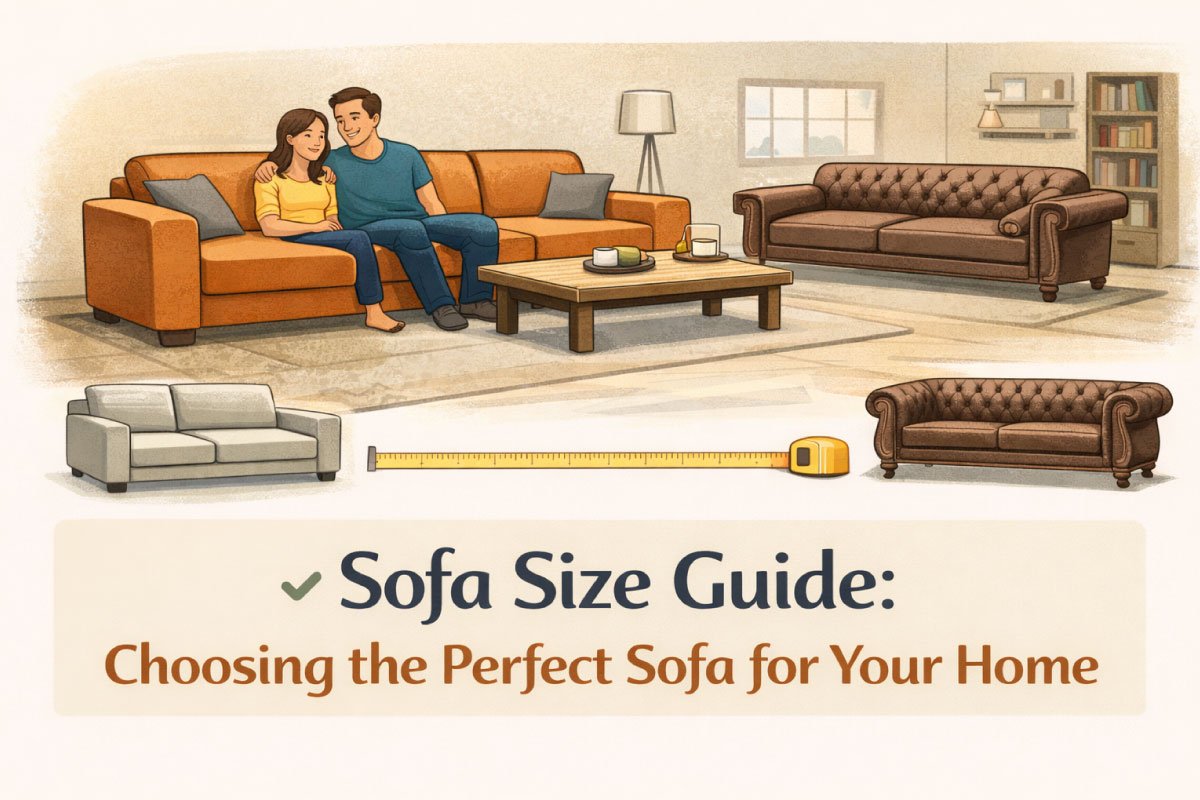
Choosing the right sofa is more than just picking a style or color—it’s about finding a piece that fits your space, lifestyle, and comfort needs. Sofas are central to living rooms, family rooms, and even offices, making them both a functional and aesthetic investment.
To help you navigate the many options, this guide covers sofa sizes, types, standard dimensions, placement tips, and selection advice. By understanding these factors, you can ensure your sofa complements your space while providing the comfort you need.
Why Sofa Size Matters
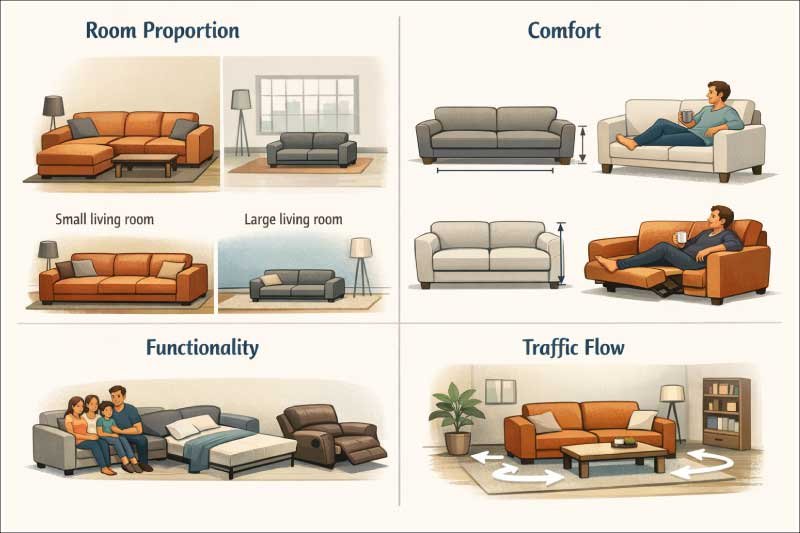
Choosing the right sofa size is essential for creating a balanced, comfortable, and functional living space. It affects the overall look, usability, and flow of your room. Key considerations include room proportion, comfort, functionality, and traffic flow. Proper sizing ensures your sofa enhances your space without overwhelming it.
-
Room Proportion – A sofa that is too large can overwhelm a small room, while a sofa that is too small can feel awkward in a spacious living area.
-
Comfort – The depth, seat height, and length affect how comfortable a sofa will be for lounging, sitting, or entertaining guests.
-
Functionality – Consider how many people will use it regularly, if it needs to accommodate sleeping, and whether it will have reclining or modular features.
-
Traffic Flow – Proper sizing ensures you have enough space to walk around the sofa without making your room feel cramped.
Standard Sofa Sizes
Standard sofa sizes vary to accommodate different rooms, seating needs, and styles. Knowing typical dimensions helps in selecting a sofa that fits your space while maintaining comfort and functionality.
From loveseats to sectionals, understanding length, depth, and height ensures your furniture complements your living area perfectly.
Standard Sofa Dimensions
| Sofa Type | Typical Length (inches) | Typical Depth (inches) | Typical Height (inches) | Seats |
|---|---|---|---|---|
| Loveseat | 52–72 | 30–36 | 30–36 | 2 |
| Apartment Sofa | 70–80 | 32–36 | 30–36 | 2–3 |
| Standard Sofa | 78–90 | 34–38 | 30–36 | 3 |
| Sectional Sofa | 90–140+ | 34–40 | 30–36 | 3–6+ |
| Sleeper Sofa | 70–90 | 32–38 | 30–36 | 2–4 |
| Chaise Sofa | 70–85 | 34–38 | 30–36 | 2–3 |
Tip: Always measure your space before buying a sofa to ensure it fits comfortably with other furniture and allows for easy movement.
Sofa Depth and Seat Height
Sofa depth and seat height play a crucial role in comfort and usability. The distance from the front to the back cushion determines seating posture and relaxation. Choosing the right depth ensures proper support, while seat height affects ease of sitting and standing, making selection important for all users.
Sofa Depth & Seat Height Guidelines
| Sofa Type | Seat Depth (inches) | Seat Height (inches) | Ideal Use |
|---|---|---|---|
| Loveseat | 20–24 | 17–19 | Small spaces, 2-person seating |
| Standard Sofa | 21–24 | 17–19 | Everyday living room use |
| Deep Seat Sofa | 24–28 | 17–19 | Lounge, reading, long sitting |
| Sectional | 22–26 | 17–19 | Family gatherings, large spaces |
| Sleeper | 20–24 | 17–19 | Multi-functional, guest seating |
Pro Tip: Taller individuals may prefer deeper seats, while shorter people often find shallower seats more comfortable.
Different Sofa Types and Their Sizes
Choosing the right sofa type is an important decision that affects both comfort and room aesthetics. Different sofa styles are designed to suit various room sizes, seating requirements, and lifestyles.
Understanding their typical dimensions helps you plan layouts efficiently, avoid overcrowding, and ensure the sofa fits well within your living space.
1. Sofa Bed (Sleeper Sofa)
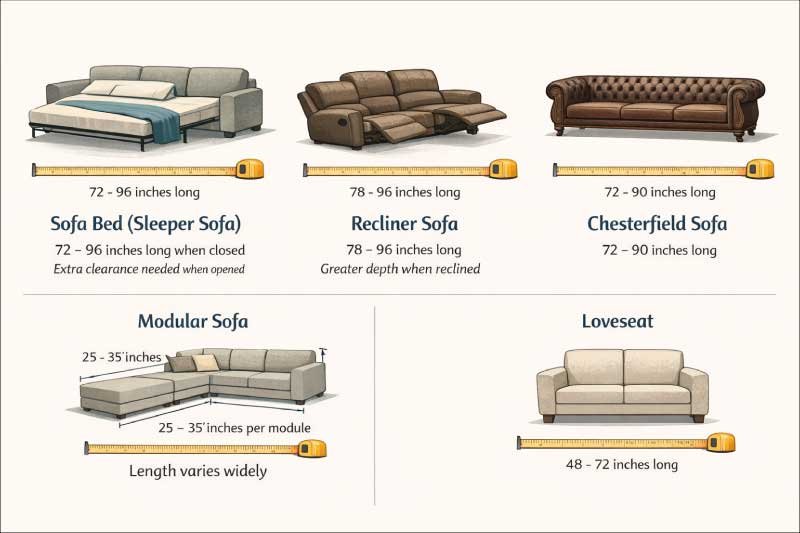
A sofa bed combines seating with a fold-out mattress, offering a practical solution for guest accommodation. Sizes are similar to standard sofas, usually 72–96 inches long, but require extra clearance when opened, as the bed mechanism extends into the room.
2. Recliner Sofa
Recliner sofas feature adjustable backrests and footrests for enhanced comfort. They often require more space than standard sofas due to reclining mechanisms. Typical lengths range from 78 to 96 inches, with greater depth when fully reclined.
3. Chesterfield Sofa
Chesterfield sofas are known for their deep button-tufting, rolled arms, and classic design. They usually have a more substantial presence, with lengths between 72 and 90 inches and deeper seating, making them well-suited for formal living rooms.
4. Modular Sofa
Modular sofas are made of individual units that can be rearranged to suit different layouts. This flexibility makes them ideal for evolving spaces. Sizes vary widely, as each module is typically 25–35 inches wide, allowing customizable overall dimensions.
5.Loveseat
A loveseat is a compact and stylish seating option designed to comfortably accommodate two people. It is ideal for small living rooms, apartments, bedrooms, or as supplementary seating in larger spaces, offering comfort and functionality without taking up excessive floor area.
Loveseat Size Chart
| Length (inches) | Depth (inches) | Height (inches) | Seating Capacity |
|---|---|---|---|
| 52 | 30 | 32 | 2 |
| 60 | 32 | 33 | 2 |
| 66 | 34 | 34 | 2 |
| 72 | 36 | 36 | 2 |
6.Standard Sofa
The standard sofa, commonly known as a three-seater, is a versatile and popular option for most living rooms. It offers comfortable seating for three people while maintaining balanced proportions, making it suitable for medium to large spaces without overwhelming the room layout.
Standard Sofa Size Chart
| Length (inches) | Depth (inches) | Height (inches) | Seats |
|---|---|---|---|
| 78 | 34 | 32 | 3 |
| 84 | 36 | 33 | 3 |
| 90 | 38 | 34 | 3 |
7.Sectional Sofa
Sectional sofas are modular and highly versatile, perfect for spacious living rooms or open-concept areas. With L-shaped, U-shaped, or customizable modular configurations, they offer flexible seating options for families and gatherings.
Understanding typical dimensions helps in selecting a sectional that fits your space while maximizing comfort and style.
Sectional Sofa Size Chart
| Configuration | Length (inches) | Depth (inches) | Height (inches) | Seats |
|---|---|---|---|---|
| L-Shaped | 90–120 | 34–38 | 32–36 | 4–6 |
| U-Shaped | 120–140+ | 36–40 | 32–36 | 5–7+ |
| Modular | 90–140+ | 34–38 | 32–36 | 3–6+ |
8- Sleeper Sofa
Sleeper sofas are versatile pieces that combine seating with a pull-out bed, making them perfect for guest rooms or small apartments. Their size varies to accommodate different mattress dimensions, ensuring comfort for both sitting and sleeping. Choosing the right length, depth, and height ensures functionality and space efficiency.
| Mattress Size | Sofa Length (inches) | Depth (inches) | Height (inches) | Seats |
|---|---|---|---|---|
| Twin | 70–75 | 32–36 | 32–34 | 2 |
| Full | 75–80 | 32–36 | 32–34 | 3 |
| Queen | 80–90 | 34–38 | 32–36 | 3 |
| King | 90+ | 36–40 | 34–36 | 3–4 |
9- Chaise Lounge / Sofa
Chaise sofas provide extended seating, perfect for lounging and relaxation. They can be standalone pieces or integrated with a standard sofa, offering both style and comfort. Knowing typical dimensions helps you choose a chaise that fits your space while allowing enough room for stretching, seating, and complementing existing furniture.
Chaise Sofa Size Chart
| Type | Length (inches) | Depth (inches) | Height (inches) | Seats |
|---|---|---|---|---|
| Standard Chaise | 70–75 | 34–36 | 32–34 | 2–3 |
| Sectional Chaise | 80–85 | 36–38 | 32–34 | 3–4 |
10- Apartment Sofa / Small Sofa
Apartment sofas, also called small sofas, are designed for compact spaces without compromising comfort. Slightly smaller than standard sofas, they fit apartments, studios, or cozy living rooms. Understanding typical dimensions helps you choose the right length, depth, and height to maximize seating while maintaining a balanced and functional layout.
Apartment Sofa Size Chart
| Length (inches) | Depth (inches) | Height (inches) | Seats |
|---|---|---|---|
| 70 | 32 | 32 | 2–3 |
| 74 | 34 | 33 | 2–3 |
| 78 | 36 | 34 | 3 |
Also Read:
How to Measure Your Space
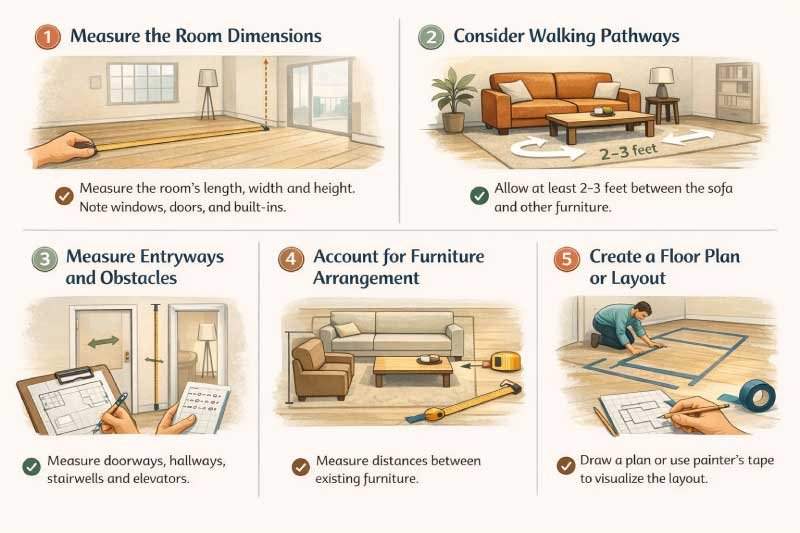
Measuring your space accurately is essential before buying a sofa. Proper measurements help ensure the furniture fits well and maintains room functionality. Consider all dimensions of the room, pathways, and entry points. Creating a visual plan can prevent mistakes and avoid the hassle of returning or rearranging furniture after delivery.
1. Measure the Room Dimensions
Start by measuring your room’s length, width, and height using a tape measure. Don’t forget to note the location of windows, doors, and built-in furniture. Accurate dimensions provide a clear idea of how much space is available for a sofa, helping you avoid selecting pieces that overcrowd or overwhelm the room.
2. Consider Walking Pathways
Leave enough space around the sofa for comfortable movement. Experts recommend at least 2–3 feet between furniture for walking. Consider high-traffic areas and how people will navigate the room. Proper spacing ensures a functional layout while maintaining comfort and accessibility throughout your living space.
3. Measure Entryways and Obstacles
Before purchasing, measure doorways, hallways, stairwells, and elevators. Compare these measurements with the sofa’s dimensions to ensure it can be delivered without issues. Taking these precautions prevents last-minute surprises and ensures that the sofa can be moved into your room safely and without damage.
4. Account for Furniture Arrangement
Consider existing furniture placement before choosing a sofa size. Measure distances between items to avoid crowding. Think about how the sofa interacts with coffee tables, chairs, and side tables. Proper arrangement maintains an open feel, balances the room visually, and keeps functionality intact.
5. Create a Floor Plan or Layout
Visualize your space by drawing a floor plan on paper or using an online tool. Mark the sofa’s dimensions and position, including clearance for pathways. Alternatively, use painter’s tape to outline furniture on the floor. This step helps confirm fit, spacing, and flow before making a purchase, saving time and frustration.
Also Read:
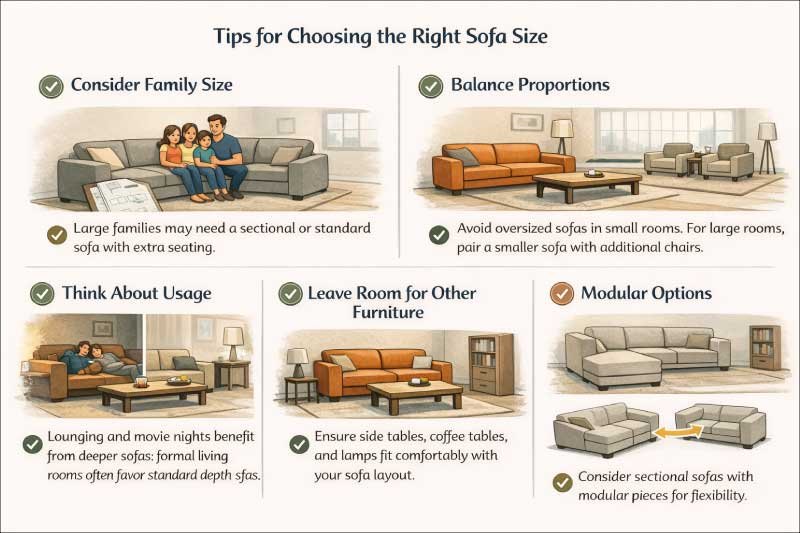
Tips for Choosing the Right Sofa Size
Selecting the perfect sofa size requires balancing comfort, style, and practicality. The right choice depends on family needs, room dimensions, usage, and furniture arrangement. Considering these factors helps you pick a sofa that fits seamlessly, enhances your space, and provides both functionality and aesthetic appeal for daily living.
-
Consider Family Size: Large families may need a sectional or standard sofa with extra seating.
-
Balance Proportions: Avoid oversized sofas in small rooms. For large rooms, pair a smaller sofa with additional chairs.
-
Think About Usage: Lounging and movie nights benefit from deeper sofas; formal living rooms often favor standard depth sofas.
-
Leave Room for Other Furniture: Ensure side tables, coffee tables, and lamps fit comfortably with your sofa layout.
-
Modular Options: Consider sectional sofas with modular pieces for flexibility.
Also Read:
Conclusion
Choosing the perfect sofa requires careful consideration of size, type, depth, and seating capacity. With the right measurements and an understanding of how your sofa will be used, you can select a piece that enhances both comfort and style.
Tables provided in this guide serve as a handy reference to ensure your sofa fits perfectly in your space. Always measure your room first, visualize the layout, and consider your lifestyle needs to make a confident decision.
A well-chosen sofa not only provides comfort but also becomes a centerpiece of your home, reflecting your style while accommodating your daily life.
Also Read:

I am Engineer Hassan, a professional engineer with over 15 years of experience in measurements, design accuracy, and furniture, appliance, and home product sizing. Through Size Helper, I provide research-based guides and trending 2026 home design ideas for living rooms, bedrooms, sofas, wall décor, fashion, and sports—helping users make confident, informed decisions. Every guide is written with real expertise, verified data, and a commitment to quality, usability, and style.