
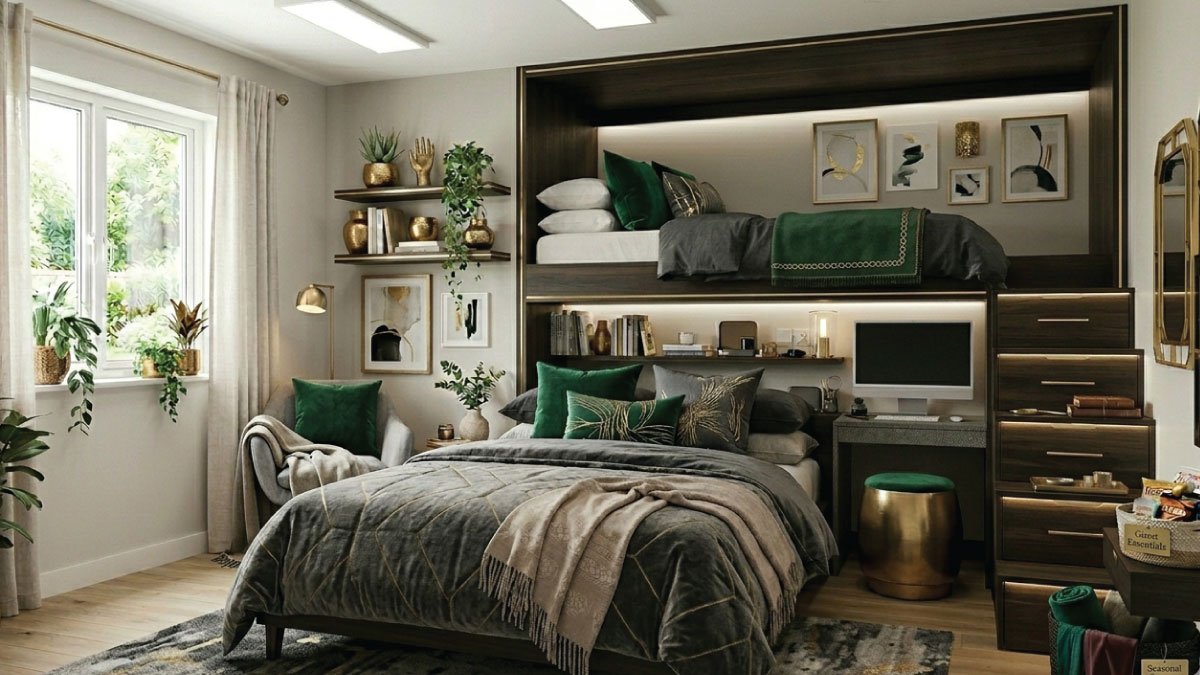
Designing a small bedroom can feel limiting at first—but with the right ideas, it can become one of the most stylish and functional spaces in your home. Whether you are dealing with a compact apartment bedroom, a guest room, or a cozy master suite, smart design choices can make a small room feel open, organized, and comfortable.
How I Turned My Small Bedroom into a Stylish and Spacious Retreat
I used to think my small bedroom was a limitation. No matter how much I cleaned or rearranged, it always felt cramped. The bed took up most of the space, furniture felt oversized, and there was barely any room to move comfortably. It didn’t matter how much effort I put into decorating—it never quite felt right.
One evening, while trying to organize yet again, I realized the problem wasn’t the size of the room—it was how I was using it.
Instead of working with the space, I was working against it.
That moment changed everything. I stopped trying to “fit more” into my bedroom and started focusing on making the space feel better. The next day, I began with the simplest step: decluttering. I removed items I didn’t truly need—extra décor, unused furniture, and anything that made the room feel crowded.
Almost instantly, the room felt lighter.
Then I made a few intentional changes. I switched to light-colored bedding and noticed how much brighter the room looked. I replaced my bulky nightstand with a small floating shelf, and suddenly there was visible floor space I didn’t even realize I was missing.
The biggest change came when I started thinking vertically. I added a couple of wall shelves and used the height of the room instead of filling the floor. This small shift made the room feel taller and more open.
I also added a mirror across from the window—and that one decision completely transformed the space. Natural light bounced around the room, making it feel almost twice its size.
At first, I thought these changes were too simple to matter. But within a few days, I noticed a huge difference—not just in how the room looked, but in how it felt. It became easier to relax, easier to focus, and even easier to keep clean.
What I learned is that a small bedroom doesn’t have to feel small.
With the right approach, it can feel intentional, functional, and even luxurious in its own way. It’s not about how much space you have—it’s about how well you use it.
By choosing smart furniture, keeping things minimal, and making thoughtful design decisions, even the smallest bedroom can become a place you truly enjoy spending time in.
Sometimes, the smallest spaces have the biggest potential—you just have to see them differently.
1. Use Light Colors to Open Up the Space
Light colors are a powerful tool to make a small bedroom feel spacious and bright. Whites, creams, soft grays, and pastels reflect natural light, visually expanding walls and ceilings.
Layering textures such as linen bedding, knitted throws, or subtle patterns keeps the space interesting while maintaining an airy feel.
Painting both walls and ceilings in the same light shade removes visual boundaries, creating a seamless, open atmosphere. This technique works particularly well in low-light rooms or very compact bedrooms, giving a sense of height and breadth without structural changes.
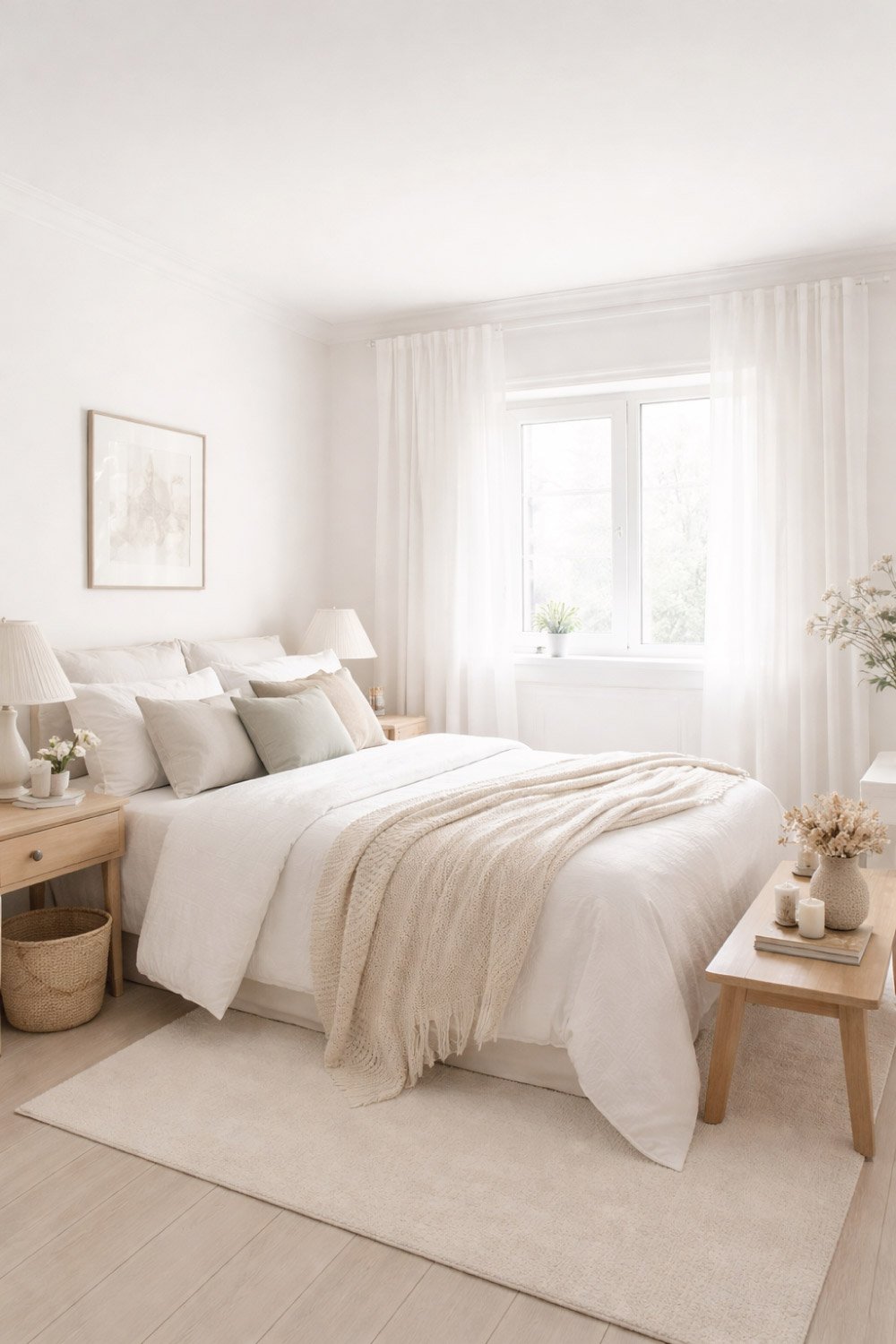
Reflects natural and artificial light
Visually expands walls and ceilings
Makes the room feel brighter and more open
Layer textures for interest without clutter
Works well in low-light or small rooms
Creates seamless visual flow by matching wall and ceiling
Complements minimalist, Scandinavian, and modern interiors
| Feature | Details |
|---|---|
| Main Benefit | Makes room feel larger |
| Best Colors | White, beige, pastel tones |
| Cost Level | Low |
| Works With | Minimalist, modern, Scandinavian |
2. Choose Multi-Functional Furniture
Multi-functional furniture maximizes limited space and reduces clutter in small bedrooms. Pieces such as beds with built-in drawers, nightstands with shelves, or desks that double as vanities serve more than one purpose,
Allowing you to store essentials without crowding the room. This approach ensures each piece contributes to organization and flow, while maintaining style.
Thoughtful selection of compact, functional furniture allows a small bedroom to feel airy and uncluttered, enhancing usability without compromising aesthetics. Multi-functional pieces are especially ideal for urban apartments and rooms with tight layouts.
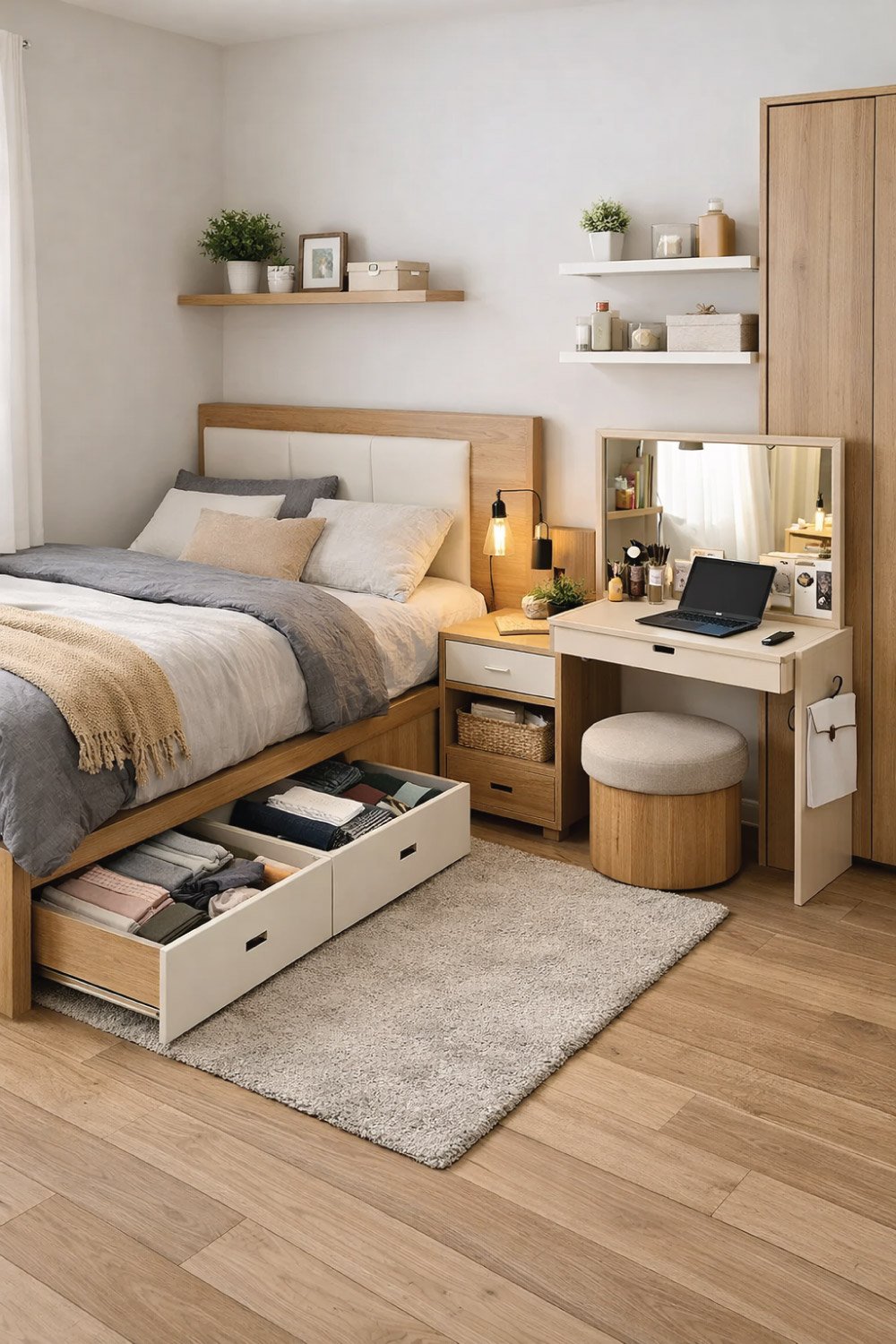
Saves floor space by combining functions
Reduces need for additional furniture
Supports organization and decluttering
Offers storage under beds or in compact furniture
Ideal for small or urban bedrooms
Works with modern and minimalist designs
Adds functionality without sacrificing style
| Feature | Details |
|---|---|
| Main Benefit | Saves floor space |
| Examples | Storage beds, foldable desks |
| Cost Level | Medium |
| Works With | Modern, urban homes |
3. Opt for a Platform Bed
Platform beds are low-profile, minimal, and perfect for visually enlarging a small bedroom. By sitting closer to the floor, they make ceilings feel higher and the space more open.
Many platform beds also include under-bed storage drawers, offering extra utility without adding bulky furniture. Their sleek design complements modern and Japandi aesthetics, allowing the room to maintain a clean, uncluttered look.
Choosing a platform bed helps small rooms appear spacious while providing practical storage and a visually balanced focal point for the bed area.
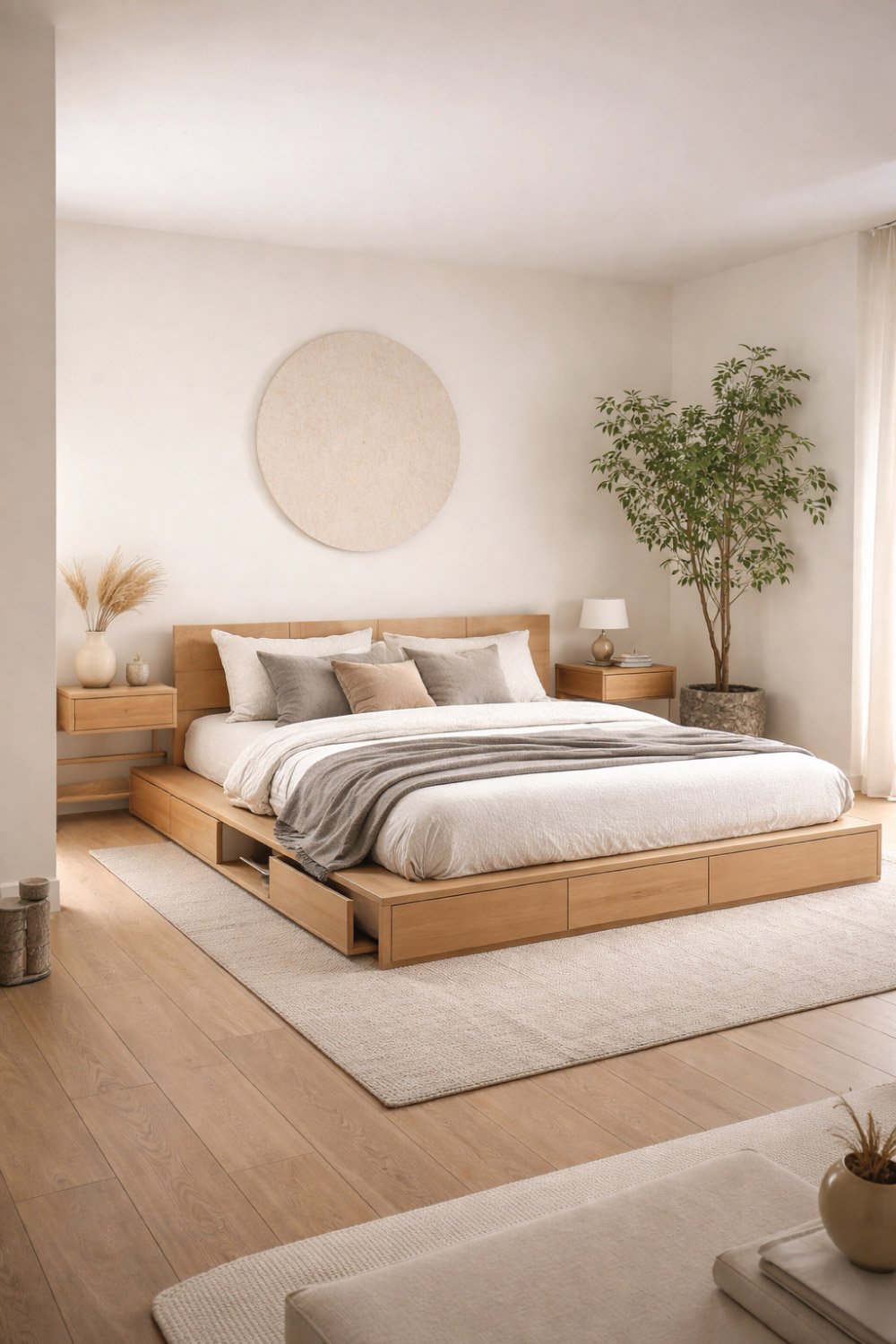
Visually enlarges the room with low height
Clean, minimal design enhances openness
Often includes storage drawers underneath
Complements modern, Japandi, or minimalist interiors
Makes ceilings feel taller by reducing vertical clutter
Easy to pair with floating nightstands or wall shelves
Creates a focal point without overpowering the space
| Feature | Details |
|---|---|
| Main Benefit | Clean, uncluttered look |
| Height | Low profile |
| Storage Option | Often included |
| Best Style | Modern, Japandi |
4. Install Wall-Mounted Nightstands
Wall-mounted nightstands, or floating shelves, free up floor space and create an airy, modern look in compact bedrooms. These units simplify cleaning, reduce clutter, and give the illusion of more room.
They can replace bulky nightstands, especially in narrow bedrooms or tight layouts, while still providing functional storage for essentials like lamps, phones, or books.
Pair them with minimalist décor and complementary lighting to maintain an open and streamlined aesthetic. Floating nightstands maximize every inch of available space while keeping the bedroom organized and visually light.
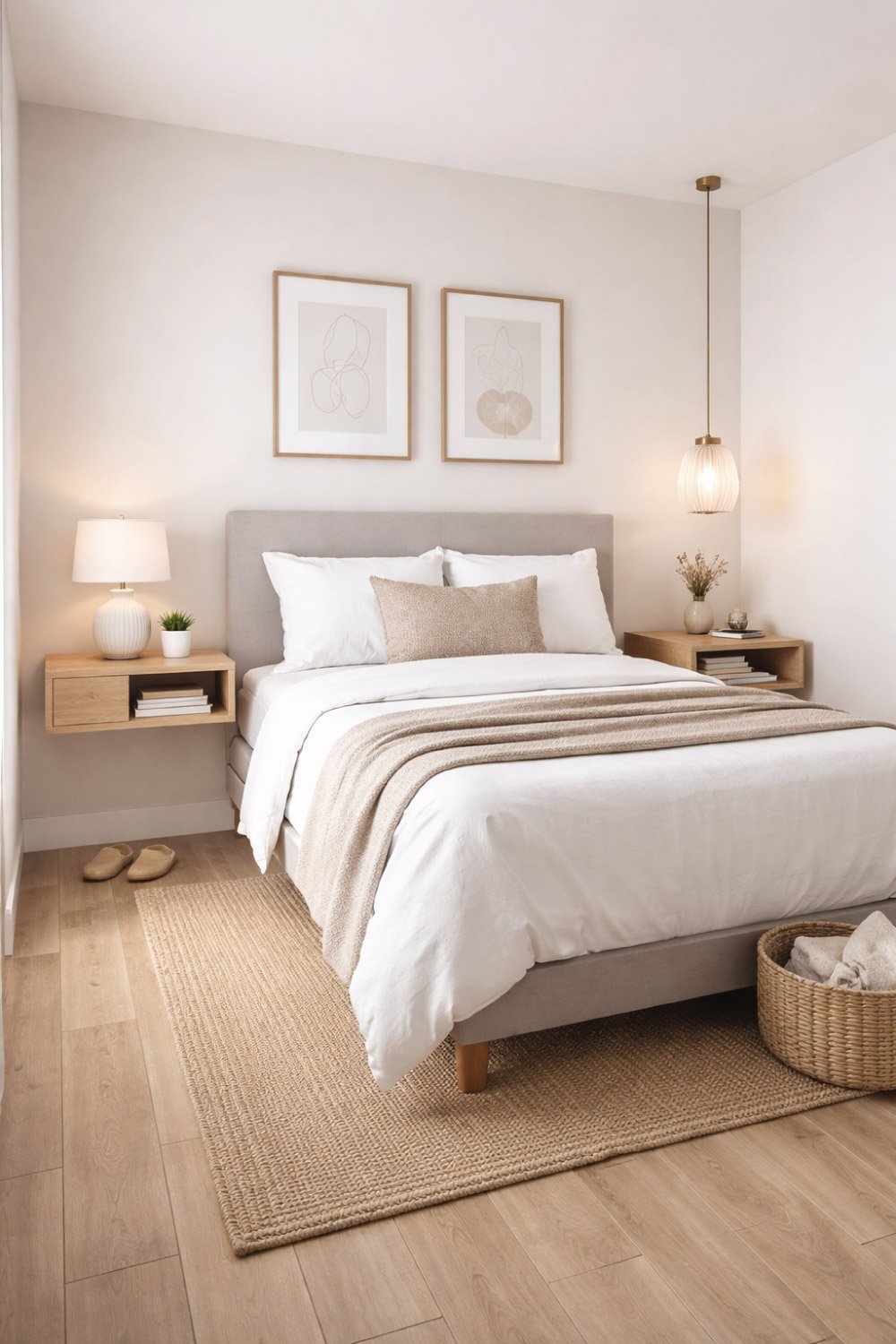
Saves valuable floor space
Makes small rooms feel open and airy
Simplifies cleaning and maintenance
Works as functional shelves for bedside items
Ideal for narrow or compact bedrooms
Supports modern and minimalist design schemes
Can be paired with under-bed or multi-functional furniture
| Feature | Details |
|---|---|
| Main Benefit | Saves floor space |
| Installation | Wall-mounted |
| Visual Effect | Light and modern |
| Best For | Very narrow bedrooms |
5. Use Mirrors Strategically
Mirrors are a classic tool for visually expanding small bedrooms. By reflecting both natural and artificial light, mirrors make rooms feel brighter and more spacious.
Full-length mirrors, mirrored closet doors, or wall-mounted mirrors work exceptionally well in tight spaces. For maximum effect, place mirrors opposite windows to amplify daylight.
Mirrors can also double as décor, adding elegance while enhancing the perception of depth. When combined with light-colored walls and minimal furniture, mirrors create a sense of openness, brightness, and sophistication in any compact bedroom.
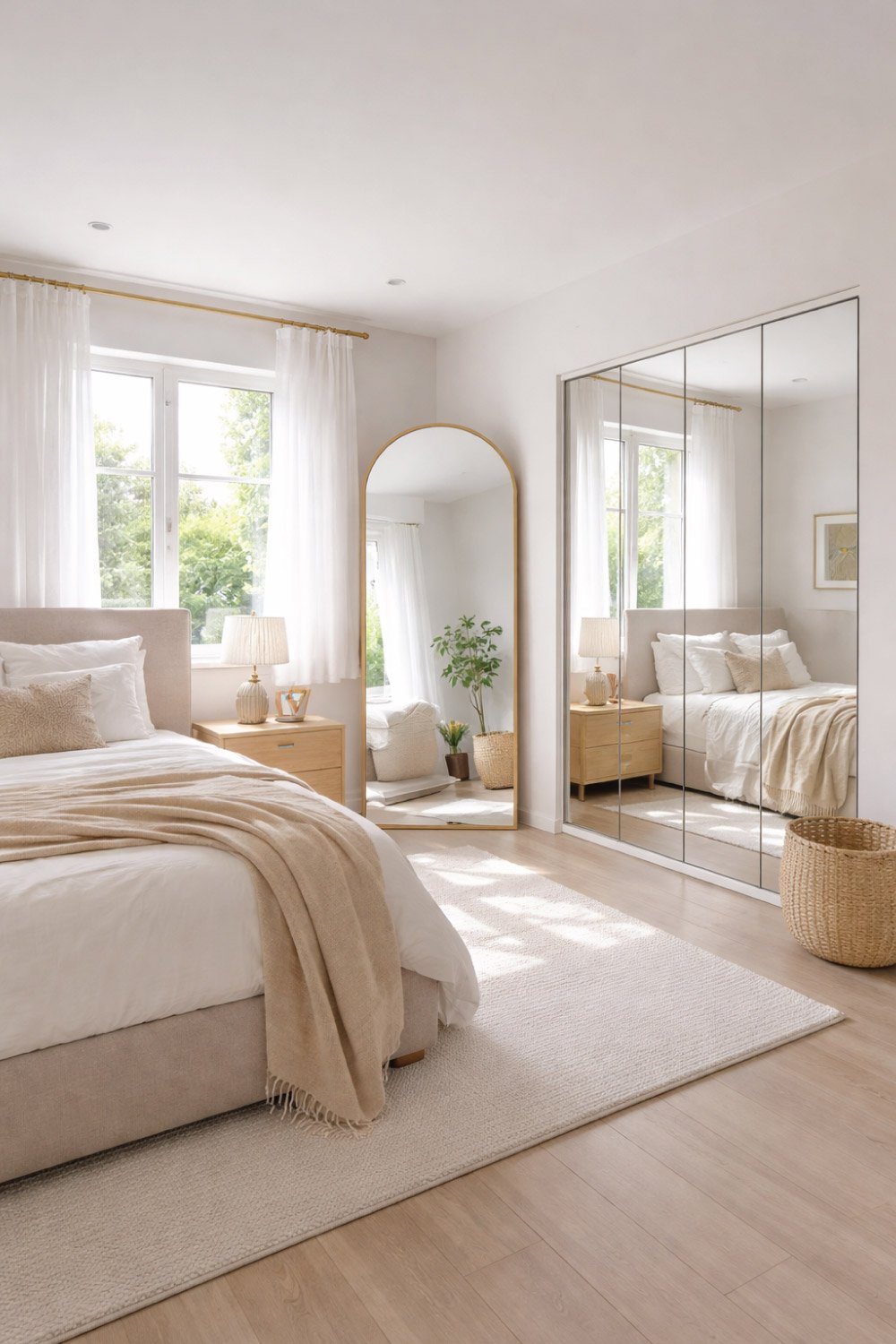
Reflects light and enlarges visual space
Enhances brightness naturally
Works with full-length, wall, or closet mirrors
Ideal opposite windows for maximum effect
Complements light-colored walls and minimalist décor
Adds functional and decorative value
Creates a perception of depth and openness
| Feature | Details |
|---|---|
| Main Benefit | Enhances brightness |
| Best Placement | Across from windows |
| Cost Level | Low to medium |
| Style Fit | Any interior style |
Also Read:
6. Maximize Vertical Space
In small bedrooms, vertical storage is a game-changer. Using tall wardrobes, high shelves, and wall-mounted storage units allows you to take advantage of otherwise unused wall height.
Frequently used items should remain at eye level or within easy reach, while seasonal or rarely used items can be stored higher up. This approach keeps the floor area open, making the room feel larger and less cluttered.
Vertical storage also draws the eye upward, creating the illusion of height. Combined with light colors and mirrors, it makes compact bedrooms functional and visually spacious.
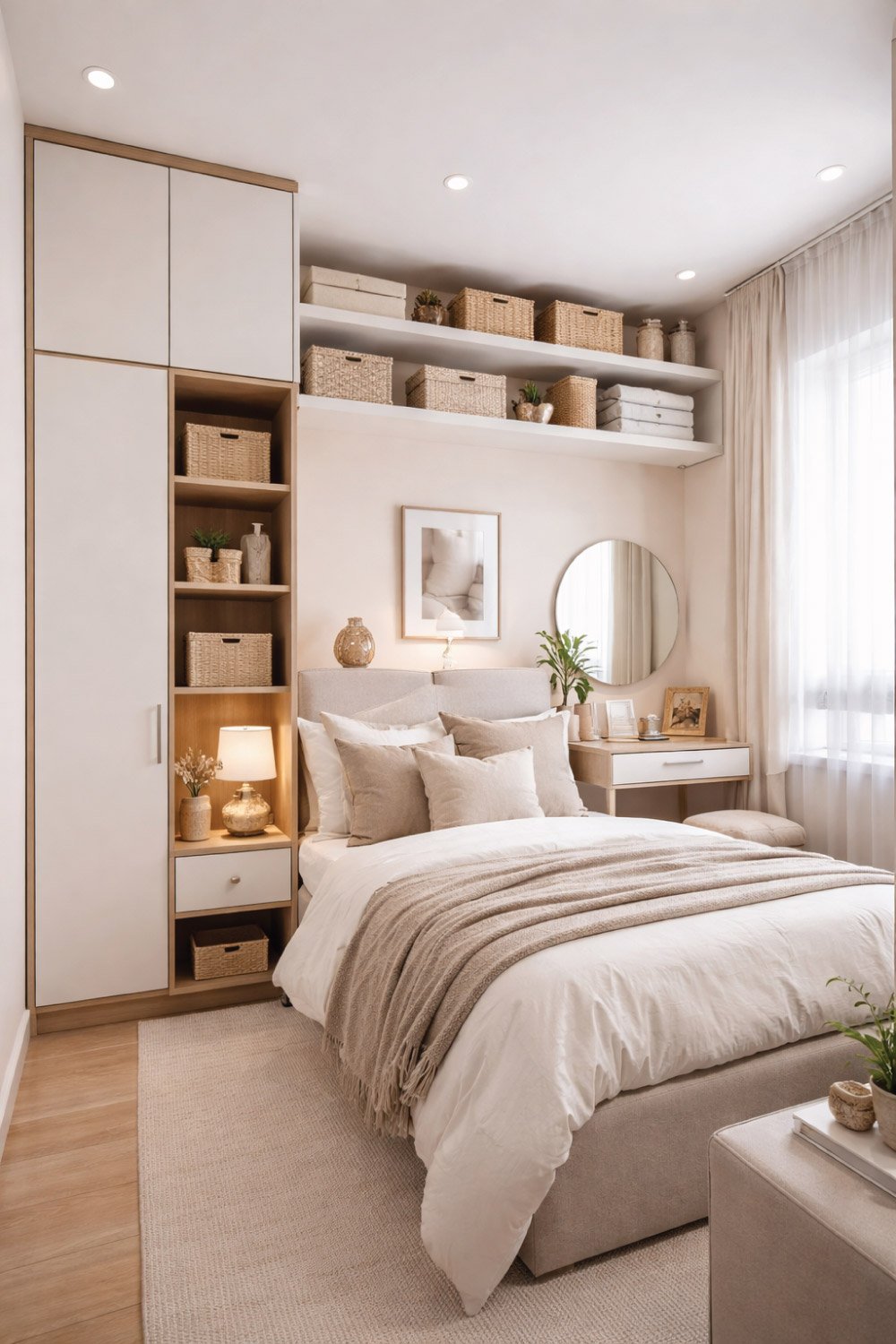
Uses wall height for extra storage
Keeps floor area clear and open
Stores seasonal or bulky items above eye level
Ideal for apartments or rooms with limited square footage
Draws the eye upward to enhance perceived height
Works with shelves, tall cabinets, or wall units
Complements minimalist and modern bedroom layouts
| Feature | Details |
|---|---|
| Main Benefit | More storage without clutter |
| Focus Area | Walls |
| Best Furniture | Tall cabinets, shelves |
| Ideal For | Apartments |
7. Go Minimal with Decor
Less truly is more in a small bedroom. Too many decorative items can overwhelm the space, making it feel cramped and cluttered. Focus on a few carefully chosen statement pieces, like a single artwork, a plant, or textured bedding, to add personality without crowding the room.
Neutral color palettes and streamlined furniture enhance the sense of openness. Minimal décor not only creates visual clarity but also allows functional elements to shine.
By prioritizing intentional accents, the bedroom feels serene, balanced, and thoughtfully designed, even in very compact spaces.
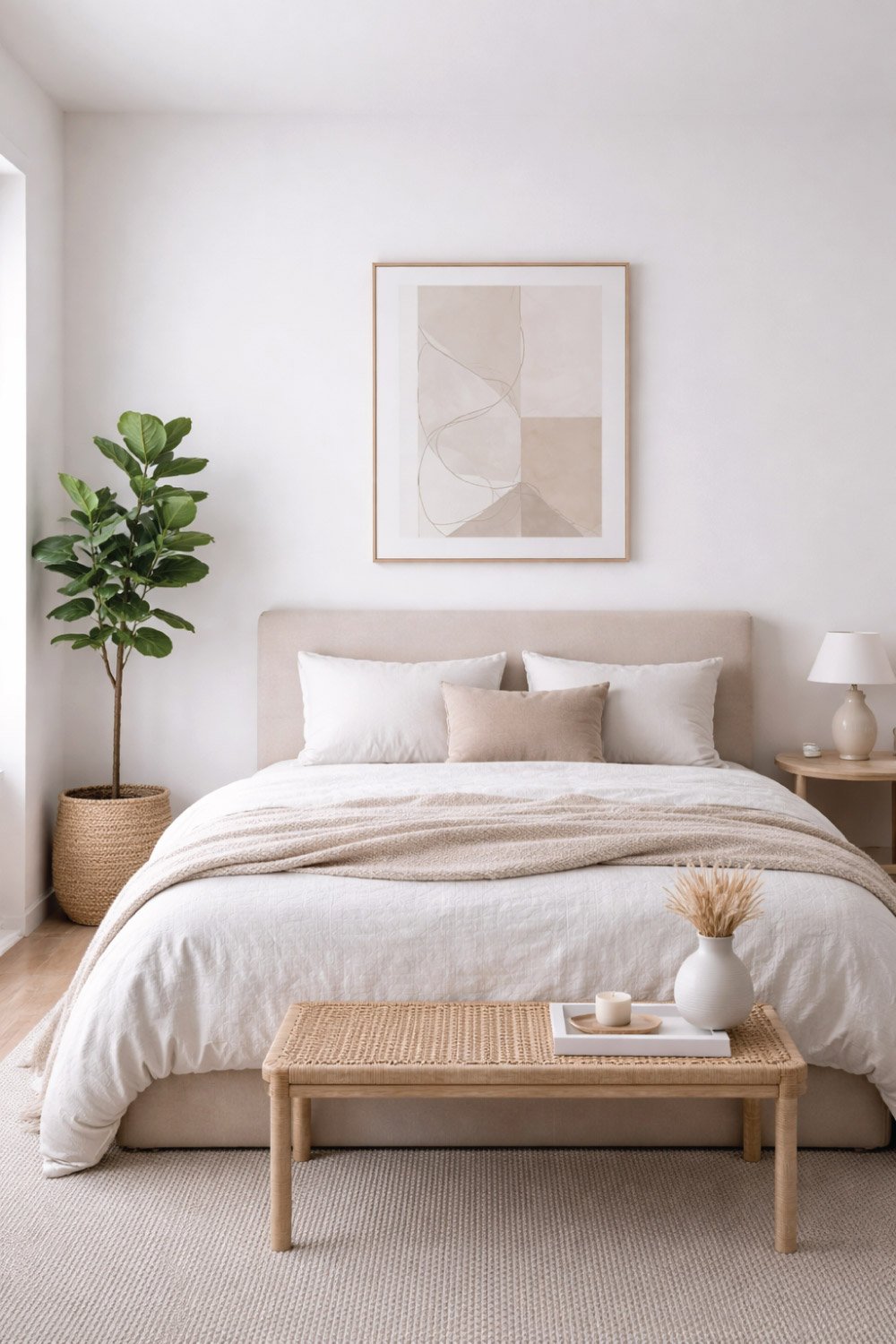
Keeps the bedroom clean and uncluttered
Focuses on a few intentional décor pieces
Works best with neutral color palettes
Enhances perception of space and openness
Highlights furniture, bedding, or artwork
Reduces visual and mental clutter
Supports minimalist, contemporary, or Scandinavian design
| Feature | Details |
|---|---|
| Main Benefit | Clean, open feel |
| Decor Items | Limited but intentional |
| Color Palette | Neutral |
| Style | Minimalist |
Also Read:
8. Choose Sliding or Pocket Doors
Swinging doors take up valuable floor space, which can be challenging in a small bedroom. Sliding or pocket doors provide a sleek, space-saving solution while adding a modern touch.
They work especially well for en-suite bathrooms, closets, or rooms where traditional door clearance limits furniture placement. Sliding doors can be made of wood, glass, or mirrored panels to enhance light flow and the perception of space.
By eliminating door swing, you gain flexibility in arranging furniture and create a more functional, contemporary bedroom layout.
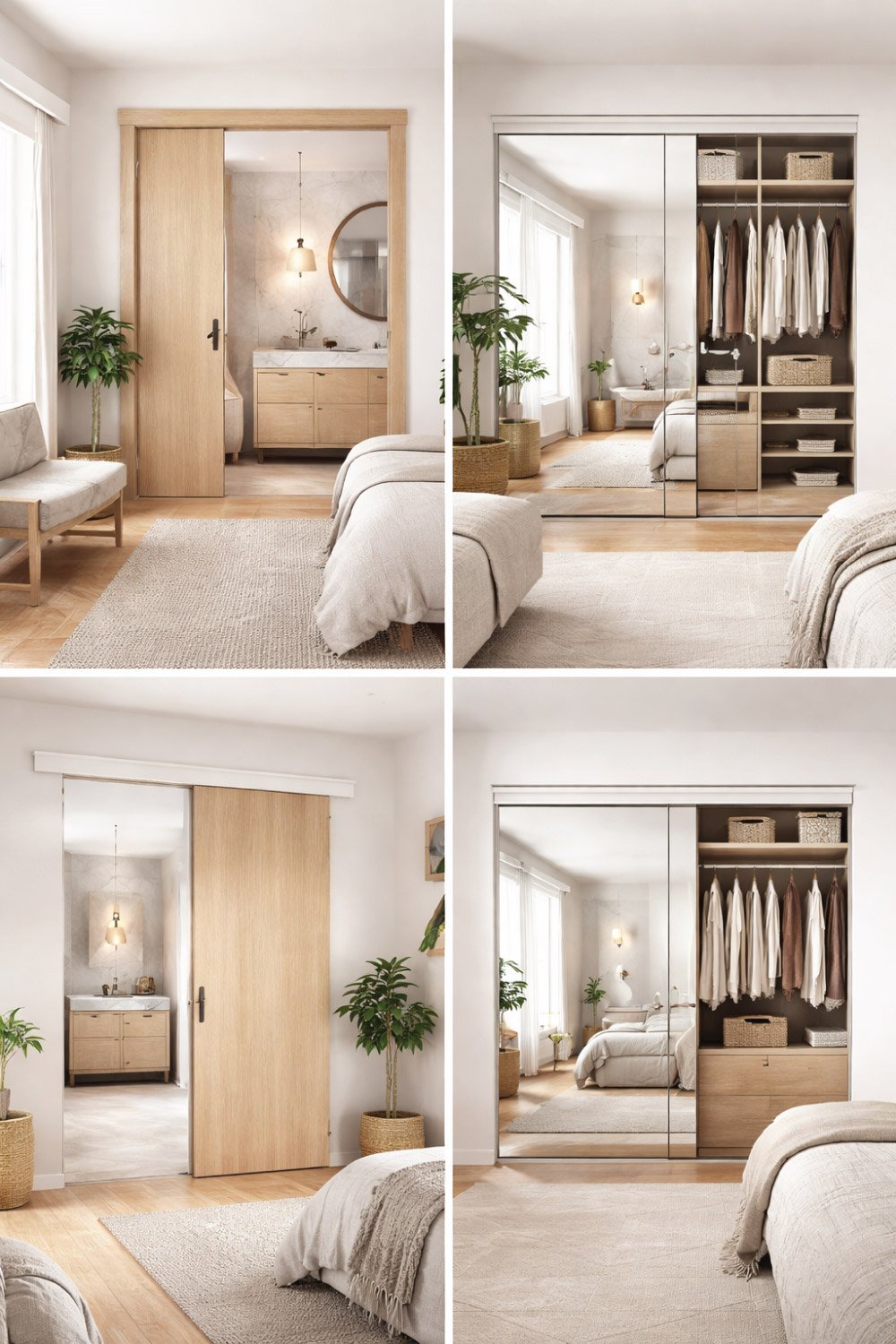
Saves floor space and clearance
Ideal for closets, en-suite bathrooms, or small rooms
Adds a modern, streamlined look
Can feature mirrored or glass panels for brightness
Works with wood, metal, or mixed materials
Provides flexibility for furniture placement
Enhances a minimalist and contemporary aesthetic
| Feature | Details |
|---|---|
| Main Benefit | Saves door clearance space |
| Best Use | Closets, bathrooms |
| Cost Level | Medium to high |
| Style | Contemporary |
9. Use Under-Bed Storage
The area under your bed is prime real estate in a small bedroom. Storage drawers, boxes, or lift-up beds allow you to store clothing, shoes, linens, or other essentials out of sight.
This maximizes space without adding bulky furniture and keeps the room tidy. Under-bed storage is particularly effective for seasonal items or things you don’t need daily access to.
Combined with vertical shelving, multi-functional furniture, and minimal décor, it ensures a compact bedroom remains organized, functional, and visually spacious. It’s a simple solution to make every inch count.
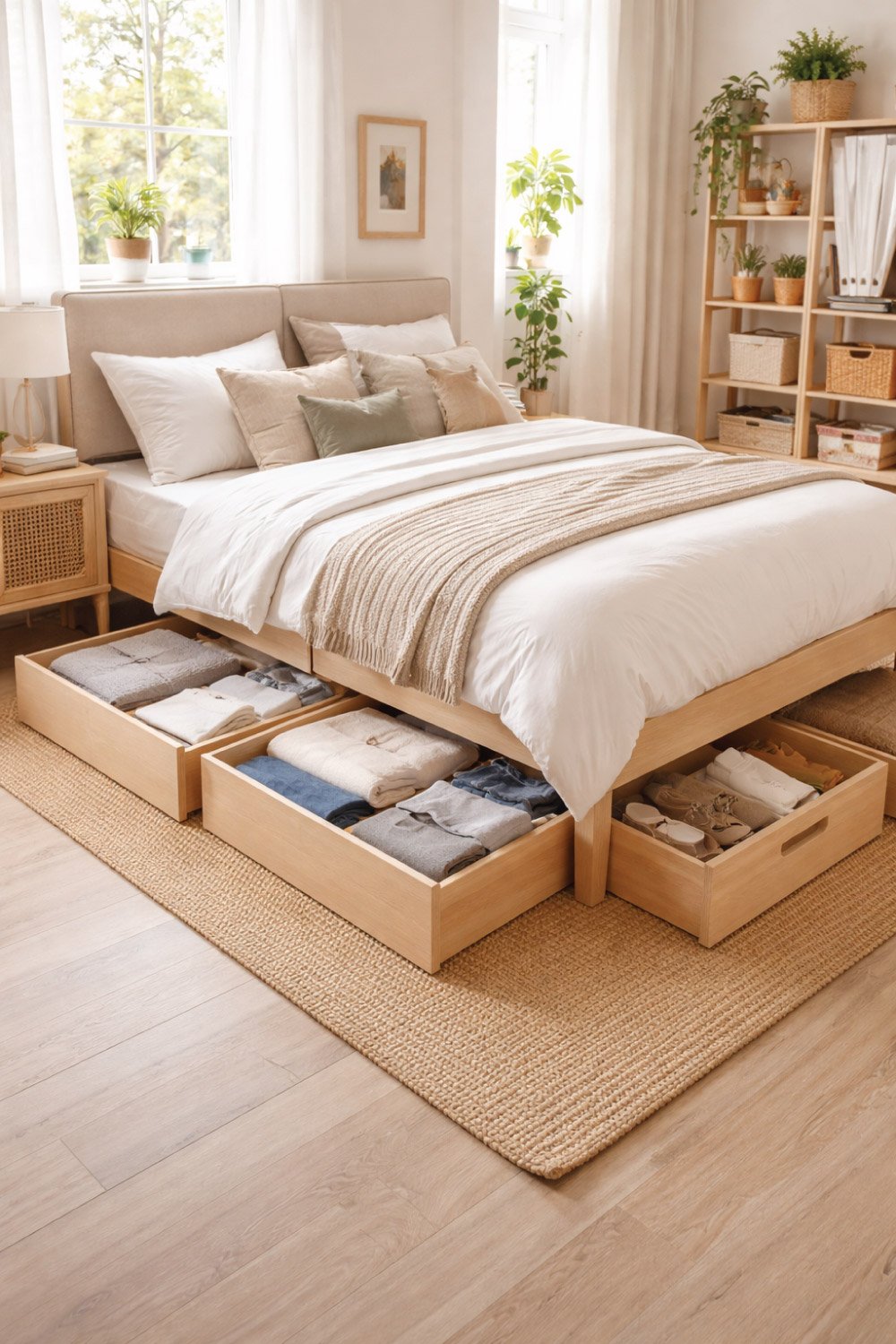
Provides hidden storage for clothing and linens
Maximizes underutilized space
Keeps seasonal or infrequently used items out of sight
Works with drawers, lift-up beds, or boxes
Reduces need for additional furniture
Ideal for apartments or small bedrooms
Supports organized, clutter-free design
| Feature | Details |
|---|---|
| Main Benefit | Hidden storage |
| Ideal Items | Seasonal clothes |
| Accessibility | Easy |
| Best For | Small apartments |
Also Read:
17 Apartment Living Room Design Ideas for Stylish Small Spaces
10. Pick the Right Rug Size
A properly sized rug can dramatically influence the perception of space in a small bedroom. Choose a rug that extends slightly beyond the bed on all sides; this visually anchors the bed and makes the room feel larger.
Avoid small rugs that break up the floor and create a disjointed effect. Rugs also add texture, warmth, and comfort underfoot. Simple patterns or neutral tones work best to maintain openness.
A well-chosen rug balances the room, complements the furniture, and adds subtle style without overwhelming a compact space.
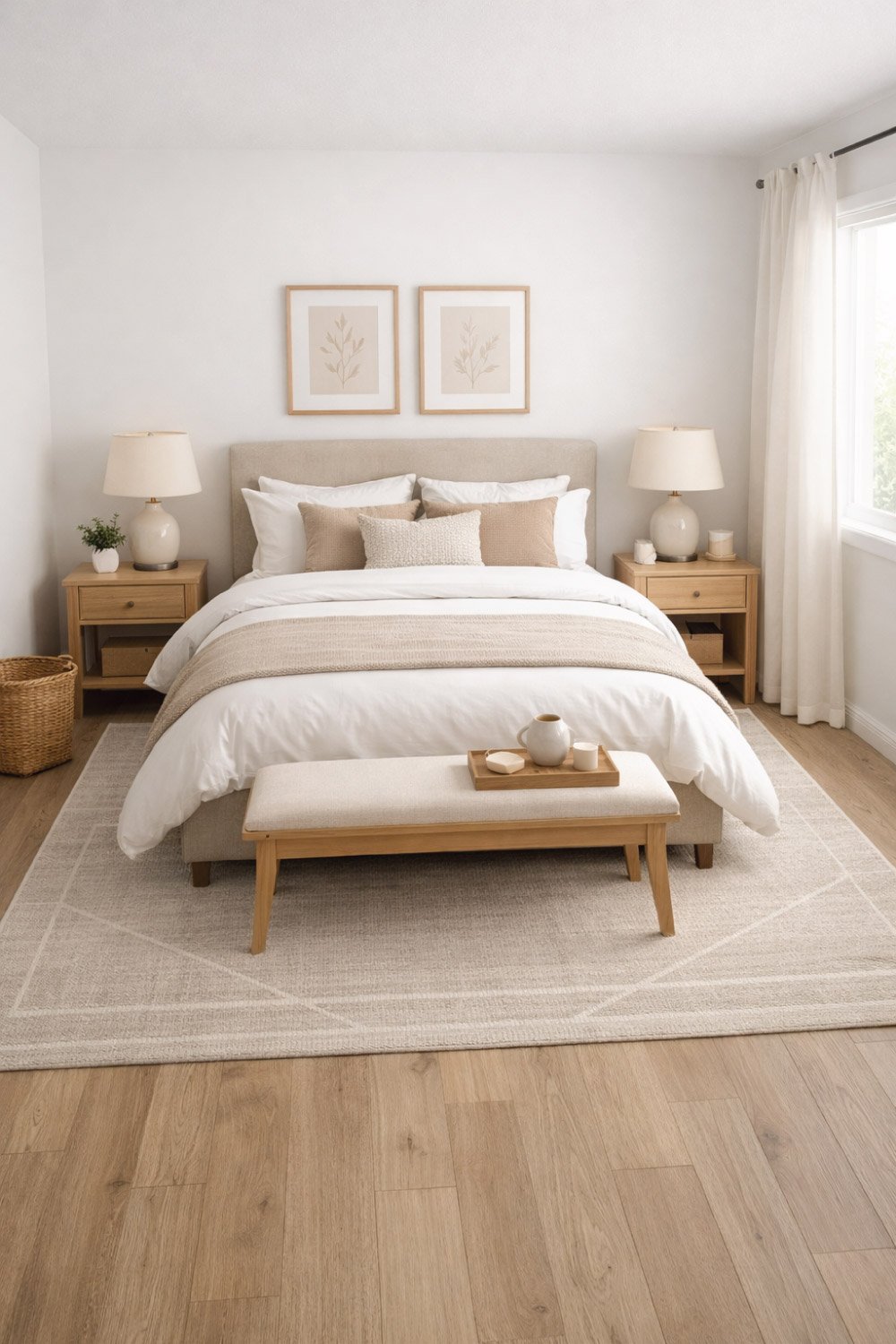
Visually expands the room by framing the bed
Adds warmth and comfort underfoot
Simple patterns prevent visual clutter
Anchors furniture for a cohesive layout
Works with neutral or soft color palettes
Avoids breaking up floor space with small rugs
Enhances both style and function
| Feature | Details |
|---|---|
| Main Benefit | Makes room feel larger |
| Best Placement | Under bed |
| Rug Style | Simple patterns |
| Budget | Flexible |
11. Use Built-In Storage
Built-in storage solutions make small bedrooms feel custom, organized, and clutter-free. Options include built-in wardrobes, shelving units, and window-seat storage.
They reduce the need for bulky furniture while maintaining a streamlined, cohesive look. Built-ins also maximize vertical and horizontal space efficiently, creating a seamless aesthetic.
Because they are permanent fixtures, they work best for long-term homes or spaces where customization is a priority. With thoughtful design, built-ins provide ample storage while preserving floor area, giving small bedrooms a polished, tailored, and functional feel.
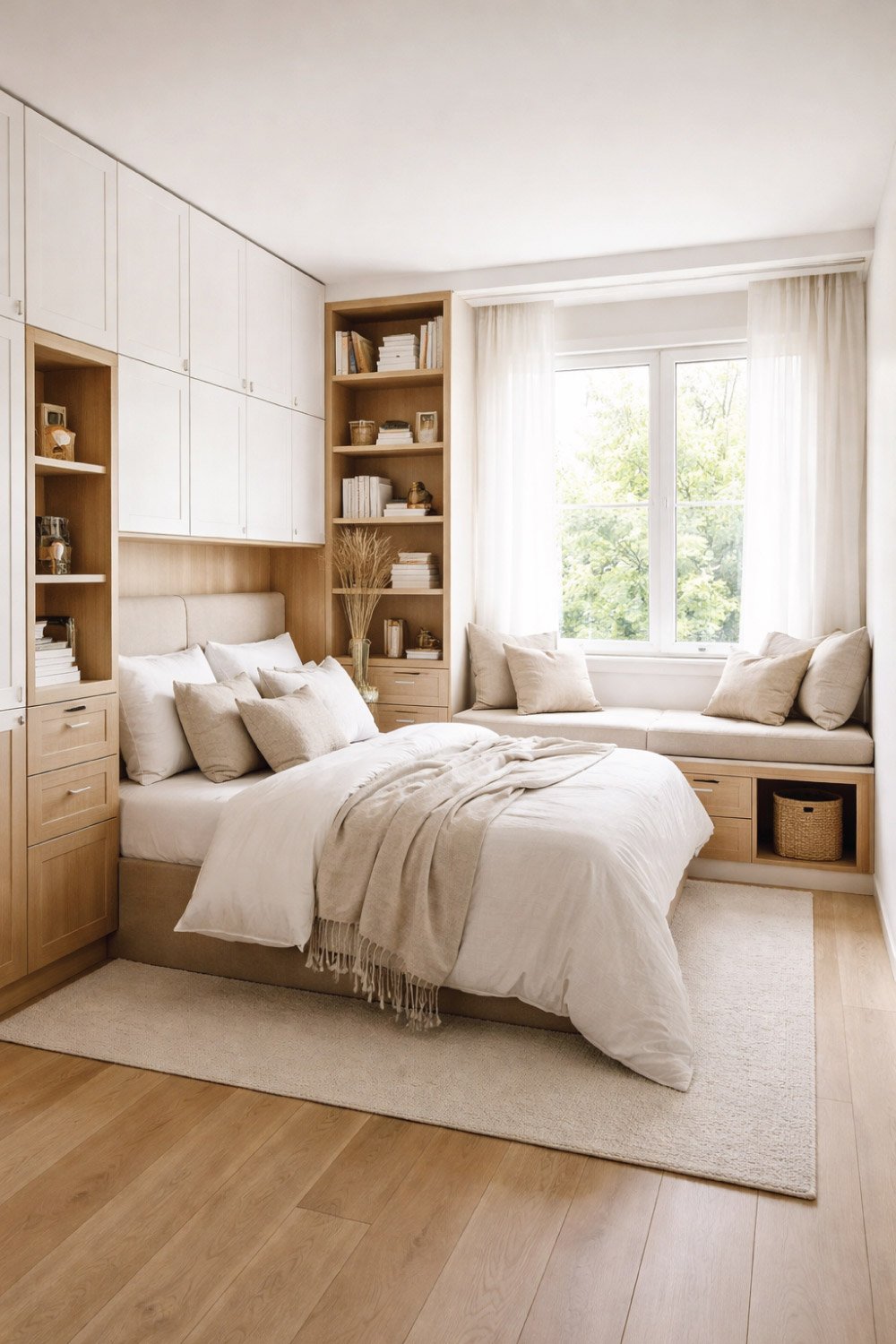
Creates seamless storage without clutter
Reduces need for standalone furniture
Maximizes both vertical and horizontal space
Ideal for long-term homes or apartments
Integrates with room design for a custom look
Supports organization and tidiness
Enhances visual flow and minimalism
| Feature | Details |
|---|---|
| Main Benefit | Seamless storage |
| Look | Clean and custom |
| Cost Level | High |
| Ideal For | Long-term homes |
Also Read:
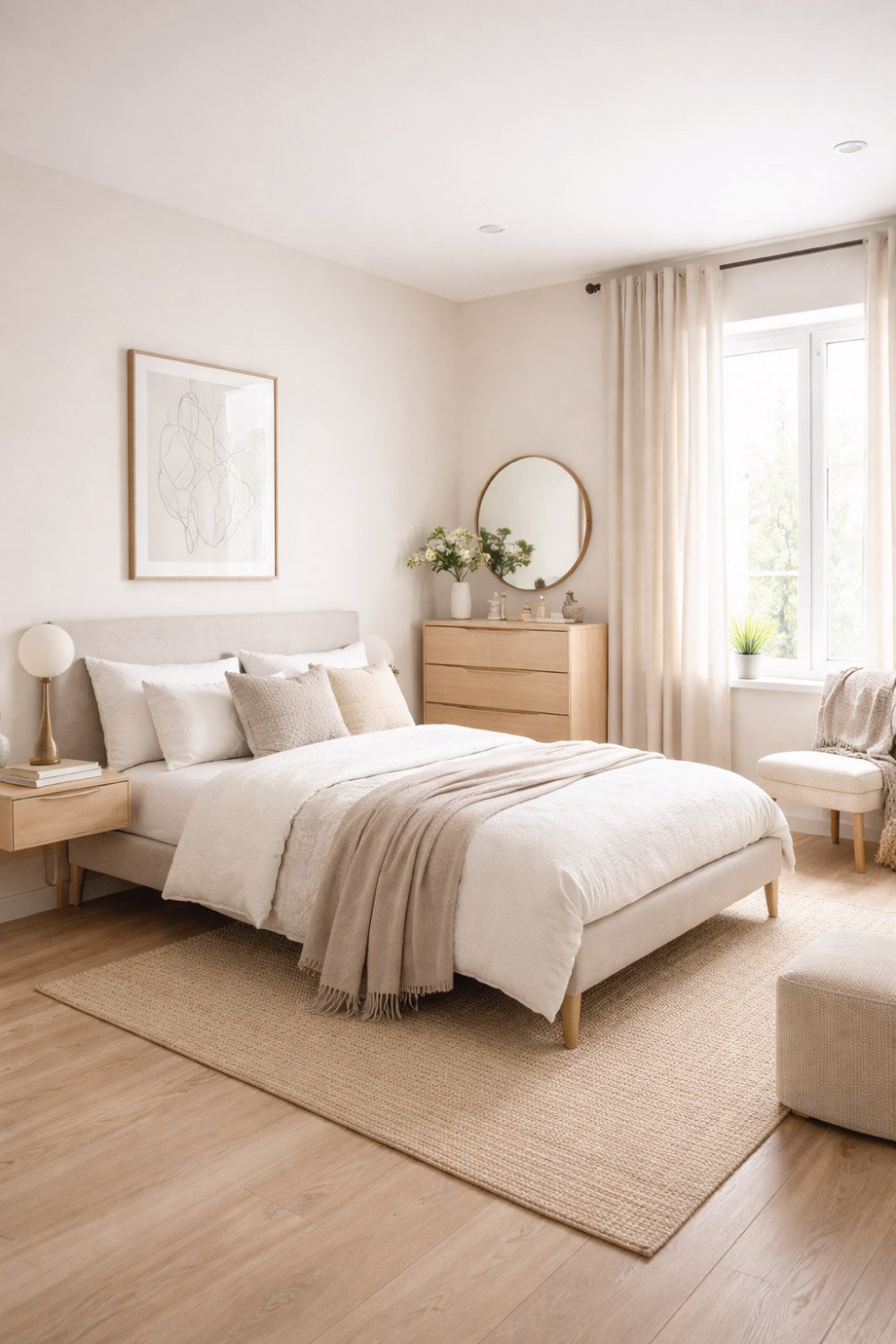
12. Keep Furniture Proportional
Oversized furniture can overwhelm a small bedroom, making it feel cramped. Choosing compact, slim, and narrow furniture frames—like dressers, chairs, and beds—ensures a balanced layout.
Properly scaled furniture maintains visual openness while still providing function. Even the height and bulk of pieces matter: low-profile beds, floating nightstands, and small seating keep the space airy.
Proportional furniture allows for better traffic flow, emphasizes design balance, and ensures that every piece serves a purpose without overpowering the room’s scale.
Prevents the room from feeling crowded
Ensures balanced visual proportions
Works with low-profile and compact furniture
Supports functional and comfortable layouts
Enhances traffic flow and movement
Complements small-scale décor and design
Maintains openness while retaining functionality
| Feature | Details |
|---|---|
| Main Benefit | Balanced layout |
| Furniture Size | Compact |
| Visual Impact | Less crowded |
| Best Style | Modern |
13. Use Soft Lighting
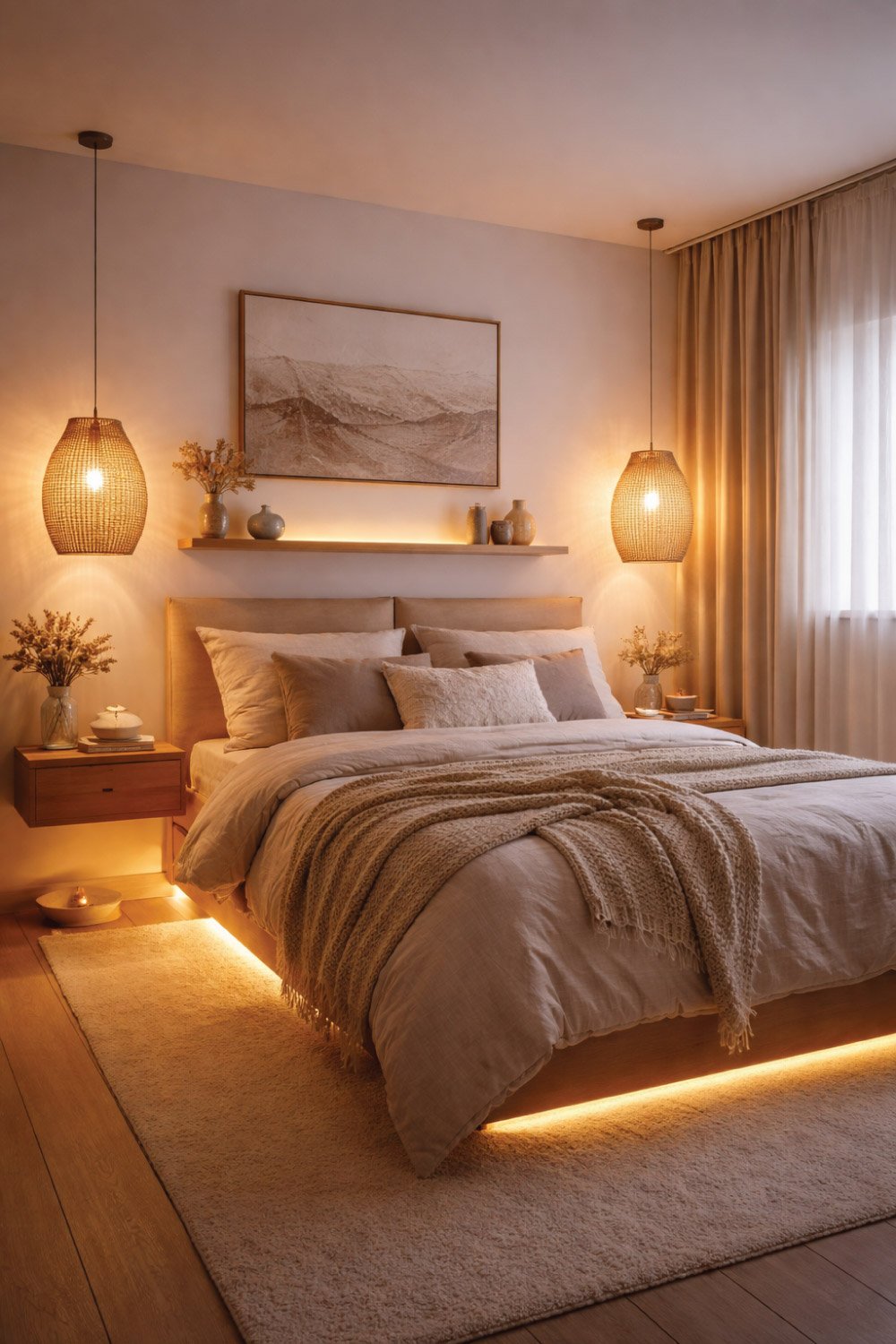
Lighting shapes the mood and perceived space in a small bedroom. Layered lighting—ambient, task, and accent—adds depth without taking up floor space.
Wall sconces, under-bed LED strips, or pendant lights free up surfaces while enhancing the room’s atmosphere. Warm, soft lighting creates a cozy, inviting environment, making the bedroom feel intimate and relaxing.
Carefully positioned lighting can highlight focal points, textures, and décor. A combination of functional and ambient lighting ensures the room is well-lit while preserving a sense of openness and visual comfort.
Creates warmth and a cozy ambiance
Uses layered lighting for depth and functionality
Saves floor space with wall-mounted or pendant lights
Highlights décor, textures, and focal points
Supports relaxation and comfort
Works with low-profile furniture and compact layouts
Enhances perception of room size
| Feature | Details |
|---|---|
| Main Benefit | Cozy atmosphere |
| Light Types | Layered |
| Space Used | Minimal |
| Mood | Warm and inviting |
Also Read:
19 Best Living Room Chairs Ideas for Modern Homes (2026 Edition)
14. Choose a Neutral Color Palette
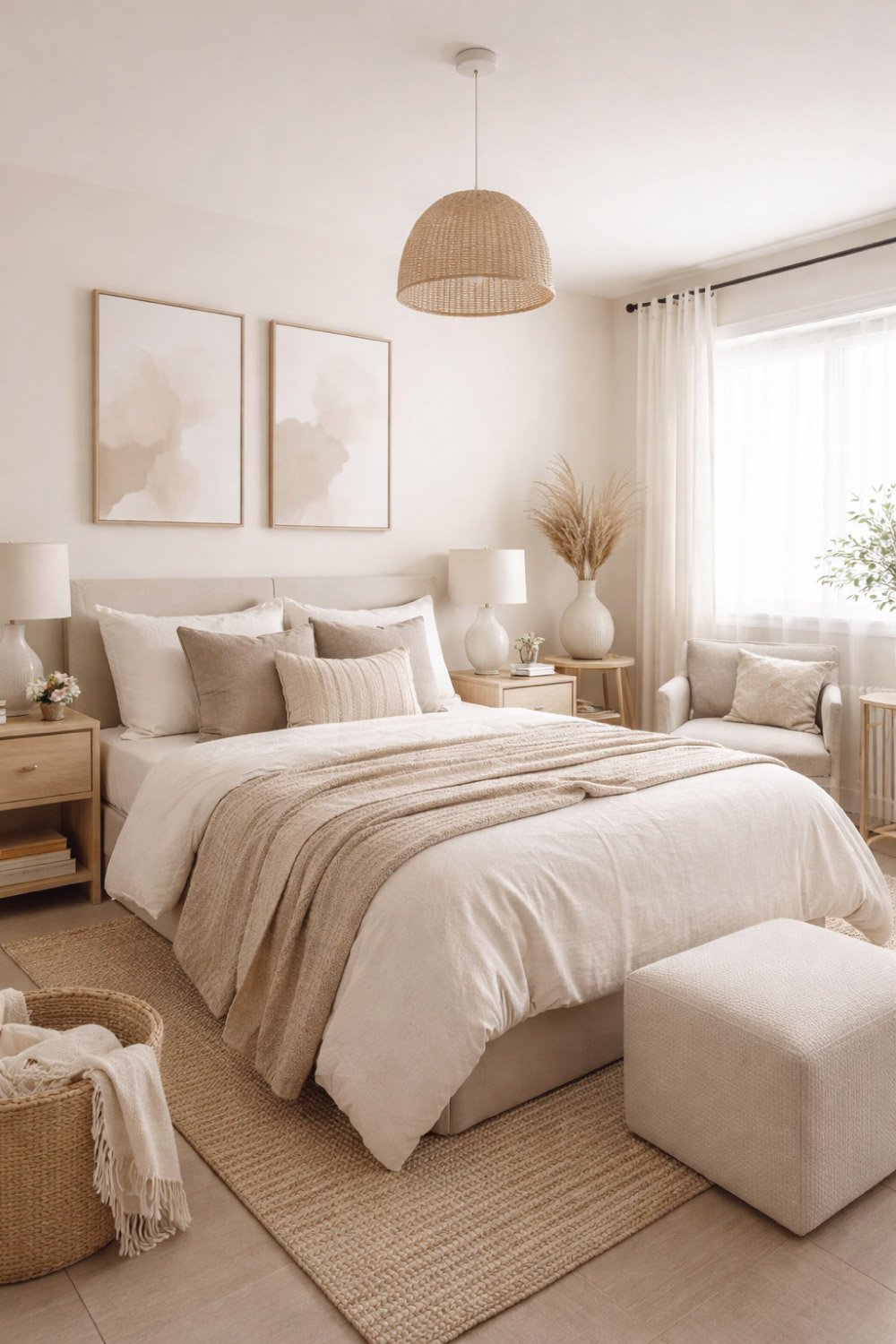
Neutral tones create continuity and visual flow, making a small bedroom feel cohesive and calm. Shades of beige, gray, or white act as a flexible backdrop, allowing pops of color through pillows, throws, or artwork.
Neutral palettes also enhance light reflection and amplify the sense of space. They pair well with minimalist décor, multi-functional furniture, and layered textures.
Maintaining subtle, consistent colors across walls, bedding, and furniture prevents visual fragmentation, ensuring a tranquil, organized, and timeless small-bedroom aesthetic.
Creates calm, cohesive spaces
Reflects light and opens up the room
Acts as a versatile backdrop for accents
Pairs well with multi-functional or minimalist furniture
Enhances perceived space with continuity
Works with layered textures and décor
Offers a timeless, flexible style
| Feature | Details |
|---|---|
| Main Benefit | Visual flow |
| Base Colors | Beige, gray, white |
| Accent Use | Minimal |
| Style | Timeless |
15. Create a Focal Point
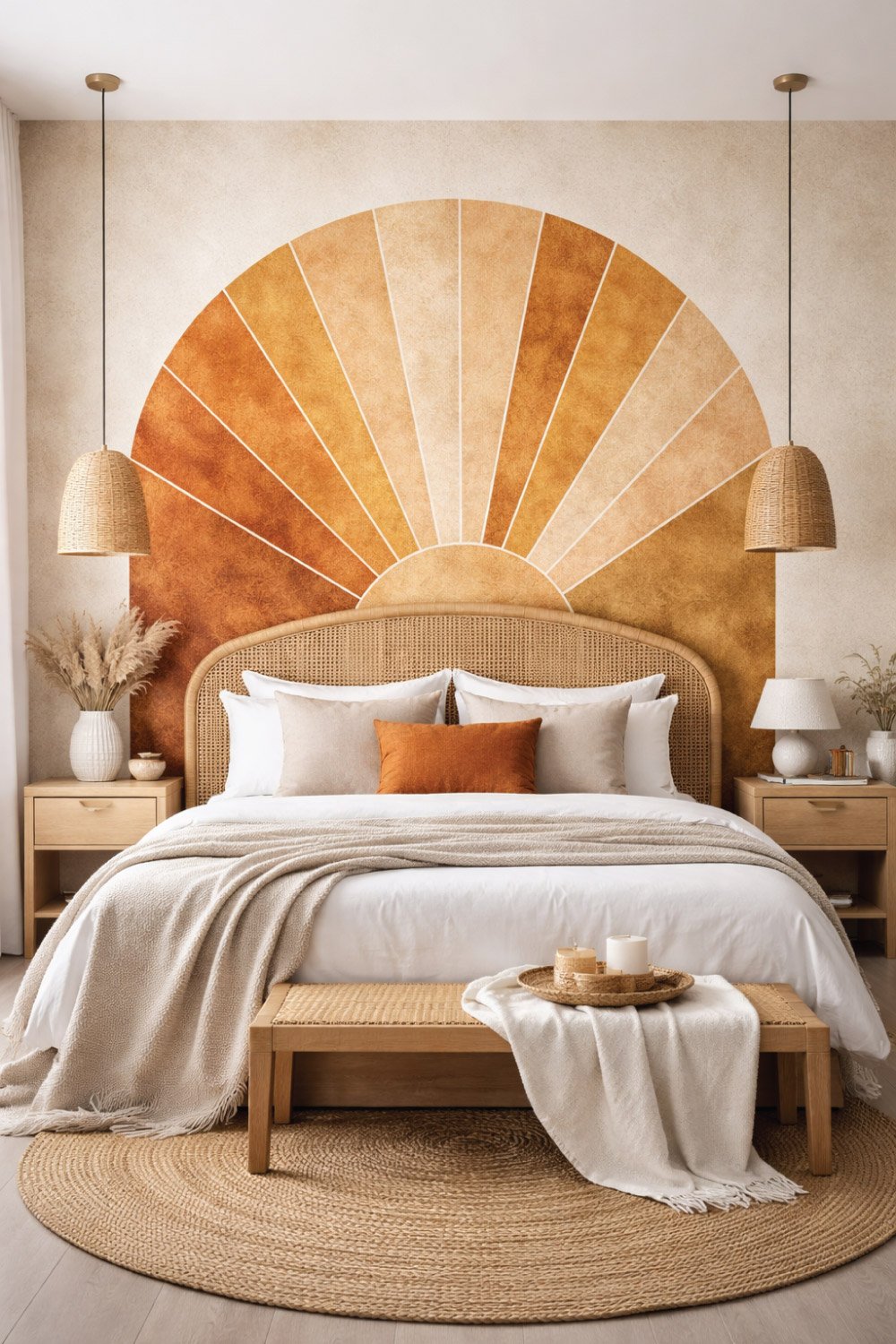
A single focal point draws attention away from the room’s limited size and creates visual interest. Options include a statement headboard, an accent wall, or a piece of striking artwork.
Focal points anchor the room, giving the eye a resting place and improving perceived balance. By limiting additional visual distractions, you make small spaces feel intentional and thoughtfully designed.
Pairing a focal point with neutral or light colors elsewhere ensures the room remains spacious while highlighting style and personality.
Provides a visual anchor for the room
Draws attention away from compact dimensions
Works with headboards, accent walls, or artwork
Keeps other areas uncluttered for openness
Enhances style and personality
Maintains a balanced and cohesive layout
Complements minimalist and neutral palettes
| Feature | Details |
|---|---|
| Main Benefit | Visual interest |
| Examples | Headboard, wall art |
| Design Rule | One focal area |
| Style | Any |
Also Read:
16. Use Curtains to Add Height
Curtains can do more than block light—they can create the illusion of taller ceilings in a small bedroom. Hang curtain rods closer to the ceiling rather than just above the window frame.
Floor-to-ceiling drapes in light, flowing fabrics enhance vertical lines, making the room feel more spacious and airy. Lighter fabrics also allow natural light to filter softly, adding warmth and elegance.
Coordinating curtain color with walls maintains continuity and prevents visual fragmentation. This simple styling trick instantly elevates the perceived height of a room without structural changes.
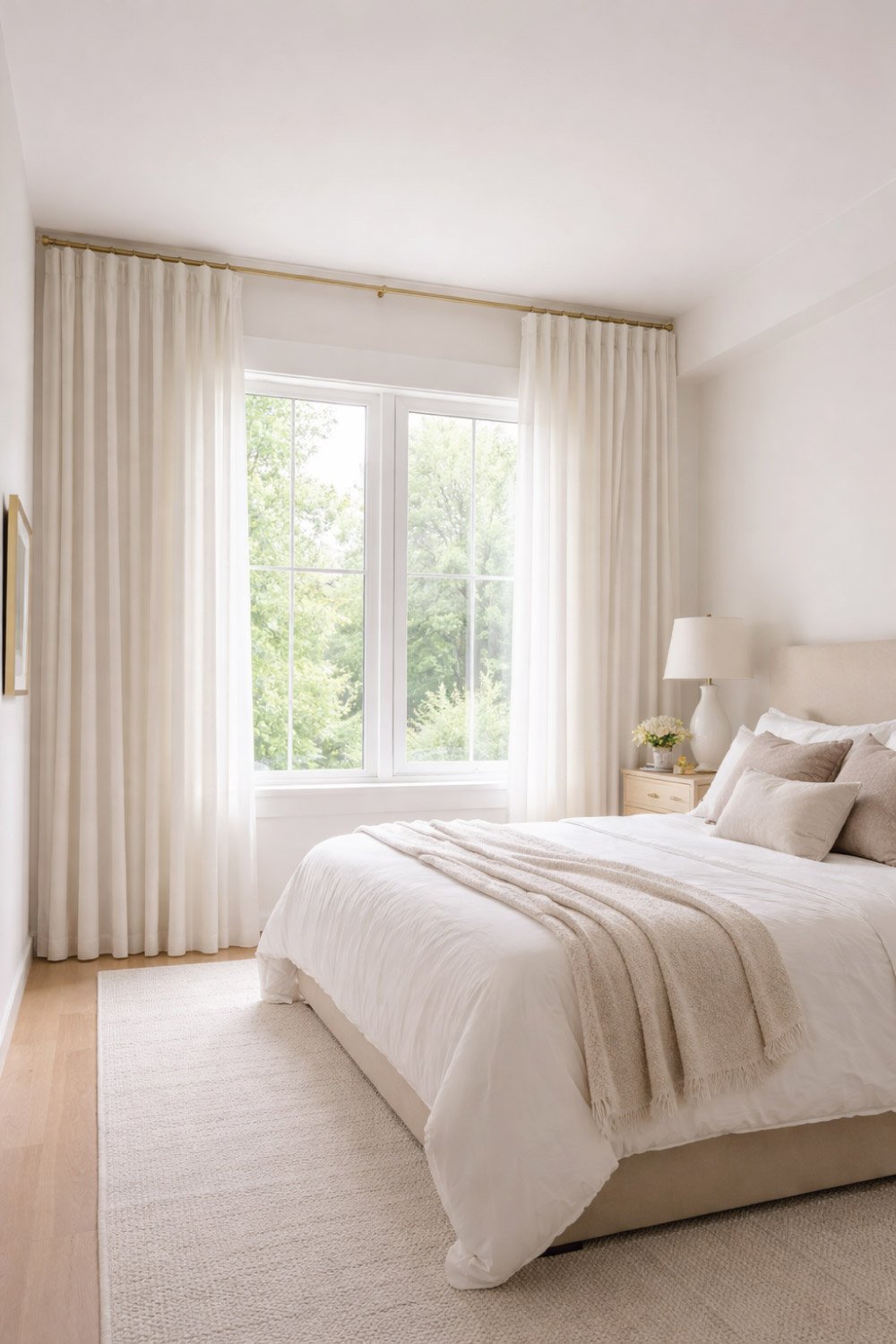
Creates the illusion of taller ceilings
Floor-to-ceiling drapes enhance verticality
Light fabrics soften the room’s feel
Coordinates with wall color for continuity
Lets natural light in while providing privacy
Adds elegance and sophistication
Works well with minimalist or modern décor
| Feature | Details |
|---|---|
| Main Benefit | Illusion of height |
| Curtain Length | Floor-to-ceiling |
| Fabric | Lightweight |
| Best Look | Elegant |
17. Keep the Layout Simple
A simple, uncluttered layout is essential in small bedrooms. Avoid unnecessary furniture or overly complicated arrangements that reduce flow and comfort. Prioritize essential pieces and ensure each item has a clear purpose.
Sometimes removing just one bulky dresser or chair can dramatically improve circulation and openness. A minimal approach emphasizes function, balances the room, and makes it feel calm and organized.
Keeping pathways clear and furniture proportional ensures the space is usable while maintaining a sense of spaciousness, even in compact layouts.
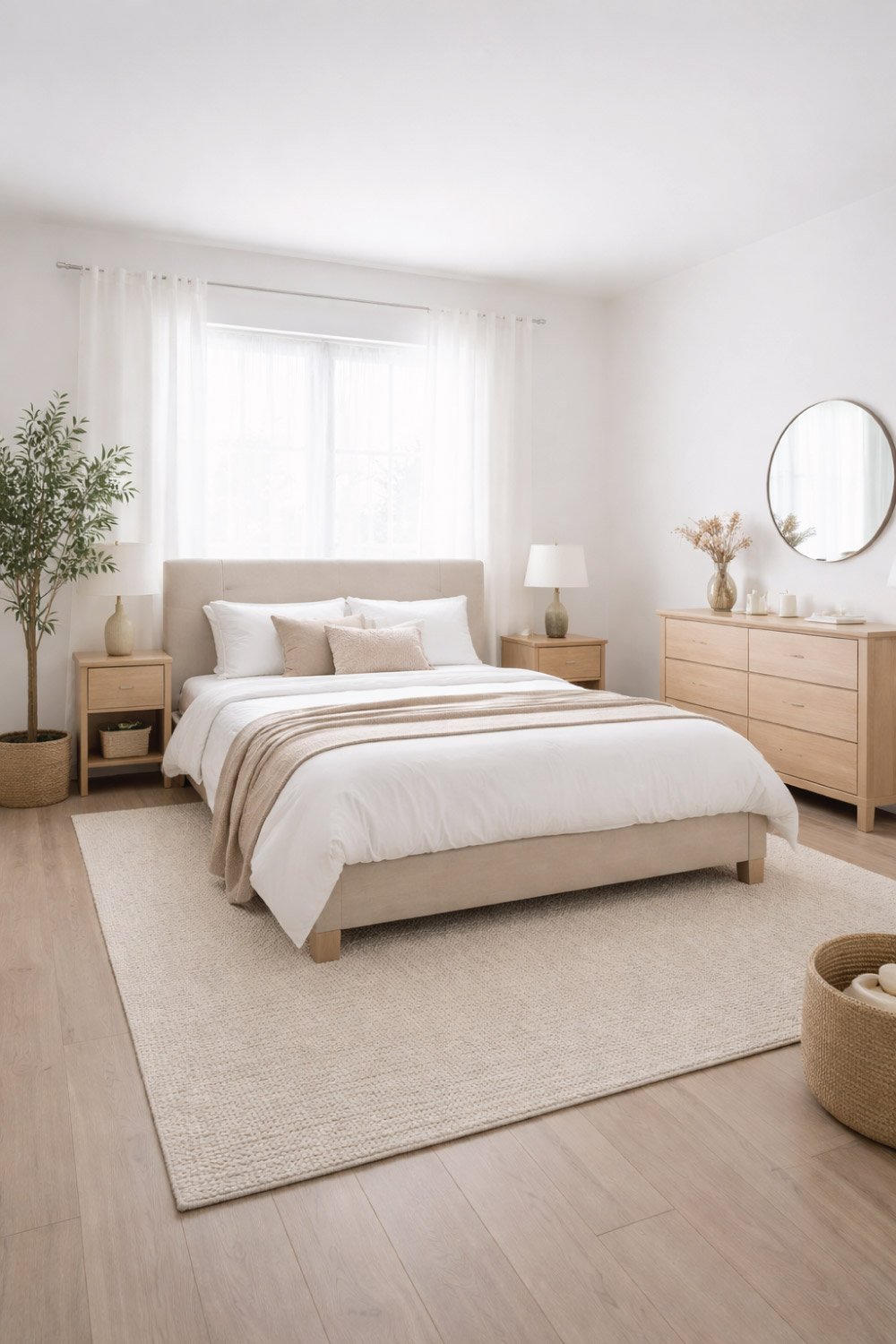
Reduces visual and physical clutter
Improves movement and circulation
Prioritizes essential furniture pieces only
Keeps pathways clear and functional
Creates a calm, open, and organized space
Supports minimalist and modern design
Emphasizes functionality over decoration
| Feature | Details |
|---|---|
| Main Benefit | Better movement |
| Furniture Count | Minimal |
| Feel | Open and calm |
| Best Practice | Function first |
Also Read:
Final Tips for Designing a Small Bedroom
To wrap things up, here are practical tips to help you apply these ideas effectively:
Declutter regularly – Small spaces need discipline.
Measure before buying furniture – Every inch matters.
Stick to a cohesive color palette – Visual unity makes rooms feel larger.
Use vertical storage whenever possible.
Choose quality over quantity – Fewer, better pieces work best.
Let in natural light – Avoid heavy curtains or blocked windows.
Think long-term – Invest in furniture that adapts to your needs.
Final Thoughts
Designing a small bedroom is all about making thoughtful choices that maximize both space and comfort. While limited square footage can seem challenging at first, the right design strategies can transform a compact room into a stylish, functional, and relaxing retreat.
By using light colors, smart storage solutions, and multi-functional furniture, you can create a space that feels open rather than cramped.
Keeping the layout simple and the décor minimal helps maintain a clean and organized environment, which is especially important in smaller rooms.
Elements like mirrors, vertical shelving, and soft lighting can further enhance the sense of space while adding warmth and personality.
Small bedrooms also benefit from cohesive color palettes and carefully chosen focal points that draw the eye without overwhelming the room.
Ultimately, the goal is to balance practicality with style. With smart planning and intentional design choices, even the smallest bedroom can feel comfortable, inviting, and beautifully designed.

I am Engineer Hassan, a professional engineer with over 15 years of experience in measurements, design accuracy, and furniture, appliance, and home product sizing. Through Size Helper, I provide research-based guides and trending 2026 home design ideas for living rooms, bedrooms, sofas, wall décor, fashion, and sports—helping users make confident, informed decisions. Every guide is written with real expertise, verified data, and a commitment to quality, usability, and style.