
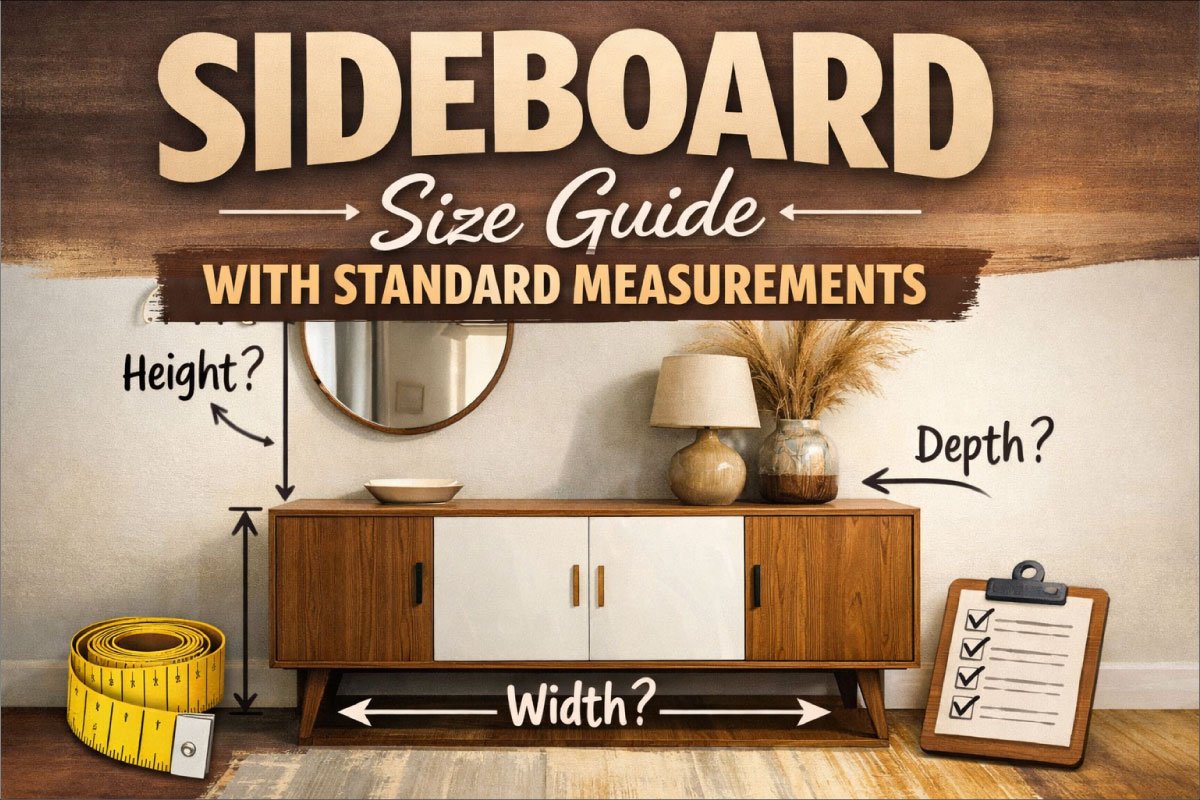
Sideboards are an essential piece of furniture in dining rooms, living rooms, and hallways. They combine functionality with style, offering storage, display space, and a focal point for room décor. Choosing the right size is crucial to maintain balance, ensure usability, and complement surrounding furniture. This guide explores standard sideboard measurements, practical tips, and ideal layouts to help you make an informed decision.
Whether you’re designing a modern dining room or updating a traditional living space, understanding sideboard dimensions, height ratios, and placement is key. We’ve also included six tables for quick reference, covering height, width, depth, style-specific dimensions, pairing options, and placement guidance.
Standard Sideboard Height Guide
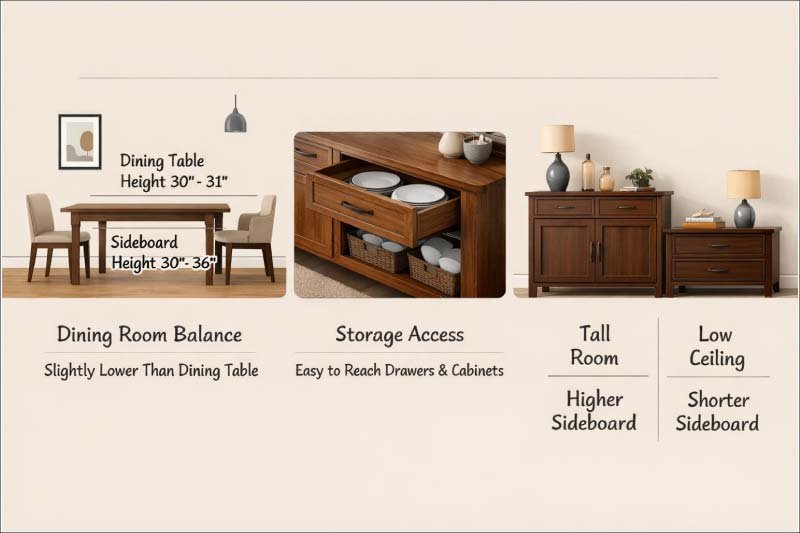
The height of a sideboard impacts both aesthetics and functionality. Too tall, and it may overpower the space or clash with wall décor. Too short, and it could feel underwhelming or limit storage usability. The standard sideboard height usually falls between 30–36 inches, making it comfortable for countertop use and proportionate to dining tables.
-
Dining Room Balance: Ideally, sideboards should be slightly lower than your dining table for visual harmony.
-
Storage Access: Consider drawer and cabinet heights for ease of reach.
-
Room Proportions: Taller rooms can handle higher sideboards; lower ceilings benefit from shorter models.
Common Sideboard Heights Table
Choosing the right sideboard height is essential for both style and functionality. Heights vary to suit room proportions, ceiling heights, and design preferences. From low, sleek units to grand statement pieces, selecting the appropriate height ensures visual balance, practicality, and harmony with surrounding furniture and décor.
| Sideboard Type | Height (inches) | Best For Room Ceiling | Notes |
|---|---|---|---|
| Low Sideboard | 28–30 | Standard 8′ ceiling | Sleek, modern design |
| Standard Sideboard | 30–34 | Most rooms | Most common, practical |
| Tall Sideboard | 34–36 | High ceilings | Adds visual height & presence |
| Extra Tall | 36–40 | Grand rooms | Statement piece, limited style |
Standard Sideboard Width Guide
Choosing the right sideboard width ensures your dining room feels balanced and functional. The correct size enhances storage, complements surrounding furniture, and maintains visual harmony. Sideboards that are too wide or too narrow can disrupt the space, so it’s important to match width with room size and style.
-
Small Rooms: Narrow sideboards (36–48 inches) work best without overcrowding.
-
Medium Rooms: 48–60 inches is ideal for most dining areas.
-
Large Spaces: 60–72 inches provides ample storage and acts as a statement piece.
Sideboard Width Recommendations
Selecting the right sideboard width is key to maintaining balance and functionality in any room. Width should correspond to room size to ensure proper traffic flow and aesthetic harmony. From compact units in small spaces to expansive pieces in large rooms, the right width enhances both style and practicality.
| Room Size | Recommended Sideboard Width (inches) | Notes |
|---|---|---|
| Small (up to 10′) | 36–48 | Leaves space for traffic flow |
| Medium (10–14′) | 48–60 | Fits comfortably along walls |
| Large (14′+) | 60–72 | Can support decorative items |
| Extra Large Rooms | 72+ | Works well as focal point |
Standard Sideboard Depth Guide
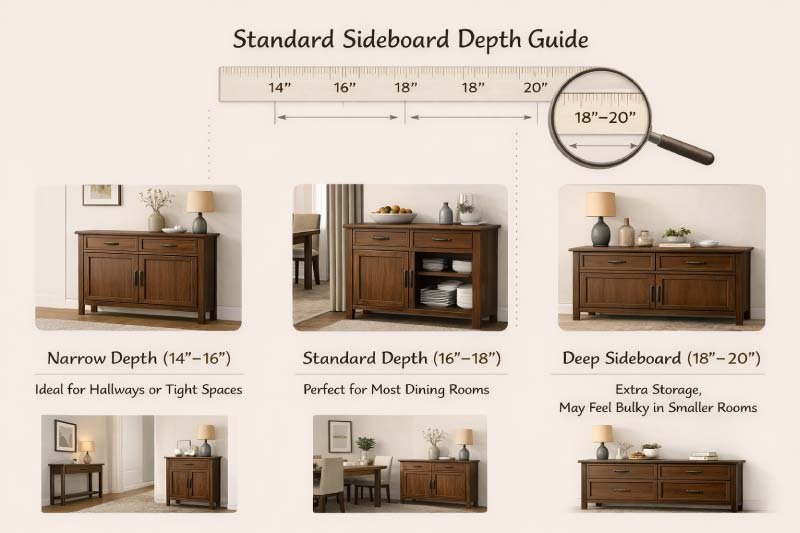
Sideboard depth plays a key role in functionality and room flow. Choosing the right depth ensures sufficient storage while maintaining comfortable movement around the space. Too shallow limits usability, while too deep can crowd a room. Standard depths balance practicality with proportion for any dining area.
-
Narrow Depth (14–16 inches): Ideal for hallways or tight spaces.
-
Standard Depth (16–18 inches): Perfect for most dining rooms; allows tableware storage.
-
Deep Sideboard (18–20 inches): Provides extra storage but may feel bulky in smaller rooms.
Sideboard Depth Measurements
Sideboard depth impacts both usability and room flow. Choosing the correct depth ensures the piece doesn’t overwhelm the space while providing adequate storage. From slim profiles for narrow areas to deeper units for spacious dining rooms, selecting the right depth balances practicality, style, and comfort in every setting.
| Depth (inches) | Ideal Room Type | Notes |
|---|---|---|
| 14–16 | Hallways, narrow spaces | Slim profile, less storage |
| 16–18 | Standard dining rooms | Optimal balance of storage & size |
| 18–20 | Large dining rooms | Ample storage, use with caution |
Style-Specific Sideboard Sizes
Sideboards come in various styles—traditional, modern, and transitional—each with slightly different dimensions to match their design philosophy. Knowing these distinctions ensures you choose a sideboard that complements your interior style.
Sideboard Sizes by Style
Sideboard dimensions often vary based on style, influencing both appearance and functionality. Traditional, modern, transitional, and rustic designs each have characteristic width, depth, and height ranges that complement their aesthetic. Understanding these typical measurements helps you select a sideboard that fits your space while enhancing your room’s overall design.
| Style | Width (inches) | Depth (inches) | Height (inches) | Notes |
|---|---|---|---|---|
| Traditional | 48–72 | 16–20 | 32–36 | Features cabinets and drawers |
| Modern | 36–60 | 14–18 | 30–34 | Sleek, minimalistic |
| Transitional | 42–66 | 15–18 | 30–34 | Mix of modern & classic elements |
| Rustic/Farmhouse | 48–72 | 16–20 | 32–36 | Chunky wood, statement presence |
Also Read:
Pairing Sideboards for Symmetry
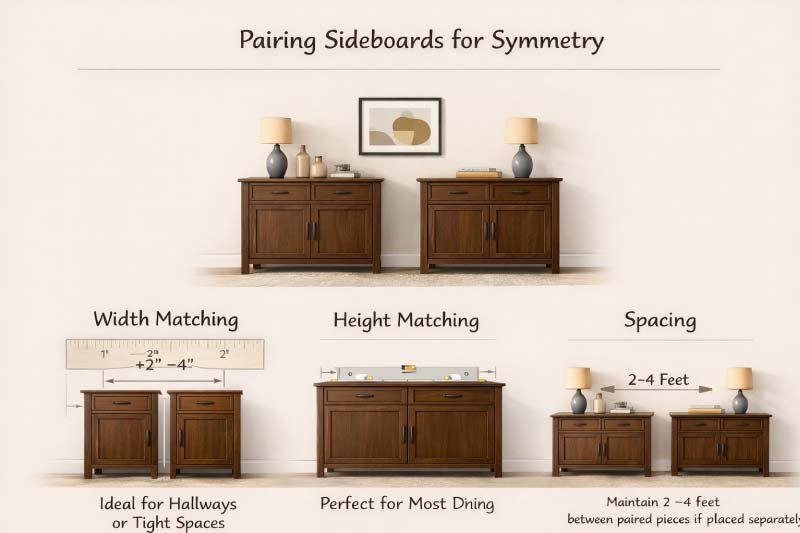
Pairing sideboards or arranging them symmetrically can transform a dining room’s visual impact. Symmetry creates a sense of order, balance, and intentional design, making large spaces feel cohesive. Properly matching width, height, and spacing ensures that paired pieces complement each other and enhance the overall décor.
-
Width Matching: Keep paired sideboards the same width or within a 2–4 inch difference.
-
Height Matching: Ensure sideboards match in height for visual harmony.
-
Spacing: Maintain 2–4 feet between paired pieces if placed separately.
Sideboard Pairing Guide
| Room Width (inches) | Recommended Sideboard Pair Width (inches) | Notes |
|---|---|---|
| 72–84 | 30–36 | Works with wide walls |
| 84–96 | 36–42 | Good for long dining rooms |
| 96–120 | 42–48 | Large open spaces |
| 120+ | 48+ | Statement symmetrical setup |
Placement Above and Around Sideboards
Correct placement of sideboards maximizes both functionality and style. Thoughtful positioning ensures smooth traffic flow, easy access to storage, and a balanced room aesthetic. Considering wall clearance, decorative spacing, and movement around the piece helps sideboards complement the space rather than dominate it, creating a harmonious and practical layout.
-
Wall Clearance: Leave at least 2–3 inches between the back of the sideboard and the wall to prevent scratches.
-
Decorative Items: Allow 8–12 inches of space above for mirrors, lamps, or art.
-
Traffic Flow: Keep at least 36 inches of clearance in front of sideboards for easy access.
Sideboard Placement Recommendations
Proper sideboard placement ensures both functionality and aesthetic balance. Considering clearance above, in front, and at the sides prevents crowding while allowing smooth movement and accessibility. Whether near walls, corners, or between furniture, following placement guidelines helps create a harmonious, practical setup that complements your room’s overall design.
| Placement Area | Recommended Clearance | Notes |
|---|---|---|
| Wall-mounted décor | 8–12 inches above | Mirrors, artwork, or shelves |
| Front clearance | 36 inches | Allow walking and drawer access |
| Corner placement | 6–12 inches side | Prevent crowding and maintain flow |
| Between furniture | 2–4 inches side | Avoid rubbing adjacent furniture |
Also Read:
Buffet Cabinet Size Guide with Chart for Small and Large Spaces
Additional Tips for Choosing the Right Sideboard Size
Selecting the perfect sideboard goes beyond basic dimensions. Considering room layout, storage needs, and style ensures your piece is both practical and visually appealing. Thoughtful choices help your sideboard complement your dining table, enhance traffic flow, and provide versatile storage while maintaining harmony with the overall décor.
-
Measure Twice: Always measure your room, wall space, and dining table before buying.
-
Balance With Table: Sideboards should complement, not overpower, your dining table.
-
Consider Storage Needs: Think about what you will store—plates, linens, barware, or decorative items.
-
Mind Room Traffic: Ensure adequate space for walking and opening drawers/cabinets.
-
Style Cohesion: Match sideboard style and material with other furniture and décor.
-
Expandable Options: Some sideboards offer adjustable shelves or removable sections for flexibility.
Also Read:
Real Scenarios
Understanding sideboard sizes and placement becomes easier when viewed in real-life contexts. Practical scenarios demonstrate how width, depth, height, and symmetry work together to create functional and visually balanced dining spaces. These examples help translate guidelines into actionable decisions for various room sizes and design styles.
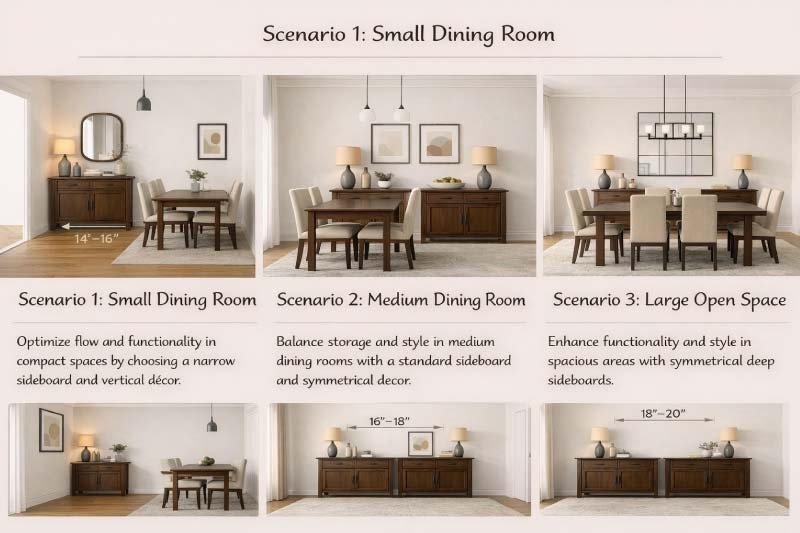
Scenario 1: Small Dining Room
n compact dining spaces, careful sideboard selection is essential to maintain flow and functionality. Proper width and depth ensure storage without crowding, while thoughtful placement and vertical décor, like mirrors or artwork, enhance the sense of space and style, creating a balanced, practical, and visually appealing environment.
Scenario 2: Medium Dining Room
Medium-sized dining rooms allow for sideboards that balance storage and visual presence. Choosing the right width, depth, and height ensures proportional harmony with the table and surrounding furniture. Adding décor elements above, such as lamps or artwork, enhances style while maintaining functional flow and an inviting dining atmosphere.
Scenario 3: Large Open Space
In spacious dining areas, sideboards can serve as both storage solutions and statement pieces. Selecting the right width, height, and depth ensures balance with expansive walls and high ceilings. Symmetry, multiple pieces, and deep drawers enhance functionality while creating a visually striking and harmonious focal point in the room.
Also Read:
Final Thoughts
Choosing the right sideboard size is about balancing function, aesthetics, and room proportions. By considering height, width, depth, style, and placement, you can find a sideboard that fits seamlessly in your dining room, living room, or hallway. Use the tables above as a reference guide for selecting the perfect size to ensure your space feels cohesive, functional, and visually appealing.
Also Read:

I am Engineer Hassan, a professional engineer with over 15 years of experience in measurements, design accuracy, and furniture, appliance, and home product sizing. Through Size Helper, I provide research-based guides and trending 2026 home design ideas for living rooms, bedrooms, sofas, wall décor, fashion, and sports—helping users make confident, informed decisions. Every guide is written with real expertise, verified data, and a commitment to quality, usability, and style.