

Getting a restful night’s sleep begins with the right pillow. Many people overlook how pillow size affects comfort, neck alignment, and overall sleep quality.
Choosing the correct pillow size ensures that your head, neck, and shoulders are supported correctly, reducing discomfort and promoting healthier sleep posture.
This guide will help you understand pillow sizes, how to choose the right one, and provide detailed charts to make your selection easier.
Why Pillow Size Matters for Sleep
The right pillow size can significantly impact sleep quality. A pillow that is too large or too small may lead to neck strain, headaches, and poor spinal alignment.
Pillow size also affects how much space you have while sleeping, the comfort of your sleeping position, and even how your bedding looks aesthetically.
-
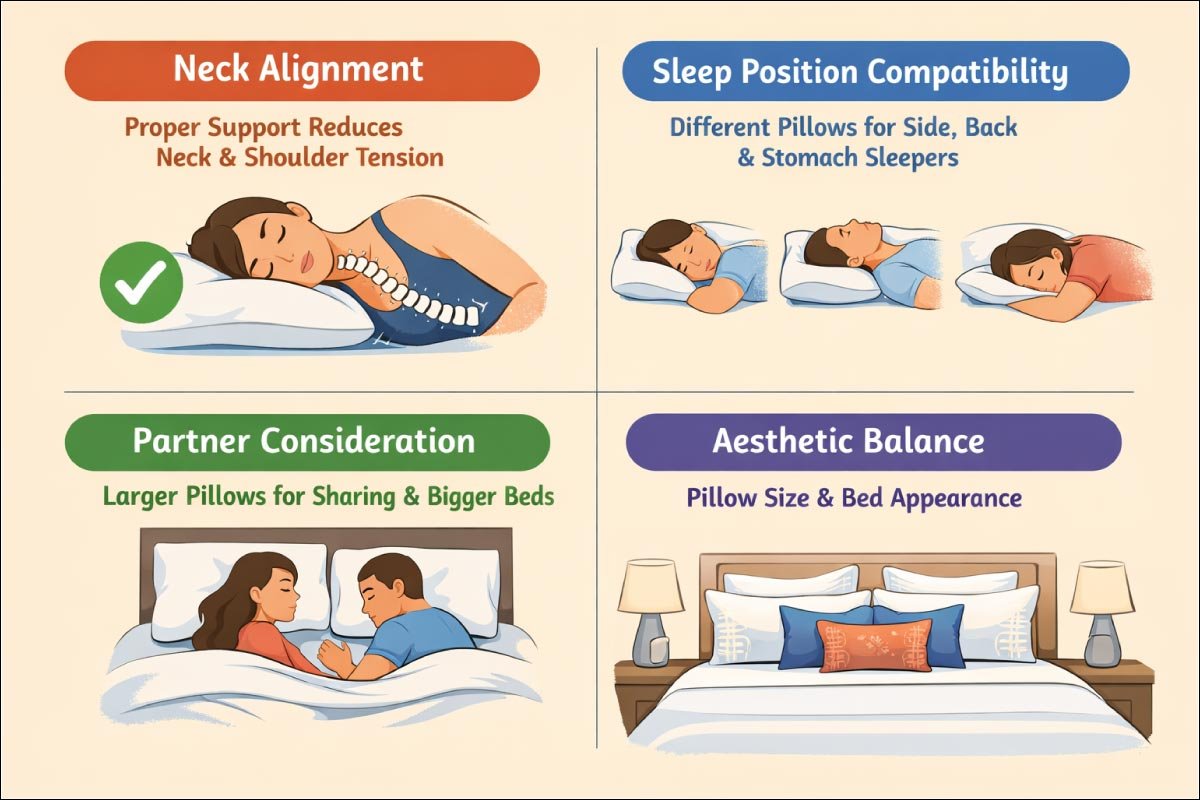
Neck Alignment: Proper support reduces tension in your neck and shoulders.
-
Sleep Position Compatibility: Different sleep positions require different pillow heights and firmness levels.
-
Partner Consideration: Larger pillows may be ideal for sharing or sleeping on a larger bed.
-
Aesthetic Balance: Pillow size contributes to how a bed looks, matching comfort with style.
Choosing a pillow isn’t just about softness—it’s about proportion, support, and your personal sleep needs.
Standard Pillow Sizes
Understanding pillow sizes is essential for comfort, support, and a good night’s sleep. Different sizes cater to various bed types, sleeping positions, and decorative needs.
This guide breaks down the most common standard pillow sizes, their dimensions, and ideal uses, helping you choose the perfect pillow for every purpose.
| Pillow Type | Dimensions (inches) | Best For | Notes |
|---|---|---|---|
| Standard | 20 x 26 | Twin and full beds | Fits most pillowcases; widely used |
| Queen | 20 x 30 | Queen beds | Slightly longer than standard, extra coverage |
| King | 20 x 36 | King beds | Perfect for stretching and hugging |
| Euro | 26 x 26 | Decorative & back support | Often used against headboard for support |
| Body Pillow | 20 x 54 | Full-body support, side sleepers | Excellent for spinal alignment |
Tip: While dimensions give a general idea, pillow height (loft) is equally important for proper neck support.
How Sleep Position Affects Pillow Size Choice
Choosing the right pillow size is essential for proper spinal alignment, comfort, and restful sleep. Your sleep position—back, side, or stomach—dictates the ideal pillow loft, firmness, and dimensions.
Using the wrong pillow can lead to neck pain, stiffness, and poor sleep quality. Understanding each position’s needs helps you select a pillow that supports natural posture.
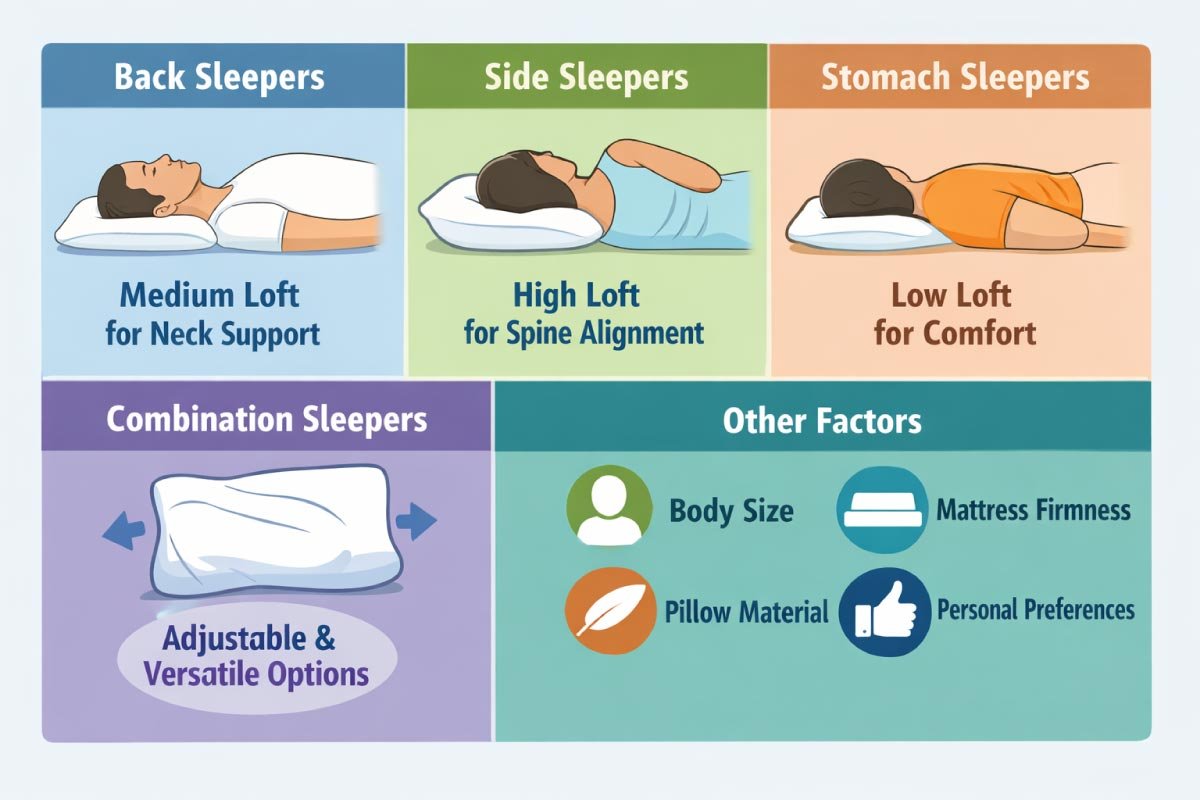
1. Back Sleepers: Medium Loft for Neck Support
Back sleepers require a pillow that supports the natural curve of the neck without pushing the head too far forward.
Medium loft pillows provide gentle elevation, filling the gap between the head and mattress.
Standard or queen-sized pillows usually offer ideal coverage, promoting alignment and reducing pressure that can lead to neck strain or discomfort.
2. Side Sleepers: High Loft for Spine Alignment
Side sleepers need firmer, higher pillows to maintain a straight spinal line from neck to hips.
Pillows should fill the space between the head and shoulders, preventing tilting. King or body pillows can also provide additional support for the arms and legs.
Proper pillow height reduces shoulder pressure and enhances overall sleep comfort.
3. Stomach Sleepers: Low Loft for Comfort
Stomach sleepers benefit from soft, low-profile pillows to prevent overextension of the neck.
Standard pillows work well, or specialized thin pillows for stomach sleepers can be used.
A lower loft keeps the head in a natural position, preventing strain and discomfort. Avoiding thick, firm pillows is key to maintaining a relaxed, supported posture.
4. Combination Sleepers: Adjustable Options Work Best
People who switch positions during the night need versatile pillows that adapt to multiple postures.
Adjustable pillows, such as shredded memory foam or ones with removable inserts, allow for easy loft customization.
This flexibility ensures proper support whether sleeping on the back, side, or stomach, reducing pressure points and promoting continuous, restorative sleep throughout the night.
5. Other Factors Influencing Pillow Choice
Besides sleep position, body size, mattress firmness, and personal comfort preferences influence pillow selection.
Taller individuals may require higher lofts, while softer mattresses may need thicker support. Pillow material also affects firmness and airflow.
Considering all these factors ensures optimal alignment, prevents neck or shoulder pain, and enhances overall sleep quality consistently night after night.
| Sleep Position | Recommended Pillow Size | Ideal Loft (inches) | Additional Tips |
|---|---|---|---|
| Back | Standard/Queen | 4-6 | Choose medium firmness |
| Side | Queen/King/Body | 5-7 | Keep head aligned with spine |
| Stomach | Standard/Thin | 2-4 | Soft pillow to reduce neck strain |
| Combination | Queen/Adjustable | 4-6 | Adjustable pillow is best |
Discover More:
Specialty Pillow Sizes and Uses
Specialty pillows go beyond standard sleep needs, offering targeted support and enhanced comfort.
Designed for specific purposes—from neck relief to back support—they combine functionality with style.
This guide explores popular specialty pillow sizes, their intended uses, and who benefits most, helping you select the right pillow for both health and décor.
| Pillow Type | Dimensions (inches) | Purpose | Best For |
|---|---|---|---|
| Neck/Contour | 14 x 22 | Ergonomic neck support | Neck pain relief, orthopedic use |
| Travel Pillow | 12 x 16 | Compact neck support on the go | Flights, car rides |
| Wedge Pillow | 24 x 24 | Elevates upper body | Acid reflux, post-surgery, snoring |
| Lumbar Pillow | 12 x 20 | Lower back support | Office chairs, driving |
| Decorative Pillow | 18 x 18, 20 x 20 | Aesthetic or light back support | Bedroom decor, accent support |
These specialty pillows serve dual purposes: comfort and functional support, often addressing specific health concerns.
How to Measure Your Pillow Space
Measuring your pillow space is essential for comfort, spinal alignment, and a well-styled bed. The right pillow size enhances sleep quality while complementing your mattress and bedding arrangement.
By understanding your bed width, shoulder size, loft preference, and overall bedding layout, you can select pillows that not only support your body but also elevate the bedroom’s aesthetic.
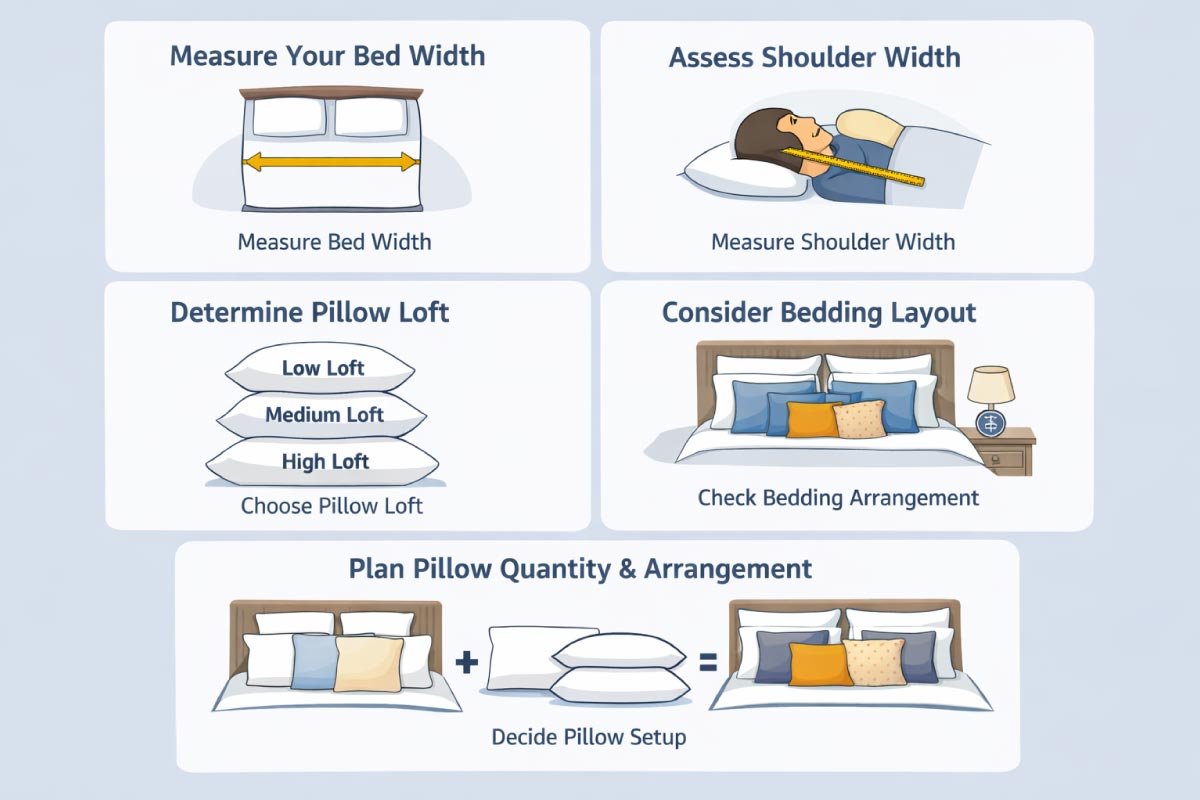
1. Measure Your Bed Width
The first step is knowing your mattress width to determine pillow size and placement. For twin, full, queen, or king beds, measuring across the mattress ensures pillows neither overcrowd nor underfill the space.
Proper measurement allows you to fit the correct number of pillows while maintaining comfort and a balanced, visually appealing arrangement.
2. Assess Shoulder Width
Side sleepers must account for shoulder width to ensure proper spinal alignment. Measure from the neck to the outer edge of your shoulder while lying down.
This measurement helps select pillow height and thickness, preventing neck strain. Matching pillow dimensions to shoulder width enhances posture, reduces pressure points, and promotes a restful night’s sleep.
3. Determine Pillow Loft Preference
Pillow loft refers to its thickness or height, influencing neck and head support. Low loft suits stomach sleepers, medium loft works for back sleepers, and high loft is ideal for side sleepers.
By understanding your sleeping position and personal comfort, you can choose pillows that maintain spinal alignment and provide consistent, restful support throughout the night.
4. Consider Bedding Layout
Pillows should fit harmoniously with your sheets, shams, comforters, and any decorative cushions.
Measure how much space remains on your mattress once primary pillows are placed. Proper planning ensures decorative pillows don’t crowd sleeping pillows, keeping the bed organized and comfortable.
A cohesive layout improves both functionality and bedroom aesthetics.
5. Plan Pillow Quantity and Arrangement
After measuring space, determine the number of pillows your bed can accommodate comfortably.
Full-size beds may need two pillows, while larger beds may allow three or more. Include sleeping pillows, Euro shams, and decorative cushions in your plan.
This ensures a balanced, cozy arrangement without cluttering the mattress or reducing usable sleeping area.
| Bed Size | Standard Pillow Count | Queen Pillow Count | King Pillow Count | Notes |
|---|---|---|---|---|
| Twin | 1 | 1 | N/A | Small bed, single sleeper |
| Full | 2 | 2 | N/A | Couples may need extra support |
| Queen | 2 | 2-3 | N/A | Extra pillow for comfort or decor |
| King | 3 | 3 | 2-3 | Allows stretching and hugging |
Discover More:
Pillow Fill Material and Its Impact
| Fill Material | Firmness | Longevity | Best For |
|---|---|---|---|
| Memory Foam | Medium-Firm | 3-5 years | Neck support, side sleepers |
| Down/Feather | Soft-Medium | 2-4 years | Lightweight, adjustable loft, back sleepers |
| Polyester Fiber | Medium | 1-2 years | Budget-friendly, hypoallergenic |
| Latex | Firm | 4-6 years | Durable, supportive, natural option |
| Hybrid | Variable | 3-5 years | Combines foam and fiber for comfort |
Matching pillow size to fill material ensures the loft and firmness meet your support needs.
How Often to Replace Your Pillow
Pillows naturally degrade over time, losing support, shape, and comfort. Regular replacement is essential to maintain proper sleep posture and overall rest quality.
This guide outlines how often different pillow types should be replaced, the signs of wear to watch for, and tips to ensure your pillow continues to provide optimal support.
| Pillow Type | Replacement Frequency | Signs to Replace |
|---|---|---|
| Memory Foam | 3-5 years | Sagging, lumps, odor |
| Down/Feather | 2-4 years | Flattening, feather escape |
| Polyester Fiber | 1-2 years | Lumps, loss of shape |
| Latex | 4-6 years | Hardening, loss of resilience |
| Specialty | Varies | Any discomfort noticed |
Replacing pillows regularly maintains neck support and ensures that sleep quality doesn’t suffer.
Tips for Choosing the Perfect Pillow Size
Choosing the right pillow size is essential for a comfortable night’s sleep and proper spinal alignment.
The perfect pillow balances support, height, and material while complementing your bed size and sleep position.
Consider your preferences carefully to enhance rest and overall sleep quality.
-
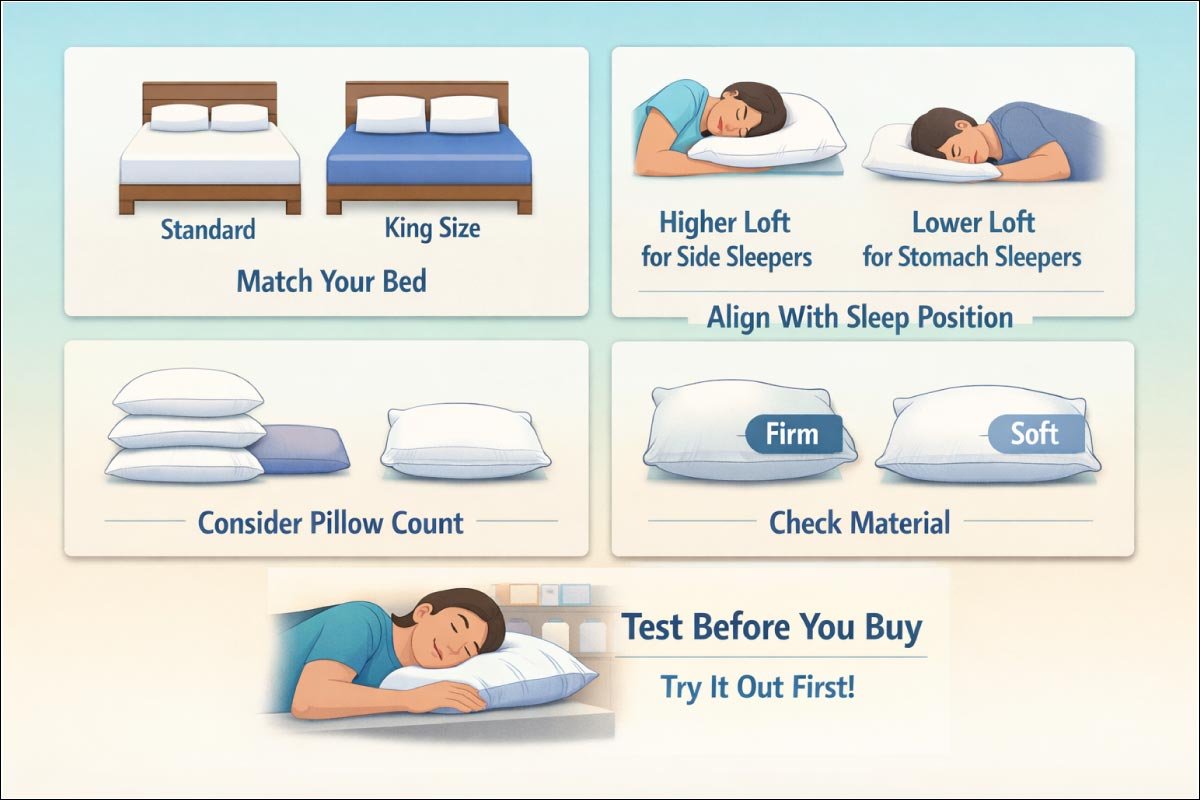
Match Your Bed: Standard pillows fit smaller beds, while larger pillows like king-size fit king mattresses comfortably.
-
Align With Sleep Position: Side sleepers need higher loft; stomach sleepers need lower loft.
-
Consider Pillow Count: Some people prefer multiple pillows for support or decorative purposes.
-
Check Material: Ensure firmness matches pillow height and support needs.
-
Test Before You Buy: Whenever possible, lie down on the pillow to check comfort and alignment.
| Factor | Recommendation | Why It Matters |
|---|---|---|
| Sleep Position | Side, back, stomach | Ensures neck and spine alignment |
| Pillow Size | Standard, Queen, King, Body | Comfort and bed coverage |
| Pillow Loft | Low, medium, high | Prevents neck strain |
| Material | Memory foam, down, polyester, latex | Determines support and durability |
| Pillow Count | 1-3 per sleeper | Balances comfort and decor |
Discover More:
Combining Pillow Types for Maximum Comfort
Using different pillow types together can greatly improve sleep quality. Combining pillows allows you to target neck, head, and body support while adjusting height and firmness.
By layering various shapes and sizes thoughtfully, sleepers can create a custom setup that promotes spinal alignment, reduces pressure points, and enhances overall comfort throughout the night.
1. Standard Pillows
Standard pillows are rectangular and provide basic support for most sleepers. They work well as a primary pillow or as a base layer for added height. When combined with memory foam or contour pillows, standard pillows help distribute weight evenly, reducing strain on the neck and shoulders.
2. Memory Foam Pillows
Memory foam pillows mold to the shape of your head and neck, offering personalized support. They are ideal for sleepers who need extra neck alignment.
Layering a memory foam pillow with a softer down pillow can balance firmness with plush comfort, catering to both pressure relief and cushioning.
3. Contour Pillows
Contour pillows have a curved design to follow the natural shape of the neck. Perfect for back and side sleepers, they maintain spinal alignment while reducing stiffness.
When paired with a standard or soft pillow, contour pillows enhance ergonomic support without sacrificing comfort.
4. Body Pillows
Body pillows are long, providing full-body support, especially for side sleepers. They help align hips, spine, and shoulders while reducing pressure on joints.
Using a body pillow alongside a standard pillow ensures head, neck, and torso are all supported for deeper, restorative sleep.
5. Down Pillows
Down pillows are soft and fluffy, offering luxurious cushioning. They conform lightly to the head and shoulders, making them ideal as a secondary pillow for added comfort.
Layering down pillows over firmer options creates a mix of softness and structural support.
6. Travel Pillows
Travel pillows are compact and versatile, often U-shaped or cylindrical. They provide targeted support for neck or lower back areas.
Adding a travel pillow under the abdomen, knees, or lumbar region complements larger pillows, giving customized comfort for specific sleep positions.
7. Wedge Pillows
Wedge pillows are triangular and elevate specific body parts, such as the head, torso, or legs. They improve circulation and can alleviate acid reflux or snoring.
Combining a wedge pillow with a standard or memory foam pillow allows sleepers to enjoy both therapeutic elevation and cozy head support.
Discover More:
Conclusion
Choosing the right pillow size isn’t just a matter of preference—it’s a key factor in maintaining proper spinal alignment, reducing pain, and achieving restorative sleep.
Using the charts above, you can select pillows that match your bed size, sleep position, and comfort needs. Remember, the best pillow is one that supports your head and neck naturally, fits your body, and improves your overall sleep quality.
By combining the right pillow size, loft, and fill material, you can create a sleep environment that allows you to wake up refreshed and pain-free every morning.
Investing time in choosing the right pillow is investing in better health, better mood, and better nights.

I am Engineer Hassan, a professional engineer with over 15 years of experience in measurements, design accuracy, and furniture, appliance, and home product sizing. Through Size Helper, I provide research-based guides and trending 2026 home design ideas for living rooms, bedrooms, sofas, wall décor, fashion, and sports—helping users make confident, informed decisions. Every guide is written with real expertise, verified data, and a commitment to quality, usability, and style.