
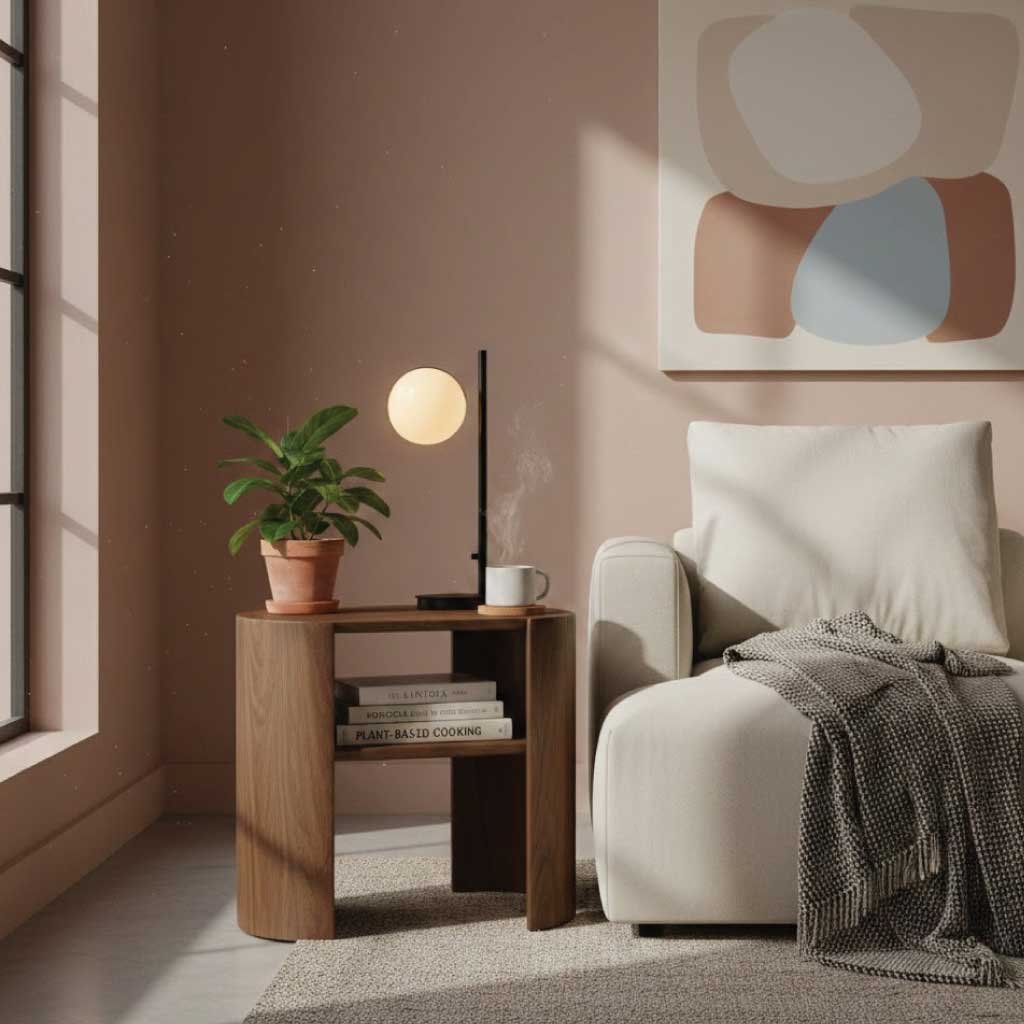
End tables, also known as side tables, are a staple of living room and bedroom design. They serve multiple purposes: holding lamps, books, drinks, or decorative items, while complementing the overall furniture layout. Choosing the right end table size is crucial for functionality, aesthetic appeal, and room balance. This guide explores ideal end table sizes for small and large rooms, including tips, measurements, and layout suggestions.
Understanding End Table Dimensions
End tables come in various shapes and sizes: round, square, rectangular, and even irregular geometric designs. However, their height, width, and depth must align with your sofa or seating to ensure comfort and usability.
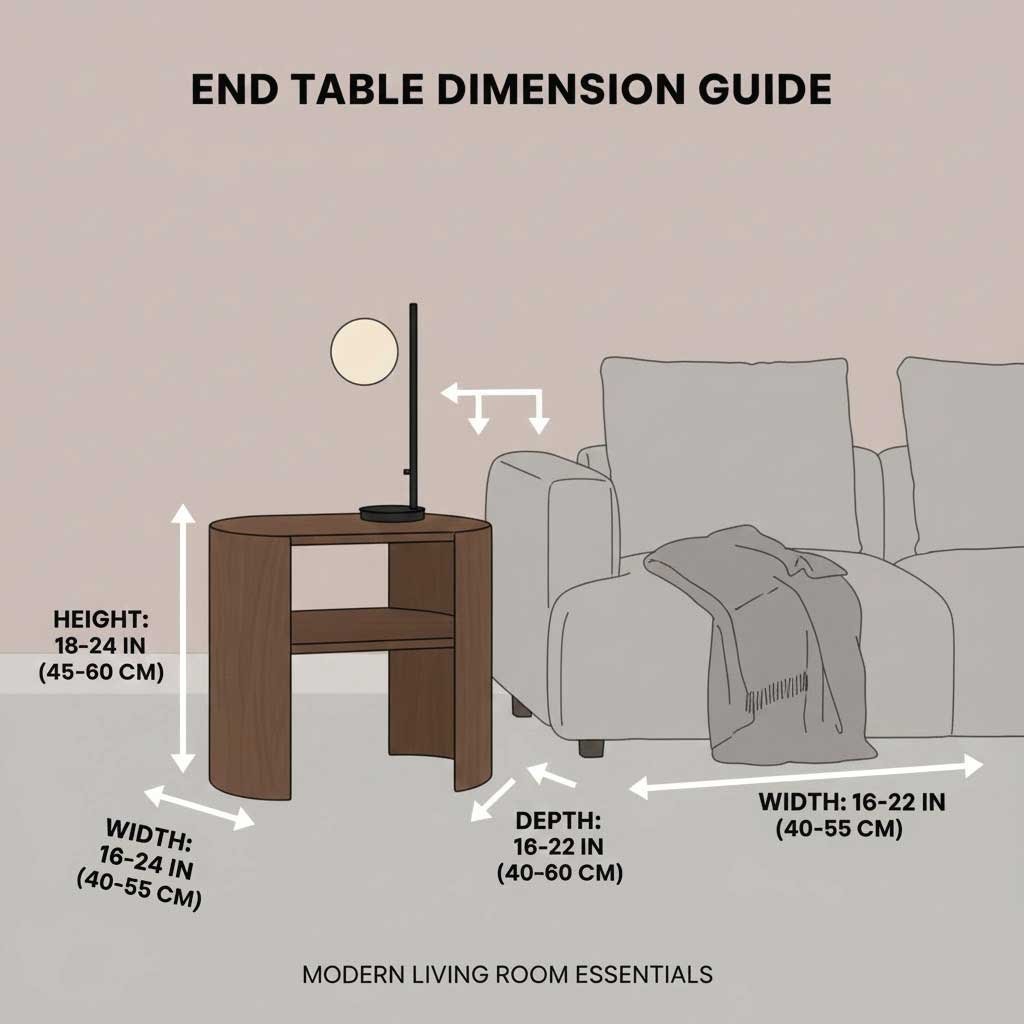
Key Dimensions:
| Dimension | Standard Range | Purpose |
|---|---|---|
| Height | 22–30 inches | Should match or be slightly below sofa arm height |
| Width | 18–30 inches | Wide enough for lamps or decor without overcrowding |
| Depth | 18–24 inches | Allows placement of items and ensures passage space |
Tip: Always measure the distance from the floor to your sofa arm before selecting an end table. Ideally, the table should be 1–2 inches below the arm for comfortable reach.
Also Read: Complete Blanket Size Chart & Guide (CM & Inches)
Choosing End Tables for Small Rooms
Small rooms need careful planning to avoid clutter and ensure functionality. End tables for compact spaces should be proportional to the room, leaving sufficient walking space.
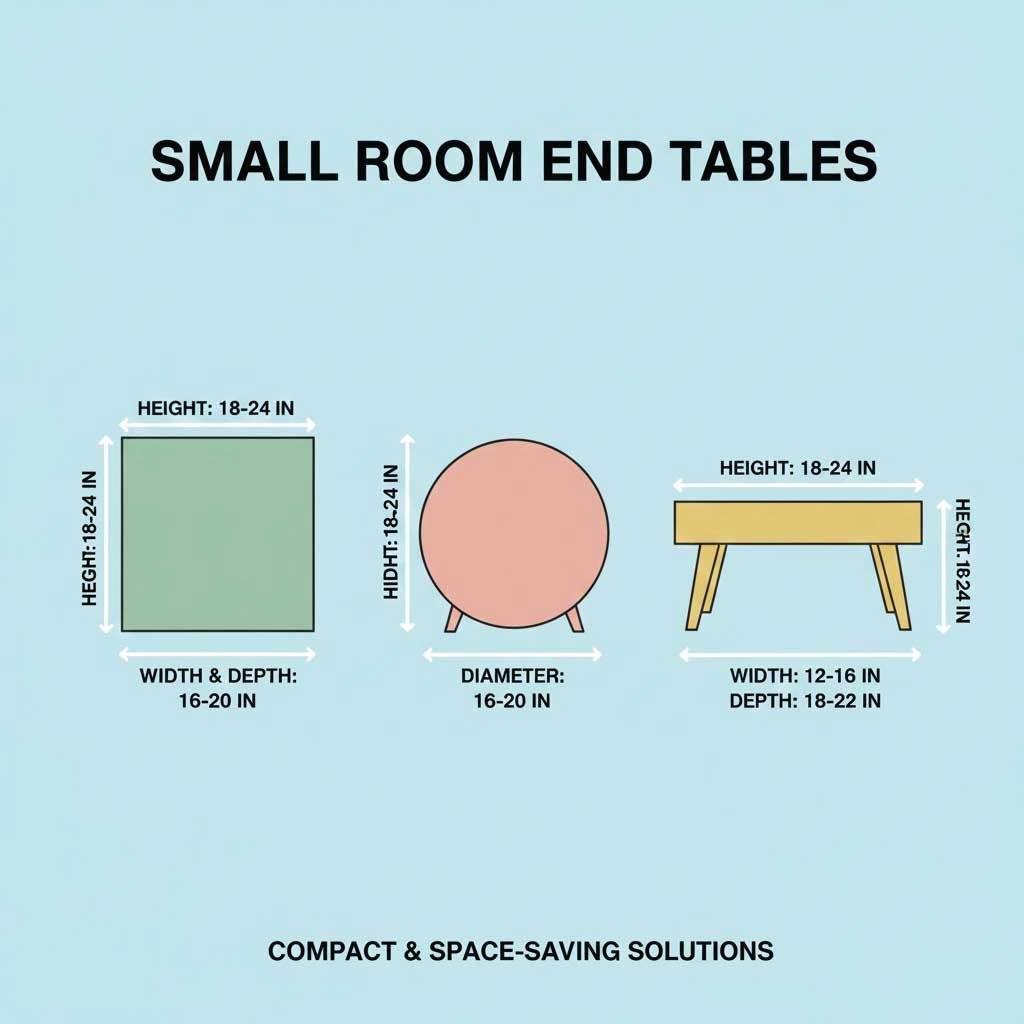
Ideal Small Room End Table Sizes:
| Table Shape | Height (inches) | Width (inches) | Depth (inches) | Notes |
|---|---|---|---|---|
| Square | 22–26 | 18–22 | 18–22 | Fits snugly beside small sofas or chairs |
| Round | 22–26 | 18–20 | 18–20 | Ideal for narrow spaces; smooth edges prevent bumps |
| Narrow Rectangular | 22–26 | 12–18 | 18–20 | Can fit tight corners or behind small couches |
Small Room Tips:
Opt for open-frame or glass tables to create a visual sense of space.
Avoid bulky or oversized tables that dominate the room.
Use stackable or nesting tables for flexible space management.
Choosing End Tables for Large Rooms
Large rooms allow more freedom to choose statement pieces and functional end tables. You can opt for larger sizes, multiple end tables, or decorative designs.
Ideal Large Room End Table Sizes:
| Table Shape | Height (inches) | Width (inches) | Depth (inches) | Notes |
|---|---|---|---|---|
| Square | 24–30 | 24–30 | 24–30 | Complements large sofas or sectional corners |
| Rectangular | 24–30 | 26–32 | 18–24 | Great for sofa sides or along walls |
| Round | 24–28 | 20–26 | 20–26 | Works well with lounge chairs and ottomans |
Large Room Tips:
Pair two matching end tables on either side of a sofa for symmetry.
Choose heavier, statement materials like marble, wood, or metal for visual impact.
Consider tables with storage to balance functionality and style.
End Table Height: The Most Crucial Factor
Height is arguably the most critical dimension for comfort. An end table too tall or too short disrupts usability and visual harmony.
Height Guidelines:
Sofa Arm Height: Measure from the floor to the top of your sofa arm. End tables should be 1–2 inches below this height.
Chair End Tables: For side chairs, measure from seat to arm; table should align similarly.
Bedside End Tables: Typically 24–28 inches, depending on mattress height.
Pro Tip: Adjustable-height tables are great for multi-purpose rooms.
Also Read: How to Choose a Full Size Mattress Topper — Complete Guide
Width and Depth: Balancing Space and Function
Width and depth determine how much surface area you have for lamps, decor, or storage. They also impact room flow.
Space Guidelines:
Small Room: Keep width under 22 inches and depth under 20 inches.
Medium Room: Width 22–26 inches, depth 20–22 inches.
Large Room: Width 26–32 inches, depth 22–28 inches.
Flow Considerations: Maintain at least 18–24 inches of walking space around end tables for comfort.
End Table Shapes and Room Fit
Shape selection can make or break room design. Here’s how different shapes work:
| Shape | Best for | Pros | Cons |
|---|---|---|---|
| Square | Small or medium rooms | Easy placement, functional | Can look boxy in large rooms |
| Round | Small rooms, corners | Smooth edges, good flow | Limited surface area |
| Rectangular | Large rooms | Lots of surface space | Can feel bulky in small rooms |
| Oval | Medium to large rooms | Elegant, softens angular layouts | Less storage space |
Design Tip: Use round or oval tables in spaces with heavy traffic to reduce bumping hazards.
Material and Style Considerations
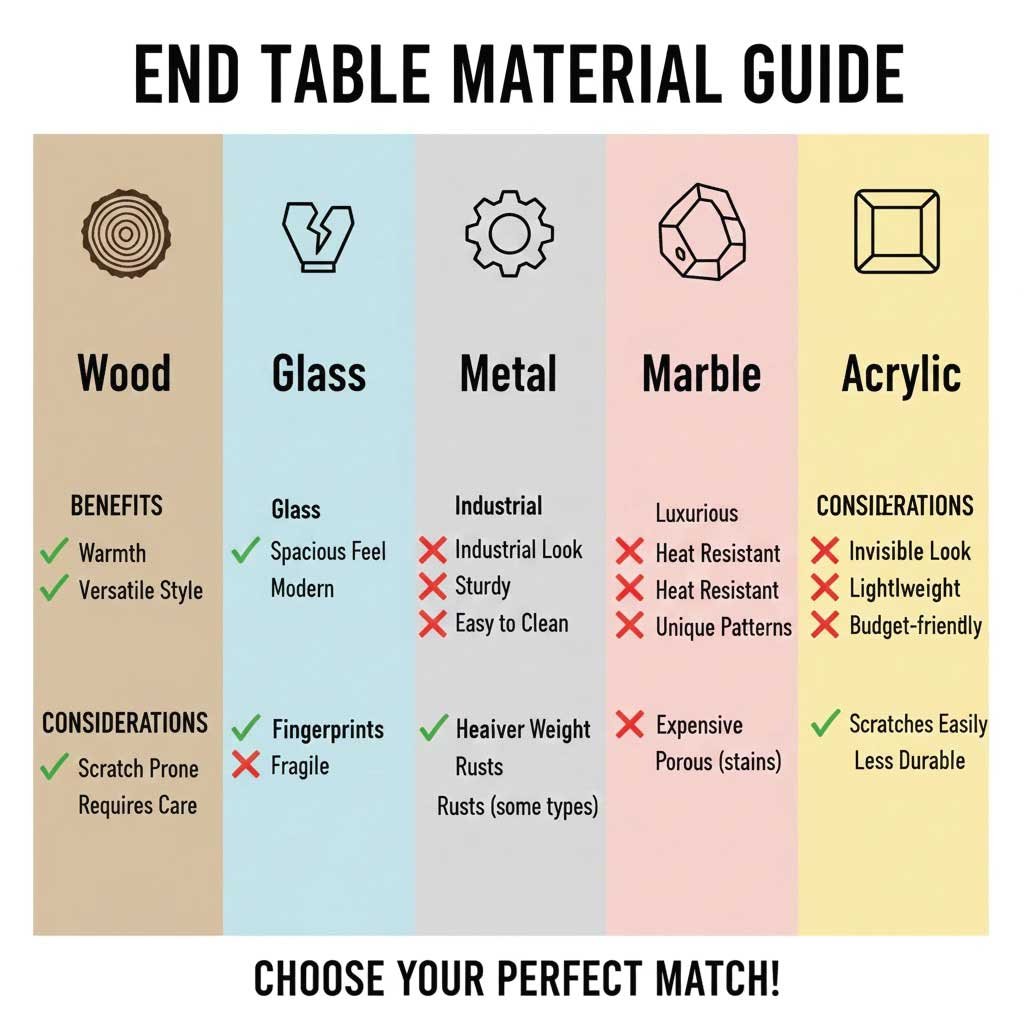
End table material affects durability, aesthetics, and perceived space.
Popular Materials:
| Material | Ideal Room Type | Benefits | Considerations |
|---|---|---|---|
| Wood | Any | Classic, warm, versatile | Heavy, can dominate small spaces |
| Glass | Small/Medium | Light, visually spacious | Fragile, requires cleaning |
| Metal | Large rooms | Industrial, modern, durable | Cold appearance in cozy rooms |
| Marble | Large rooms | Luxurious, statement | Heavy, expensive |
| Acrylic | Small rooms | Transparent, unobtrusive | Limited styles |
Pro Tip: For small rooms, choose lighter colors or transparent materials. For large rooms, bold patterns or textures add depth and personality.
Also Read: Bed Frame Size Chart: All Standard Dimensions Explained
End Tables With Storage: Function Meets Design
Storage is often overlooked but crucial. Many end tables include drawers, shelves, or hidden compartments.
Storage Table Sizes:
| Type | Height (inches) | Width (inches) | Depth (inches) | Notes |
|---|---|---|---|---|
| Single Drawer | 22–28 | 18–26 | 18–22 | Perfect for remote, magazines |
| Shelves | 22–30 | 20–28 | 18–24 | Great for books, decorative storage |
| Two Drawers | 24–30 | 24–30 | 18–24 | Ideal for large rooms or bedroom |
Tip: Avoid oversized storage in small rooms—it overwhelms the space.
End Table Placement Guidelines
Correct placement ensures usability and flow.
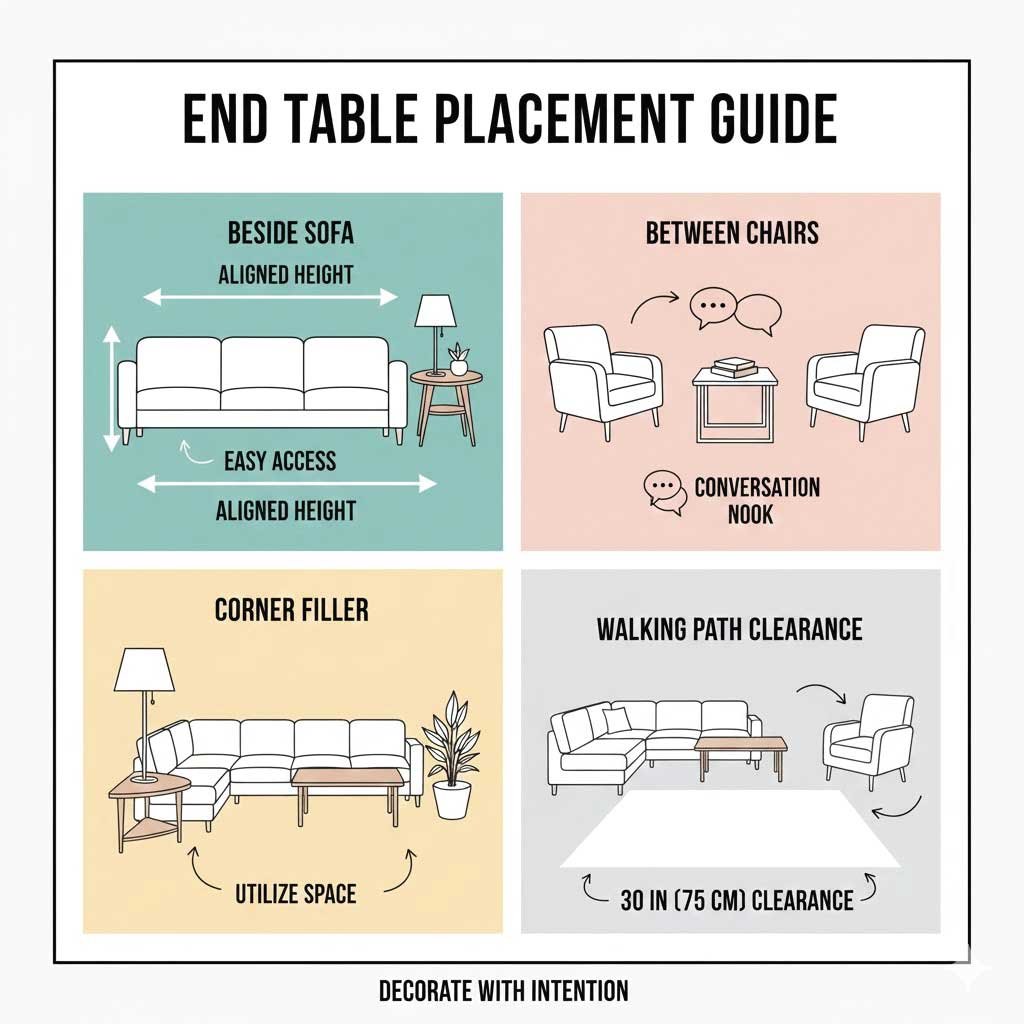
Next to Sofa: Keep 2–4 inches from the sofa for easy reach.
Next to Chair: Align table height with chair arm.
In Corners: Round tables are ideal to save space.
Between Two Seats: Consider a rectangular table spanning both sides.
Visual Balance: Tables should neither overpower furniture nor disappear into the background.
Also Read: Headboard Size Chart: Standard Measurements for All Beds
Common End Table Mistakes to Avoid
Too Tall or Short: Causes discomfort when reaching for items.
Oversized for Room: Makes space feel cramped.
Underutilized: Table too small or decorative-only in a functional spot.
Ignoring Flow: Blocks walking paths or traffic.
Pro Tip: Use painter’s tape to mark potential table dimensions on the floor before purchase.
End Table Size Chart for Quick Reference
Here’s a comprehensive summary for all room sizes:
| Room Size | Table Height | Table Width | Table Depth | Notes |
|---|---|---|---|---|
| Small | 22–26 | 18–22 | 18–20 | Compact, minimal clutter |
| Medium | 24–28 | 22–26 | 20–22 | Balance style and function |
| Large | 24–30 | 26–32 | 22–28 | Statement pieces, larger surface |
Styling End Tables in Any Room
End tables are not just functional—they elevate room decor. Consider:
Layered Decor: Lamp + small plant + books.
Accent Colors: Tables can complement or contrast room palette.
Artwork & Accessories: Match table shape and style with room features.
Lighting: Table lamps with appropriate height improve ambiance.
Small Rooms: Keep accessories minimal.
Large Rooms: Use multiple items, books, trays, and decorative bowls for visual interest.
Conclusion
Selecting the perfect end table size involves balancing height, width, depth, material, shape, and room size. For small rooms, compact, light, and multipurpose tables maintain functionality without clutter. For large rooms, statement pieces, wider tables, and storage solutions enhance aesthetics and usability. Always prioritize height alignment with seating, flow space, and visual harmony.
By following this guide, you can confidently choose the ideal end table for any room—small or large—ensuring your living space is functional, stylish, and comfortable.

I am Engineer Hassan, a professional engineer with over 15 years of experience in measurements, design accuracy, and furniture, appliance, and home product sizing. Through Size Helper, I provide research-based guides and trending 2026 home design ideas for living rooms, bedrooms, sofas, wall décor, fashion, and sports—helping users make confident, informed decisions. Every guide is written with real expertise, verified data, and a commitment to quality, usability, and style.