
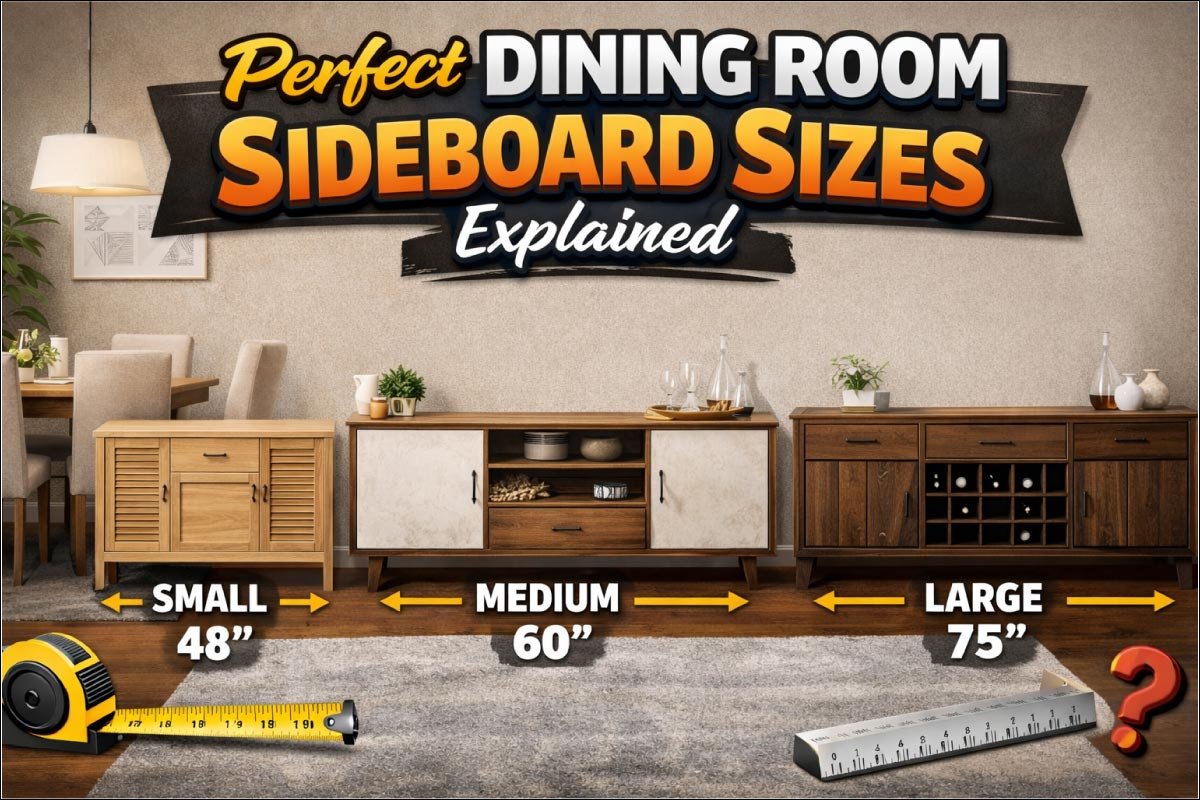
A dining room sideboard is more than just a piece of furniture—it’s a blend of style, storage, and functionality. Whether you are storing fine china, table linens, or displaying decorative pieces, the size of your sideboard can make or break the room’s aesthetics and functionality. Choosing the perfect sideboard size ensures harmony with your dining table, wall space, and other furniture pieces. This guide explains everything you need to know about sideboard dimensions, height, width, depth, and placement strategies.
Why Sideboard Size Matters
Choosing the right sideboard size is more than a design decision—it affects storage, room flow, and visual harmony. A properly sized sideboard enhances functionality while complementing your dining area, ensuring that the furniture feels integrated rather than overpowering.
-
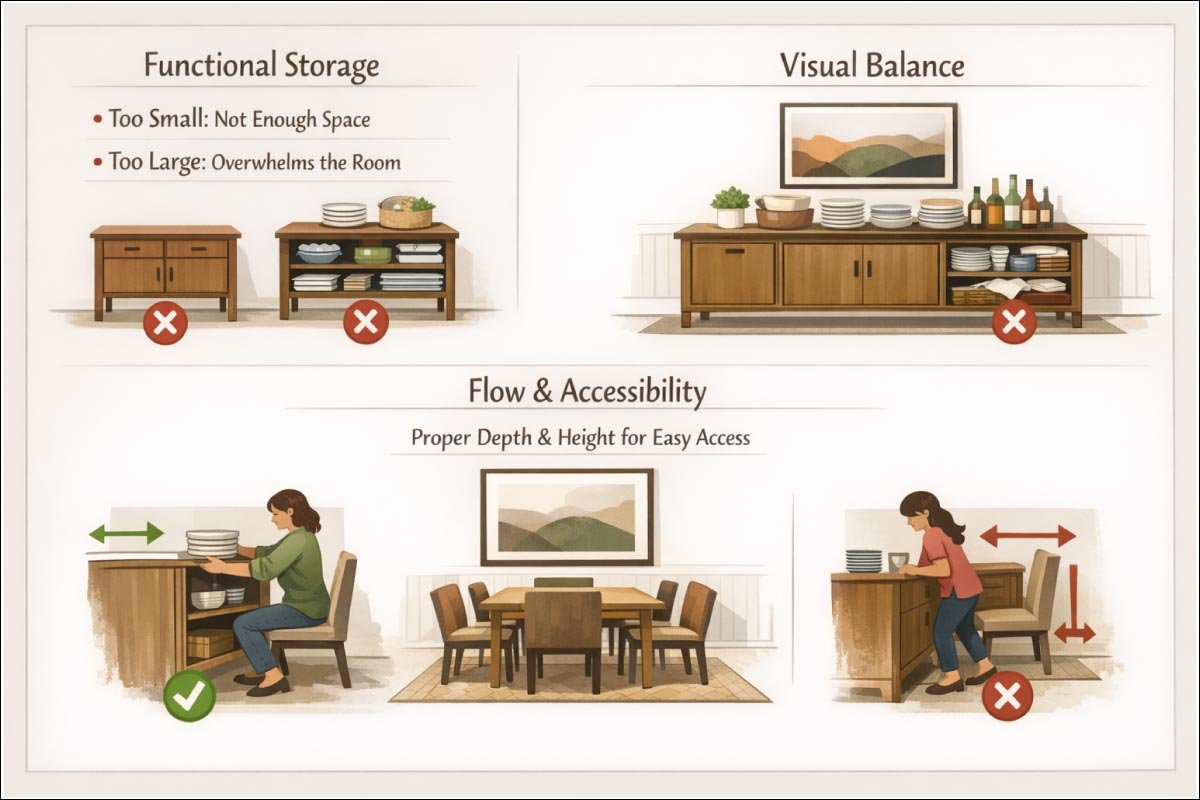
Functional storage: Too small, and your sideboard won’t hold essentials. Too large, and it overwhelms the room.
-
Visual balance: A sideboard that is proportional to your dining table and wall creates a cohesive look.
-
Flow and accessibility: Proper depth and height ensure easy access without obstructing movement.
By understanding the standard dimensions and design principles, you can pick a sideboard that complements your dining space rather than dominating it.
Standard Dining Room Sideboard Dimensions
Choosing the right sideboard is essential for both style and functionality in a dining room. Standard sideboard dimensions help ensure balance, storage, and ease of movement, whether your space is small or grand. Understanding width, height, and depth guidelines makes selecting the perfect piece effortless and practical.
| Sideboard Type | Width (inches) | Height (inches) | Depth (inches) | Ideal Room Size |
|---|---|---|---|---|
| Small | 36–48 | 28–32 | 14–18 | Small dining rooms (8–12 ft) |
| Medium | 50–60 | 30–34 | 16–20 | Medium dining rooms (12–16 ft) |
| Large | 60–72 | 30–36 | 18–22 | Large dining rooms (16+ ft) |
| Extra Large | 72–84 | 32–36 | 20–24 | Open plan / grand dining rooms |
Table 1 — Standard Sideboard Dimensions
Tip: When measuring for a sideboard, leave at least 36 inches of walkway space between the dining table and sideboard for comfortable movement.
Sideboard Width: Finding the Right Fit
Selecting the right sideboard width is essential for both function and style. The width affects how balanced the piece feels in your room, its storage capacity, and its relationship to other furniture. Choosing a proportionate width ensures your sideboard complements the space instead of overwhelming it.
Guidelines for Width:
When choosing a sideboard, width plays a key role in both aesthetics and practicality. The right width ensures the piece feels balanced with your dining table, fits your room’s scale, and provides enough storage for your needs without overwhelming the space.
-
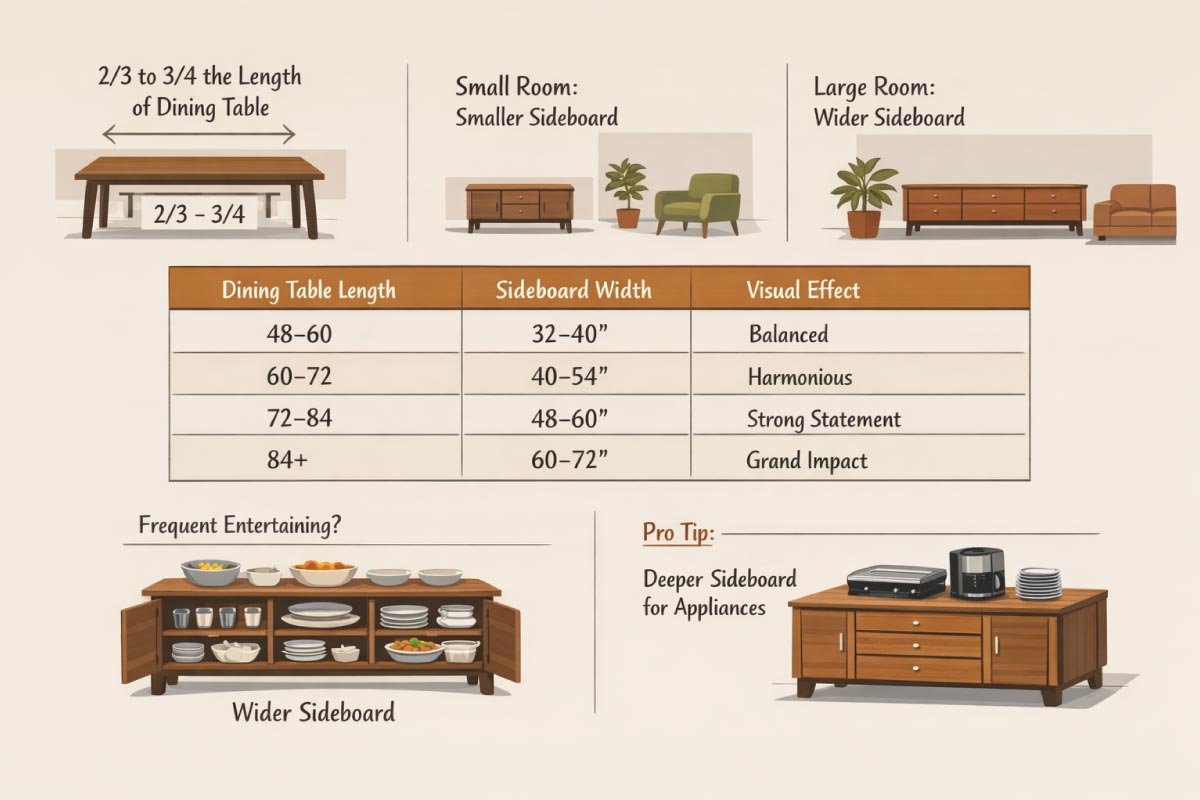
Proportionality: Ideally, your sideboard should be 2/3 to 3/4 the length of your dining table.
-
Room size: Small rooms require smaller sideboards, while large spaces can accommodate wider units.
-
Functionality: If you host large dinners often, wider sideboards offer additional storage for serving dishes and accessories.
| Dining Table Length | Recommended Sideboard Width | Visual Effect |
|---|---|---|
| 48–60 inches | 32–40 inches | Balanced |
| 60–72 inches | 40–54 inches | Harmonious |
| 72–84 inches | 48–60 inches | Strong statement |
| 84+ inches | 60–72 inches | Grand impact |
Table 2 — Sideboard Width Relative to Dining Table Length
Pro Tip: If your sideboard will hold appliances like buffet warmers or small coffee machines, consider a slightly deeper width for usability.
Sideboard Height: Matching Function with Comfort
Choosing the right sideboard height ensures both comfort and functionality. A well-proportioned height allows easy access to items while maintaining visual harmony with your dining table and surrounding furniture. Striking the right balance prevents the sideboard from feeling too dominant or too diminutive in the room.
General Recommendations:
Selecting the appropriate sideboard height is key for comfort, accessibility, and style. Standard, low, or tall options serve different needs, from everyday serving to creating visual impact. Understanding these general recommendations ensures your sideboard complements your dining table, room scale, and overall interior design seamlessly.
-
Standard height: 30–34 inches, which aligns well with the dining table height for serving purposes.
-
Low sideboards: 28–30 inches, suitable for modern or minimalist interiors.
-
Tall sideboards: 34–36 inches, ideal for high-ceiling rooms or when you want a dramatic presence.
| Sideboard Type | Height (inches) | Functionality | Ideal Ceiling Height |
|---|---|---|---|
| Low | 28–30 | Easy access, sleek look | Standard 8 ft |
| Standard | 30–34 | Comfortable for serving | Most rooms |
| Tall | 34–36 | Maximum storage & statement | High ceilings |
| Extra Tall | 36–40 | Grand visual impact | Large open spaces |
Table 3 — Sideboard Height Recommendations
Tip: Keep the top surface height about 4–6 inches below any artwork or mirrors above it to avoid a cramped look.
Discover More:
Depth: Ensuring Accessibility and Flow
Choosing the right sideboard depth balances storage capacity with ease of movement. A properly sized depth allows you to keep essentials within reach without crowding the room, ensuring smooth traffic flow and maintaining a visually open, comfortable dining area. Functionality and accessibility go hand in hand.
Recommended Depth Guidelines:
Understanding sideboard depth ensures practical storage without compromising room flow. Standard, shallow, or deep options each serve different needs, from compact setups to large storage requirements. Following these guidelines helps you choose a depth that balances functionality, accessibility, and comfort, keeping your dining area spacious and easy to navigate.
-
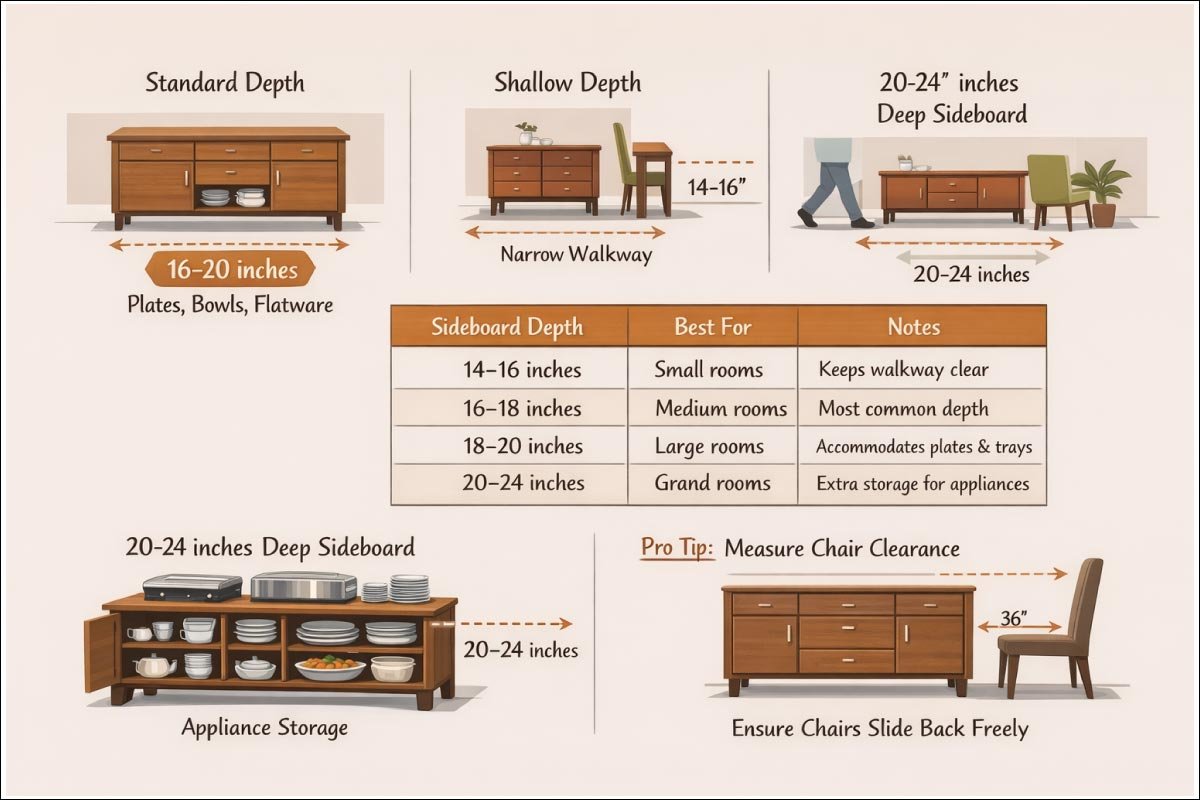
Standard depth: 16–20 inches, suitable for plates, bowls, and flatware.
-
Shallow depth: 14–16 inches, works for narrow dining rooms.
-
Deep sideboards: 20–24 inches, ideal for larger storage and appliances, but check that there is enough walking space.
| Sideboard Depth | Best For | Notes |
|---|---|---|
| 14–16 inches | Small rooms | Keeps walkway clear |
| 16–18 inches | Medium rooms | Most common depth |
| 18–20 inches | Large rooms | Accommodates plates & trays |
| 20–24 inches | Grand rooms | Extra storage for appliances |
Table 4 — Depth Recommendations
Pro Tip: Measure the clearance between your dining table chairs and the sideboard; ensure chairs can slide back without hitting the sideboard.
Discover More:
Placement Tips: Balancing Space and Style
Proper placement ensures your sideboard complements the room’s layout and enhances both function and aesthetics. By considering wall space, traffic flow, and visual balance, you can position your sideboard for easy access while creating a harmonious, stylish focal point that integrates seamlessly with your dining or living area.
-
Distance from dining table: Keep at least 36 inches between the sideboard and table for easy movement.
-
Wall alignment: Ensure the sideboard is centered on the wall for symmetry.
-
Décor balance: Pair with artwork, mirrors, or lighting to enhance visual appeal.
-
Layer storage: Combine drawers, cabinets, and open shelving for a functional and aesthetic setup.
| Placement Tip | Recommendation |
|---|---|
| Clearance | Minimum 36 inches from dining table |
| Wall alignment | Center the sideboard on the wall |
| Top surface decor | Avoid overcrowding with more than 3–5 decorative items |
| Lighting | Overhead lights or wall sconces enhance sideboard display |
Table 5 — Placement & Styling Guidelines
Discover More:
Style Considerations Based on Size
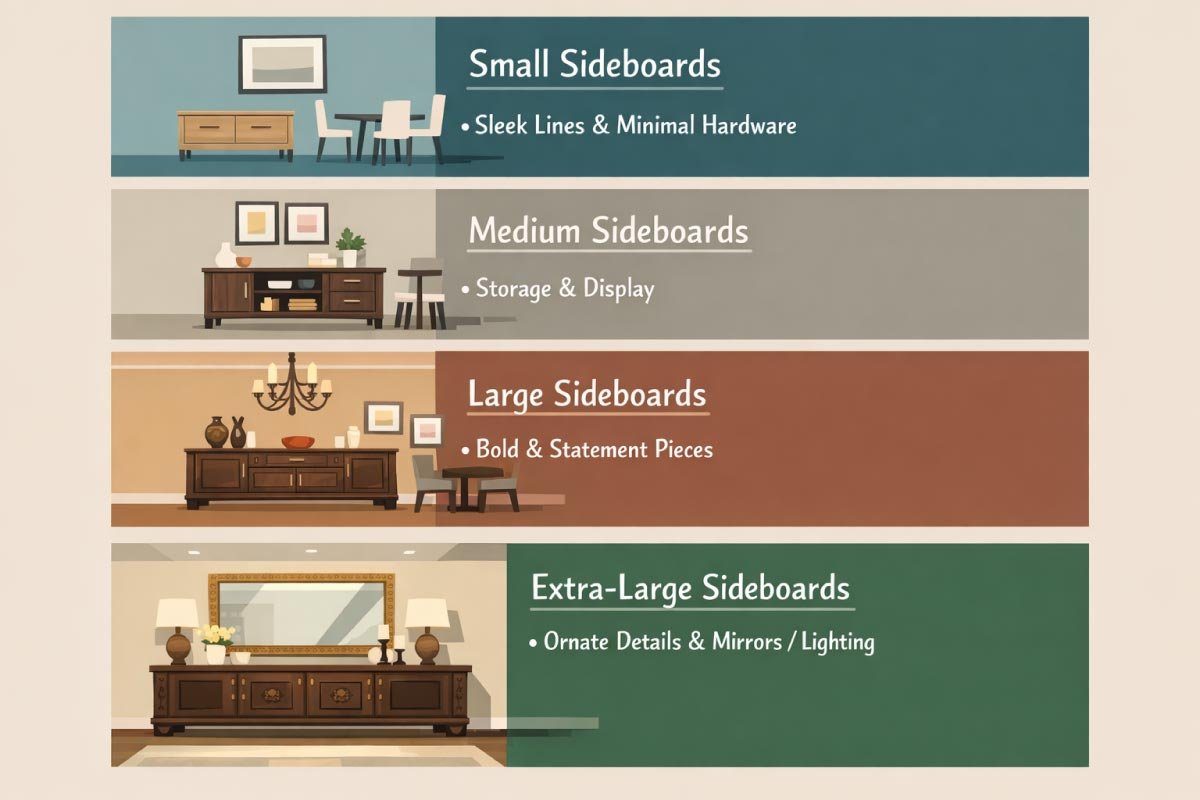
Sideboard size influences not just function but also the overall style of your space. Choosing a piece proportionate to your room allows you to highlight design elements, create visual balance, and select complementary décor. Size-aware styling ensures your sideboard enhances the room rather than feeling out of place.
-
Small sideboards: Ideal for minimalistic or contemporary dining rooms; pair with sleek lines and minimal hardware.
-
Medium sideboards: Perfect for transitional spaces that combine storage and display.
-
Large sideboards: Work well in traditional or eclectic dining rooms where bold furniture can act as a statement piece.
-
Extra-large sideboards: Great for open-plan homes; consider ornate detailing and strong visual anchors like mirrors or lighting.
Tip: Mirrors above the sideboard can enhance visual depth, especially if your sideboard is medium or large. The mirror width should be about 2/3 to 3/4 of the sideboard width for balance.
Discover More:
Final Thoughts: Choosing the Perfect Sideboard
Choosing the ideal sideboard combines practicality, proportion, and design harmony. Paying attention to dimensions, placement, and style ensures your piece complements the dining area while providing ample storage. Thoughtful selection allows the sideboard to enhance both the room’s functionality and its visual appeal, creating a cohesive, elegant space.
-
Width should complement your dining table.
-
Height should match functional use and ceiling scale.
-
Depth must allow storage without disrupting movement.
-
Placement and styling amplify the sideboard’s visual impact.
By following these guidelines and referring to the tables provided, you can choose a sideboard that is not only practical but also enhances your dining room’s elegance and functionality.
Discover More:

I am Engineer Hassan, a professional engineer with over 15 years of experience in measurements, design accuracy, and furniture, appliance, and home product sizing. Through Size Helper, I provide research-based guides and trending 2026 home design ideas for living rooms, bedrooms, sofas, wall décor, fashion, and sports—helping users make confident, informed decisions. Every guide is written with real expertise, verified data, and a commitment to quality, usability, and style.